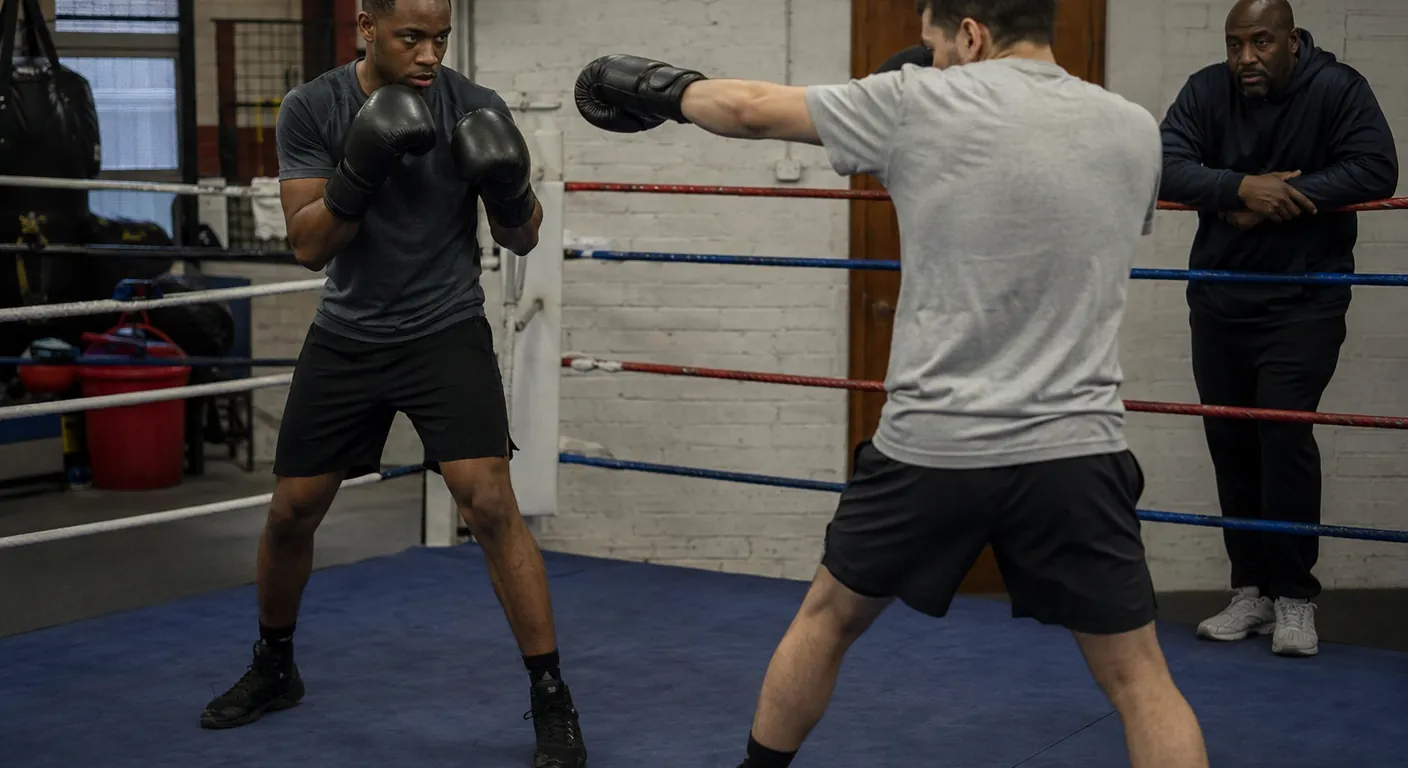
A punch does not begin when the glove moves. Often, the body has already made a small promise.
A boxer settles onto the front foot before the lead hook. The rear hip sits back before the cross. A slip takes the head off line and leaves one side of the body more ready than the other. None of those signals guarantees the next punch. Good boxers are not fortune tellers. They notice the picture early enough to make a calmer decision.
That is a useful gap between knowing a defence and using one. You can know how to catch a jab, slip a jab and step out. The harder job is noticing which answer might be needed before you are already late.
The video below is useful as a visual reference for the connection between a boxer’s balance, defensive movement and the next available punch. Watch the feet, hips and shoulders rather than trying to copy a long sequence.
Read the body, not one glove
Staring at a glove is a slow way to box. By the time the glove has travelled far enough to demand your full attention, the decision may already be late.
Instead, keep a soft view through the upper body. Chest, shoulders, hips and lead foot give you a wider picture of whether the other boxer is settled, stepping, leaning or preparing to turn. The gloves stay in view, but they are not the only evidence.
A systematic review of perceptual anticipation in combat sports found that higher-level athletes were generally faster and more accurate when facing attacks, and used fewer, more useful visual fixations than novices. That does not mean a beginner should try to read every twitch. It means looking at the whole person is more useful than waiting for a glove to arrive near the face.
The first rule is modesty. A weight shift is information, not a verdict. Someone may sit on the lead side and jab instead of hooking, or show a shoulder then step away. Your job is to avoid standing still while the evidence builds.
Three pictures worth recognising
The following patterns give you a reason to stay organised. They are not invitations to throw a hard counter at the first hint of movement.
The lead side starts to load
An orthodox boxer preparing a lead hook often has a little more pressure through the lead leg and a small turn towards that side. The shoulder may begin to close, but the clearest clue is usually that the body looks ready to rotate rather than travel straight forward.
Your first response can be very simple. Keep the rear glove close, chin down and eyes up. If the hook actually comes, cover, roll or take the angle that your coach has taught. If it does not come, you are still in a good stance.
Do not try to beat every possible hook with a huge right hand. A technical review of boxing performance describes punching, movement, defence and tactical behaviour as connected parts of the same task. In gym terms, a read is useful only if it leaves you able to defend the punch that arrives, not the one you imagined.
The rear side settles before the straight shot
A rear straight usually needs a base. You may see the rear hip sit slightly, the rear shoulder turn back a fraction, or a pause after a jab before the back hand comes through the middle.
Do not panic backwards every time you see that picture. Keep your own stance ready. At long range, a small step back may let the punch fall short. Close in, a tight guard or compact slip may fit better.
This is where defending the jab and keeping your hands up while punching matter. You do not need a clever move to be safe. You need both gloves available and a stance that has not abandoned you.
The head leaves the centre line
A slip is not only defence. It can also leave a boxer in a stronger place for certain returns.
When an orthodox boxer slips outside your jab, their rear side may be better placed for the right hand. When they move to their lead side, the lead hook may become easier to throw. Neither route is compulsory. A capable boxer can still choose a lighter shot from the other side or use the movement to leave.
That uncertainty is why your answer should stay small. If they slip outside your jab, do not lean after them. Bring the jab back, keep the rear hand ready and see whether they actually step in.
Use a read to buy time, not gamble
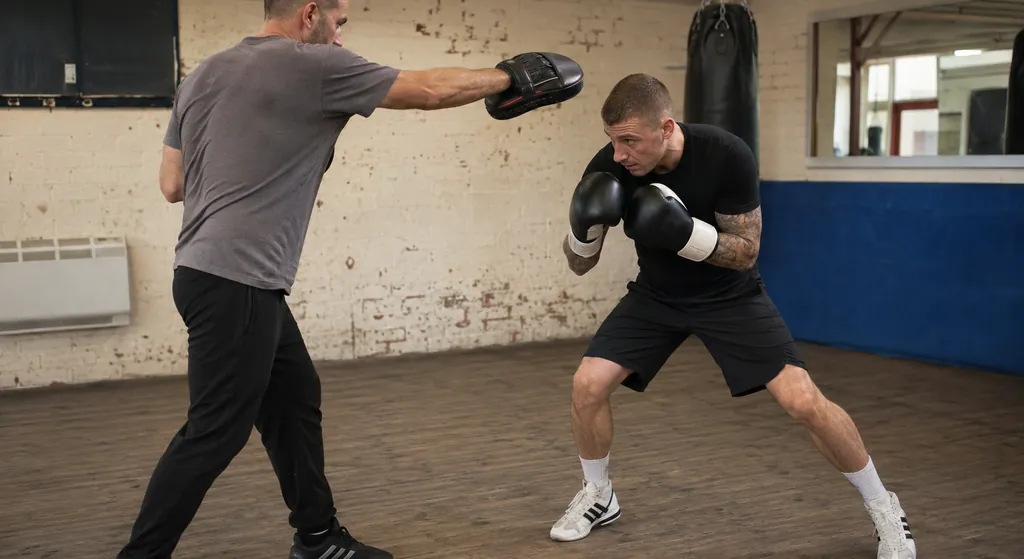
Beginners often hear that they should read opponents and immediately try to become counter punchers. That creates a bad habit: waiting for one dramatic tell, then launching a big shot from too far away.
Use the read to buy yourself a second. You see the opponent plant the lead foot, tighten the rear glove and stop walking into their hook lane. You see the rear shoulder settle, bring your chin behind the lead shoulder and prepare to move instead of jabbing naked into the middle.
The same principle makes your own boxing better. If you always load the rear hand in the same visible way, someone else will learn to read you. Our guide to telegraphing the jab explains why a punch can be quick yet still obvious. Your shoulders, rhythm and feet tell a story before the glove does.
A three-round read and respond drill
Keep this technical. No hard contact, no surprise punches and no competition over who can look the quickest.
Round one: name the picture
Partner A stands at a safe distance and shows one clear shape at a time: a slight lead-side load, a slight rear-side load, or a small slip. Partner B does not punch. They simply name what they saw, maintain their stance and return to neutral.
This first round teaches the eyes to notice without the body flinching. If Partner B starts guessing wildly, slow the movement down.
Round two: make one safe response
Now Partner A gives the same three pictures, followed by one pre-agreed action. A lead-side load can become a light hook mitt cue. A rear-side load can become a straight mitt cue. A slip can become a step or a return jab cue.
Partner B makes one sensible answer: cover, catch, small step out or a light touch to a coach-held mitt. The response should match the actual cue, not a favourite counter.
Round three: hide the ending
In the final round, Partner A is allowed to show the picture and then do nothing, step away or give the agreed punch cue. Partner B must keep the guard, feet and eyes organised until the action becomes clear.
That is the part that makes it boxing. You are not being rewarded for guessing. You are being rewarded for staying calm enough to choose.
The mistakes that make the drill worse
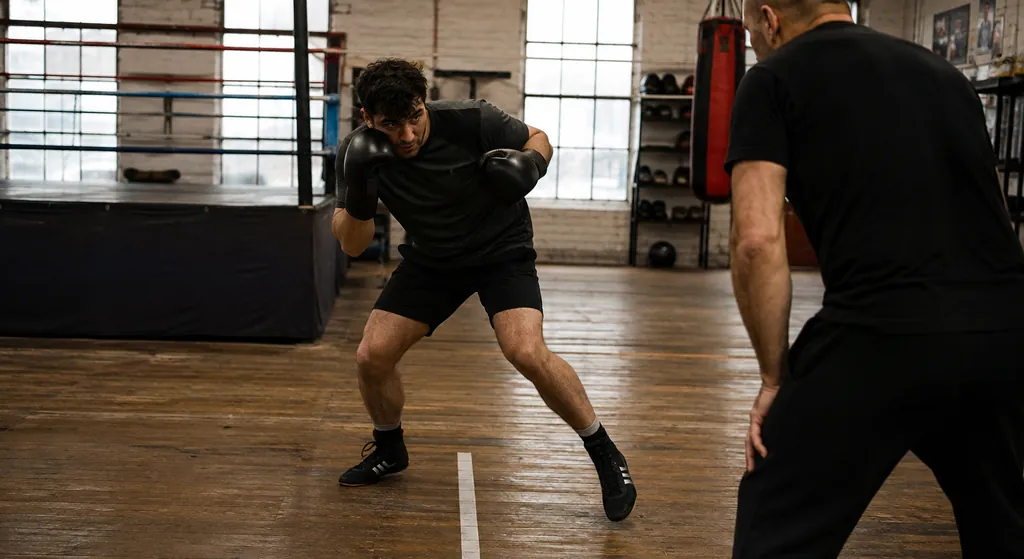
The first is looking down at the feet. The feet matter, but you do not need to stare at them. Use your wider view to notice the stance while your eyes stay on the body in front of you.
The second is reacting to every movement. A feint, a small shoulder twitch or a hand touch does not always require a defence. If you jump at every signal, the other boxer can make you tire yourself out without throwing anything.
The third is trying to counter before the range is honest. If your response needs a reaching right hand or a swinging hook, you have probably read the movement but ignored the distance.
The fourth is treating this as a substitute for coaching. Reading improves through slow, specific partner work and feedback. Video can give you an idea, but it cannot tell you whether your feet have crossed, your chin has lifted or your counter leaves you open.
The coaching cue
See the weight, keep the shape, wait for the proof.
A loaded side can tell you what may be available. It cannot tell you exactly what is coming. Good boxing is not about guessing brilliantly. It is about noticing early, staying balanced and making the smallest useful answer.
If you are in Kidbrooke, Greenwich or nearby, our Recreational Adults boxing classes teach these details through controlled pad work, bags and partner drills. You can build timing and awareness without needing to jump into hard sparring.
H&G Team
Writer at Honour & Glory Boxing Club, a community boxing gym in Kidbrooke, South East London.
KEEP READING
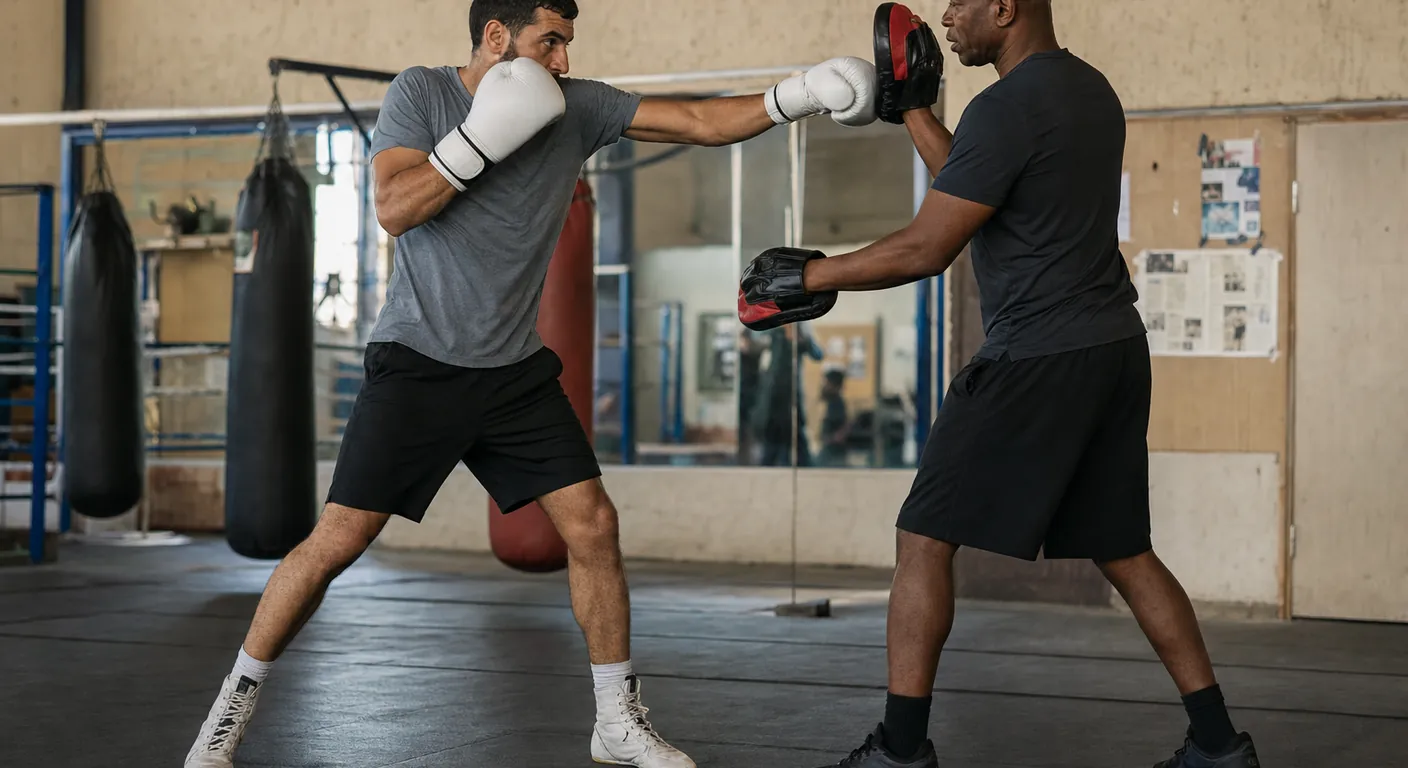
Shift Counter in Boxing: Punch as You Move
Learn the shift counter: a simple way to step off pressure and punch while you change angle, instead of backing up in panic.
Inside Slip Lead Hook: A Controlled Jab Counter
Use a small inside slip and a compact lead hook only when the jab, range and guard make the counter an honest option.
Boxing Draws: Make an Opponent Throw First
Use a controlled boxing draw to invite a predictable attack, stay balanced through it and choose a counter only when the opening is real.
Was this page helpful?
It takes one tap, and it genuinely helps.
Choose your next step
Turn this article into the right action
Some readers are ready to book. Some need the class route first. Pick the route that matches what you actually want.