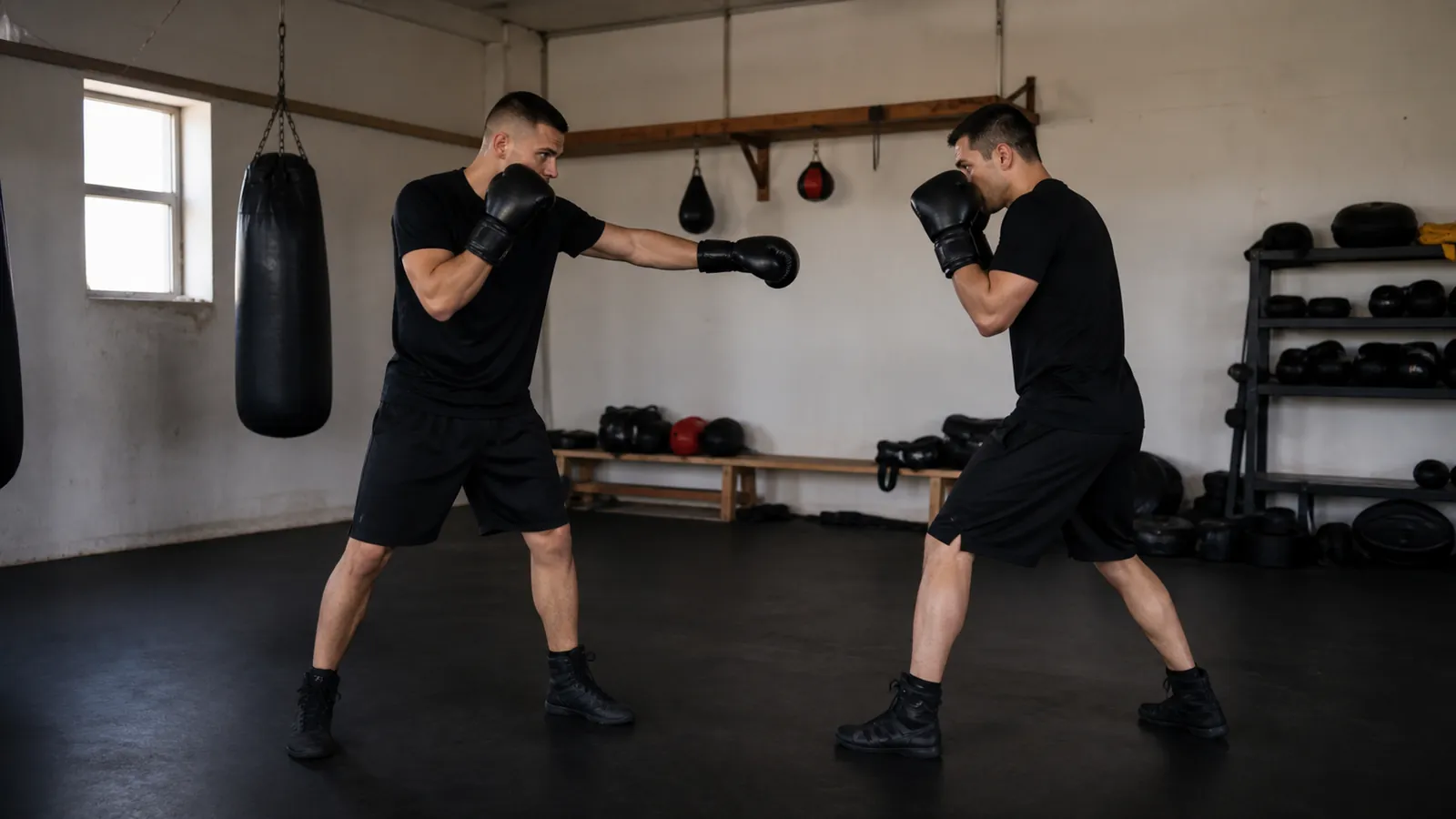
A draw in boxing is an invitation. You give the other boxer a small, believable reason to throw, then you are ready for the response they chose.
That is different from standing at range and hoping somebody gets impatient. A good draw has a purpose. You might leave a safe-looking gap just inside range, show a light lead hand, or take a controlled half-step back. The invitation needs to look real enough that the other boxer commits, while your own stance stays organised enough to deal with the punch that follows.
The video below is a useful visual reference. Watch the distance and the feet as much as the gloves. The counter only exists because the boxer is in a position to see the attack and respond to it.
A draw asks for an action, not a block
A feint usually asks the other boxer to defend something they think is coming. You show the start of a jab to the body, for example, and see whether their hands drop before you throw elsewhere.
A draw asks for an attack. You give the other boxer a picture that looks available enough for them to jab, step in or reach with a cross. The moment they commit, their feet, head and hands have to travel somewhere. That gives you information, and sometimes a safe countering lane.
Do not confuse either idea with a lazy habit. Hanging a lead hand in front of your face or walking backwards with your chin up is not clever bait. It is simply poor defence. A draw needs guard, distance and an exit built in before you invite anything.
Our guide to using feints in boxing without fake movement covers the defensive-reaction side of this. A draw is the other half of the conversation: instead of asking the guard to move, you are asking the other boxer to make the first attacking decision.
Start with a safe range, not a dramatic opening
The best draws are usually small. If you make the gap too obvious, a more experienced partner will see the trap. If you make it too large, they can throw without overreaching and you have not created anything useful.
Start around the edge of your proper jab range. Keep your lead shoulder and rear glove in sensible places. Then make one change that invites a response:
- Take a short step back while keeping the stance underneath you.
- Touch lightly with the lead hand, then bring it home.
- Pause after moving forward, as if you are deciding whether to enter again.
- Show a small body-level feint, then return to guard.
None of these are guarantees. They are questions. A systematic review of anticipation in combat sports found that more experienced performers use early movement information more effectively than less experienced performers. The gym version is simple: watch the first step, shoulder shift or lead hand. Do not wait until the punch is already on your face before deciding what it means.
The small step-back draw
The easiest place to begin is a controlled step back from jab range. It teaches the order without asking you to be flashy.
Partner A starts at a distance where their jab would land if both boxers stayed still. Partner B takes one compact step back, keeping their feet staggered and their rear hand close to the cheek. If Partner A follows with a long jab, Partner B lets it fall short, then makes one calm choice: jab back to a mitt, take a side step, or reset.
The point is not to make Partner A miss by a metre. If they are reaching so far that they lose their balance completely, the drill has become too easy. A useful draw creates a small overreach and leaves both people able to stop safely.
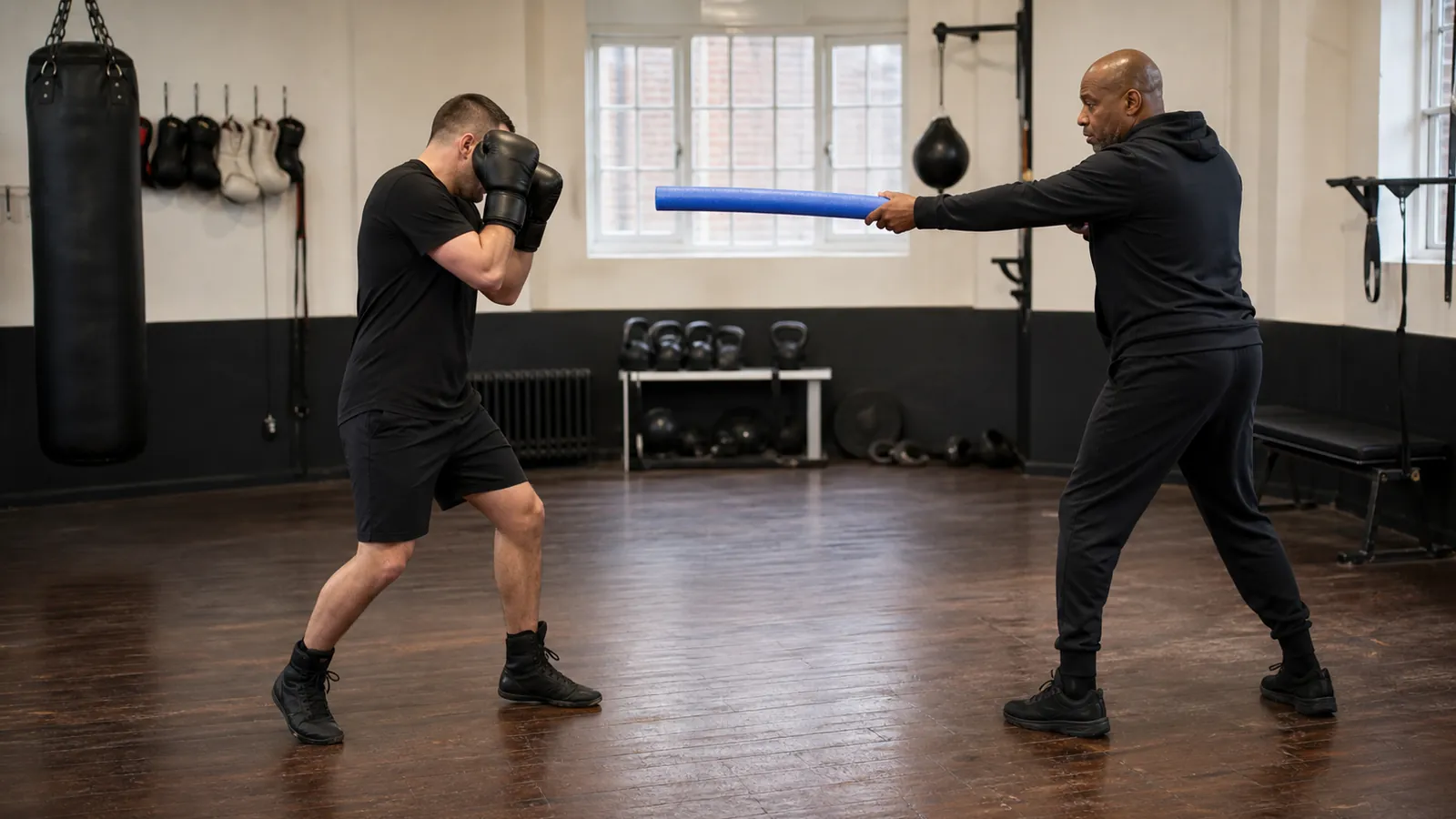
Keep the first counter modest. A jab back to a focus mitt is enough. If they stop short, cover or take the angle away, bring the gloves home and return to range. Our guide on the pendulum step in boxing covers the same rule: a retreat should leave you ready to choose, not simply moving away.
Do not counter before the attack exists
The most common error is rehearsing the answer before the question has been asked.
A boxer decides they want to slip and throw the right hand, then starts the slip before their partner has punched. That is a memorised sequence, not timing. Make the partner vary the pause or hold their ground so the person using the draw has to wait and choose only from what is actually in front of them. A good reset is better than a counter thrown from poor range or a square stance.
A study of lead straight-punch biomechanics shows why position remains important even for a simple straight shot. Punching is not a glove-only action. The legs, trunk and arm have to work in sequence. If the step-back draw has left your feet crossed, your weight outside the stance or your head hanging behind you, the counter has no proper base.
Three rounds to build the habit
Use this as a technical drill after warming up. Pads or a clear partner feed are better than trying to turn it into live sparring.
Round one: invite and freeze
Partner A stands at normal jab range. Partner B uses one small invitation: a short step back, a light lead-hand touch, or a pause after an entry. Partner A does not punch yet.
After every invitation, freeze for one beat. Check the rear glove, lead shoulder, feet and eyes. You should be able to jab, cover or step away without rebuilding yourself first.
Round two: invite and read
Now Partner A chooses one of two responses: a light jab line or no punch. Partner B has no counter in this round. The only jobs are seeing the response and returning to stance.
This prevents the drill becoming a race. The boxer learns that a draw is not successful because it looks clever. It is successful when it gives them enough time and shape to read the other person.
Round three: one safe answer
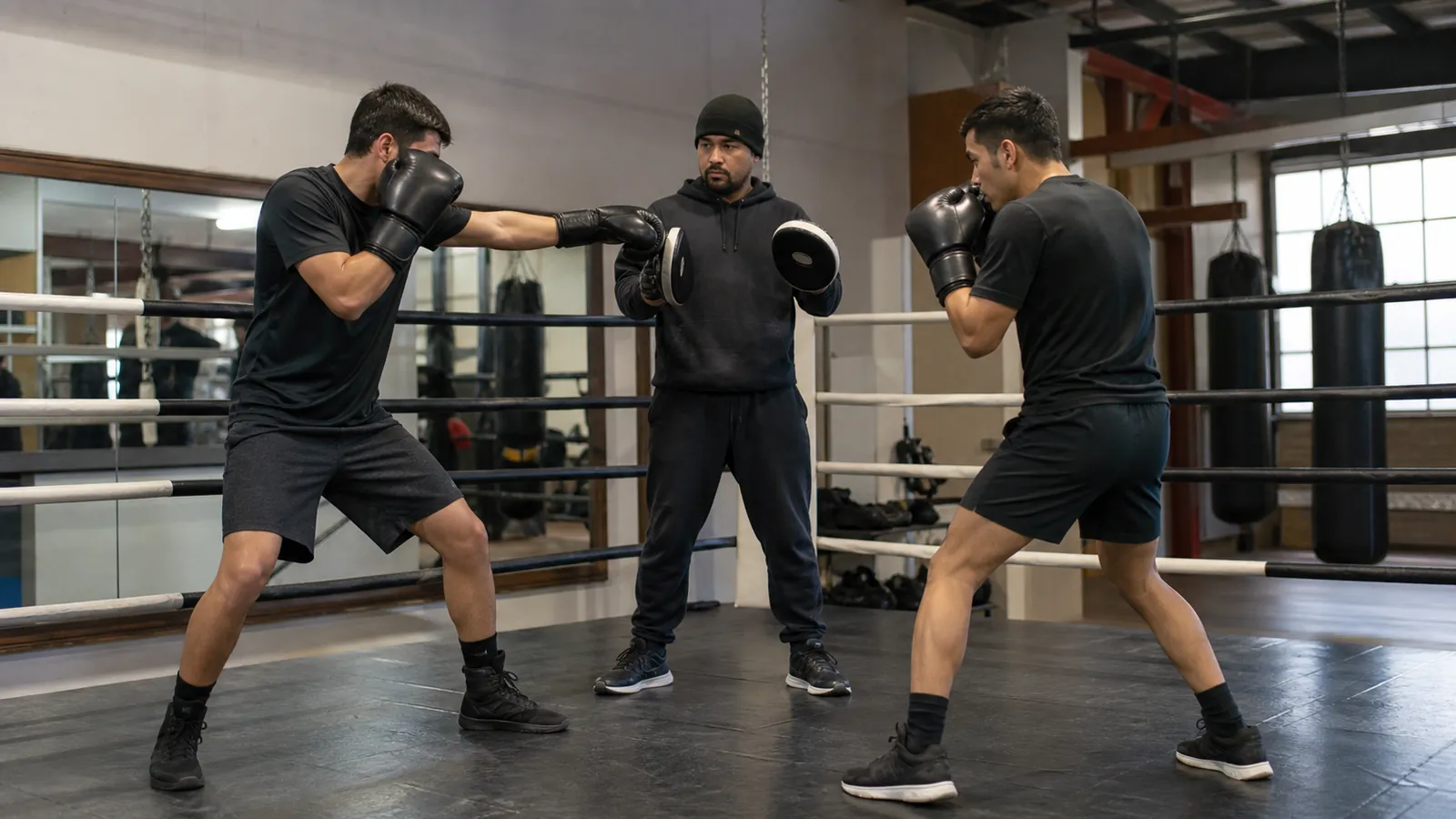
Add one coach-held mitt after the light jab line. Partner B can make a compact defence, then touch the mitt with one selected counter. Keep the punch measured and finish with a step out or a complete guard reset.
For an orthodox boxer, a short step-back draw may invite a jab that can be made to fall short before a rear-hand mitt is shown. Southpaws reverse the stance picture. The detail that matters most is not the side. It is whether the feet have stopped in a place from which the counter is honest.
Four ways to make a draw unsafe
The first is leaning back from the waist. A small step back can leave the other boxer short. Throwing your shoulders away from them just makes your next punch slow and your balance poor.
The second is leaving the lead hand out as bait. A draw can include a light jab or a visible lead hand, but the glove must return. A parked arm can be parried, punched over or grabbed in an untidy exchange.
The third is making the invitation too predictable. Change the timing, but keep the movement small.
The fourth is treating every bite as a green light for a hard counter. The counter should match the distance, not your excitement. A clean jab to a mitt, a cover and reset, or one quiet side step can be the right finish.
For a wider look at how a small first action can lead to a safe second decision, read the three phases of a boxing exchange. The important habit is the same: see the response before you decide the next punch.
If you train near Kidbrooke, our Recreational Adults boxing classes use controlled pads and partner drills to teach range, defence and countering without pushing beginners into hard sparring.
The coaching cue is simple: invite a decision, read it clearly, then answer only with the position you have earned.
H&G Team
Writer at Honour & Glory Boxing Club, a community boxing gym in Kidbrooke, South East London.
KEEP READING
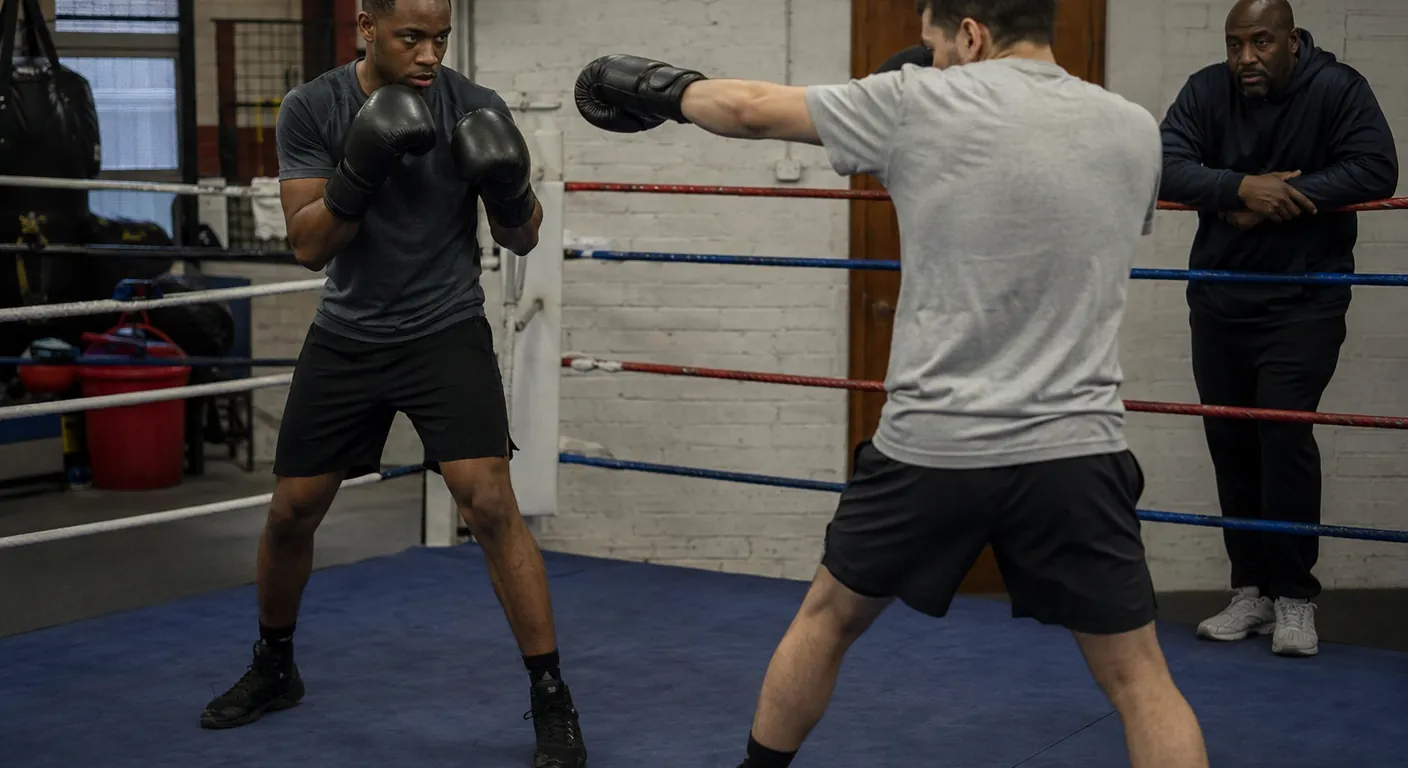
Read Boxing Weight Shifts Before the Punch
Learn to spot small weight shifts in boxing, then choose a calm defence or counter without guessing at every movement.
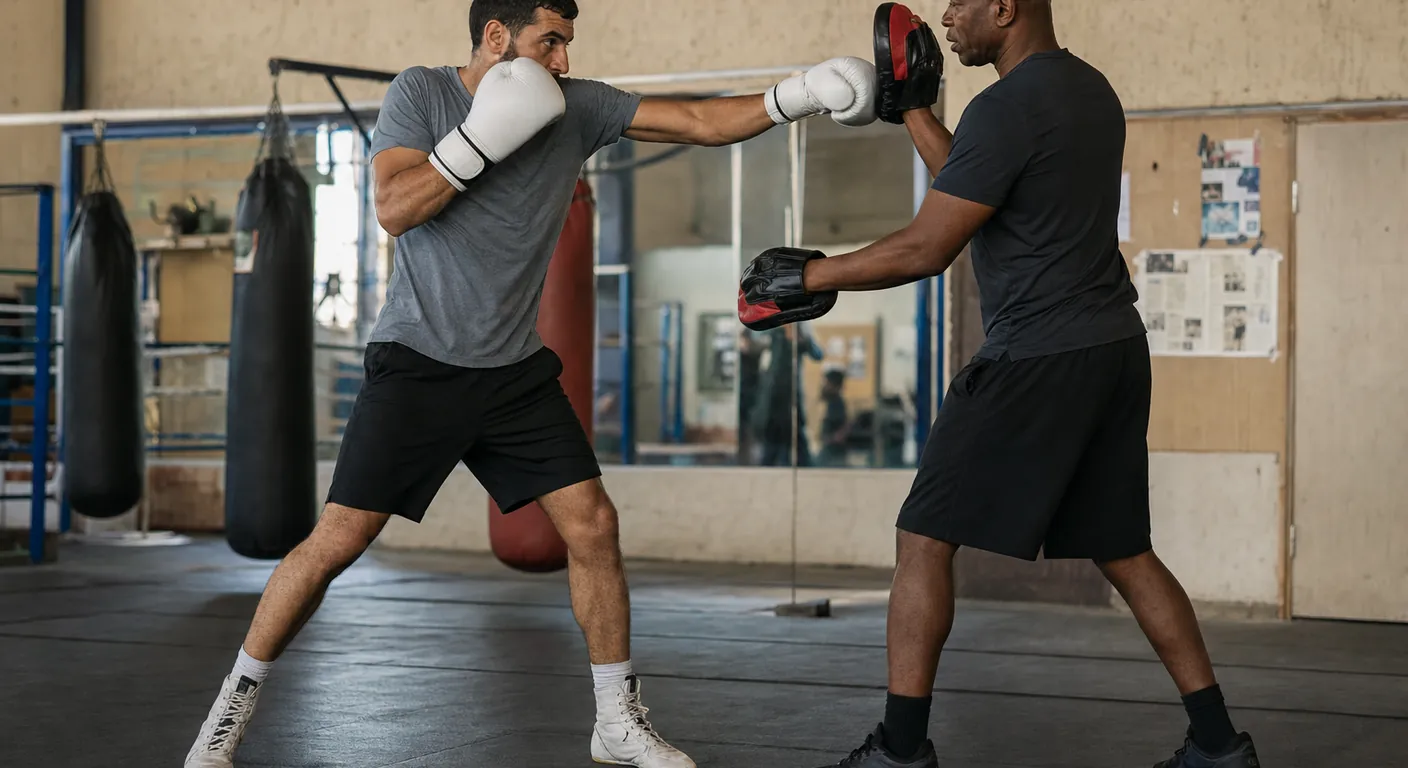
Shift Counter in Boxing: Punch as You Move
Learn the shift counter: a simple way to step off pressure and punch while you change angle, instead of backing up in panic.
How to Improve Your Boxing Timing: Drills That Actually Work
Timing separates a boxer who looks good on the bag from one who performs under pressure. Here is how to build it properly.
Was this page helpful?
It takes one tap, and it genuinely helps.
Choose your next step
Turn this article into the right action
Some readers are ready to book. Some need the class route first. Pick the route that matches what you actually want.