Pendulum Step Boxing Drill: Move Out and Back In
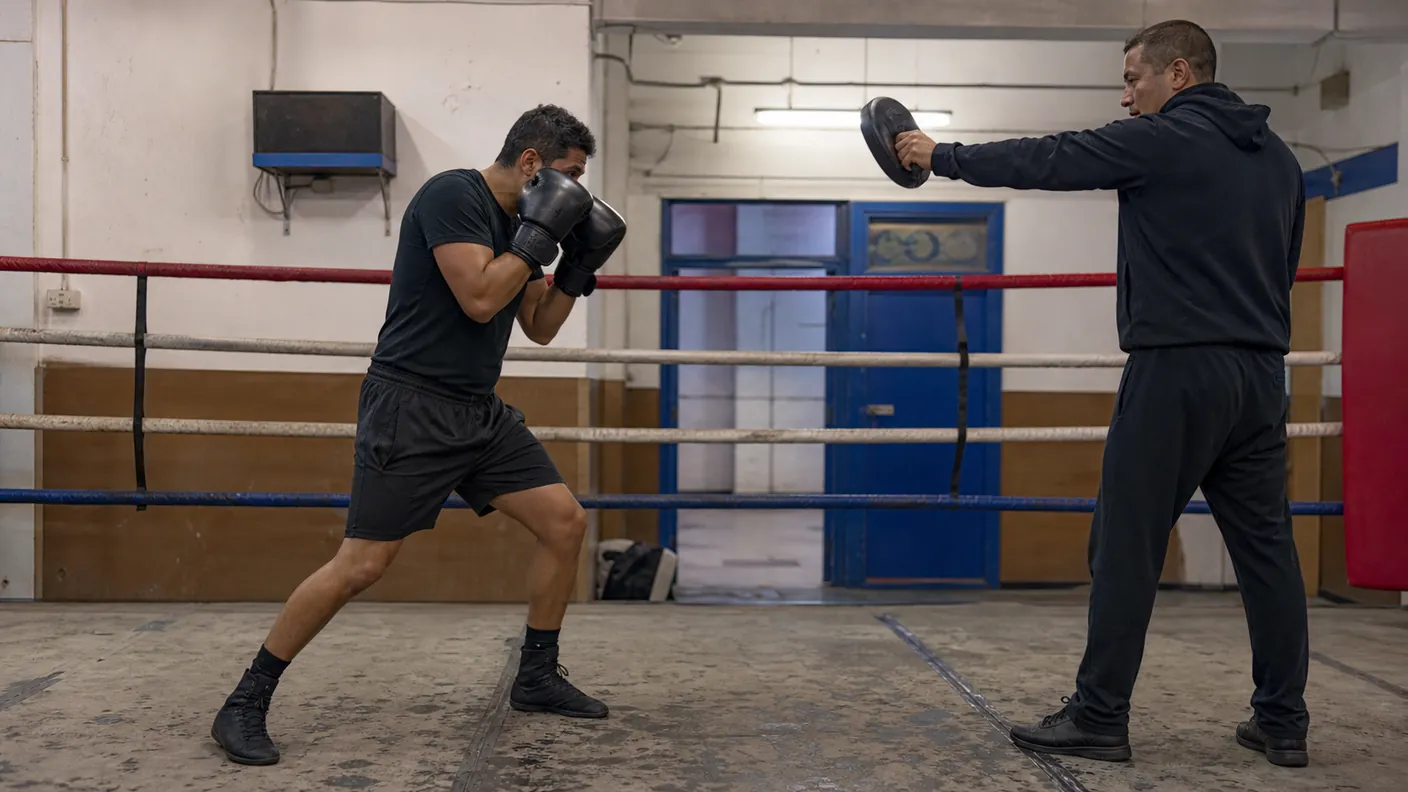
A lot of beginners retreat from a jab as if the only job is to get away.
They take a big step back, the punch misses, and it feels like good defence. Then the stance has stretched and any return punch is a reach.
The pendulum step is a smaller answer. You move just enough to leave the line, then return to useful range while the stance stays intact. It is not a bounce for show.
The video below is a useful visual reference. Watch the distance change, then use the drills here to make the movement calm and repeatable.
What the pendulum step is for
The movement has two parts: a short retreat and a measured return. The first part creates enough space for an incoming straight punch to fall short. The second part stops the retreat becoming surrender.
Think of it as a change in distance rather than a jump backwards. Your front leg helps send the stance away, the rear foot preserves the gap between your feet, and the whole position comes back together before the next action. Your head stays between the feet and your hands stay home.
A technical review of boxing performance treats punching, defence, movement and distance as connected jobs. The backward movement only works if it leaves you able to defend, take an angle or jab again.
Start with an honest distance check
Do not start this drill from too far away.
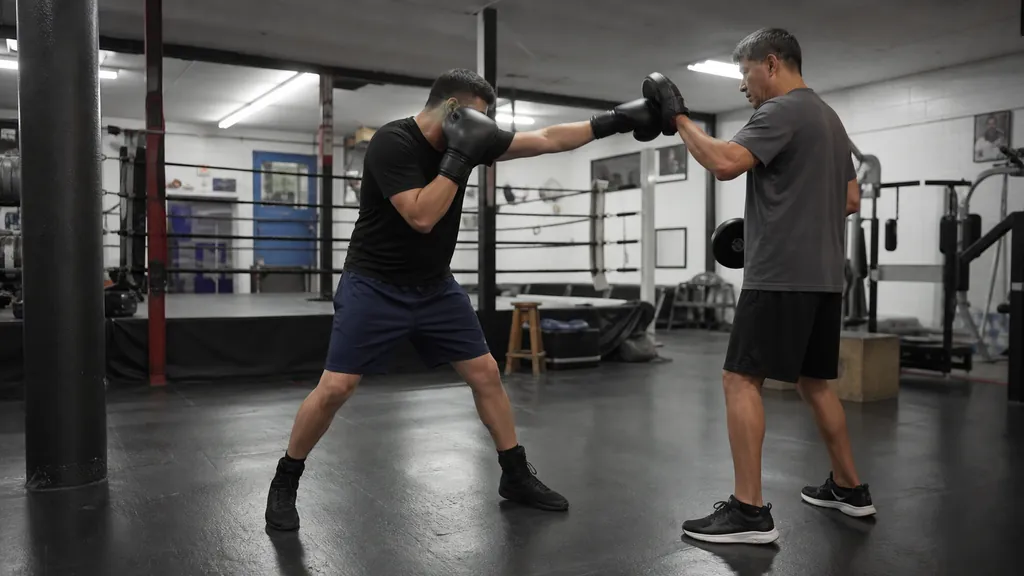
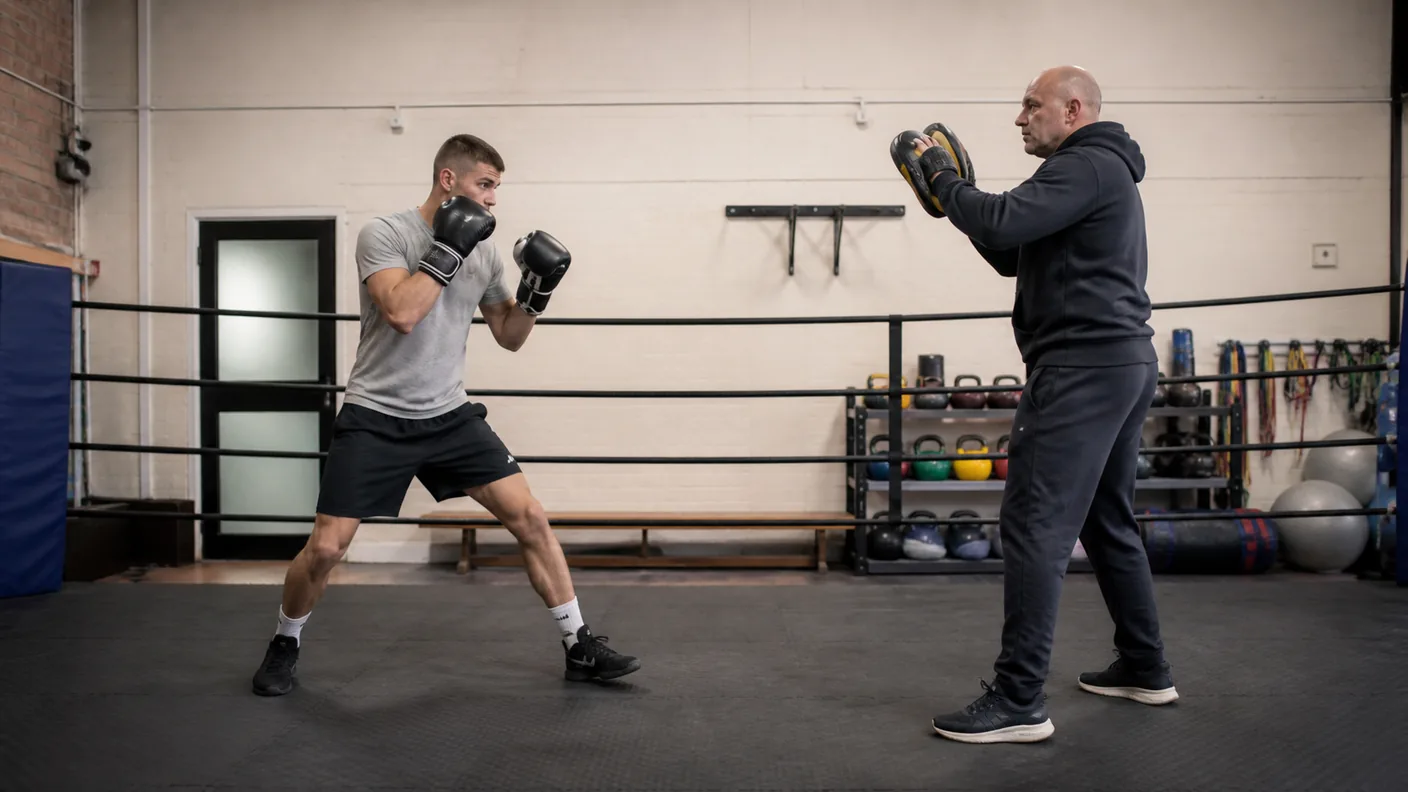
Stand at the outer edge of jab range with a coach holding a mitt or partner showing a lead hand. You should touch it with a normal jab without stretching over the front knee. If you need to lean, the distance is wrong.
Make a small retreat. Do not fly backwards or lift both feet together. Let the stance travel as a unit, keep the knees soft and pause. The mitt should be beyond ordinary jab range, but you should still be balanced enough to move either way.
Then return to the original range without throwing. This is the first check. If the return makes the feet cross, brings them too close together or puts all the weight over the front foot, make the movement smaller. The useful version is often only a few inches.
England Boxing's coaching handbook puts stance, balance and controlled progression at the centre of skill development. A coach should be able to stop the drill at either point and find you in a useful position.
The three-round pendulum step drill
Use a coach, a reliable partner or a focus mitt. Keep the pace low. This is not open sparring.
Round one: out and back without punches
Start at jab range. Take one compact retreat, hold your stance for a beat, then return to range. Repeat for one minute.
Keep both gloves in position. If your shoulders are doing the work of your legs, slow down.
The aim is to feel the return, not cover ground. Every third repetition, freeze and check whether you could jab or step out. If you need to rearrange your feet, the rhythm is too big.
Round two: make one jab fall short
Now ask the partner to show a slow, clear jab. The partner does not chase and does not add a second punch. Their job is to give you one safe line to read.
As the glove starts forward, make the short retreat. Keep your eyes on the partner and move the head with the stance. When the jab has finished, return to range and reset without punching.
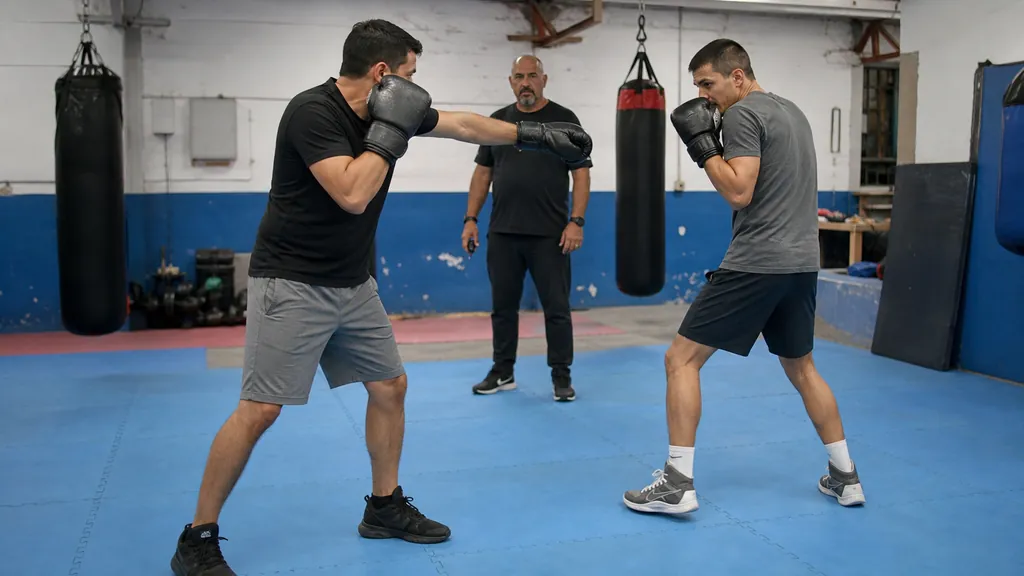
This round teaches restraint. Do not fire back before the feet have settled. If you are too far away, regain range and keep your shape.
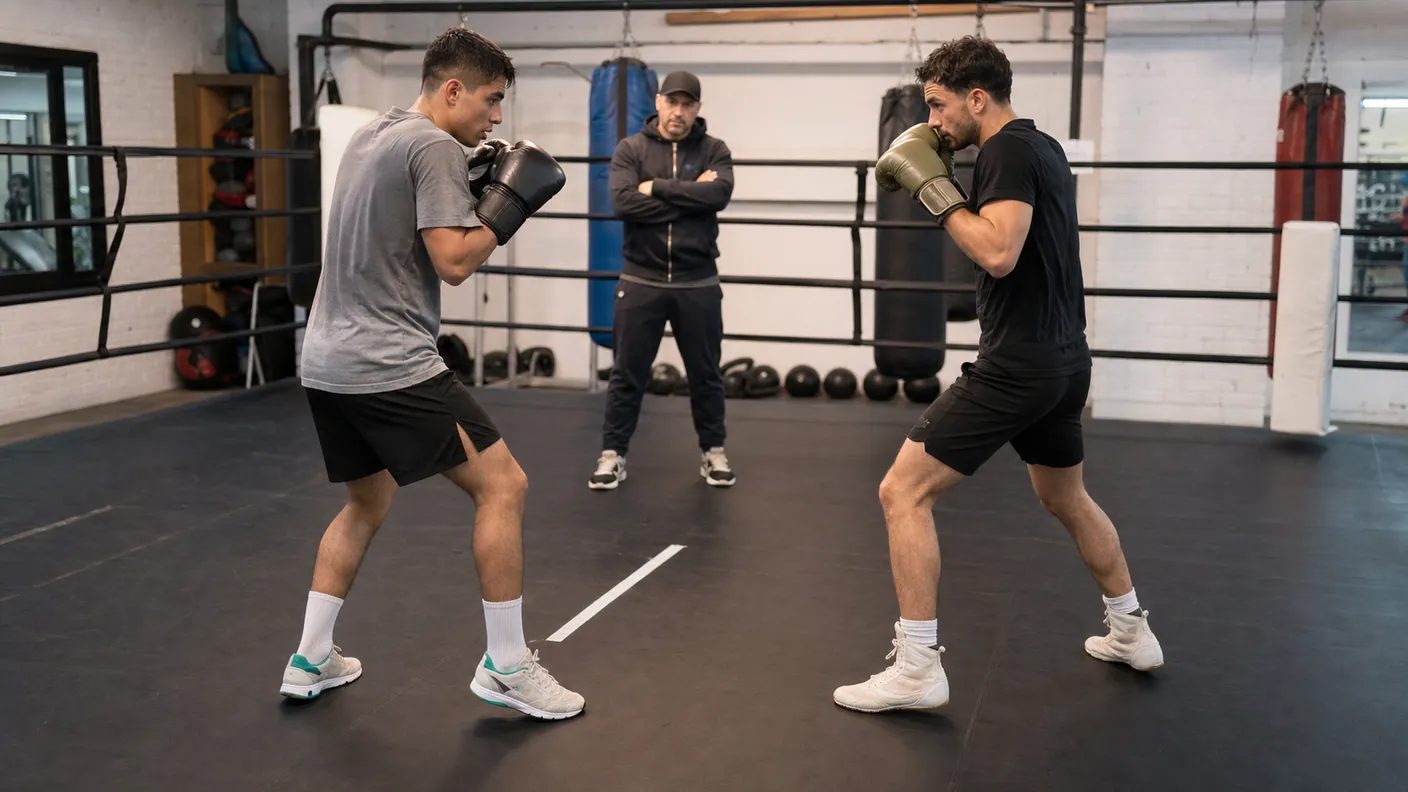
That is the same discipline behind our guide to moving in and out without crossing your feet. The feet move first. The punch has to fit the range you have earned.
Round three: return with one simple punch
Only add the punch when the first two rounds look calm. Partner A gives the same single jab. Partner B makes the small retreat, returns to range and lands one light jab on a mitt or an agreed target. Then both people reset.
Start with the jab because it tells the truth about distance. A jab exposes a boxer who returns too far away, too close or too square.
Once the jab works, add a measured one-two only if the rear foot has rebuilt the stance. Do not rush it.
Why this is better than bouncing away
Bouncing can make a boxer feel mobile, but it can also hand the other person an easy rhythm. If you move back the same distance at the same speed every time, a decent partner can step with you and land where you plan to be.
The pendulum step has a job. Use it when a straight line is coming, when the other boxer overreaches, or when you want them to reset. It should not become your default reaction.
A big retreat usually gives up your own range. A small retreat can leave the other boxer extended while you are still close enough to choose a jab, a side step or a reset. The goal is to keep the next choice available.
Our guide to defending the jab in boxing covers catches, slips and blocks for different distances. The pendulum step belongs beside them. It is a range answer, not a replacement for your guard.
Four mistakes that spoil the movement
The first is turning the retreat into a lean. If the upper body flies back while the feet remain planted, you may make the first punch miss but you will struggle to return in balance. Let the legs move you. Keep the back tall and the eyes level.
The second is taking too much ground. If the partner has to walk two steps to reach you again, the step was probably too large for this drill. You want the punch to miss, not to leave the exchange entirely.
The third is returning with the front foot alone. That can put you close enough to touch the target, but it leaves the rear foot behind and the stance stretched. Let both feet do their part before you commit to the next punch.
The fourth is treating every retreat as an invitation to counter. A jab may be followed by a second jab, cross or step forward. First make the distance change clean.
Put it into a normal session
Use two or three short rounds after warming up and before hard bag work. It teaches a decision that a stationary bag cannot give you.
For shadow boxing, imagine a jab crossing the line. Move back just enough, return to range, show one jab, then take a small angle or reset. Keep the movement modest. You should finish sharper than you started, not tired from hopping around the room.
For partner work, agree the cue and pace first. One person gives a slow jab, the other practises the step. No surprise combinations or hard contact. Own the movement at half speed before making it faster.
If you train near Kidbrooke, Greenwich or Blackheath, our Recreational Adults boxing classes use coached drills to connect footwork with defence and sensible punch selection. A coach can see whether your issue is range, balance or the timing of the return.
The cue is simple: move out by a little, come back in under control, then choose the punch that fits.
H&G Team
Writer at Honour & Glory Boxing Club, a community boxing gym in Kidbrooke, South East London.
KEEP READING
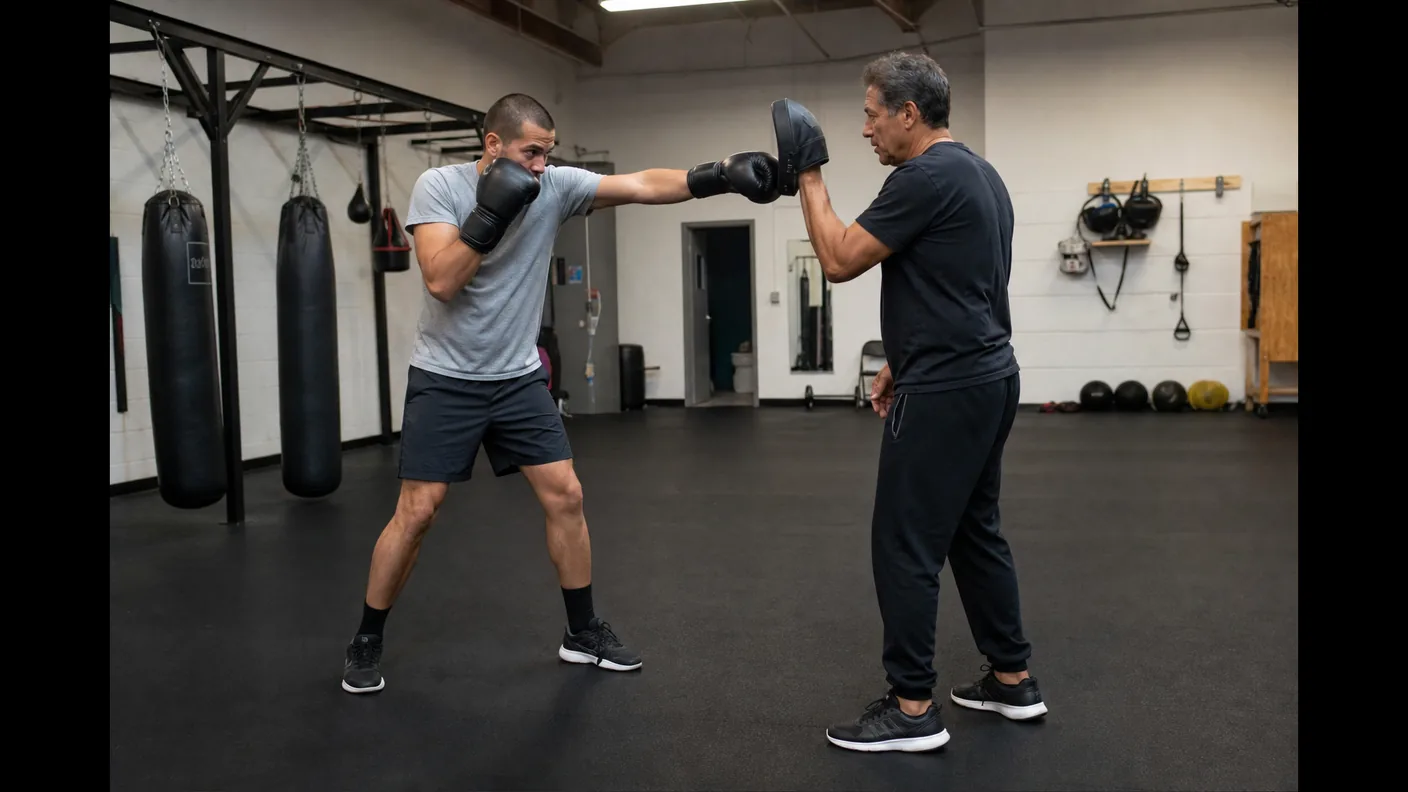
Angle Step Boxing Drill: Stay in Range
Use a compact angle step to keep your punches in range without crossing your feet or chasing a moving partner.
Boxing Side Steps: Move Without Drifting
Use a small boxing side step to leave the centre line without crossing your feet, wasting movement or losing the chance to punch back.
Move In and Out in Boxing Without Crossing Your Feet
Learn the step-and-slide rule that keeps your stance usable when you close distance or move away from pressure.
Was this page helpful?
It takes one tap, and it genuinely helps.
Choose your next step
Turn this article into the right action
Some readers are ready to book. Some need the class route first. Pick the route that matches what you actually want.