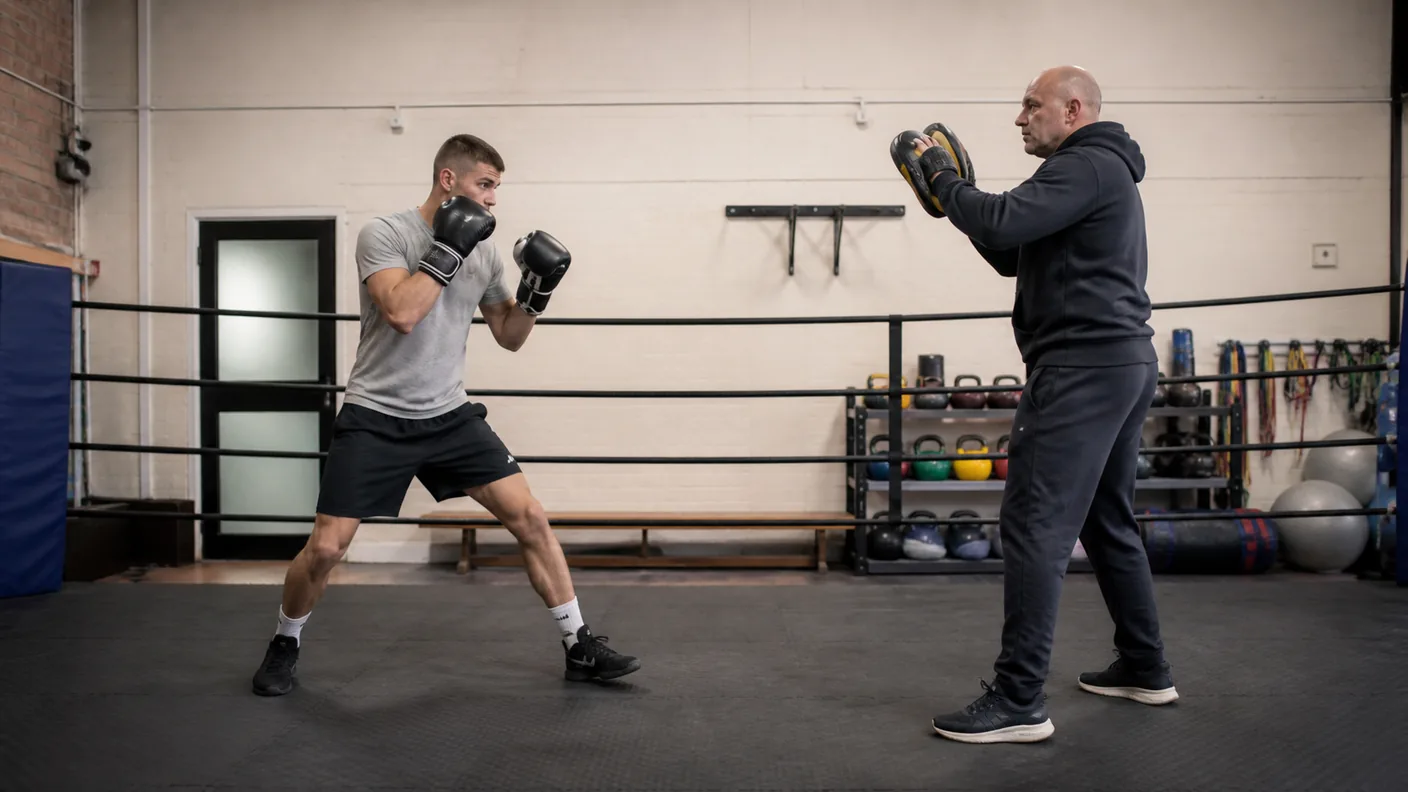
A side step is one of the smallest movements in boxing, and one of the easiest to make untidy.
A beginner sees a jab coming and tries to get out of the way. The lead foot crosses over, the body leans, the hands separate and the boxer ends up a metre away but unable to throw back. It feels like defence because the punch missed. It is really a delayed problem. The stance has gone, so the next punch or step is slow.
A useful side step does less. It shifts you just far enough that the punch would miss, while keeping your feet, eyes and hands ready for the next decision. You are not escaping the room. You are changing the line.
Watch the short demonstration below, then use the coaching notes to make the movement useful in pads, bag work and controlled partner drills.
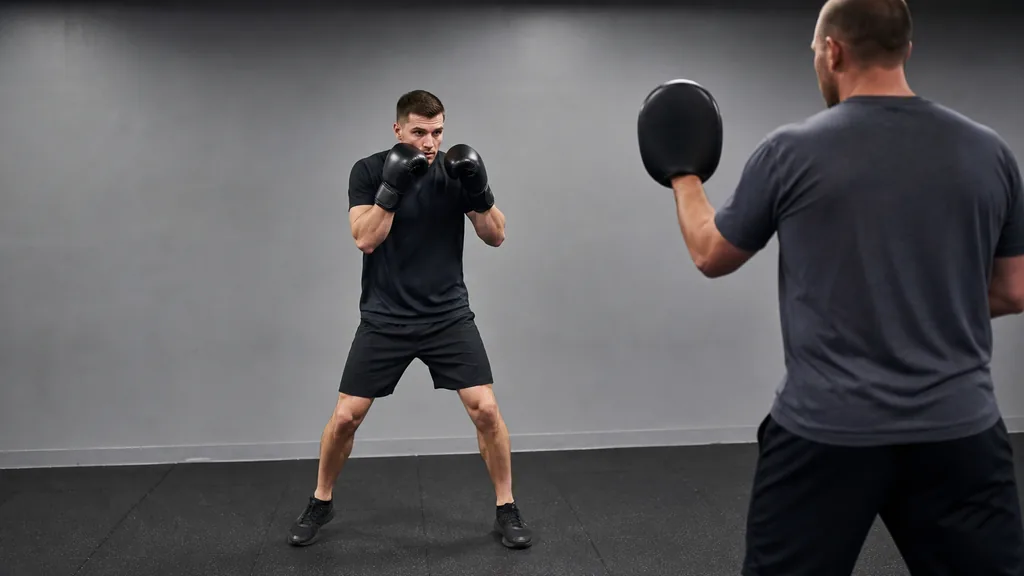
A side step is a push, not a cross-over
The key detail is where the movement starts.
To move to your left, drive lightly from the right foot. To move to your right, drive lightly from the left foot. The foot furthest from the direction of travel creates the push. The nearer foot moves first into the available space, then the other foot restores the usual stance width.
That is different from walking sideways. If you pick up the nearest foot, step across your body and drag the other foot after it, your stance narrows and the hips turn square. You might still arrive to the side, but you have made it harder to jab, block or move again.
England Boxing's coaching handbook treats balance, stance and movement as the base for skill development. The practical test is simple: after the side step, you should still look like a boxer who can make a choice, rather than someone who has just avoided a puddle.
Small enough to miss, close enough to answer
A side step does not need to take you far away.
If a straight punch is travelling down the centre line, a small shift can make it pass by your shoulder instead of meeting your face. That is enough. A bigger jump uses more energy, tells the other boxer where you are going and can put you outside your own punching range.
The goal is not distance for its own sake. The goal is a different line with a useful range.
Think about the difference between these two outcomes:
- You step so far away that the other boxer has to walk forward again, but you cannot reach them with your own jab.
- You step a fraction, their jab misses, and your jab is still available as they recover.
The second version is boxing. You have made them miss and kept the next action available.
A review of boxing biomechanics describes punching as a linked action through the legs, trunk and upper body. That is why the side step matters. The feet are not parked while the hands do the interesting work. If the feet finish crossed, stretched or too narrow, the next punch has a poor starting point.
Keep the head between the feet
The common error is moving the head first and letting the feet chase after it.
A boxer spots a punch, leans sideways at the waist, then takes a large step to catch their balance. That can look dramatic in a mirror. Against a moving partner, it leaves the body tilted, the rear hand late and the eyes below the next punch.
Keep the head roughly between the feet. Let the legs shift the whole stance sideways together. Your upper body can stay relaxed and slightly turned behind the guard, but it should not fold over the lead knee or drift beyond the outside foot.
The cue is: move the floor, not the face.
If you can finish the step, freeze and throw a slow jab without having to rebuild your feet, the movement was sound. If you need an extra shuffle before you can punch, make the step smaller.
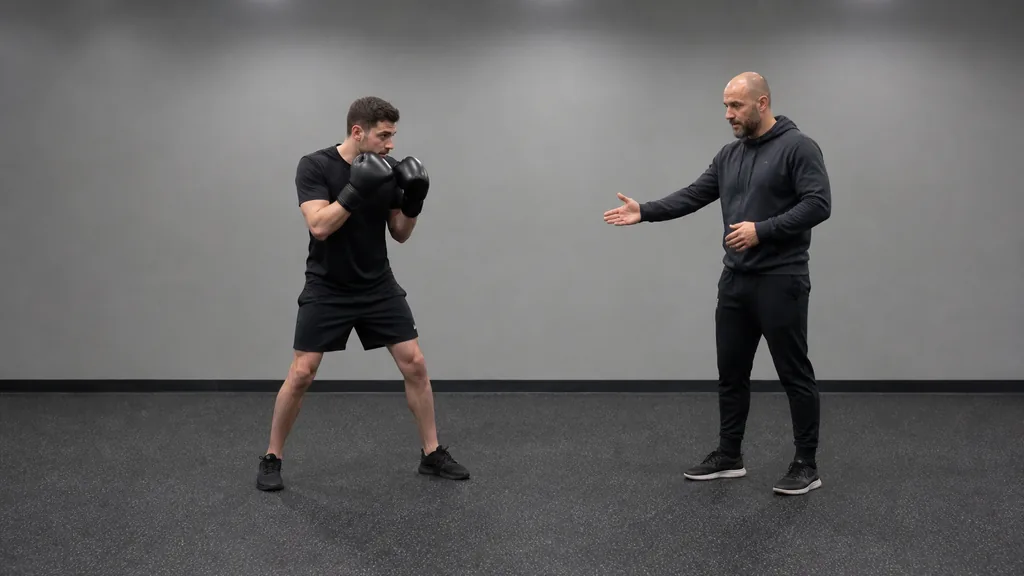
Start with the feet-only drill
Do not begin by trying to side step around a fast partner.
Put two strips of tape on the floor, parallel to each other, with enough room for your normal boxing stance between them. Stand with the lead foot near one line and the rear foot near the other. The lines are not targets to stare at. They simply make it obvious when the feet cross or collapse together.
Work three one-minute rounds.
Round one: slide left and right
Take one small side step left, settle, then one small side step right. Keep both gloves near the face and keep the knees soft. The push comes from the far foot. Do not bounce. Do not let the feet meet in the middle.
At the end of each movement, pause for a count of one. Can you jab? Can you take another side step? Can you bring the rear hand into a catch? If not, the step was too large or the feet have lost their gap.
Round two: add the jab after the step
Move left, settle, jab. Move right, settle, jab. Work at half speed.
The jab matters because it tells the truth about the feet. A boxer can hide poor footwork during a no-punch movement drill. The moment the lead hand leaves, a crossed or narrow stance usually reveals itself. The shoulder pulls, the head reaches or the rear glove drops to keep balance.
Do not chase the jab. Let it follow the feet. The side step changes the line first. The jab becomes available from the new position.
Round three: coach call
Ask a coach or partner to call left or right without a pattern. Move on the call, settle in stance and show one light jab. The partner does not need to throw back yet. The point is to connect seeing, moving and staying organised.
When that feels calm, add a slow lead-hand cue. Partner A extends a light jab line. Partner B makes the side step, brings the guard home and gives one measured jab back. Keep the pace technical. A side step is a positioning skill, not a reason to turn a drill into sparring.
Use it after the jab, not only against one
Many boxers only think about side steps as defence. That is too narrow.
A side step can also finish your jab. You touch with the lead hand, shift a small amount off the centre line and make the other boxer turn before they can answer. You have not vanished. You have changed the picture by a few inches.
Try this on pads:
- Start at honest jab range.
- Throw one light jab to the mitt.
- Return the glove to guard as the feet make a small side step.
- Freeze in the new stance.
- Let the coach show either a mitt for a second jab or a light return cue to cover.
This is not the same as pivoting away after every punch. A pivot turns the stance around a new angle. The side step keeps the basic line of your stance but moves it sideways. Both are useful, but they solve different problems.
Our guide to moving in and out without crossing your feet covers the forward and backward version of the same discipline. For lateral movement, the rule stays familiar: do not sacrifice the stance to make one step look quick.
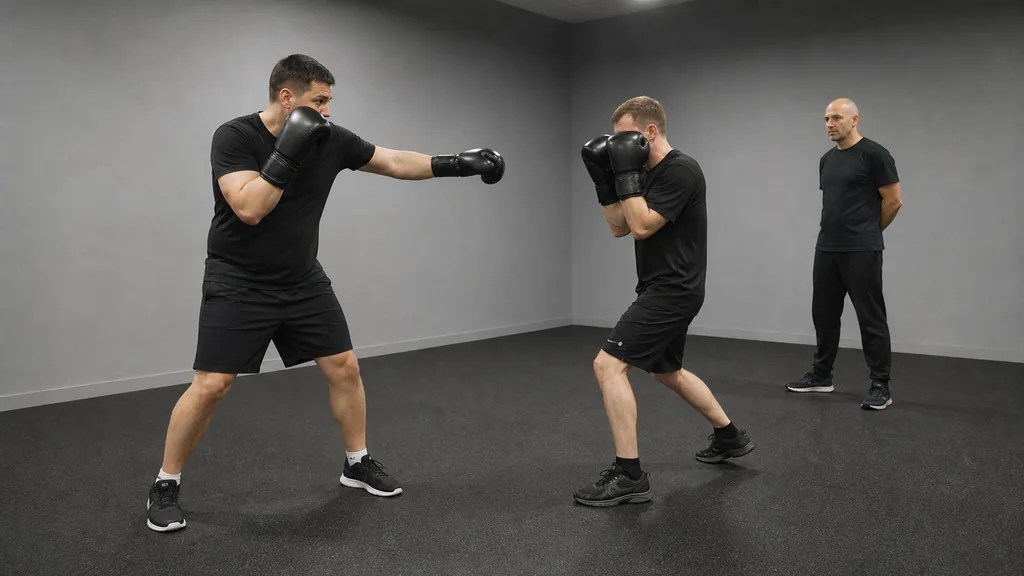
Four mistakes that make the side step useless
The first is stepping too far. If your next jab falls short by a mile, you have escaped range rather than changed the line. Make the move smaller.
The second is crossing the feet. A cross-over step may cover ground, but it leaves the legs tangled when you need to stop or punch. Our guide to stopping your feet from crossing in boxing gives a simple way to spot and correct that habit.
The third is leaning the torso without moving the base. A small head movement can support the step, but the feet still have to carry you. Do not rely on the waist to do a job the legs should be doing.
The fourth is moving and admiring it. After a good side step, you still need a next choice: jab, reset, cover, move again or leave. Standing still in the new position only gives the other boxer a fresh target.
Where this fits for beginners
A beginner does not need to side step every punch. In fact, trying to do so usually creates a nervous, jumpy style.
Start with a reliable stance, a clean jab and a simple guard. Add a side step when there is a clear reason: you want to leave the centre line, make a straight punch fall short, or finish a jab without remaining in the same lane.
Keep it controlled. A coach should be able to see the feet, guard and head position at the end of every repetition. If the movement works only at full speed, it is probably not a movement you own yet.
The useful standard is modest: make a small move, stay in stance, keep your eyes up, and retain the option to punch back. That gives you a skill which looks ordinary in the gym but matters when the other boxer is no longer standing still.
If you are in Kidbrooke, Greenwich or nearby, our Recreational Adults boxing classes use pads, bag rounds and controlled partner drills to make footwork part of every punch and defensive decision.
H&G Team
Writer at Honour & Glory Boxing Club, a community boxing gym in Kidbrooke, South East London.
KEEP READING
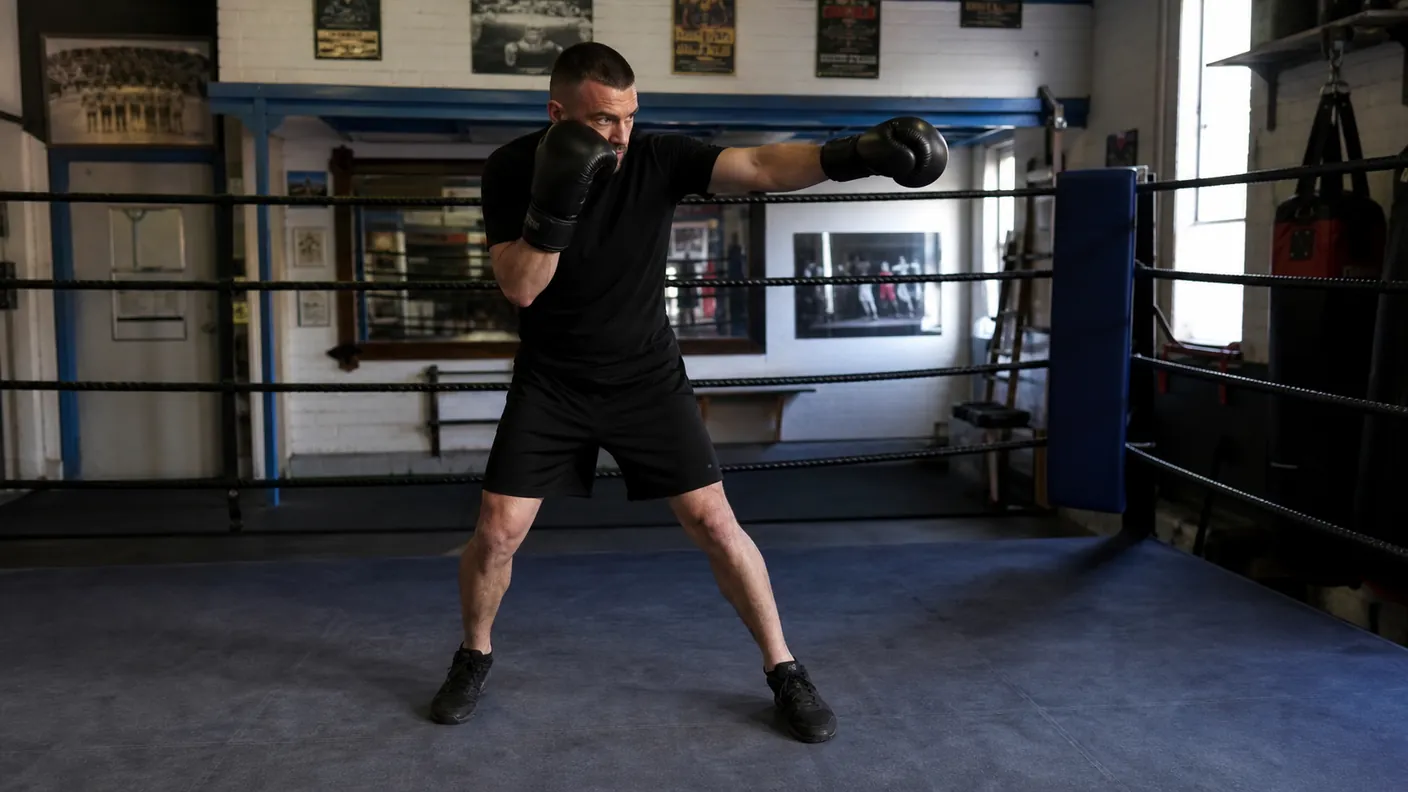
Boxing Side-Step Drill: Keep Your Stance While Moving
Use this boxing side-step drill to move across the floor, keep your stance and make the jab work without crossing your feet.
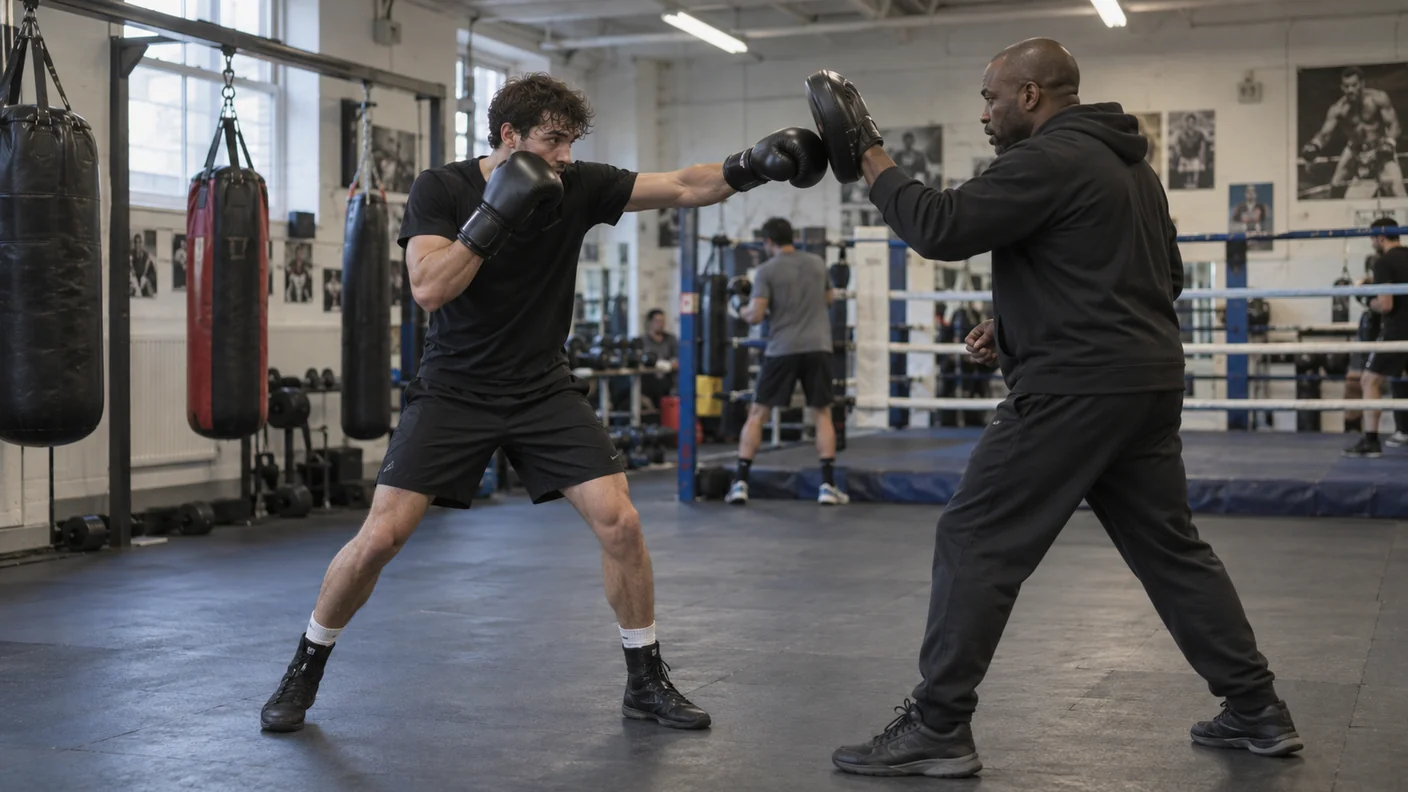
Side-Step Cross: Counter a Jab Without Reaching
Use a compact side-step cross to leave the jab line, keep your stance and make a calm counter when the range is honest.
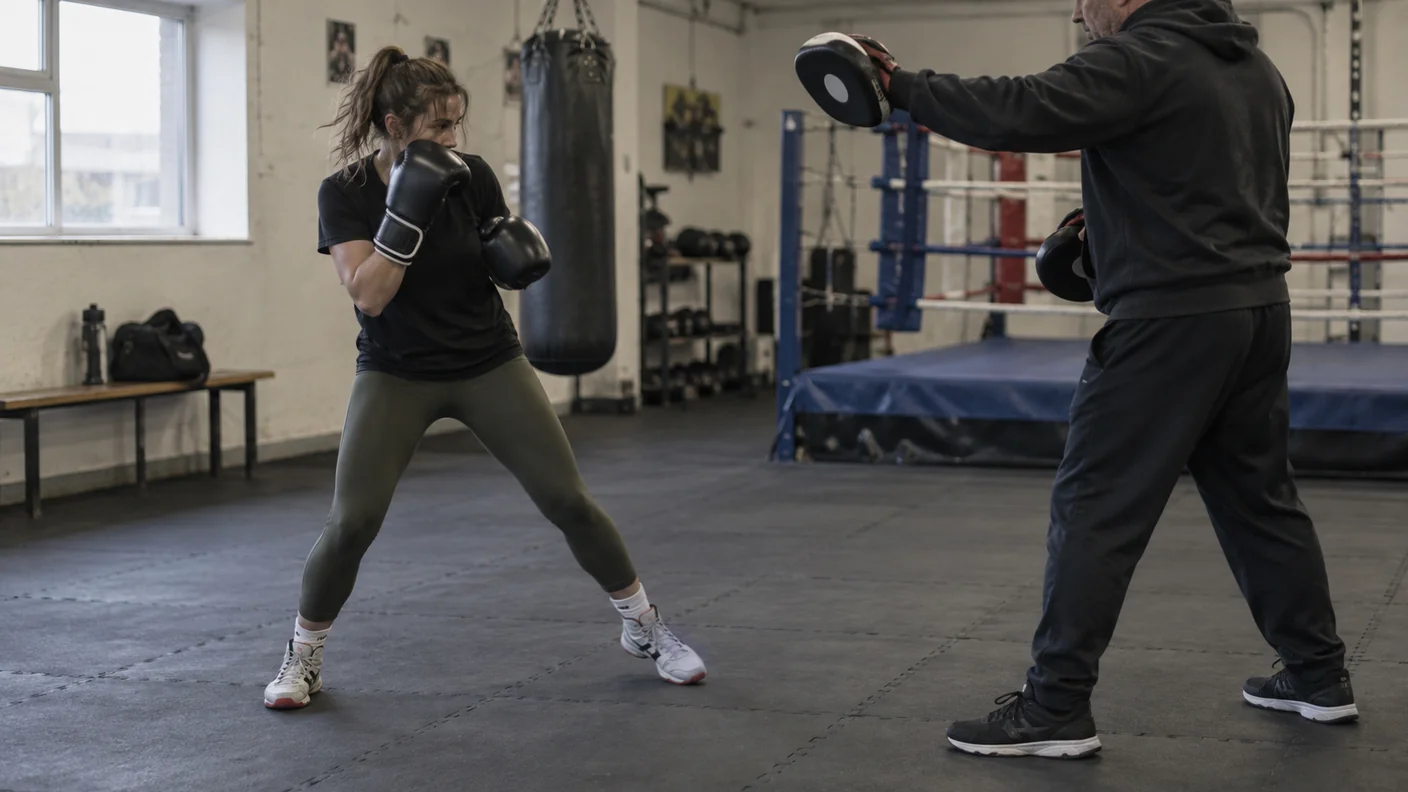
Side-Step Rear Body Cross: A Boxing Counter
Use a small side step to leave a jab line, then place a rear body cross only when your feet and range still support it.
Was this page helpful?
It takes one tap, and it genuinely helps.
Choose your next step
Turn this article into the right action
Some readers are ready to book. Some need the class route first. Pick the route that matches what you actually want.