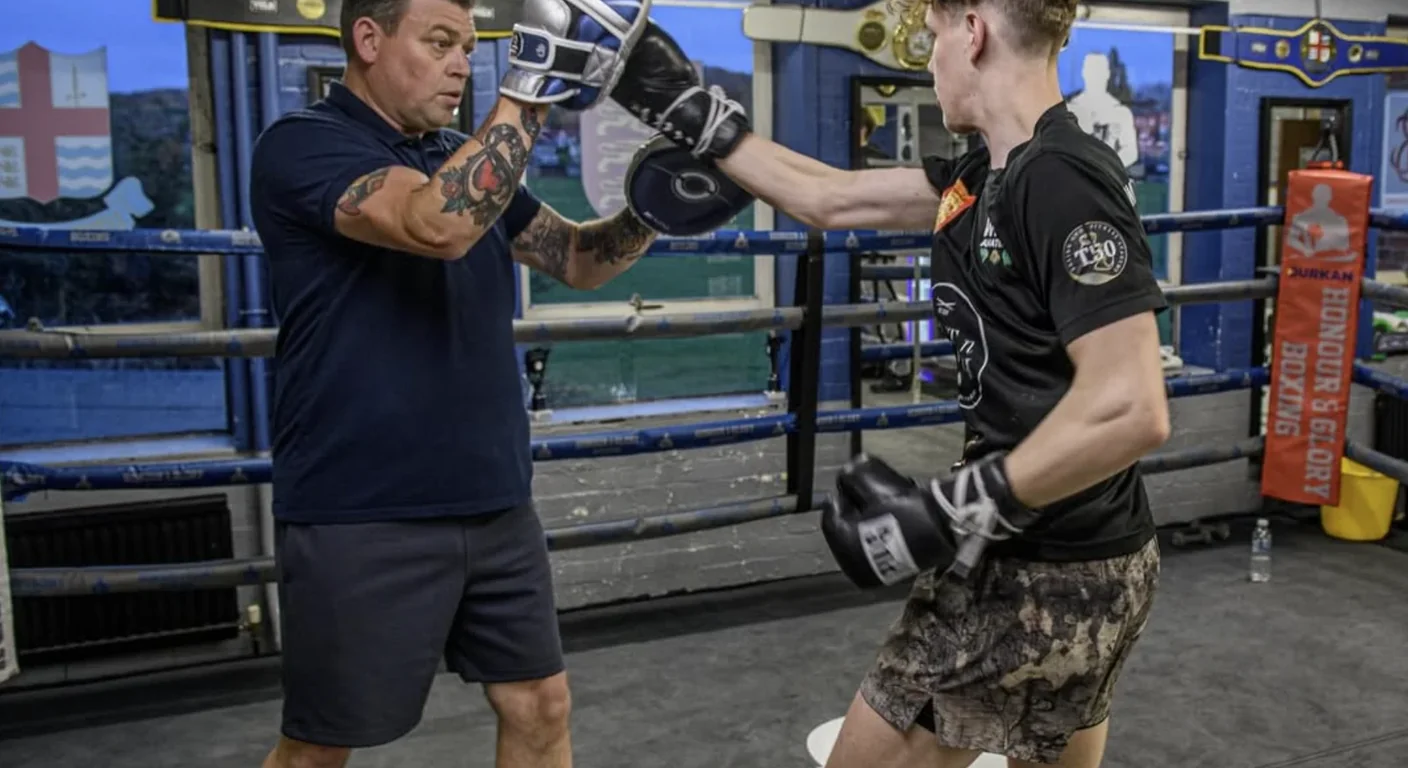
Crossing your feet is one of the quickest ways to make boxing feel harder than it needs to feel.
You can have decent hands, a tidy jab and enough fitness to get through a class, but if the feet keep tangling underneath you, everything arrives late. The punch loses its base. The guard drops because the body is trying to stay upright. The exit disappears. Then the beginner thinks the problem is speed, when the real problem is balance.
Good footwork is not fancy. For most beginners, the first job is much smaller: move without crossing the feet, keep the stance alive and finish every action in a position where you can punch or defend again.
Why crossed feet break the whole exchange
Crossed feet are not only untidy. They remove your ability to react.
When one foot passes across the other, your stance narrows and your weight gets trapped. For a split second, you cannot push cleanly in either direction. You cannot sit into a punch properly. You cannot step away without rebuilding the stance first. If someone touches you with a jab, even lightly, the body has no base to absorb it.
A biomechanical study of boxing punches describes effective punching as a whole-body action, with force and speed depending on connected movement rather than the arm alone. That is why the feet matter so much. If the base is messy, the hand is trying to do a job the rest of the body has abandoned.
The same applies to defence. A crossed-foot boxer often has to choose between standing still and falling out of position. Neither is good. The other boxer does not need to be brilliant. They only need to be present while you are busy saving your balance.
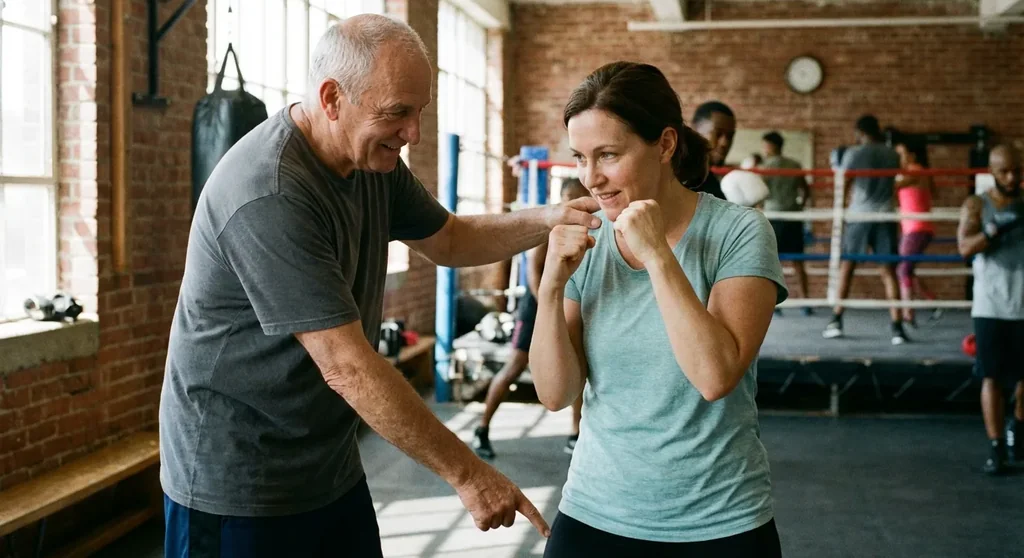
The basic rule: the nearest foot moves first
The simplest rule is still the best one: move the nearest foot first.
If you move forward, the lead foot steps first and the rear foot follows. If you move backward, the rear foot steps first and the lead foot follows. If you move left, the left foot moves first. If you move right, the right foot moves first.
That keeps your stance shape while you travel. You are not marching. You are shifting the whole stance across the floor in small pieces.
Beginners usually cross their feet for one of three reasons:
- They try to move too far in one step.
- They chase the target instead of resetting the range.
- They turn the shoulders before the feet have arrived.
The fix is not to become more athletic. The fix is to shorten the step until the stance survives it. If you cannot move six inches without crossing your feet, four inches is better. If four inches still breaks the stance, make it two. Boxing footwork is built from small honest movements, not heroic leaps.
Forward and back: stop falling into the punch
Forward movement causes a common beginner mistake: the lead foot steps in, the rear foot stays behind, and the punch reaches across the gap.
That may work on a bag for a few rounds because the bag is polite. It does not step away or counter. In partner work, the same habit creates a long, stretched stance where the head drifts past the front knee and the rear hand drops. You are close enough to be hit, but not organised enough to hit well.
Practise forward movement like this:
- Start in your boxing stance with the hands up.
- Step forward a small amount with the lead foot.
- Bring the rear foot up the same amount.
- Freeze and check the stance width.
- Jab only after the feet are under you.
Then reverse it. Rear foot steps back, lead foot follows, hands stay high, eyes stay forward.
The freeze matters. It makes the mistake visible. If your feet are on one line, too close together or stretched miles apart, do not add speed yet. Fix the shape first.
This links directly to setting your feet in boxing. You move so you can arrive, punch and leave. If you never arrive in stance, you are not really moving like a boxer. You are only travelling.
Side steps: do not let the feet meet in the middle
Lateral movement is where crossed feet show up fastest.
A beginner wants to move left, so the right foot drifts across the body. Or they want to move right, so the left foot chases across the line. For one second both feet are close together, the shoulders square up and the boxer looks balanced only because nothing has tested them yet.
The safer version is boring and useful. Step with the direction of travel first, then let the other foot follow just enough to rebuild the stance. The feet should not clap together. They should not swap places. They should keep the same relationship while the body changes position.
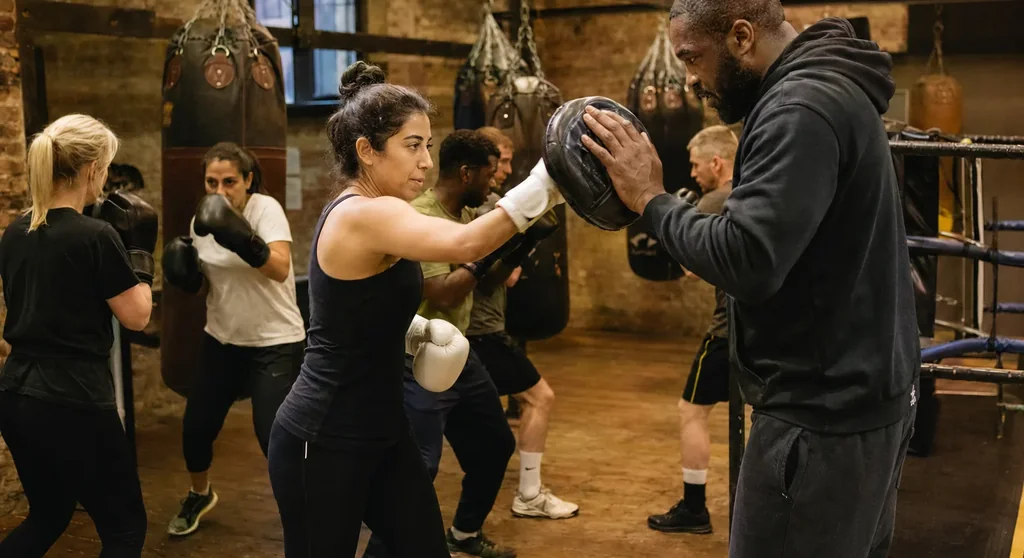
Use this drill:
- Take two small steps left, then stop.
- Take two small steps right, then stop.
- After every stop, throw a light jab-cross.
- If the punch feels cramped or stretched, the feet were wrong.
- If the punch feels available, the stance probably survived.
This is why good coaching slows beginners down. Speed can hide a bad step for a few seconds. It cannot make the step sound. Once pressure arrives, the bad step comes back.
Footwork changes what you see
Crossed feet also affect decision-making.
A boxer who is off balance spends attention on staying upright. They look down, tense the shoulders, hold the breath and lose the shape of the other person in front of them. That makes the round feel faster than it is.
A systematic review on anticipation in combat sports found that more expert combat athletes tend to respond faster and more correctly than non-experts. That does not mean a beginner can read everything on day one. It does mean poor balance has a hidden cost. If your stance is broken, you have less attention left for the opponent.
This is one reason fitness boxing can feel mentally absorbing as well as physical. Harvard Health notes that boxing-style exercise asks people to think, change position and change posture, which can challenge balance and coordination (Harvard Health on fitness boxing). In a real boxing class, that challenge is not abstract. The coach is asking you to move, punch, protect yourself and stay organised at the same time.
Add punches only when the feet can carry them
A lot of beginners make footwork harder by adding long combinations too early.
They can step forward cleanly. They can jab cleanly. But when the call becomes jab-cross-hook, the feet panic. The stance narrows after the cross, the hook pulls the body square and the exit becomes a scramble.
Keep the first progression simple:
Round one: movement only
Move forward, back, left and right for three minutes. No punches. Every ten seconds, freeze and check whether your stance still exists. If you are crossing, reduce the step size.
Round two: movement plus jab
Add one jab after each movement. Step, rebuild stance, jab, recover. Do not jab while the rear foot is still chasing. The jab should come from a position, not from a fall.
Round three: movement plus two punches
Add jab-cross only. If the cross makes the rear foot spin away or the stance collapse, shorten the entry. The goal is not a loud shot. The goal is a punch you can defend after.
Once those rounds are clean, use the same idea with boxing footwork drills at home. Home drills are useful if they stay honest. Moving around the living room with crossed feet only rehearses the same problem somewhere cheaper.
What a coach should correct first
The first correction is stance width. If the boxer finishes too narrow, nothing else matters yet.
The second correction is step size. Most crossed feet come from greed. The boxer wants too much distance from one movement. Make the step smaller and the problem often drops by half.
The third correction is the upper body. If the shoulders turn before the feet, the legs chase the torso. That is when the boxer crosses, stumbles or reaches. Keep the eyes forward, keep the chest controlled and let the feet move the body rather than drag behind it.
The fourth correction is recovery. After every punch, ask: could you defend now? If the answer is no, the footwork failed even if the punch landed.
That is the standard behind more advanced skills such as the pivot hook in boxing. You cannot pivot well if basic movement already crosses the feet. You cannot create angles if every angle destroys your stance.
The standard to chase
Do not aim for flashy feet. Aim for feet that keep giving you choices.
After you move, you should be able to jab. After you jab, you should be able to block. After you block, you should be able to step away. If crossing your feet removes those choices, the movement was too big, too rushed or too disconnected from the rest of your boxing.
Most adults do not need perfect footwork before they start. The NHS recommends adults build regular activity across the week, including aerobic work and strengthening activities (NHS physical activity guidance). A beginner-friendly boxing class can help with that while still teaching the skill properly: stance, rhythm, balance, bags, pads, partner drills and sensible coaching.
If you are in Kidbrooke, Greenwich or nearby, our Recreational Adults boxing classes teach footwork slowly enough for beginners to fix these habits before they become style. You do not need to move like a champion on day one. You just need to stop tripping over your own base.
H&G Team
Writer at Honour & Glory Boxing Club, a community boxing gym in Kidbrooke, South East London.
KEEP READING
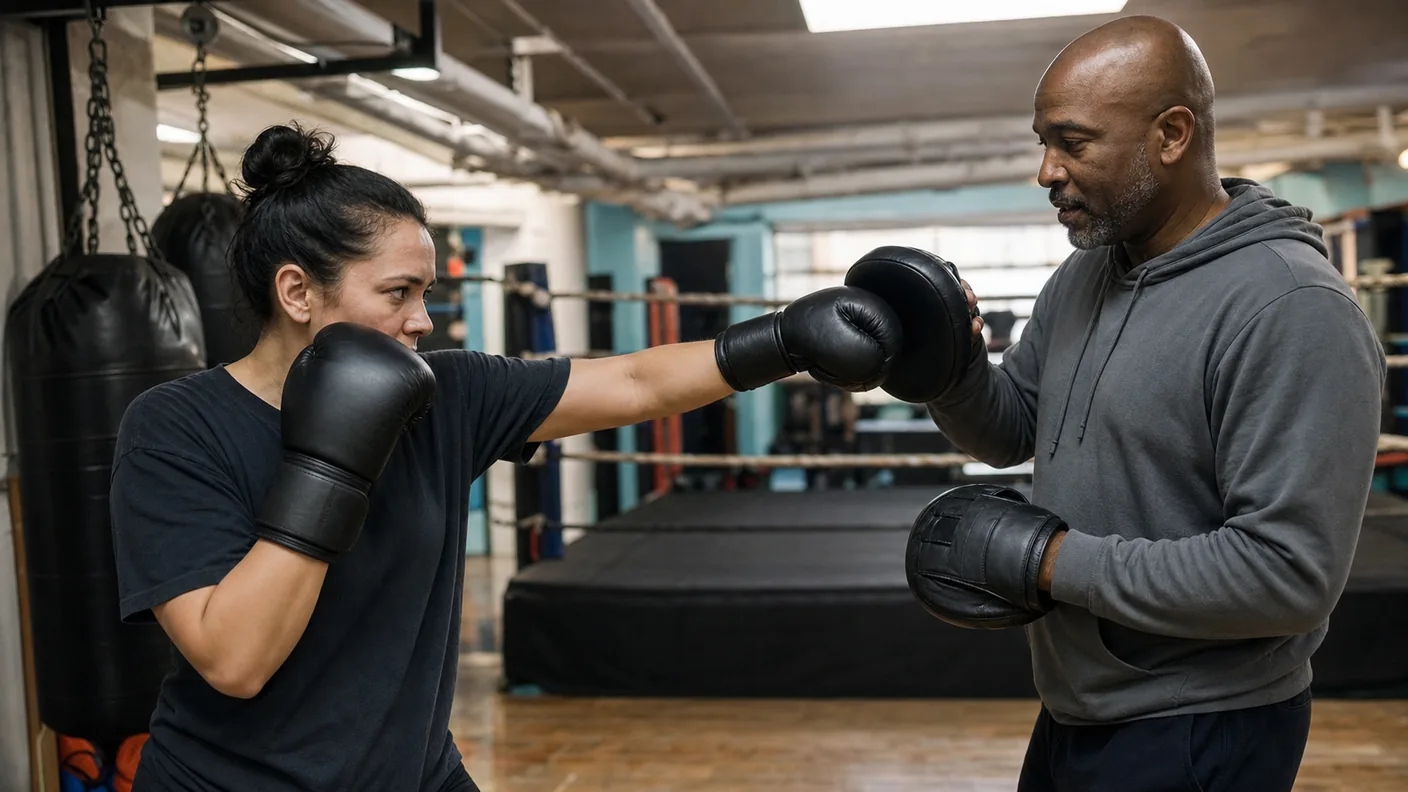
Why You Fall Forward When You Punch
Falling forward after a punch is a common boxing mistake. Learn why it happens and how to keep your balance, guard and next move.
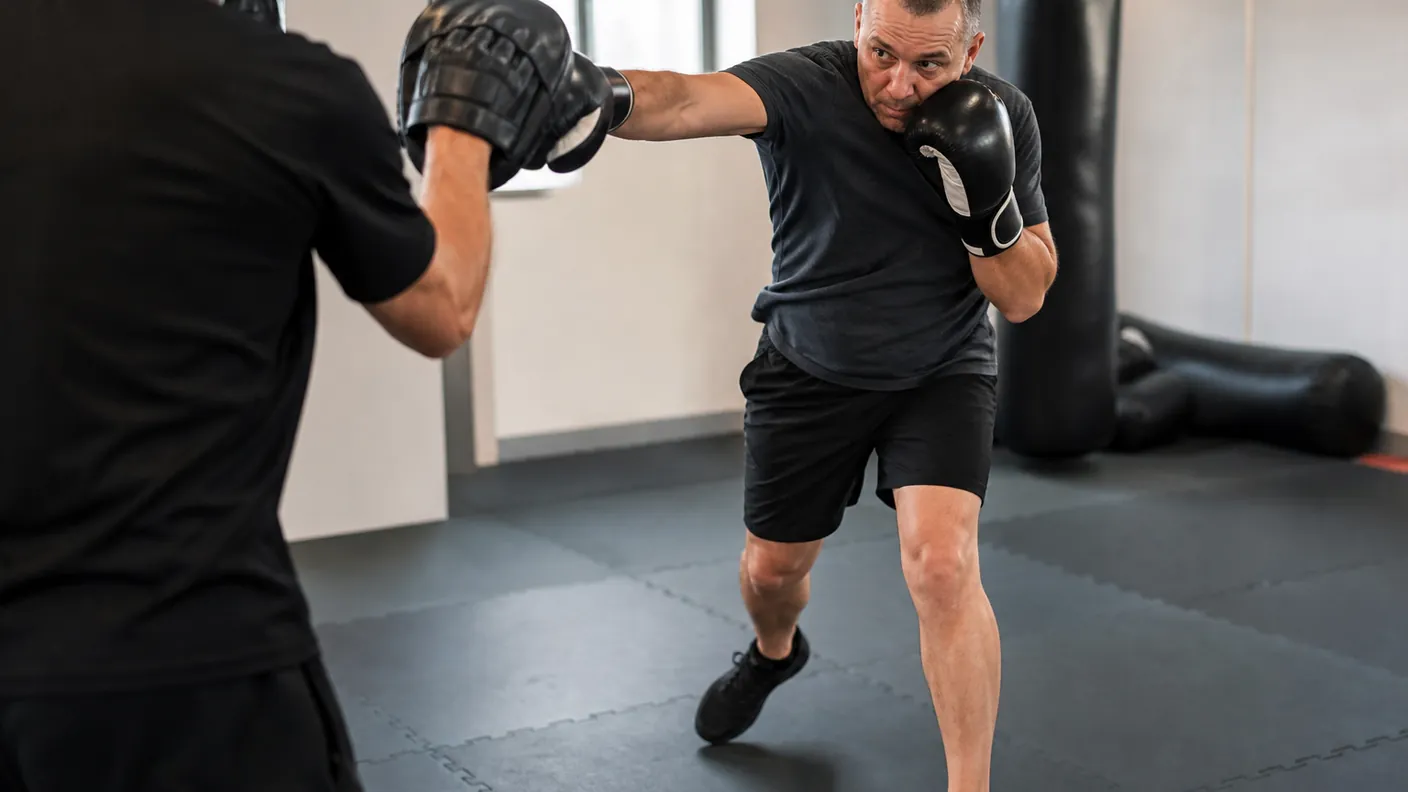
Two-Step Hook Drill for Boxing Balance
Use two small foot adjustments to find range for a compact hook without stretching, spinning or losing your guard.
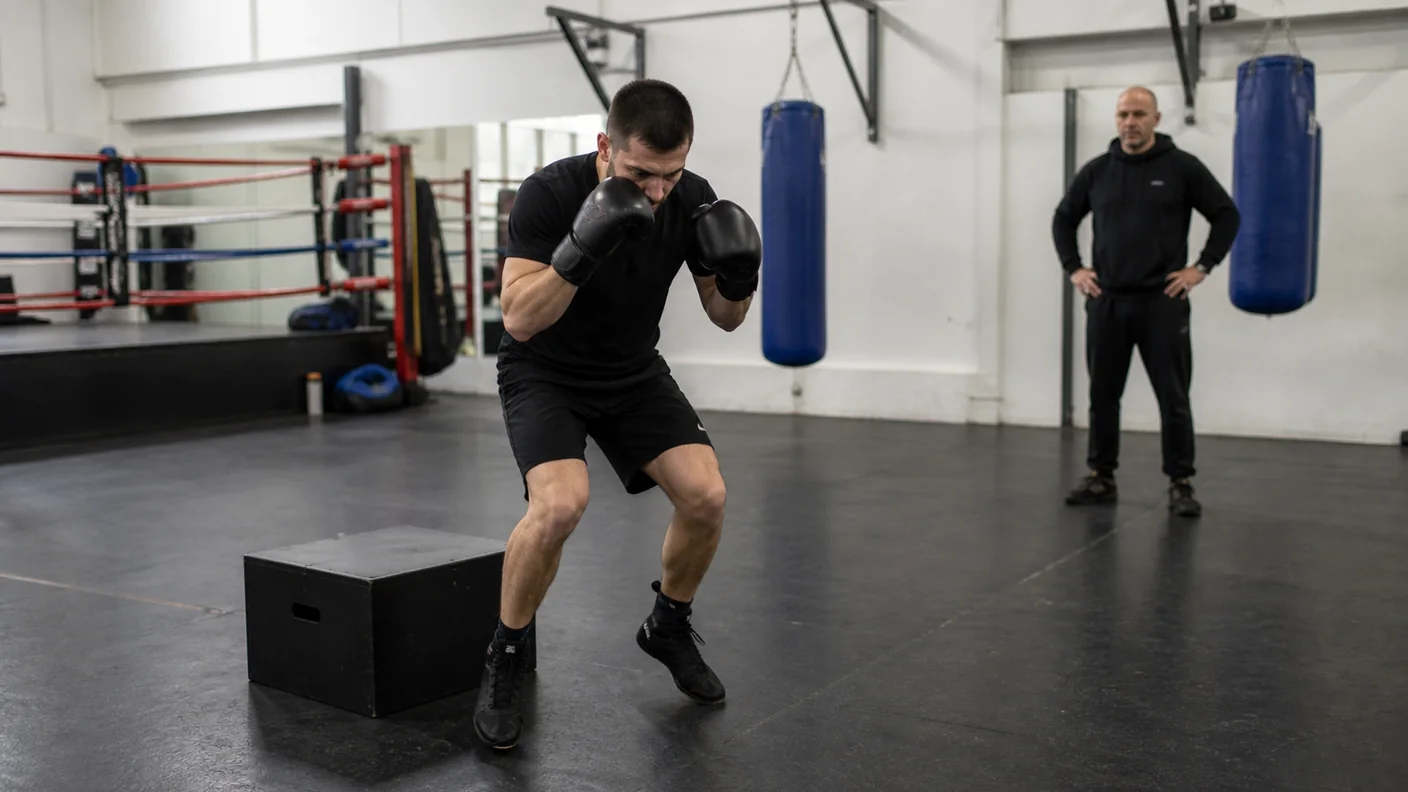
Boxing Drop-Step Drill: Land Ready to Punch
Use a low boxing drop-step drill to practise a settled rear leg, balanced guard and a calmer straight punch after movement.
Was this page helpful?
It takes one tap, and it genuinely helps.
Choose your next step
Turn this article into the right action
Some readers are ready to book. Some need the class route first. Pick the route that matches what you actually want.