Boxing Science research on footwork and performance highlights that foot positioning is the foundation of effective punching - poor footwork limits force generation regardless of upper body strength. FightCamp's footwork drill guide covers the specific movement patterns used at amateur level.
Here is an uncomfortable truth about boxing: your punches are only as good as your footwork. You can have a sledgehammer right hand, but if you cannot move your feet to get in range, it is worthless.
The good news is footwork is one of the easiest things to practice at home. You do not need equipment, you do not need much space, and you can drill it while watching TV if you want. Here are the boxing footwork drills that actually make a difference.
Why Footwork Matters So Much
Watch any high-level boxer and notice their feet. They are constantly moving, adjusting, repositioning. Good footwork lets you:
- Control distance (staying in range to hit without getting hit)
- Generate power (punching power starts from the ground up)
- Create angles (getting off the centre line to land shots)
- Escape danger (moving away from incoming punches)
Muhammad Ali did not float like a butterfly because it looked cool. He did it because superior footwork let him hit people who could not hit him back.
The Basics: Stance and Balance
Before drilling movements, make sure your stance is right. Stand with your feet shoulder-width apart, knees slightly bent, weight on the balls of your feet. Your lead foot points towards your target, your rear foot is at about 45 degrees.
You should feel stable but light. If someone pushed you, you'd shift but not fall over. That is the balance you are looking for.
Drill 1: The Basic Step
This is where everything starts. In boxing, you move by stepping with the lead foot first (when going forward) or the rear foot first (when going backward). Your feet never cross.
How to practice:
- Start in your stance
- Step forward with your lead foot about 6-8 inches
- Immediately bring your rear foot forward the same distance
- Now reverse it: rear foot steps back, lead foot follows
Do this for 3 minutes straight, like a round. Keep your hands up the whole time. Stay bouncy and light on your feet.
Key point: Your feet should slide, not stomp. If your flatmates can hear you, you are doing it wrong.
Drill 2: Lateral Movement
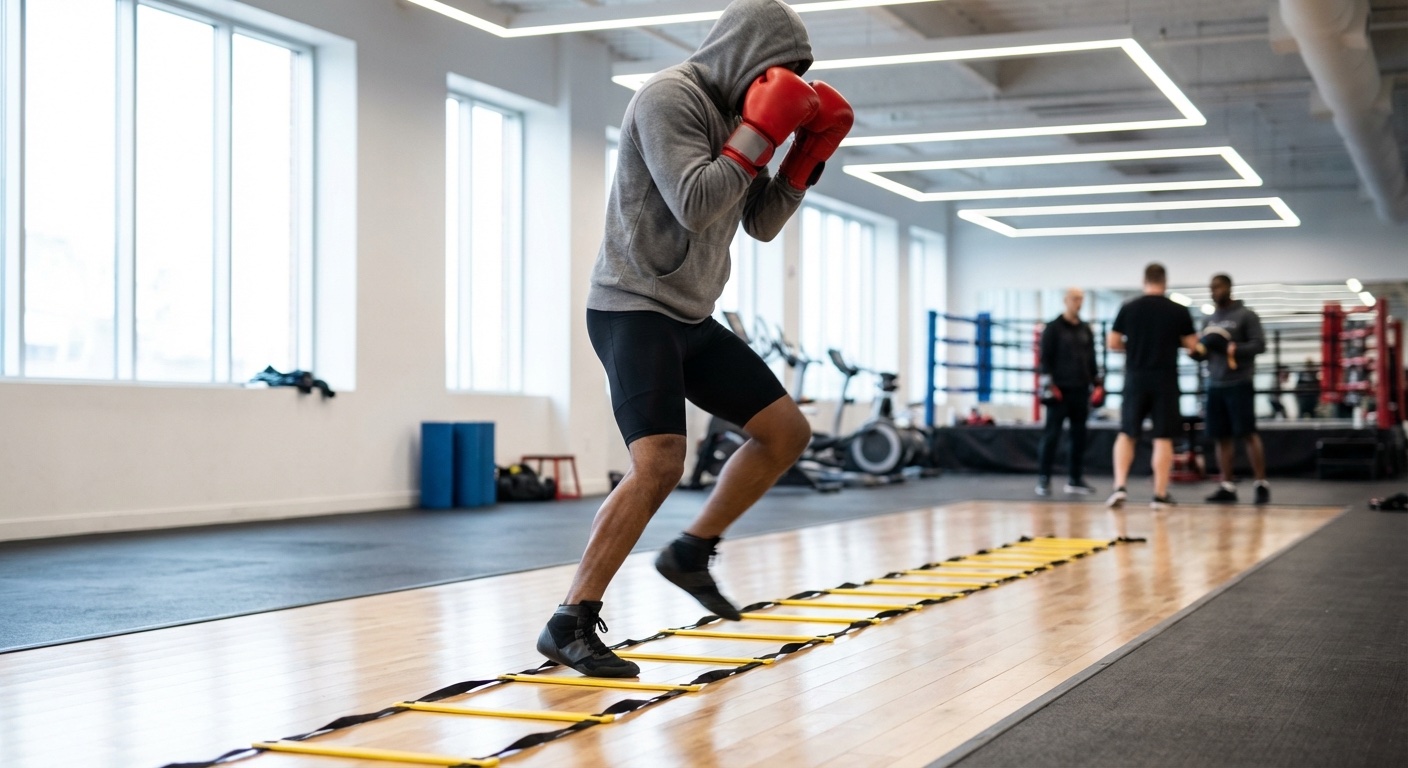
Moving side to side uses the same principle. To go left, step with your left foot first. To go right, step right foot first. Feet never cross.
How to practice:
- Start in your stance
- Step left with your lead foot
- Bring your rear foot over to maintain stance width
- Now go right: rear foot steps, lead foot follows
Mix it up. Go left-left-left, then right-right. Randomise it. The goal is to change direction instantly without losing balance.
Drill 3: The Box Drill
This combines forward, backward, and lateral movement into one pattern.
How to practice:
- Imagine you are standing on the corner of a square
- Step forward to the next corner (2-3 steps)
- Step right to the next corner
- Step backward to the next corner
- Step left back to where you started
Once that is comfortable, reverse the direction. Then start mixing it up - forward, right, forward, left, backward. Keep it random so you are actually thinking about your movement.
Drill 4: Pivot Practice
Pivoting lets you change angle without changing position. It is how you slip past an opponent who is coming straight at you.
How to practice:
- Stand in your stance
- Push off your rear foot while rotating on your lead foot
- You should end up facing about 45 degrees from where you started
- Return to your original position and repeat on the other side
This is easier to understand if you imagine an opponent throwing a straight punch at you. You pivot out of the way, and now you are at their side while they are still facing forward. That is a massive advantage.
Drill 5: Circle Drill
This is what it sounds like - moving in a circle around an imaginary opponent.
How to practice:
- Put something on the floor as a marker (a shoe works fine)
- Move around it in a circle, always keeping your stance facing the marker
- Go one direction for a full minute, then switch
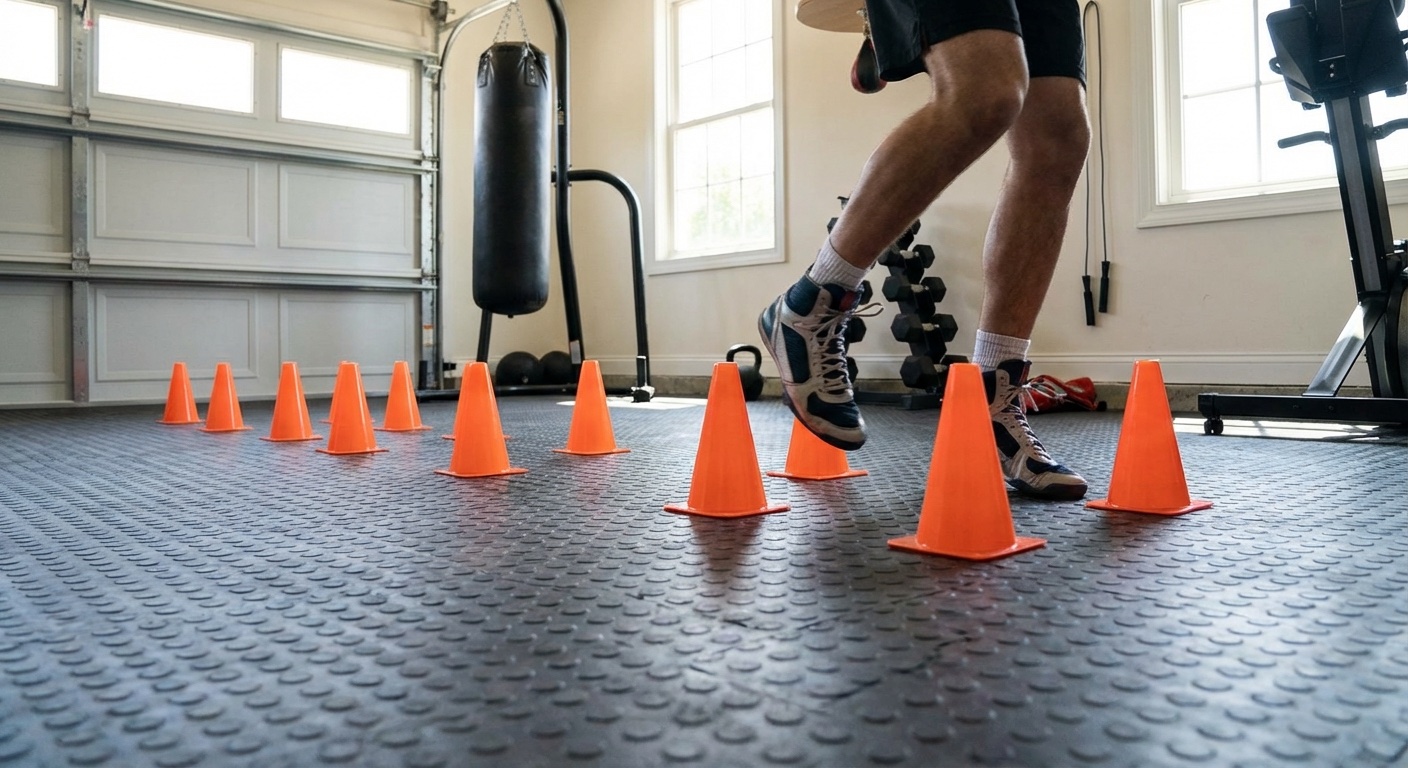
This teaches you to cut angles while maintaining proper position. In a real fight, you are constantly circling, looking for openings. This drill makes that movement automatic.
Drill 6: In-and-Out
This drills the movement pattern you will use constantly - darting in to throw punches, then getting back out of range.
How to practice:
- Start in your stance
- Take 2-3 quick steps forward (lead foot, rear foot, lead foot)
- Immediately bounce back 2-3 steps (rear foot, lead foot, rear foot)
- Throw a jab as you come in, another as you exit
The rhythm should be: in-in-jab-out-out-jab. You are never standing still in the danger zone.
Drill 7: Ladder Drills (No Ladder Needed)
You can do agility ladder drills by just imagining the squares on your floor.
Basic pattern:
- Quick feet in and out of each imaginary square
- High knees through the ladder
- Side-to-side shuffle down the ladder
These build the foot speed and coordination that transfers directly to boxing movement. Two minutes of this will have your calves burning.
Drill 8: Bounce Step
This is about maintaining constant movement - the light bounce that keeps you ready to explode in any direction.
How to practice:
- Stay in your stance and bounce lightly on the balls of your feet
- Keep the same rhythm going for 3 minutes
- While bouncing, throw occasional jabs and move in random directions
This builds the conditioning and rhythm that makes movement feel natural. You should not have to think about bouncing - it should just happen.
Putting It Into Practice
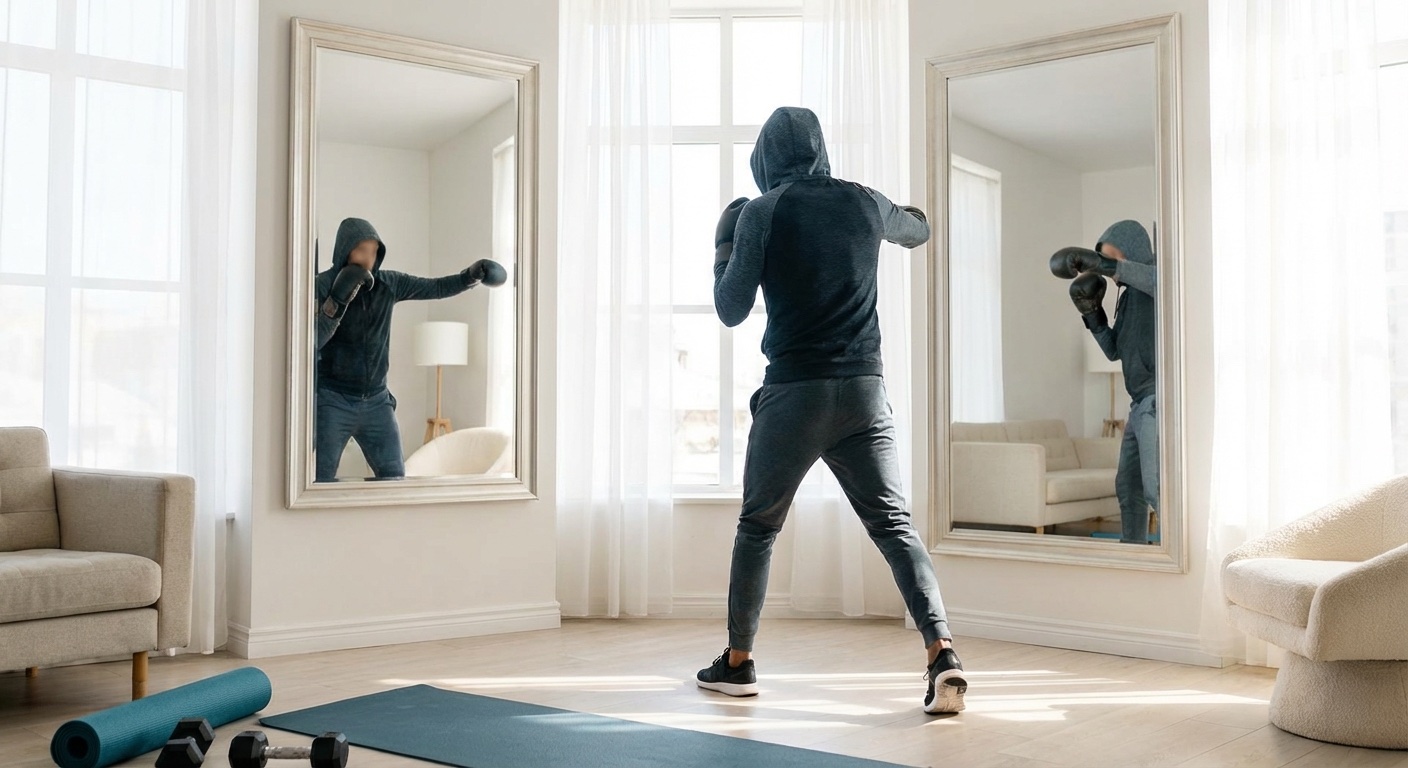
The best way to drill footwork is during shadow boxing. Instead of standing in one place throwing punches, move constantly. Circle one direction, throw a combination, pivot, exit at an angle.
Try this 3-round shadow boxing session:
Round 1: Focus on forward and backward movement. Come in with jabs, exit with straight rights.
Round 2: Focus on lateral movement. Circle left, throw a hook. Circle right, throw a hook.
Round 3: Everything together. Move randomly, change directions, throw combinations, pivot after you punch.
Common Footwork Mistakes
Crossing your feet: This kills your balance. Feet should never cross over each other.
Flat-footed movement: Stay on the balls of your feet. The moment you drop onto your heels, you are slow.
Too wide or too narrow: Both hurt your mobility. Maintain that shoulder-width distance.
Bouncing too high: You want small, quick movements. If you are bouncing like a basketball, you are wasting energy.
Forgetting to move: Many beginners plant their feet and just throw punches. Keep moving, even when hitting the bag.
How Often Should You Practice?
Footwork drills do not require recovery like heavy bag work or sparring. You can do 15-20 minutes every day without any issues. In fact, daily practice is ideal because you are building movement patterns that need to become automatic.
Even 5 minutes of footwork drills while you wait for the kettle to boil adds up over time. Consistency beats intensity here.
Ready to Put It Together?
Drilling at home is great, but nothing beats having a coach watch your movement and correct your habits before they become permanent. At Honour & Glory, footwork is built into everything we do - you will be moving from your very first session.
H&G Team
Writer at Honour & Glory Boxing Club, a community boxing gym in Kidbrooke, South East London.
KEEP READING
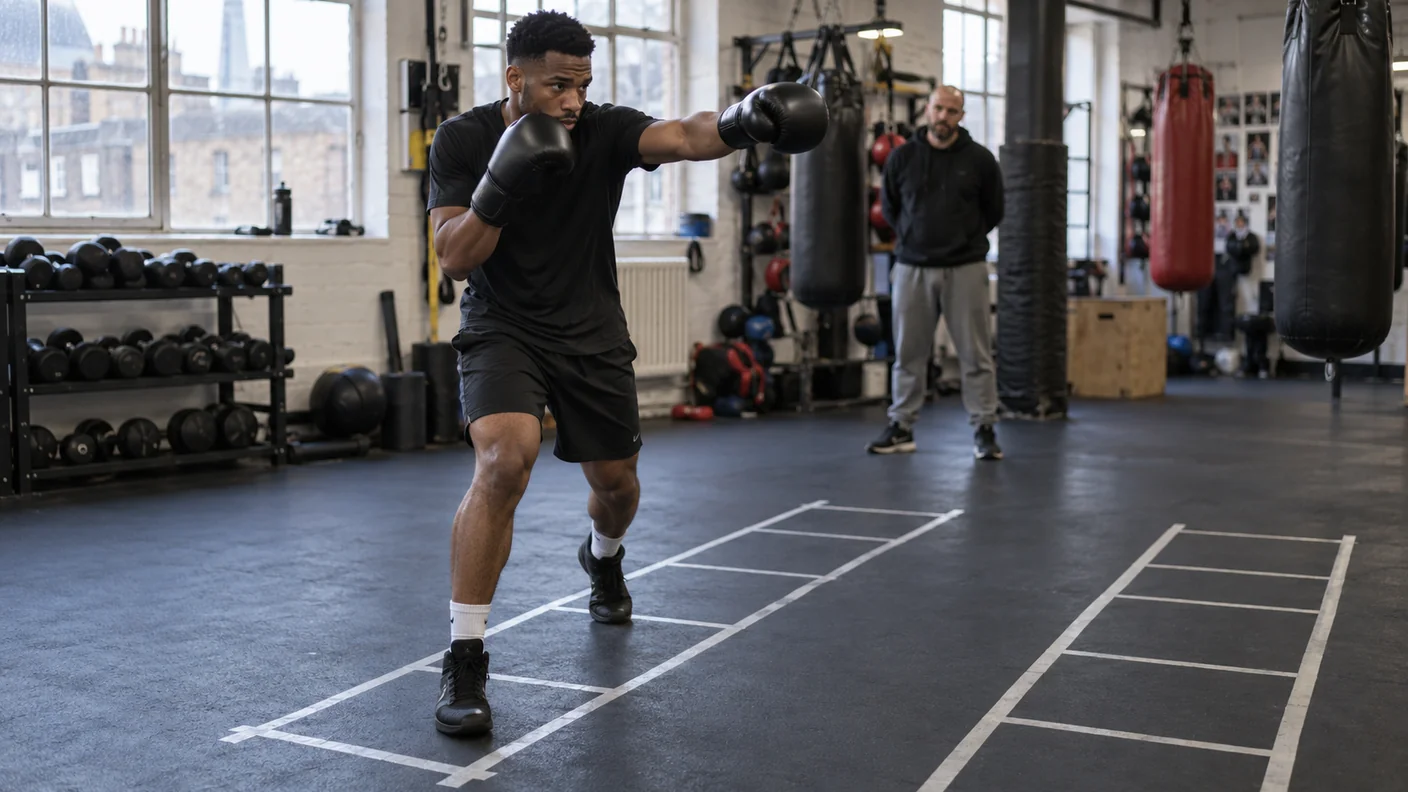
In, Out, Across: Boxing Footwork Drill
A three-direction boxing footwork drill for entering range, leaving safely and changing the line without losing your stance.
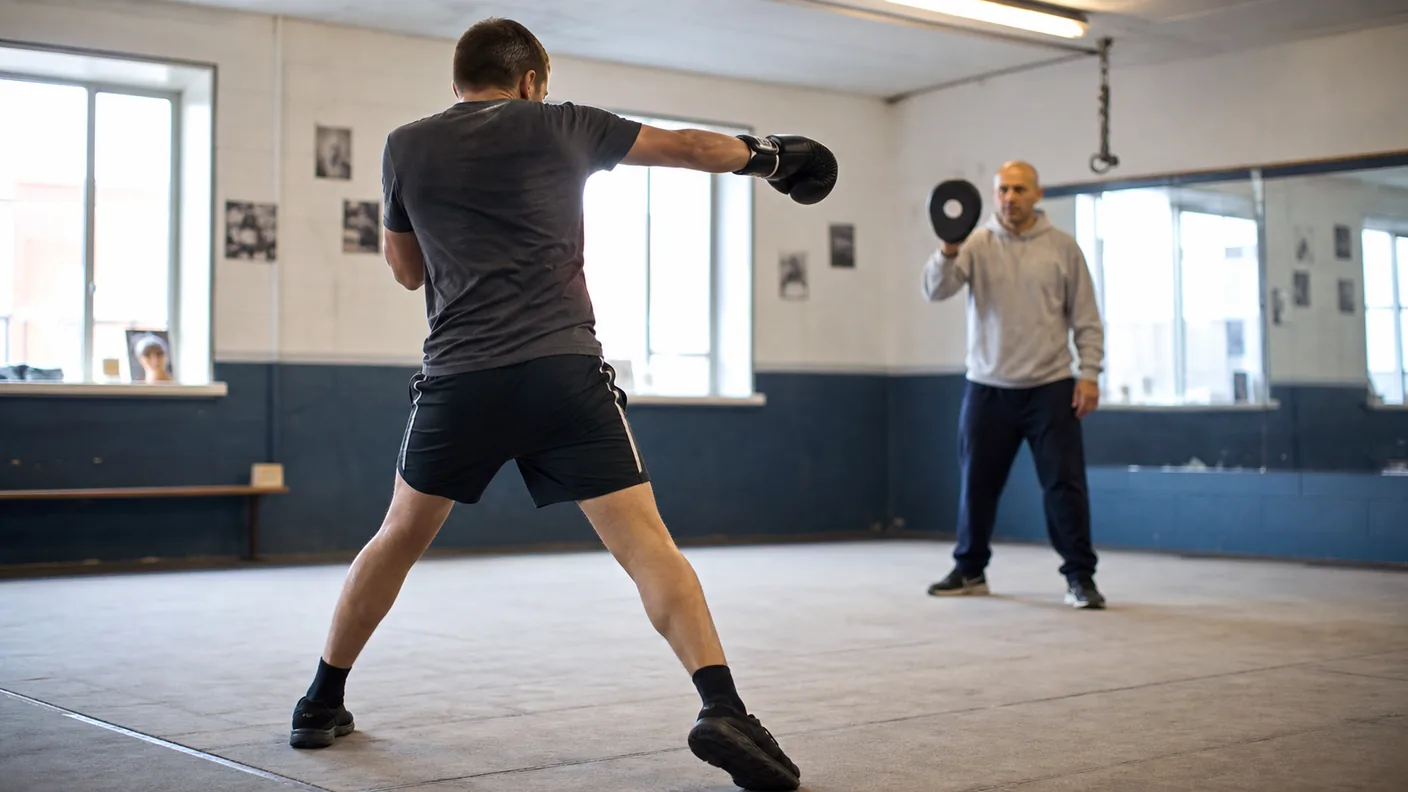
Boxing Pivot Drill: Turn Without Losing Your Stance
Build a useful boxing pivot with three simple drills that keep your feet under you, your guard ready and your next punch available.
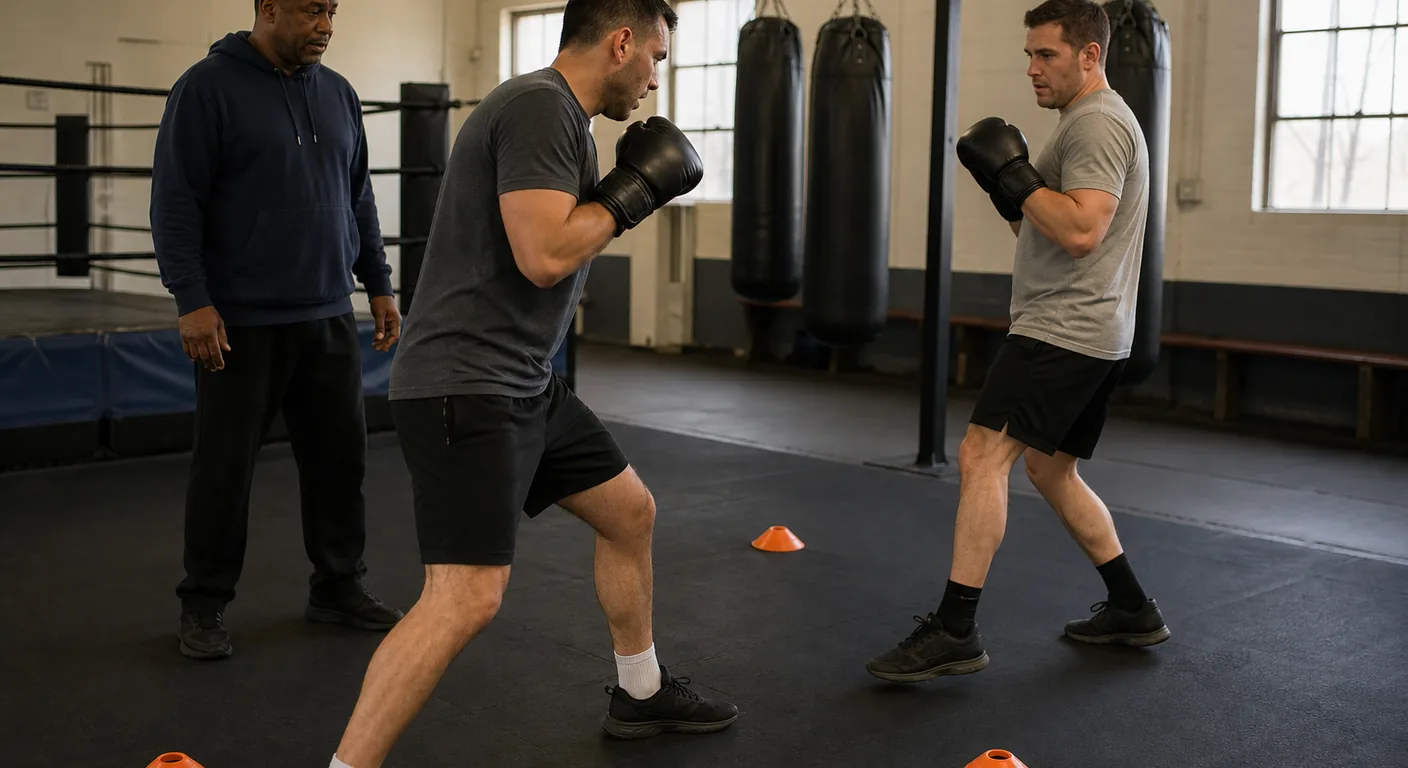
How to Close Distance in Boxing
Learn how to close distance in boxing without rushing, reaching or walking onto counters. A practical footwork guide for beginners.
Was this page helpful?
It takes one tap, and it genuinely helps.
Choose your next step
Turn this article into the right action
Some readers are ready to book. Some need the class route first. Pick the route that matches what you actually want.