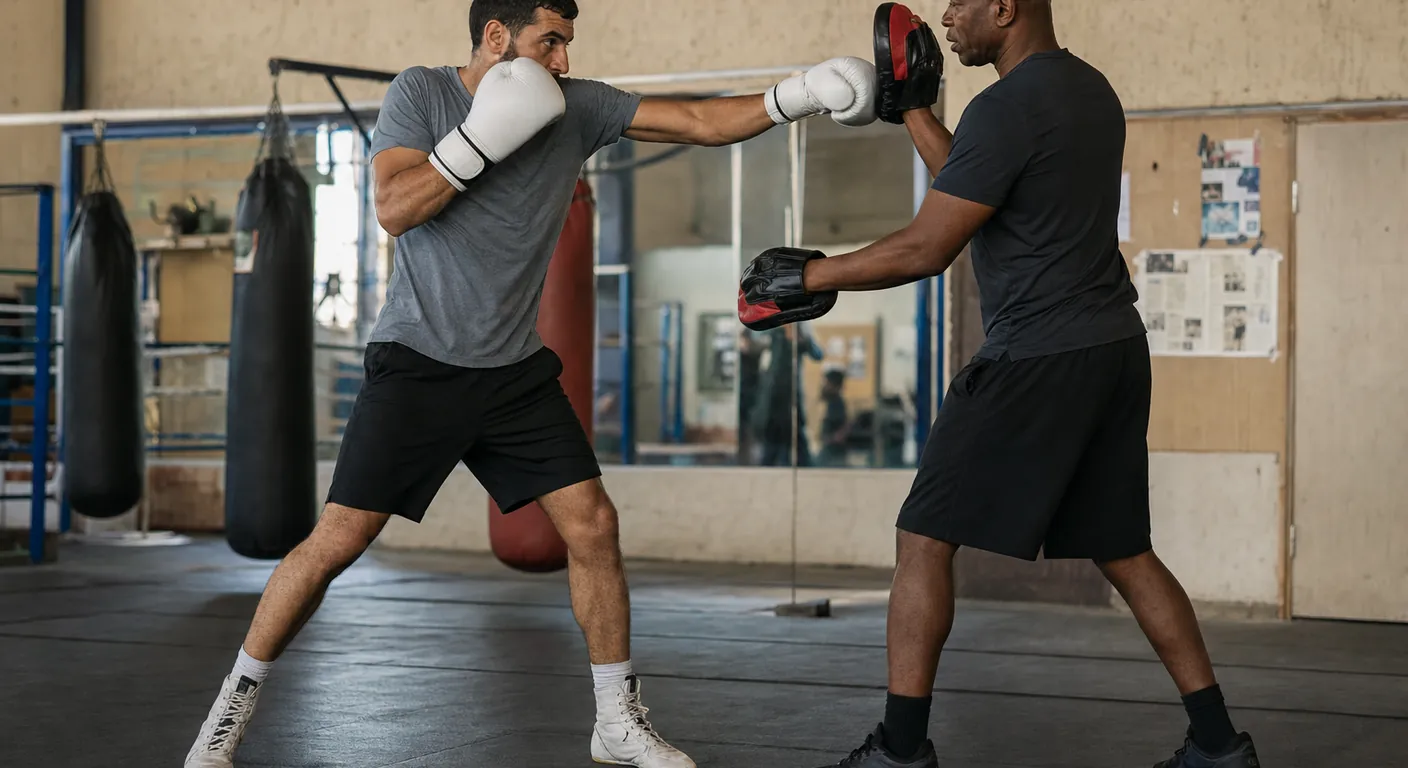
Most beginners move back from pressure in one of two bad ways.
They either retreat in a straight line with both gloves high and no answer coming back, or they try to jump out, change stance, and punch all at once with no plan. The first version gives ground for free. The second version feels brave but usually turns into crossed feet, squared shoulders and a hopeful punch thrown from nowhere.
The better habit is smaller and calmer: if you change your stance or line at close range, attach a punch to the movement. Do not shift first, admire the new position, then decide what to throw. Move and punch as one action.
Watch the short clip below for the basic idea. Then use the notes after it to build the drill safely.
This is not beginner switch-hitting for show. It is a practical pressure answer. The other boxer walks you down, you create a little space, and your punch travels while your feet are already taking you off the line. Done well, it buys distance without giving the other person a free chase.
What a shift counter actually is
A shift counter is a punch thrown while your feet are changing position.
That can mean a small step-back as you punch, a step-through that changes stance, or a move from a normal boxing stance into a more square position for a moment. The important part is not the fancy label. The important part is that the punch and the foot movement belong to each other.
If the opponent is far away, you have time to adjust your stance, reset and think. At close range, that pause is dangerous. The pressure fighter is already in front of you. If you change your feet without giving them something to respect, they simply follow you.
A shift counter says: I am leaving this line, but you cannot walk in for free.
Why backing up without a punch invites pressure
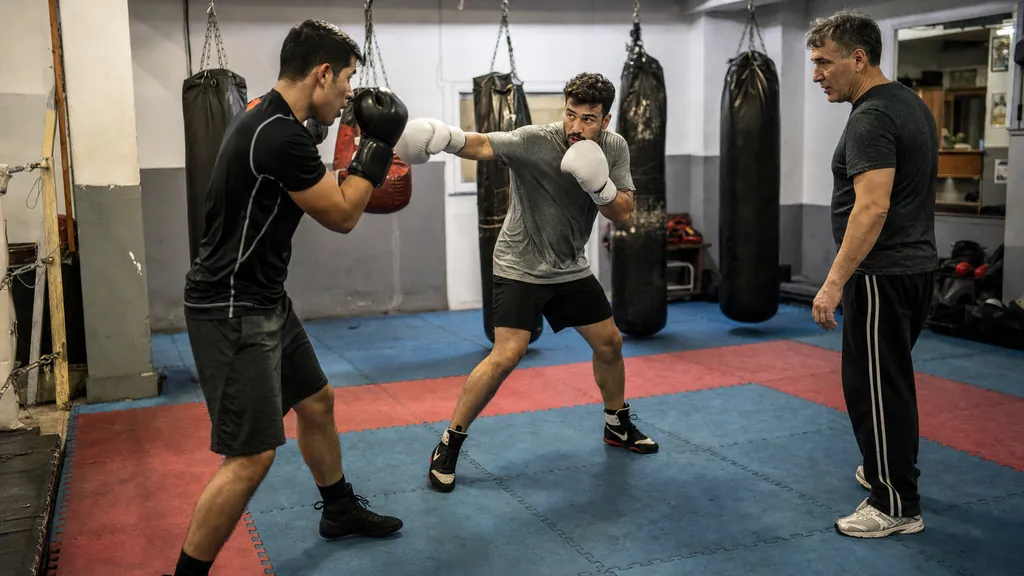
Pressure fighters love quiet retreats.
If you step back with no jab, no hook, no frame and no angle, the other boxer gets a clear message: keep walking. Your retreat becomes their rhythm. They step, you step. They step again, you step again. Soon you are near the ropes, tired, and throwing from a worse position than the one you started in.
That does not mean every backward step needs a hard counter. Sometimes the right answer is to move, cover and reset. But if the same opponent keeps taking ground, you need to interrupt the chase.
The shift counter is one way to do that. The punch does not have to be perfect. It does not have to be loaded like a knockout shot. It needs to arrive in the opponent's path while your feet are moving you somewhere safer.
A 2022 review on anticipation in combat sports found that better combat athletes use early movement cues to make faster decisions. In gym language, pressure is not only physical. It is also a reading contest. If your retreat has the same rhythm every time, the other boxer reads it early. If your exit carries a counter, they have to think before following.
The rule: do not shift naked at close range
The coaching rule is simple: do not shift naked when the other boxer is close enough to hit you.
Naked means the movement has no cover. You are changing stance, changing angle or stepping back without a punch, guard, frame or feint protecting the transition. That is where beginners get caught. Their feet are halfway between positions and their hands are not doing a job.
A safer version has three parts:
- See the pressure early.
- Move your feet with a clear purpose.
- Throw a punch through the movement.
The punch can be a lead hook, a jab, a straight shot to the chest line or a short check hook, depending on stance and distance. The first goal is not to pick a perfect target. The first goal is to put a sensible punch in the lane the opponent wants to walk through.
That sounds blunt because it is. Under pressure, exact aiming often disappears. You are not threading a needle. You are putting leather into the space where the other boxer is arriving, then using the moment to get your feet back underneath you.
The footwork: small shift, not a leap
The worst version of this drill is the big leap.
A boxer feels pressure, panics, jumps too far, lands square, and swings while their feet are still arguing with each other. It may look athletic for one second. It is usually bad boxing.
Keep the shift small. Your feet should move enough to change the line or create distance, but not so much that you cannot defend the next punch. If your head finishes miles past your lead knee, the shift was too big. If your rear foot drags behind and you cannot punch again, the shift was too big. If the coach could push you lightly and knock you over, the shift was too big.
This links directly to setting your feet in boxing. Good movement is not floating for the sake of it. You move so that you can punch, defend or move again. The shift counter is only useful if the next position still lets you box.
Start with the lead hook shift
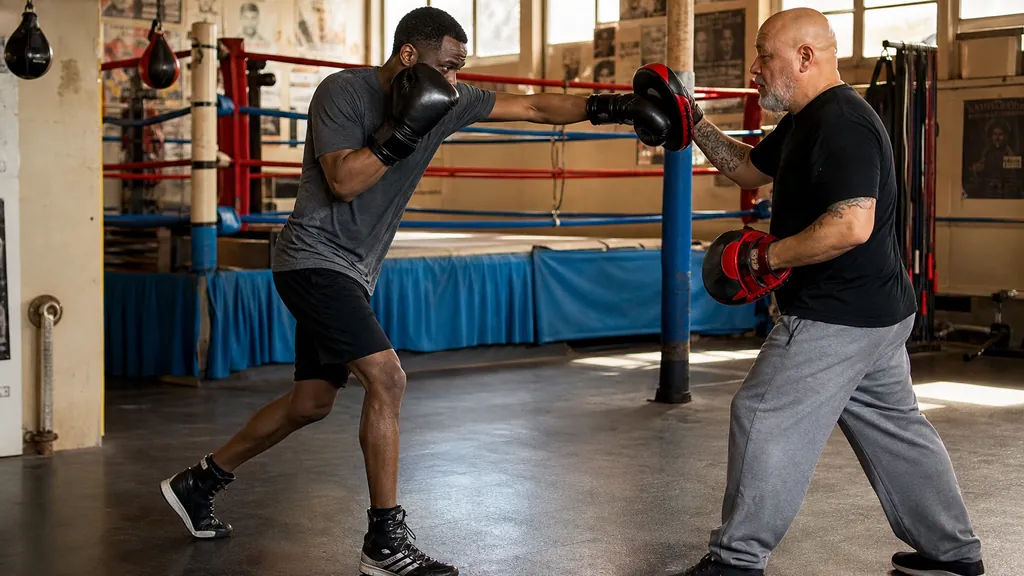
The easiest version for many orthodox boxers is a small step-back lead hook.
Partner A walks forward behind a high guard. Partner B gives a short step back or slight angle step and throws a light lead hook as the front foot moves. The hook should not be a wild swing. It is compact, elbow level sensible, rear hand tight, chin down.
Run it slowly first:
- Partner A takes one controlled step forward.
- Partner B reads the step and moves back a fraction.
- Partner B throws the lead hook during the movement.
- Partner B lands balanced, with the rear hand still home.
- Both partners reset before the next rep.
For southpaws, reverse the idea. The exact punch can change. The principle stays the same: your counter travels while your feet change the line.
Do not chase power here. The first useful version is clean and repeatable. A light hook that keeps your stance is better than a heavy hook that turns your back foot into a mess.
Add the straight punch version
Once the hook version is tidy, add a straighter answer.
This can be a jab while stepping back, a rear hand to the chest line, or a straight punch fired as you step out. The straight version teaches a different lesson. You are not trying to loop around the guard. You are trying to put a line in front of the opponent so they cannot walk through the space untouched.
A biomechanical study of boxing punches found that effective punching depends on linked body segments rather than arm action alone. That matters here because the shift counter falls apart when the hand and feet separate. The punch should feel connected to the floor, not thrown after the legs have already finished moving.
Use a coach or pad holder if possible. The pad should move forward gently so the boxer learns timing, not just a static target. If the pad stays still, the drill becomes ordinary pad work. The whole point is to answer pressure.
Build it in three rounds
Use this as a technical class drill before any hard sparring.
Round 1: footwork only
Partner A steps forward. Partner B shifts back or off-line without punching. Freeze after every rep. Check stance, eyes, guard and balance. If the freeze position is poor, do not add punches yet.
Round 2: one agreed counter
Add the lead hook or straight punch. Keep it at 40 percent power. Partner A does not fire back. They only provide honest forward pressure. The coach watches whether the punch and step happen together.
Round 3: pressure and reset
Partner A steps forward, Partner B shift counters, then both boxers take one second to reset. No open sparring. No ego. The aim is to teach the body that pressure has an answer, not to turn the drill into a scrap.
Common mistakes
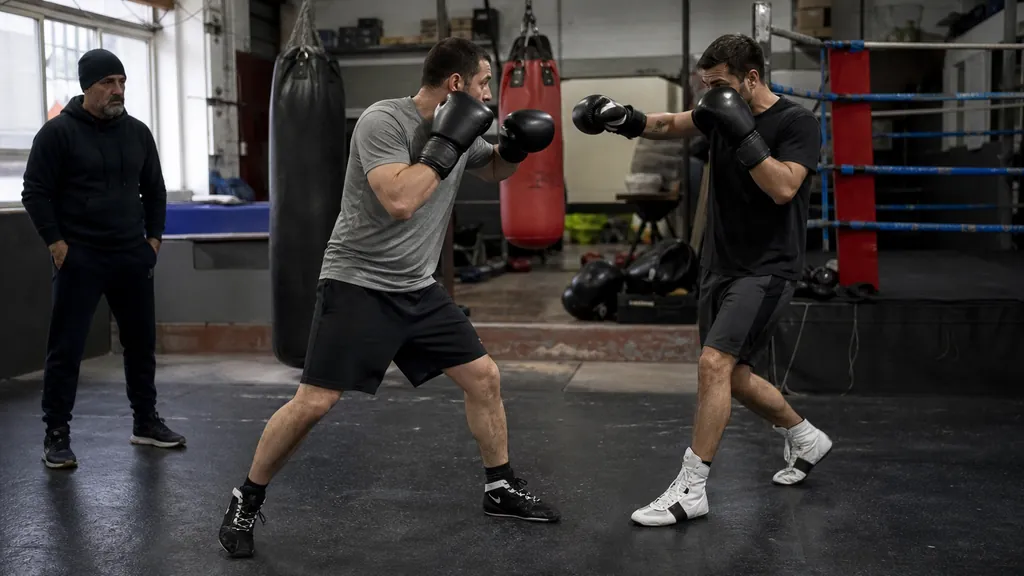
The first mistake is shifting too far. If the movement is huge, the punch becomes late and the guard opens. The answer is not more athleticism. The answer is a smaller step.
The second mistake is punching after the shift instead of during it. If the feet move, then the hand starts, the pressure fighter has already gained ground. Count it as one action: move-punch, not move-then-punch.
The third mistake is aiming too carefully. Under pressure, beginners often freeze because they are trying to land the perfect shot. Do not overthink the target. Put a sensible punch into the opponent's line and recover your shape.
The fourth mistake is dropping the non-punching hand. This is common on the lead hook version. The rear hand must stay close to the cheek. If you hook while giving away the other side of your face, the counter has failed even if the punch lands.
The fifth mistake is copying advanced switch-hitters too early. There is a separate place for switch hitting in boxing, but this drill is not about becoming awkward for the sake of it. It is about surviving pressure with balance.
Where this fits in training
Use the shift counter after basic stance, guard, jab and defensive movement are already in place.
If a beginner cannot step back without crossing their feet, fix that first. If they cannot throw a compact hook without spinning, fix that first. If their guard drops on every punch, fix that first. This drill should sharpen a base, not hide the lack of one.
For recreational boxers, it works well in pad rounds and controlled partner drills. For competitive boxers, it becomes part of the wider counter-punching game: draw pressure, make the opponent step, hit while leaving the line, then reset or build the next attack. Our counter punching basics guide covers that bigger picture.
The coaching cue is simple: do not leave for free.
If someone pressures you, you can move. You can step off. You can change the line. But if you are close enough for them to follow, make the exit cost them attention. Punch as you move, land balanced, and be ready for the next phase.
If you are in Kidbrooke, Greenwich or nearby, our Recreational Adults boxing classes teach this kind of pressure answer through pads, partner drills and controlled rounds. You learn how to move without panicking, and how to counter without turning every drill into a fight.
H&G Team
Writer at Honour & Glory Boxing Club, a community boxing gym in Kidbrooke, South East London.
KEEP READING
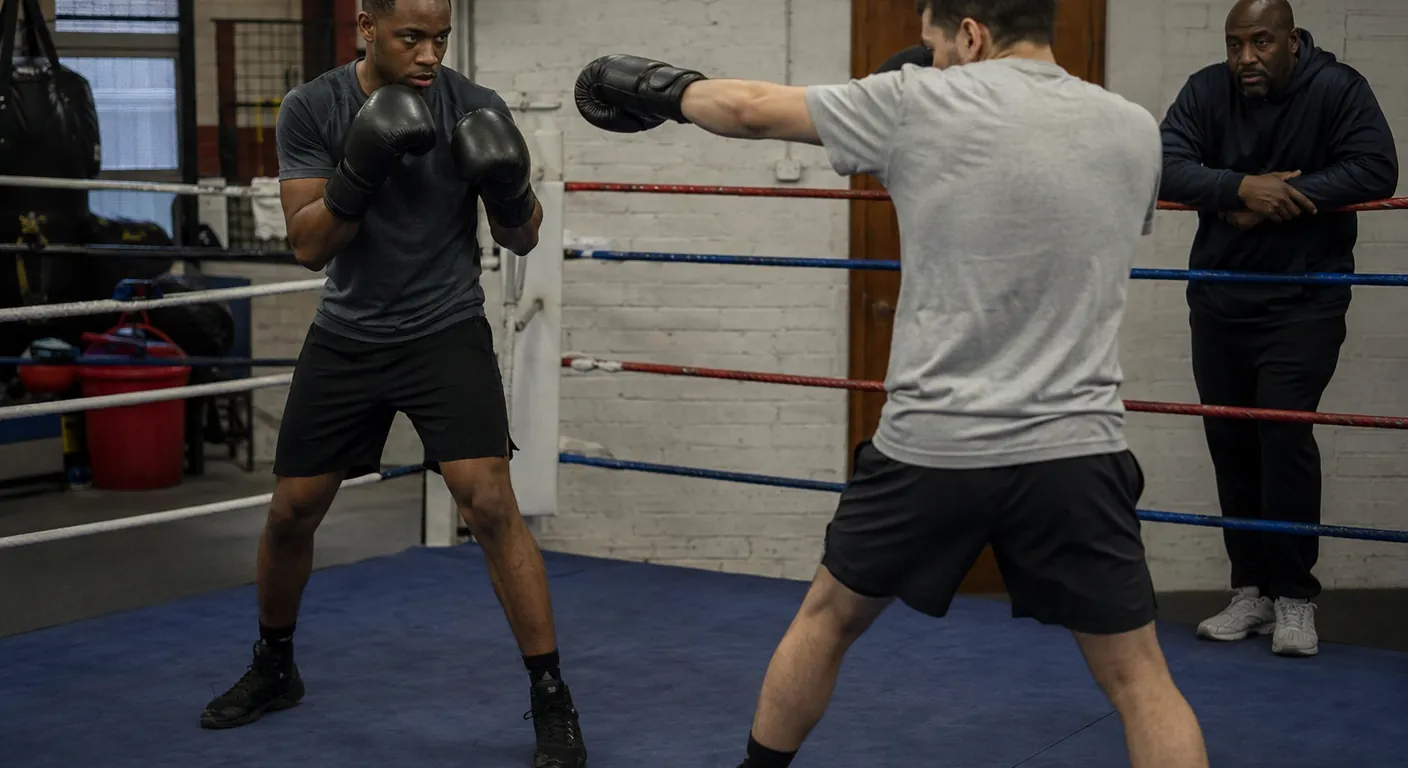
Read Boxing Weight Shifts Before the Punch
Learn to spot small weight shifts in boxing, then choose a calm defence or counter without guessing at every movement.
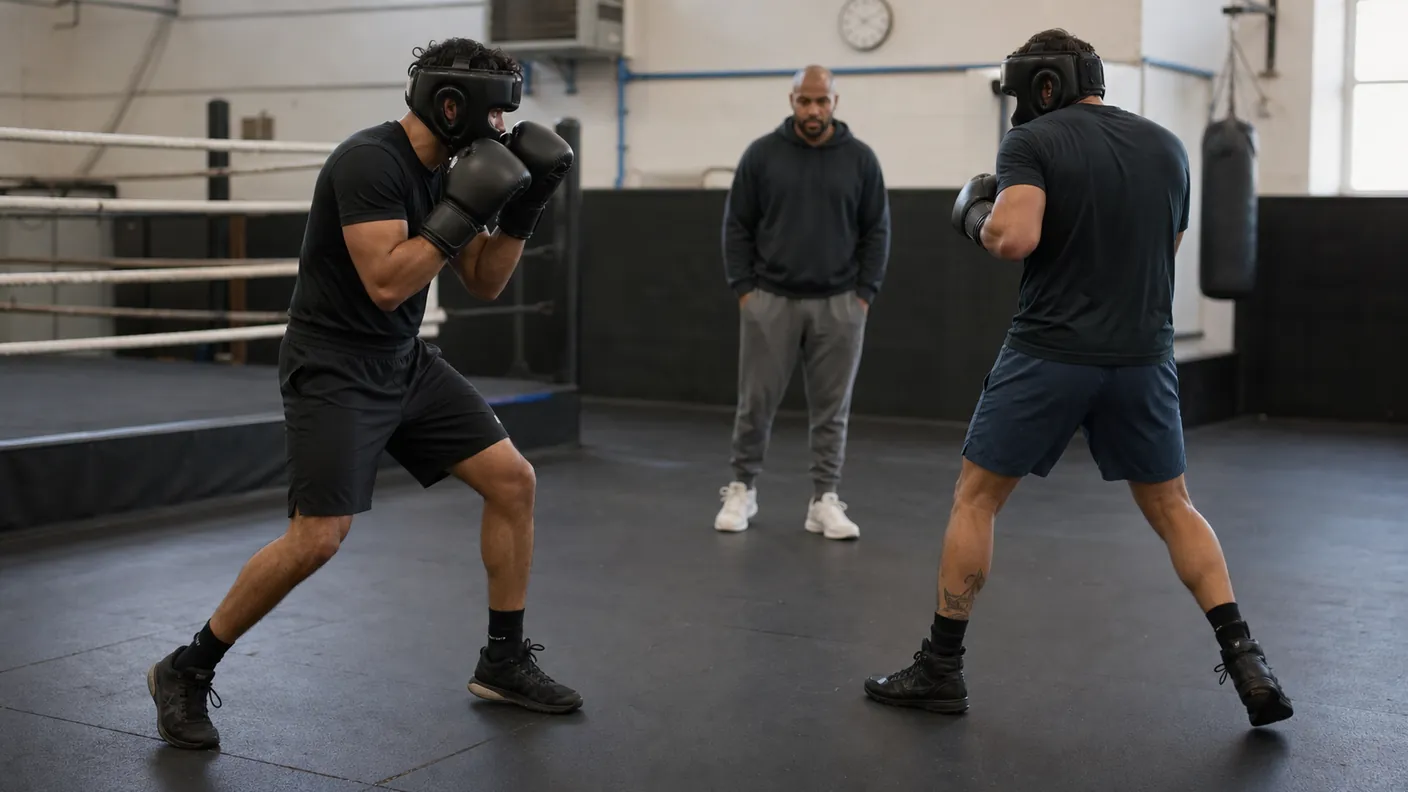
Follow a Retreating Boxer Without Reaching
Learn how to take ground against a boxer who steps back without crossing your feet, leaning for punches or walking into a counter.
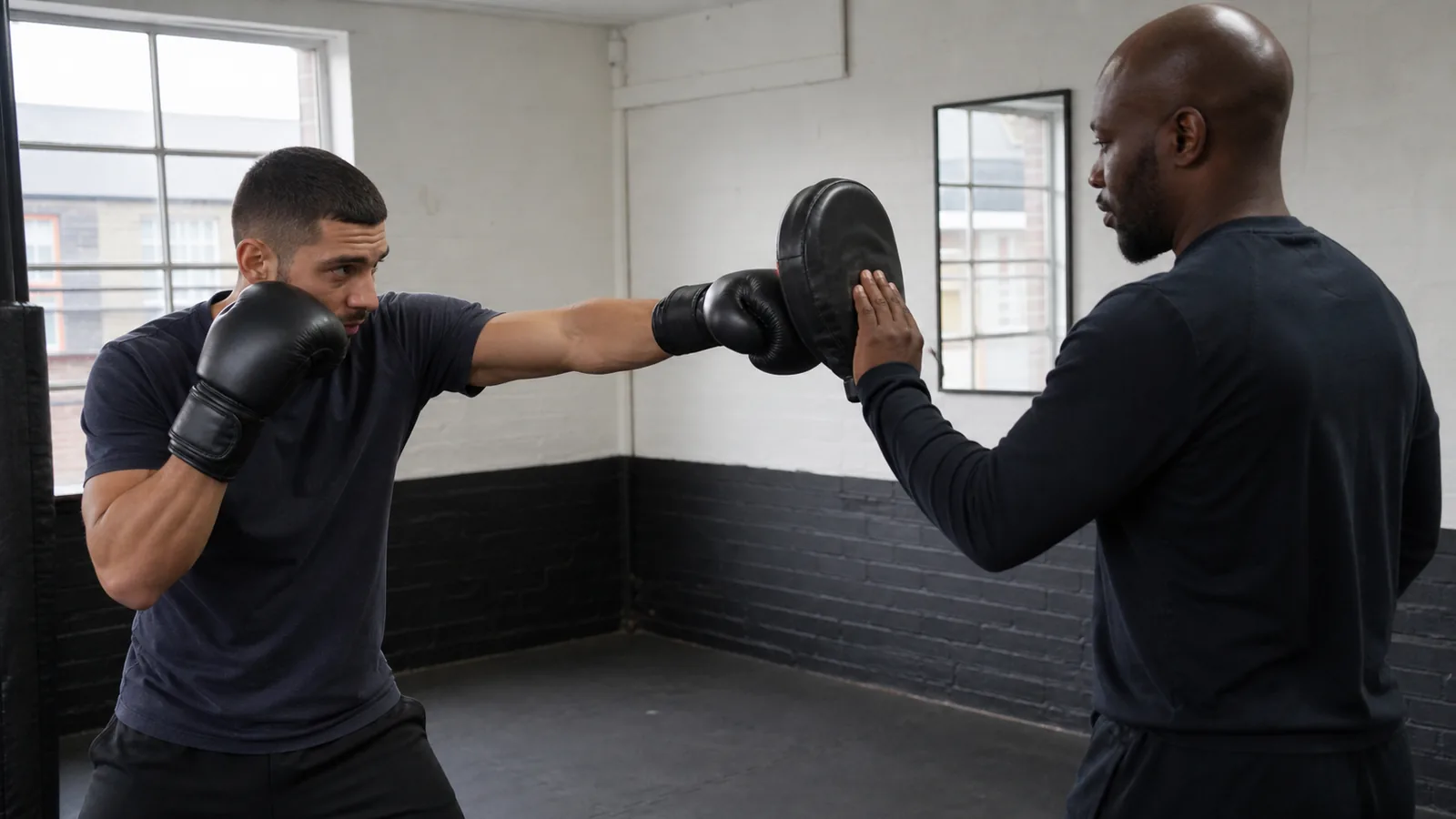
Trigger, Evade, Counter: A Boxing Reaction Drill
Use three small triggers to draw a predictable response, evade without panic, and return only when your stance still supports the counter.
Was this page helpful?
It takes one tap, and it genuinely helps.
Choose your next step
Turn this article into the right action
Some readers are ready to book. Some need the class route first. Pick the route that matches what you actually want.