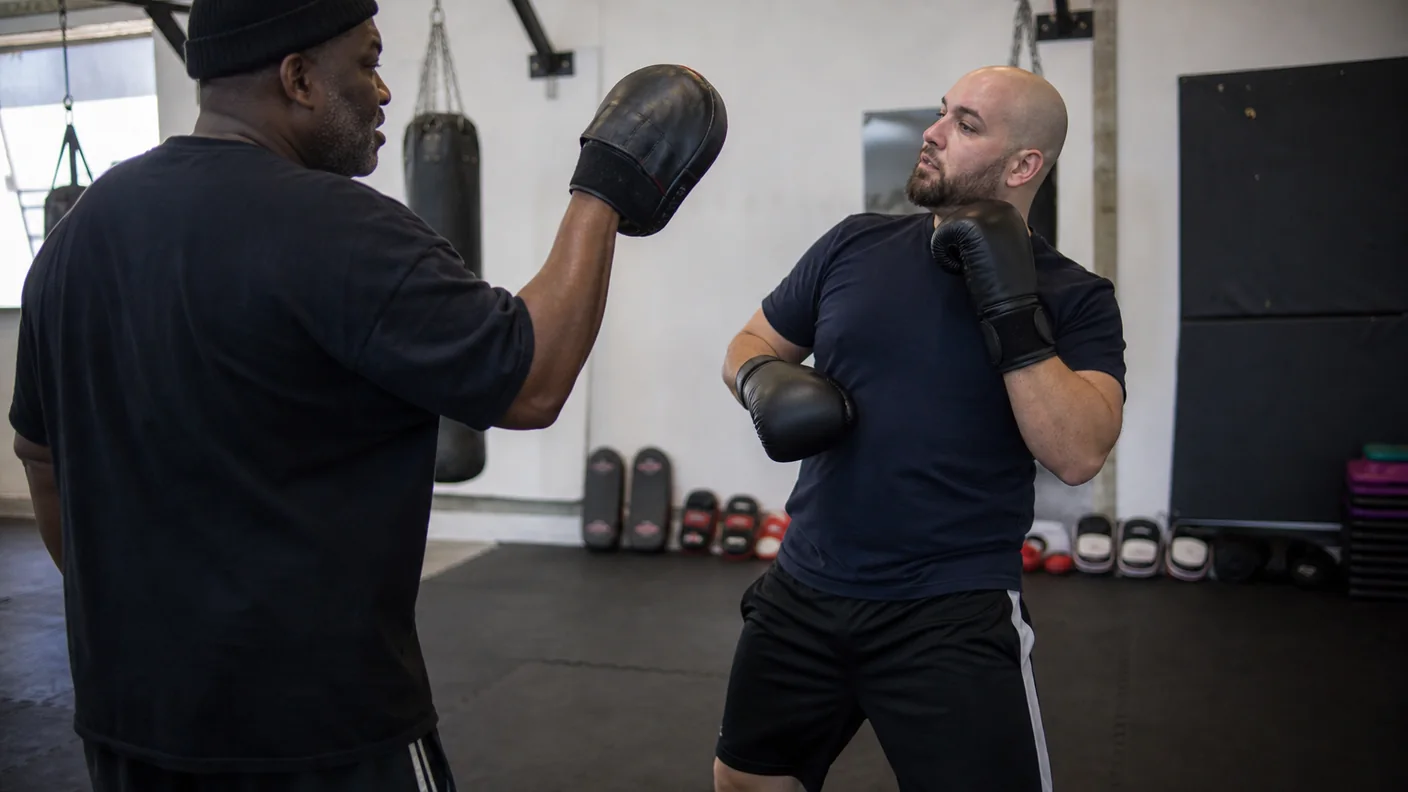
The layback looks simple, which is why beginners get it wrong.
They see a boxer pull the head away from a jab and fire back, then they copy the visible bit. Head goes back. Chest lifts. Feet stay stuck. The punch misses, but so does the counter, because the boxer has leaned themselves out of the fight.
A useful layback is smaller than that. It is a short defensive pull from stance, usually against a straight shot, that leaves you close enough to answer. Watch the clip below for the shape, then use the coaching notes after it to make the movement safe and useful.
A systematic review on anticipation in combat sports explains that fighters read early movement cues before the attack has fully arrived. That is why the layback is a timing skill, not a panic escape. You are reading the shot, taking just enough away, then answering while the other boxer is still extended.
What the layback is for
The layback is a defensive movement that makes a straight punch fall short without giving up the countering range.
It is most useful against a jab or straight right when you are already close enough for the other boxer to reach you. Instead of stepping all the way out, you let the head move back a few inches, load the back leg, keep the eyes on the target and come back with a straight punch, jab, hook or reset.
That last bit matters. The layback is not a pose. It is a bridge between defence and the next action.
A good layback gives you three things:
- their punch misses by a small margin
- your feet stay under you
- your counter is still in range
If any of those three are missing, the movement has probably become too big.
The mistake: leaning from the waist
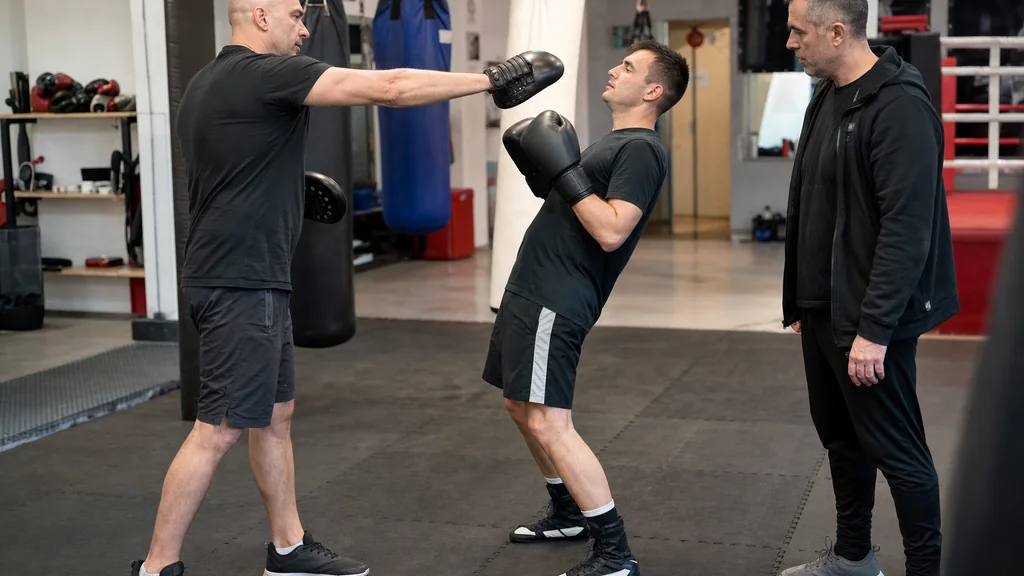
The common mistake is bending backwards from the waist.
That feels natural because it moves the head away quickly. It also creates problems. The chin lifts, the eyes often look up, the front foot gets light and the hands drift away from the face. A good opponent does not need much more than that. They can step again, hook around the lean or simply wait for you to fall back into range with no shape.
Think of the layback as a weight shift, not a back bend.
Your back leg accepts a little more weight. Your knees stay soft. The chest remains organised. The head moves only as far as it needs to move. If you feel your lower back arching, you have gone too far.
The easiest coach cue is blunt: make the punch miss, not the room.
Keep the rear hand home
The layback often fails because both hands become spectators.
When the head moves back, the hands should still belong to the fight. The rear hand stays near the cheek. The lead hand either returns from the jab or sits ready to touch, post, measure or fire again. If both hands drop because you are pleased the punch missed, the next punch will find you.
This is why the layback pairs well with the habits in how to jab without getting jabbed back. Defence and attack overlap. Your head moves, but your guard does not clock off.
A simple check works well on pads:
- Coach shows a light jab with the mitt.
- Boxer lays back just enough for it to miss.
- Coach taps the boxer on the rear glove.
- Boxer fires the straight right or resets.
If the coach cannot find the rear glove near the face, the boxer is not ready to add the counter yet.
Use the back foot without falling onto it
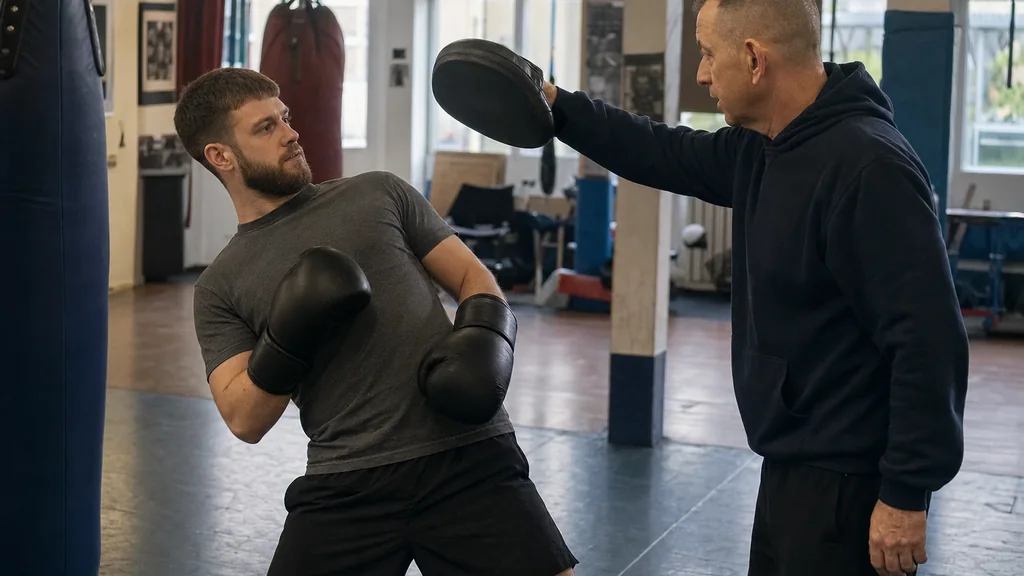
The back foot gives the layback its base.
For an orthodox boxer, the weight moves slightly towards the right leg as the head pulls away. For a southpaw, reverse the idea. Slightly is the important word. You are not sitting into a chair. You are loading the spring enough to bring yourself back.
The rear heel should not fly around. The front foot should not slide miles away. If the stance widens or the front knee locks, the next punch will be late.
Try this without punches first:
- Stand in stance in front of a mirror.
- Let the weight move a little towards the back leg.
- Keep the chin down and eyes forward.
- Return to normal stance without stepping.
- Repeat until the movement is quiet.
Then add the hand. Lay back, return the head to centre, throw the straight right at half speed. If the right hand feels weak, you have probably leaned too far away from your own base.
A 2024 study on amateur boxers and visual ability linked punching performance with reaction time, eye-hand coordination and depth perception. In plain gym terms, the layback depends on seeing the line of the punch and judging the distance early enough that you do not have to panic.
The counter comes from being close enough
The layback is tempting because it feels safe. The counter is what makes it boxing.
If you pull back six inches when three inches would do, you may avoid the shot but lose the answer. You are now too far away, your weight is behind you, and the other boxer gets to recover. That is not a counter-punching position. It is a retreat with extra style.
The best version is boring from the outside. Their jab misses by a finger or two. Your head is still over your feet. Your right hand is already travelling back down the lane they opened.
Start with one counter only:
- lay back from the jab, straight right
- lay back from the jab, jab back
- lay back from the right hand, lead hook
- lay back, reset, step out
Do not collect patterns until the first one works. Our guide to counter punching basics explains the bigger idea: the counter is not random revenge. It is the punch you can throw because the opponent has just given you a line, a rhythm or a mistake.
A three-round layback drill
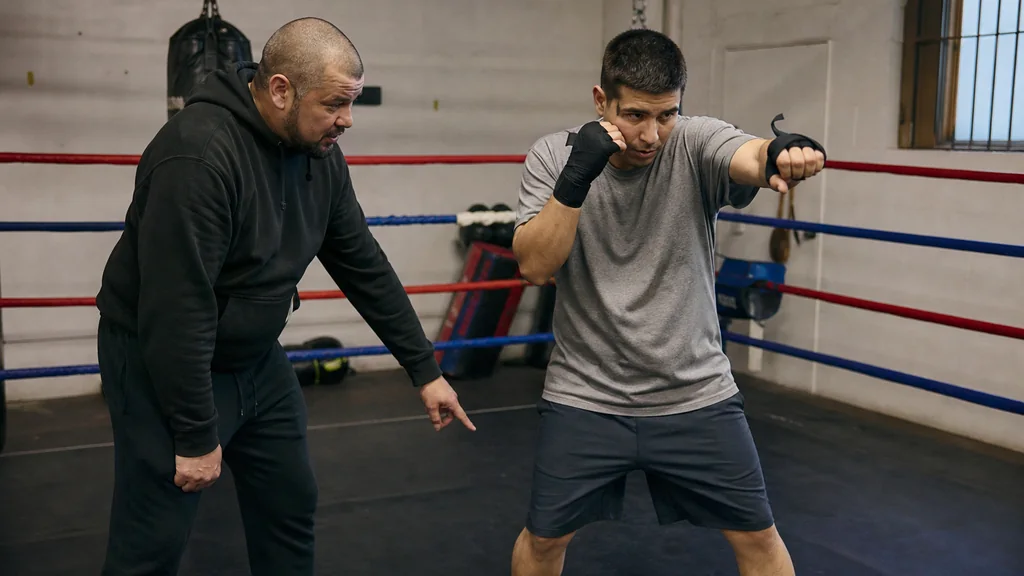
Use this on pads or in controlled partner work. Keep the pace calm. The layback becomes dangerous when beginners try to prove they are hard to hit before they can keep their feet.
Round 1: make the jab miss
The coach or partner shows a light jab to the forehead line. The boxer lays back just enough for the glove or mitt to miss, then freezes. No counter yet.
The freeze tells the truth. If the boxer is off balance, chin high, looking at the ceiling or standing too wide, fix the shape before adding speed.
Round 2: layback and single counter
Now add one answer. Lay back from the jab and throw a straight right at half speed. Recover the right hand straight back to the face.
The coach should not feed quickly. The point is not a highlight-reel pull counter. The point is to feel the timing: see the jab, take the head away, answer while the line is open.
Round 3: choose counter or exit
The coach feeds the jab. Sometimes the boxer counters. Sometimes the boxer lays back and steps out. This stops the movement becoming automatic.
Good boxing is choice under pressure. If every layback is followed by the same right hand, a decent partner will draw it and punish it.
Common layback mistakes
The first mistake is moving too far. If the opponent's punch misses by a foot, you have probably removed your own counter as well.
The second is lifting the chin. The head can move back while the chin stays tucked. If the chin points at the lights, you are giving the next punch a cleaner target.
The third is dropping the rear hand. The layback is not a substitute for a guard. It works with the guard.
The fourth is using it against hooks. A layback can help against straight punches, but leaning away from a hook is a bad habit for most beginners. Learn to block, roll or step for hooks. Use the layback mainly against straight lines until a coach tells you otherwise.
The fifth is doing it only in shadow boxing. Shadow boxing teaches the shape. Pads and partner drills teach the distance. You need both.
When not to use it
Do not use the layback when your heels are already near the ropes, when your stance is square, when you are tired enough that your legs are stiff, or when the other boxer is throwing in bunches.
A single straight shot gives you time to pull and answer. A fast combination gives you less time. If you lay back from the first punch and stay there, the second or third punch can catch you while your weight is trapped.
That is why the three phases of a boxing exchange matter. You are not defending one punch in isolation. You are asking what happens next. If the next thing is another straight shot, your counter may fit. If the next thing is a hook or pressure step, you may need to block, pivot or exit instead.
The coaching cue
Take away an inch, not the whole postcode.
That is the layback. Small pull. Feet under you. Rear hand home. Eyes open. Counter only if the range is still there.
If you are in Kidbrooke, Greenwich or nearby, our Recreational Adults boxing classes teach defensive movement through pads, partner drills and controlled rounds. You learn when to pull, when to block and when to move your feet instead of copying a highlight and hoping it works.
H&G Team
Writer at Honour & Glory Boxing Club, a community boxing gym in Kidbrooke, South East London.
KEEP READING
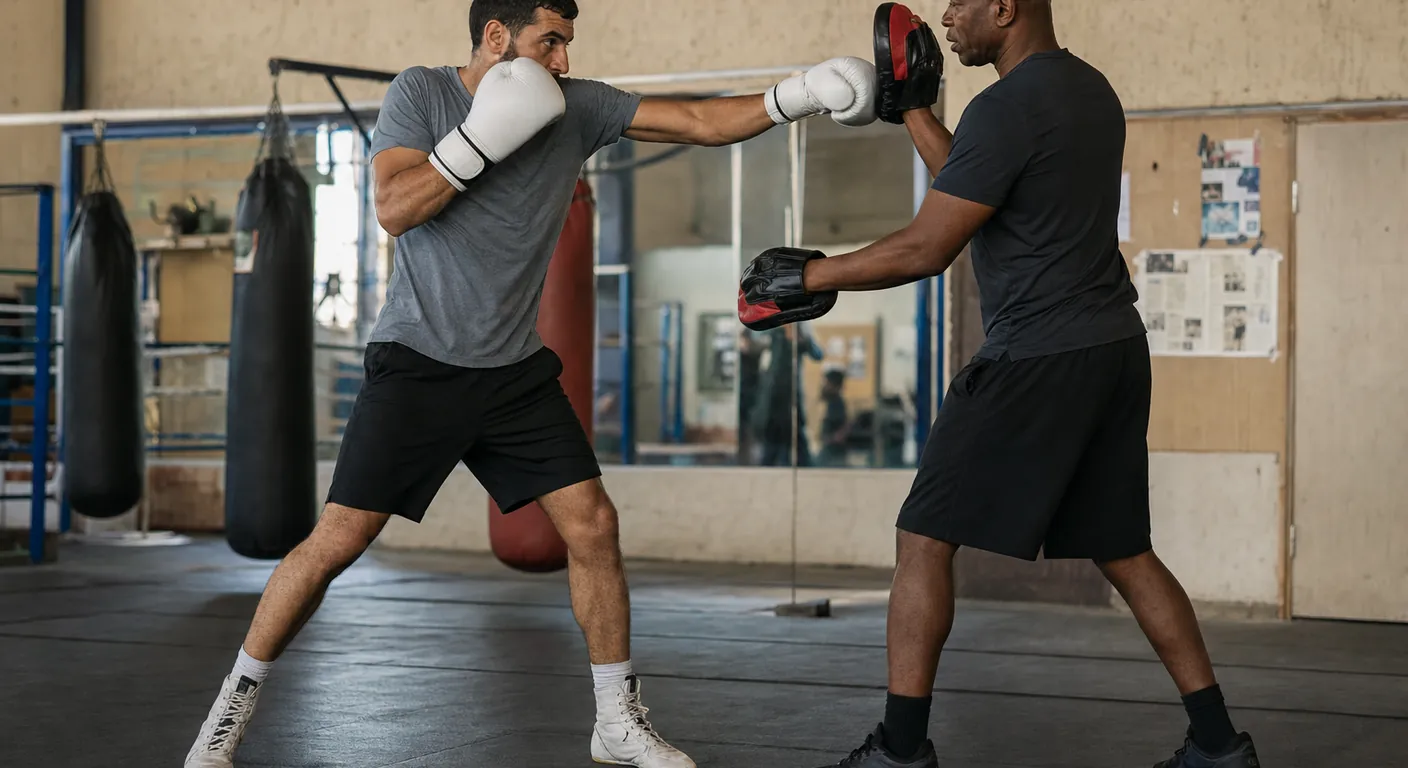
Shift Counter in Boxing: Punch as You Move
Learn the shift counter: a simple way to step off pressure and punch while you change angle, instead of backing up in panic.
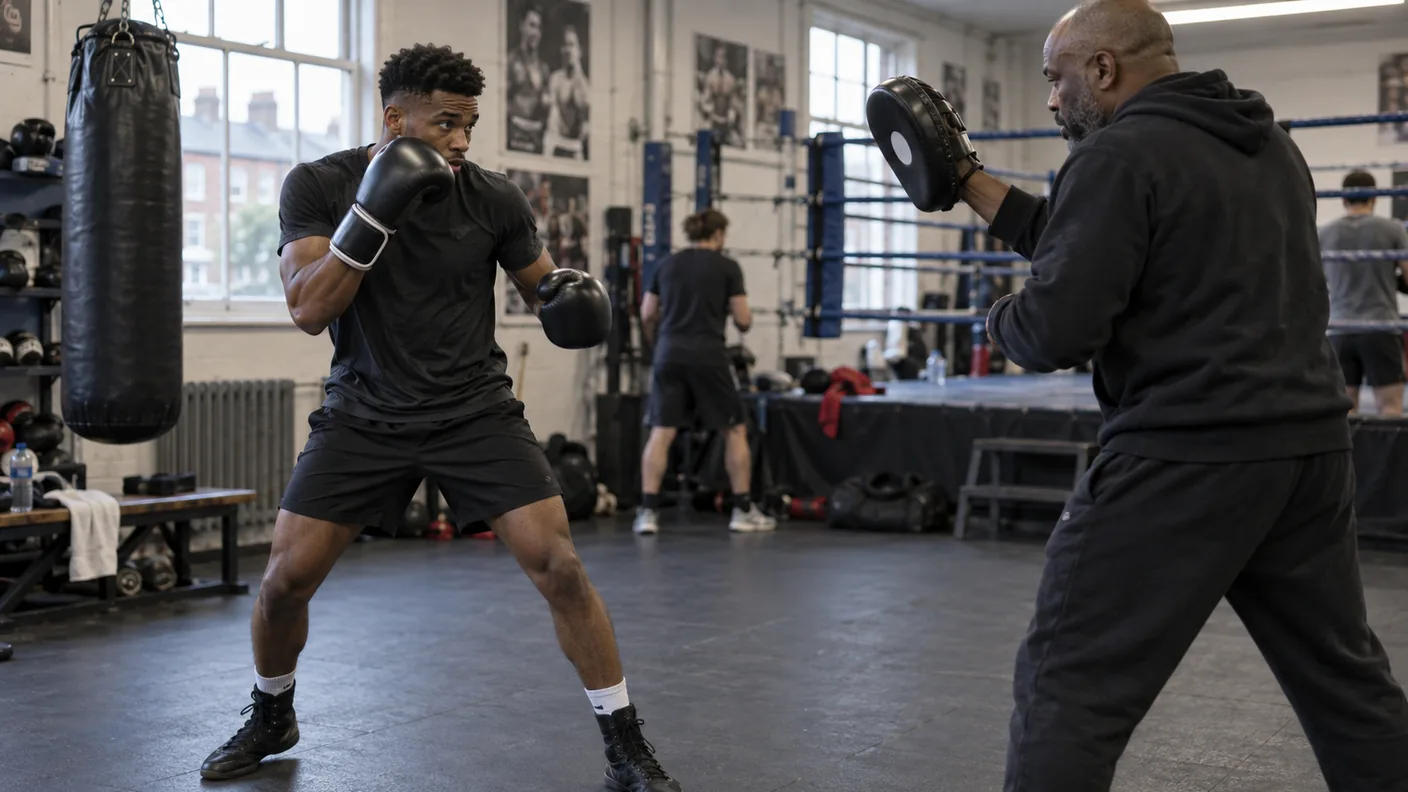
Feint, Block, One-Two: A Boxing Counter Drill
Use a small feint, compact block and balanced one-two to turn a predictable jab into a calmer boxing counter drill.
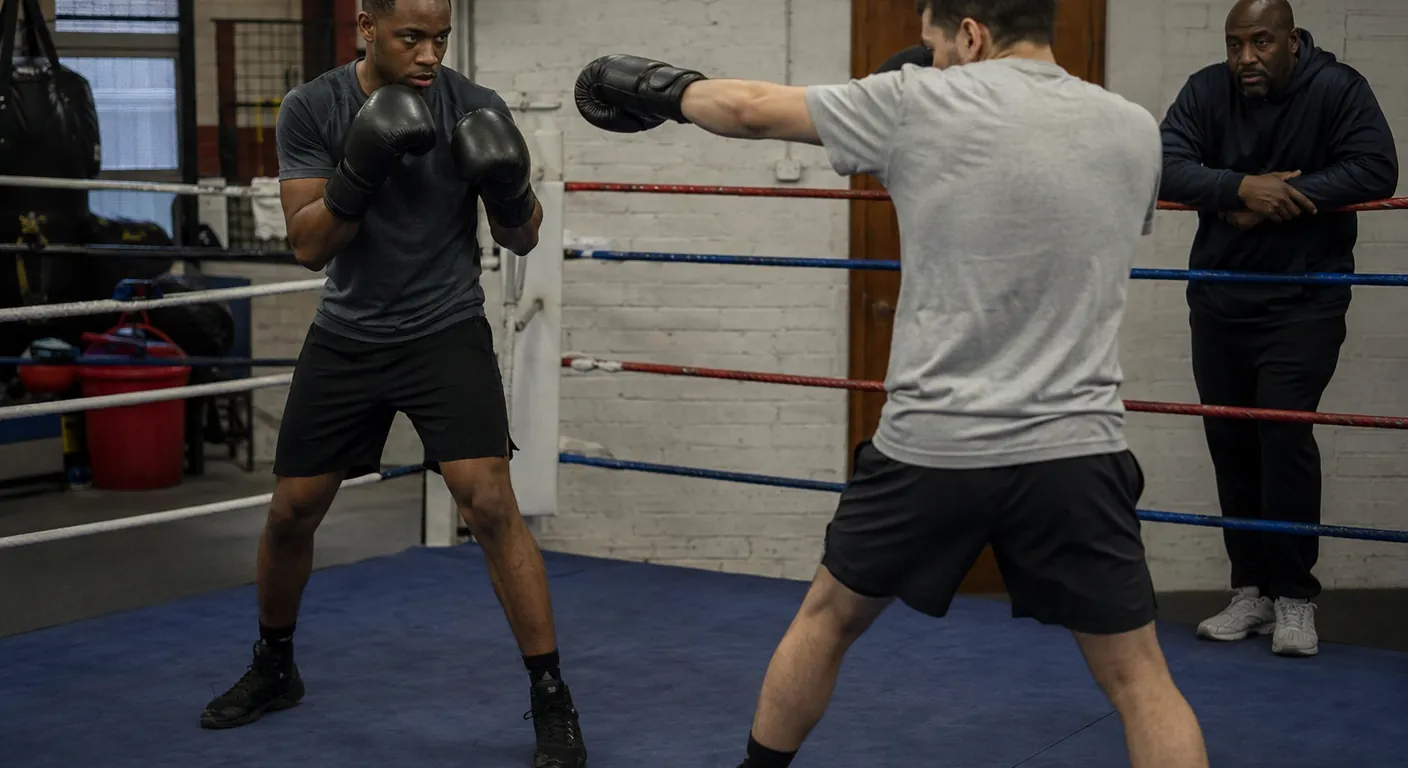
Read Boxing Weight Shifts Before the Punch
Learn to spot small weight shifts in boxing, then choose a calm defence or counter without guessing at every movement.
Was this page helpful?
It takes one tap, and it genuinely helps.
Choose your next step
Turn this article into the right action
Some readers are ready to book. Some need the class route first. Pick the route that matches what you actually want.