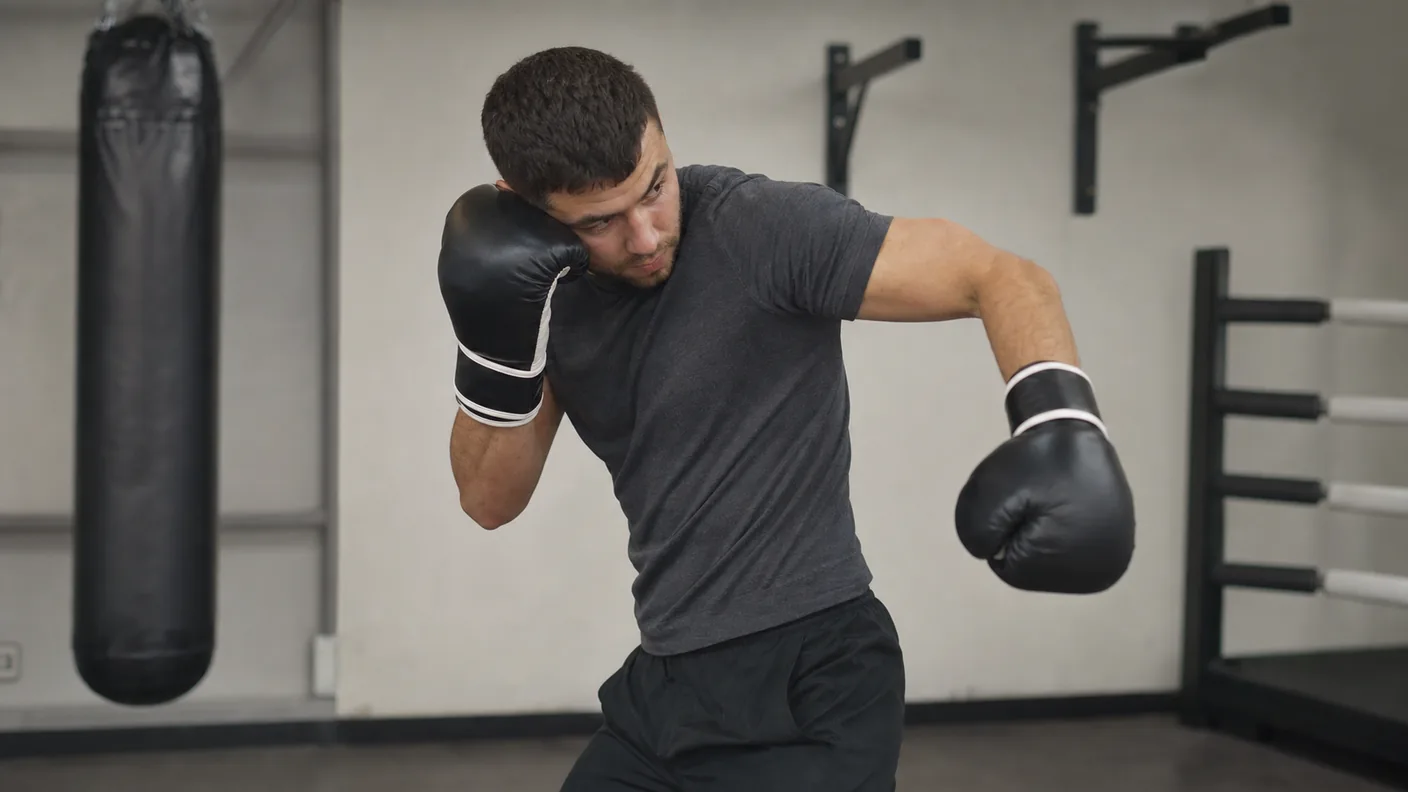
A one-two is not finished because your right hand lands.
That is the point beginners often miss when they first start looking comfortable on the pads. The jab lands, the cross lands, and there is a small moment where they admire the combination. In a real exchange, that is often where the other boxer throws their hook back.
A useful answer is simple: jab, cross, make a compact block, then return with the lead hook if the range and position are still there. It is not a six-punch party trick. It is a way of teaching the body that attack, defence and the next decision belong to the same exchange.
Watch the short demonstration below before trying the progression.
Why the lead hook is there after the block
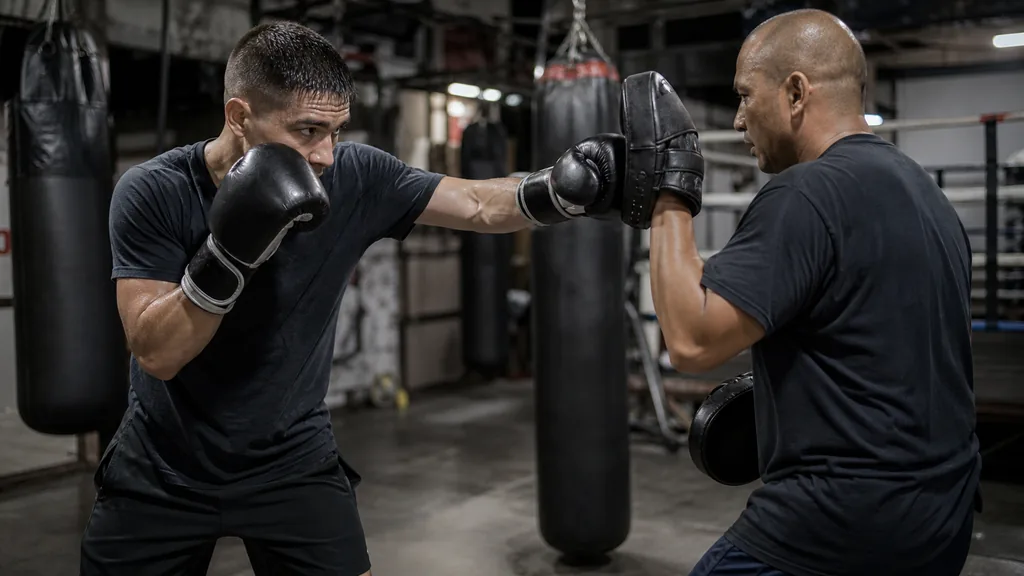
The jab and cross draw attention through the middle. A partner who has covered, been touched or simply read the right hand may answer with a lead hook. If your rear hand is already in the right place, you can use a short block rather than trying to leap away from the punch.
The lead hook is not thrown because it is fashionable. It is there because the other boxer has committed their lead side and their glove is travelling across. Once the block has done its job, the line around their guard may be open for a compact return.
That is a narrow opportunity, not a promise. If the hook has not arrived, if the block did not leave you balanced, or if the other boxer has stepped out, you reset. Good boxing is not about collecting every rehearsed punch. It is about recognising when the shape is still useful.
A review of boxing punch mechanics makes the wider point clearly: effective punching depends on the linked work of the feet, legs, trunk and upper body. Your hook cannot be useful if the one-two has left your feet crossed, your weight too far forward or your head looking at the floor.
Keep the block small
The block is not a windscreen-wiper movement. You do not need to swing the rear glove across the room and hope the hook lands somewhere on it.
Bring the rear glove close to the cheek and temple, with the forearm helping to close the line. Tuck the chin behind the shoulder. Keep the elbow useful enough to protect the body. The movement should be short enough that you can still see the other boxer and throw from your stance afterwards.
A big block creates two problems. First, it can pull your own hand away from the face just as the other boxer decides to add another shot. Second, it can spin your shoulders so far that the lead hook becomes a desperate swing rather than a punch.
The England Boxing coaching handbook treats guard, balance and controlled movement as foundations, not accessories. That is the standard here. The block is successful only if it leaves you able to see, stand and make the next decision.
Build the sequence in four parts
Do not start by throwing the whole pattern quickly. Break it down so the position after each part is clear.
- Throw a clean jab and cross at half speed. Bring both hands home.
- Hold the rear glove near the cheek as a coach or partner shows a slow lead-hook cue.
- Make the compact block and pause. Check that your eyes are forward and your feet have not narrowed.
- Add a short lead hook to a focus mitt or body shield, then bring the hand back to guard.
The word that matters is short. The hook should travel from a working guard, with the lead shoulder and hip helping it through. Do not pull the hand behind the ear to announce it. The hook is an answer to an opening that already appeared. It does not need extra loading.
The pad drill: one-two, block, hook
Pads are the best place to learn the order because a coach can make the return predictable at first.
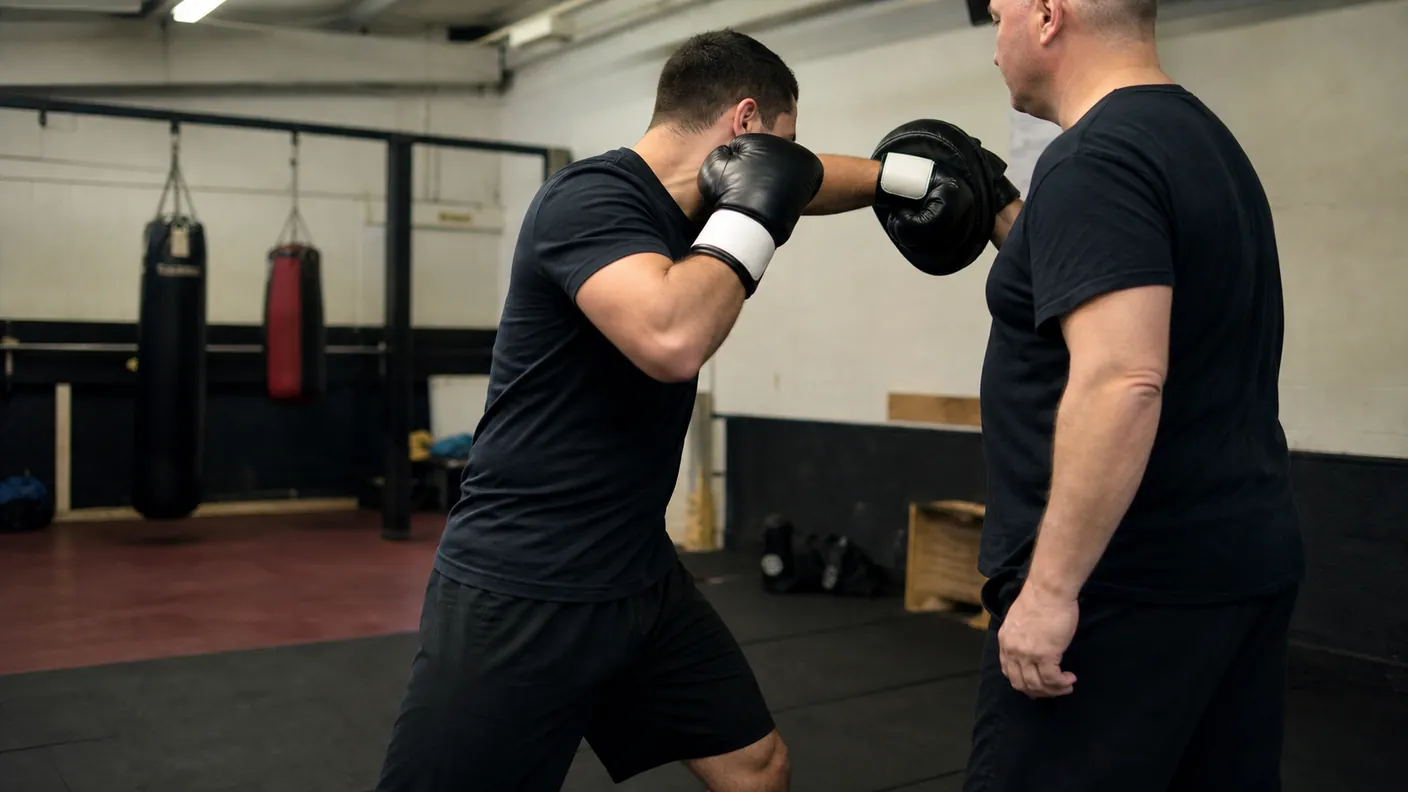
The pad holder presents the jab and cross. After the cross, they give a slow, safe hook cue to the boxer's right side. The boxer closes the line with the rear glove and forearm, then places a lead hook on the next mitt. Every action should be light enough that the coach can stop the drill and correct the position.
Start with a visible pause after the block. The pause feels awkward, but it tells you whether the rear hand is really home or whether you are just moving late. Once the position is dependable, let the hook return more naturally.
Use a three-round structure:
Round one: one-two and recover
Throw only the jab-cross. After every cross, freeze for one second with the rear glove back near the cheek and the feet underneath you. There is no hook yet.
This catches the common mistake early. If the rear hand stays extended, drops to the chest or leaves the chin exposed, there is nothing to block with. Fix the return before building the rest of the combination.
Round two: block without the hook
The coach gives the same slow hook cue after every one-two. Close the rear glove and forearm to the line, then reset. Do not throw back yet.
The aim is to make the block calm. If you flinch, turn away or lift both hands off the body, reduce the speed. A controlled defensive drill teaches more than trying to prove you can take a glove on the guard.
Round three: add the lead hook
Now add one short hook to the waiting mitt after the block. Keep the punch at about 60 percent effort. The hook should arrive because you are balanced and the opening is there, not because the drill says you are owed a hook.
Finish every repetition in stance. The lead hand returns, the rear hand remains useful, and the feet can move again.
Use a partner drill only when the pad version is tidy
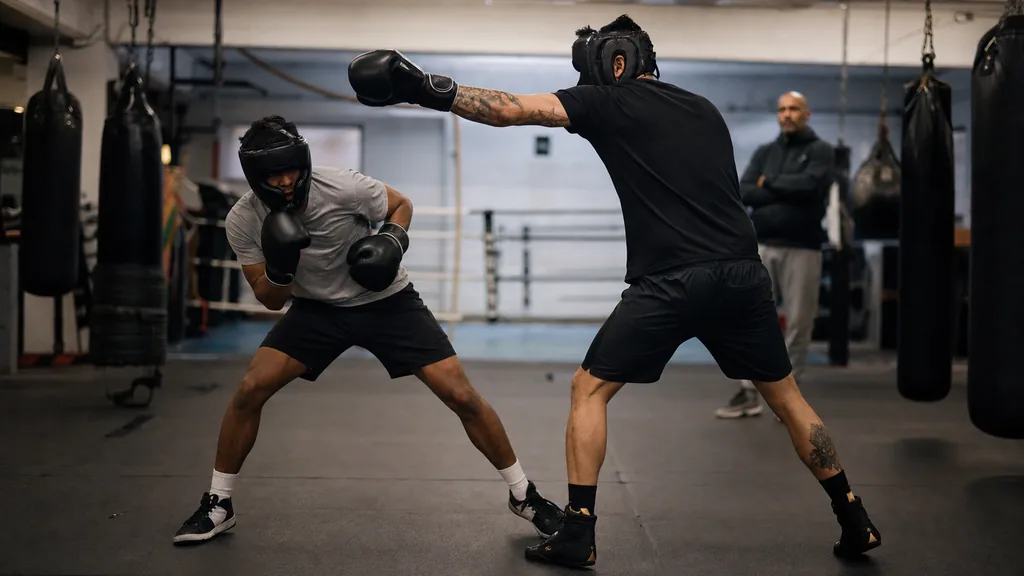
Partner work makes the idea more honest, but it also adds timing and distance. Keep the contact light and the rules narrow.
Partner A throws a slow jab-cross. Partner B gives a pre-agreed lead-hook shape at controlled speed. Partner A blocks with the rear glove and returns a touch-only lead hook to a focus mitt, body shield or clearly agreed safe target. Both boxers reset before the next repetition.
Do not turn this into a contest. The point is not to see who can sneak a hook through. The point is to give the first boxer a predictable defensive picture, then make the return from balance.
If the sequence starts to become frantic, go back to pads. There is no prize for practising the wrong version at a higher speed.
Our guide to what to do after you punch in boxing is useful alongside this drill. It explains the bigger habit: a punch changes the next moment, so your guard and feet need an answer ready before that moment arrives.
Mistakes that make the sequence fall apart
The first mistake is throwing the cross and leaving the rear hand out. That is not a one-two. It is a long right hand with your face behind it. Bring the glove home before asking it to block anything.
The second is blocking with the elbow flared high. That opens the ribs and makes the shoulder stiff. Keep the block close to the side of the face, not hovering in front of it.
The third is pulling the lead hook too far back. The hook should be compact. If you have to wind it up, you are probably too far away or too late.
The fourth is throwing the hook while falling forward. The lead hook needs a base. If the jab-cross has stretched your stance, cover, reset and find the next entry instead.
The fifth is making the pattern automatic in live rounds. Even a good combination is only useful when the opponent gives you the right response. The other boxer may step away, clinch, throw a different punch or do nothing at all. You must be able to abandon the hook without losing your position.
The coaching cue
Punch, protect, answer.
The one-two starts the exchange. The compact block keeps you organised when the response comes. The lead hook is available only if the defence has left you in a position to throw it well.
That is a better target than trying to memorise another long combination. Build a one-two that returns to guard, a block that keeps your eyes up, and a hook that comes from balance. The rest can grow from there.
If you are in Kidbrooke, Greenwich or nearby, our Recreational Adults boxing classes use pads, bags and controlled partner drills to build combinations that stay defensively useful.
H&G Team
Writer at Honour & Glory Boxing Club, a community boxing gym in Kidbrooke, South East London.
KEEP READING
The Hook-Jab: Use Your Lead Hand Twice
Learn how a compact hook-jab can change the line of attack, bring your lead hand home and help you leave the pocket in balance.
Lead Hook to Jab: Change Direction in Boxing
Use a compact lead hook to shift the guard, then send a jab through the middle without losing your stance or balance.
Rear-Hand Touch Before a Lead Hook
Use a light rear-hand touch to occupy the guard before a compact lead hook, without forcing power from the wrong position.
Was this page helpful?
It takes one tap, and it genuinely helps.
Choose your next step
Turn this article into the right action
Some readers are ready to book. Some need the class route first. Pick the route that matches what you actually want.