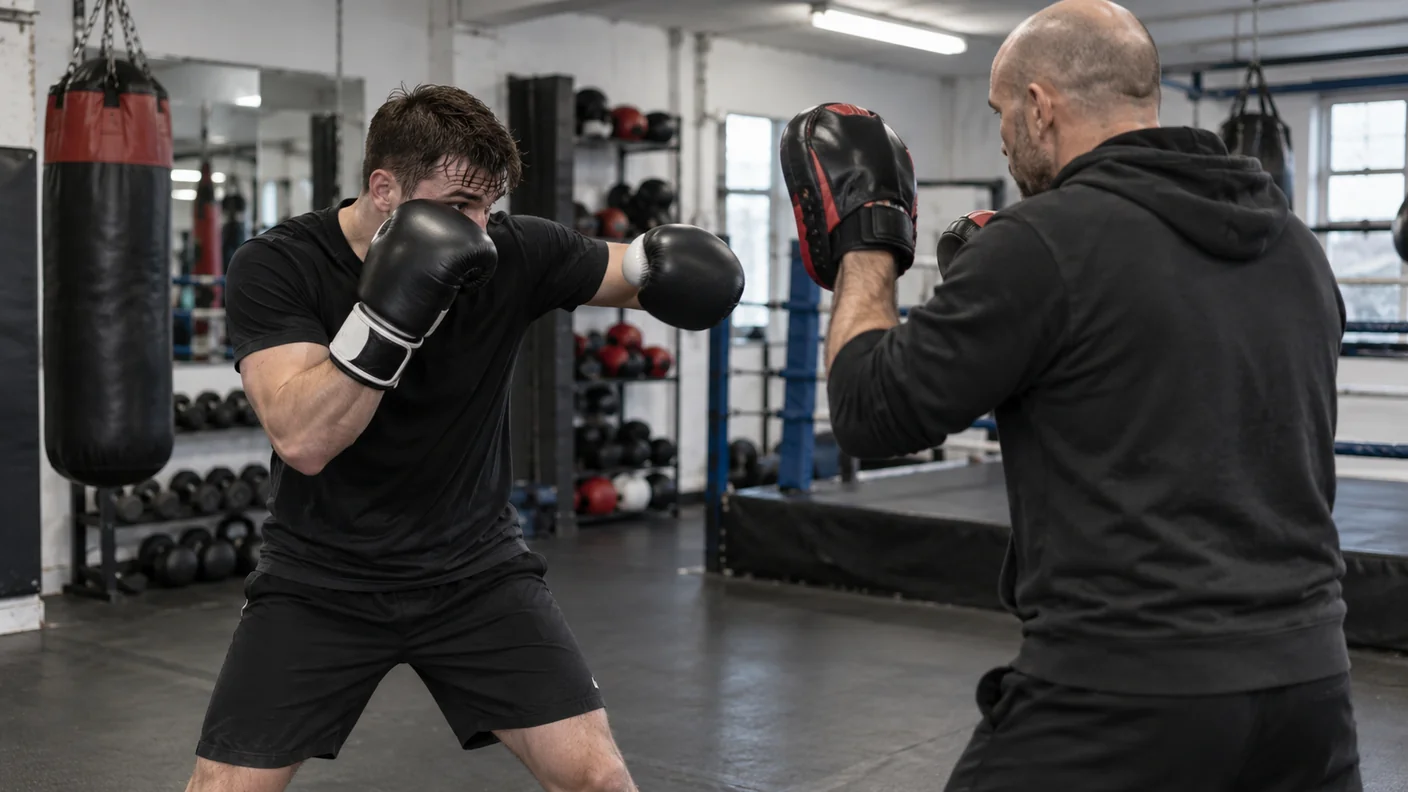
A high guard can give you a second to settle an exchange. The mistake is treating that second as an invitation to swing from anywhere.
A better answer is smaller: cover the straight line, find your feet, then return a short lead hook only when the other boxer has left a real opening. This is a useful counter drill because it teaches the order of the work. Guard first. Eyes up. Hook second, if the range still makes sense.
The video below is a helpful visual reference. Watch the guard recover after the block, then notice how the counter comes from a compact position rather than a long wind-up.
The hook is not the first job
A lead hook can be there after a high-guard block because the other boxer has committed a straight shot and may be briefly open around the side. It is not there because every blocked punch earns a counter.
If the other boxer is still far away, has stepped out, or has brought both gloves back into position, do not chase the hook. Bring your guard back to its ordinary shape and reset. Good boxing is often deciding not to throw a punch that looked available half a second ago.
England Boxing places balance, stance and a usable guard at the centre of technical development in its coaching handbook. That is the test here. After the block, can you still see, take a short step and throw without reaching? If not, the counter is not ready.
Make the high guard compact, not frozen
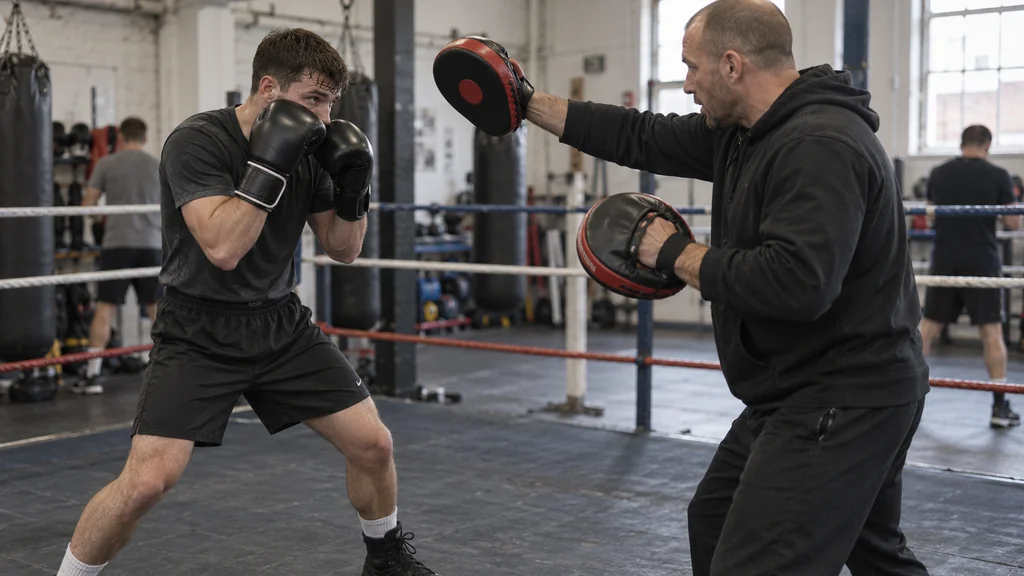
The high guard needs to close the immediate line without turning the shoulders into a knot. Both gloves sit close to the temples and cheeks, the chin stays behind them, and the elbows remain near enough to protect the middle.
For a straight-punch cue, bring the gloves and forearms together by a small amount. Do not bury your head between your arms or look down at the floor. You need a narrow sight line so you can tell whether the other boxer has stopped, stepped in, or changed to a hook.
The block should be brief. Your gloves can cover the line for a moment, but they cannot stay welded together while you expect to jab, hook or move. Once the straight line has passed, separate the hands back into working lanes.
Our guide to high guard boxing without freezing covers the defensive base in more detail. This drill adds one narrow question after that base: has the block left a sensible lane for a short lead hook?
Let the lead hook come from the floor
The lead hook needs a settled stance. A high guard does not produce power on its own.
For an orthodox boxer, the lead knee softens slightly and the lead hip turns through the punch. The elbow stays bent. The rear glove stays near the cheek. Southpaws reverse the picture, but the rule is identical: the hook comes from a stable lead side while the far hand protects the face.
Do not pull the lead hand back behind the ear. That turns a useful counter into a warning signal. The opening is normally short, so the hook should travel a short route and return to guard immediately.
A review of boxing performance and biomechanics describes punching, defence and movement as connected parts of the same task. In the gym, that means the block is only useful if it leaves your legs, trunk and hands able to work together. A hook thrown while falling forward is not a counter. It is a reach with a better name.
The three-round high-guard-block-to-hook drill
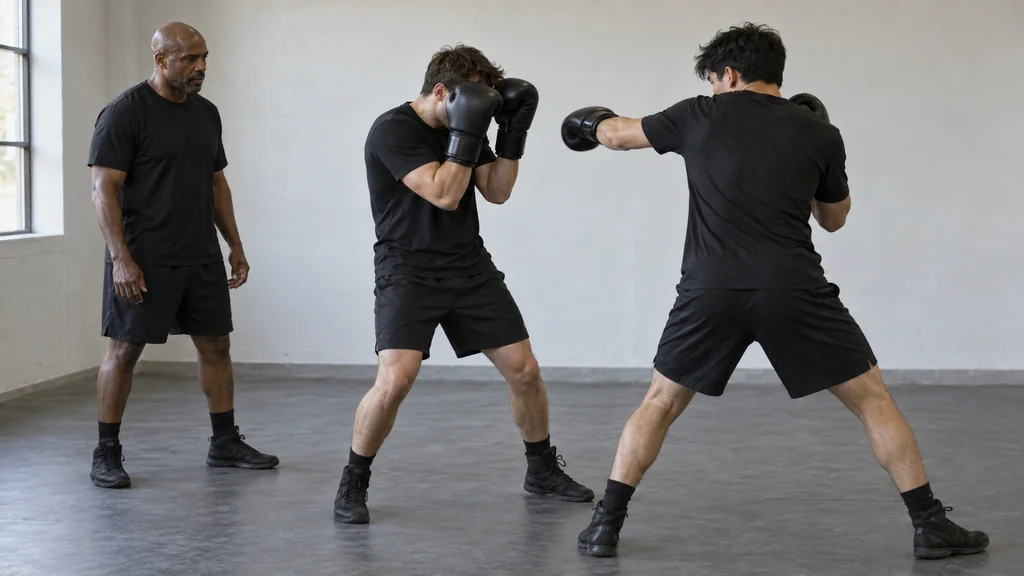
Use a coach and focus mitts before you use a partner. Keep the return cue slow and agreed. This is a technical drill, not a test of who can throw a harder shot.
Round one: cover and return to stance
The coach presents one slow straight-punch mitt cue. Bring the gloves into a compact high guard, keep the eyes on the coach and freeze for one count.
Check the finish before adding anything. The feet should still be staggered, the elbows should not have floated away from the body, and the chin should not be sticking forward between the gloves. If the position is untidy, make the cue slower and smaller.
Round two: cover, recover, then touch the hook mitt
The coach gives the same straight cue, then holds a second mitt at honest lead-hook range. Block first, let the hands return to their working lanes, then place a controlled lead hook on the mitt.
The coach should sometimes remove the hook mitt. When it disappears, do not throw into empty space. Cover, recover and reset. This builds the habit that matters outside a drill: the guard makes a punch possible, but it does not demand one.
Round three: add the exit
Now finish each repetition with one calm choice. After a compact hook, take a small step out, bring both gloves home, or give one light jab to a third mitt if the range remains honest.
Do not add a long combination. The aim is to make the block and the hook defensively useful. If you finish too close, square or with the hook hand drifting low, reduce the speed and return to round two.
When not to throw the hook
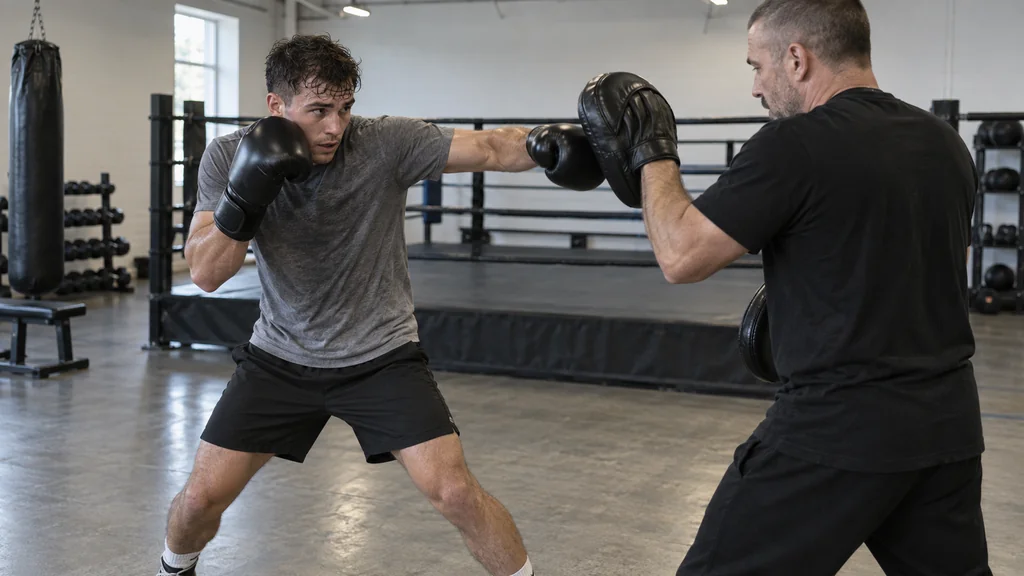
The lead hook is a poor answer when the block has left you crowded. If the other boxer has stepped right into your space, both gloves may need to stay home while you turn out or reset. A wild hook in that moment often leaves the centre open for an uppercut or a second straight shot.
It is also a poor answer when the opponent has pulled away after the first punch. Do not chase a retreating person with an arm. Move your feet first, then decide whether the next entry should be a jab, a feint or no punch at all.
Finally, do not use this as a response to every straight shot. A catch, a parry, a small step or a simple reset can be better depending on the distance. Our guide to parry and return against straight punches gives you another option when the high guard would be more cover than you need.
Four mistakes that make the counter unsafe
The first is throwing the hook before the block has finished. If the gloves are still stuck together or the eyes are shut, you are guessing at a target.
The second is lifting the elbows too high in the guard. The head may be covered, but the ribs become easy to find. Keep the gloves near the cheeks and the elbows useful.
The third is loading the hook with the arm. The lead hand does not need a dramatic pullback. Keep it close, turn from the lead side and let the hook travel from the position you have earned.
The fourth is standing still after the counter. Return the glove, regain your stance and make the other boxer solve the next entry. A good counter gives you a better next position. It does not leave you waiting for their answer.
For adults in Kidbrooke, Greenwich and nearby, our Recreational Adults boxing classes use pads and controlled partner drills to join guard, footwork and simple counter choices without rushing people into hard sparring.
The coaching cue is simple: cover the line, see the opening, hook only when your feet agree.
H&G Team
Writer at Honour & Glory Boxing Club, a community boxing gym in Kidbrooke, South East London.
KEEP READING
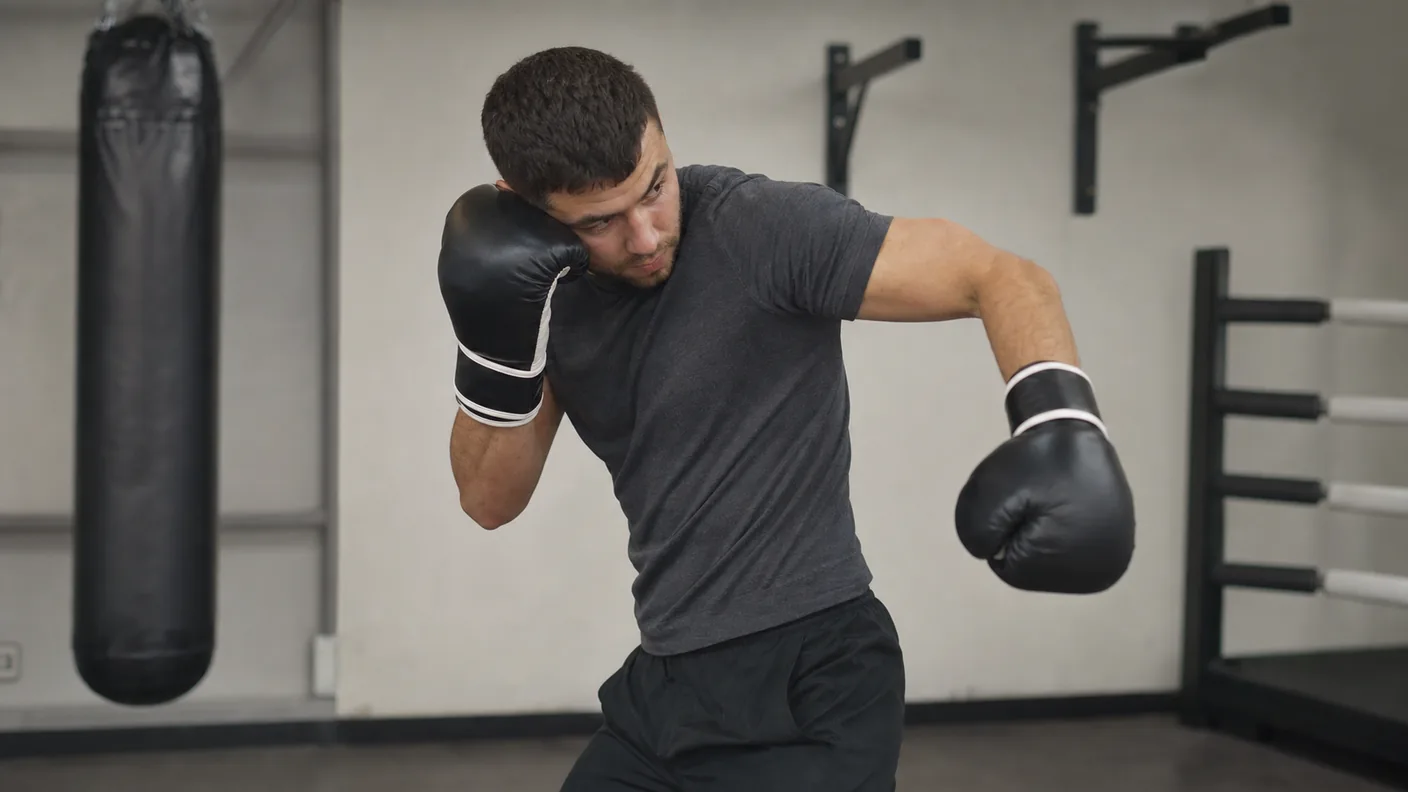
One-Two, Block, Hook: The Next Boxing Answer
Use a compact block after the one-two, then return with a lead hook without losing your stance or chasing the exchange.
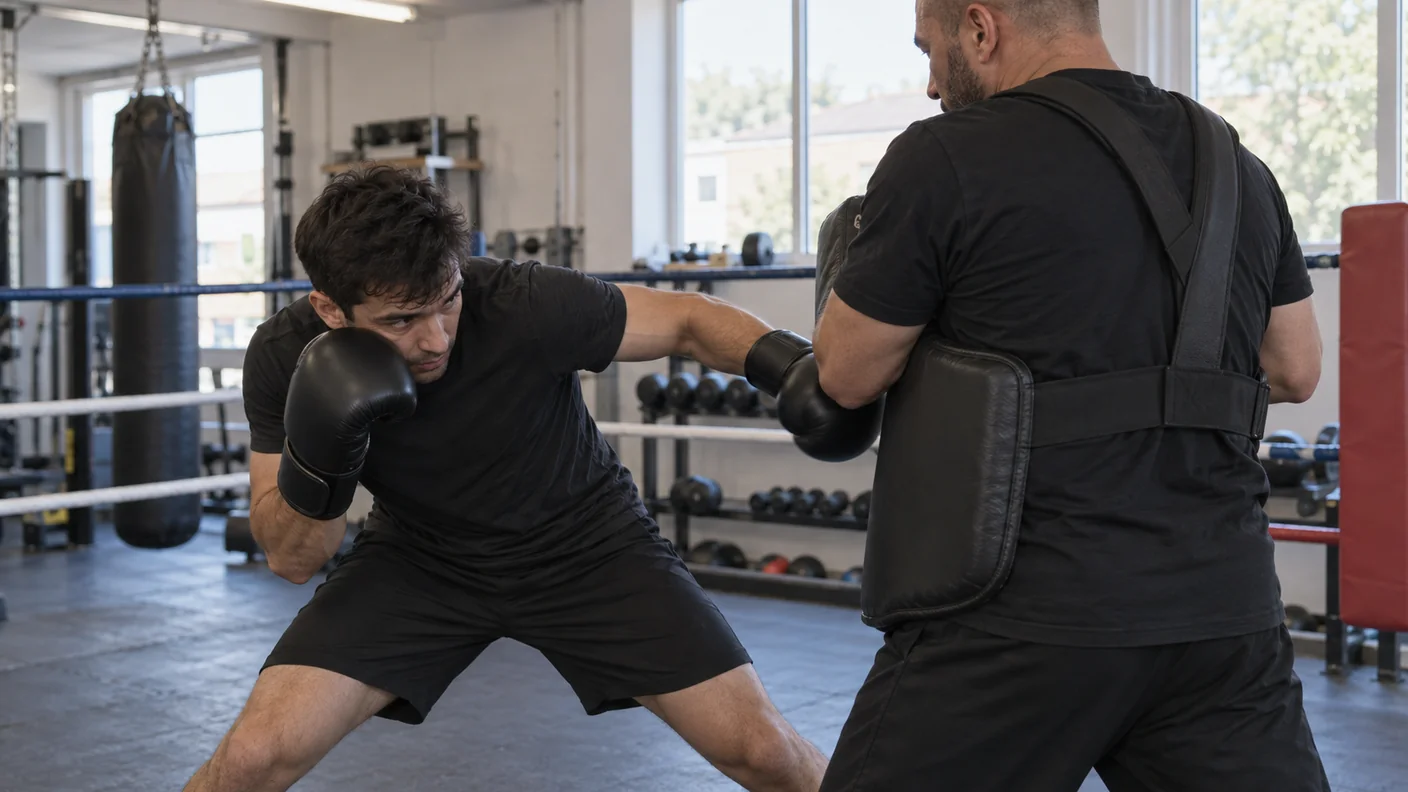
Inside Slip Lead Hook: A Controlled Jab Counter
Use a small inside slip and a compact lead hook only when the jab, range and guard make the counter an honest option.
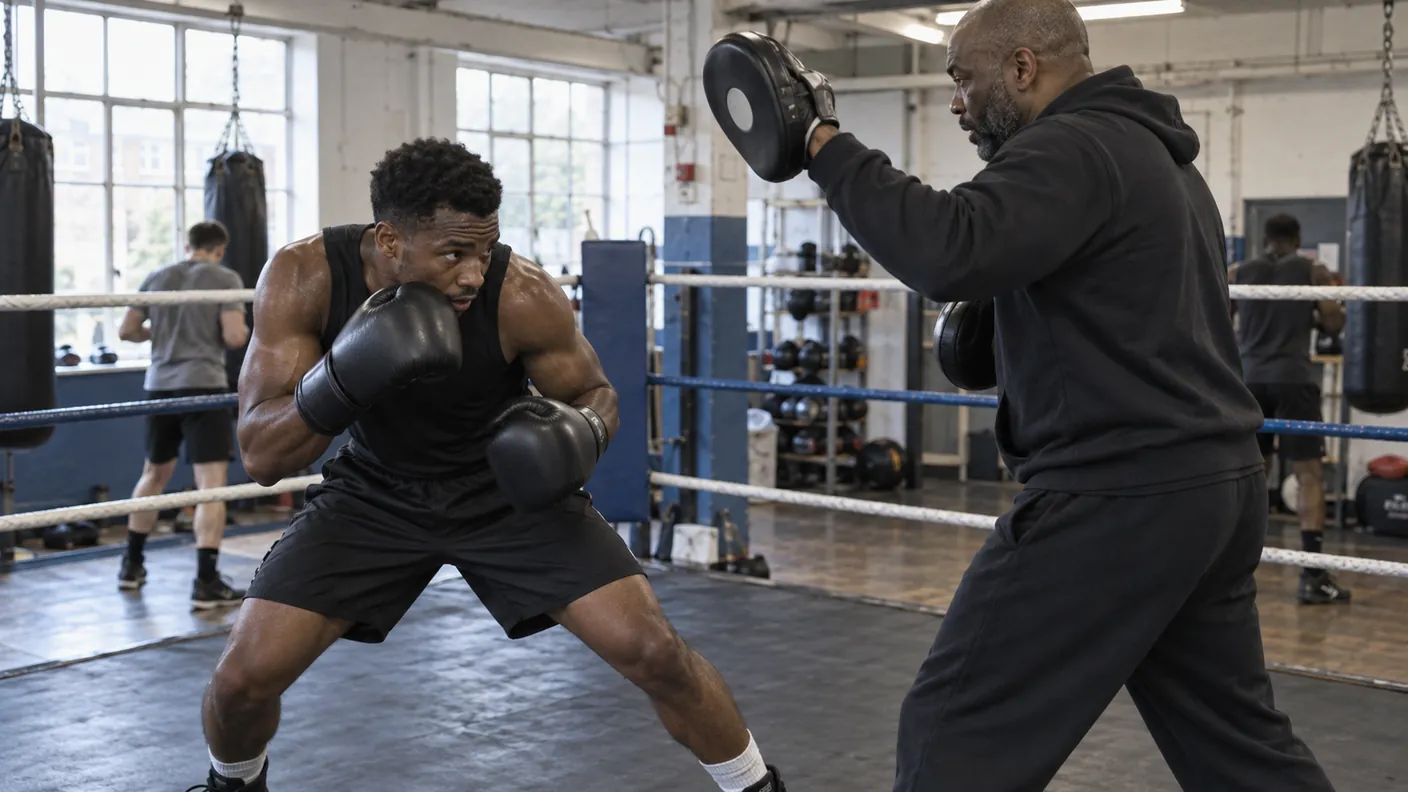
High Guard Boxing: Stay Covered Without Freezing
Use a high guard that protects your head while your feet, eyes and next decision stay active under pressure.
Was this page helpful?
It takes one tap, and it genuinely helps.
Choose your next step
Turn this article into the right action
Some readers are ready to book. Some need the class route first. Pick the route that matches what you actually want.