High Guard Boxing: Stay Covered Without Freezing
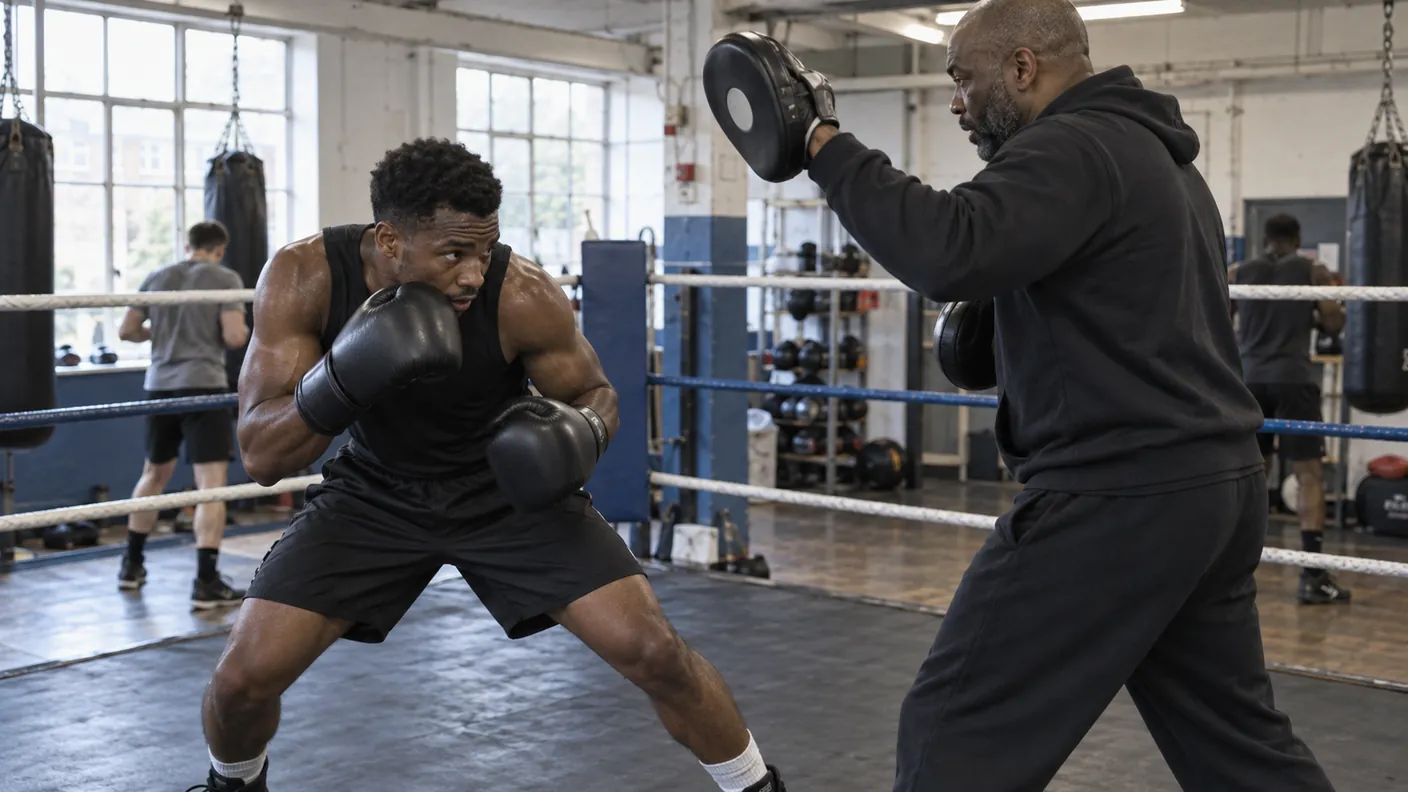
A high guard is useful when it gives you a second to see what is coming. It becomes a problem when it turns you into a stationary target.
Newer boxers often get caught, bring both gloves tight to the forehead, and wait for the exchange to end. The intention is sensible. The result is often worse. The other boxer sees that you have stopped moving, finds the body or the sides of the guard, and starts throwing with more confidence.
A working high guard is not a hiding place. The gloves protect the head, the elbows look after the middle, and the eyes stay available. From there, you still have to make a decision: take a small step, change level, return a simple punch, cover again, or reset at a better range.
The short demonstration below is a useful visual reference. Watch how the guard remains compact without becoming rigid, and how the boxer keeps an option after covering.
What the high guard is actually for
The high guard is a close, ordinary boxing position. Both gloves sit near the temples and cheeks, the chin stays behind them, and the elbows remain close enough to deny a clear body line.
It is most useful when you need to reduce the obvious targets for a moment. That might be when a partner has stepped in behind a jab, when you have missed and need to settle, or when you are too late for a neat parry. It can buy time without asking you to invent a clever answer under pressure.
England Boxing's coaching handbook puts a solid stance, sound guard and balanced movement at the centre of technical development. That is the right standard here. The guard is good only if it leaves you able to move, punch or defend again.
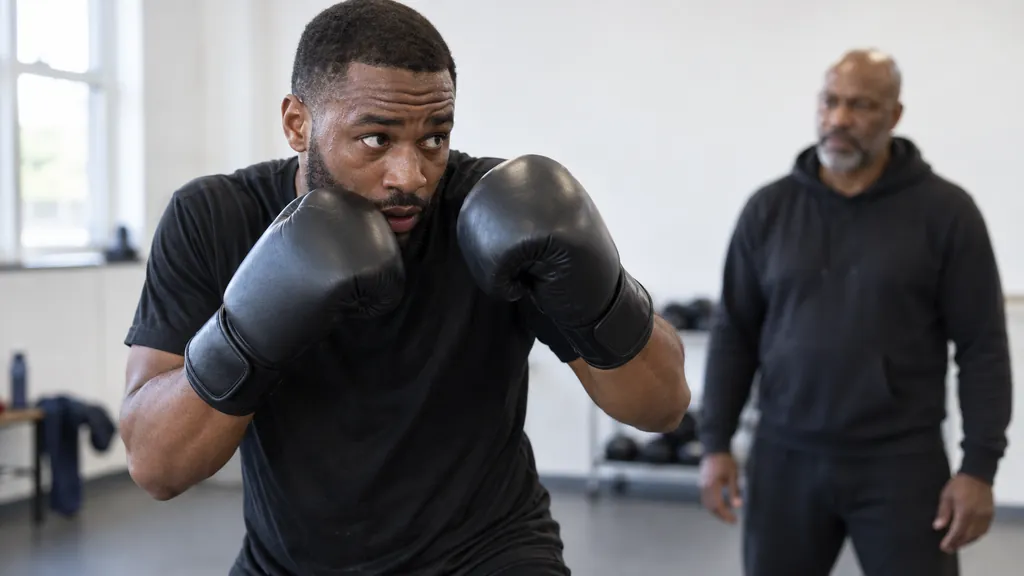
Do not squeeze the gloves together directly over the nose. You need a narrow sight line between them, not a blindfold. You also need each arm to keep its job. If both elbows fly high, the body opens. If both hands sit too low, the head is available. Stay compact, but do not turn the shoulders into a knot.
Keep the guard active with small feet
The first escape from a static guard is usually a small one.
If someone is walking towards you behind their jab, you do not have to leap away. A short step back can restore the range. A short side step can change the line. A small pivot can stop you drifting towards the ropes. The correct choice depends on the space, not on which movement looks sharp in shadow boxing.
The mistake is trying to move the head before the feet. A boxer feels pressure, leans away at the waist, then has to take a large step to stop falling. The guard may still be high, but the stance has gone. The next jab or hook will come while the body is trying to find its balance.
Instead, keep the head roughly between the feet and let the feet take you out of the line. The movement can be small enough that your own jab would still reach once you have settled. If you move so far that you cannot answer without another shuffle, you have escaped range rather than solved the exchange.
Our guide to boxing side steps without drifting gives the footwork detail. For the high guard, the main lesson is simpler: cover first when you need to, then move before the other boxer can set their feet for a second attack.
Change level without folding over
A small level change can make a high guard harder to read. It can also stop you standing tall behind it while someone picks at the same targets.
This does not mean bending from the waist until you cannot see. Bend gently through the knees and hips. Your eyes stay forward, the chin stays protected and both feet stay on a useful base. You are making yourself less predictable, not disappearing below the next uppercut.
A review of boxing biomechanics describes punching as a connected action involving the lower body, trunk and upper body. The same idea helps with defence. If your legs and trunk are organised, a small change of level can leave you ready to step, jab or cover again. If you fold at the waist, you have removed your own options.
Use this at technical pace with a coach. A slow mitt cue to the head is enough. Cover the line, lower a few inches through the legs, then return to your normal height and stance. There is no prize for making the movement dramatic.
Do not answer every cover with a big counter
A high guard can make people impatient. They cover a punch, feel safe for half a beat, then throw a wide hook from a crowded position because they want the exchange to end their way.
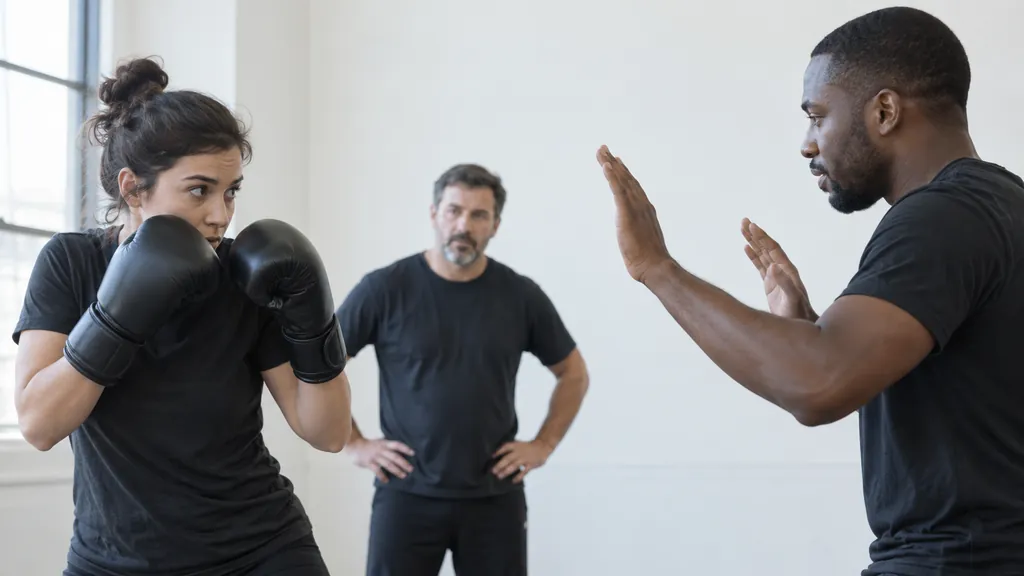
Usually, the cleaner answer is smaller. Bring the hands back into their ordinary lanes and show one jab to a coach-held mitt. Take a step out. Or cover the next cue and reset. A punch is available only when the feet, range and line actually support it.
This matters most after you have been pushed back. A pressured boxer can mistake a big counter for courage. If the back is near the ropes, the feet are square or the other boxer is already close enough for short punches, that counter can become an arm swing with nowhere to recover.
Our guide to getting off the ropes in boxing covers that problem in more detail. The high guard gives you a moment near the ropes, but the real job is to see a route, turn out early and recover open space.
A high guard should make the other boxer pause, not give them a reliable target. A small jab after the cover can interrupt their next step. A compact step can make their next punch fall short. Sometimes the best answer is simply to bring the guard home and start again at a range where you can read properly.
The cover-move-choose drill
Use gloves and a coach or trusted partner. Keep every feed slow and agreed in advance. This is a technical drill, not a hard sparring round.
Round one: cover and see
Partner A gives a slow straight-punch mitt cue. Partner B brings the gloves into a compact high guard, keeps the eyes up and freezes for one second.
Check the position. Can Partner B see the chest and shoulders? Are the elbows still near the ribs? Are the feet still staggered? If the answer is no, reduce the pace and make the cover smaller.
Round two: cover and move
Use the same cue, but add one exit after the guard. Partner B can take a small step back or a small side step, then freeze in stance.
Do not prescribe the direction for every repetition. Let the coach show one clear line, then ask the boxer to move to the space that remains. The point is not to travel far. It is to leave the original line while staying close enough to make another decision.
Round three: cover, move, choose
Now the coach can present a second mitt after the step, or take it away. If the mitt appears at honest range, Partner B gives one measured jab and resets. If it does not, Partner B keeps the guard organised and moves again.
This is the important part. The jab is a choice, not a compulsory reward for covering. If the feet are narrow, the partner is too close or the mitt has vanished, do not reach for it.
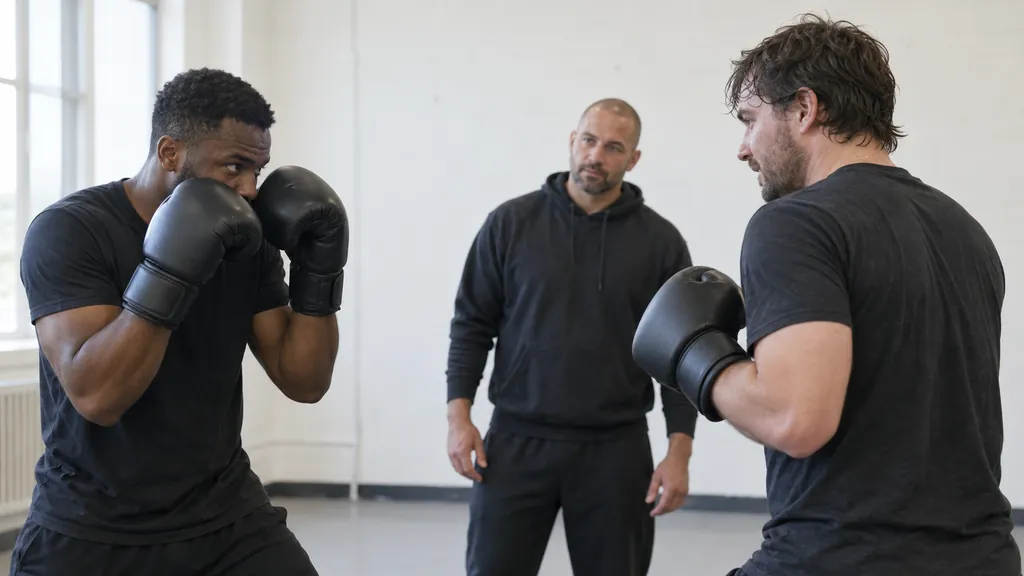
Four mistakes that make a high guard easy to beat
The first is closing the eyes. If you cannot see through the guard, you cannot tell whether the next shot is straight, round, low or not coming at all. The guard should protect your view, not remove it.
The second is standing tall. A high guard with locked knees makes the body heavy and easy to push back. Keep enough bend that you can step or change level without a warning movement.
The third is holding the guard too long. A cover is a response to a line, not your permanent address. Once the immediate threat has passed, return the hands to a working position where you can jab, catch or parry.
The fourth is throwing back before the stance is ready. The guard may have stopped the first shot, but that does not guarantee a counter. If you are crowded, square or falling back, reset first. That is a good decision, not a timid one.
For adults in Kidbrooke, Greenwich and nearby, our Recreational Adults boxing classes use controlled partner drills to connect guard, footwork and simple decisions. You can learn to cover with purpose before pace turns every loose habit into a problem.
The coaching cue is simple: cover the line, keep seeing, then leave or answer with balance.
H&G Team
Writer at Honour & Glory Boxing Club, a community boxing gym in Kidbrooke, South East London.
KEEP READING
How to Punch Without Dropping Your Guard
Learn how to keep your guard alive while punching, so combinations protect you instead of opening clean counters.
Cross Guard Catch and Return in Boxing
Use a temporary cross guard to cover a straight line, feel the contact and return to a balanced boxing stance.
Long Guard Boxing: Keep Range Without Reaching
Use a long guard to judge range, interrupt a jab and leave yourself balanced enough to punch, defend or step away.
Was this page helpful?
It takes one tap, and it genuinely helps.
Choose your next step
Turn this article into the right action
Some readers are ready to book. Some need the class route first. Pick the route that matches what you actually want.