Block Straight Body Shots With a Boxing High Guard
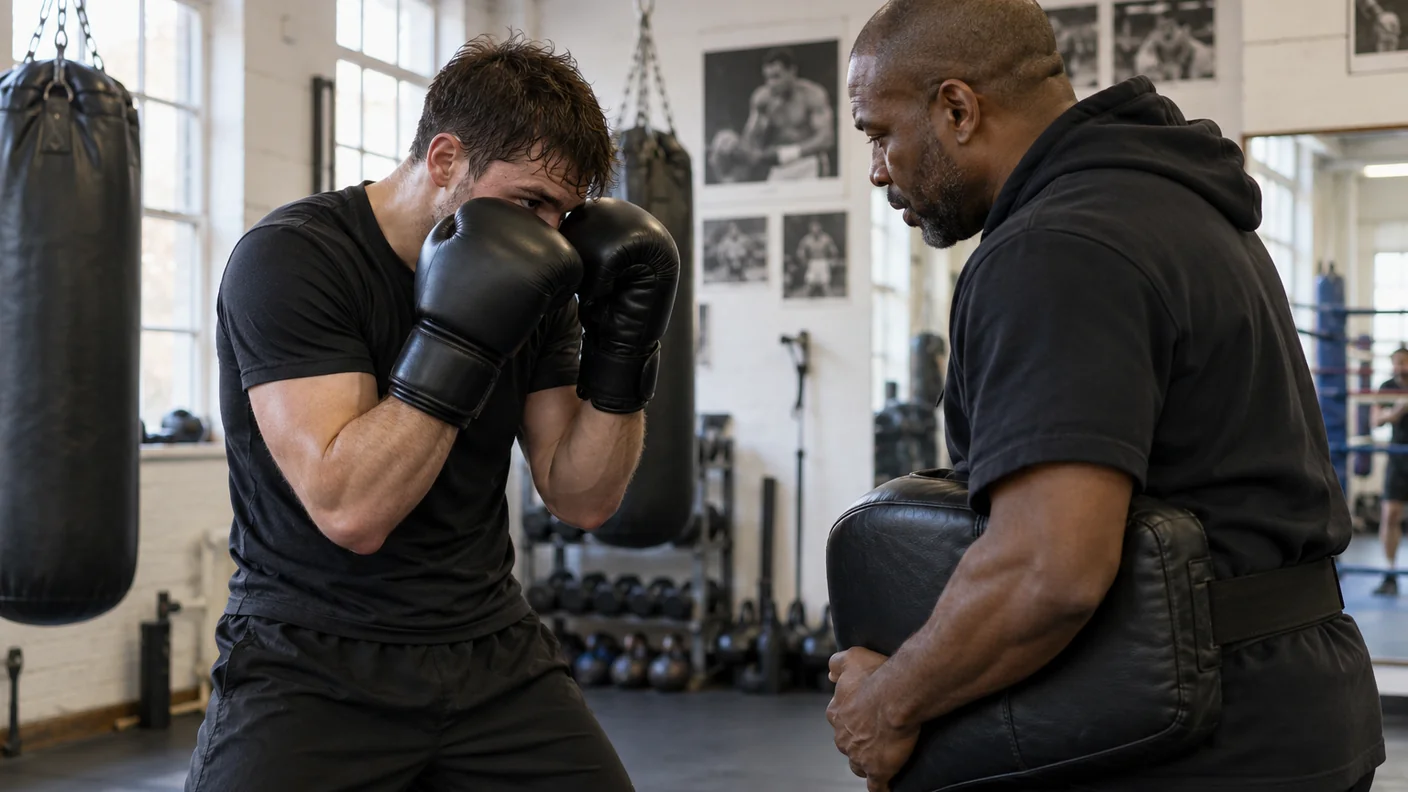
A straight body shot is easy to see in a drill and still easy to miss in a busy round. The other boxer shows the jab upstairs, you lift the eyes and then the rear hand comes down the middle. Many beginners try to fold over, reach down with one glove or take a huge step back. Those reactions often open the head or leave the feet tangled.
A compact high guard gives you a simpler first answer. Bring the forearms closer through the middle, lower the guard only as far as the line requires, keep the elbows connected to the body and stay balanced enough to see what comes next. The goal is not to make yourself invulnerable. It is to take the clean lane away without making a bigger mistake.
The video below is a useful visual reference for the small guard changes that separate straight and looping body shots. Use it as a starting point, then practise the movements slowly with a coach rather than treating any guard as a fixed pose.
A straight body shot needs a closed centre
Think about the route before you move. A jab to the body, straight rear hand to the body or an uppercut through the centre comes through the middle. A hook to the ribs comes round the outside. They need different shapes.
Against the straight line, the first task is to reduce the gap between the arms. Your forearms come closer together, your elbows come in and the guard travels down as a single compact unit. The shoulders stay relaxed enough that you can still see. Do not drop both hands to the hips and call it a block.
The movement is smaller than most people expect. You are building a short wall in front of the centre of your body while keeping the chin protected behind the gloves. If the punch is lower than your guard can honestly cover, use a controlled step, angle or parry.
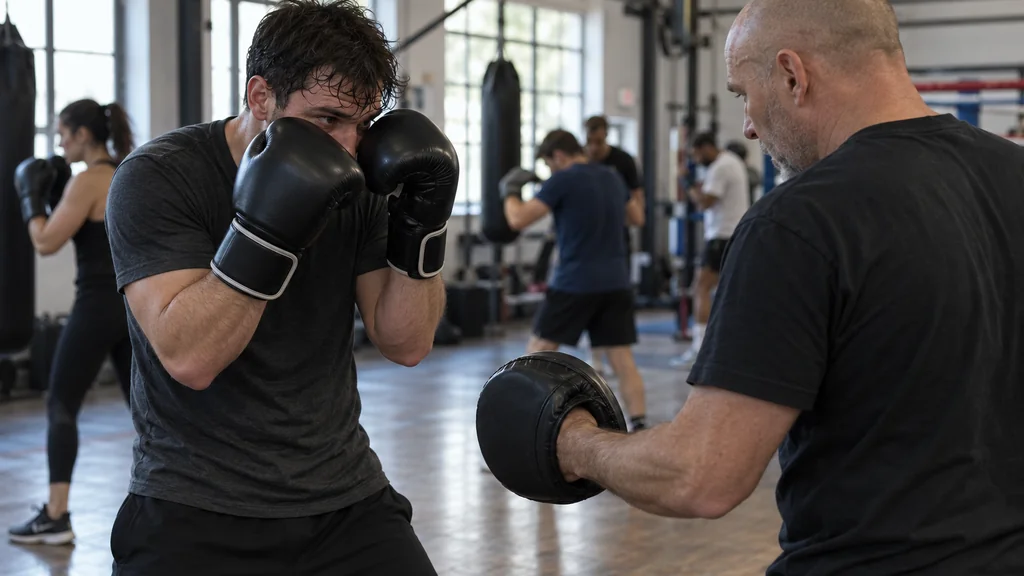
The England Boxing coaching handbook describes an outside parry to a straight body shot as a downward redirection near the wrist. That is a useful alternative when you have seen the line early. The high guard block is the more conservative answer when the shot is already travelling through the middle and you need the arms close first.
Keep the knees working, not the waist folding
The common error is bending from the waist until the head drops towards the target. It can look as though you have got low, but it puts your eyes on the floor and makes the rear hand slow to return upstairs.
Use the knees to lower your level a little instead. Keep the spine long, sit into the stance and bring the arms with you. Your eyes should remain forward. If the coach freezes the rep, you should be able to see their chest, keep both gloves available and take a normal step in either direction.
A review of boxing punch biomechanics describes punching as a connected movement through the legs, trunk and upper body. Defence needs the same connection. If the feet are crossed or the torso has folded forward, the guard cannot rescue the position on its own.
Do not use the same answer for hooks
A closed middle guard is for straight lines. It is not the right shape for every body attack.
When a hook comes round to the ribs, the outside line matters more. The near elbow drops towards that side while the other glove stays ready to protect the head. If you try to squeeze both forearms together against a hook, you may leave the side of the body open.
That distinction is why defensive drills should use clear, slow cues at first. Ask a coach or partner to show only one body line for a round. A straight body mitt means close the centre. A side mitt means bring the relevant elbow down. Once the shapes are tidy, alternate the targets without speeding up too early.
Our guide to blocking body hooks in boxing covers the outside line in more detail. The two articles work together, but they should not be mashed into one hurried movement. First read whether the punch is coming through the middle or round the side. Then make the smallest useful adjustment.
Three rounds to make the block useful
Start without hard punches. This is a positioning drill, not a toughness test.
Round one: close the line
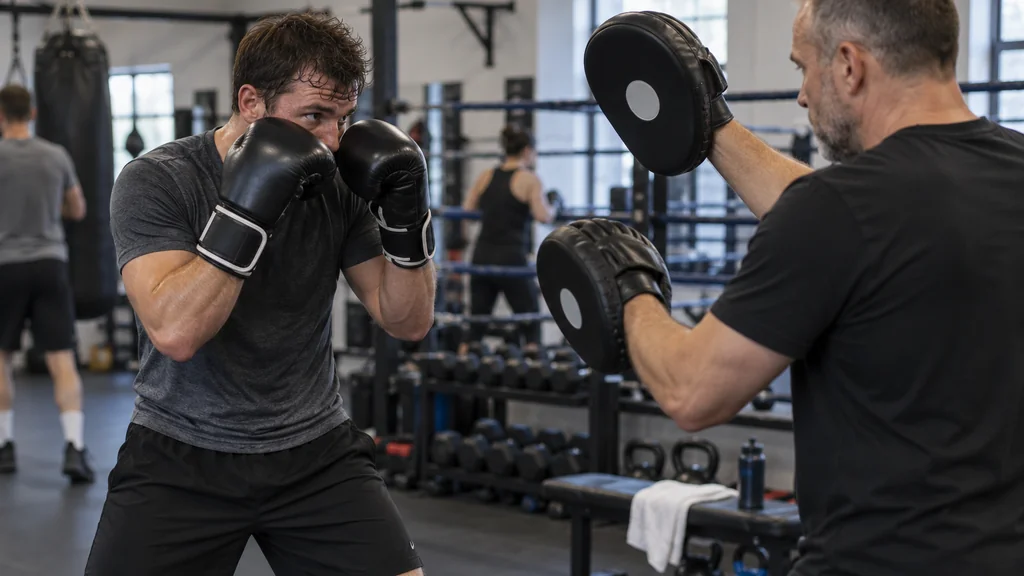
Stand in front of a coach holding one mitt around solar-plexus height. On the cue, bring the forearms together, lower the elbows as one compact shape and settle the knees slightly. Freeze for one count.
The coach checks three things: both gloves are still close enough to protect the head, the elbows are not flaring and the feet have stayed in stance. If any of those disappear, slow the movement down. You are learning a shape, not trying to beat the mitt to the finish.
Round two: block, then see
Use the same straight body cue. This time, after the block, the coach either shows a head-height mitt for a light jab, shows a second body cue, or lowers both hands.
If the jab mitt appears at honest range, touch it and bring the hand back. If another body cue appears, protect the centre again. If there is no target, stay in stance and reset. The point is to stop the block becoming a frozen shell.
Round three: choose the defence
Now add two body lines: straight through the centre and a slow hook line to either side. Work at a pace where the boxer can identify the route before moving.
Straight line means forearms together. Hook line means the relevant elbow comes down. If the boxer guesses wrong, stop and name the line before repeating. That small pause is more valuable than fifty panicked repetitions.
When a block is not the best answer
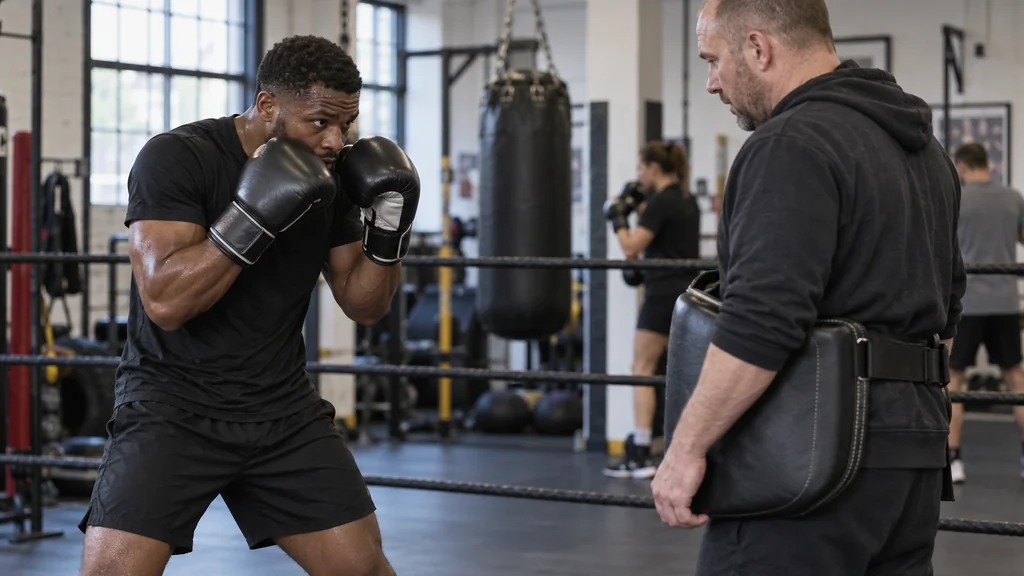
At the edge of range, a down parry may give you more room to reset. Against repeated body jabs, a change of distance can be safer than repeatedly absorbing contact on the arms.
The decision depends on the range and what you have seen. If the other boxer is already close and the rear hand is travelling through the middle, close the centre first. If they are far away and reaching, use the feet. If you read a single body jab early, a parry may be there.
For that last option, read our drill on down parries against straight punches. It is not a better answer in every situation. It is another tool once the compact block has become reliable.
Four errors that make the guard collapse
The first is pulling both gloves down too far. This protects the stomach for a moment and gives away the head. Keep the gloves in the general line of the cheeks while the forearms and elbows do the lower work.
The second is widening the elbows. A wide arm looks like a large shield, but it creates space through the middle and makes the next hook easier to land. Bring the arms closer, not farther apart.
The third is looking down. Your eyes tell you whether the other boxer is about to come upstairs, step away or throw again. Keep them forward even while the guard lowers.
The fourth is throwing back automatically. A clean block may leave a jab available. It may also leave you too close, off balance or looking at a covered target. The correct next move can be a jab, a step, a cover or nothing at all. Read the picture before you answer.
The coaching cue
Close the middle, keep the eyes up, then make the next decision.
That is the whole job. A straight body shot should not make you fold over or abandon your guard. Build the small adjustment slowly, practise it against an honest cue and only add counters when the stance remains useful afterwards.
In Kidbrooke, our Recreational Adults boxing classes use coached pads, bags and controlled partner drills to build that kind of defence without treating every round as a hard spar.
H&G Team
Writer at Honour & Glory Boxing Club, a community boxing gym in Kidbrooke, South East London.
KEEP READING
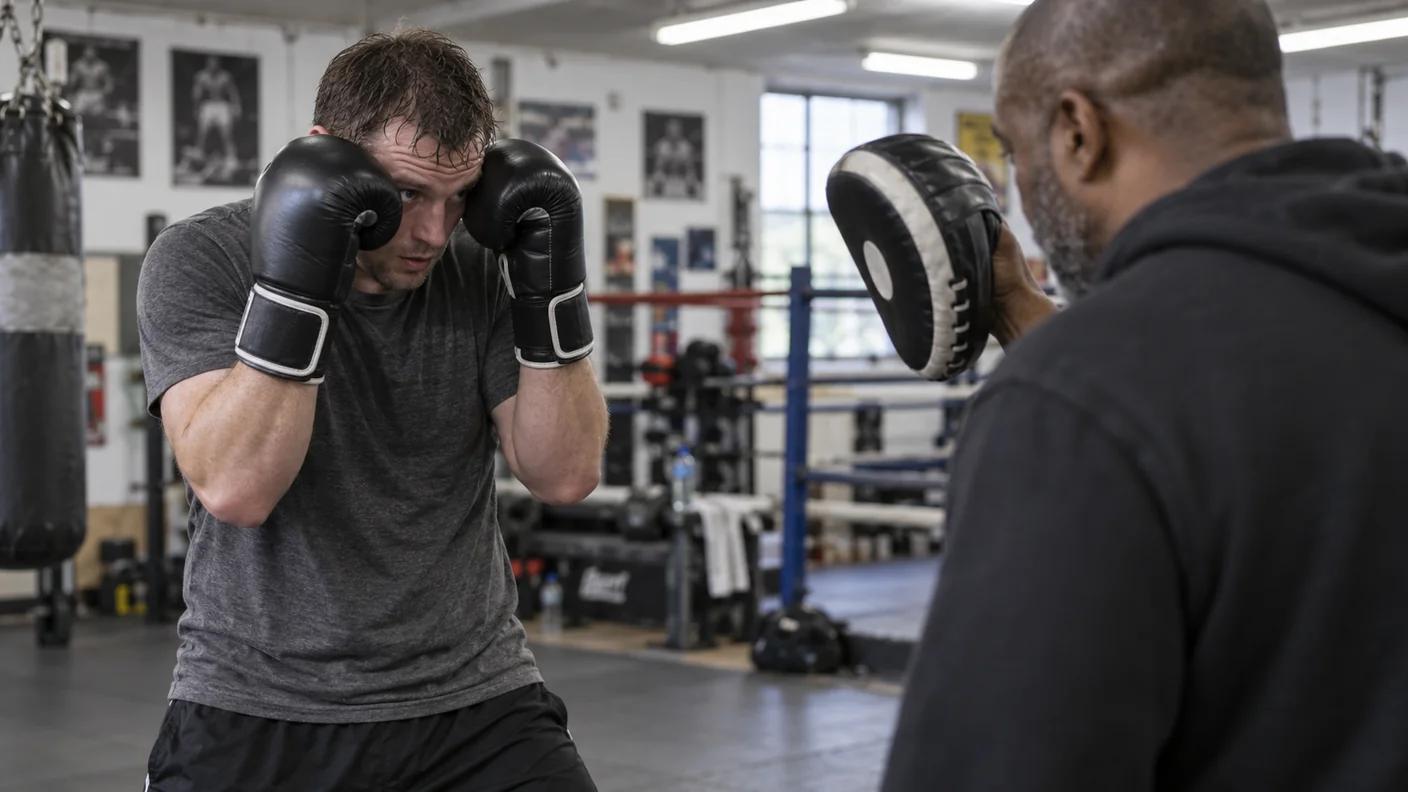
High Guard Defence for Straight Punches and Hooks
Learn how small high-guard adjustments help you cover straight punches and hooks without losing your eyes, stance or next step.
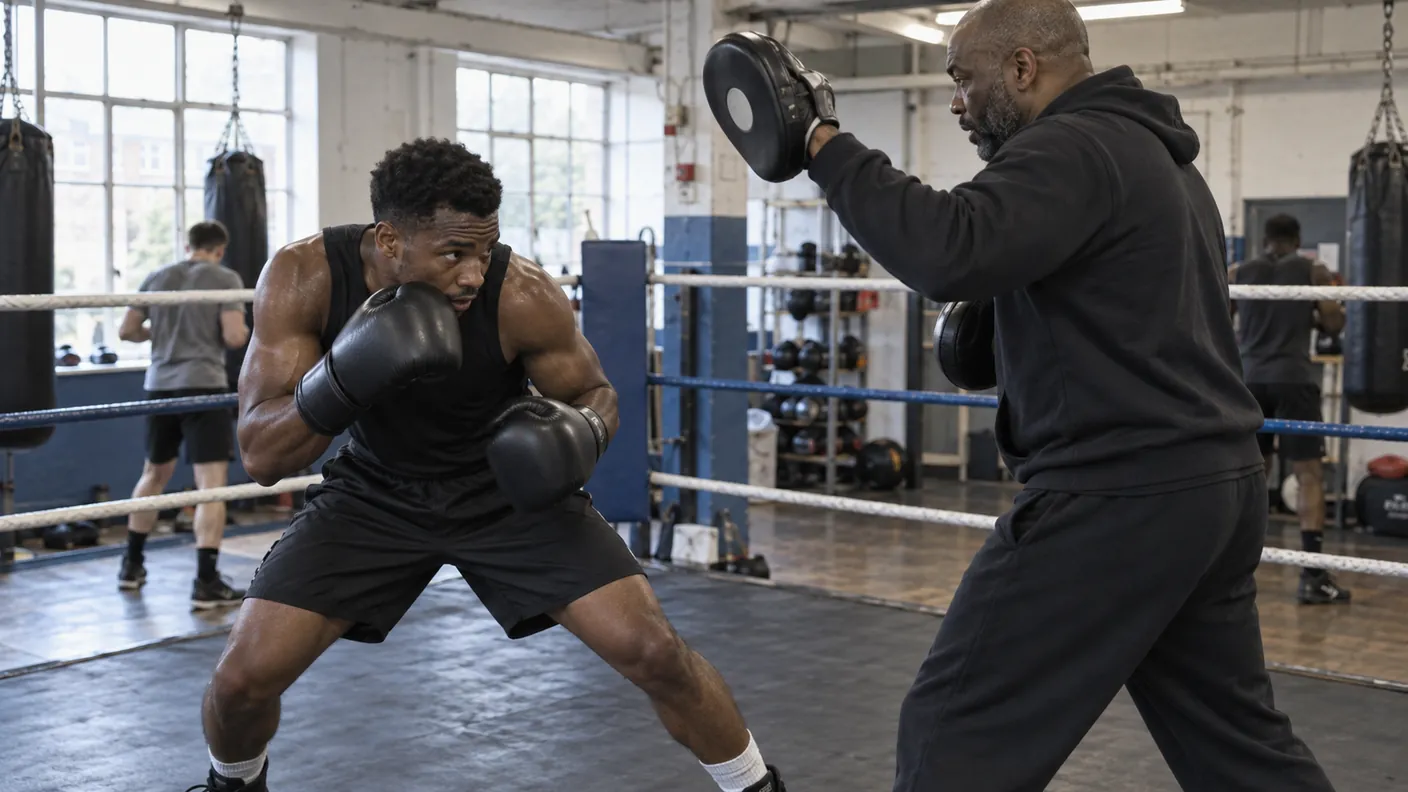
High Guard Boxing: Stay Covered Without Freezing
Use a high guard that protects your head while your feet, eyes and next decision stay active under pressure.
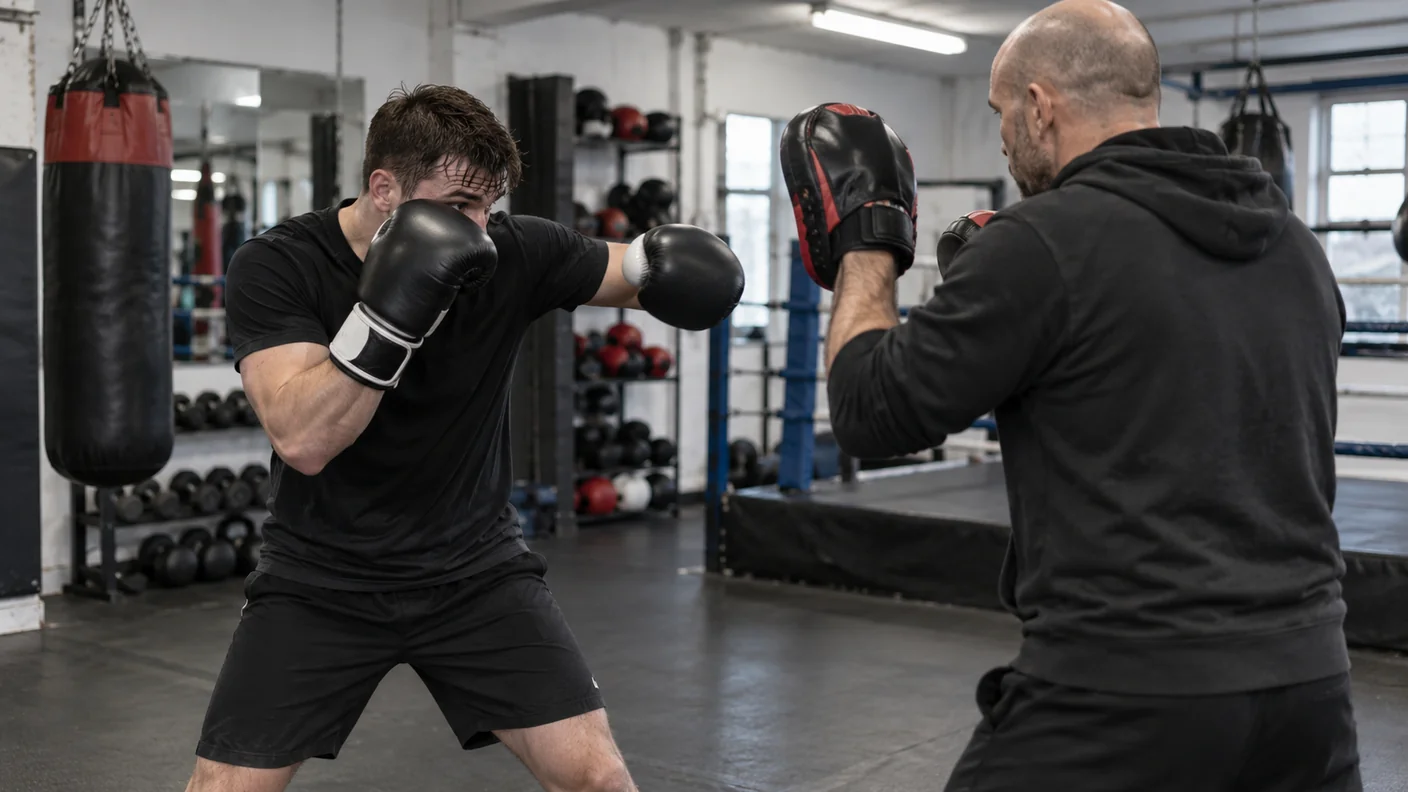
High Guard Block to Lead Hook: Boxing Counter
Use a compact high guard to block a straight line, then return with a short lead hook only when your stance and range are ready.
Was this page helpful?
It takes one tap, and it genuinely helps.
Choose your next step
Turn this article into the right action
Some readers are ready to book. Some need the class route first. Pick the route that matches what you actually want.