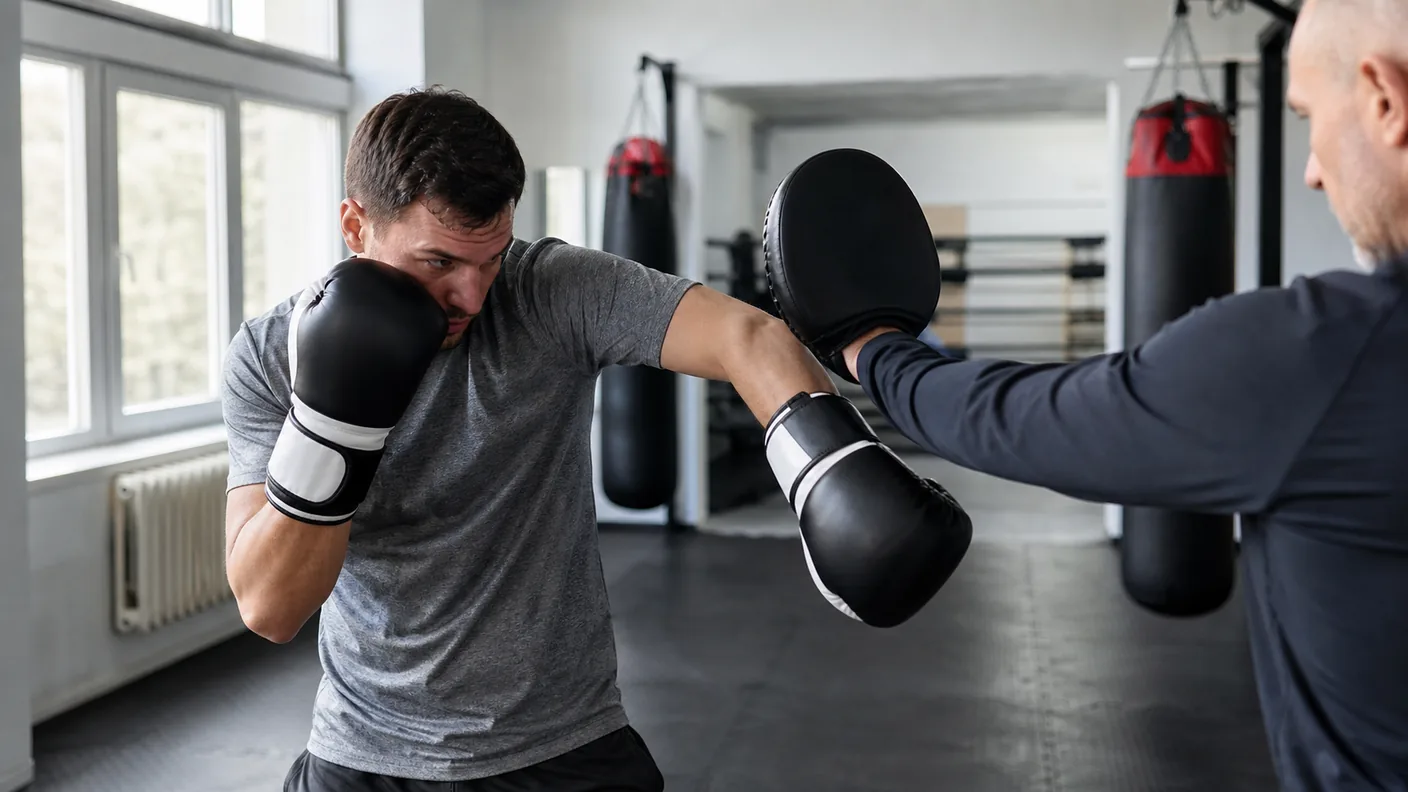
A down parry is a small defensive touch that moves a straight punch away from its line. It is useful when you can see the shot early enough to redirect it, but you do not want to make a large slip, block behind both gloves or give up your own position.
The important word is small. A good down parry does not swat at the opponent's glove or drag your hand towards the floor. The hand makes a short path, the elbow stays connected, your eyes stay up and the glove returns to a working guard before the next punch arrives.
The video below is a useful visual reference. Watch how a parry can become a brief defensive beat rather than a big arm action. The coaching standard is still simple: protect yourself first, then decide whether the range gives you a safe return.
What a down parry is for
The down parry works best against a predictable straight line. It can take a jab or a straight body line off course by guiding the wrist or glove down and slightly across, instead of trying to meet force with force.
England Boxing's Level 1 coaching handbook describes an outside parry to a straight body shot as a downward sweep that makes contact near the opponent's wrist, with the defender staying in range and ready to counter. That is the useful principle here: redirect the line, keep your own shape, and do not reach so far that you open a bigger problem.
For an orthodox boxer, the hand choice depends on the incoming shot and the position you are in. A rear-hand parry can deal with the opponent's jab while leaving your lead hand available. A lead-hand parry can deal with a straight rear hand if the range and timing are right. Do not turn this into a fixed rulebook. Start with one pre-agreed punch in a coached drill and learn what a compact movement feels like.
The hand does not chase the punch
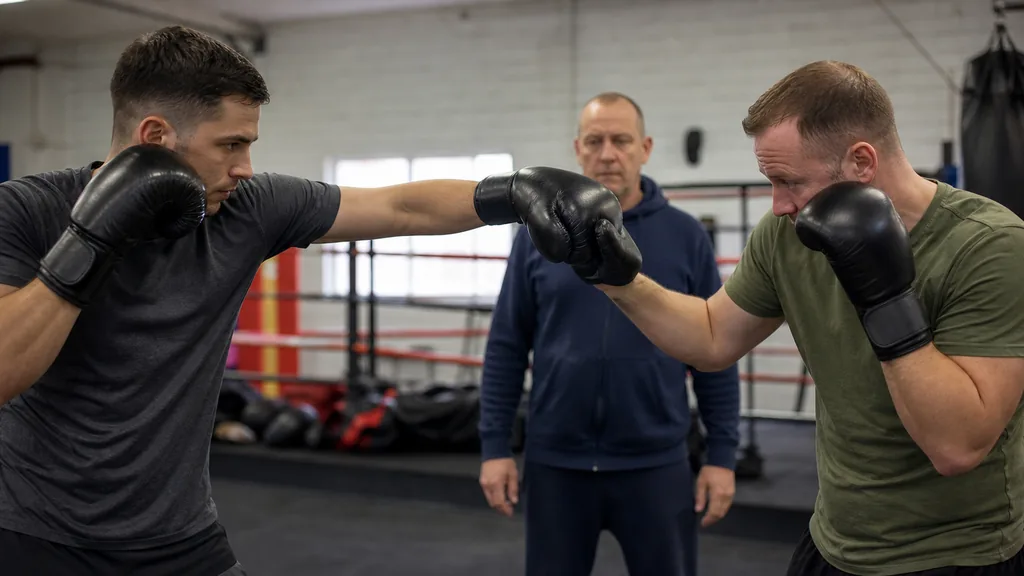
The main mistake is trying to knock the punch away at arm's length. A boxer sees a jab coming, reaches forward with a wide sweep and feels pleased that the glove never reached their face. Then the other boxer brings the hand back, throws the rear straight, and finds an open line because the parrying hand is still travelling home.
The defence should happen near your own space. Let the incoming punch enter the edge of your guard, make the small downward touch, and recover immediately. Your elbow should not fly away from the ribs. Your shoulder should not turn so far that the chin appears. The other hand remains where it can protect the face.
A useful cue is: brush, return, look. Brush the line off course. Return to your guard. Look for what follows instead of staring at the glove you just moved.
This is why a down parry is not a replacement for the basic answers in how to defend the jab. Sometimes the right answer is a catch, a small slip, a high guard or a step out. Use the smallest defence that deals with the punch in front of you.
Keep your feet underneath you
The hand movement is only useful if the rest of you stays available. If the parry pulls your weight over the front foot or locks both feet to the floor, you have solved one punch and made the next one harder.
Stay in your ordinary stance. Keep a light bend in the knees. Make the parry from a position where you could still take a short step, jab back or cover the next shot. The goal is not to win a hand fight. It is to keep the opponent's straight line from finding you while you stay able to box.
A study of lead straight-punch mechanics underlines how much a jab depends on the legs and trunk as well as the arm. The defensive lesson is similar. When your feet, torso and hands stay organised, a small movement can do enough. When the feet stop and the arm reaches, the whole defence becomes late.
A three-step down-parry drill
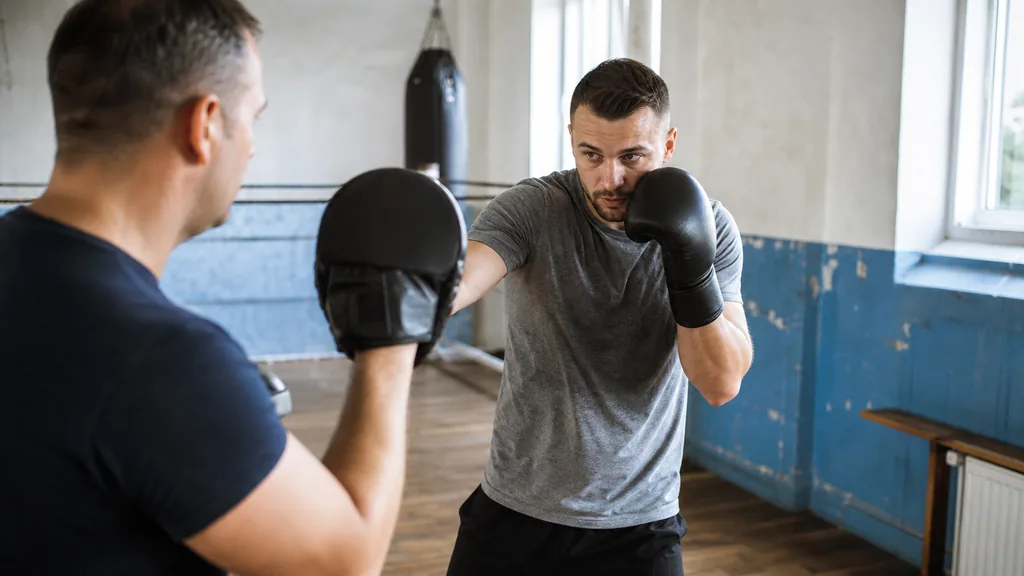
Use gloves, a clear target line and no hard contact. The partner's job is to give a readable straight punch, not to test whether you can react under pressure.
Step one: parry and reset
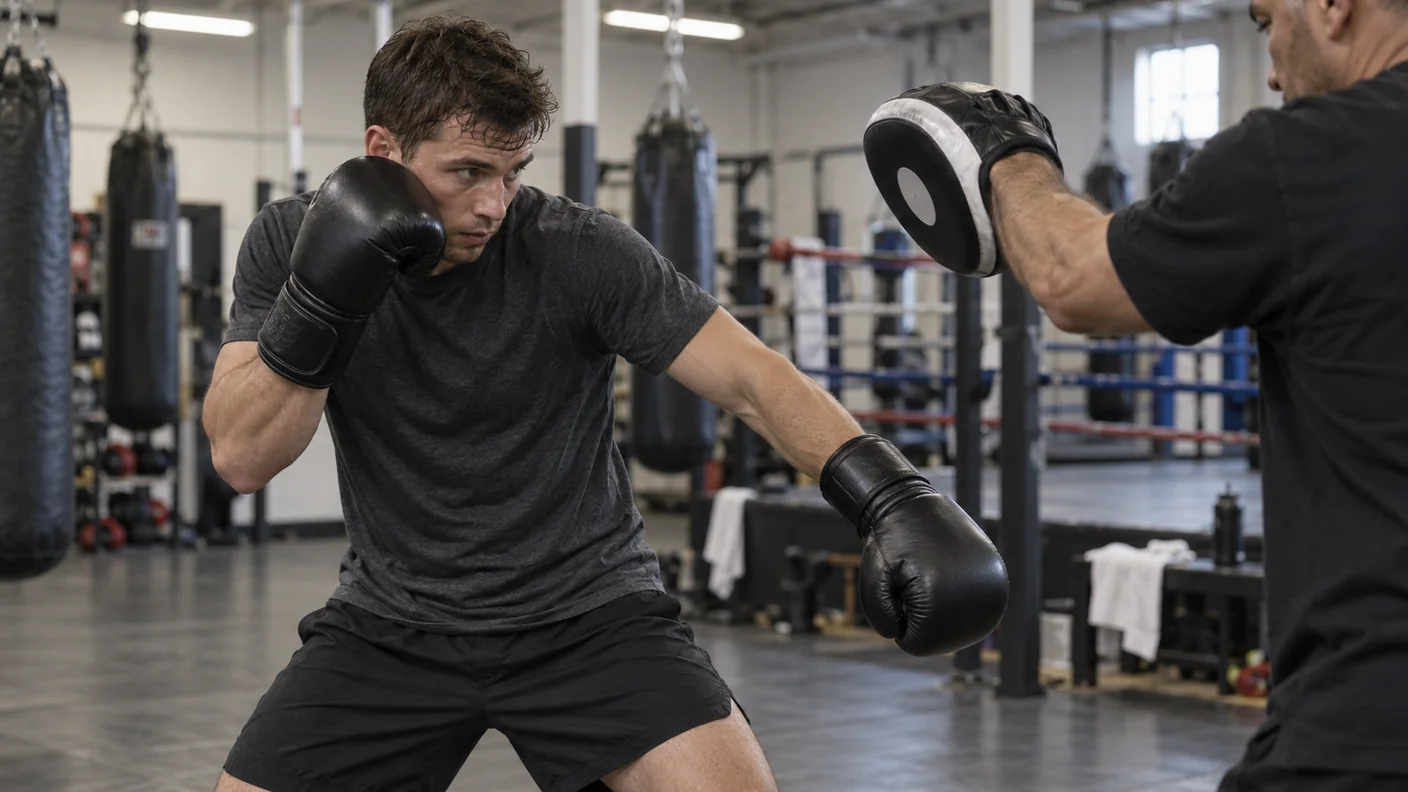
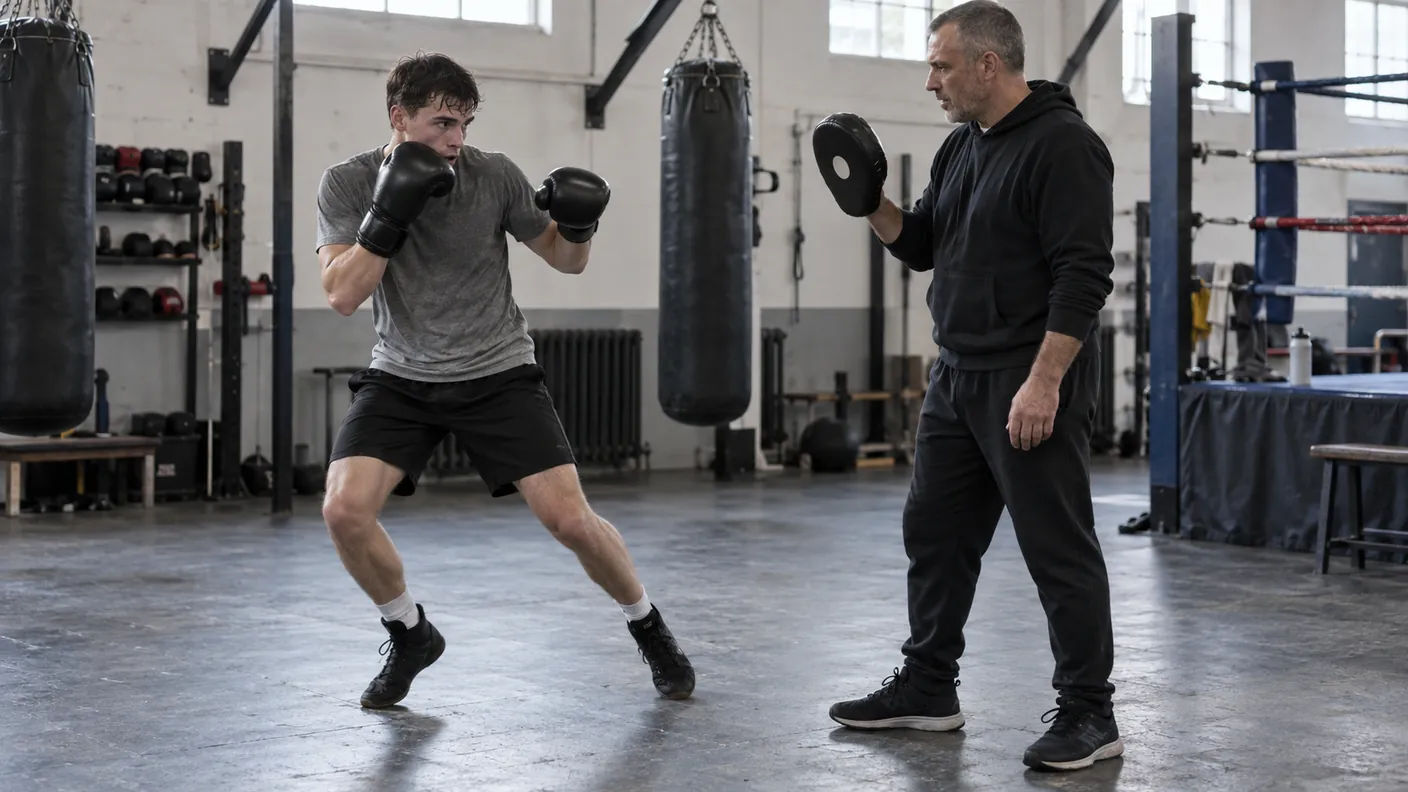
Partner A extends a slow jab or straight line to the chest-height target. Partner B makes one compact downward parry, then brings the glove back to guard without throwing anything.
Work ten controlled repetitions each. The coach should be able to see the chin stay down, both feet remain in stance and the non-working hand stay near the cheek. If the parry becomes a big swipe, slow it down before adding a counter.
Step two: parry, jab, step out
Use the same slow feed. This time, after the parry, Partner B returns a light jab to a mitt or agreed target, then takes one small step out. The jab is there to practise recovery, not to score a point on your partner.
This gives the defence an ending. You have moved the shot, made a simple answer and left the original line. If the jab needs a reach, the distance is wrong. Reset rather than making the counter bigger.
Step three: choose the safe response
Now Partner A may show either the pre-agreed straight line or no punch. Partner B must not parry automatically. If the shot comes, make the compact parry and choose one answer: jab, light cross to a mitt, step out or reset.
That final choice matters. A parry is not a command to throw a hard counter every time. If the other boxer is too close, bring both gloves back and cover. If they have stepped away, do not chase. Good defence creates options, not obligation.
When not to use it
Do not force a down parry against every jab. A sharp jab at close range may need a tighter catch, a small slip or a high guard. A hook needs a different answer. A combination may require you to cover, angle away or reset rather than looking for one clever hand movement.
It is also not an excuse to practise loose lead hands. The glove should leave the guard only long enough to do its job. Our guide to boxing guard spacing explains why a working guard needs room to catch, parry and punch without becoming either cramped or casual.
The parry becomes more useful when the opponent has a habit you can see. Perhaps they jab from the same distance, reach with the lead hand after a pause, or fire the straight body line without moving the feet first. Notice the pattern in controlled work. Then use the smallest movement that leaves you able to respond.
Four faults to correct early
The first is slapping down with a straight arm. That exposes the head and makes it difficult to recover for the next punch. Keep the elbow soft and the movement near the body.
The second is looking at the hand. Your eyes should stay on the person in front of you. If you watch the glove fall, you will miss the hook, the next straight shot or the step that follows.
The third is countering before you have defended. The parry has to move the line first. If you throw at the same time without having created space, you may simply collide with the attack.
The fourth is standing still after the parry. Make one decision after the touch. Jab, cover, step, angle or reset. The stillest moment after a defence is often when the next punch gets through.
If you are near Kidbrooke, our Recreational Adults boxing classes use coached pad work and controlled partner drills to make defensive details practical. You do not need hard sparring to learn how a compact parry, a balanced stance and a calm reset fit together.
The cue is simple: move the line, bring the glove home, stay ready.
H&G Team
Writer at Honour & Glory Boxing Club, a community boxing gym in Kidbrooke, South East London.
KEEP READING
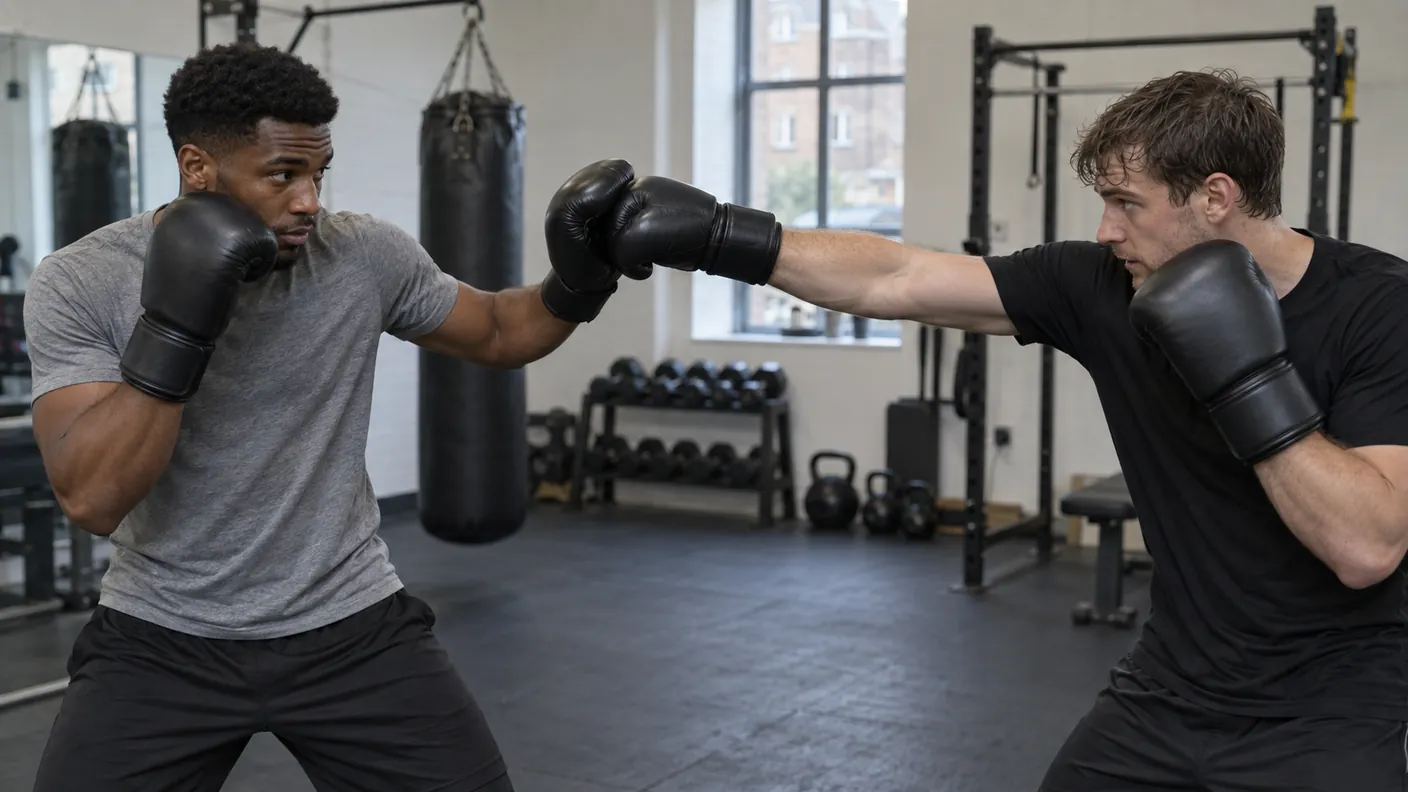
Parry and Return: A Boxing Drill for Straight Punches
Use a compact parry against straight punches, keep your guard in place and return only when the range and stance make sense.
Down-Parry Jab: Open a Long Guard
A controlled boxing drill for moving an extended lead glove, finding the jab line and returning to guard without reaching.
Parry While Moving: A Boxing Pressure Drill
Use a compact parry and small side step to leave pressure behind without reaching, freezing or rushing a counter.
Was this page helpful?
It takes one tap, and it genuinely helps.
Choose your next step
Turn this article into the right action
Some readers are ready to book. Some need the class route first. Pick the route that matches what you actually want.