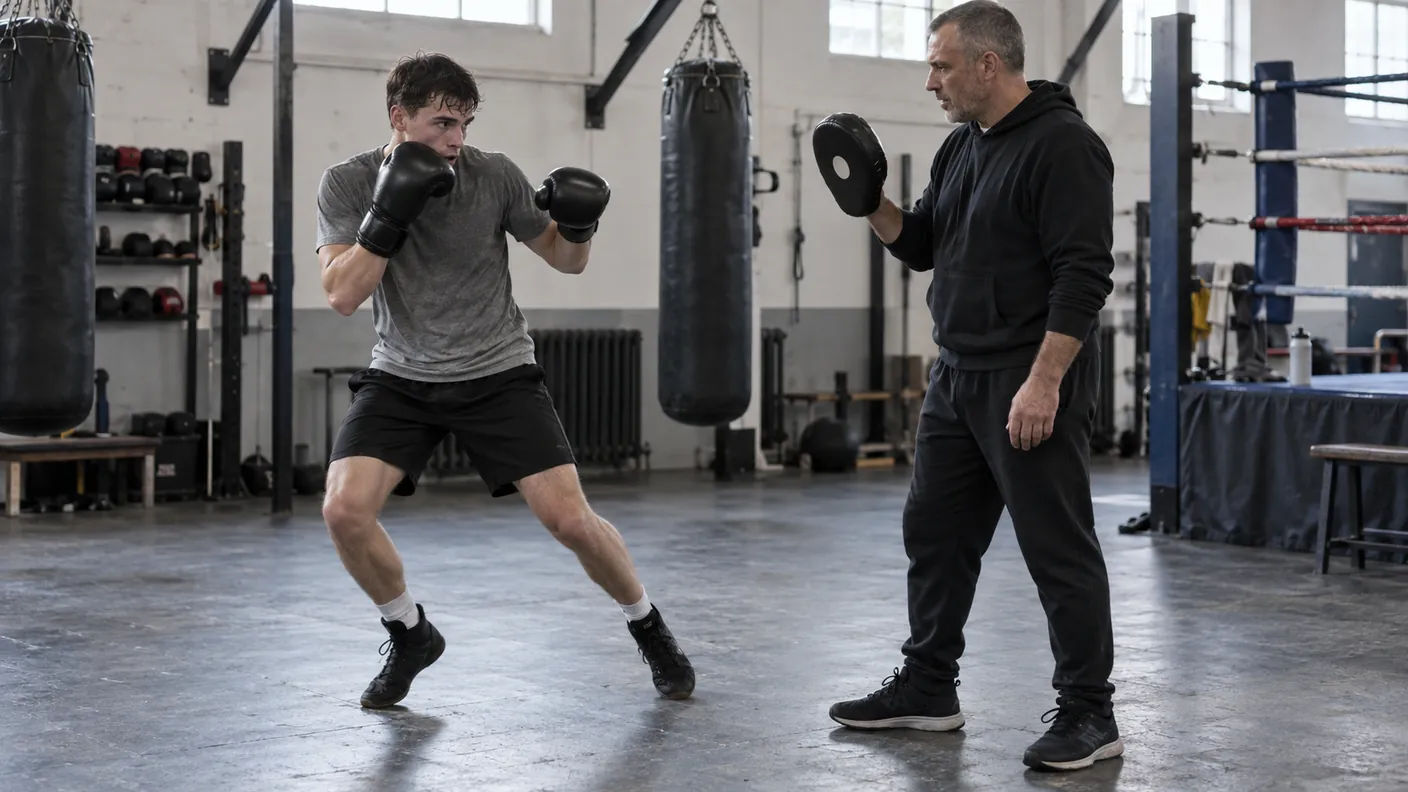
The moment a boxer tries to leave a pressure line is often the moment they get caught. They see the space beside them, step across quickly, and let the lead hand drift away from the job it was doing. The other boxer only needs one straight shot to make the exit feel much less clever.
A parry while moving gives you a simpler answer. You make a small change to the jab line as the feet take a small change of angle. It is not a counter-punching trick and it is not a licence to wave the lead hand around. It is a way to leave a straight-line attack with your eyes up, both hands useful and your stance still underneath you.
The video below is a helpful visual reference for the idea of pairing a small parry with footwork under pressure. Treat it as a technical prompt, not a fixed sequence to force in sparring.
Why the step alone can be a problem
A side step changes the line, but it takes a moment. While the nearer foot moves and the other foot restores your stance, you are not standing in exactly the same protected shape.
That does not mean you should stay still. It means the hands need to remain part of the movement. If a partner is coming forward behind a jab, a compact lead-hand parry can take the glove just outside your shoulder line while the feet move you away from the original track. The parry is small enough to recover. The step is small enough to stop.
England Boxing puts stance, balance and controlled progressions at the base of technical coaching in its coaching handbook. That is the standard here. At the end of the step, you should be able to jab, cover or take another step without rebuilding your feet first.
Keep the parry near your own guard
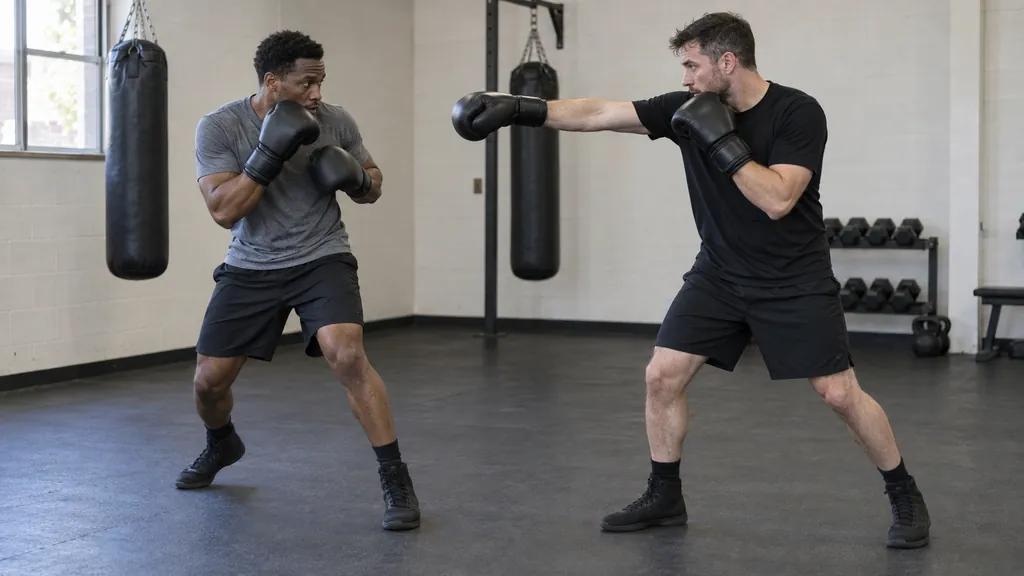
The parry does not chase the incoming glove. If you stretch the arm out to meet a jab early, you have made a large target with your own lead hand and opened the centre for the next shot.
Instead, let the jab reach the edge of your ordinary space. Brush it off line with a short movement from the elbow and forearm, then let the hand return towards guard as the side step finishes. Your rear glove stays near the cheek. Your chin stays behind the lead shoulder. Your eyes stay on the chest and shoulders in front of you.
That is different from trying to win a hand fight. You are not holding the other person down, steering their glove or turning them with the arm. You are making one straight line less useful while you choose a better place to stand.
Our guide to the down parry against straight punches explains the hand action in more detail. Add the step only once the short parry itself is tidy. A rushed footwork layer cannot repair a loose guard.
Let the feet do enough, not everything
A boxer under pressure often makes their first side step far too large. The movement looks dramatic, but the feet end up narrow, crossed or so far from the opponent that the next jab falls short.
The useful version is quieter. Move only far enough to take your head and torso out of the original lane. The foot nearest the direction of travel moves first, then the other foot restores your normal gap. The body does not lean sideways to make up distance. You are shifting position, not throwing yourself out of it.
A review of boxing performance describes effective technique as the connection of movement, defence and tactical choices rather than isolated actions (sports-science review). You can feel that in this drill. The parry without the step can leave you in front of the pressure. The step without the parry can leave you moving with an open line. Together, they can buy a clean second to see what happens next.
The parry-and-exit drill
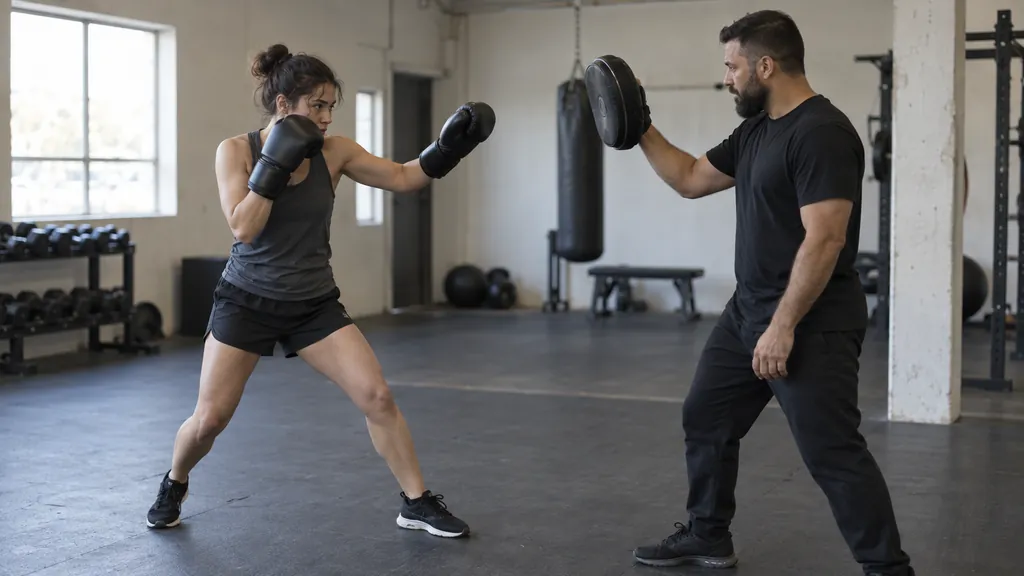
Use gloves, a mitt or a trusted partner. Keep every feed slow and agreed. This is a way to improve position, not an invitation for the feeder to chase their partner across the floor.
Round one: step without the hand
Partner A stands just outside jab range with the lead glove extended as a visual line, but does not punch. Partner B takes one small side step left or right, resets the stance and freezes for a count of one.
Check the finish. Both feet should still have width. The rear hand should be available. Partner B should be able to throw a light jab to a mitt without taking an extra shuffle. If any of those are missing, make the step shorter.
Round two: parry and step
Partner A now gives one slow jab line. Partner B makes a short parry as the side step begins, brings the hand home and resets. There is no return punch in this round.
The coach should look for timing, not speed. If the parry happens long before the feet move, it becomes a separate habit. If the feet move first and the hand arrives late, the jab can still find the lane. The two movements should feel joined but not rushed.
Round three: choose one finish
Partner A can now show a jab, a forward step without a jab, or nothing. Partner B must read the cue.
Against the jab, parry and take the small angle. Against the forward step, cover or take the angle without a parry. Against no cue, stay balanced rather than moving automatically. After the exit, Partner B may touch one coach-held mitt with a light jab only if it appears at honest range. Otherwise, reset.
This is the part that transfers. The drill is not teaching a scripted answer to every jab. It is teaching you to leave pressure with enough shape to decide what comes next.
Four faults that make the drill worse
The first is slapping down at the jab. A big sweep can feel satisfying, but it leaves the lead hand away from the face and gives the other boxer a simple route back through the middle. Brush, return, look.
The second is moving too late. If the jab has already forced you into a tight guard, a large side step may be unrealistic. Cover, settle and take the next safe exit instead. Good boxing includes knowing when the neat answer has passed.
The third is looking at the floor during the step. The feet need to learn the shape, but the eyes need to read the person in front of you. Looking down turns a controlled exit into a guess.
The fourth is treating the jab after the exit as compulsory. The best result can be one small parry, one small step and a return to open range. You do not need to make every defensive moment look like a counter.
Where the drill fits in class
Use it after a warm-up and before faster bag or pad rounds. Two or three one-minute rounds on each side are enough to make the coordination clear. Stop when the hands start sweeping or the feet start crossing.
It also belongs before the ropes are close. If you are already pinned with your shoulders against the ropes and the other boxer is throwing in combinations, a compact cover, a coached clinch or a simple turn may be safer. Our guide to getting off the ropes without panic covers that more urgent situation.
For adults in Kidbrooke, Greenwich and nearby, our Recreational Adults boxing classes build this kind of decision through coached pads and controlled partner drills. You do not need hard sparring to learn how a small hand movement and a sensible step can keep you out of a bad line.
The cue is simple: move the jab, move your feet, stay ready.
H&G Team
Writer at Honour & Glory Boxing Club, a community boxing gym in Kidbrooke, South East London.
KEEP READING
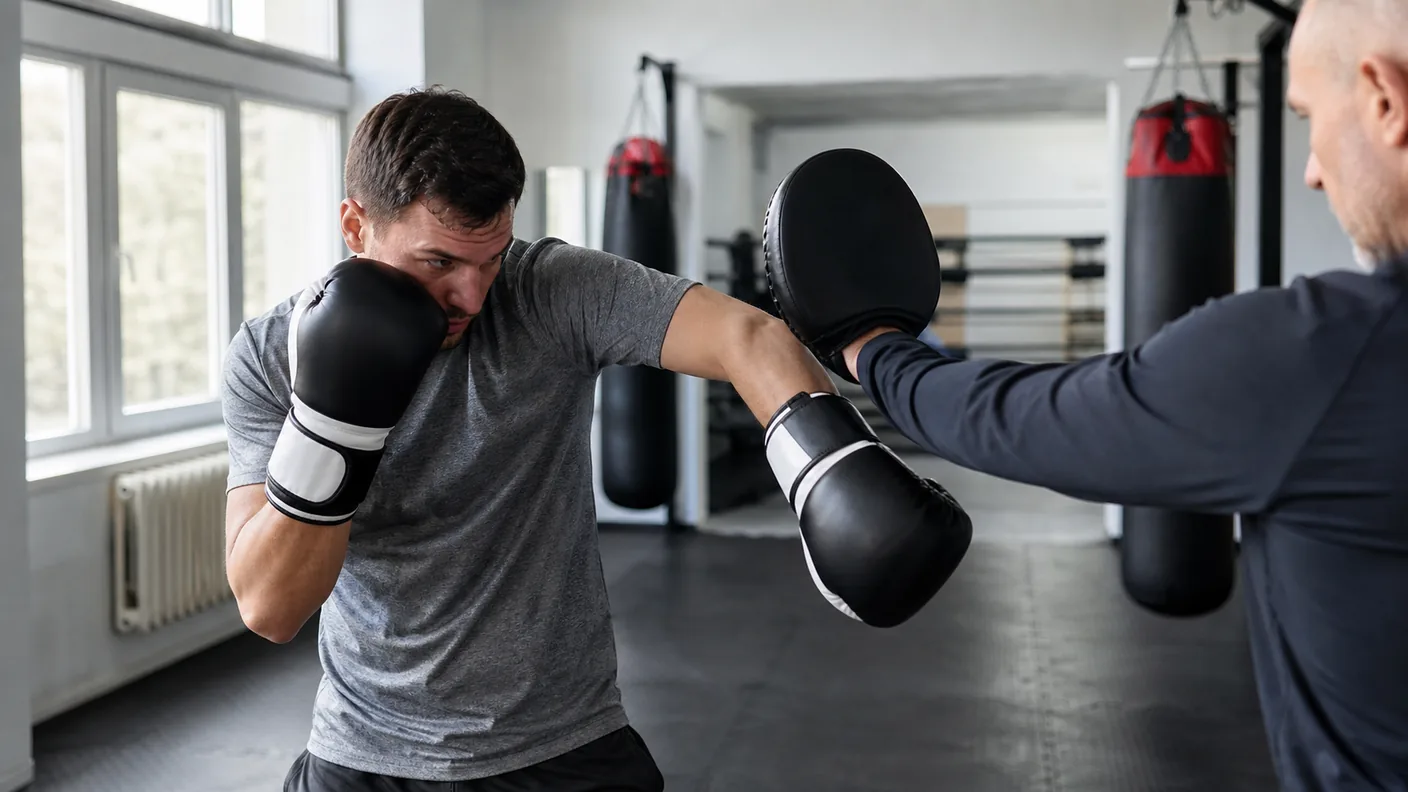
Down Parry in Boxing: Defend Straight Punches
Use a compact down parry to move a straight punch off line without reaching, losing your guard or freezing after the defence.
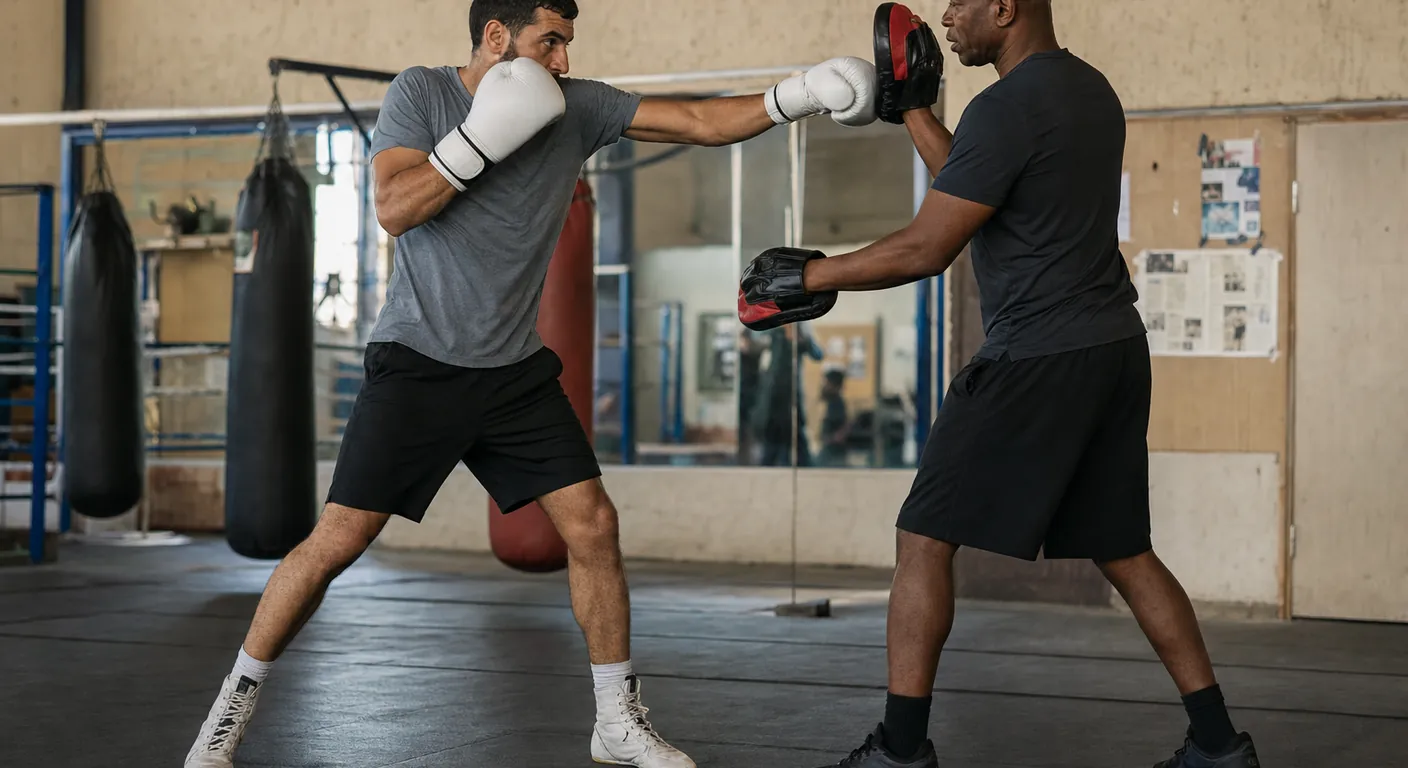
Shift Counter in Boxing: Punch as You Move
Learn the shift counter: a simple way to step off pressure and punch while you change angle, instead of backing up in panic.
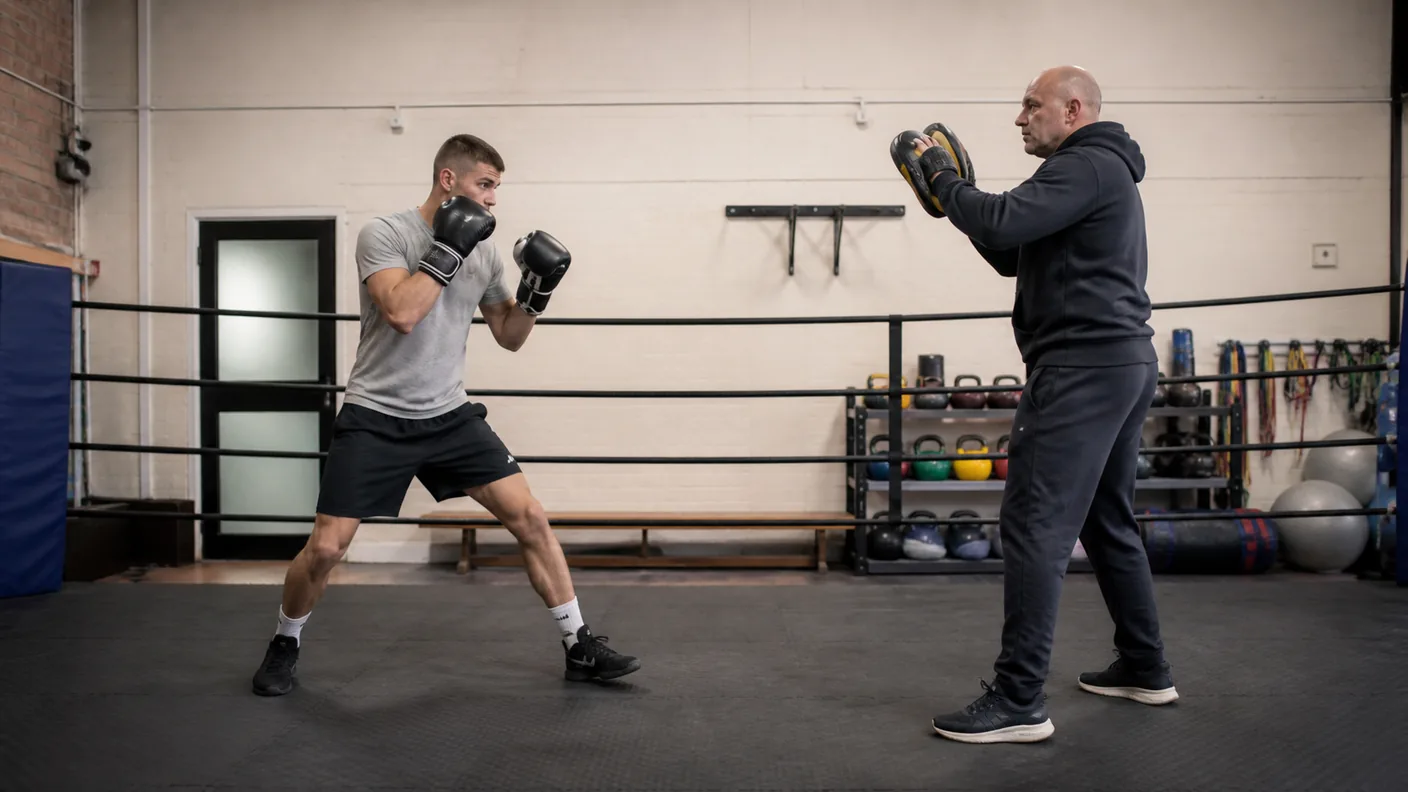
Boxing Side Steps: Move Without Drifting
Use a small boxing side step to leave the centre line without crossing your feet, wasting movement or losing the chance to punch back.
Was this page helpful?
It takes one tap, and it genuinely helps.
Choose your next step
Turn this article into the right action
Some readers are ready to book. Some need the class route first. Pick the route that matches what you actually want.