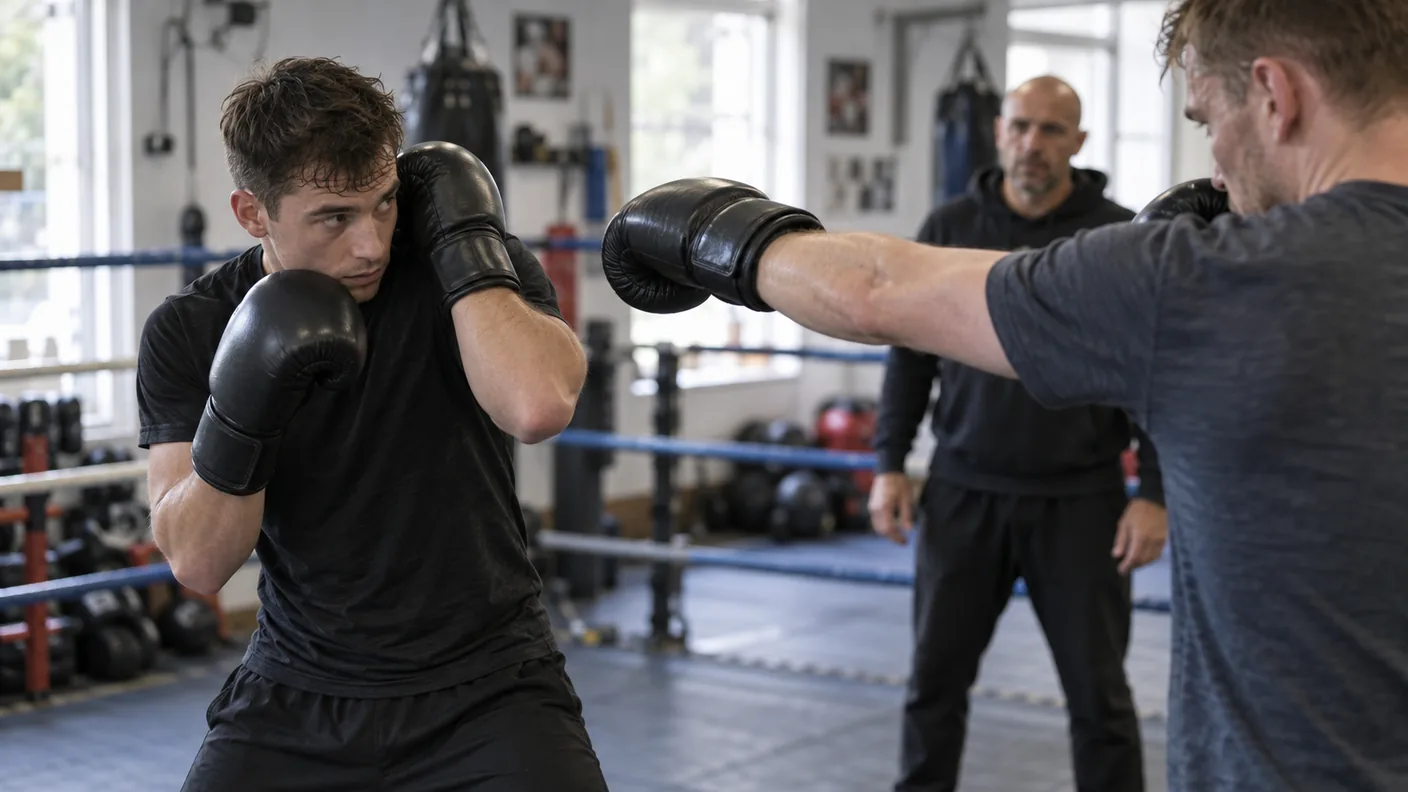
The elbow parry is a small answer to a common problem: a jab arrives, you reach for it, and your own guard opens before you have made the punch miss.
A compact elbow parry gives the jab a firmer surface without sending either hand searching across the centre line. The rear glove stays close to the cheek, the elbow sits in front of the ribs, and the forearm turns just enough to make the incoming jab glance away. You then have a choice. You can jab back, take a step out, cover the next shot or simply reset.
The embedded video gives a useful visual reference. Watch how little the defensive shape needs to travel. The useful version is not a dramatic elbow lift or a trick borrowed from a particular style. It is a tight defensive detail that keeps a beginner in stance.
What the elbow parry is for
An elbow parry is a compact way to change the line of a straight jab when it reaches the edge of your guard. The glove stays near the face and the elbow makes a short outward turn, so the jab meets a solid part of the arm rather than landing cleanly down the middle.
It is not a replacement for a normal rear-hand catch. It is a useful variation when the catch feels too open or when you need the rear glove to stay close to your cheek. The aim is not to knock the other glove away. The aim is to make the line awkward, keep your posture and be ready for what comes next.
England Boxing places balance, guard and controlled footwork at the centre of sound technique in its coaching handbook. That is a good test here. If the movement lets you jab, cover or step out immediately, it is doing its job. If it pulls your shoulder open or tips your weight backwards, make it smaller.
Keep the glove home and turn the elbow a fraction
Start from an ordinary boxing guard. For an orthodox boxer, the rear glove sits near the right cheek and the rear elbow protects the right-side ribs. A slow jab arrives on the centre line. Let the elbow shift out by a few inches while the forearm turns slightly across the jab's route.
The hand does not need to chase the glove. Think of closing a small gate in front of your chin, not swatting a ball away. Your eyes stay on the partner, your chin stays down and your feet stay in the same usable stance.
The common mistake is lifting the elbow until the ribs are bare. The other version is pushing the whole forearm forward, which turns a tidy defence into a reach. Neither leaves much left for a second punch. A compact parry should feel almost boring.
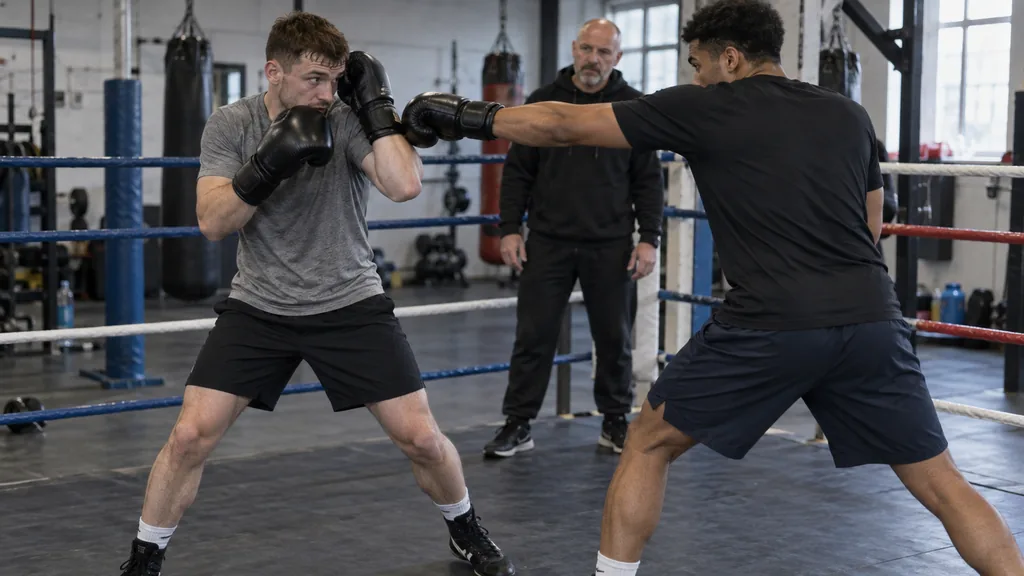
Choose the next action instead of rehearsing a counter
The elbow parry can create a moment, but it does not promise a right hand. Beginners often make a defensive move and throw the counter they had already planned, whether the target is there or not.
Use the parry to read what happens after the jab. If the partner has reached and stayed in front of you, a measured jab to a mitt may be available. If they have stepped away, return to range. If they are following the jab with a cross, the rear glove needs to come straight back to its normal guard position before you decide anything else.
A review of anticipation in combat sports found that stronger performers make better use of early movement information. In a boxing class, that means seeing the shoulder, front foot and second hand before you decide to counter. The elbow parry is useful because it buys a clearer look without making you move miles away from the action.
This is closely related to our guide on defending the jab in boxing. A catch, slip, block, parry or small exit can all work. The right choice depends on range, the punch coming and whether you can still stand properly afterwards.
The three-round elbow parry drill
Use a coach, a partner wearing gloves or a foam-noodle cue. Keep the pace technical. This is a drill for clean defensive positions, not an excuse to test somebody's chin.
Round one: find the shape
Partner A shows a slow jab down the middle. Partner B makes the smallest useful elbow parry, returns the rear glove to the cheek and freezes for one count. No counter punch yet.
Check three things after each repetition. The rear elbow should not be flying out, the lead glove should still be able to jab, and the weight should remain between the feet. If you need to take a recovery step every time, the movement is too large.
Round two: parry and choose one safe finish
Add a single coach-held mitt after the jab. Partner B uses the elbow parry, then chooses one response: touch the mitt with a jab, take a short step out or return to guard without punching.
The coach should remove the mitt on some repetitions. That matters. It teaches you that defence does not owe you a counter. If the target is gone, the correct answer is a calm reset.
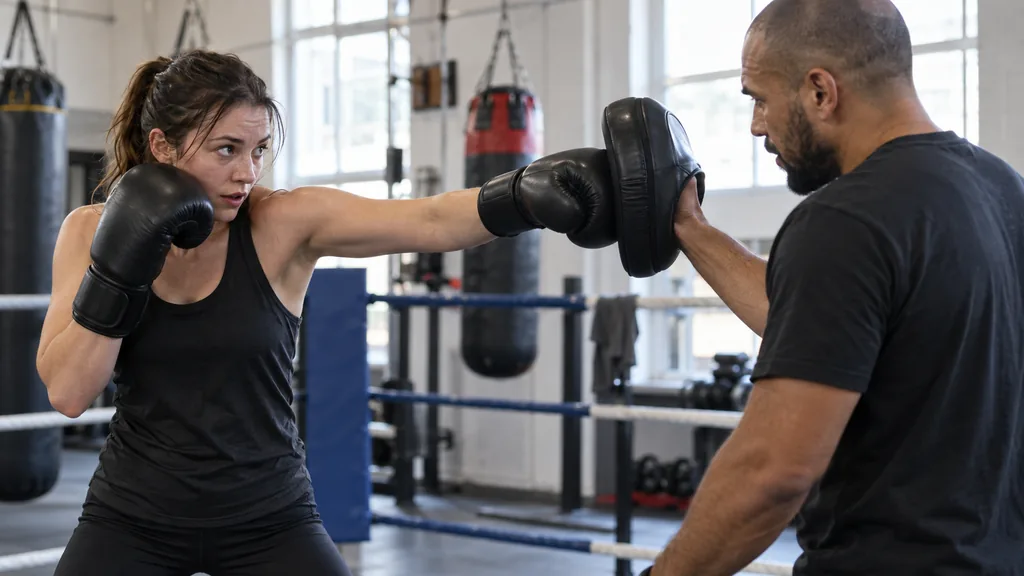
Round three: add the second straight line
Partner A can now show either a jab only or a jab followed by a slow rear straight. Against the single jab, Partner B may elbow parry and use the mitt if it is presented. Against the two-punch cue, Partner B makes the parry, brings the guard tight and covers or steps out rather than trying to race a counter through the second line.
That distinction is the whole lesson. The first defence is not the end of the exchange. You need enough shape left to deal with the next question.
Four mistakes that spoil the drill
First, do not lift the elbow to shoulder height. That exposes the ribs and makes the guard stiff. The elbow only needs to alter one straight line.
Second, do not twist your whole body with the parry. A big turn may look defensive, but it can put you square or make the rear hand slow to return. The elbow moves. The stance stays ready.
Third, do not wait with the glove extended after the jab has passed. The hand and elbow should recover to a normal guard immediately. A defence that cannot return home becomes a target for the next punch.
Fourth, do not use the elbow parry against every attack. It is for a straight line at a sensible range. A hook, a crowded exchange or a boxer already pressing in may call for a tight guard, a step, a frame or a coached clinch instead.
For a related way to turn a jab aside without chasing it, practise the parry and return straight-punch drill. The shared rule is simple: keep the movement small enough that you can still make a sensible next decision.
Where this fits in training
The elbow parry suits a boxer who can hold a basic stance, guard and jab. It works well in technical partner rounds or on pads before harder bag work. It does not need hard sparring to teach the useful part.
For adults in Kidbrooke, Greenwich and nearby, our Recreational Adults boxing classes use controlled drills to connect guard, distance and simple counters without rushing anyone into a scrap.
The coaching cue is short: close the line, bring the glove home, then choose what is actually there.
H&G Team
Writer at Honour & Glory Boxing Club, a community boxing gym in Kidbrooke, South East London.
KEEP READING
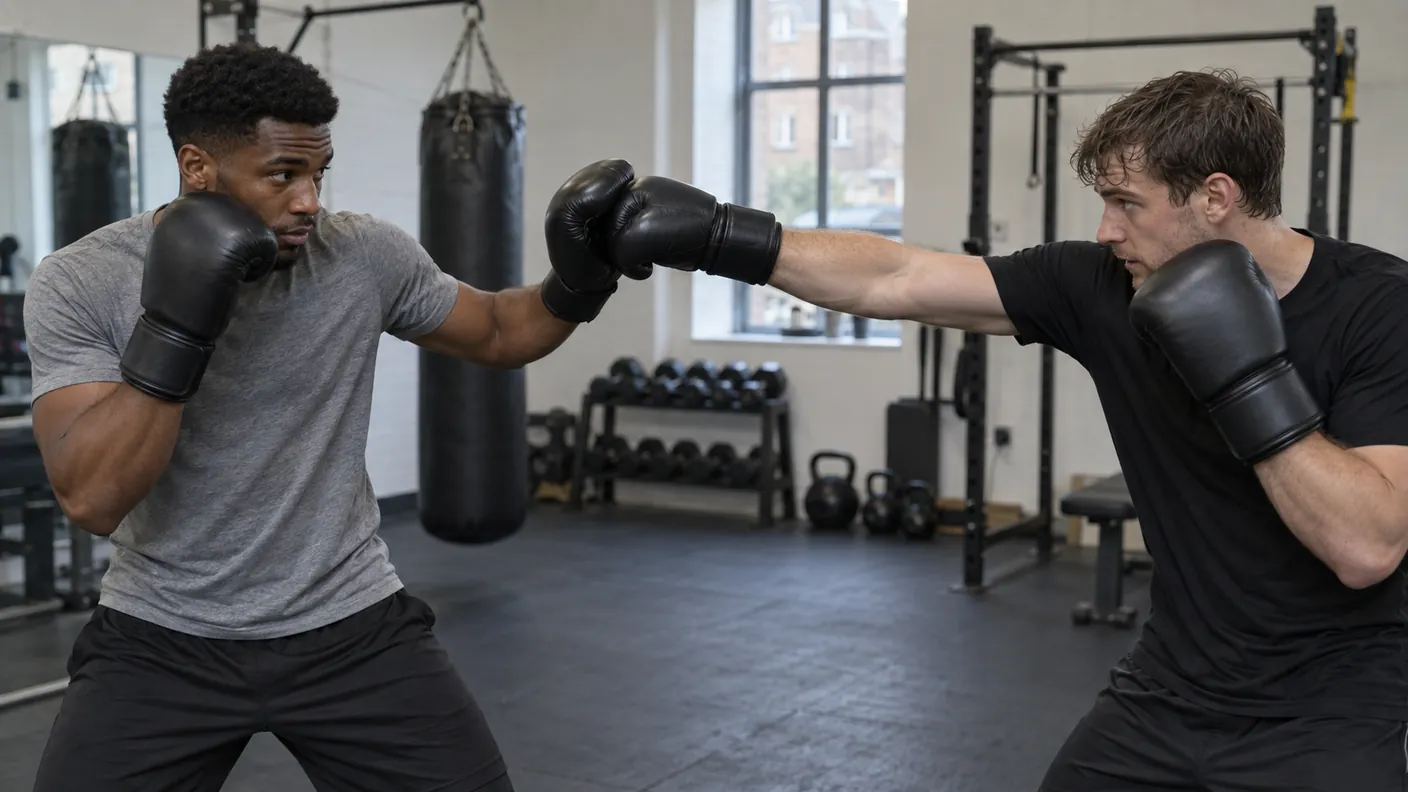
Parry and Return: A Boxing Drill for Straight Punches
Use a compact parry against straight punches, keep your guard in place and return only when the range and stance make sense.
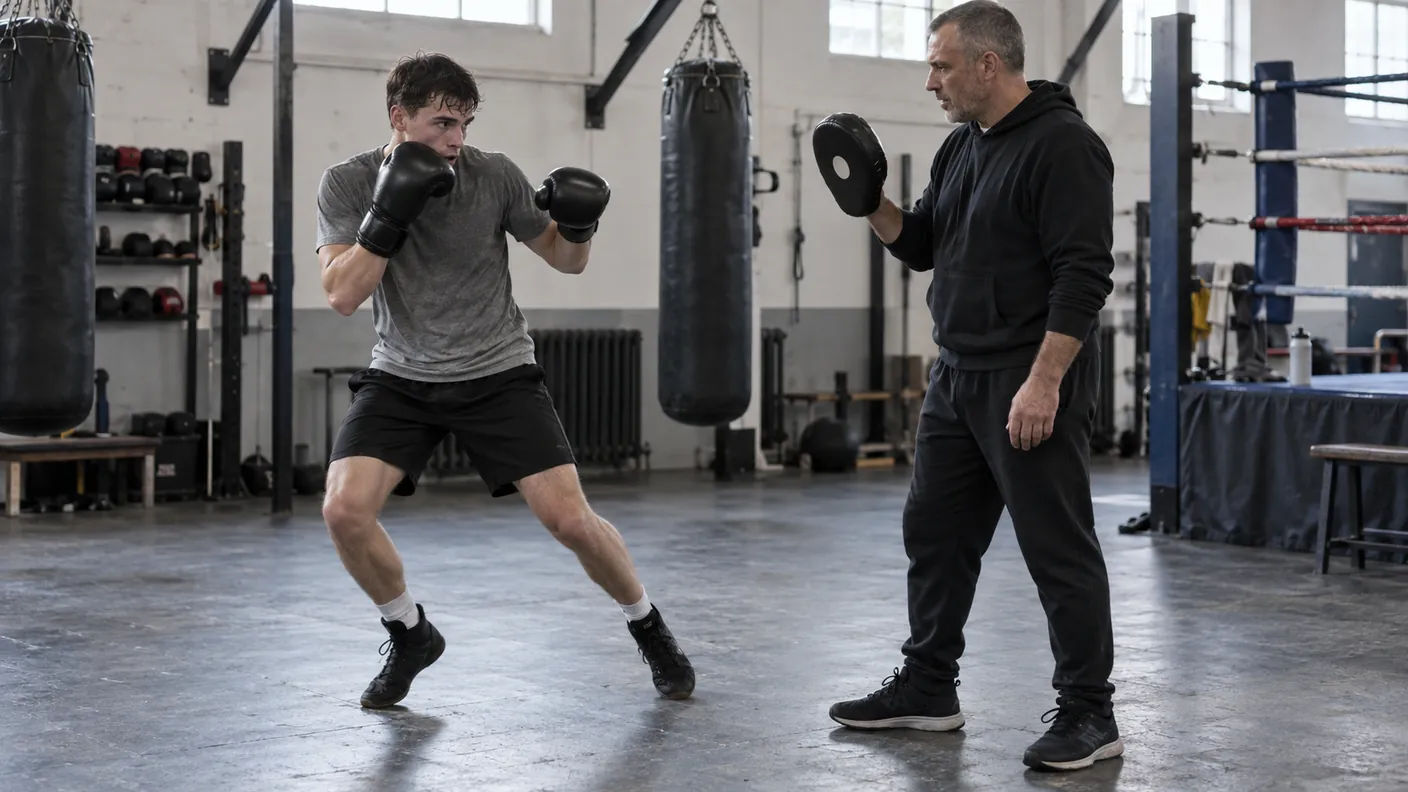
Parry While Moving: A Boxing Pressure Drill
Use a compact parry and small side step to leave pressure behind without reaching, freezing or rushing a counter.
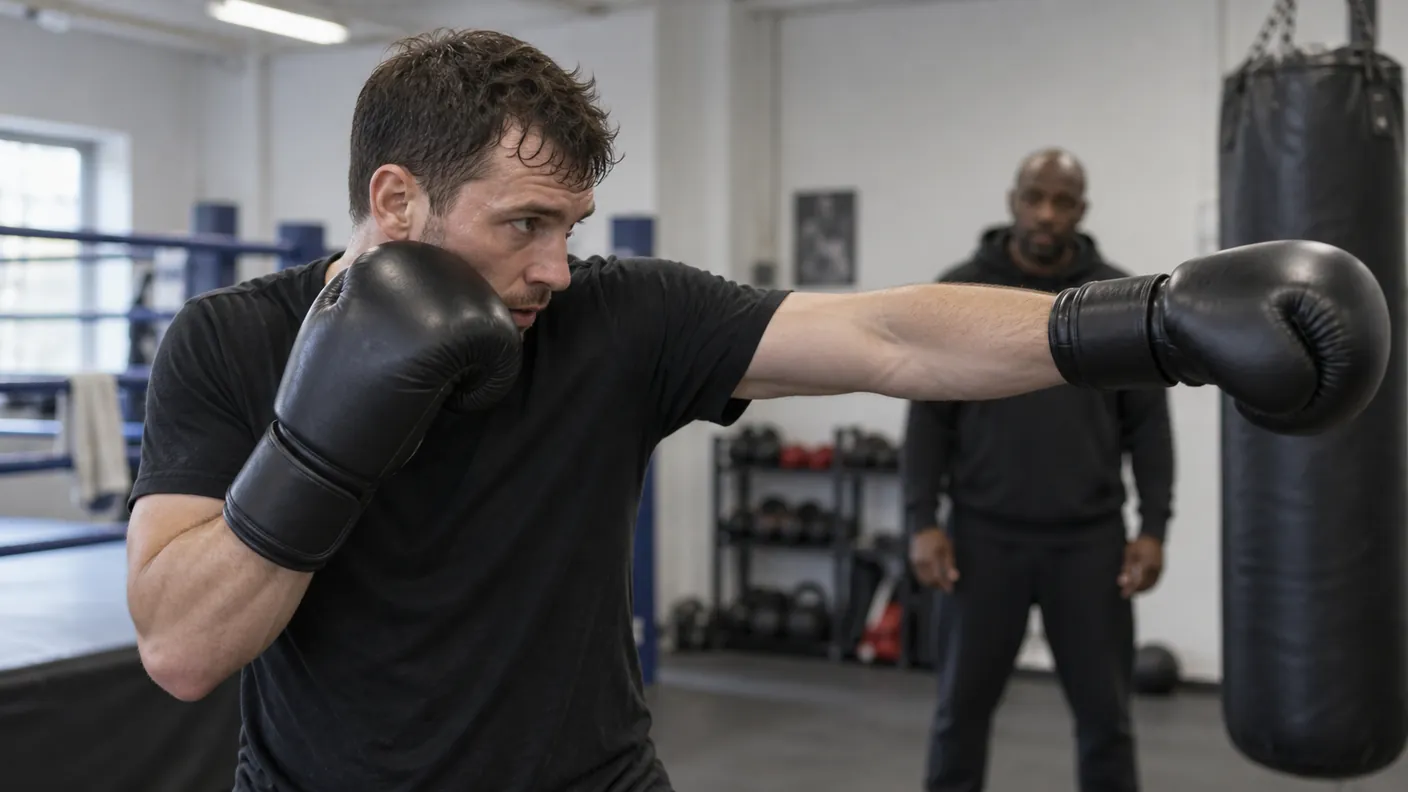
Keep Your Jab Straight: Stop the Elbow Flare
A simple boxing drill to keep your jab on line, protect the rear hand and replace a slow paw with a clean return.
Was this page helpful?
It takes one tap, and it genuinely helps.
Choose your next step
Turn this article into the right action
Some readers are ready to book. Some need the class route first. Pick the route that matches what you actually want.