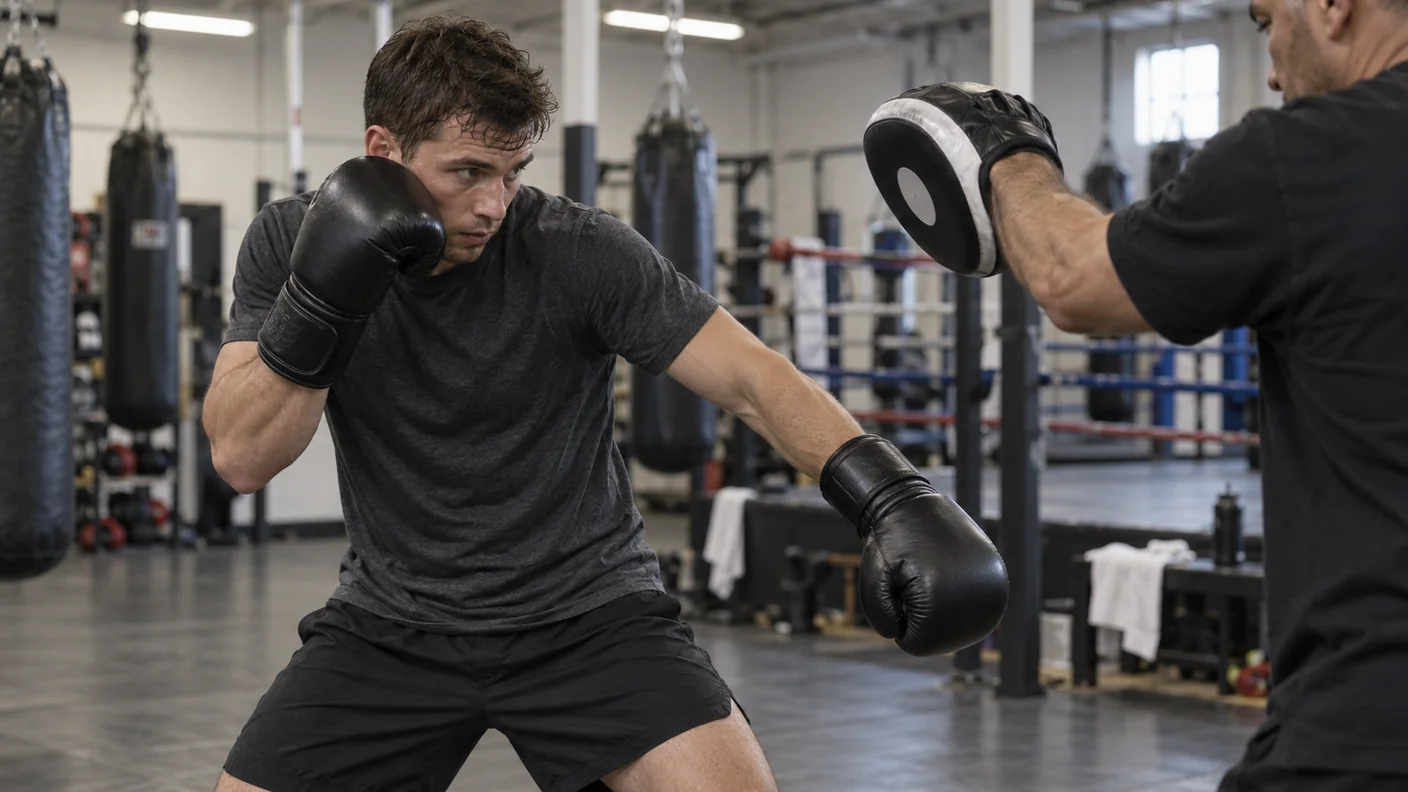
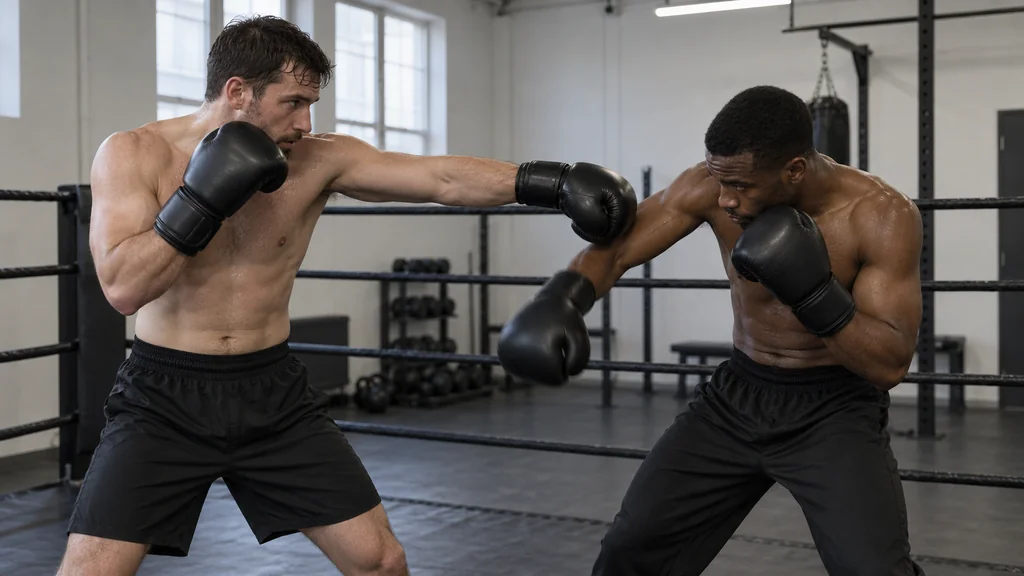
An extended lead glove can make the ordinary jab feel blocked before you have thrown it. Many boxers answer by trying to slap the hand down, then charging through the gap. That normally gives the long-guard boxer exactly what they want: a reaching arm, a fixed head and an easy rear-hand line.
A better answer is smaller. Use a compact downward lead-hand parry to move the extended glove just enough, then take the straight jab only if your feet and guard still agree. The parry is not a trick for winning a hand fight. It is a short interruption that gives you a clearer line to read.
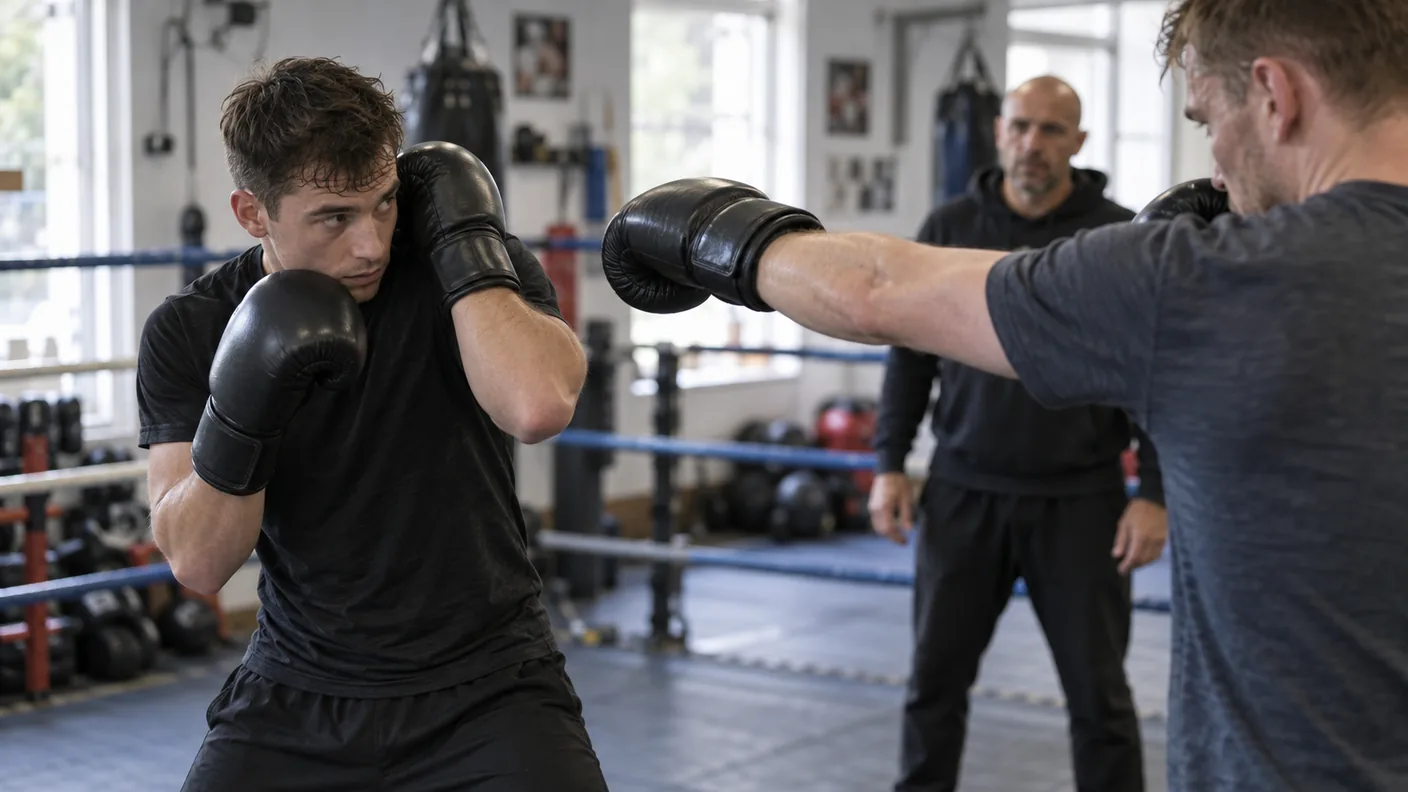
Watch the demonstration below once for the lead-hand activity, then use the drill to keep the movement sensible for normal coached training.
The jab line matters more than moving the glove
The aim is not to drag the other boxer’s lead hand towards the floor. You only need to change the line by a few inches. That can be enough to make their glove stop obscuring the centre while you keep your own rear hand at the cheek.
Start at a range where your jab could reach a mitt without your head travelling past the front knee. If you need to stretch to make contact, no hand movement will make the follow-up safe. Set the distance first.
A long guard still has a rear hand, feet and an exit. That is why the down parry must be brief. Make the touch near the edge of your own guard, bring the hand back towards its normal place and see whether the central line is genuinely available.
Make the parry compact
From orthodox stance, the lead glove makes a short downward brush across the other boxer’s extended lead glove or a coach-held mitt. The elbow stays soft. The shoulder does not chase the hand. Your head stays over the space between your feet.
The same idea applies in southpaw with the sides reversed. The important detail is not the label. It is whether the movement leaves both gloves useful and the stance ready to step, cover or jab.
England Boxing’s coaching handbook places balance, guard and controlled progressions at the centre of technical work. Use that as the standard. If your parry leaves you square, bent over or unable to bring the glove home, it was too large.
This is different from trying to force an opponent’s hand down. A forceful push can make them pull you out of line, parry over your arm or step back before the jab arrives. A compact touch gives you information without giving up your own shape.
Jab only when the line is honest
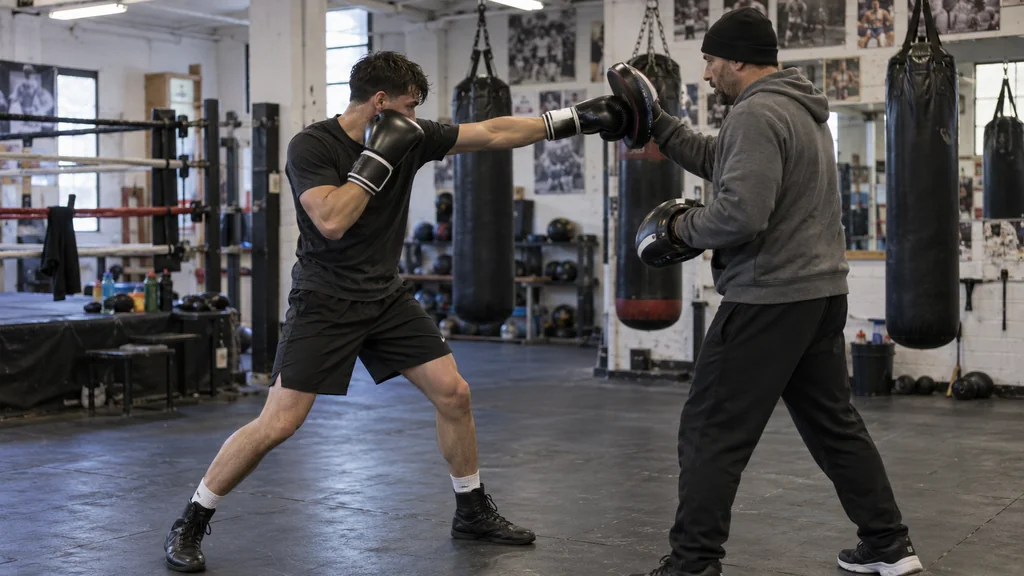
After the touch, your first answer is usually a single jab to a coach-held mitt. It does not need to be hard. Its job is to test whether the line you created is real.
If the opponent’s glove has moved and the mitt remains at normal range, jab straight through the middle. Let the lead shoulder help protect the chin, keep the rear glove close and bring the jab back before deciding anything else.
If the long guard reforms, the mitt disappears or the other boxer has stepped away, do not reach after the jab. Return your hand to guard and reset the range. The down parry has still done useful work if it showed you that the line was not available.
A review of boxing performance describes punching, movement, defence and tactical choice as connected actions. That is the practical lesson here. The parry is not separate from the jab, and the jab is not separate from your feet. One action should leave the next one possible.
The down-parry jab drill
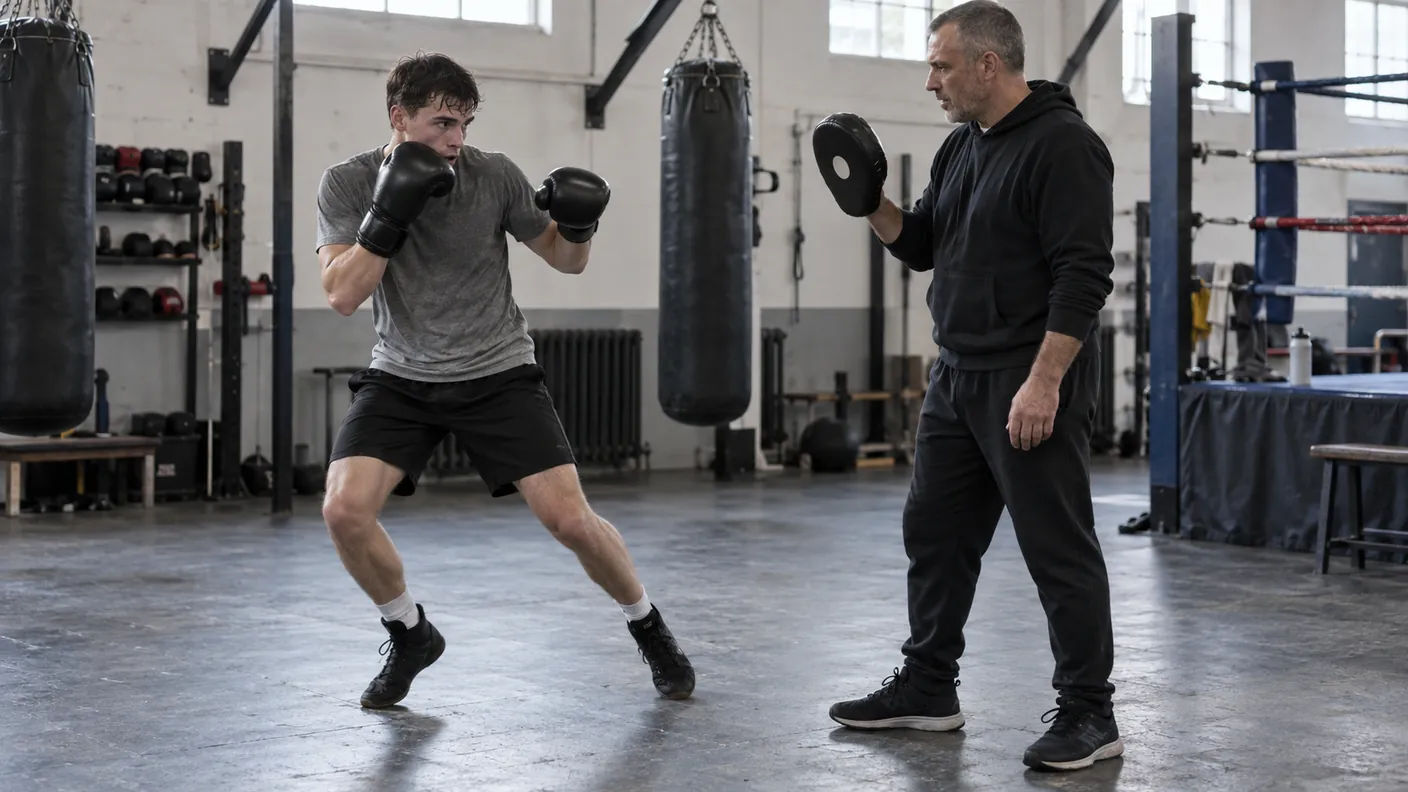
Use gloves and a coach-held mitt, or a trusted partner who can keep the feed slow and predictable. This is technical work, not sparring.
Round one: touch and return
Partner A holds one extended lead glove or mitt at the edge of jab range. Partner B makes the compact downward parry, returns the lead glove to guard and freezes for one count.
Check three things before every new repetition:
- The rear glove is still close to the cheek.
- The head has not chased the lead hand.
- The feet are staggered and ready to move.
There is no jab in this round. The purpose is to learn the smaller movement before speed turns it into a swipe.
Round two: parry and jab
Partner A shows the same extended line, then holds a mitt in the centre only after the parry. Partner B makes the touch, sends one calm jab to the mitt and returns both gloves to guard.
Keep the pace low enough that the coach can remove the mitt. If it disappears, do not throw at empty space. Bring the hand home and reset instead.
Round three: parry, jab or leave
Now Partner A can give one of three responses after the parry: leave the mitt available, pull the lead glove back into a tighter guard, or take a small step away.
Jab only against the first picture. If the guard closes, do not try to punch through it. If the partner steps away, recover the distance with your feet before you ask another question. This is what stops the drill becoming a fixed sequence.
Four mistakes that make the long guard easier
The first is reaching down. The parry happens near your own guard. If you are trying to catch the glove at full arm length, the other boxer has already made you overcommit.
The second is letting the rear hand drift. Your lead hand may be working, but the rear side is still responsible for the straight line coming back.
The third is treating the jab as guaranteed. A good parry can create a line for a moment, but it cannot make the other boxer stand still. See the target before you throw.
The fourth is standing in front after the jab. Bring the hand home and take a small angle, cover or reset according to the next cue. Do not admire a clean mitt touch.
For the wider problem, read our guide to countering a long guard in boxing. For the defensive movement on its own, see how to use a down parry against straight punches. This drill sits between them: one compact hand action, one honest jab and a decision about whether the range remains yours.
For adults in Kidbrooke, Greenwich and nearby, our Recreational Adults boxing classes use controlled partner work to build distance, guard and decision-making without rushing beginners into hard sparring.
The coaching cue is simple: brush the glove, see the line, jab only when it is there.
H&G Team
Writer at Honour & Glory Boxing Club, a community boxing gym in Kidbrooke, South East London.
KEEP READING
Down Parry in Boxing: Defend Straight Punches
Use a compact down parry to move a straight punch off line without reaching, losing your guard or freezing after the defence.
Elbow Parry: A Compact Jab Counter Drill
Use a compact elbow parry to close the jab line without reaching, then return to a balanced boxing stance before choosing a counter.
Parry While Moving: A Boxing Pressure Drill
Use a compact parry and small side step to leave pressure behind without reaching, freezing or rushing a counter.
Was this page helpful?
It takes one tap, and it genuinely helps.
Choose your next step
Turn this article into the right action
Some readers are ready to book. Some need the class route first. Pick the route that matches what you actually want.