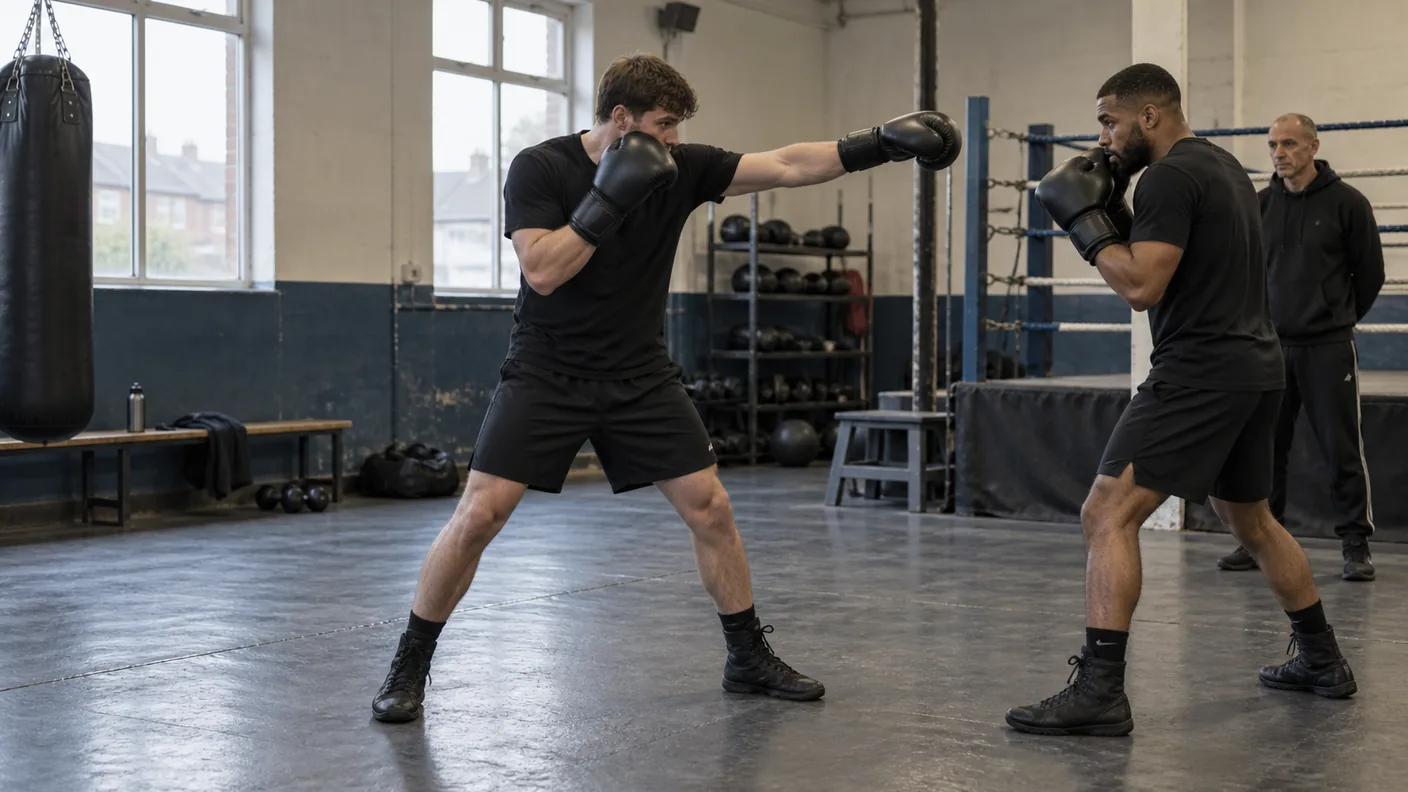
A long guard can make a boxer feel as if there is always a glove in the way. The obvious response is to grab at it, slap it down or throw a big hook round it.
That is usually the moment the long guard has done its job. You are reaching at a hand instead of managing the range, and the other boxer can step back, parry or bring a straight punch through the space you created.
The better answer is quieter. Make the extended hand react, use the body line when it is available, and move your own head and feet into a position where a simple punch makes sense. You do not need to win a hand fight. You need to stop the long guard dictating every entry.
The short demonstration below is a useful visual reference. Watch how the answer starts with a question rather than an immediate big punch. The long guard is a live position, so your first job is to make it change.
What makes a long guard awkward
A useful long guard puts the lead glove between you and the boxer, normally at the edge of jab range. It can interrupt your first step, obscure the line to the head and give the other boxer an early feel for your distance.
It also has limits. The extended lead hand cannot protect every line without help from the rear hand and feet. If the boxer leaves it out too long, the body line may be available. If they keep moving it to meet your feints, there is a moment while the guard reforms. If they stand still behind it, you can take a better position without having to punch your way through the glove.
England Boxing's coaching handbook treats balance, guard and the ability to move in any direction as core technical foundations. That matters here. The response to a long guard is only useful if you can still cover a straight return, step out or reset when the opening disappears.
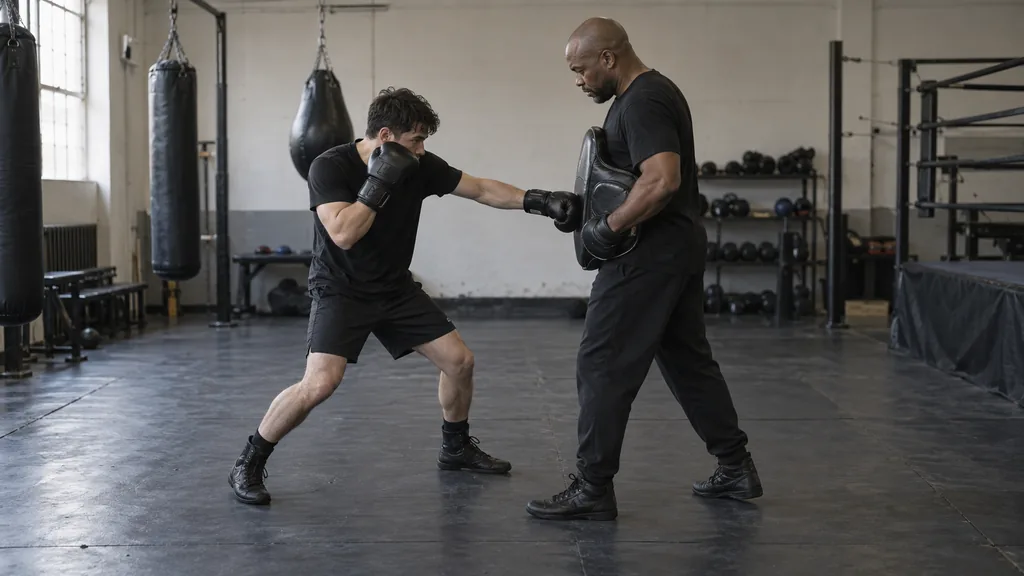
Start by making the guard answer a small question
Do not open with a hard shot at the head. Start with a small, believable cue.
A light level change can make the other boxer lower the lead hand. A short shoulder movement can make them pull the glove back. A small step can make them brace for the jab. None of those movements need to become a punch. Their job is to find out whether the long guard is held rigidly, pulled away or reset into a tighter cover.
Keep the cue small enough that you could stop halfway through it. If your feet race forward every time the shoulders twitch, you are not feinting. You are announcing the entry. The rear hand stays near the cheek and the chin remains behind the lead shoulder while you watch the reaction.
A review of anticipation in combat sports describes how more skilled athletes use early movement information more effectively than less experienced athletes. In a controlled boxing drill, that means looking for the first guard adjustment, step or shoulder change rather than waiting until a full punch is coming back at you.
Our guide to using feints in boxing without fake movement covers the general skill. Against a long guard, the point is specific: make the extended hand move before you commit to the space it was blocking.
Use the body line when the lead hand stays high
A long guard often puts the lead glove high and forward. That can leave a straight route to the chest or body line, but it does not make a body shot automatic.
First check your distance. If your jab would reach the body line without the head travelling past the front knee, a light jab to a coach-held body pad can be a sensible answer. If you are too far away, use the feet to close a little ground first. Do not drop the level and stretch the arm through empty space.
The purpose of the touch is not to force a hard shot. It can make the long guard draw back, lower or change shape. That gives you information for the next decision. If the boxer covers the body and leaves the head line clearer, you may have a jab. If they step out, recover your own range rather than pursuing them with a second long punch.
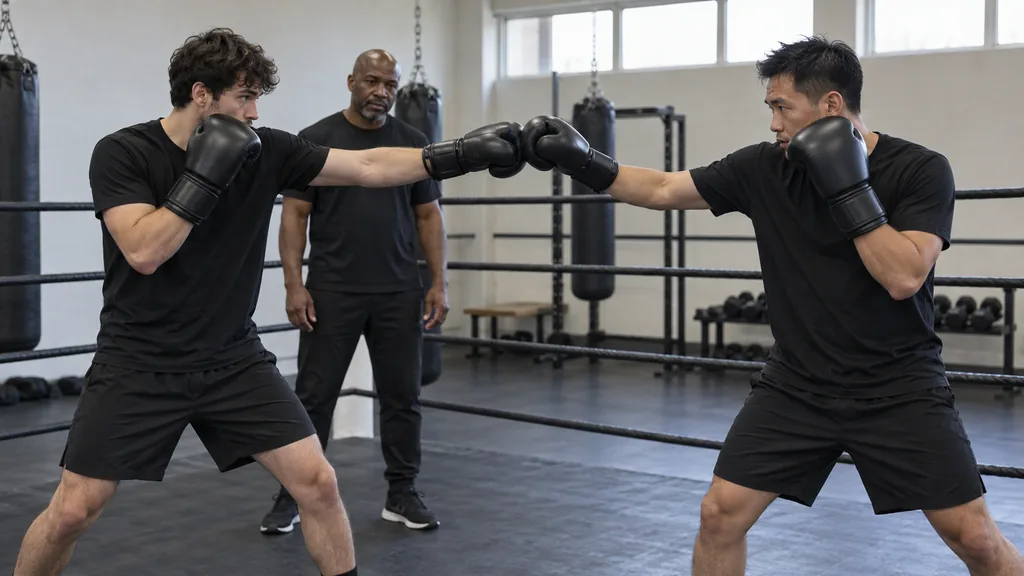
This connects with our guide to boxing body jabs as a set-up. The body jab is useful only when the posture survives it. If the back rounds, the rear hand drops or your feet come together, return to the simpler range work.
Touch the lead hand without grabbing it
There is a difference between a short touch and trying to wrestle with someone else's glove.
At the edge of range, a light outside parry or brief touch can move the lead glove a few inches off its line. The hand should return immediately. You are making the long guard reset, not trying to hold it down while you throw a combination.
If you reach for the glove with a straight arm, you give the other boxer a handle. They can pull you, parry over it or step you into their preferred range. Keep the elbow soft, keep the rear hand home and do not chase the touch with your head.
The follow-up is deliberately modest. If the line opens and a coach presents a mitt at honest range, a jab or short lead hook can be there. If the opponent has stepped away or their rear hand is ready, cover and reset. The touch has worked if it changed the picture, even when you do not score a punch from it.
For the defensive side of that same hand fight, read lead-hand control without reaching. The shared rule is restraint. A lead hand can tell you something useful, but it should not pull your whole stance out of shape.
Move your head before you attack the rear-side line
A long guard asks you to look at the lead hand. That can make you forget that the other glove still has a job.
Before you attack around the extended hand, make a small head movement or take a small angle with the feet. The movement is not there to show off. It changes the line between you and the rear hand, and it stops your face sitting directly in front of the obvious counter.
Keep it small. A slight outside slip can put the head off the centre line while leaving the rear hand available. A small step to the side can make the long glove miss its usual reference point. If you have to bend at the waist or cross the feet to get there, you have tried to solve the whole exchange in one movement.
Our guide to the outside slip and rear body shot shows how a defensive movement can create a body line. Against a long guard, use the same patience. Move first, assess the range, then throw only if the stance and target agree.
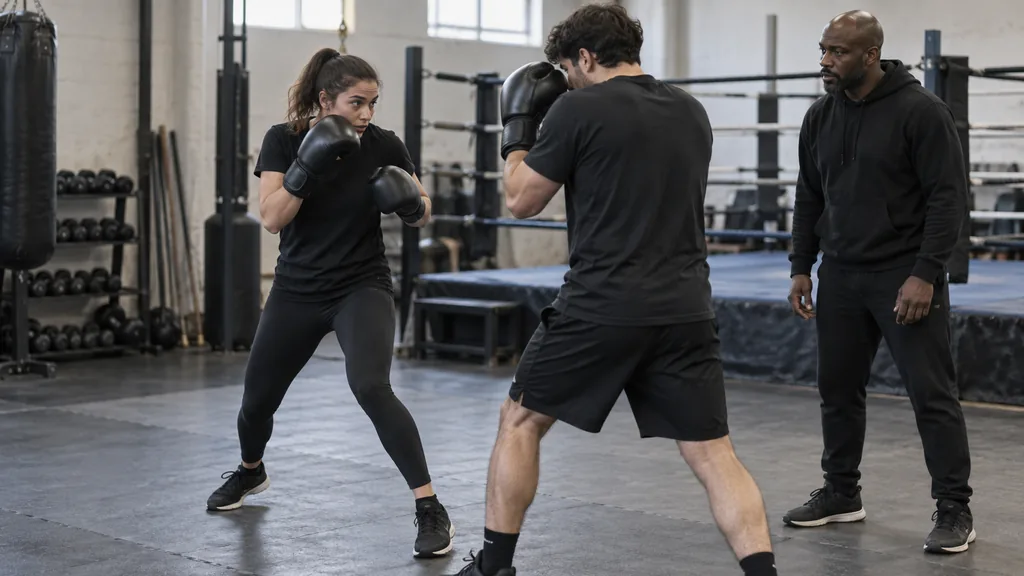
A three-round long-guard response drill
Use gloves, mitts or a body pad, and keep every feed slow and agreed. This is technical partner work, not a contest to pull someone else's hands around.
Round one: feint and read
Partner A holds a relaxed long guard. Partner B uses a small shoulder cue, level change or lead-foot hint, then freezes.
Partner A can keep the hand still, pull it back, lower it a little or take a small step away. Partner B names the response after each repetition. No punches yet. This forces both people to see the guard rather than act on a guess.
Round two: choose one line
Partner A keeps the long guard but may change it after the feint. Partner B chooses one light action only: a jab to a body pad, a jab to a mitt, or a reset with no punch.
The coach should remove the target sometimes. That matters. A boxer who throws the body touch because the drill promised it will learn to punch at empty space. The standard is not busy hands. The standard is an honest line and a settled stance.
Round three: touch, move, choose
Partner A gives the same long guard, then shows either a small rear-hand mitt, a step back or a forward step. Partner B may make one brief lead-hand touch, take a small angle and choose the available answer.
If the rear-hand mitt is present at sensible range, use one controlled shot. If Partner A steps in, cover or leave. If Partner A steps out, do not follow with the arm. Regain range with the feet and begin again.
Four mistakes that make the long guard easier to use
The first is trying to hit through the glove. A hard straight shot into an extended hand can leave you square and close enough for a return. Make the guard move or choose another line.
The second is grabbing or dragging the lead hand. That turns a short technical touch into an untidy exchange and gives your own balance away. Touch, return, decide.
The third is dropping too low for the body line. A small knee bend can open a target. Folding forward puts the head in front of the feet and makes the next defensive choice slow.
The fourth is forgetting the rear hand. A long guard is visible because one glove is extended. The other glove can still catch, parry or fire through the centre. Do not attack the lead side while leaving your own head in the obvious lane.
For adults in Kidbrooke, Greenwich and nearby, our Recreational Adults boxing classes use coached partner drills to connect range, guard and one clear decision at a time. You do not need hard sparring to learn how an extended hand changes the space.
The coaching cue is simple: make the guard answer, move into a real line, then finish ready to defend.
H&G Team
Writer at Honour & Glory Boxing Club, a community boxing gym in Kidbrooke, South East London.
KEEP READING
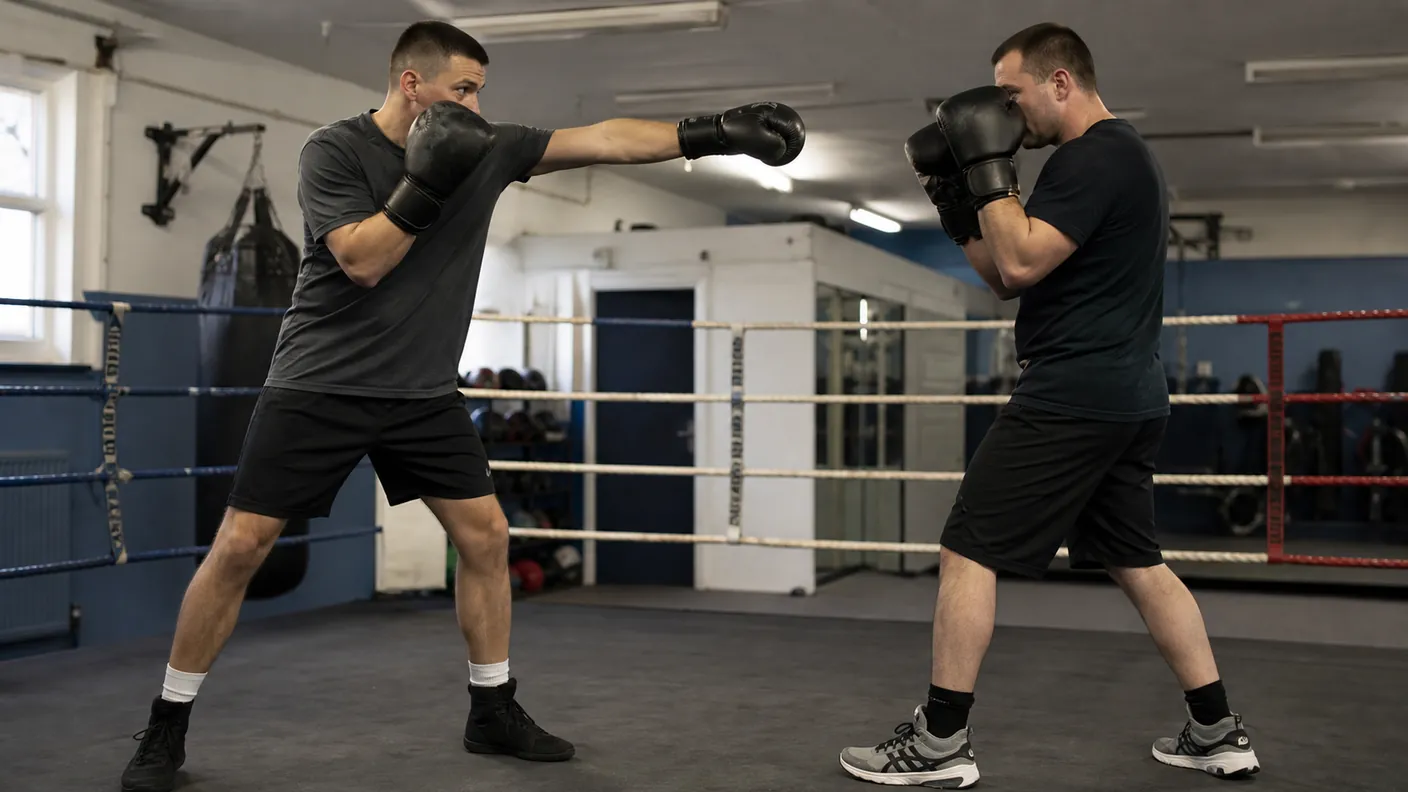
Long Guard Boxing: Keep Range Without Reaching
Use a long guard to judge range, interrupt a jab and leave yourself balanced enough to punch, defend or step away.
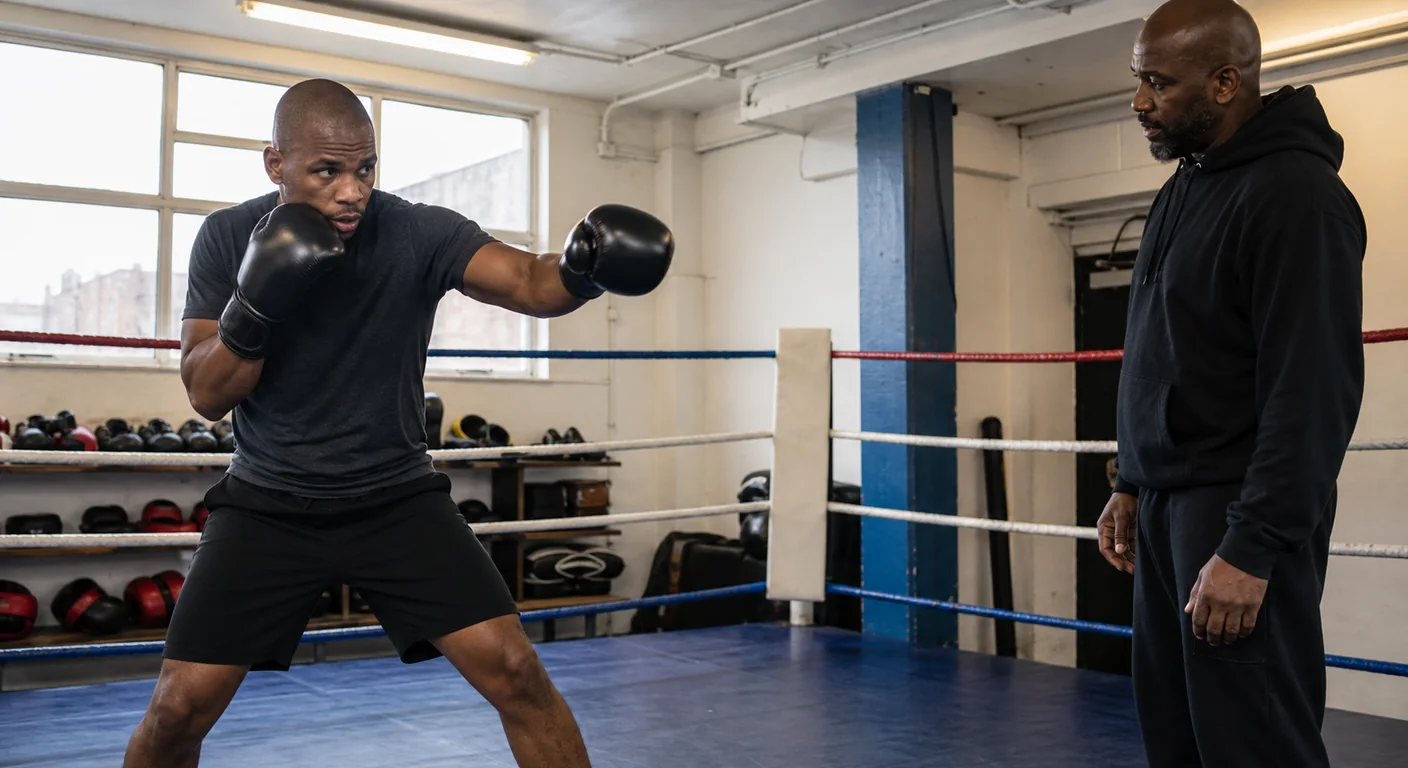
How to Use Feints in Boxing Without Faking It
A practical guide to boxing feints: how to use eyes, feet, hands and rhythm to make an opponent react before you commit.
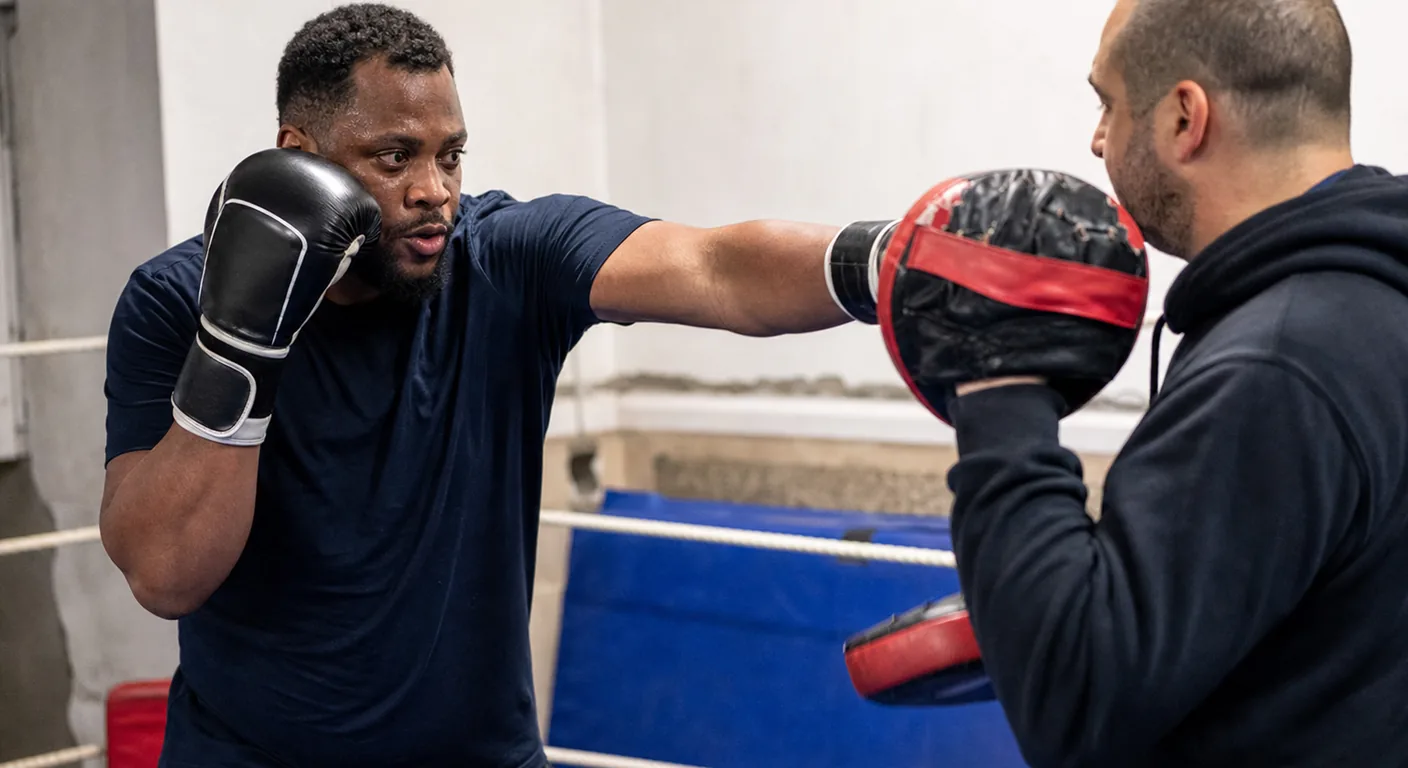
How to Punch Without Dropping Your Guard
Learn how to keep your guard alive while punching, so combinations protect you instead of opening clean counters.
Was this page helpful?
It takes one tap, and it genuinely helps.
Choose your next step
Turn this article into the right action
Some readers are ready to book. Some need the class route first. Pick the route that matches what you actually want.