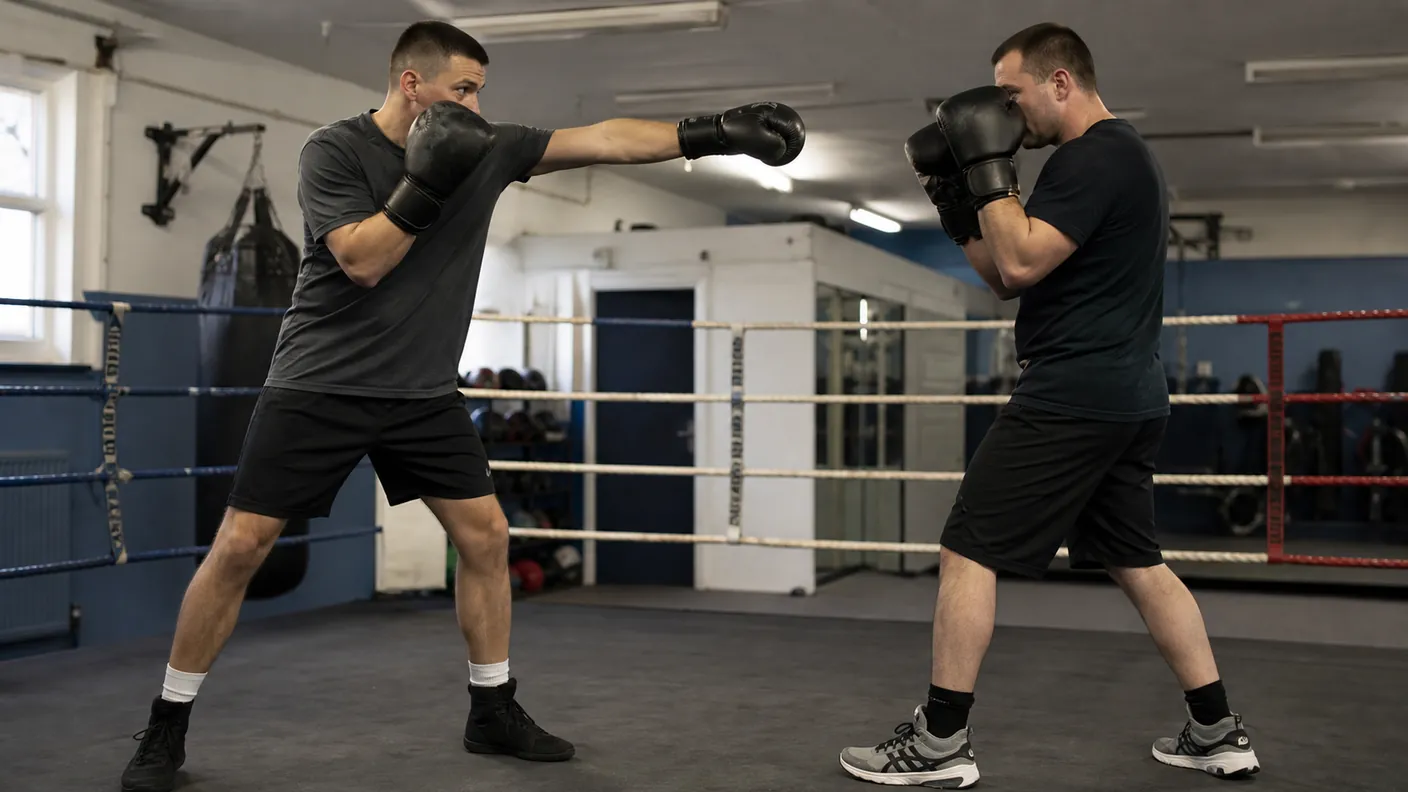
A long guard is not a lazy lead hand left in the air. It is a measured way to manage the space between you and another boxer.
At its best, the lead hand gives you a reference point. You can see the distance, touch the other boxer without leaning, interrupt their first step and bring your hand back to defend. At its worst, it becomes a stiff arm that leaves the chin open and makes the feet stop moving.
The difference is not complicated. A useful long guard has a purpose, a rear hand at home and feet ready to move. It helps you make the next decision. It does not replace the next decision.
The video below is a useful visual reference. Watch the distance between the boxers and the hand that stays at the cheek. The extended glove matters because it is joined to a settled stance, not because it is stretched as far forward as possible.
What the long guard is for
The long guard works best at the edge of jab range. Your lead hand sits between you and the other boxer, normally with a soft bend at the elbow. The rear glove remains close to the cheek, chin stays down and the shoulders stay relaxed enough to move.
That lead hand can do several small jobs. It can measure the space. It can make a jab touch awkward. It can give you an early feel for a step forward. It can hide the timing of your own jab or let you take a small step out before a punch reaches you.
It cannot do every job at once. Do not treat an extended glove as a wall that makes you safe. A boxer can punch around it, knock it aside, change level or simply take an angle. Your feet and rear hand are still the insurance policy.
England Boxing's coaching handbook puts balanced stance, guard and controlled footwork at the centre of effective punching and defence. That is the right way to think about a long guard. It is a tool inside good position, not a substitute for it.
Set the hand without locking the arm
Start in your normal stance. Lift the lead glove a little forward of your shoulder line, with the elbow neither flared nor jammed straight. Imagine that you are keeping a light connection to the range, not trying to push the other boxer away.
The lead shoulder can rise slightly to help cover the chin, but do not shrug so hard that your neck disappears. Keep enough bend in the arm to bring the glove home, parry or jab. If the arm feels locked, you have made the long guard slow before the exchange has even started.
The rear hand has one clear job: stay available. It can cover a straight shot, catch a jab or return after you have made the other boxer miss. If the rear glove drifts while you admire the lead hand, the guard has become a one-handed pose.
Use it to see the first step
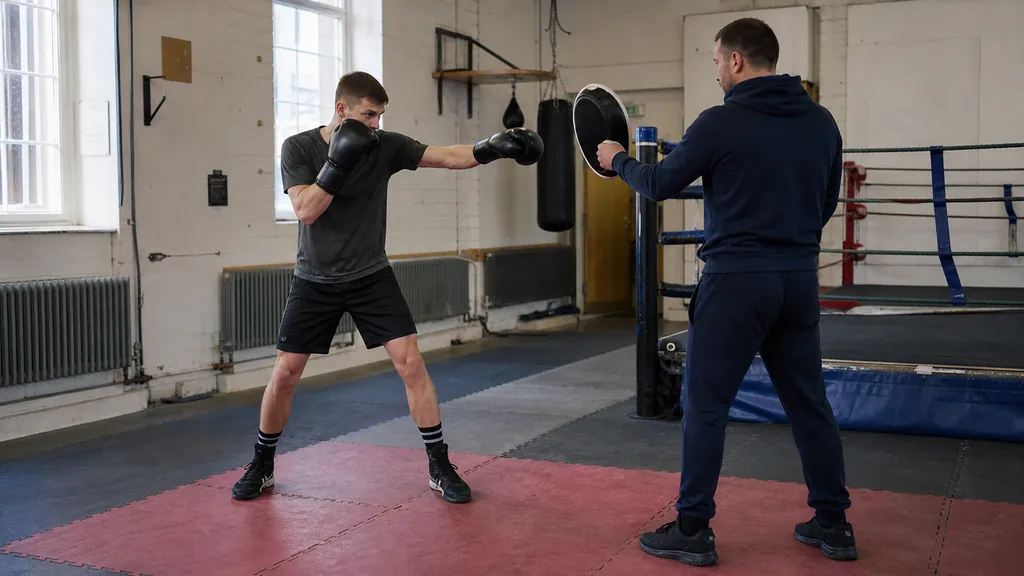
The long guard gives you information when it stays calm. A jab that meets your lead glove tells you something about the other boxer's range and rhythm. A person who repeatedly pats the glove before stepping in is showing a pattern. A person who tries to pull the hand down may be creating a line for their next punch.
Look through the space rather than staring at their glove. Watch the chest, shoulders and lead foot. Those parts usually move before the punch is fully committed. A systematic review of anticipation in combat sports found that higher-level athletes tend to use early movement information more effectively than less experienced athletes. In class terms, do not wait until the glove is at your face before you decide to move.
That does not mean guessing. The long guard is useful because it gives you time to make a simple choice: touch and reset, parry, jab back, take a step out, or cover. The choice depends on what arrives and where your feet are.
Our guide to boxing draws that make an opponent throw first explains the same discipline from the other side. You can show a picture without giving away the whole exchange. The long guard should make an opponent reveal something, not invite you to stand still.
The three-round long-guard drill
Keep this controlled. This is a distance and decision drill, not a sparring shortcut. Start with a coach and a mitt, or a trusted partner who understands that the feeds stay light and clear.
Round one: find the edge of range
Stand where a full jab would almost land. Put the lead glove forward with a soft elbow, rear hand close to the cheek. Your partner takes one small step in or out while you track the range without chasing their hands.
Every few seconds, bring the lead hand home, then set it again. This stops the arm becoming a parked barrier. Freeze after each adjustment. If your shoulders are tense, your feet are square or your chin is showing, reset before the next repetition.
Round two: touch, then choose
Your partner now gives a light jab line to a mitt or glove. You can use the lead hand to make a small parry, let the shot fall short with one step back, or bring both hands into a conventional guard. Do not add a hard counter yet.
The point is to see whether the long guard has given you a useful position. If you have had to lean back or cross your feet to survive the jab, you were too close or the hand was doing too much of the work.
Round three: one clean answer
Add one coach-held mitt after the jab line. Make the guard or parry first, then choose one light return: a jab to the mitt, a straight shot only if range is honest, or a step out and reset. Keep the return measured and finish with both gloves available.
A long guard should give you a clearer first picture. It should not persuade you to throw because you have memorised the drill. If the range has changed, reset. Good decisions are better than a busy sequence.
Four mistakes that ruin the long guard
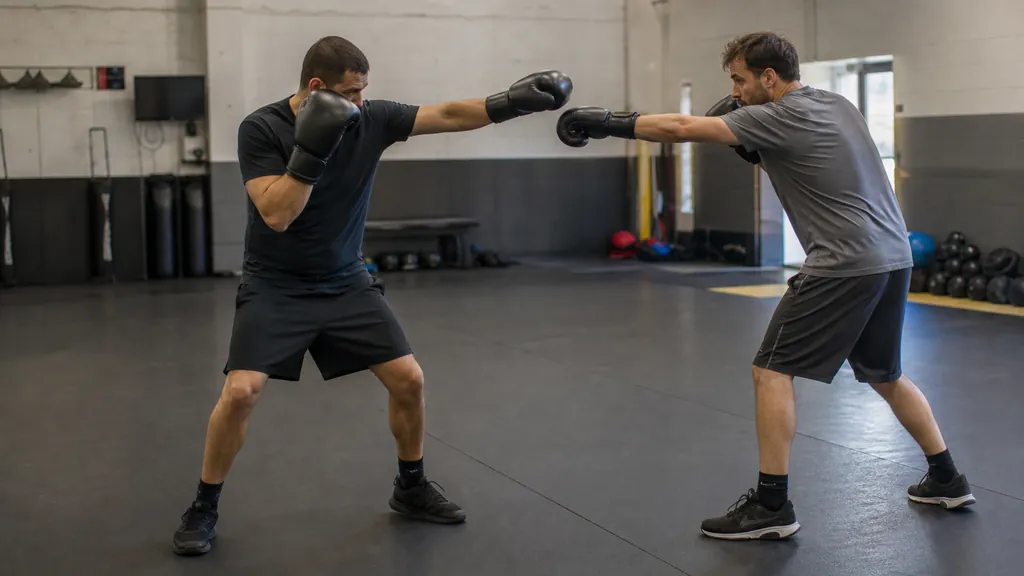
The first is locking the lead elbow. A straight, rigid arm can be knocked aside and is slow to recover. Keep enough bend to move the glove in either direction.
The second is letting the rear hand fall. The extended hand is the visible part, so beginners tend to watch it. The rear glove is the hand that saves you if the other boxer gets around the lead side.
The third is measuring with your face. If you need to lean your head past the front knee to make the glove reach, your feet have not put you at the right range. Take a small step, or accept that you are out of range and reset.
The fourth is staying there too long. The long guard is a changing position, not somewhere to live for an entire round. Touch, read, return to a tighter guard, jab, step or take an angle. Make the picture change before the other boxer gets comfortable solving it.
For the footwork that supports this, read how to follow a retreating boxer without reaching. The same rule applies: take distance with the feet, not by sending the head forward after the glove.
When to use a tighter guard instead
A long guard is not the default answer to every exchange. Use a tighter guard when you are already close, when punches are coming in bunches, when you have lost sight of the line, or when a partner is working a controlled hook-and-uppercut sequence. The lead hand needs room to give you information. Crowded range takes that room away.
That is why the long guard belongs in a wider defensive toolkit. You might use it at range, bring it home when the other boxer closes the gap, then step out or cover before you choose another entry. Good defence changes with the distance instead of forcing one shape everywhere.
If you train near Kidbrooke, our Recreational Adults boxing classes use pads, bags and controlled partner work to make range and guard feel practical. You do not need hard sparring to learn when a hand is helping you and when it is simply getting in the way.
The coaching cue is simple: put the lead hand between you and the problem, but keep the rest of your boxing ready.
H&G Team
Writer at Honour & Glory Boxing Club, a community boxing gym in Kidbrooke, South East London.
KEEP READING
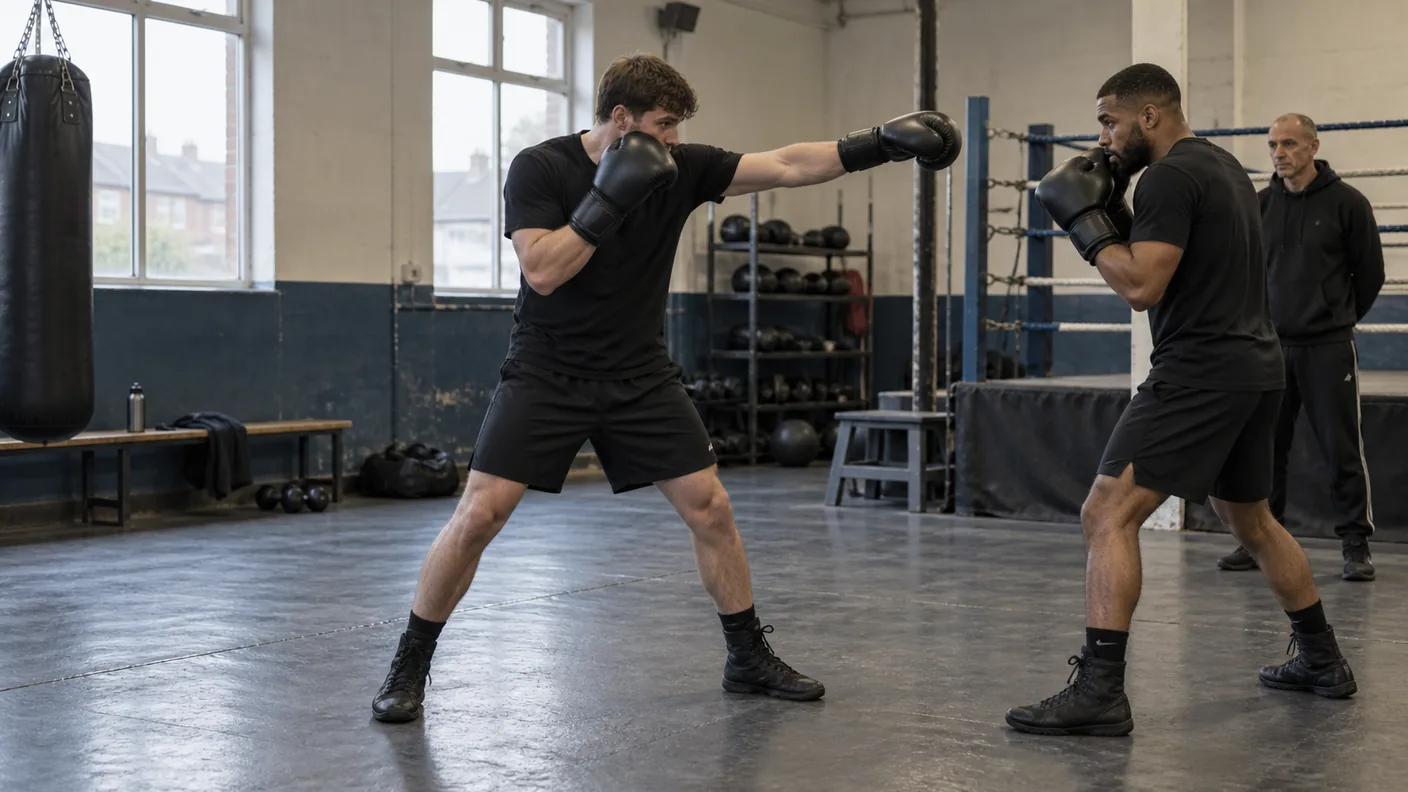
How to Counter a Long Guard in Boxing
Use feints, body-line touches and patient footwork to answer a long guard without chasing the lead hand or reaching.
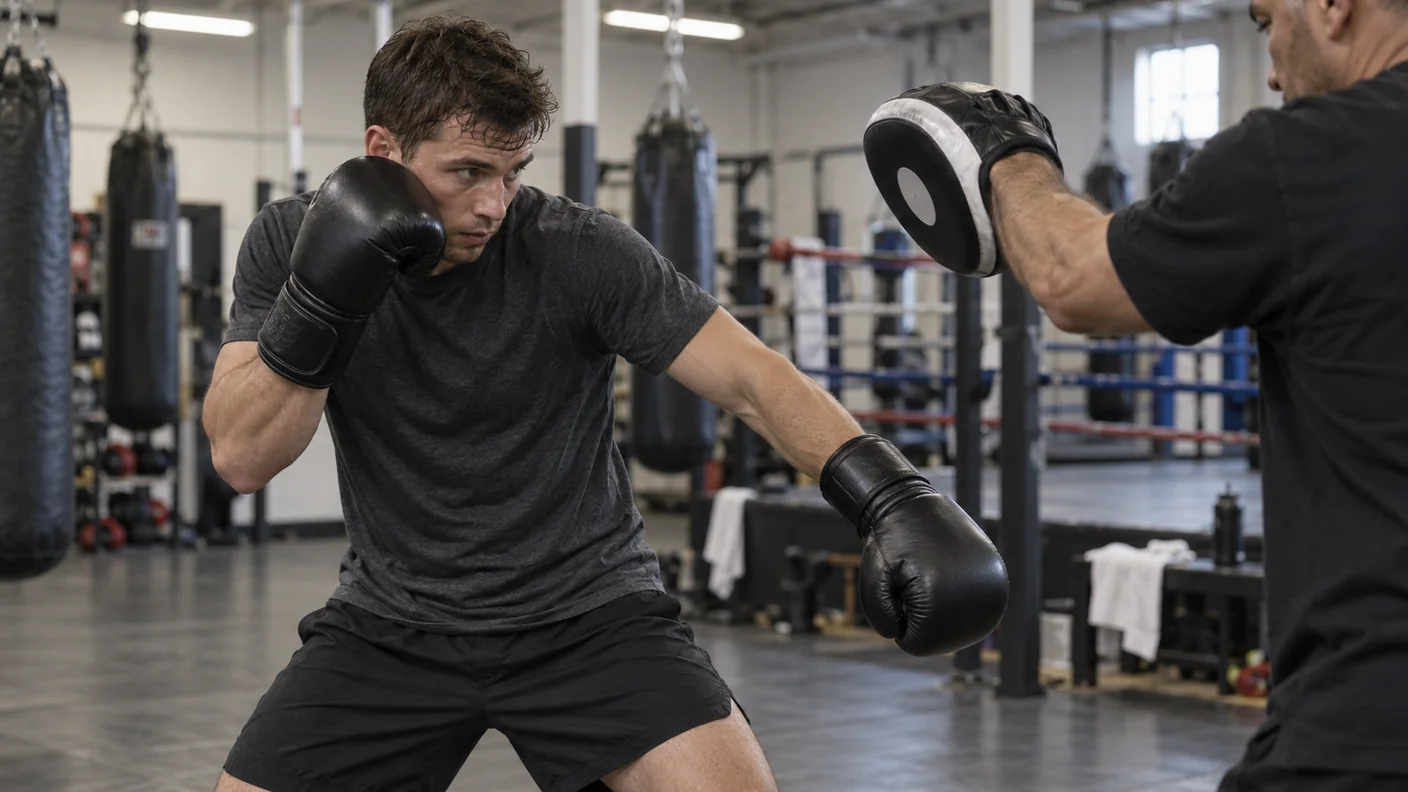
Down-Parry Jab: Open a Long Guard
A controlled boxing drill for moving an extended lead glove, finding the jab line and returning to guard without reaching.
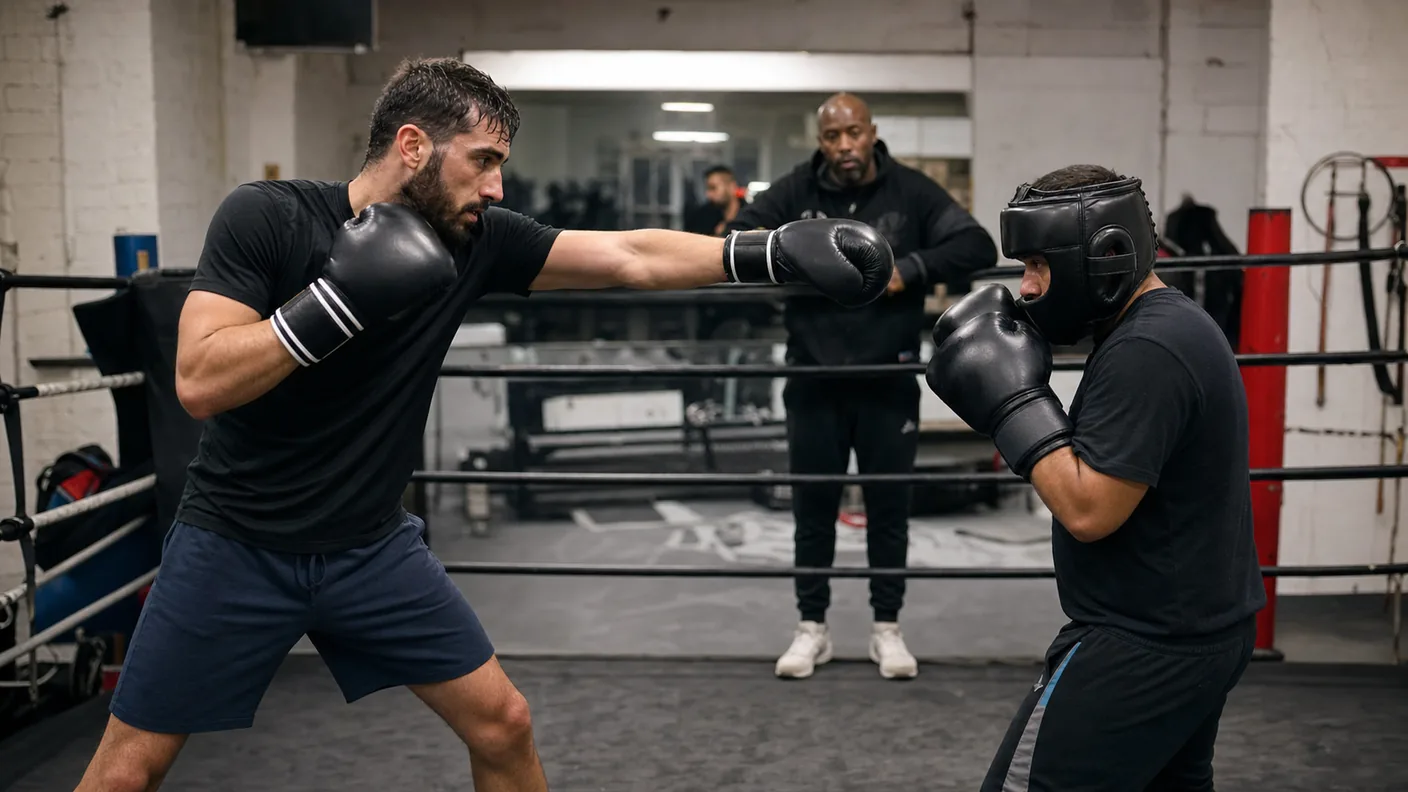
How to Box a Shorter Opponent Without Reaching
Use the jab, your feet and calm resets to control a shorter boxer without leaning into their range or giving away your balance.
Was this page helpful?
It takes one tap, and it genuinely helps.
Choose your next step
Turn this article into the right action
Some readers are ready to book. Some need the class route first. Pick the route that matches what you actually want.