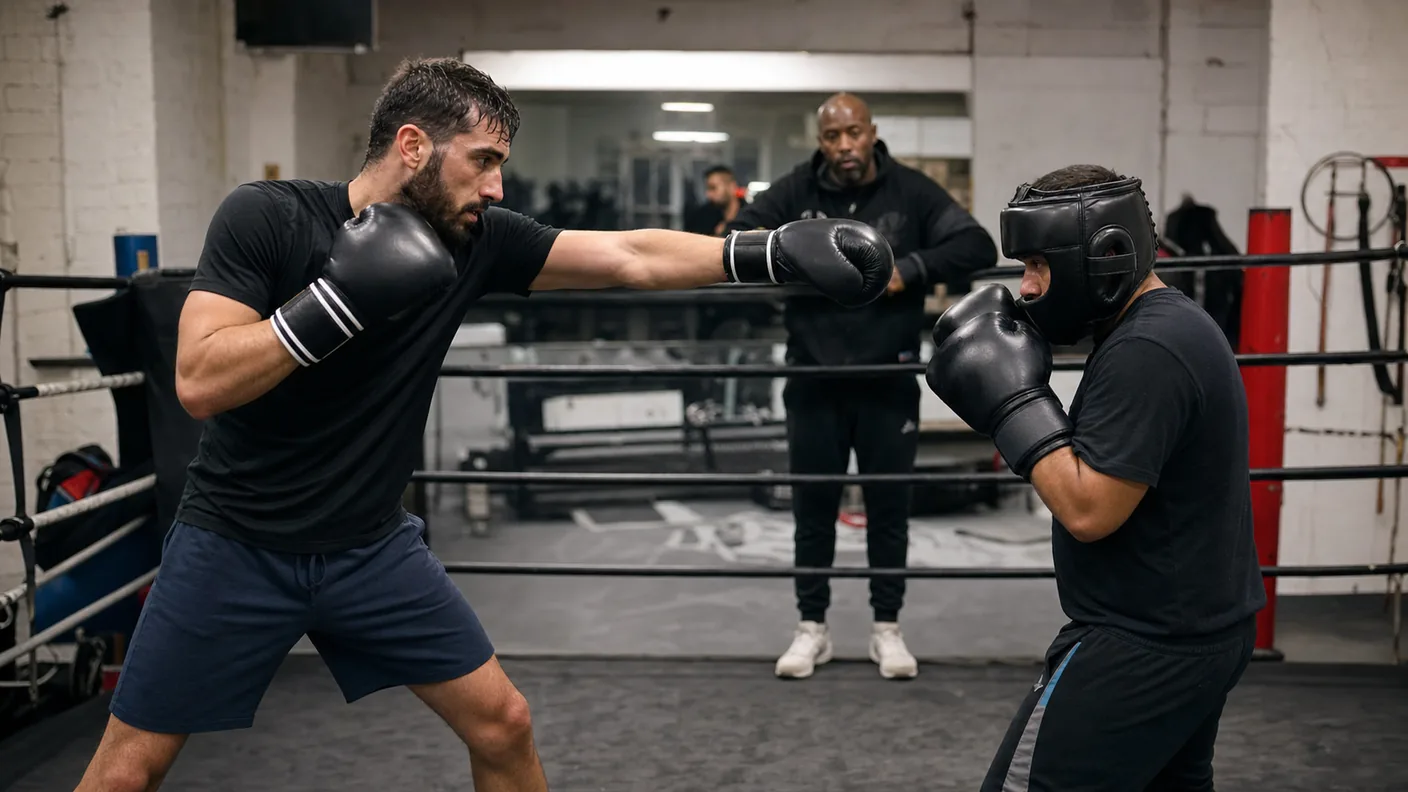
A shorter opponent does not need to be faster than you to make you uncomfortable. They only need you to help them get close.
That usually happens when the taller boxer grows impatient. They lean over the front knee to force a jab, pull the right hand back too far, or walk backwards in a straight line until the ropes arrive. Suddenly the reach advantage has disappeared and the shorter boxer is working at the range they wanted all along.
The answer is not to stand tall and throw long punches from wherever you happen to be. It is to make your reach useful: keep the feet under you, make the lead hand do a clear job, and reset before the other boxer can turn your length into a shortcut inside.
Watch the short clip below, then use these coaching cues in slow bag, pad and partner work.
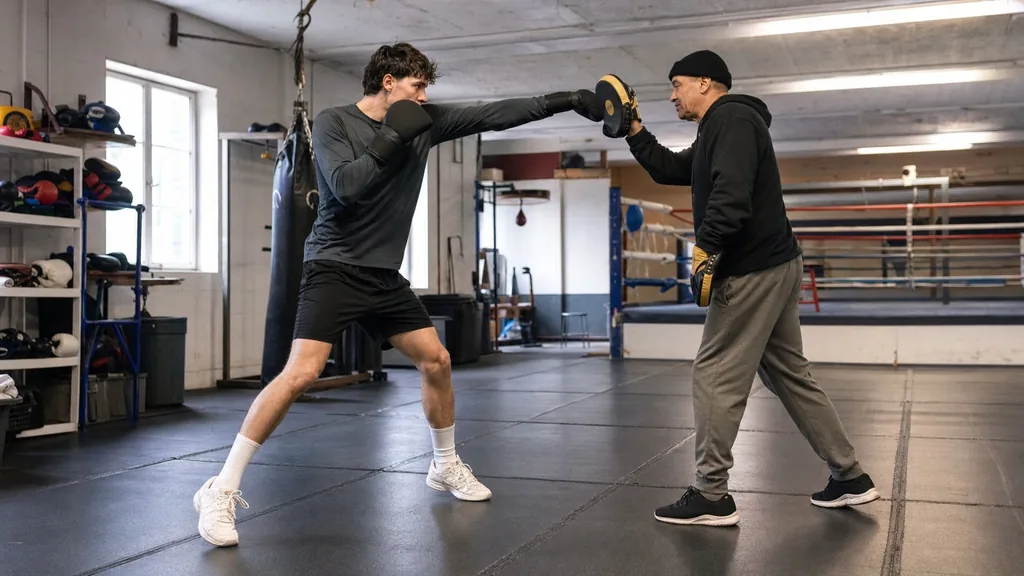
Your jab should make the other boxer solve a problem
A long jab is not only a scoring punch. Against a shorter boxer, it can make the entry more difficult.
The jab can touch the chest line, meet the gloves, interrupt a step, or make the other boxer show which way they want to move. None of that requires you to stab at their face or lock your arm out. The point is to put a straight, balanced action in front of their route in.
A study of boxing punch performance describes the jab as useful for managing distance and finding range for a following punch. That is a better way to think about it than simply trying to make every jab hard. Sometimes the jab scores. Sometimes it gives you the information to choose whether to jab again, take a small step back, or turn away from the other boxer’s lead foot.
Keep the jab connected to the shoulder and bring it home. If the glove stays hanging in front of you, the shorter boxer can parry it, walk around it, or use it as a bridge into close range. Our guide to throwing a jab in boxing covers the basic mechanics. Here, the extra question is what the jab does to the space between you.
Try three versions on pads:
- Jab to the chest line, then take a small step back into stance.
- Jab to the glove, then circle away from their lead side.
- Double jab, then stop and reset instead of adding a wild third punch.
The jab is doing its job if you remain balanced enough to choose the next action. If it pulls your head forward, the jab has become an invitation.
Do not retreat in one straight line
A shorter opponent often wants you to give ground predictably. If you step straight back every time they advance, you keep the same lane open and eventually run out of it.
You do not need a huge pivot or a dramatic escape. Small exits are usually better. After the jab, take a short step back and slightly to the side. After the double jab, turn just enough that the other boxer has to find you again. If they follow without setting their feet, they may give you a second jab or a straight right while they are rebuilding their balance.
The feet must stay in their normal relationship. Do not cross them trying to escape and do not hop away with both feet together. A reach advantage is useless if you have no base when the shorter boxer finally arrives.
The point is simple: give ground without giving the same line away twice.
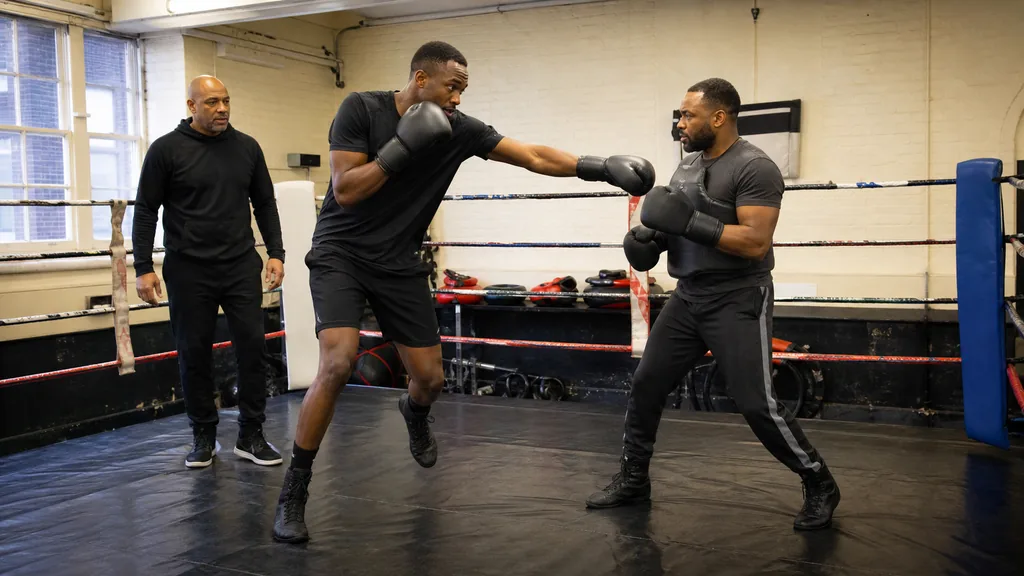
Keep the shorter boxer at the end of the punch, not the end of your balance
There is a bad version of distance control that looks busy. The taller boxer leans forwards, reaches with the jab, then drags the rear foot after every punch. They may touch the target, but their chest is over the front knee and their head is now close enough to meet a hook.
A better jab starts from a position you could leave from. The lead foot may take a small piece of ground with the hand, but the rear foot stays ready to follow. The chin stays behind the shoulder. The rear glove stays useful. When the jab returns, you should feel as if you could jab again, pivot, or cover a response without having to pull yourself upright first.
This is why a shorter boxer can be difficult even when they are not throwing much. Their height can tempt you into chasing the target downwards. Resist that urge. Bring the boxer to the end of your jab through footwork and timing, not through your head falling over your lead foot.
A review of anticipation in combat sports found that more skilled athletes use early movement cues more effectively than less skilled athletes. In a gym, that means a good partner can read a shoulder twitch, an obvious step, or the moment your weight spills forward. Keep your own actions quiet enough that the jab arrives before you have announced it.
Use the chest jab when the head is moving
A shorter boxer may be good at changing height. They dip under a jab, bob as they come in, or make you feel as if the head is never where you expect it. That does not mean you should start aiming your punches down at them.
The chest is a steadier reference. A light jab to the chest line can interrupt forward movement without making you lean. It can also show whether the other boxer is entering behind a high guard, moving to one side, or trying to slip outside your lead hand.
Do not force the shot. If they are already too close, a long jab may be the wrong tool. Cover, frame within the rules of your drill, make a small angle, or clinch only where the coach and format allow it. A boxer who insists on using long punches at short range is doing the other person’s work for them.
Our article on how to make space at close range explains the next problem. Good distance control includes knowing when the distance has gone and choosing a compact answer rather than pretending it has not.
A three-round long-range drill
Use this in controlled technical work. The point is to learn the rhythm of jab, reset and angle, not to punish a partner for being shorter.
Round one: jab and rebuild
One boxer holds pads or gives a light, predictable advance. The longer boxer throws a single jab, brings it back, then takes one small step to a new line. No follow-up punches.
The coach watches the rear hand, the chin and the feet. If the jab makes the lead foot and head fall together, shorten the range and slow the action down.
Round two: chest jab and choice
The advancing boxer can now choose to come straight in, step to their left, or step to their right. The longer boxer uses a light chest jab, then chooses one answer: a second jab, a small step back, or a small circle away.
Do not turn this into a chase. The jab is there to make the entry visible. The footwork is there to keep the position workable.
Round three: double jab and exit
Now add the double jab. The first jab asks the question. The second jab lands only if the range is still there. Then the longer boxer exits at a modest angle with both hands back in guard.
A partner should not be trying to win the drill. They should be giving honest movement at a pace where both people can see the decision. If the shorter boxer reaches inside after the second jab, the longer boxer covers and resets. They do not try to fire a long cross from a crowded position.
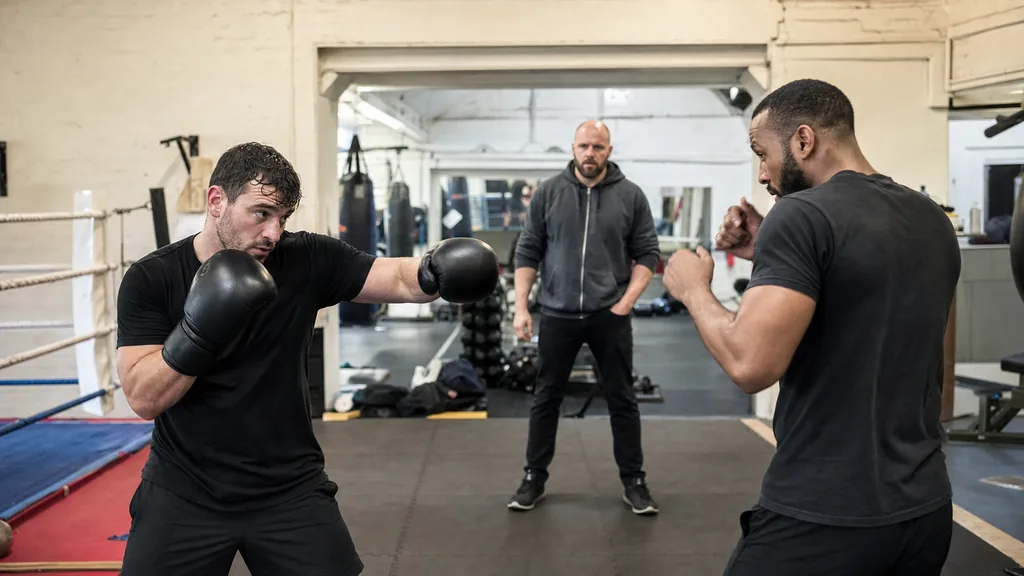
Common mistakes against a shorter boxer
The first mistake is treating reach as a guarantee. Reach only helps when the feet, guard and timing support it.
The second is leaning to find the jab. If the head travels further than the glove, you are not controlling distance. You are volunteering to be close.
The third is backing up without an exit. A straight retreat gives the shorter boxer a clear route and lets them build confidence. Step back, then change the line.
The fourth is throwing the right hand too early. A shorter boxer who is entering low may be waiting for you to overextend the rear hand. Make them deal with the jab first. Use the right hand when the feet and range say it is there.
The fifth is forgetting that close range exists. A tall boxer still gets crowded. When that happens, stop trying to look long. Get compact, protect the chin, regain a little space, and return to a range where the jab works again.
The coaching cue
Make them cross a controlled space.
The jab gives the shorter boxer something to solve. The feet stop you becoming a stationary target. The small angle prevents the same entry happening twice. None of it is flashy, but it turns a reach advantage into a useful structure instead of a long arm held out in hope.
At Honour and Glory, our Recreational Adults boxing classes use pads, bag work and coached partner drills to teach distance without turning every round into hard sparring. If you are in Kidbrooke, Greenwich or nearby, we can help you build a jab and footwork that stay useful when the other boxer is trying to close the gap.
H&G Team
Writer at Honour & Glory Boxing Club, a community boxing gym in Kidbrooke, South East London.
KEEP READING
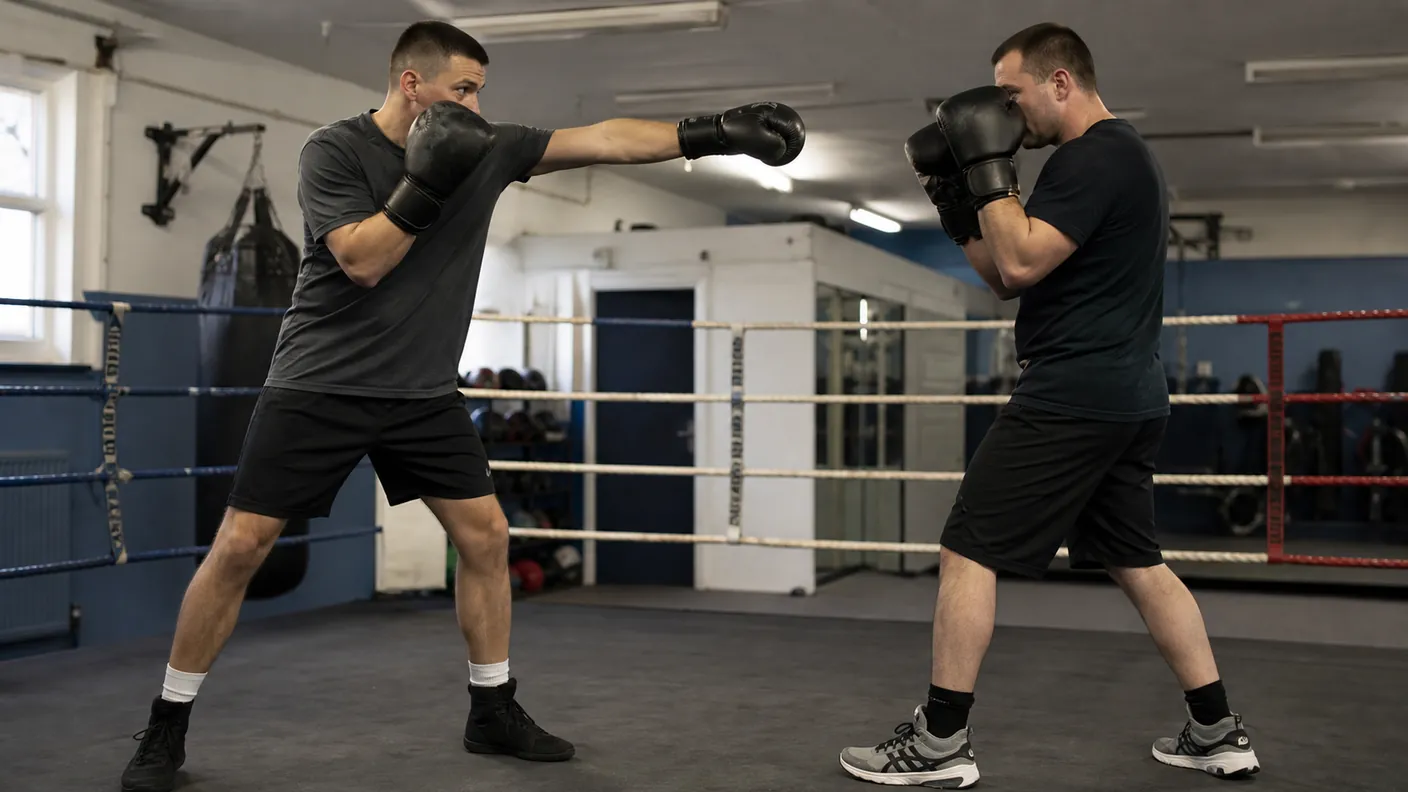
Long Guard Boxing: Keep Range Without Reaching
Use a long guard to judge range, interrupt a jab and leave yourself balanced enough to punch, defend or step away.
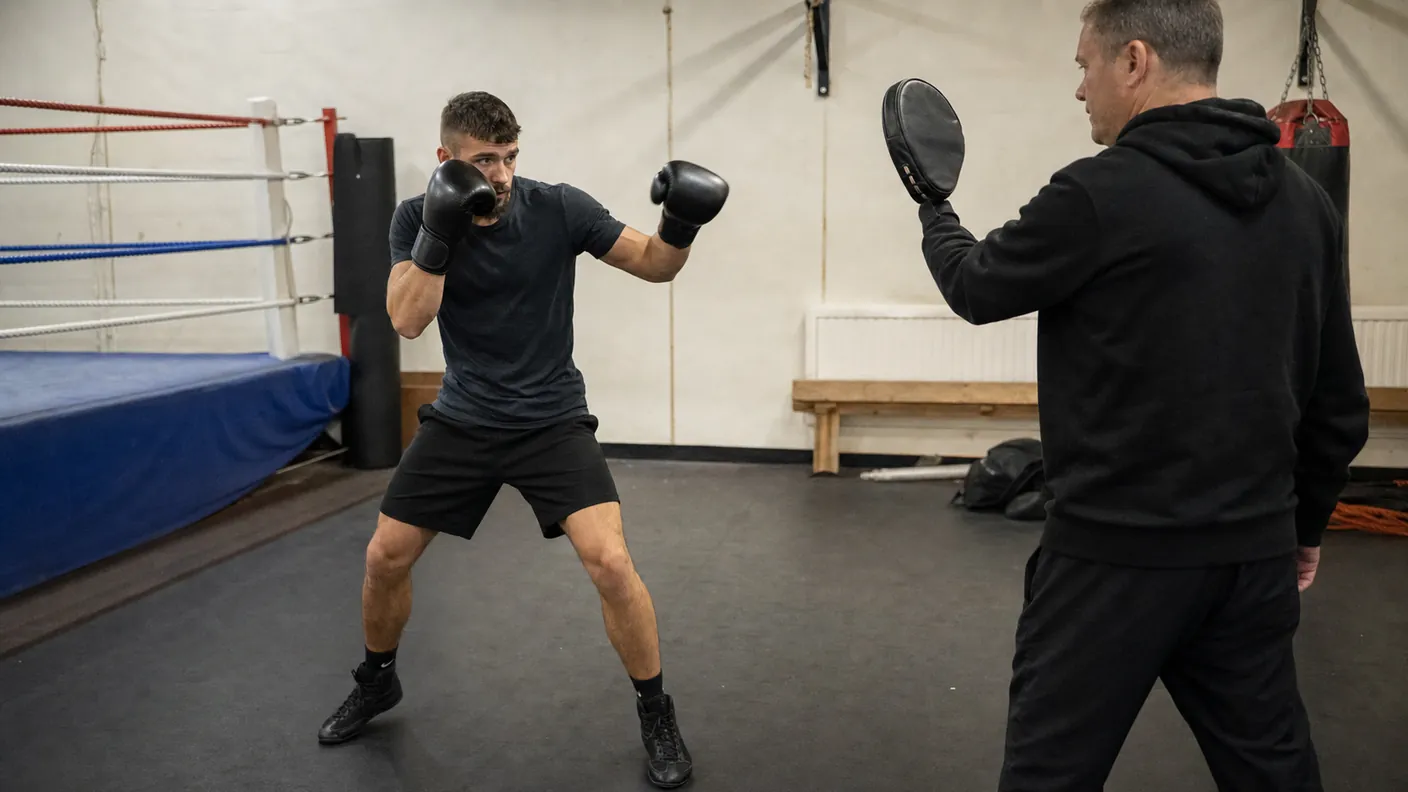
The Half-Jab: A Fast Boxing Range Finder
Use a half-jab to test distance, interrupt an opponent and set up your proper punches without reaching or overcommitting.
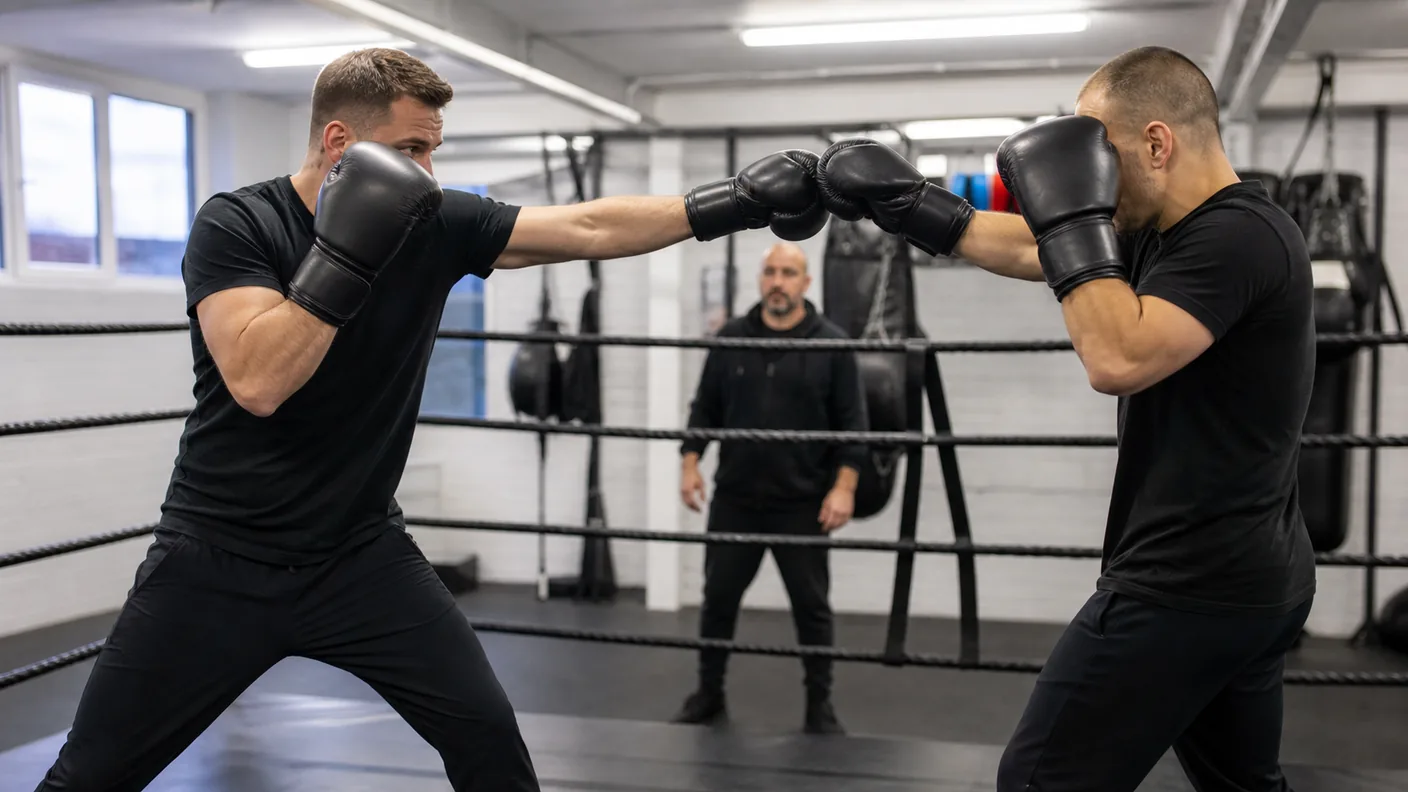
Lead Hand Control in Boxing Without Reaching
Use small lead-hand touches to disrupt the jab, manage range and create safer entries without turning boxing into an arm wrestle.
Was this page helpful?
It takes one tap, and it genuinely helps.
Choose your next step
Turn this article into the right action
Some readers are ready to book. Some need the class route first. Pick the route that matches what you actually want.