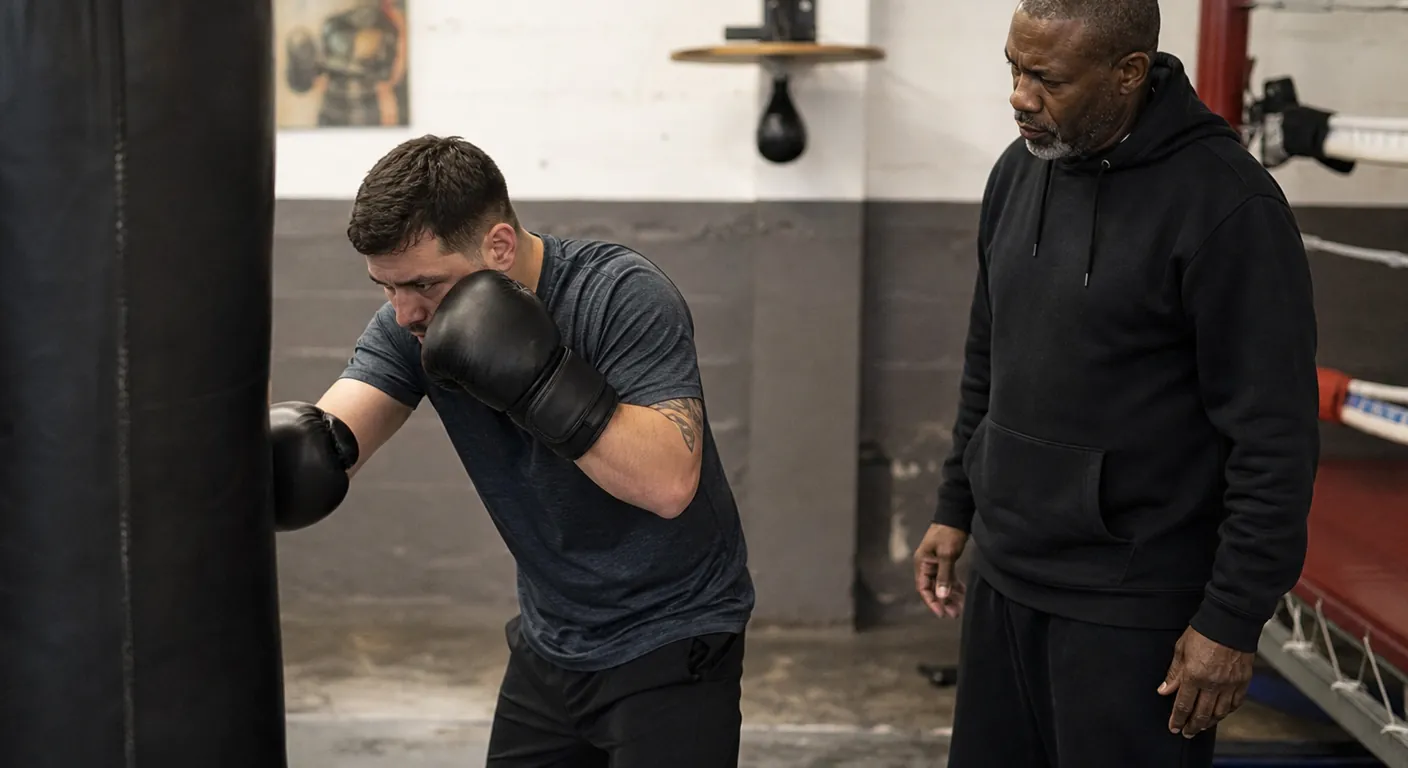
Close range is where tidy boxing often disappears.
Beginners spend months learning long jabs, clean crosses and neat pad combinations. Then they get chest-to-chest with a bag, a pad holder or a sparring partner, and everything shortens. The elbows flare. The chin lifts. The feet stop. They either lean on the target or try to throw long punches from a range where long punches no longer work.
Good close-range boxing is not just toughness. It is position. You need enough space to punch, enough cover to stay safe, and enough balance to leave when the exchange is finished. A technical and tactical review of boxing performance describes boxing as a blend of punching, movement, defence, distance and tactical behaviour. Close range proves the point. If one part breaks, the whole exchange gets ugly.
The short clip below shows the basic idea on the heavy bag: stay covered, create a little room, then turn the hip through a compact punch instead of trying to swing from no space.
Here is how to make space at close range without turning the exchange into a wrestling match.
Close range is not the same as being stuck
The first mistake is thinking that close range means you have no choices.
You do have choices. They are just smaller. At long range, you can step, jab, pivot, reset and see the whole picture. At close range, the decisions are tighter: frame, nudge, turn, shorten the punch, block, smother, step out. The movement is not dramatic, but it matters.
If you are too close for a straight right hand, do not force a straight right hand. If your hook needs a full arm swing, you are not in position for that hook. If the bag is pressing into your chest, you cannot pretend you are still at mid-range. You need to create half a step, not a giant escape.
Use this rule: make only enough space to work.
That keeps the action clean. You are not shoving someone across the ring. You are not leaning on the bag until it carries your weight. You are creating a small pocket where your hips can turn and your hands can stay useful.
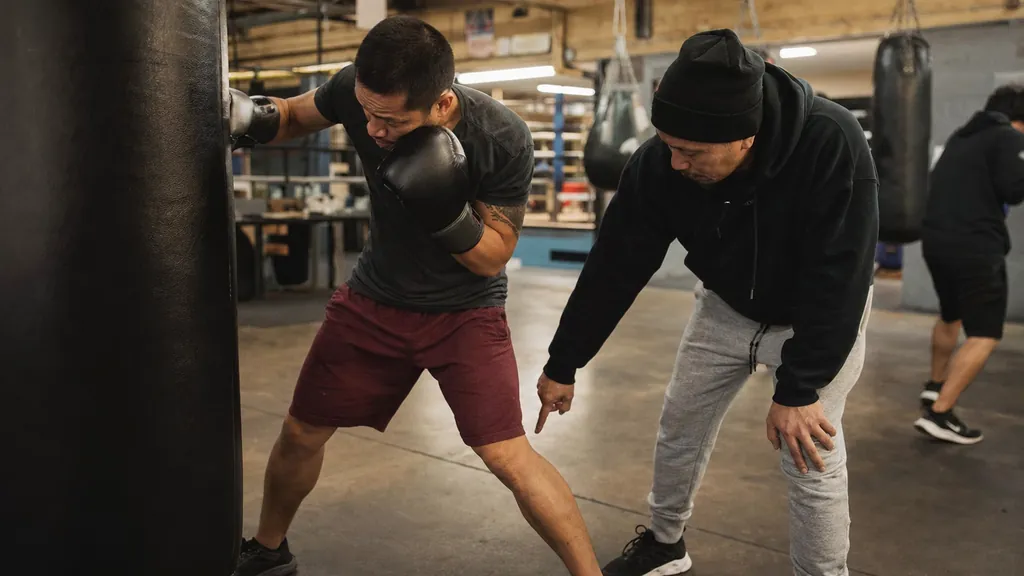
Stay covered before you make space
Do not make room with your chin in the air.
When beginners feel crowded, their first reaction is often to push both hands out. That creates space for a split second, but it also opens the face. In a real exchange, the other boxer does not have to be clever. A short right hand, left hook or uppercut can arrive while both of your gloves are busy pushing.
Start from cover. Your chin stays down. Your elbows stay close enough to protect the ribs. One glove or forearm can create the frame, but the other hand needs to guard. If both hands leave home at the same time, you have made space for the other boxer as well as yourself.
On the heavy bag, feel the difference. Stand too close and let the bag touch your chest. If both gloves push the bag away, your head is probably exposed. Now try it with one glove framing lightly while the other glove stays near your cheek. The space is smaller, but the shape is much safer.
This is also why the feet matter. If your feet are square, you will push from your upper body. If your stance is still underneath you, a small step or hip turn can help create the room without losing balance.
Frame, do not shove
A frame is a controlled barrier. A shove is panic.
In boxing training, we use framing as a way to understand body position and space. The glove, forearm or shoulder helps you know where the target is, buys a moment, and stops you collapsing into the bag or partner. It should be short, tidy and coach-controlled.
Do not extend the arm fully and lock the elbow. That turns the frame into a long push, leaves your ribs open, and makes your next punch slow. Keep the arm bent. Feel the target. Then let the hip and foot create the punch.
A simple heavy-bag version works well:
- Start close enough that a long cross would feel cramped.
- Keep the rear hand home and the chin tucked.
- Use the lead glove or forearm to make a small pocket of space.
- Turn the hip through a short hook or short uppercut.
- Bring the punching hand back and step out.
The key word is small. If the bag swings wildly, you are probably pushing too hard. The bag should move enough to teach you distance, not so much that the drill becomes a strength contest.
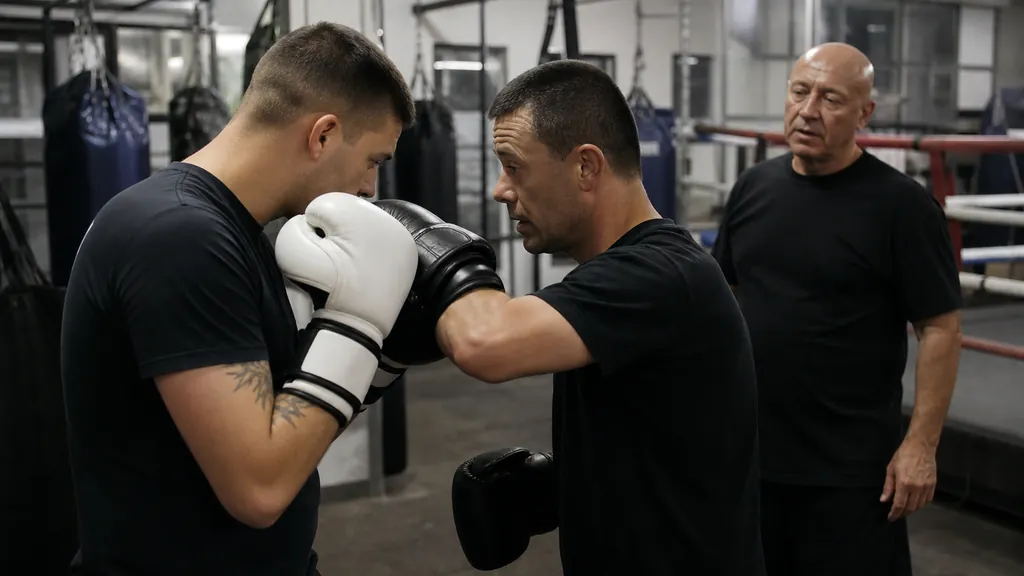
Turn the hip when the arm has no room
Close-range power comes from the body, not from a long arm path.
At arm's length, a punch has space to travel. At close range, the glove is already near the target. If you try to add power by pulling the arm back, you give away the punch and open yourself up. The better answer is to keep the punch short and turn the body behind it.
A biomechanical study of boxing punches notes how punching performance depends on coordinated action across the body rather than the arm alone. That matters even more in close range. You do not have space for a big swing, so the hips, legs and trunk have to do their share.
On the bag, try this. Put your lead shoulder close to the bag. Keep both hands high. Throw a short lead hook without moving the hip. It will feel like an arm tap. Now reset, bend the knees slightly, and turn the lead hip as the hook lands. The punch is still short, but it has weight behind it.
The same idea applies to the uppercut. If you are working from inside range, the uppercut should lift through a tight lane. The elbow stays under the glove. The other hand stays home. If you need more room, step or frame first. Do not scoop the punch from your knee.
For the mechanics of that punch, our uppercut technique guide breaks down short, mid and long ranges. This close-range drill is where the short version starts to make sense.
Do not smother your own work
Smothering your opponent can be useful. Smothering yourself is not.
A lot of beginners step in well, land the first shot, then keep falling forward until their own chest blocks the next punch. Now the arms are trapped, the head is low, and the only available movement is a messy push. That is not inside boxing. That is a loss of posture.
The fix is to check your head position. Your head should not drift beyond your front knee. Your chest should not collapse onto the bag. Your rear foot should not trail so far behind that you cannot turn. If you are too close, make the small pocket first. If you are still too close after punching, step off or reset.
This links with how to close distance in boxing. Getting in is only phase one. Once you arrive, you still need enough structure to punch, defend and leave.
A useful coaching cue is: enter with shape, work with shape, leave with shape.
If any part of that sentence fails, slow the drill down.
Add the partner version carefully
Do this first on the bag. Then do it with pads or a trusted partner under supervision.
The partner version is not a licence to shove each other around. It is a controlled drill for learning what close range feels like. Partner A holds a high guard or body shield. Partner B starts close, frames lightly, throws one short body shot or short uppercut, then steps out. Both reset.
Keep the first round almost boring. One frame, one punch, one exit. No wrestling. No head pushing. No big swings. The coach should be able to see the guard, the feet and the hip turn every time.
Once the shape is safe, add a decision:
- If the partner stays close, frame and work short.
- If the partner gives ground, step with the punch and reset range.
- If the partner answers, cover first, then leave.
That decision-making is the real skill. Close range is not a place where you get to switch your brain off. It is a place where small choices have to happen faster.
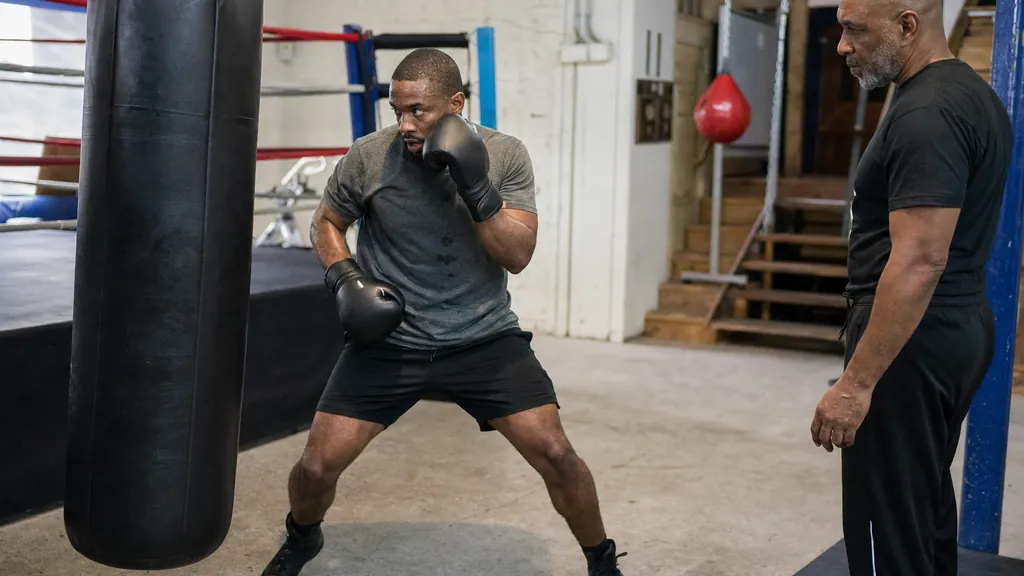
Common mistakes in close-range drills
The first mistake is pushing with both hands. It feels strong, but it removes your guard and delays your next punch.
The second is leaning on the bag. If the bag is holding you up, the drill is lying to you. You should be balanced enough to step away at any moment.
The third is swinging long from short range. Long hooks and looping uppercuts need space. If you are inside, shorten the punch and turn the hip.
The fourth is forgetting the exit. A good close-range action is not finished when the punch lands. It finishes when you have defended, stepped out, turned off, or reset in stance.
The fifth is making the drill too rough too early. Close-range training can get untidy fast. Start slowly enough that both boxers can keep their shape. Speed comes later.
The three-round close-range drill
Use this as a simple class or bag-work progression.
Round 1: frame and reset
Work close to the heavy bag. Frame lightly with one glove or forearm, keep the other hand home, and step back into stance. No punch yet. The aim is to learn how little space you actually need.
Round 2: frame and punch
Add one short punch. Use a short hook to the body, short uppercut, or compact hook upstairs depending on the coach's instruction. The punch should come from hip turn, not a long wind-up.
Round 3: frame, punch and leave
Now finish the action. Frame, punch, then step out or pivot. Do not admire the punch. Do not stay attached to the bag. Finish balanced, with both hands back in guard.
That progression teaches the whole skill: make room, work, get safe.
The coaching cue
Close range rewards calm boxers.
If you panic, you push, swing and lean. If you stay organised, you make a small pocket, keep one hand home, turn the hip through the short punch, and leave before your shape disappears.
You do not need to win a wrestling match. You need to make enough room to box.
If you train in Kidbrooke, Greenwich or nearby, our Recreational Adults boxing classes teach close-range work through bags, pads and controlled partner drills. Beginners learn how to stay covered and balanced before anyone adds pressure.
H&G Team
Writer at Honour & Glory Boxing Club, a community boxing gym in Kidbrooke, South East London.
KEEP READING
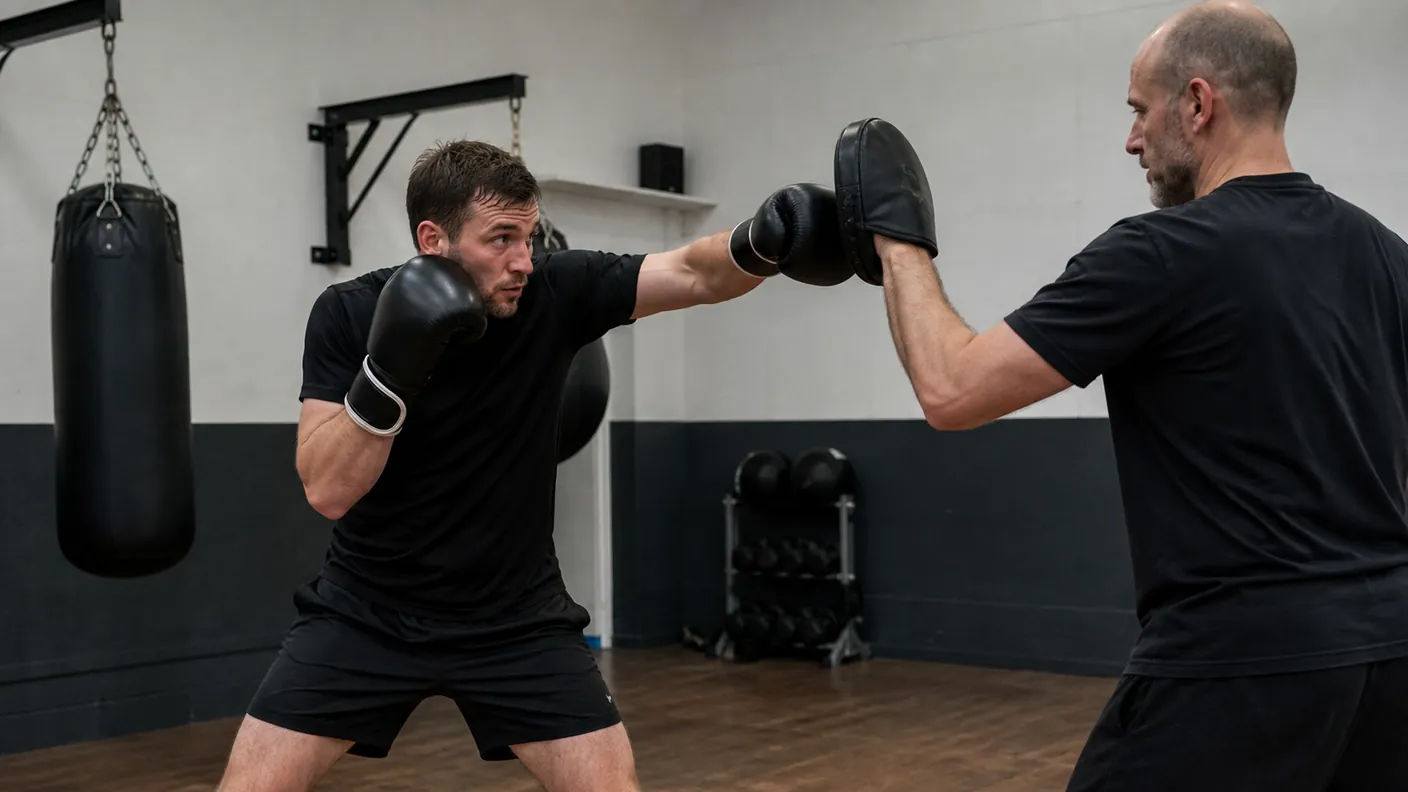
Hook-Slip-Hook: A Calm Close-Range Boxing Drill
Use a compact hook, small defensive slip and second hook to practise close-range boxing without standing still after your first punch.
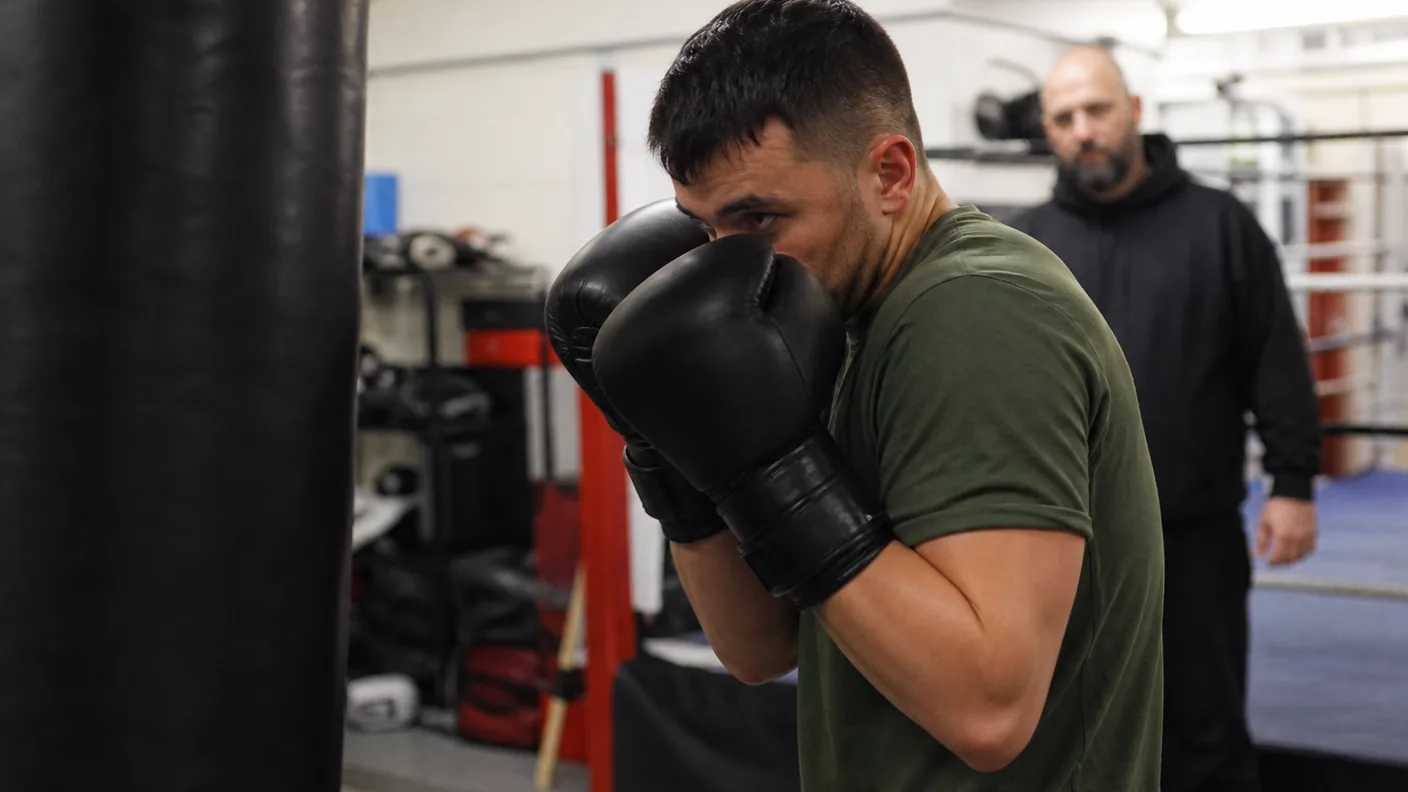
Stop Smothering Your Punches on the Heavy Bag
A close-range heavy bag drill for finding punching room, keeping your guard useful and building compact power without pushing.
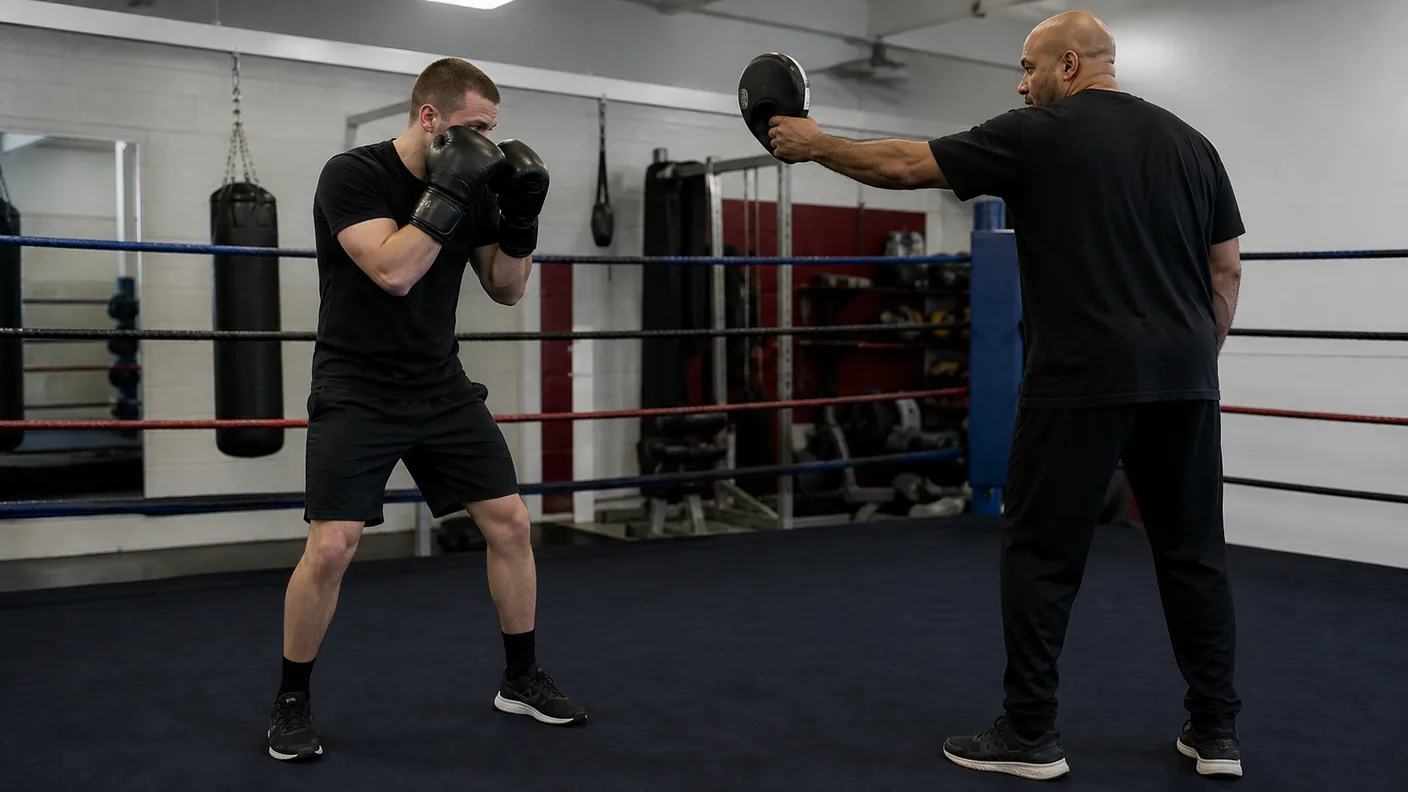
Creep Into Boxing Range Without Reaching
Use small, patient steps to close boxing range without lunging, losing your stance or handing an opponent an easy counter.
Was this page helpful?
It takes one tap, and it genuinely helps.
Choose your next step
Turn this article into the right action
Some readers are ready to book. Some need the class route first. Pick the route that matches what you actually want.