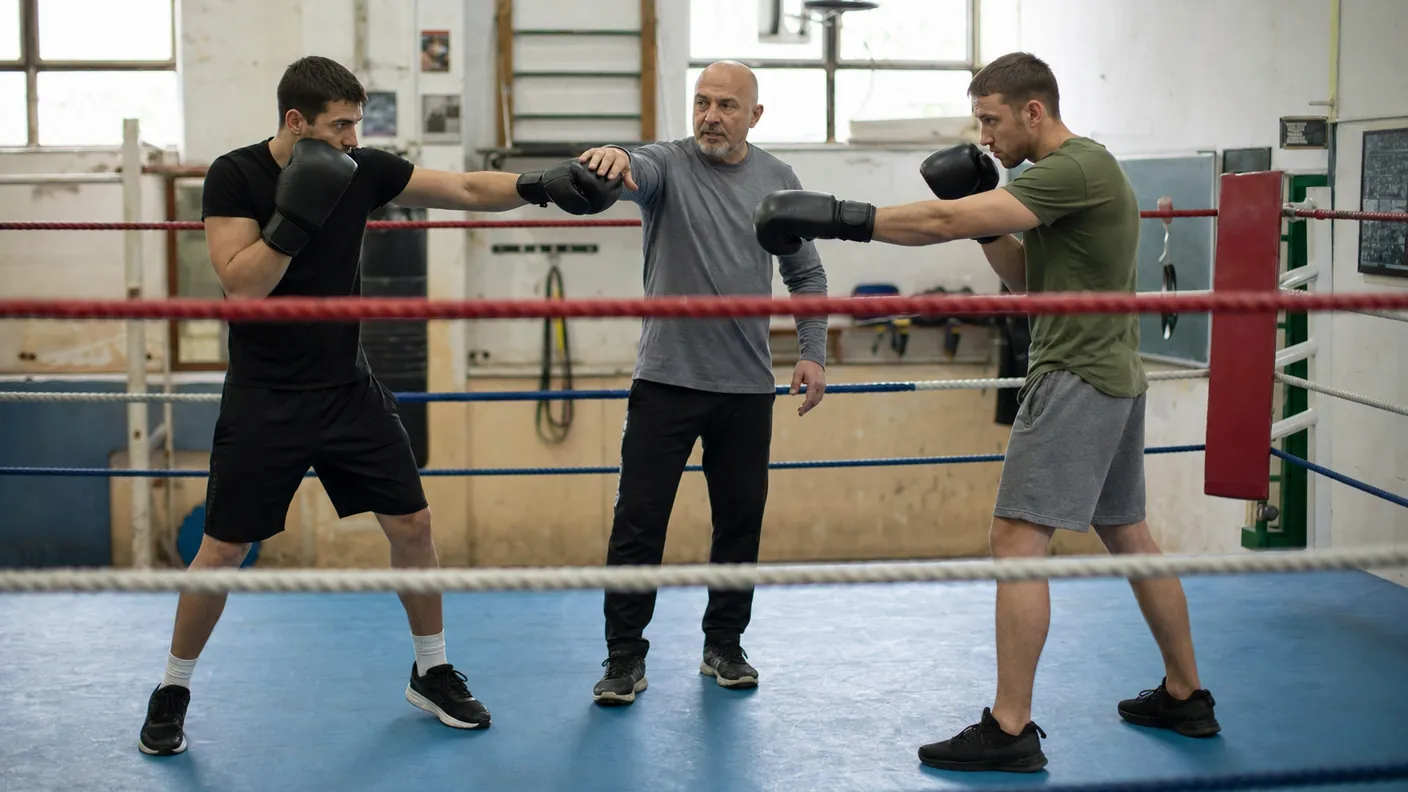
Most missed punches are not caused by bad hands.
They are caused by bad range. A beginner throws a jab from too far away and reaches with the chin. A hook comes from long range and turns into a slap. An uppercut starts from outside distance and travels like a scoop. The boxer then blames timing, power or confidence, when the simpler problem is that the punch was thrown from the wrong place.
Range is the map of boxing. If you know where you are, you know which punch belongs there, which defence is sensible, and when to move instead of forcing a shot.
Watch the short clip below, then use the coaching notes after it to turn range from a vague idea into something you can test in training.
Range decides what is available
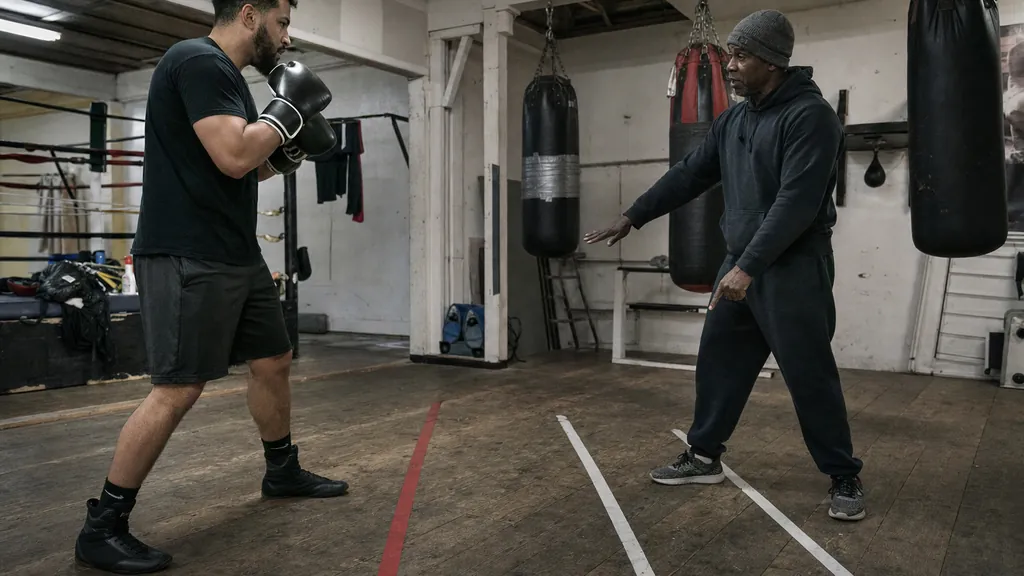
Range is not only how close you are to the other boxer.
It decides what actions are honest. At one distance, a jab can land cleanly without your stance breaking. At another, the jab is only a threat while your feet close the gap. At close range, a full straight right hand may be useless because there is no room for it to travel.
That is why good coaching links punches, footwork and defence together. A biomechanical review of boxing punches describes punching as a coordinated action across the body rather than an isolated arm movement. Range is part of that coordination. If the feet are in the wrong place, the punch starts lying before the glove leaves the guard.
The aim is not to memorise a perfect tape-measure distance. Bodies differ. Arms differ. Stances differ. The aim is to recognise the job each distance gives you.
Out of range is not wasted time
Out of range means the opponent cannot hit you immediately with a clean punch, but you also cannot hit them cleanly without moving.
Beginners often hate this distance because nothing dramatic is happening. They want to be busy, so they step in too early or throw a punch that has no chance of landing. Better boxers use out-of-range moments to breathe, read, feint, set the feet and choose the entry.
Your hands still have a job here. They can show a jab, touch the guard, feint the shoulder, or draw a reaction. But if you throw a full punch from out of range and try to make it land by leaning, the range has beaten you.
Use this test. Stand in stance and extend the jab without moving the head forward. If the glove falls short, do not stretch the punch. Step or feint first. The punch should not borrow distance from your face.
That idea connects directly to our guide on how to close distance in boxing. Getting into range should be a controlled entry, not a hopeful jump.
Edge of range is where decisions start
The edge of range is just outside clean punching distance.
This is a dangerous and useful place. You are close enough that a small step can make the jab real. You are also close enough that the other boxer can reach you if you drift, admire your work or freeze. Many beginners hover here without knowing it, which is why they get clipped while thinking they were still safe.
At the edge, your best tools are small. A jab feint. A half-step. A shoulder twitch. A touch to the lead glove. A small step back to make the other boxer fall short. The point is to ask for information before you commit.
Research on anticipation in combat sports found that more skilled fighters read early movement cues better than less skilled fighters (systematic review). In normal gym language, better boxers notice the shoulder, foot, hip and guard changes sooner. Edge-of-range work teaches you to make and read those small cues without charging in blind.
Long range belongs to straight punches
Long range is where your fully extended straight punches can land with structure.
This is jab and cross territory. The shoulder can travel behind the fist. The elbow can extend without locking. The rear foot can turn. The punch can leave and return without you falling in.
The common mistake is trying to hook from here. A long-range hook can exist, but it is harder to control and easier to turn into a swing. Most beginners are better served by learning the honest straight line first. If you want to hook, close the distance or use the hook as a deliberate long lead-side setup, not as a panic answer to being too far away.
Long range is also where the jab becomes your organiser. It measures, touches, interrupts and hides the next action. Our article on how to throw a jab in boxing breaks down the punch itself. The range lesson is simpler: if the jab only lands because your head goes with it, you are still not in true long range.
A useful round is straight punches only. Jab. Jab-cross. Double jab. Jab to body. No hooks. No uppercuts. Every time you feel yourself reaching, reset the feet before punching again.
Mid range is where hooks and uppercuts begin to make sense
Mid range is close enough that the arm no longer needs to fully extend.
This is where hooks, uppercuts and shorter body shots start to belong. The elbow can stay bent. The hips and shoulders can turn through the punch. The head can stay over the stance rather than chasing a target at the end of the arm.
Mid range is also where people get punished for lazy exits. If you are close enough to hook, the other boxer is close enough to hook you back. A good mid-range punch must come with a defensive finish: hand back, chin tucked, roll, catch, step, pivot or tie the next action to the first one.
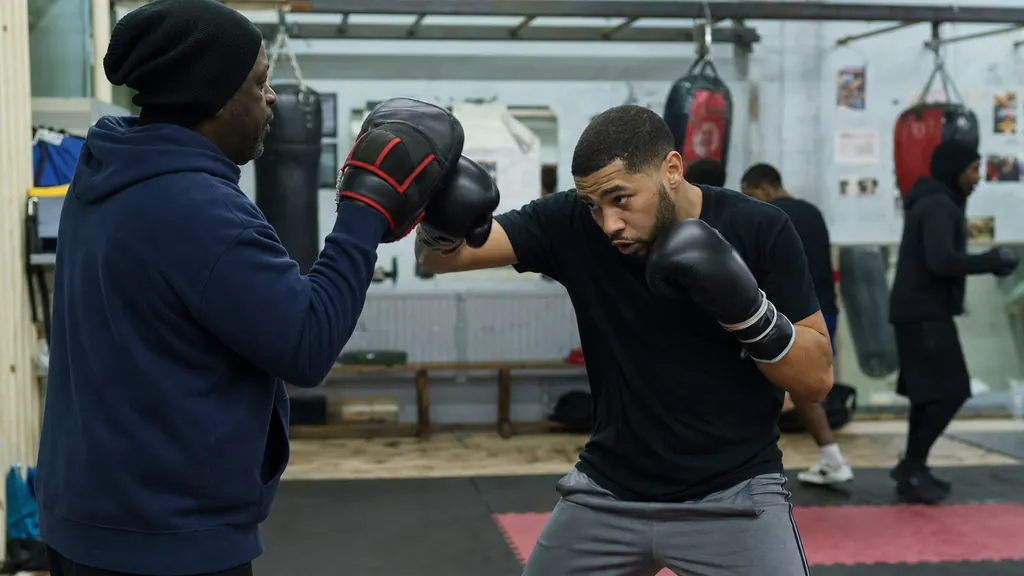
A simple drill works well on pads. The coach calls either straight or short. On straight, the boxer jabs or throws jab-cross from long range. On short, the boxer steps in slightly and throws a compact hook or uppercut. After every action, the boxer freezes for one second so the coach can check stance, guard and head position.
If the boxer throws a hook without stepping into mid range, the coach stops the round. If the boxer throws a long cross from too close and smothers it, the coach stops the round. The lesson is not speed. The lesson is choosing the punch that fits the distance.
Close range needs short work, not panic
Close range is where everything gets smaller.
Straight punches lose room. Long hooks become messy. Uppercuts need a tight path. The guard has to stay useful because there is less time to see the return. At this distance, calm matters more than force.
Good close-range work is compact: short hook, short uppercut, body shot, frame, block, roll, step out. Bad close-range work is usually emotional: pushing with both hands, leaning on the target, swinging from the elbow, or trying to create power by pulling the punch back.
This is why our guide to making space at close range in boxing starts with posture. You do not need a huge gap. You need enough space to box without exposing yourself.
In class, we keep this controlled. Beginners do not need rough inside sparring to understand close range. They need safe, clear drills where a coach can see whether the elbows, chin, feet and exit are still organised.
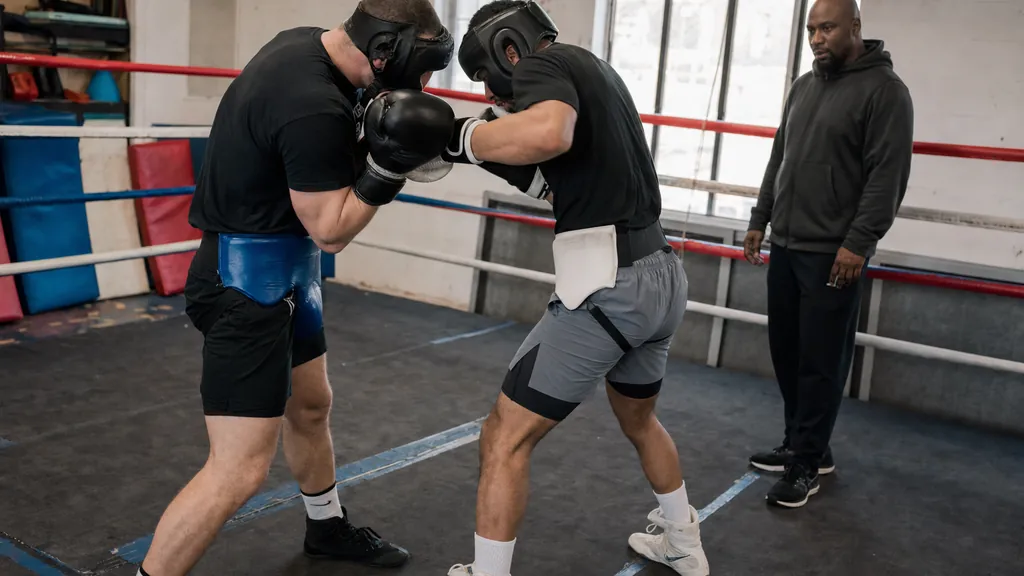
The five-range shadowboxing drill
Use this before bags or pads.
Mark five zones on the floor with tape, cones or imaginary lines: out of range, edge of range, long range, mid range and close range. Shadowbox slowly through the zones. Each zone has a rule.
- Out of range: feint, breathe, set the feet.
- Edge of range: show the jab, draw a reaction, step in or step out.
- Long range: straight punches only.
- Mid range: compact hooks, uppercuts and body shots.
- Close range: short work, frame, cover and leave.
Do not rush the transitions. The value is in noticing when the punch should change. If you step from long to mid range, the punch changes. If you step back from mid to edge, the punch changes again. That is the whole point.
Common range mistakes
The first mistake is reaching. If the punch needs your chin to travel forward, the range is wrong.
The second is throwing hooks from too far away. The arm straightens, the glove slaps, the body turns square and the other boxer sees the shot early.
The third is throwing straight punches from too close. The punch has no room, so the shoulder jams and the boxer ends up leaning on the target.
The fourth is staying in mid range after punching. If you can hit with hooks, so can the other boxer. Finish with a guard, roll, step or exit.
The fifth is treating range as fixed. It changes every second. One small step from you or the other boxer can turn a sensible punch into the wrong punch.
The coaching cue
Range first, punch second.
Before you throw, know where you are. Out of range asks for setup. Edge of range asks for a decision. Long range favours straight punches. Mid range brings hooks and uppercuts into play. Close range needs short, calm work and a clean exit.
That does not make boxing robotic. It makes it cleaner. You stop forcing your favourite punch into the wrong space and start choosing the punch the position actually allows.
If you are in Kidbrooke, Greenwich or nearby, our Recreational Adults boxing classes teach range through pad work, bag drills and controlled partner rounds. You learn where the punch belongs before trying to make it faster or harder.
H&G Team
Writer at Honour & Glory Boxing Club, a community boxing gym in Kidbrooke, South East London.
KEEP READING
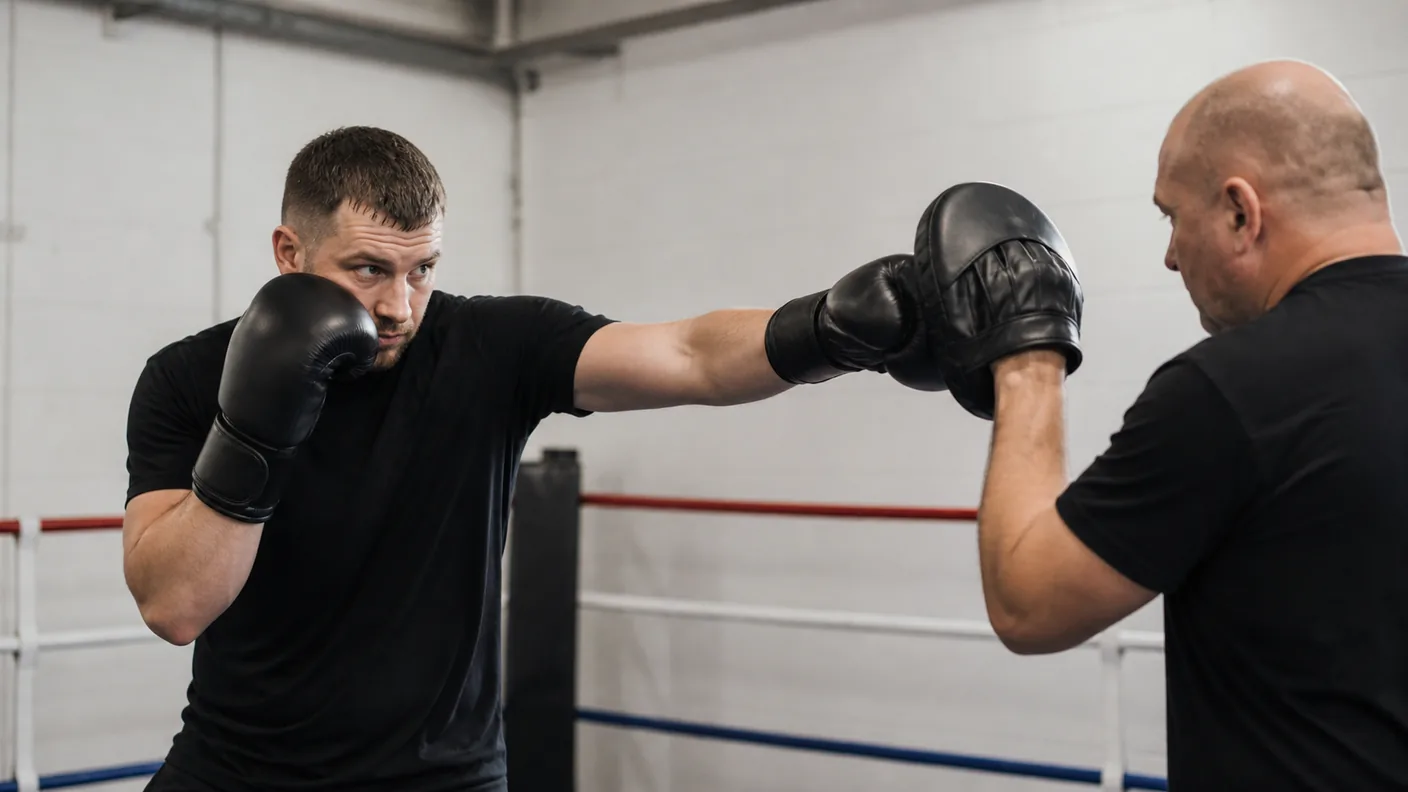
Boxing Punch Range: Short, Mid and Long Shots
Learn why a jab, hook and uppercut need different range, shape and foot position before you add speed or power.
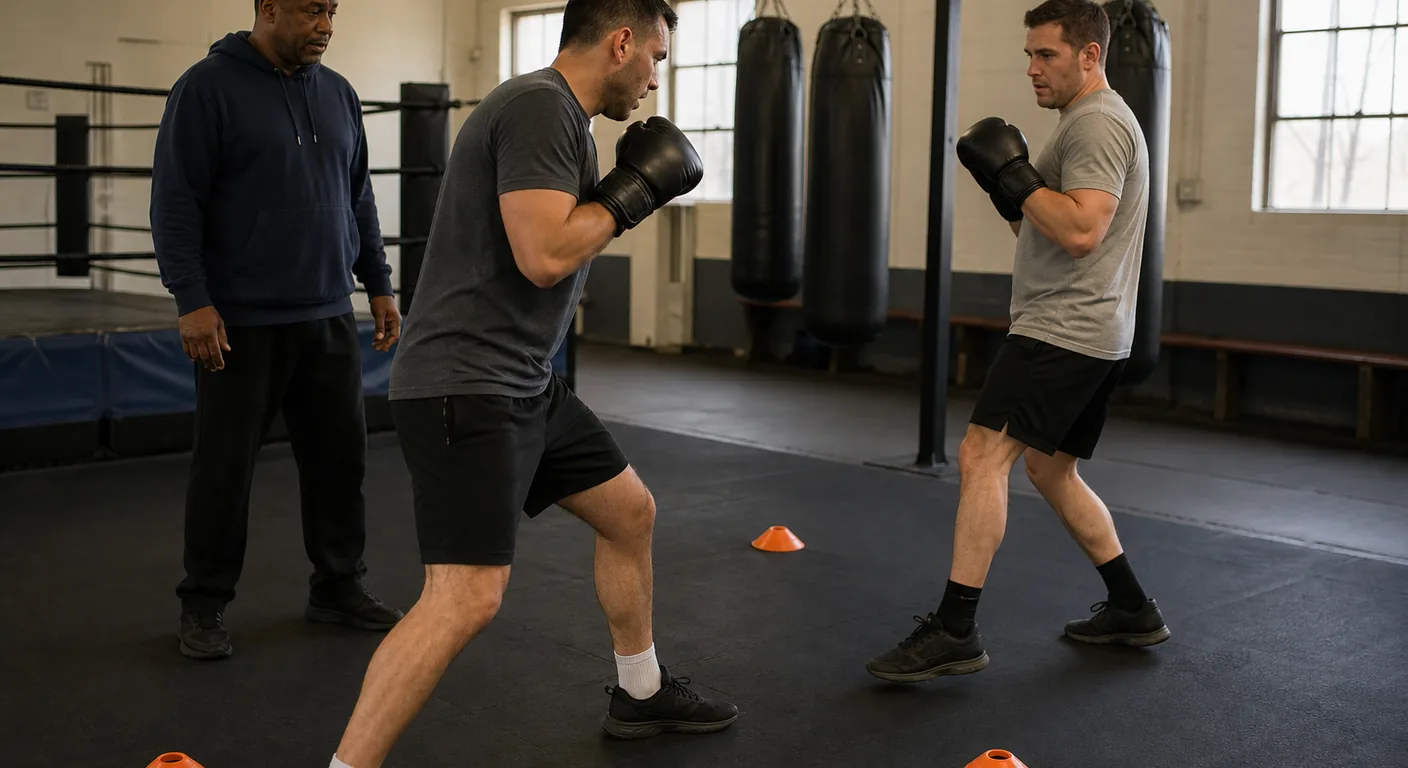
How to Close Distance in Boxing
Learn how to close distance in boxing without rushing, reaching or walking onto counters. A practical footwork guide for beginners.
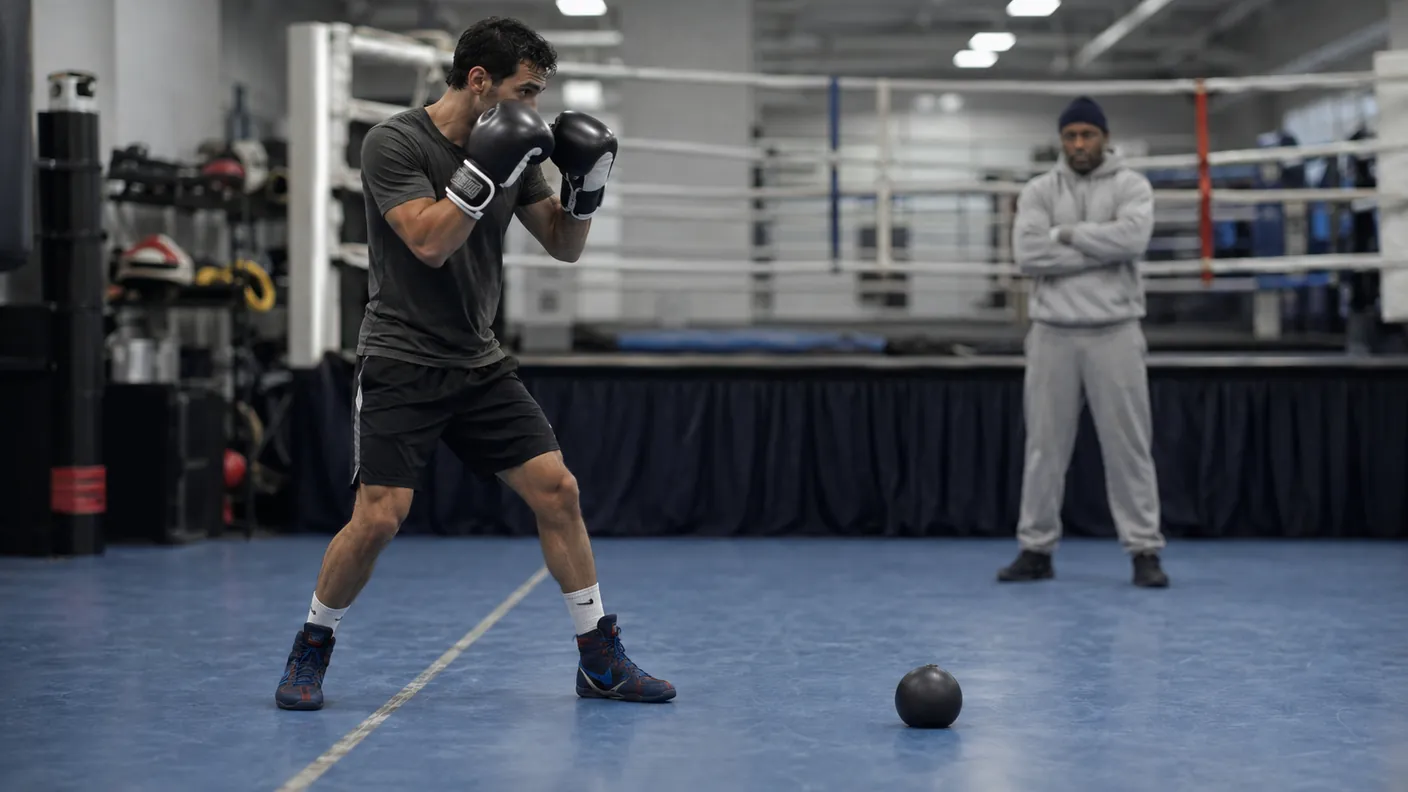
Boxing Footwork Ball Drill for Better Range
Use one small ball to practise stepping into range, seeing the distance and leaving without crossing your feet or reaching.
Was this page helpful?
It takes one tap, and it genuinely helps.
Choose your next step
Turn this article into the right action
Some readers are ready to book. Some need the class route first. Pick the route that matches what you actually want.