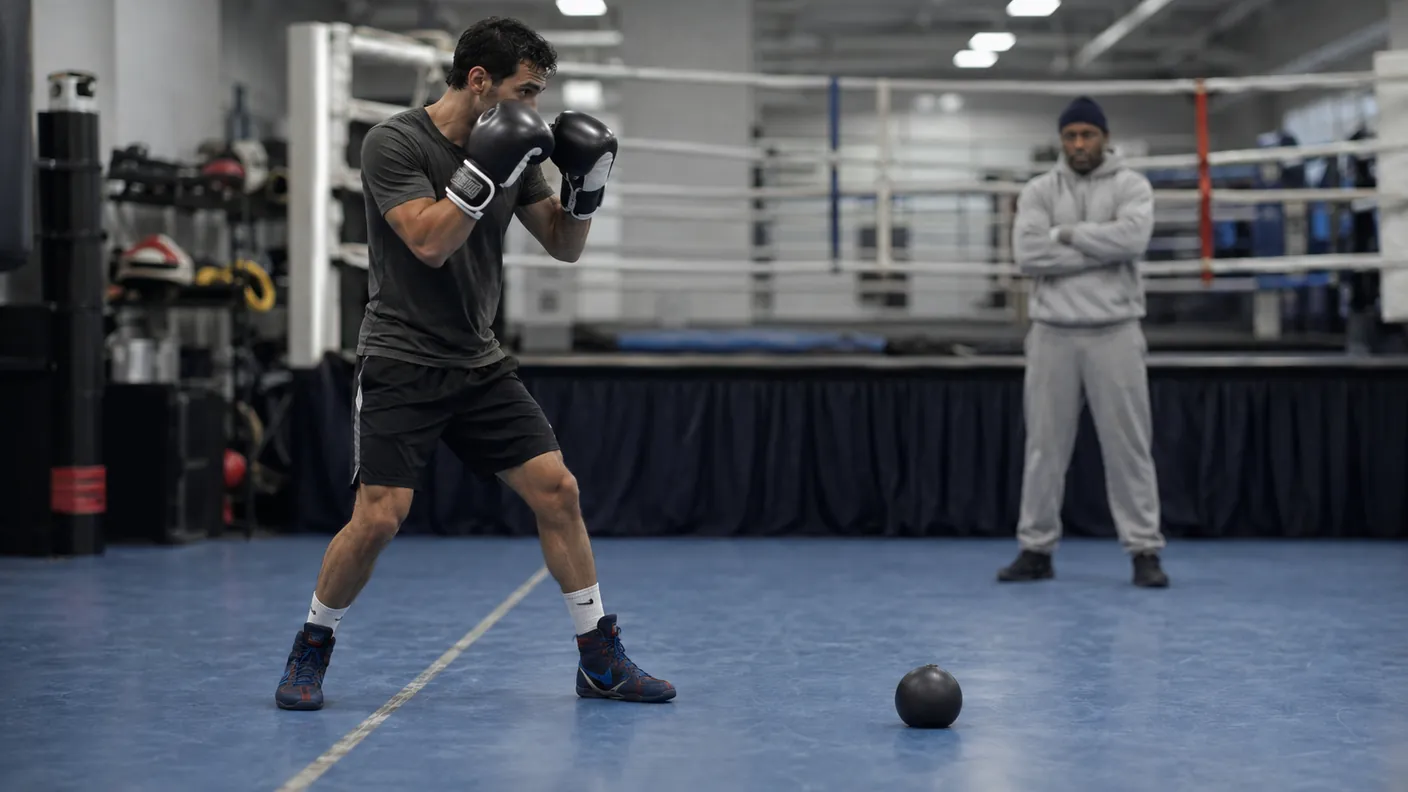
A small ball on the floor can teach an awkward boxing problem clearly: how to move into range without leaning, then leave without panicking backwards.
The ball is not a target to kick or a piece of gym theatre. It is a visible marker. It gives your feet a place to arrive, helps your eyes judge distance, and exposes whether you can get in and out while your stance still looks like boxing.
The video below is a useful visual reference. Watch the feet more than the ball. The useful point is the calm approach, the short placement of the lead foot and the immediate recovery to a balanced stance.
Why a ball can make range easier to see
Most people understand range when a coach is holding mitts. The target is clear, the person is standing still and the punch tells you when you are close enough. The problem arrives when the target is moving or you are trying to leave after an entry. A boxer who cannot see the distance with their feet starts reaching with their head and hands instead.
A small, soft training ball gives you a fixed point between your feet and the floor. Start outside the ball, take one controlled step until your lead foot reaches the agreed position, then take yourself back out while keeping the rear foot behind you. The ball makes the space visible before punching complicates it.
England Boxing places stance, balance and controlled movement at the heart of technical development in its coaching handbook. That is the standard for this drill. The point is not to move quickly around an object. The point is to reach a position from which you could still jab, cover or leave.
Set the ball in the right place
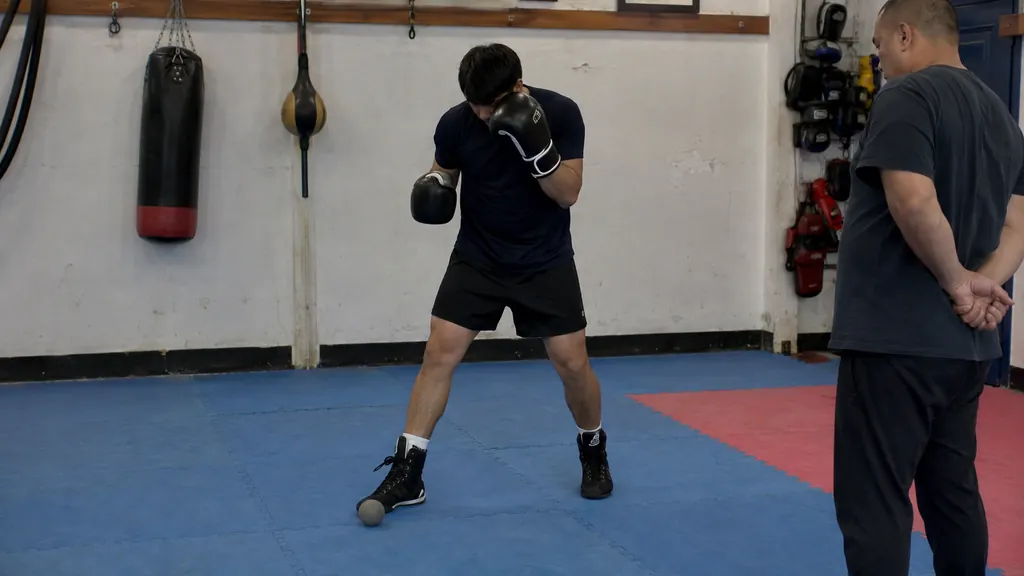
Use a soft, low ball that cannot roll far or become a trip hazard. A tennis ball, a soft reaction ball or a small foam ball works. Do not use a heavy medicine ball, a hard football or anything that encourages you to kick or lunge at it.
Place it on a clear patch of floor. Stand just outside your usual jab range from the ball, in your normal stance, with both gloves where they belong. For an orthodox boxer, the lead foot will approach first. The rear foot follows only enough to restore the stance. Southpaws reverse the same idea.
Decide the rule before you begin. Your lead toe might arrive just behind the ball, or your lead foot may step beside it. Keep that rule the same for a round. A clear marker makes it easier to notice when you have reached too far or stepped so close that you cannot leave safely.
Do not stare down at the ball. Look forward most of the time, as you would when a coach or partner is in front of you. The ball is there to give your lower body feedback, not to pull your eyes from the person you would need to read in a real exchange.
Our guide to why boxers look at the floor explains why a settled stance and eyes-up habit belong together. You can glance down between repetitions to check the position, but the repetition itself should teach you to feel the distance.
Step in with one job
Begin outside the marker. Push gently from the rear foot and let the lead foot take one short step towards the ball. As that lead foot settles, bring the rear foot enough to preserve the gap between your feet. You have arrived when your knees are soft, your feet still point on their own lanes and your head remains between them.
Do not make a long leap at the ball. A big step can bring you close, but it usually leaves the rear foot behind and the chin too far forward. That is not range. It is an overreach with a better prop.
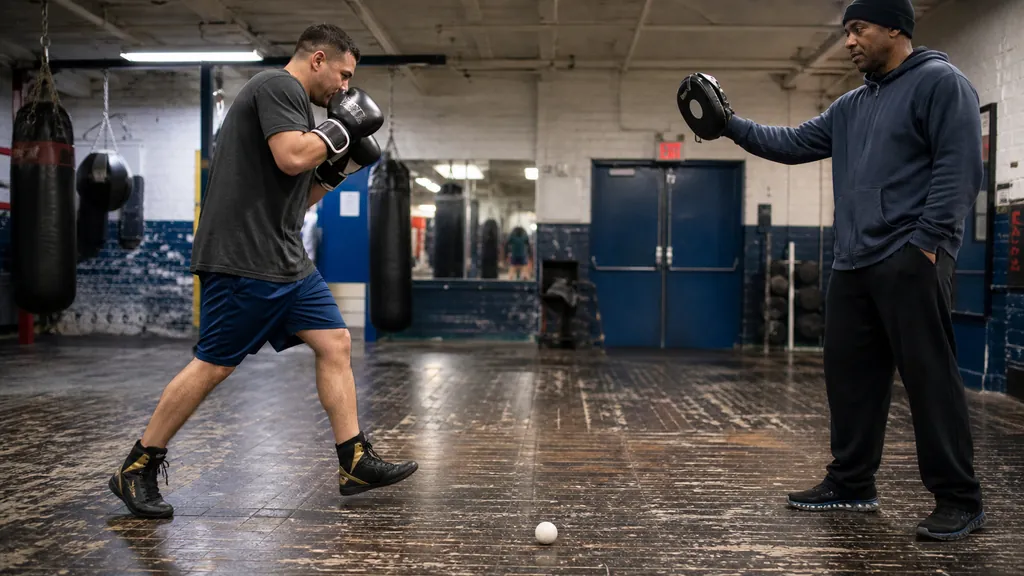
If you want to add a punch, use one light jab to a coach-held mitt only after the feet have reached the marker cleanly. The jab and the lead foot should arrive together. Do not step, pause and then reach for the mitt because the ball has already told you that you are too far away.
A biomechanical study of the cross, hook and uppercut shows that punch mechanics depend on the coordinated movement of the body segments, not only the arm. That is exactly what this simple drill shows. A footwork error changes the punch before the hand has moved.
Leave before the stance disappears
The more useful half of the drill is the way out. Once the lead foot has reached the marker, take a short retreat using the rear foot first. The lead foot follows only enough to return you to the original range. You are not trying to escape across the gym. You are getting back to a place where the other boxer must step again before they can reach you.
A common error is pushing hard off the lead foot and hopping backwards with both feet together. That may feel fast, but it removes your stance for the moment you would need it most. Another is taking a huge rear step and leaving the lead foot stranded. Both movements make the next decision slower.
The better version is quieter. Rear foot moves, lead foot follows, guard remains usable. Finish with enough width to jab again or take a side step if the other boxer keeps following.
This is a focused version of the distance work in our pendulum step boxing drill. The ball gives you a visible point for the entry. The real lesson remains the same: leave the line without throwing your feet together.
A three-round ball footwork drill
Keep this technical. The ball should sit still. There is no race, no kick and no need for a hard punch.
Round one: step in and step out
Work for one minute. Start outside the marker, step in until the lead foot reaches its agreed place, then step back to your original range. Pause for one count after each retreat.
Check three things in that pause: the rear hand is near the cheek, the feet still have a staggered lane, and your weight has not drifted over the front knee. If any of them have gone, make the next step smaller.
Round two: add the eyes-up rule
Repeat the movement, but look at a point on the wall or at a coach standing in front of you. Use the ball only through peripheral vision. After every fifth repetition, stop and glance down to see whether your foot is landing where you thought it was.
This is where the drill becomes more useful than merely stepping around a marker. You learn whether your feet can measure a space without your eyes leaving the next problem.
Round three: add one calm decision
Ask a coach to stand beyond the ball with one focus mitt. After your step in, the coach either holds the mitt at honest jab range, keeps it away, or asks you to retreat. If the mitt is there, touch it with one measured jab and leave. If it is not, return to your stance without reaching.
The ball does not tell you to punch. The coach's cue and your range do. That distinction stops the drill becoming a rehearsed lunge.
Four mistakes to fix early
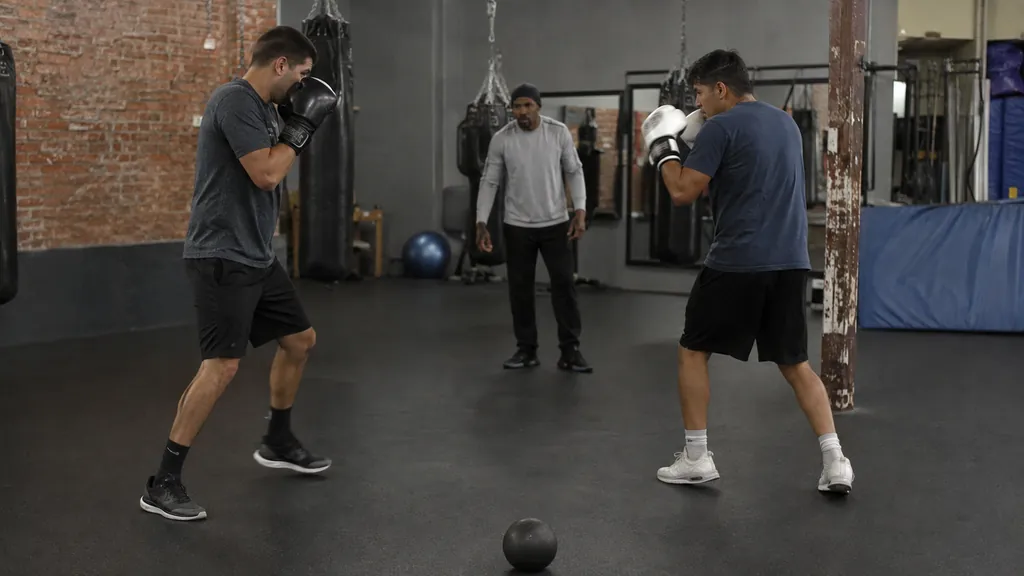
The first is standing too close to the ball before starting. If you begin inside the range you are trying to learn, the step teaches nothing. Take one small adjustment back and give the feet a job.
The second is touching the ball with the shoe. The ball is a marker, not a target. If it moves every repetition, you lose the distance reference and risk turning the drill into something careless.
The third is making every entry a punch. Spend enough repetitions stepping in and out with no punch at all. When the feet know their job, the jab becomes easier to add without the head travelling first.
The fourth is racing the retreat. A fast retreat with crossed feet is worse than a short, calm retreat in stance. If you cannot finish balanced, slow down and make the first step shorter.
For adults in Kidbrooke, our Recreational Adults boxing classes use controlled footwork, pad work and partner drills to turn range into something you can feel rather than guess. You do not need sparring experience to learn how a clean entry and a calm exit fit together.
The cue is simple: find the distance with your feet, then leave with your stance.
H&G Team
Writer at Honour & Glory Boxing Club, a community boxing gym in Kidbrooke, South East London.
KEEP READING
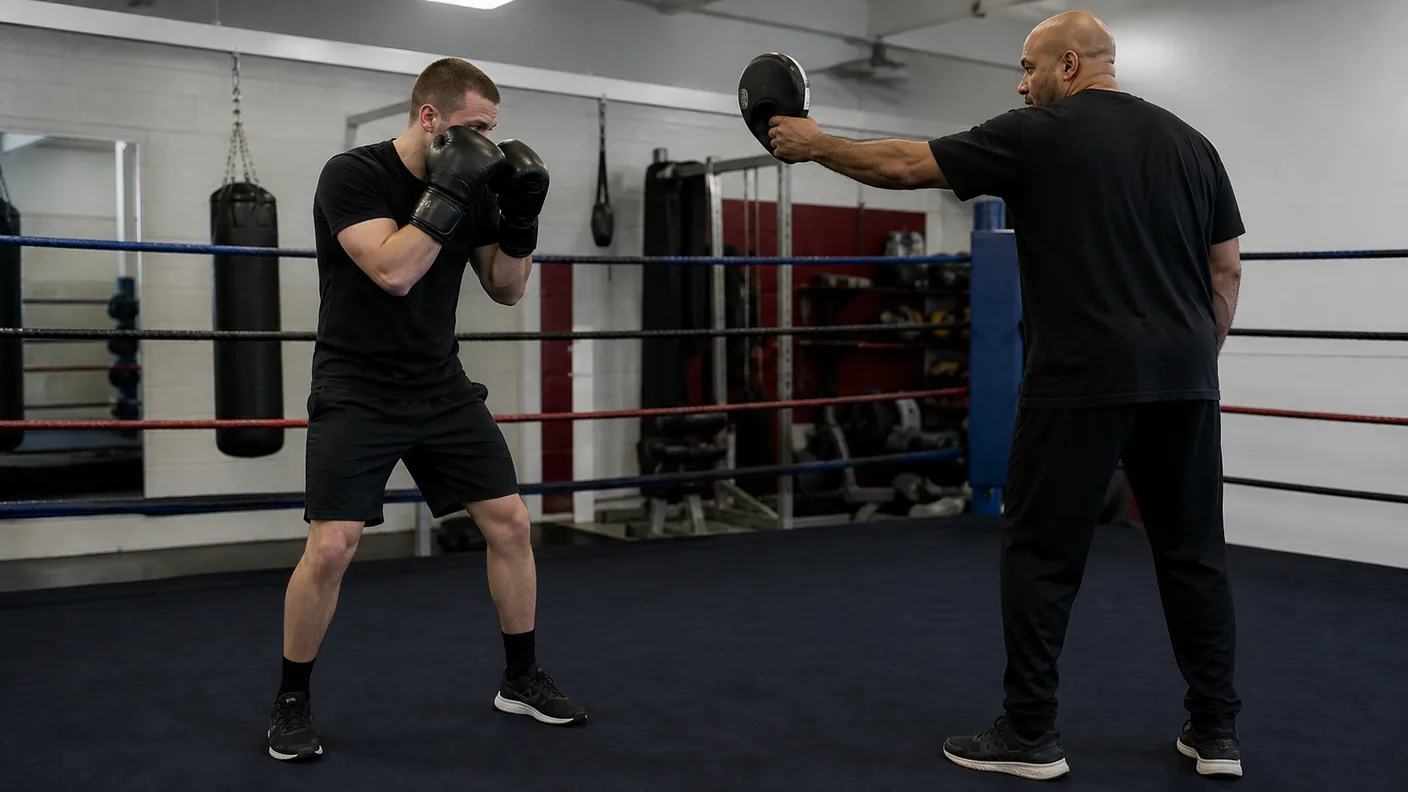
Creep Into Boxing Range Without Reaching
Use small, patient steps to close boxing range without lunging, losing your stance or handing an opponent an easy counter.
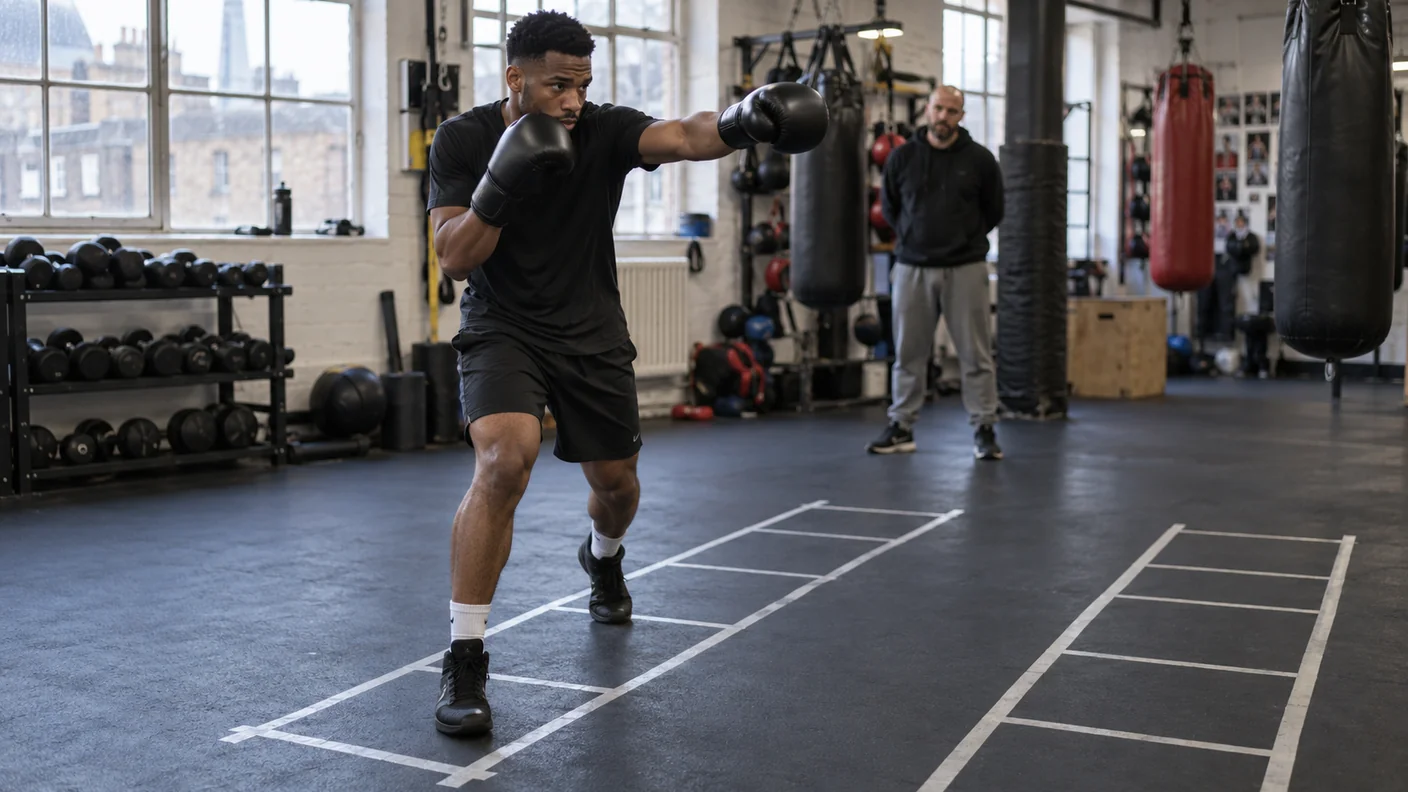
In, Out, Across: Boxing Footwork Drill
A three-direction boxing footwork drill for entering range, leaving safely and changing the line without losing your stance.
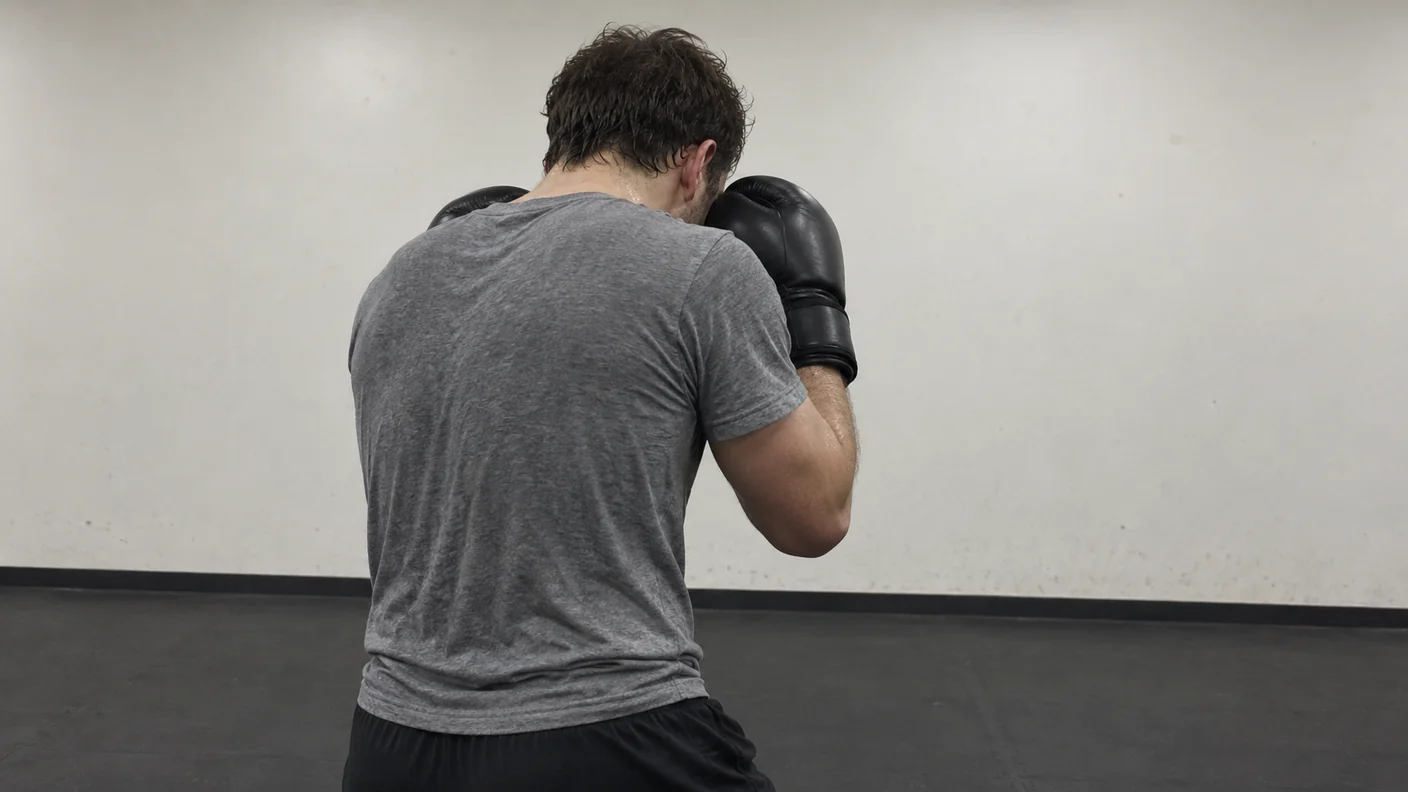
Boxing Footwork When an Opponent Leans On You
Use a small, balanced exit when close-range pressure turns into an opponent leaning on your stance.
Was this page helpful?
It takes one tap, and it genuinely helps.
Choose your next step
Turn this article into the right action
Some readers are ready to book. Some need the class route first. Pick the route that matches what you actually want.