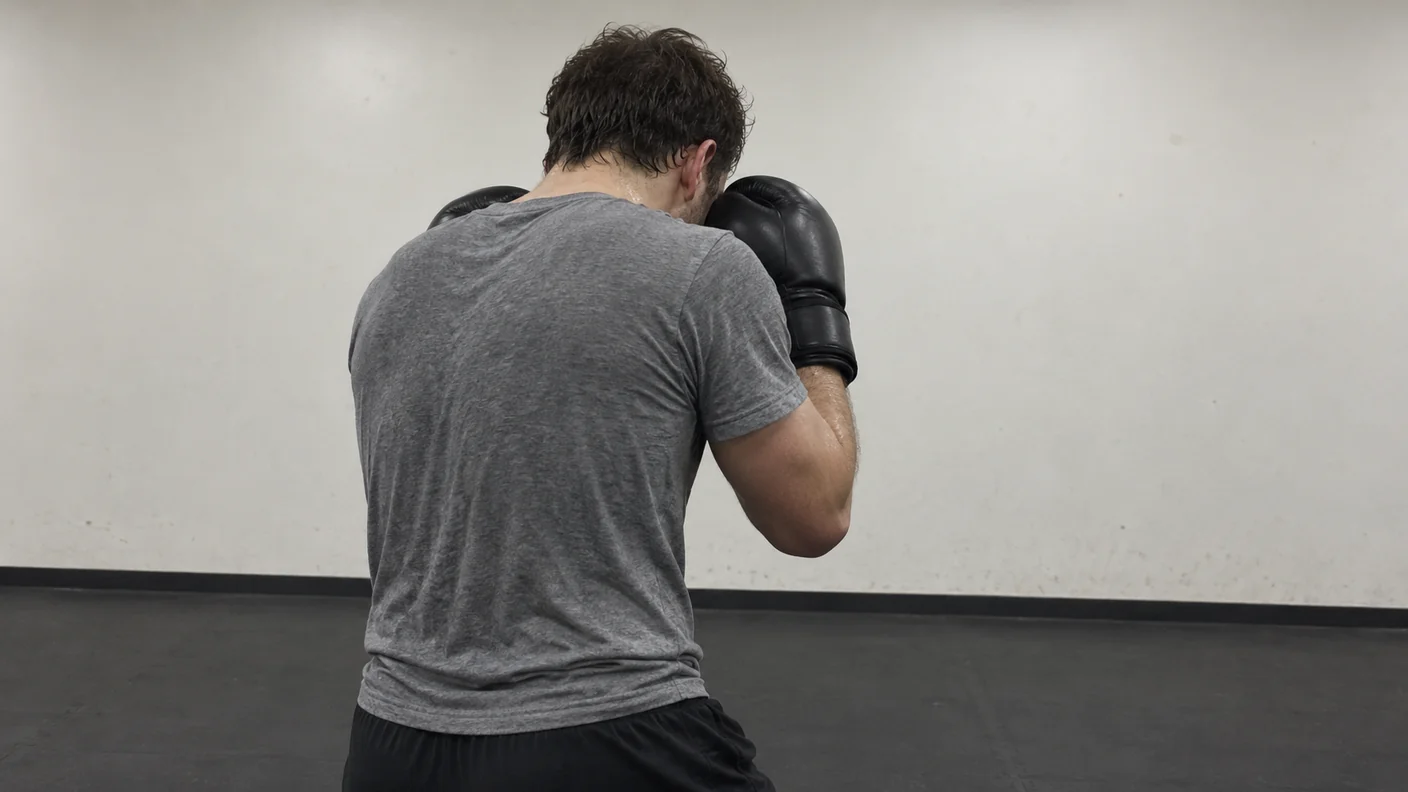
An opponent who leans forward at close range can make a round feel ugly very quickly. Their weight arrives on your gloves, shoulder or chest. Your own feet start to narrow. You try to push them away, they push back, and the exchange becomes a wrestle that neither boxer controls.
Do not solve that by shoving harder.
The better answer is usually to make a small exit before your stance disappears. Move your own weight out from underneath the lean, recover a boxing shape, and decide what is available only after you are balanced again. Sometimes that means a straight step back. Sometimes it means a short angle. It rarely means throwing while your feet are tangled.
Watch the short drill below first. The useful part is not copying every stance switch. It is learning that retreating can be a deliberate way to regain a line for your next decision.
Do not accept a lean as a wrestling contest
Close range is not automatically bad range. A shorter boxer may be comfortable there. A tall boxer may use it briefly to take away a punch before leaving. The problem starts when one boxer is carrying the other person's weight and can no longer set their feet.
If you feel their upper body settle onto you, check your own position first. Are your feet still apart? Is your rear hand near your face? Can you take one small step without crossing your legs? If the answer is no, you are not in a position to add a clean shot.
This is not a licence to pull somebody off balance, push their head, or turn a technical round into a scrap. In coached work, agree the level of contact and leave enough room to reset. England Boxing puts control, balance and progressive technical learning at the centre of its coaching handbook. That is a better standard than trying to win a gym drill through force.
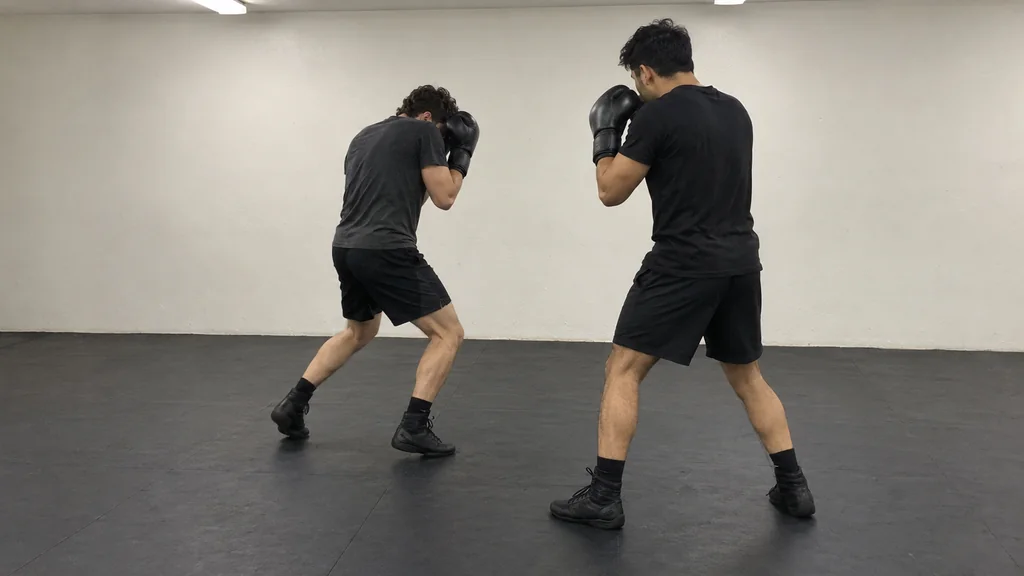
Make the first step small enough to keep your stance
The first exit should be boring. That is a compliment.
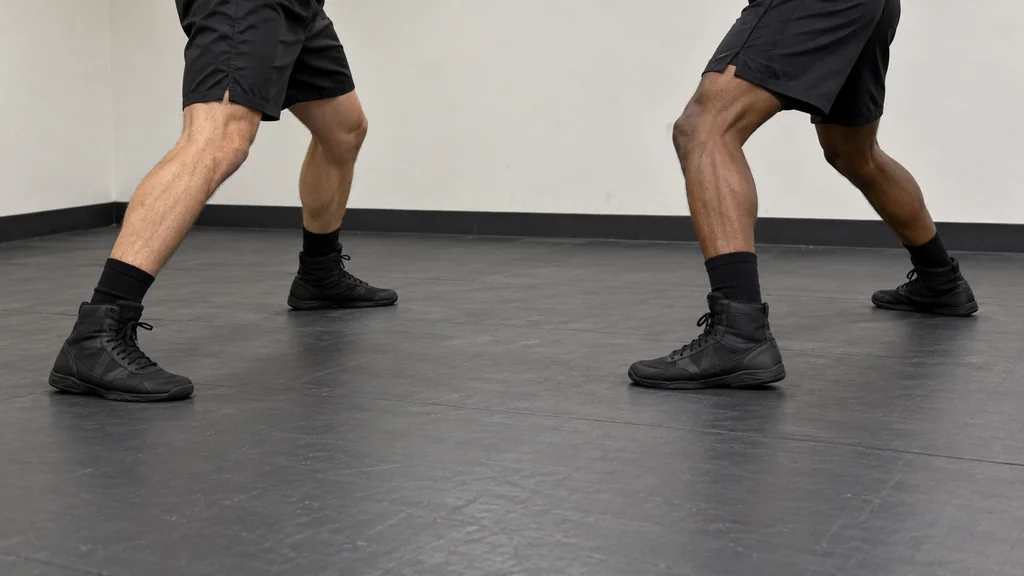
From orthodox stance, take the rear foot back a short distance, then let the lead foot recover enough to restore your normal base. Your lead toe should still face the other boxer. Your feet should not come together, and your rear foot should not travel behind the lead foot.
Keep both gloves high while you do it. A common mistake is to reach forward with the lead hand as the feet move away, as if the glove will hold the other person in place. It will not. It usually leaves the chin exposed and gives the other boxer a simple route back in.
A small retreat creates distance for a reason. It gives you space to see whether the other boxer follows recklessly, settles into range, or decides to stop. You are buying time and shape, not running from the exchange.
A review of boxing biomechanics describes punching as a linked action through the lower body, trunk and upper body. In gym language, that is why the feet matter before the counter. A sharp-looking hand is not much use if your body is still tipping backwards or your stance has narrowed underneath it.
Use an angle when the straight line is crowded
A straight retreat is often enough, especially if the other boxer is walking directly in. But if you keep giving ground on the same line, you can end up meeting the ropes or simply helping them pressure you.
The alternative is a short diagonal exit. Move off to the side with a step that keeps your stance intact, then face the other boxer again before you consider punching. Think of moving around a chair in a crowded room, not making a huge circle around the gym.
The important detail is the recovery. Do not let the rear foot cross behind the lead foot. Do not widen into a split stance. Do not look at the floor to check your placement. Your eyes stay on the other boxer and your gloves stay useful.
Do not rush the counter after the exit
This is where people undo good footwork. They step away cleanly, see a gap, then reach back in with a long right hand while their weight is still travelling.
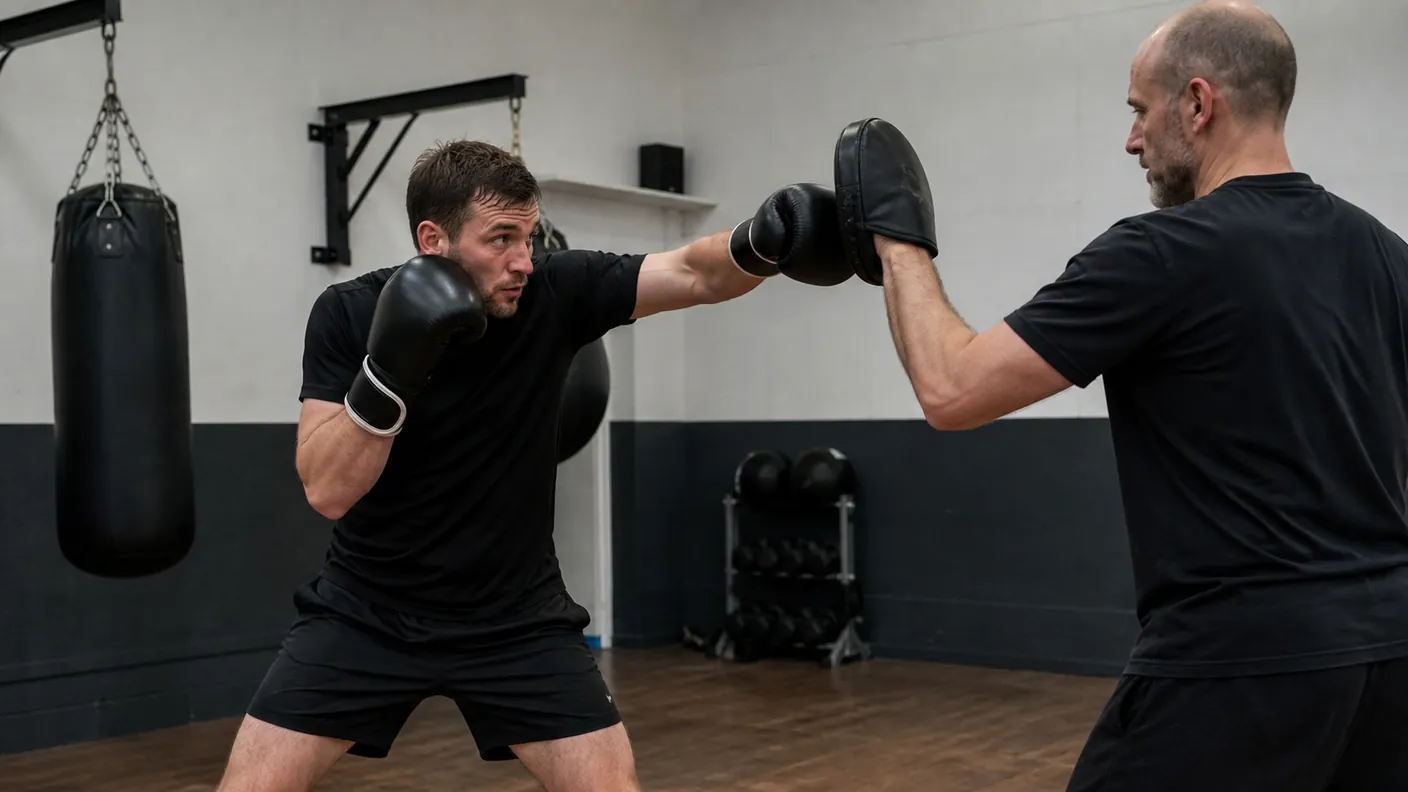
Give yourself one beat. Once both feet are under you, choose a simple option: a jab to reset range, a straight shot to a coach-held mitt, a cover and another angle, or nothing at all. Nothing is a good choice if the other boxer has recovered their guard and distance.
A useful partner rule is this: the boxer who exits is not allowed to throw until they can name where their rear hand is. If the answer is not "at my cheek", start the repetition again. It sounds fussy, but it stops footwork practice becoming a game of falling away and reaching.
The same discipline makes your straight punches more reliable. You are not trying to find a dramatic escape. You are making the next straightforward punch possible.
A three-round drill for close-range pressure
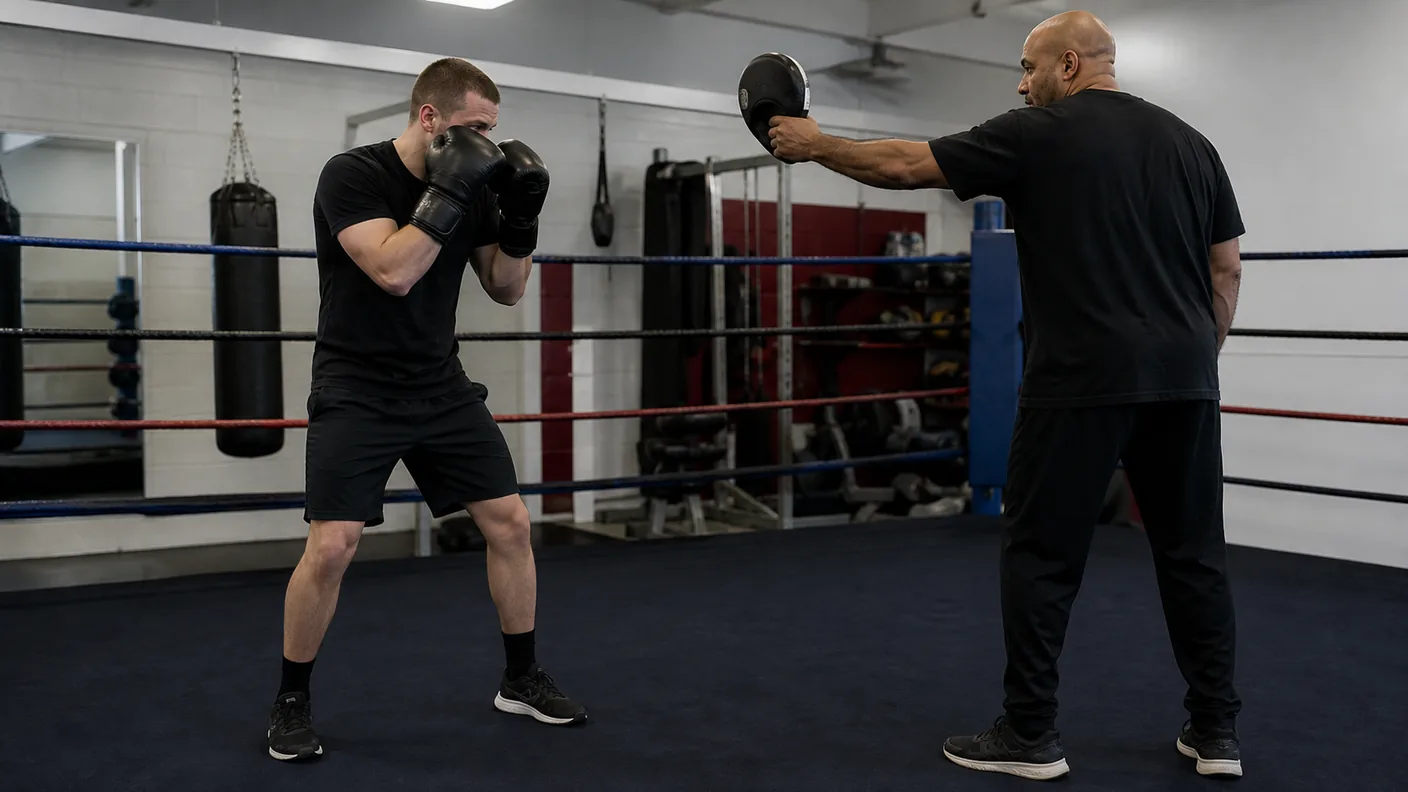
Use gloves, a calm partner and clear limits. This is a technical drill, not sparring. The partner can apply gentle forward presence, but there should be no wrestling, pulling, shoulder barging or attempts to make anyone stumble.
Round one: feel the straight exit
Start at close but safe range. The partner takes a slow step in with a high guard. You take one short rear-foot step back, recover the lead foot, freeze and check the stance. Repeat on both sides of the ring.
The goal is to recognise the moment you start carrying the other person's pressure. If you wait until your feet are square, the recovery becomes harder. Leave early and keep the movement small.
Round two: add the diagonal choice
Repeat the same start, but this time choose a straight exit on one repetition and a diagonal exit on the next. Your partner should stay controlled and give you time to land in stance.
If the diagonal step turns into a big leap, reduce the distance. If you look down, slow it down. The quality of the landing matters more than covering ground.
Round three: recover, then make one decision
After each exit, the partner presents one of three cues: a mitt at jab range, a covered guard, or no target. Jab only at the mitt. If the guard is covered, move or reset. If there is no target, hold your stance and do nothing.
That final rule matters. It teaches you not to treat every retreat as a trigger for a big counter. The best fighters are difficult to crowd because they keep their posture, choose the clean moment and refuse to force the rest.
If you are working on calm, usable boxing footwork rather than gym theatrics, start with the Recreational Adults class. From Kidbrooke, Honour and Glory is close enough to make steady technical practice part of the week rather than a once-a-month idea.
H&G Team
Writer at Honour & Glory Boxing Club, a community boxing gym in Kidbrooke, South East London.
KEEP READING
Hook-Slip-Hook: A Calm Close-Range Boxing Drill
Use a compact hook, small defensive slip and second hook to practise close-range boxing without standing still after your first punch.
Creep Into Boxing Range Without Reaching
Use small, patient steps to close boxing range without lunging, losing your stance or handing an opponent an easy counter.
How to Make Space at Close Range in Boxing
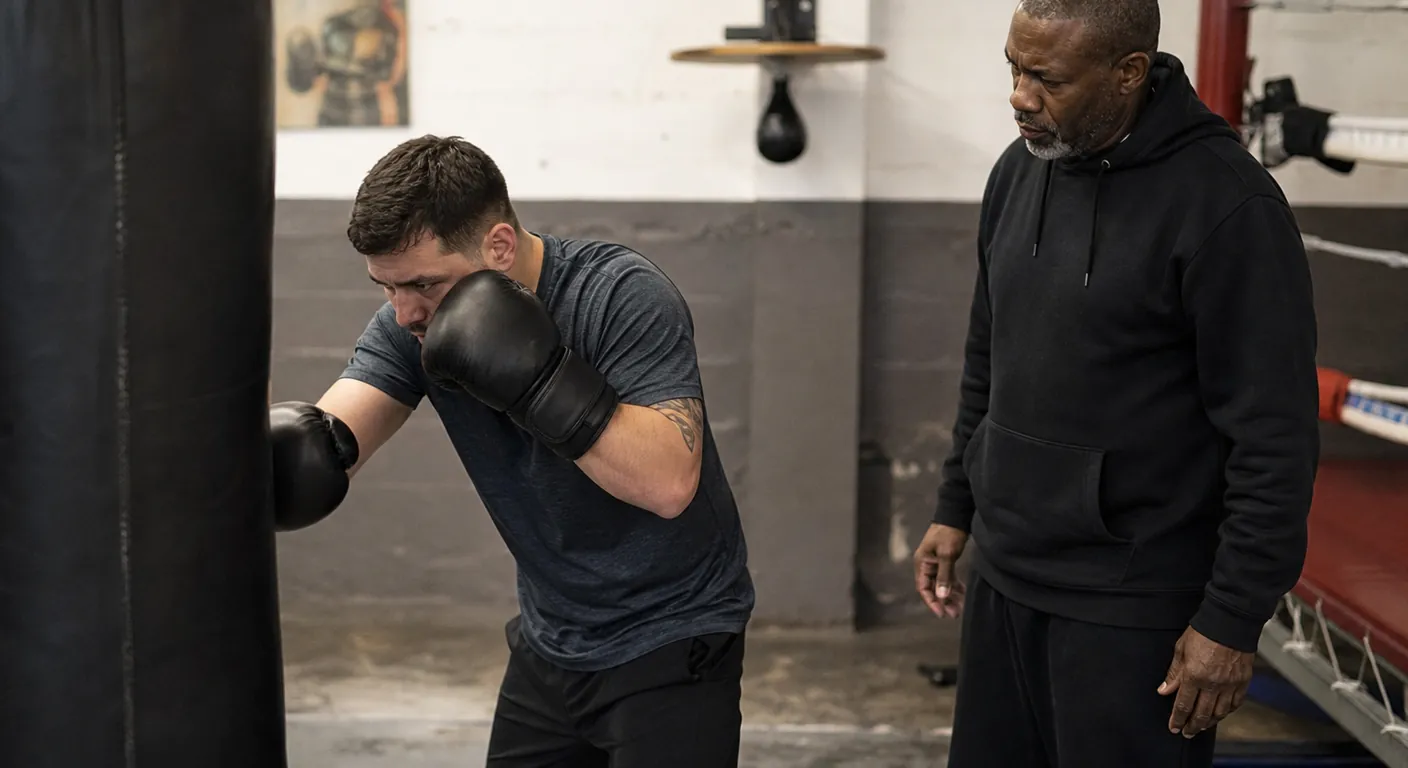
Learn how to make space at close range without panicking, pushing illegally, or smothering your own punches.
Was this page helpful?
It takes one tap, and it genuinely helps.
Choose your next step
Turn this article into the right action
Some readers are ready to book. Some need the class route first. Pick the route that matches what you actually want.