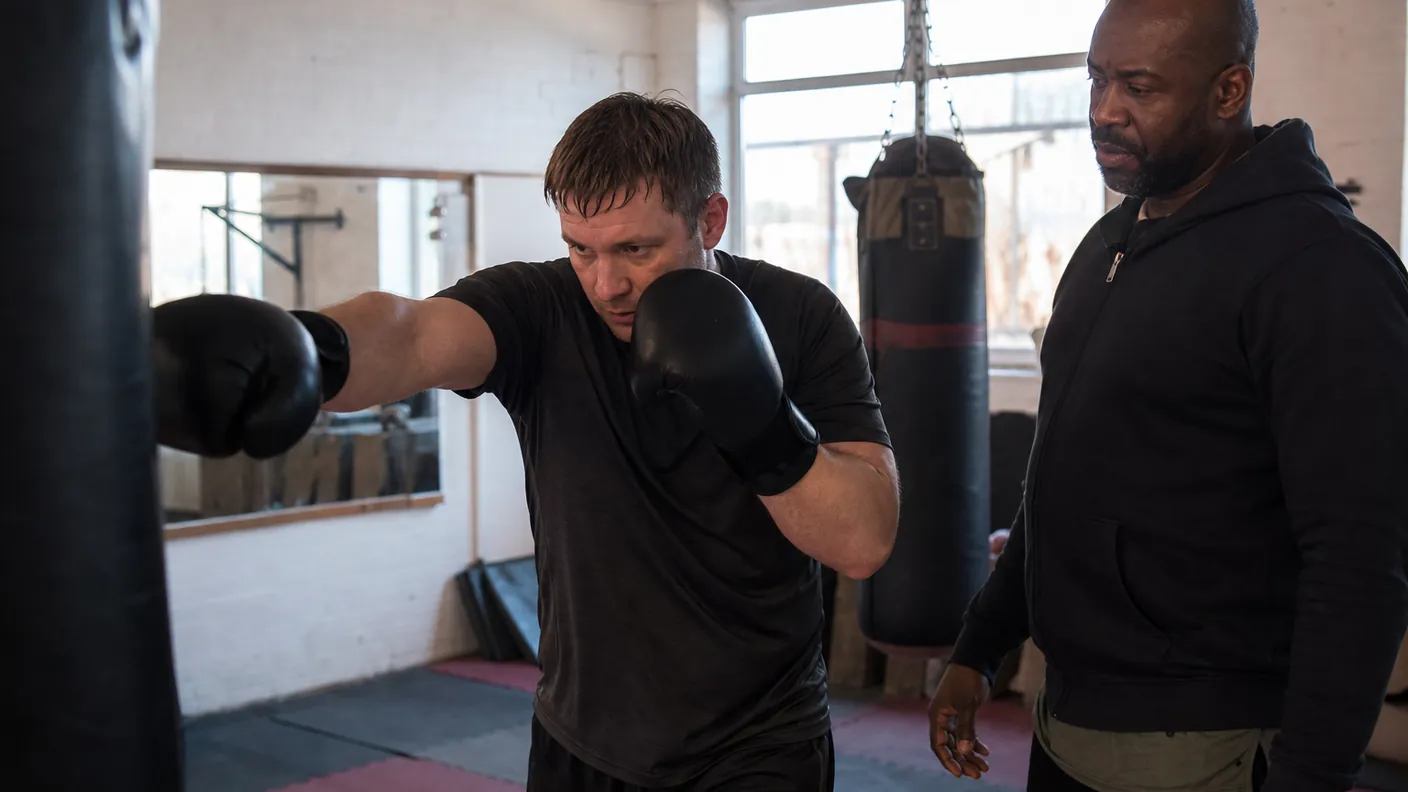
A straight punch should not leave your chin sitting in the shop window.
That is the mistake this drill exposes. A beginner throws a jab or cross, the glove travels forward, but the shoulder does not come with it. The head stays upright, the opposite hand floats, and the punch becomes a clean line for the glove but an open invitation for the return shot.
The short clip below shows a useful training idea: use a simple object or visual line to check whether the shoulder moves with the punch. The point is not the object. The point is that the shoulder, glove and chin should work together.
Boxing is not only arm speed. A technical review of boxing performance describes punching, movement, defence, distance and tactical behaviour as connected parts of the same job. That is exactly why a straight punch has to protect as it attacks.
Here is how to use the idea safely in normal gym training.
What the shoulder line drill teaches
The shoulder line drill teaches one simple habit: the punching shoulder should help cover the chin as the hand travels.
When the jab goes out, the lead shoulder rises and turns enough to narrow the target. When the cross goes out, the rear shoulder rotates through while the lead hand stays home. In both cases, the punch is not separate from defence. The shoulder, glove, chin and other hand are all part of the same movement.
Beginners often hear "hands up" and think the guard only matters before and after punching. That leaves a gap in the middle. The punch leaves, the hand is away, and the face is briefly easier to find. Better technique closes that gap.
This connects closely with our guide on how to punch without dropping your guard. The guard is not a still position. It is a working shape that changes while you punch, then comes home again.
Why straight punches expose the mistake
Straight punches are honest because the route is easy to see.
On a jab, the lead glove should travel from its lane, the shoulder should come with it, and the hand should return without dragging the chin forward. On a cross, the rear hand should travel through the middle, the rear shoulder should turn, and the lead hand should protect while the body rotates.
If any part is late, the punch tells on you.
You will see the head lift. You will see the chin sit above the shoulder. You will see the non-punching hand drift away from the cheek. You may also see the boxer reach because the shoulder has not organised the line properly.
A good straight punch is not stiff. It is clean. The glove travels, the shoulder follows, the other hand stays useful, and the boxer finishes in a position where they can punch again, defend or leave.
How to set up the drill safely
Use soft equipment and keep the pace slow.
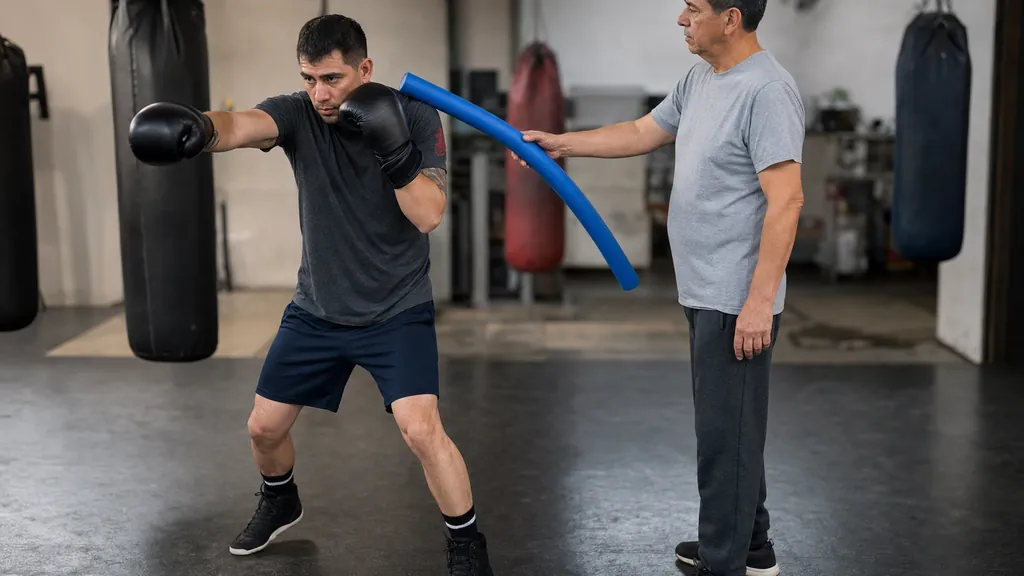
A coach can use a foam noodle, a pool noodle, a soft pad edge, or even an imaginary line beside the boxer. Do not swing anything at the head. Do not turn this into a toughness test. The drill is a visual and technical check, not a punishment.
The setup is simple:
- Boxer starts in stance at a calm distance.
- Coach stands safely to the side, not directly in the punching lane.
- Coach holds the soft line near where the exposed chin would be.
- Boxer throws a slow jab or cross.
- Coach checks whether the shoulder narrows the target as the punch leaves.
If the punch is clean, the shoulder gives cover without the boxer ducking, leaning or hiding. If the punch is poor, the head stays easy to touch and the shoulder arrives late.
The drill is not about flinching
The first rule is calm.
Some people see a visual object near the head and immediately flinch, blink or pull away. That is not the lesson. The drill should be slow enough that the boxer can think about position rather than panic. If someone is flinching, reduce the pressure and go back to shadow boxing.
The shoulder should move because the punch is correct, not because the boxer is scared of being touched.
A combat sports anticipation review found that skilled fighters use early movement cues better than less skilled athletes. In gym language, people read your shoulder, feet, rhythm and head before the glove lands. This drill works both sides of that idea. It cleans up your own cue while teaching you to notice the line your opponent is using.
Start with the jab
The jab is the best first test because it is the punch beginners throw most often.
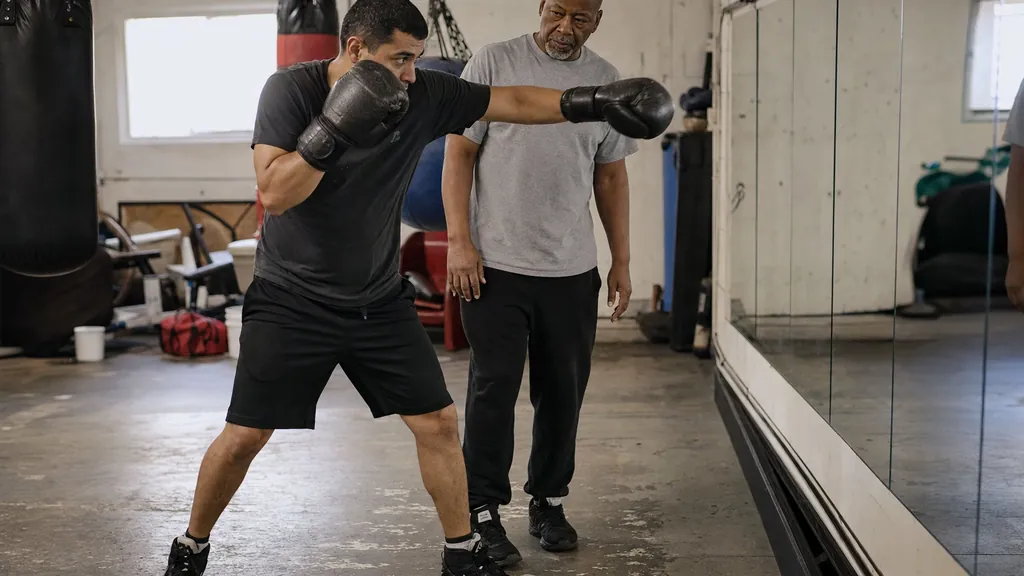
Stand in front of a mirror, a coach or a pad holder. Throw the jab slowly. Ask three questions:
- Did the lead shoulder move with the glove?
- Did the rear hand stay close to the cheek?
- Did the chin stay tucked behind the shoulder rather than reaching forward?
If the answer is no, slow down. Do not add power. Do not add speed. Do not add a second punch yet.
The most common correction is smaller than people expect. You do not need to shrug the shoulder to your ear. You need the lead shoulder to travel naturally with the jab while the chin stays tucked. The punch should look relaxed, not braced.
If the jab itself still feels unclear, start with how to throw a jab in boxing. The shoulder-line drill is a quality check layered on top of the basic punch.
Then add the cross
The cross gives the same lesson on the rear side.
When the right hand leaves for an orthodox boxer, the right shoulder should rotate through the shot. The left hand should not drift away. The head should not lean over the front knee. If the cross lands but the boxer finishes square, tall and open, the punch has done only half its job.
Use a slow jab-cross:
- Jab with shoulder cover.
- Return the jab to guard.
- Throw the cross with the rear shoulder turning through.
- Freeze for one second after the cross.
- Check both hands, chin, feet and balance.
The freeze matters. It stops the boxer escaping the evidence. If the final position is ugly at slow speed, it will be worse at full speed.
Do not hide behind the shoulder
Shoulder cover is not a shell.
The shoulder helps protect the chin while the punch travels, but it does not replace the guard, the feet or the eyes. If you overdo it, you can turn the punch into a hunched movement where the boxer cannot see, breathe or recover cleanly.
The aim is a useful shoulder, not a buried head.
A good cue is: cover on the way out, shape on the way back. The shoulder helps narrow the target as the punch leaves. Then the hand returns, the posture settles, and the boxer is ready for the next action.
This is why shoulder-line work sits beside telegraphing the jab, not apart from it. If the shoulder movement becomes a big warning sign before the punch, the drill has gone wrong. The shoulder should travel with the punch, not announce it first.
A three-round shoulder line drill
Use this before pads or bag work.
Round 1: mirror straight punches
Shadow box in front of a mirror. Throw single jabs for one minute, then single crosses for one minute. After every punch, freeze briefly and check shoulder, chin and opposite hand.
If the shoulder arrives late, slow down. If the opposite hand drops, reset. If the head leans forward, step closer instead of reaching.
Round 2: coach line check
A coach or partner holds a soft visual line near the exposed side of the face. The boxer throws slow straight punches. The line should make the mistake obvious without creating fear.
Keep the punch at 40 to 50 percent. The job is technical honesty, not impact.
Round 3: pads with a defensive finish
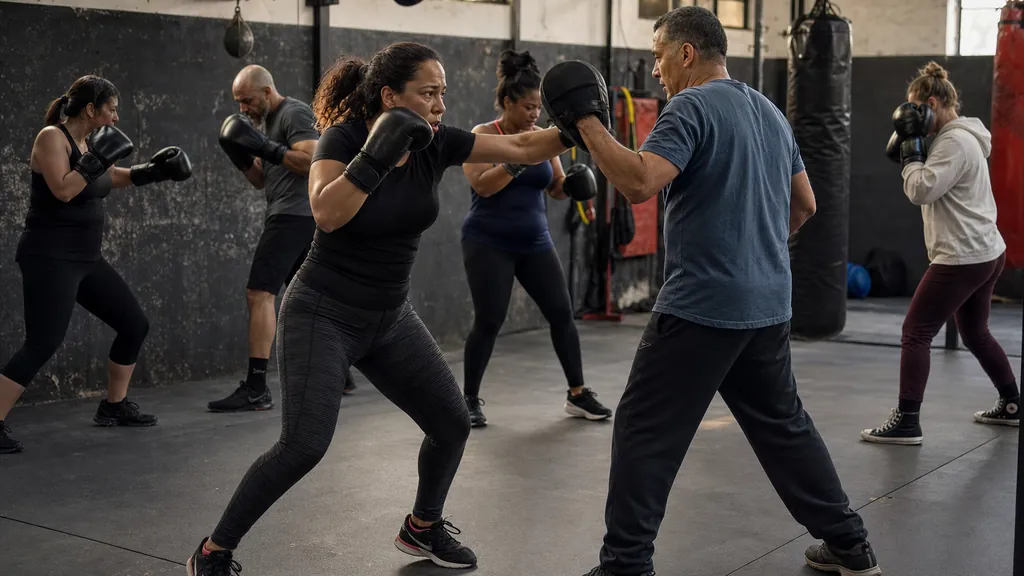
Now put the same idea onto pads. Jab, return. Cross, return. Jab-cross, freeze. Then add a small step out or high guard after the combination.
The combination does not count unless the boxer finishes with both hands useful and the chin protected.
Common mistakes
The first mistake is reaching. If your chin travels forward to make the punch land, your shoulder cannot save you. Step into range instead.
The second is shrugging. A tense shoulder makes the punch slow and tiring. The shoulder should rise and turn naturally, not clamp around the ear.
The third is moving the shoulder before the hand. That telegraphs the punch. The shoulder and glove should travel as one action.
The fourth is forgetting the other hand. Shoulder cover on one side does not excuse the opposite glove wandering away from the face.
The fifth is drilling it too hard. Slow, clean repetitions beat fast sloppy ones. Once the shape holds, speed can come later.
The coaching cue
Punch through a protected line.
That is the lesson. The straight punch should not be a naked reach. It should leave from stance, travel with shoulder cover, keep the other hand useful and return to a guard that still lets you box.
At Honour and Glory, our Recreational Adults boxing classes teach these details through pad work, bag rounds and controlled partner drills. If you are in Kidbrooke, Greenwich or nearby, we can help you build straight punches that are cleaner, safer and easier to repeat under pressure.
H&G Team
Writer at Honour & Glory Boxing Club, a community boxing gym in Kidbrooke, South East London.
KEEP READING
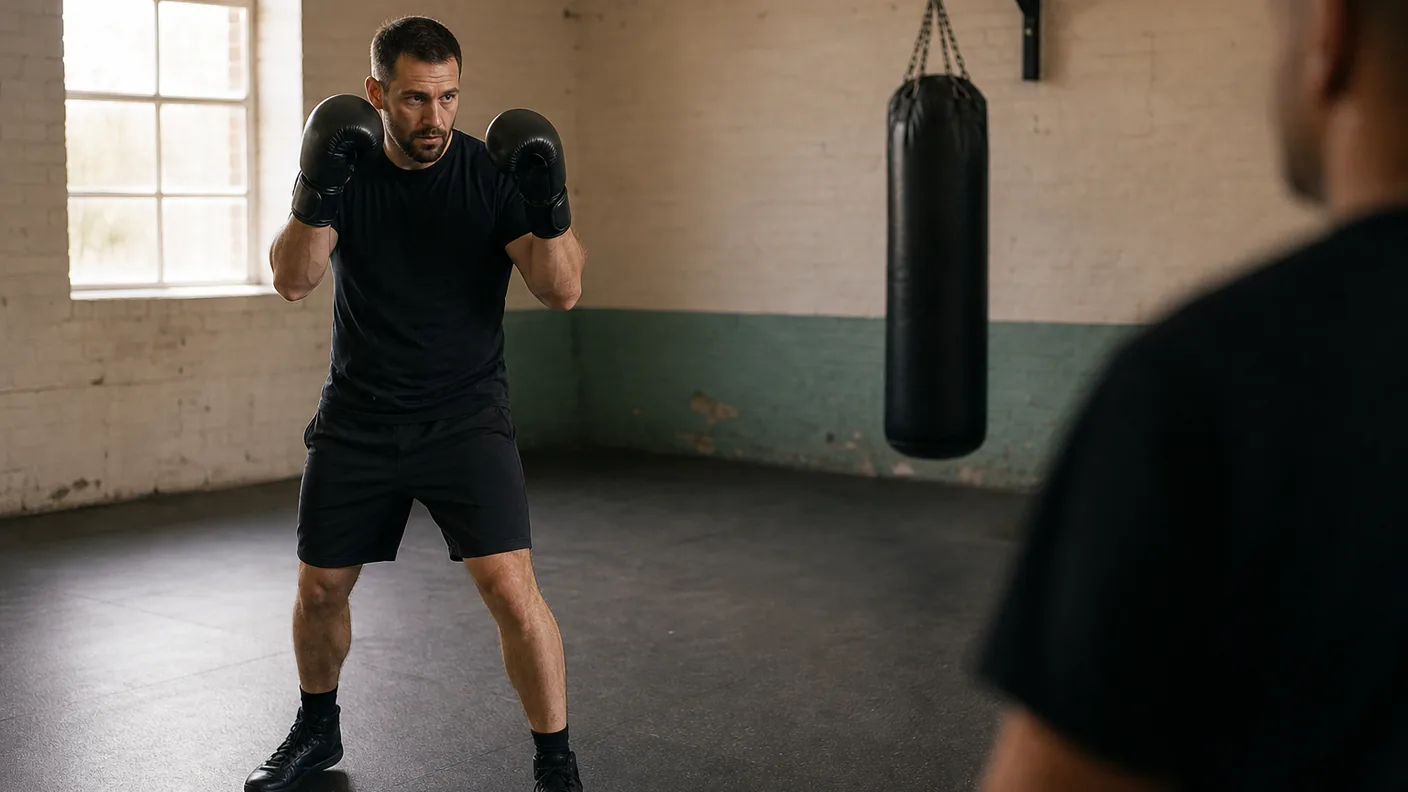
Why a Narrow Boxing Guard Spoils Straight Punches
A cramped boxing guard can turn the shoulders away from clean straight punches. Use this simple check to keep your stance useful.
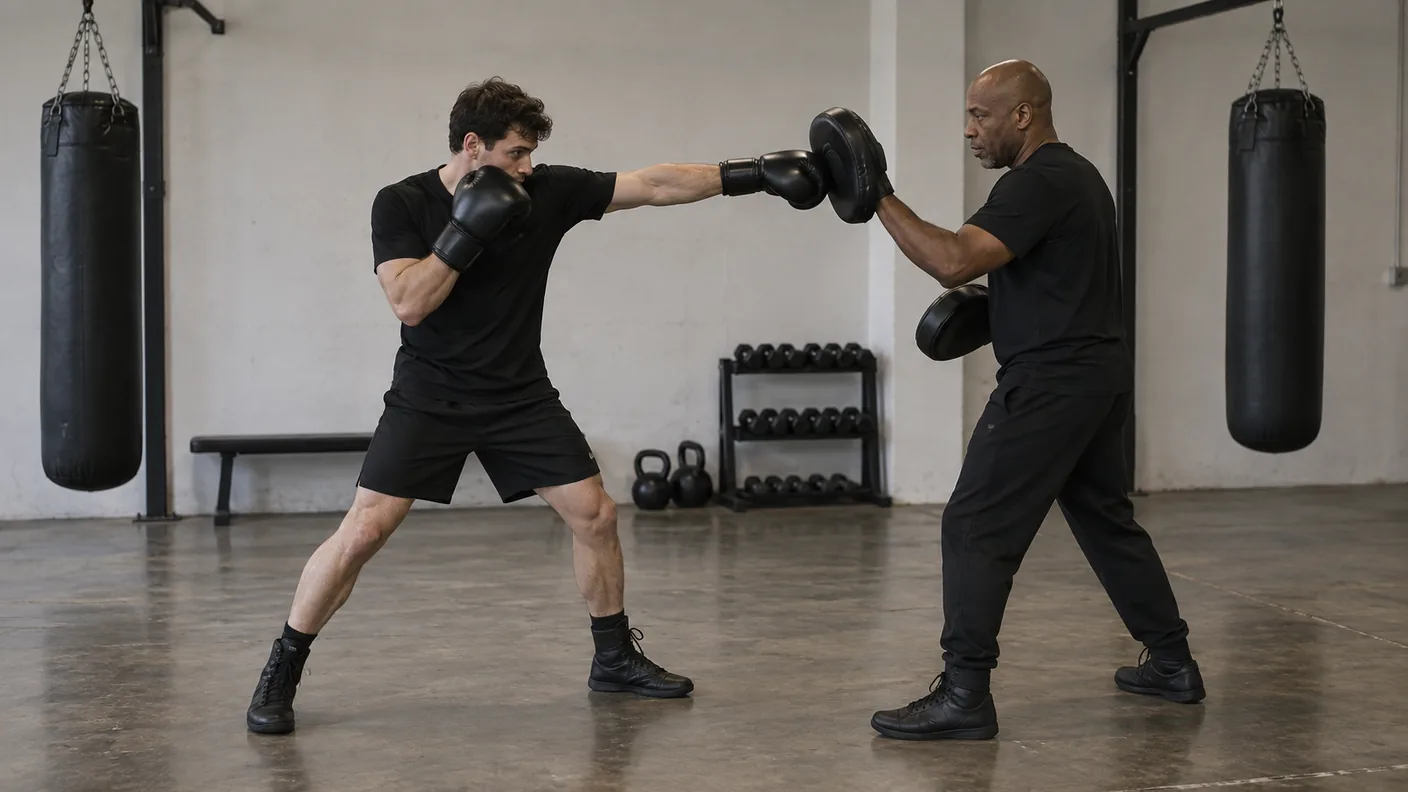
Opposite-Shoulder Turn: Stop Arm Punching
Use a small turn from the non-punching shoulder to stop reaching with the arm and keep your balance after straight punches.
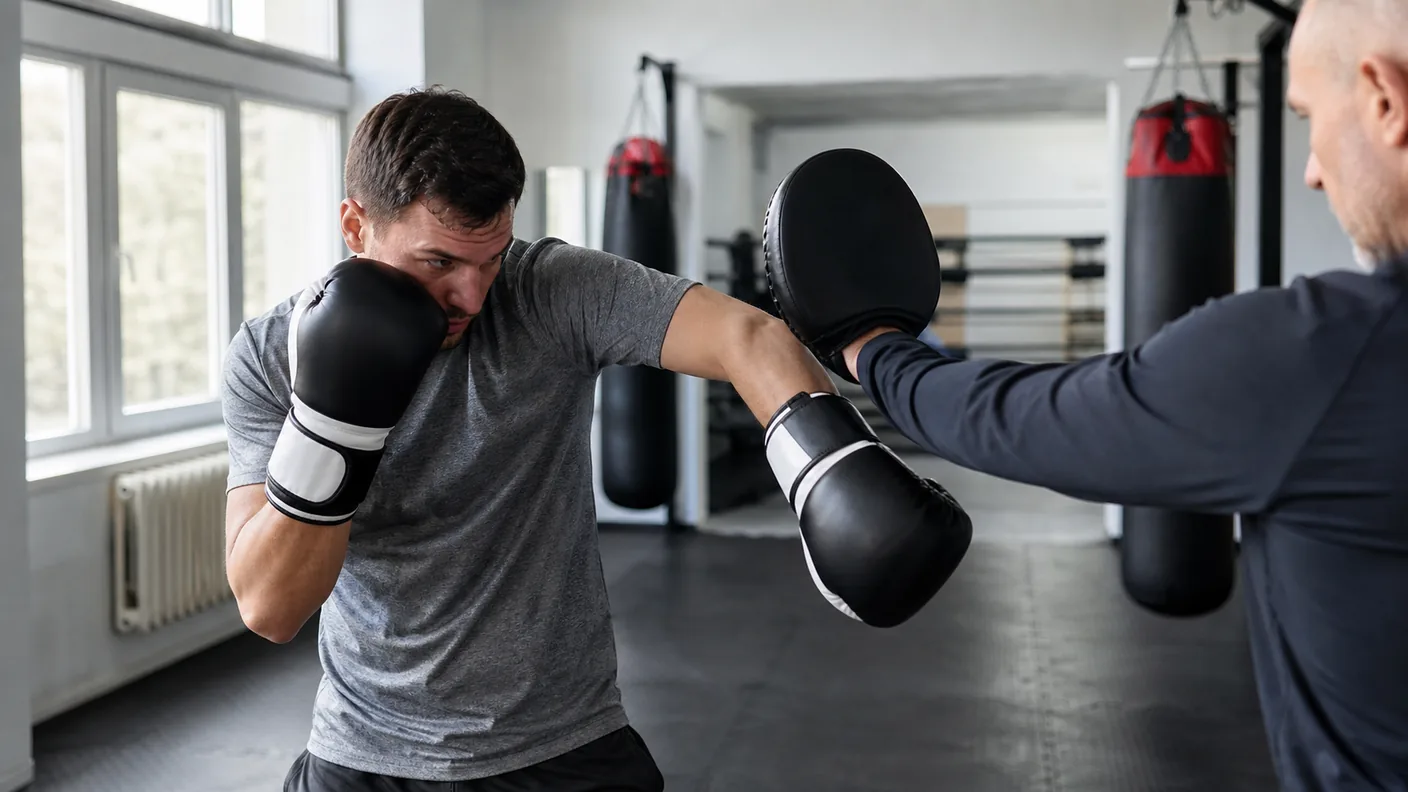
Down Parry in Boxing: Defend Straight Punches
Use a compact down parry to move a straight punch off line without reaching, losing your guard or freezing after the defence.
Was this page helpful?
It takes one tap, and it genuinely helps.
Choose your next step
Turn this article into the right action
Some readers are ready to book. Some need the class route first. Pick the route that matches what you actually want.