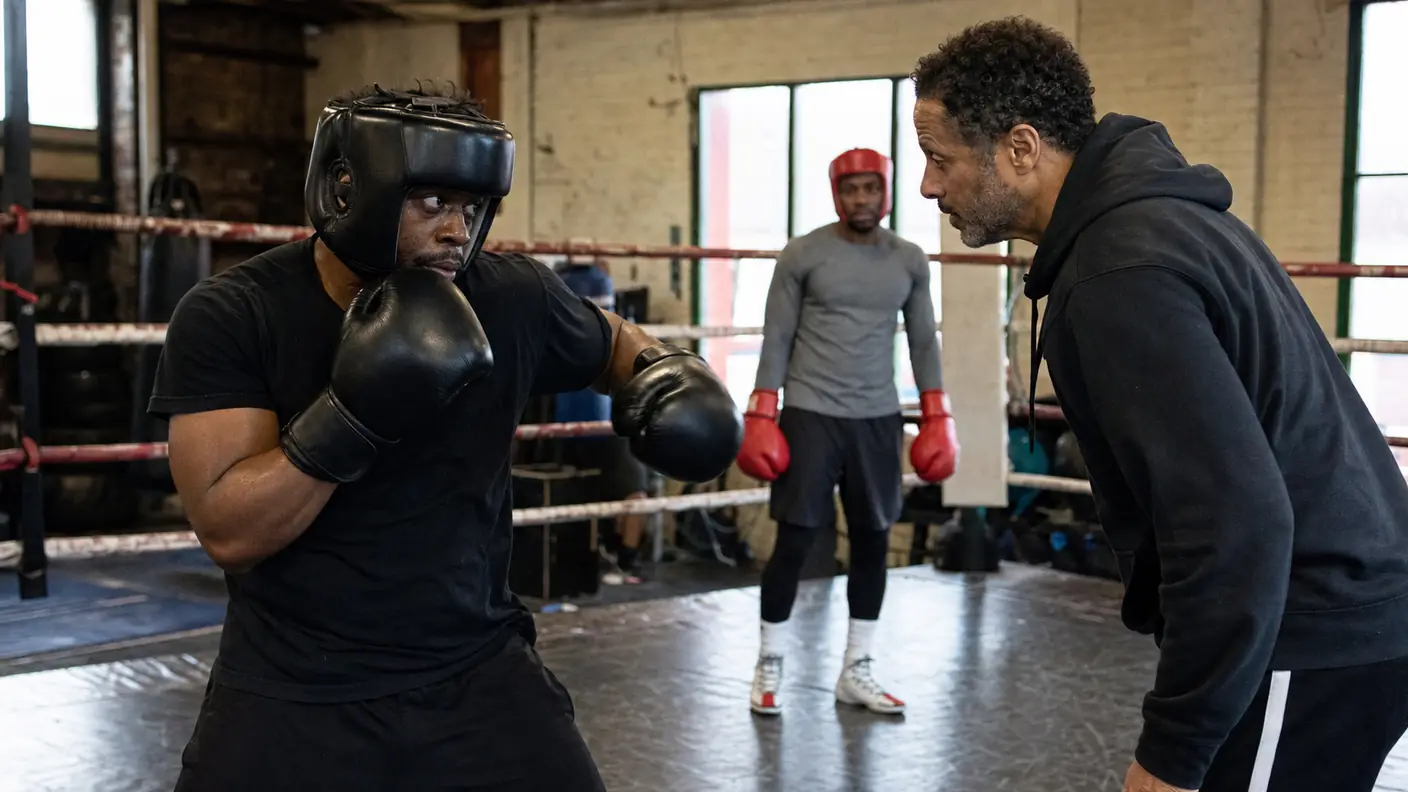
A jab does not have to be slow to be readable.
That is the lesson in the short clip below. Kimbo Slice thinks the question is hand speed. Michael Jai White changes the problem. The first two jabs are quick, but Kimbo can move his hand. The third one lands because the tell changes. The jab does not arrive as an isolated blur. It arrives inside a little chain of posture, rhythm, shoulder, eye line and intent.
That is telegraphing. It is not only winding up a massive punch. It can be tiny: a shoulder lift, a breath hold, a foot twitch, a hand drop, a pause before release, or the same rhythm every time. Better boxers do not need to see the glove halfway to their face. They read the movement before the glove leaves.
This is why jab work is more than arm speed. A good jab is quick, but it is also quiet.
What telegraphing actually means
Telegraphing means giving the opponent useful information before the punch has to be defended.
Sometimes the information is obvious. A beginner drops the lead hand, leans forward, loads the shoulder, then jabs. Anyone watching can see the punch coming. Other times it is subtle. The boxer always bounces twice before jabbing. They always blink before stepping in. They always jab after a small front-foot shuffle. They always tense the lead shoulder before extending the hand.
At beginner level, the biggest tells usually come from five places:
- The hand drops before it punches.
- The shoulder rises before the jab starts.
- The head moves forward before the hand.
- The front foot steps too early and announces the attack.
- The rhythm is identical every time.
A sharp opponent does not have to react to the final punch. They react to the preparation.
That is why the jab can feel confusing in sparring. On the bag, it seems fast. On pads, it snaps nicely. Then another person keeps catching it, slipping it, or jabbing over the top. The punch did not suddenly become slow. It became readable.
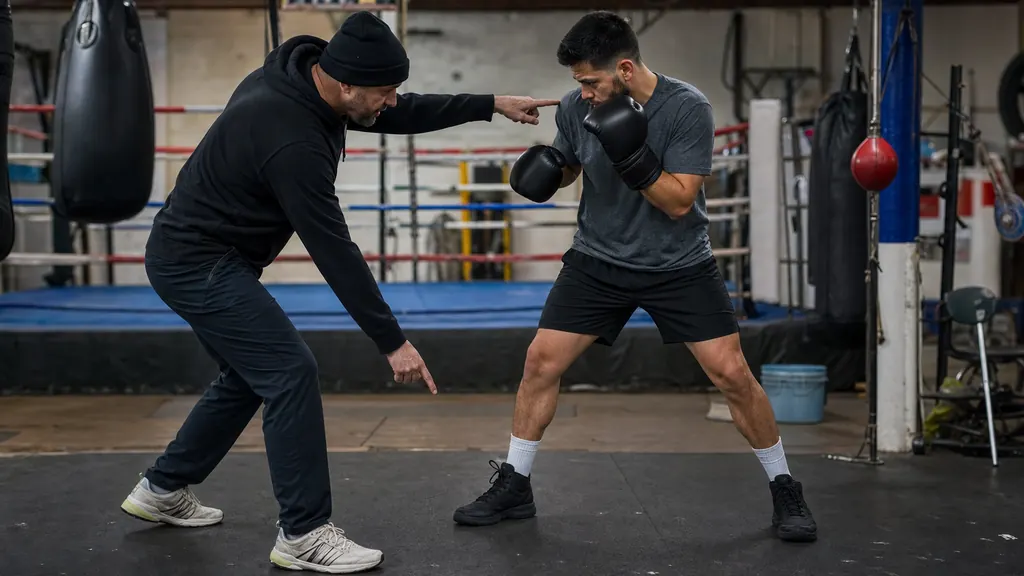
The science: fighters read early cues
There is good research behind what coaches see in the gym.
A systematic review and meta-analysis on perceptual anticipation in combat sports found that higher-level combat athletes showed faster and more accurate anticipation than lower-level athletes. The review also found differences in how experts used visual information, including fewer visual fixations. In normal language: better fighters look at fewer useful things and make earlier decisions from better cues.
That matters for the jab because boxing is too fast to wait politely for the full punch. If the opponent only starts deciding once your glove is already travelling, they are late. If they read your shoulder, foot, chest, rhythm or eyes before the punch, they have time.
A 2024 study of highly trained male amateur boxers found relationships between visual ability and punch performance, including reaction time, depth perception, eye-hand coordination and decision-making. The paper is not a magic recipe for a better jab, but it supports the coaching point: boxing performance depends heavily on seeing, processing and choosing quickly.
So when a coach says, "stop showing the jab," they are not being picky. They are protecting you from a real perceptual problem. You are giving the other boxer an early read.
Why a fast jab still gets countered
A fast jab gets countered when it is fast in the wrong part.
Many beginners rush the hand but telegraph everything before it. They bounce, load, step, lift the shoulder, then fire the glove quickly. The hand is fast, but the decision was advertised early.
The best version is the opposite: the body stays calm, the setup is hidden, and the hand arrives before the opponent has a clean read.
There are four common reasons a quick jab still fails.
1. The rhythm is too regular
If every jab comes on the same beat, the opponent can time you without being faster than you. They only need to know when the jab is likely to leave.
This is why double jab drills should not become metronome drills. If you always jab-jab at the same tempo, a decent boxer will catch the first and beat the second. Change the beat. Show the first one, hold half a second, then jab. Touch the guard, pause, jab to the chest. Feint, step, jab. Make the timing harder to sit on.
2. The foot arrives before the punch
A step can make the jab longer, but it can also announce it.
If the front foot lands, the body settles, and then the jab comes, the opponent gets a free warning. The punch and step need to work together. Not every jab needs a step, but when you do step, the glove should arrive with the foot or just before the opponent feels settled enough to answer.
This links with setting your feet in boxing. You need enough base to punch, but you cannot plant so heavily that the opponent sees the whole attack forming.
3. The shoulder loads before the jab
The jab should not need a dramatic wind-up. If the shoulder lifts or rolls back before release, the punch becomes easy to pick up.
A useful cue is: shoulder protects the chin as the hand goes, not before the hand goes. The shoulder movement should be part of the punch, not a separate announcement.
4. The hand comes back lazy
Telegraphing is not only about the start of the jab. A lazy return tells the opponent when to counter.
If the jab comes out quickly but drops on the way home, the counter right hand has a lane. That is why jab practice has to include the recovery. The punch is not finished when it touches the target. It is finished when the hand is back, the chin is covered, and the feet can move again.
The longer breakdown below is useful because it shows how a lazy jab can make the rest of your boxing collapse. Watch it with one question in mind: what does the opponent see before the jab lands?
Make the jab quiet before you make it flashy
There is a temptation to fix telegraphing by adding tricks: more feints, more angles, more speed, more shoulder roll, more bounce. Sometimes that helps. Usually, the first job is simpler.
Make the basic jab quiet.
Start with this checklist:
- Can you throw the jab without dropping the lead hand first?
- Can you jab without lifting your chin?
- Can you jab without stepping early?
- Can you jab without tensing the whole upper body?
- Can you recover the hand straight back to the face?
- Can you jab at three different rhythms?
If the answer is no, do not hide the jab with theatre. Clean the jab.
A quiet jab starts from your normal guard. The opponent should not see a new posture appear before the punch. The eyes stay calm. The breathing stays normal. The feet are alive but not fidgeting. The lead hand travels from guard to target and comes home.
That sounds basic because it is. Basic does not mean easy.
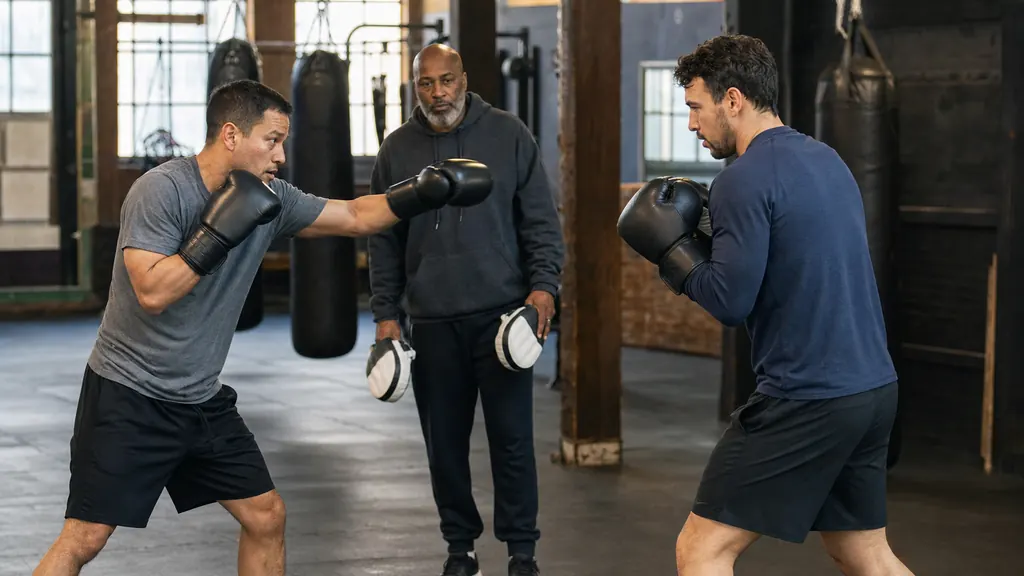
How to use feints without becoming readable
Feints are part of the answer, but only if they are believable.
A feint works when it looks enough like the real jab to make the opponent react. If your feint is a big shoulder twitch but your real jab comes from a different shape, the opponent learns to ignore it. If your feint always comes before your real jab, the feint becomes another tell.
Use three simple feints first:
The eye feint
Look like you are about to jab high, then jab to the chest or shoulder line. Do not stare dramatically at the target. The cue is small. The aim is to disturb their guard and attention, not perform a magic trick.
The shoulder feint
Give a tiny shoulder pulse that looks like the start of your jab. If they flinch, catch, pull back or shell up, you have information. You do not have to punch every time. Sometimes the feint is there to show you what they respect.
The foot feint
Show the smallest step in, then stay just outside range. If they reach with a jab, you can draw it and counter. If they step back, you can take the ground next time.
The key is variation. Sometimes feint and jab. Sometimes feint and do nothing. Sometimes jab without a feint. Sometimes jab to the body. If every action has the same follow-up, it becomes readable again.
The drill: remove the tell
This drill works well in a class, a PT session or a controlled sparring round.
Round 1: coach calls the tell
One boxer jabs at 40 percent speed. The partner does not counter. The coach watches only for tells: hand drop, shoulder lift, foot early, chin lift, rhythm repeat. After each jab, the coach calls one correction. Keep it slow enough that the boxer can actually change the movement.
Round 2: partner reads the tell
Now the partner is allowed to call "seen" when they spot the jab before it leaves. They are not trying to win the round. They are training perception. If the partner can call it early, the jab is still too loud.
Round 3: add one answer
The partner can now catch and return a jab, but only if they read the tell. This makes the cost real without turning the drill into open sparring. The jabber learns that small habits create counters.
Round 4: vary the beat
The jabber must use three timings: immediate jab, delayed jab, and feint first. The partner does not know which one is coming. The goal is not to land hard. The goal is to stop giving a predictable start signal.
This is also a good place to connect the jab to defending the jab. If you know what makes your own jab readable, you become better at reading someone else's.
What to watch in the second longer video
The video below gives a useful technical view of common jab mistakes, especially the danger of throwing lazy jabs and giving an experienced opponent a countering lane.
Do not watch it only as a list of mistakes. Watch it as a list of information leaks.
A lazy jab leaks the return path. A low hand leaks the counter lane. A poor stance leaks the exit. A repeated rhythm leaks the timing. A stiff body leaks the intention.
That is a better way to train. Instead of asking, "was my jab fast?" ask, "what did I show before, during and after the jab?"
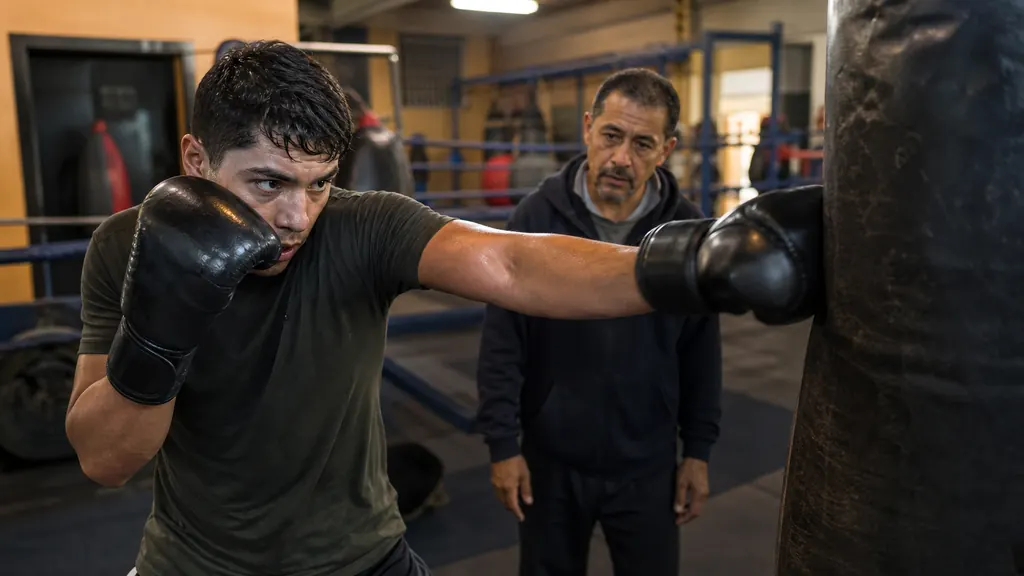
The coaching cue
Make the jab quiet.
Do not drop it before you throw it. Do not step early. Do not lift your chin. Do not jab on the same beat forever. Do not admire the punch after it leaves.
Speed matters, but surprise matters too. The jab that lands is often not the fastest jab in the room. It is the jab with the fewest warnings.
If you are in Kidbrooke, Greenwich or nearby, our Recreational Adults boxing classes teach jab mechanics, feints, timing and controlled partner drills from the start. You learn how to throw the jab, hide it, defend it and build the next phase of the exchange.
H&G Team
Writer at Honour & Glory Boxing Club, a community boxing gym in Kidbrooke, South East London.
KEEP READING

How to Throw a Jab in Boxing
The jab is boxing's most underrated weapon. Learn how to throw a jab properly, why it matters more than power punches, and drills to make yours sharper.
The Body Jab: A Safe Boxing Setup
Use a compact body jab to change the target, check range and set up the next decision without falling over your front foot.
The Half-Jab: A Fast Boxing Range Finder
Use a half-jab to test distance, interrupt an opponent and set up your proper punches without reaching or overcommitting.
Was this page helpful?
It takes one tap, and it genuinely helps.
Choose your next step
Turn this article into the right action
Some readers are ready to book. Some need the class route first. Pick the route that matches what you actually want.