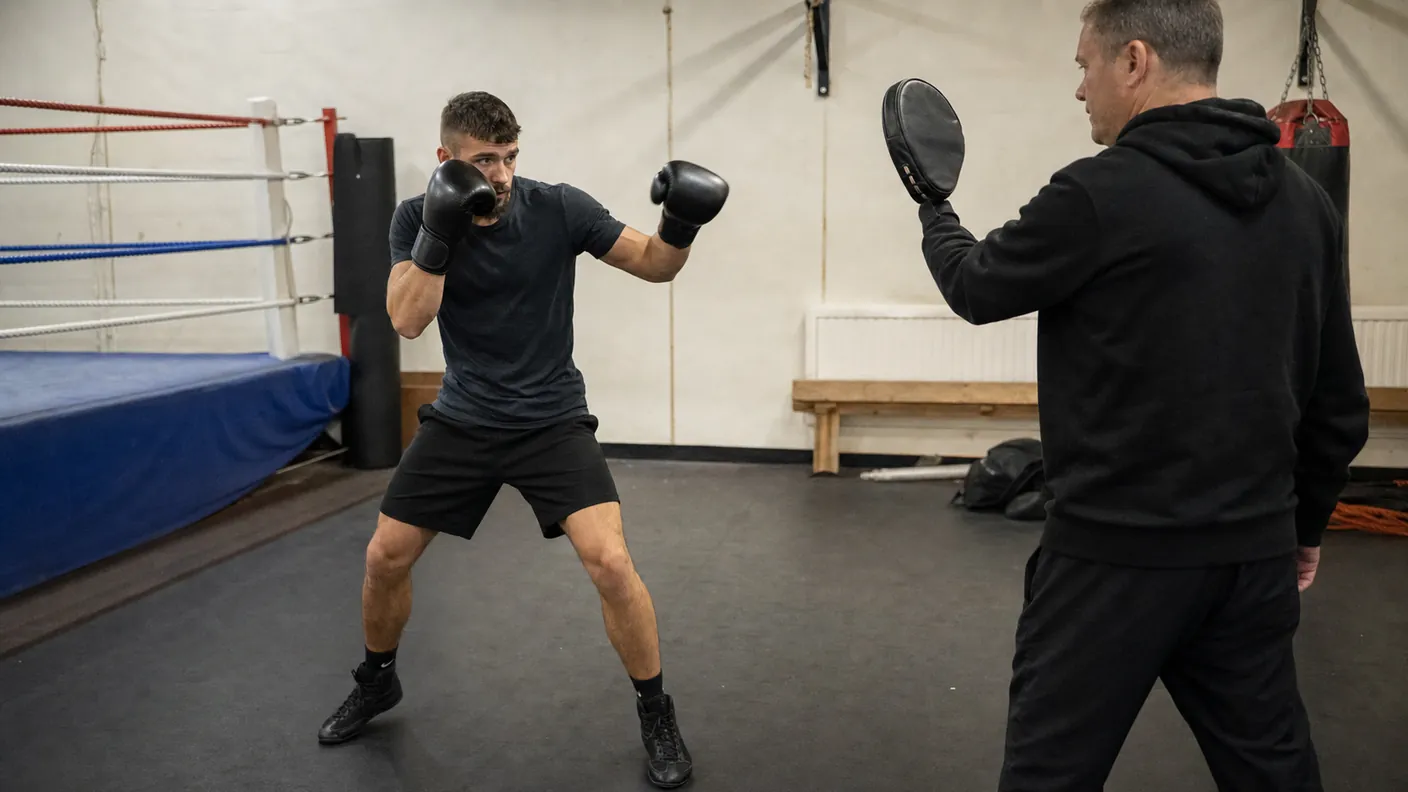
A jab does not always need to travel all the way to the target.
That sounds obvious, but beginners often treat every jab as the same job. They either throw it properly at full length or leave it alone. In a real exchange, there is useful work in between. A short, quick lead-hand touch can test the distance, make the other boxer react and help you step into a cleaner shot.
Call it a half-jab, a measuring touch or a shortened jab. The name matters less than the rule: it is not a power punch and it is not a lazy arm left in the middle. It is a brief, balanced action that gives you information.
Watch the short drill below, then use the coaching notes to make it useful rather than just busy.
What the half-jab is for
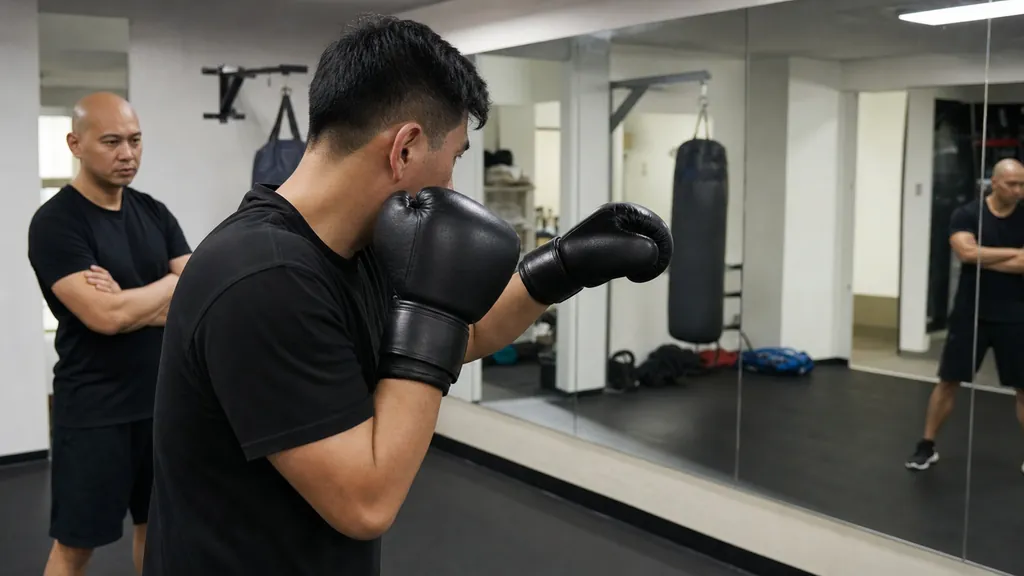
A proper jab owns long range. It reaches, scores, creates a reaction and comes straight back. The half-jab has a smaller job. You bring the lead glove part way out, usually with a visible bend in the elbow, then recover it before you become easy to read or easy to hit.
It can do three things.
- It checks range. If the glove is still nowhere near the other boxer, you are too far away for the cross you were considering.
- It interrupts. A short, quick lead hand in front of the eyes can make someone blink, tighten their guard or pause their own attack.
- It gives you a starting point for the next punch. The lead hand can return to guard, become a full jab, or help disguise a step into a proper one-two.
Do not confuse it with holding your hand out in front of you. A parked lead hand becomes a handle for the opponent to catch, parry or punch over. The half-jab must come home. Think touch, read, return.
That distinction matters for beginners. Your normal jab still needs the clean line, shoulder cover and sharp recovery explained in our guide to throwing a jab in boxing. The half-jab is an extra option, not a replacement for sound basics.
Why a shorter movement can arrive sooner
There is no mystery here. A glove that starts a little closer to the target has less distance to travel. You trade some reach and force for speed and a smaller signal.
That trade only makes sense when the range is already close enough. If you are standing too far away, a half-jab simply falls short and leaves you leaning forward. If you are already in a busy exchange, it can be enough to break the other boxer’s rhythm before you choose the next action.
The useful part is not merely moving the glove faster. Good punching is a whole-body action. A study of boxing punches in junior and elite boxers found that better punches combine force and velocity through the timing of multiple body segments. Your feet, balance, trunk, shoulder and glove still have to agree with one another, even when the lead hand only travels a short way.
Keep the knees soft. Keep the rear hand by the cheek. Keep the chin behind the lead shoulder. If the short lead hand makes you stretch your head past the front knee, you have turned a useful touch into a bad habit.
The right shape: bent elbow, ready feet
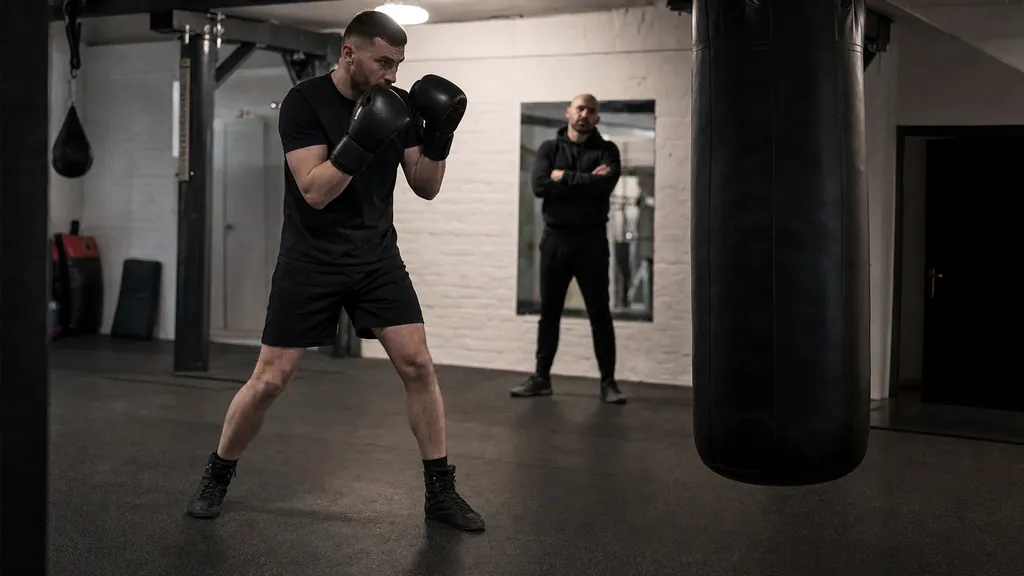
Start in your ordinary stance, not in a special pose. Your rear hand stays where it normally protects you. The lead hand comes out only part way, with the elbow still bent and the shoulder still connected to the chin.
The glove should be far enough forward to change the picture for the other boxer, but not so far that your shoulder opens and your weight falls over the front foot. A good first cue is simple: let the glove leave the lead-side lane, then bring it back before the feet have stopped moving.
There is a difference between a short lead hand and a stiff arm.
A stiff arm is held out and forgotten. It leaves a gap on the lead side, slows your return and tempts you to lean. A short lead hand is alive. It goes out, does a job and returns to a useful guard. Our guide to boxing guard spacing explains why both gloves need room to work without drifting into a cramped or open position.
Use a mirror first. Take a normal stance, move the lead glove out halfway, then bring it back. Watch the head, not only the glove. If your chin appears before the shoulder, shorten the movement. If your rear hand wanders, slow down until it stays home.
Three simple drills before you use it with a partner
1. Shadow-boxing range check
Move around an imaginary opponent for one minute. Every few steps, show the half-jab, bring it back, then choose one of three answers: full jab, jab-cross, or step away.
The point is not speed yet. The point is stopping the hand from hanging in the middle. Say the rhythm quietly if it helps: touch, back, choose.
2. Mitt drill: half-jab, full jab, cross
Ask a coach or partner to hold one mitt at long-jab range. Start just outside it. First show the half-jab without reaching the mitt. Then take a small step, land a full jab, and finish with a controlled cross. Reset the feet before the next repetition.
This teaches the real value of the short touch. It tells you that you are not yet in range, rather than pretending that the first small movement did the job of the full jab.
3. Light partner response drill
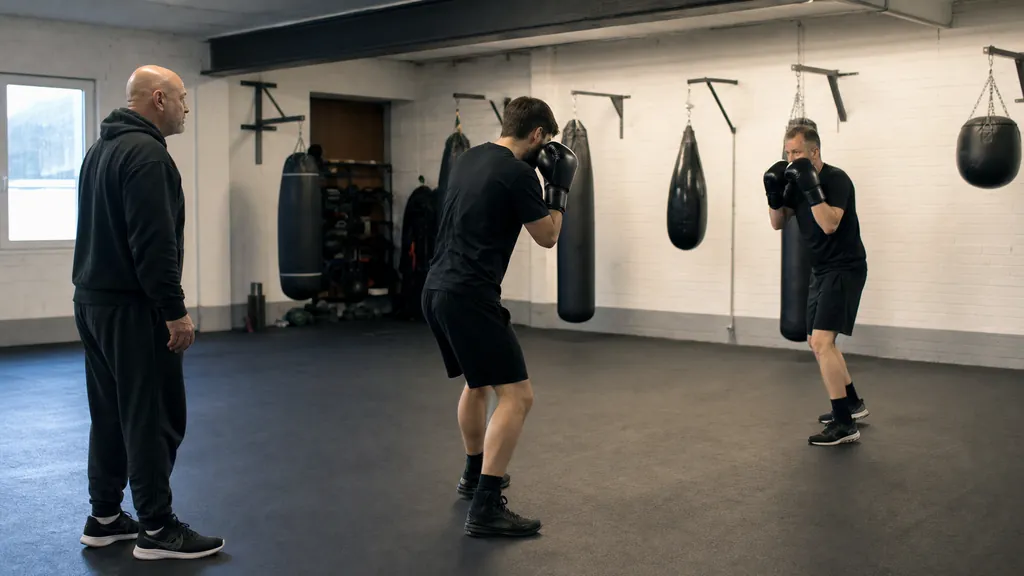
With gloves on and no hard contact, one boxer shows a half-jab while the other gives one predictable response: high guard, small step back or a light parry. The first boxer then returns to stance without chasing.
After a few rounds, add one clear follow-up. A high guard can invite a jab to the body line. A small step back can tell you to take ground behind a full jab. A parry can tell you to feint, reset and try again later. Keep this slow enough that both people can see the decision.
Do not use it as a shortcut around fundamentals
The half-jab is not permission to punch from a poor stance. It will not fix feet that are too square, a chin that lifts, or a rear hand that disappears when you get excited.
It is also not a substitute for the full jab. The full jab has reach, authority and enough structure to score cleanly at distance. The shortened version is a small question. The full jab is often the answer.
That is why the best use is to link the two. Show the quick lead hand, notice the reaction, then either return safely or take the moment you have created. The boxer who lands more is not always the one moving their hands fastest. It is often the one whose hands and feet arrive at the right time.
A biomechanics study of lead straight punches found measurable differences in punch velocity between boxers of different levels. That does not mean beginners need to chase a number. It is a reminder that speed develops on top of position and repeatable movement, not by throwing harder and hoping the glove travels quicker.
Where it fits in ordinary training
Use the half-jab in the technical part of a session, not as a frantic bag round. It works well in shadow boxing, slow pad drills and controlled partner work where the goal is reading distance.
If you train in Kidbrooke, bring the idea to a coach rather than trying to turn it into your whole game on day one. In our Recreational Adults boxing classes, that means working the small lead-hand touch slowly before you try to add it to a quicker exchange. A coach can see whether the hand is helping you find range or whether it is making you reach.
The basic lesson is worth keeping: not every lead-hand movement needs to be a big shot. Some of the useful ones are small enough to make the next proper punch easier.
H&G Team
Writer at Honour & Glory Boxing Club, a community boxing gym in Kidbrooke, South East London.
KEEP READING
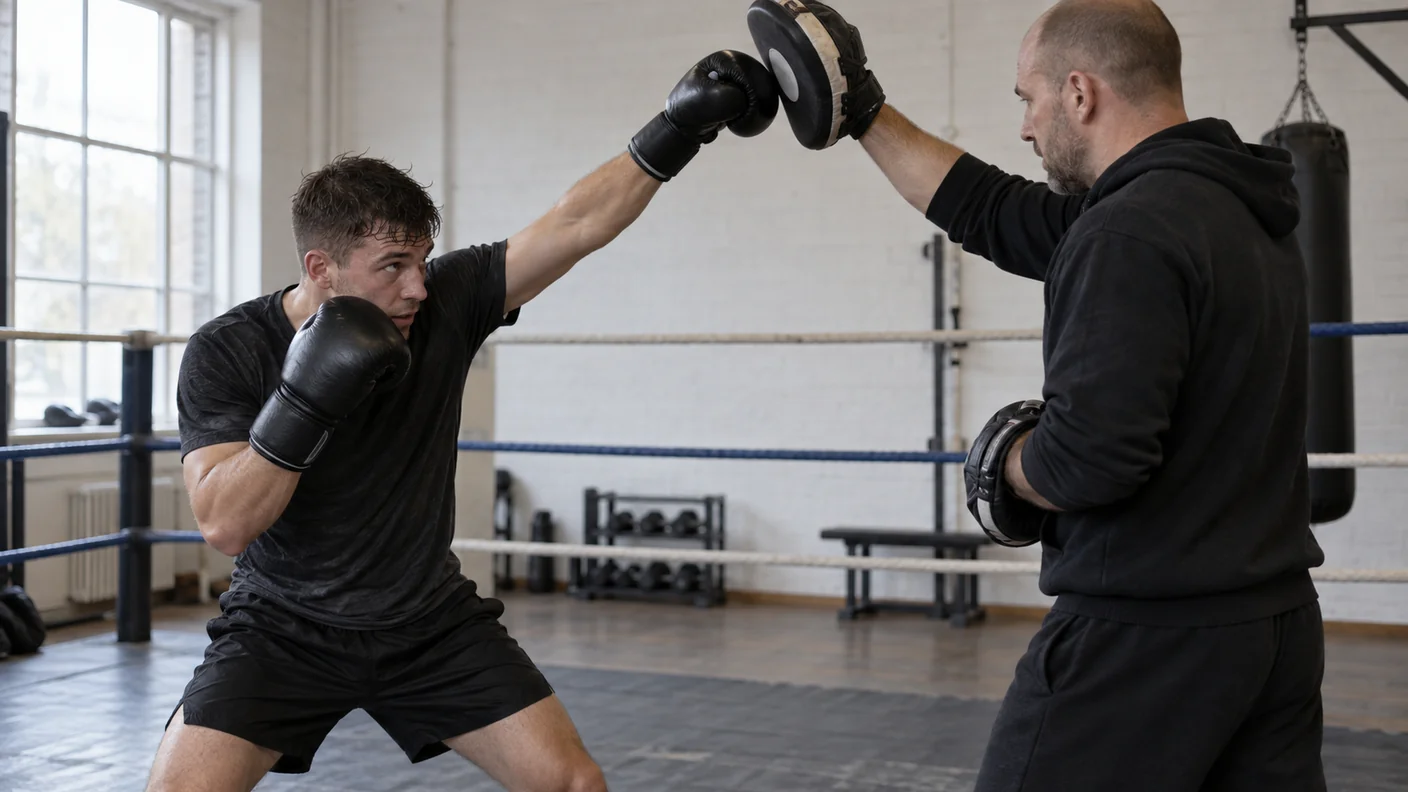
How to Use an Up Jab in Boxing
Use a compact up jab to change the line, test a high guard and keep your stance ready for the next decision.
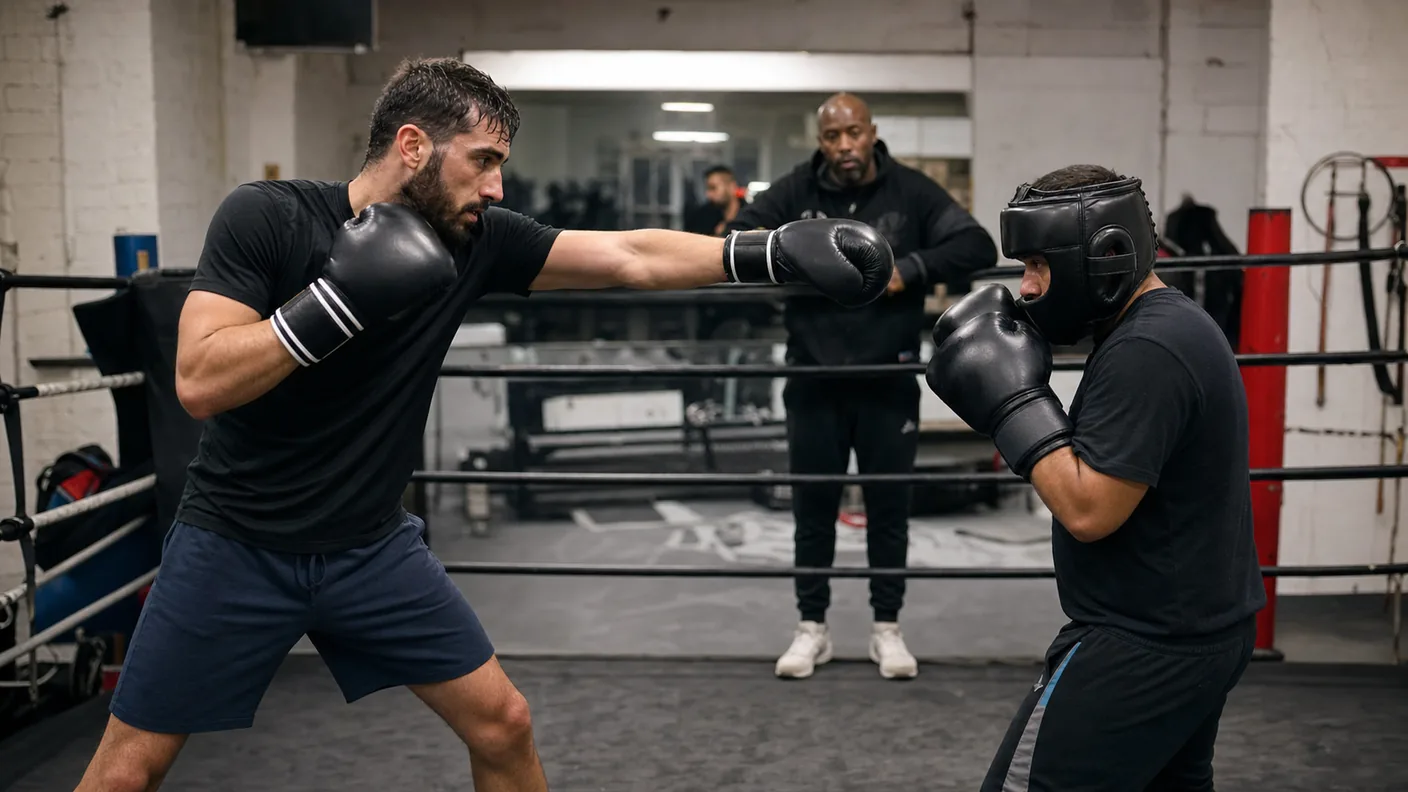
How to Box a Shorter Opponent Without Reaching
Use the jab, your feet and calm resets to control a shorter boxer without leaning into their range or giving away your balance.
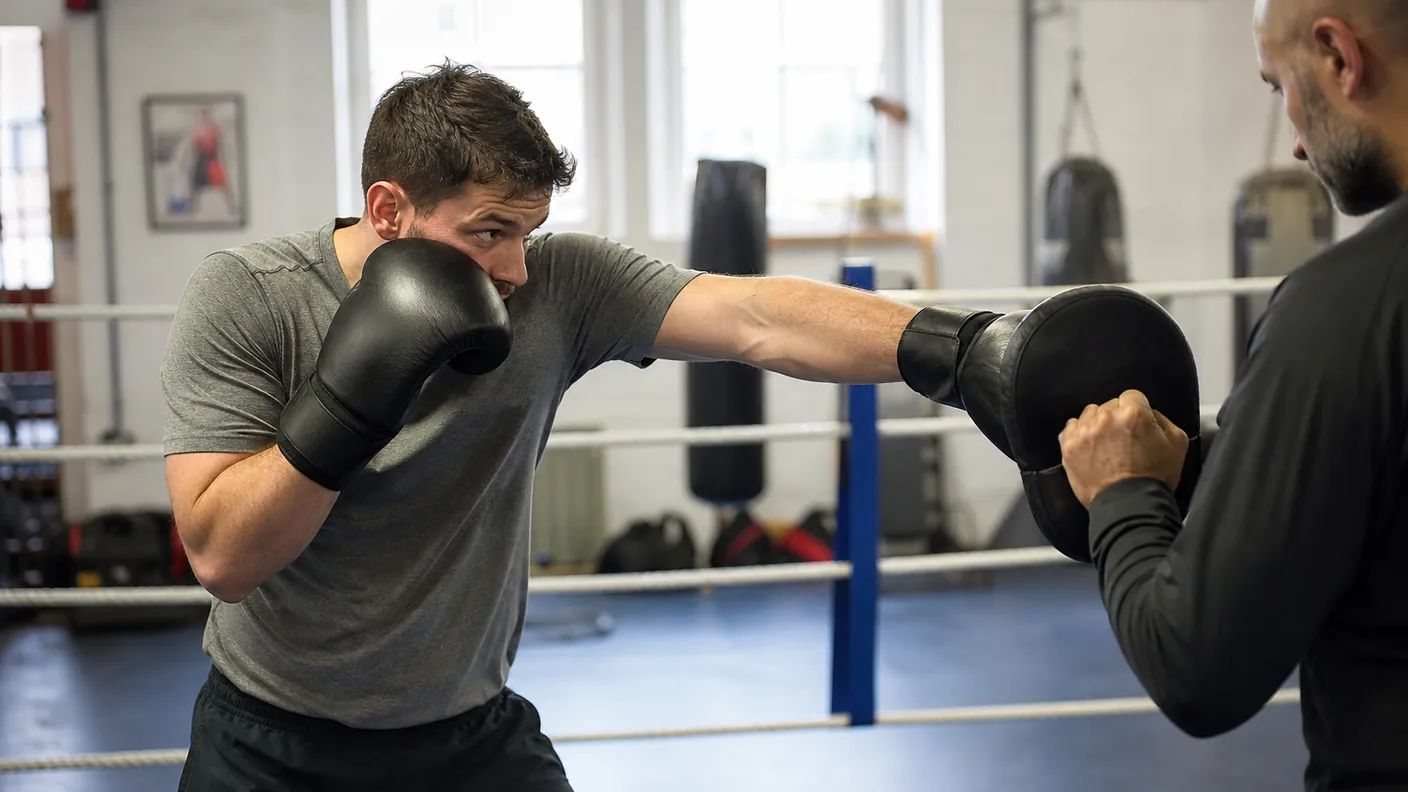
The Body Jab: A Safe Boxing Setup
Use a compact body jab to change the target, check range and set up the next decision without falling over your front foot.
Was this page helpful?
It takes one tap, and it genuinely helps.
Choose your next step
Turn this article into the right action
Some readers are ready to book. Some need the class route first. Pick the route that matches what you actually want.