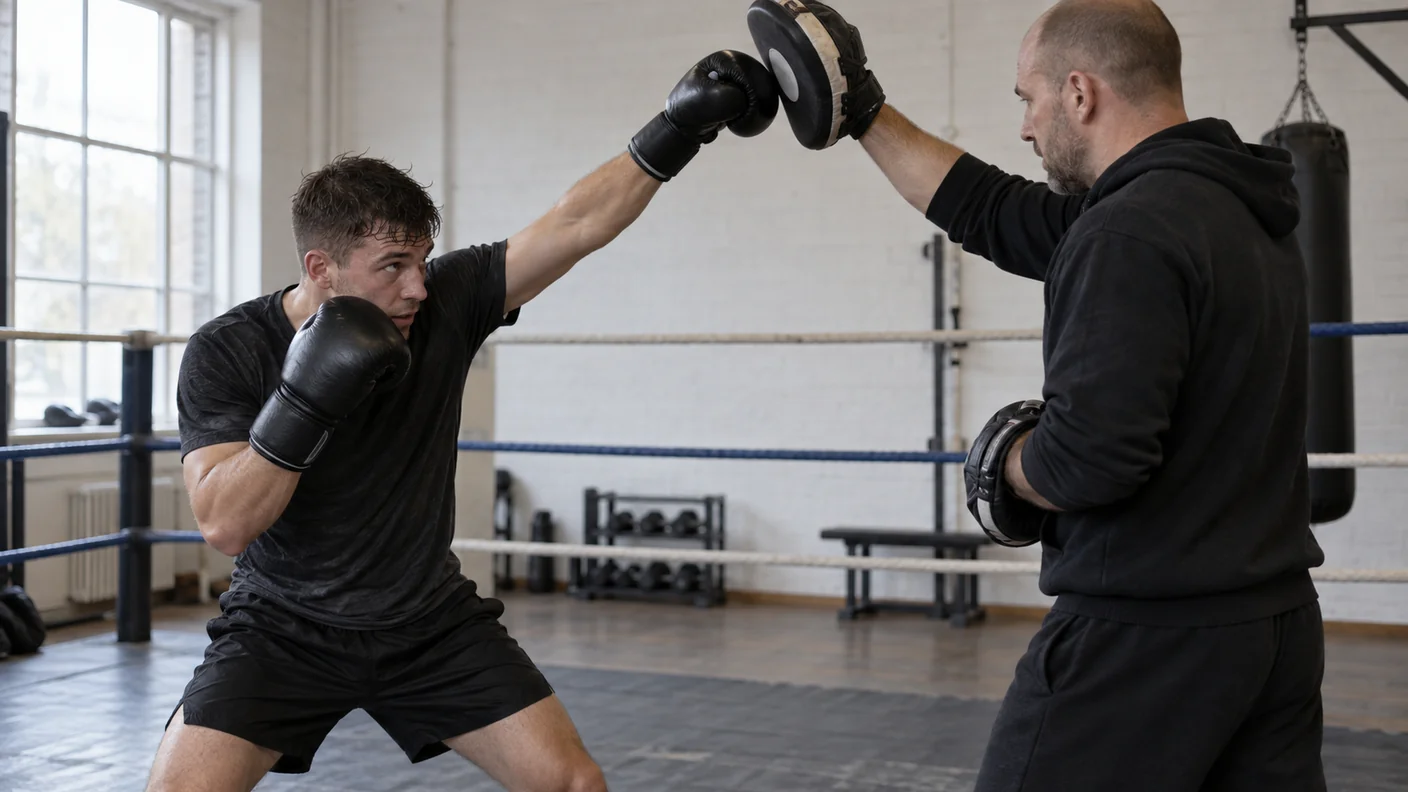
An up jab is a useful variation when an ordinary straight jab has become too easy to read. It changes the line of the lead hand without asking you to throw a wild hook or stand square in front of someone.
The important word is compact. The up jab is not an uppercut thrown from long range, and it is not a dramatic squat followed by a reach towards the ceiling. It is a lead-hand jab that rises on a slightly different line because your level and posture have changed first.
The video below is a helpful visual reference for the basic shape. Watch the small change of level, the line of the lead glove and the fact that the rear hand stays available. Do not copy every variation at speed. Start with a quiet version a coach can see and correct.
What an up jab actually is
A standard jab travels on the shortest sensible route from guard to target. An up jab starts from the same organised guard, but the glove rises towards a higher line as you come up from a small bend in the knees.
That gives the other boxer a slightly different picture. If they are waiting to catch or parry a level jab, the rising line can make them lift the gloves, lose their usual timing or pause long enough for you to see what is available. The jab is still a question. It is not a promise that a bigger punch must follow.
Keep the body underneath the movement. Soften both knees, lower only a little, then let the legs bring you back towards normal height as the lead hand goes. Your head should remain between the feet, not dive forwards beyond the lead knee.
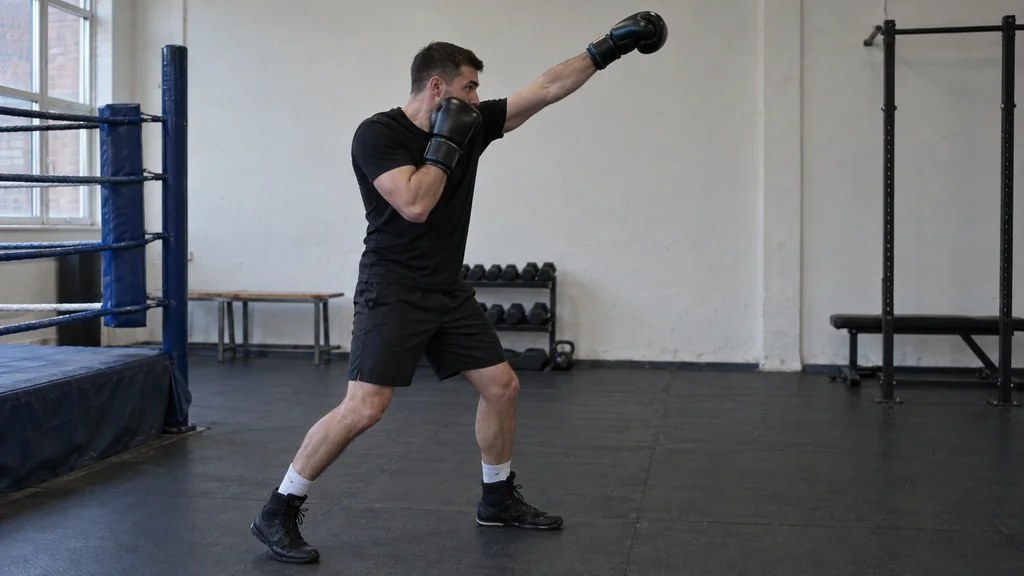
The England Boxing coaching handbook puts stance, balance and controlled progressions before more elaborate work. That order matters here. If the level change has already pulled the feet apart or lifted the chin, the unusual jab has made you easier to hit rather than harder to read.
Do not turn it into a stretched uppercut
The most common error is loading the lead hand low, then scooping it upwards from outside useful range. That is not an up jab. It is a slow announcement that leaves the lead side open and the head travelling towards the target.
Keep the glove close enough to its ordinary starting lane that it could still return home quickly. The elbow can bend more than it would for a level jab, but it should not swing behind the body. If the fist has to start near your hip to make the movement work, the movement is too large.
The target should also be honest. An up jab can rise beneath a high guard, touch a coach-held mitt above the normal jab line, or make a partner think about a level change. It does not need to land under somebody's chin from the other side of the gym.
A review of boxing biomechanics describes punching as a linked movement through the lower body, trunk and upper body. That is a useful reminder, not a licence to over-rotate. The legs and trunk help the glove arrive cleanly. They do not need to throw the whole body out of position.
Use the level change to change the line
The up jab works best when it follows a believable change in level. You might show the shape of a body jab, lower slightly while taking a small step, then rise into the lead hand. You might also use it after a quiet feint when the other boxer is tall behind a high guard.
The eyes should stay on the chest and shoulders rather than dropping to inspect your own feet. Looking down makes the level change obvious and gives away the line before the glove has left home.
Our guide to boxing set-up jabs covers the same wider principle. The first lead-hand action should create information, position or a reaction. An up jab is useful only when it gives you one of those things.
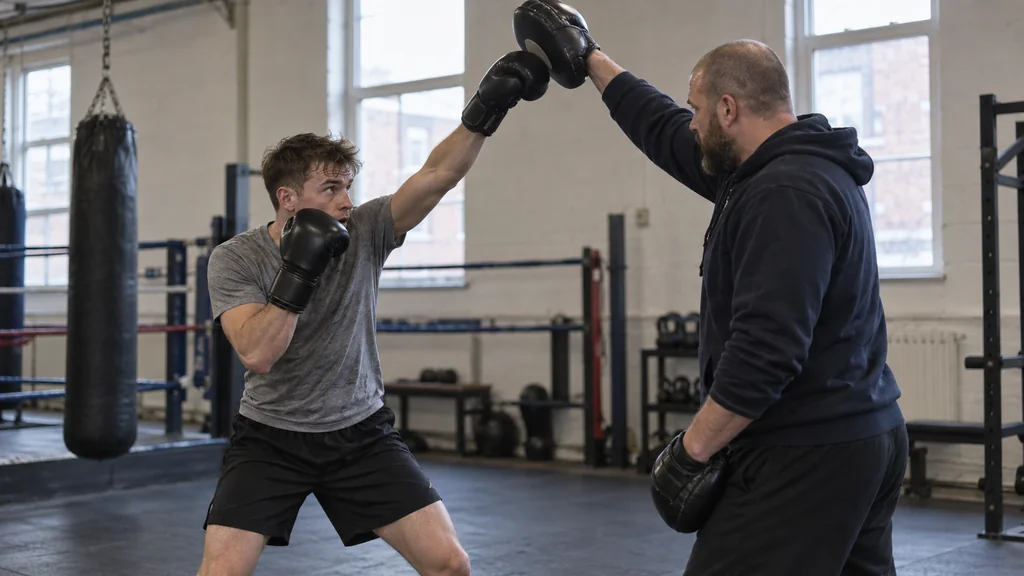
Do not force the second punch. If the up jab makes the gloves rise and the range remains good, a measured rear hand to a coach-held mitt may be there. If the other boxer steps back, covers well or moves sideways, return the lead hand to guard and follow with your feet or reset.
That is why the up jab should be trained as a decision, not a sequence. The jab can draw a cover. The cover can show an opening. The opening may disappear before your feet are in place. A calm reset is a better answer than reaching after the moment.
A three-round up-jab drill
Use a coach and focus mitts where possible. Keep the early rounds slow and agreed. There is no need to test this in hard sparring before the line, balance and return all look normal on pads.
Round one: lower, rise, return
Shadowbox for one minute with the lead hand only. Every third rep, make a small bend through the knees, rise into an up jab, then bring the glove straight back to guard.
Freeze for one count after the return. Check that both feet are still staggered, the chin is down and the rear glove has not drifted. If the stance feels wide or the head is leaning over the front knee, make the movement smaller.
Round two: find the high mitt
Ask the coach to hold one mitt just above your normal jab line. Start at a range where you can land without leaning. Lower a few inches through the legs, rise into one compact up jab, then recover to guard.
The coach should move the mitt occasionally. When it is too far away, do not chase it with the arm. Take a small step, use an ordinary jab or let the rep go. The drill is teaching range as much as it is teaching a new line.
Round three: up jab, then choose
The coach now gives three pictures after the up jab: a second mitt at honest range, a closed guard, or space opening to one side. Choose one response only.
If the mitt appears, throw one measured straight shot and recover. If the guard closes, bring the hands home and reset. If the space opens, take a small side step without crossing the feet. The job is to stay organised after the jab, not to win the drill with a long combination.
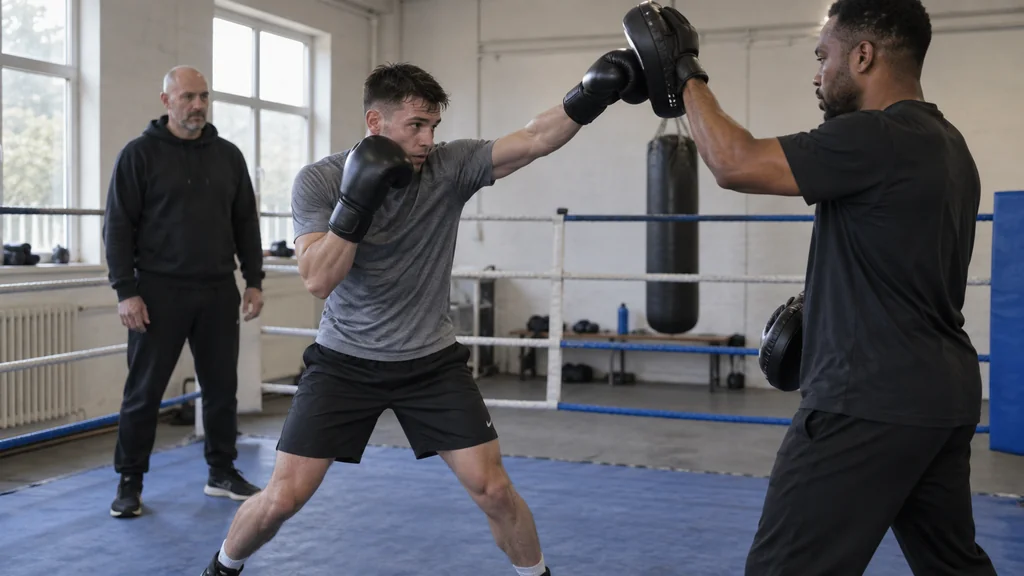
When the up jab is not available
Do not use an up jab merely because it feels clever. If you are already too close, a short guard, frame or ordinary lead hook may make more sense. If you are too far away, use the feet or a normal jab to recover range first.
It is also a poor choice when the other boxer is waiting with a clear rear hand over the top and you cannot keep your own head off the centre line. The variation should make your line less predictable, not give somebody a taller target to counter.
For a more complete lead-hand game, read our guide to using feints in boxing. A feint, a level jab and an up jab can all change the opponent's timing. None of them replaces a dependable basic jab.
Four mistakes that spoil the up jab
The first is bending at the waist instead of the knees. When the back folds, the eyes drop and the punch has to rescue your balance. Bend through the legs, keep the chest calm and rise in a position where you could still step away.
The second is dropping the rear hand while the lead glove rises. An unusual jab is not worth leaving the far side of your face open. The rear glove stays near the cheek throughout the rep.
The third is throwing too high. The target is a changed line, not a basketball hoop. Keep the fist within a route that lets the arm return to guard without a large circle.
The fourth is making it your only jab. If every lead hand rises, the other boxer will adjust quickly. Use the ordinary jab, a light set-up jab and the up jab as different questions from the same sound stance.
For adults in Kidbrooke, Greenwich and nearby, our Recreational Adults boxing classes use controlled pad work and partner drills to make variations like this practical. Build the basic jab first. Then add a new line only when the guard, feet and balance can still hold their jobs.
The coaching cue is simple: lower a little, rise with the lead hand, then return ready.
H&G Team
Writer at Honour & Glory Boxing Club, a community boxing gym in Kidbrooke, South East London.
KEEP READING
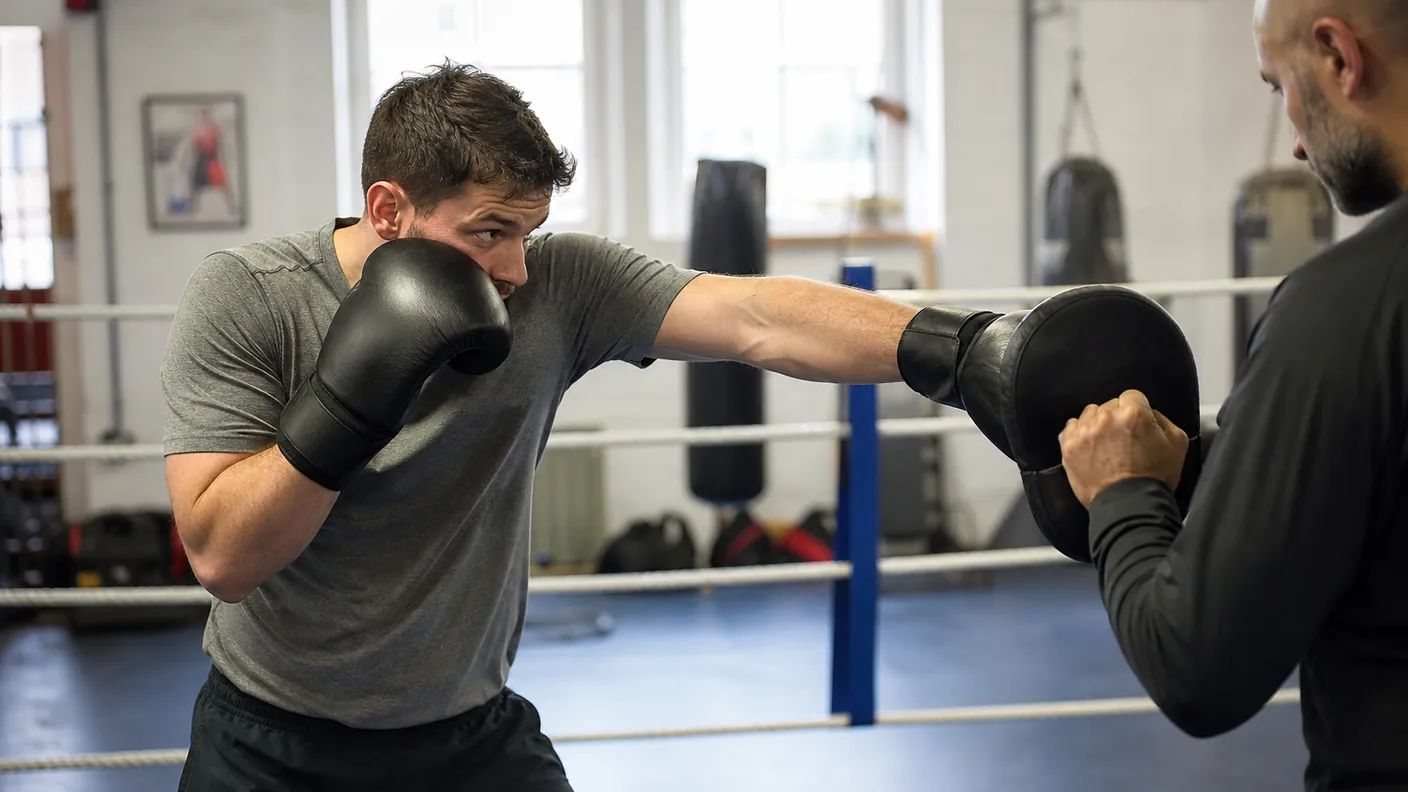
The Body Jab: A Safe Boxing Setup
Use a compact body jab to change the target, check range and set up the next decision without falling over your front foot.
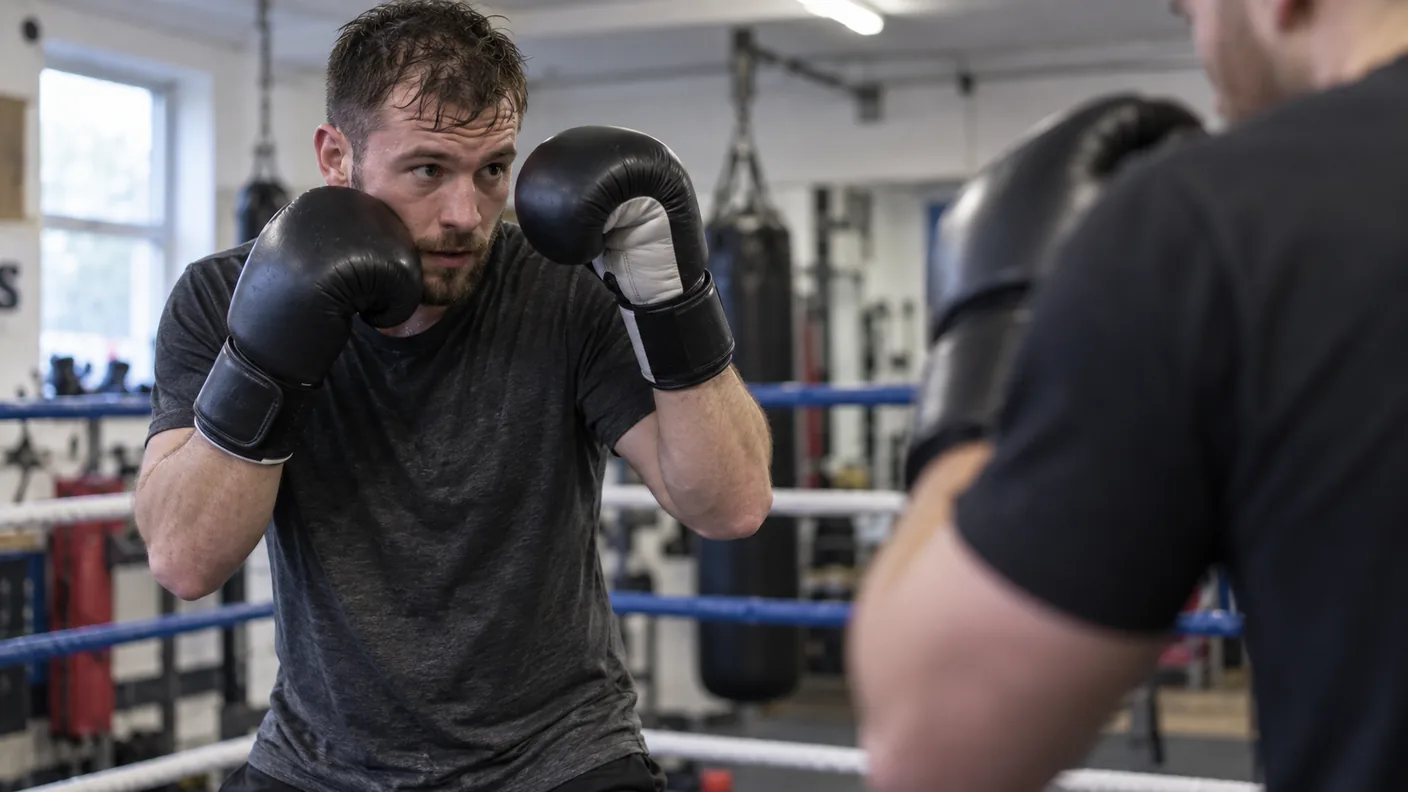
Lead-Hand Catcher Mitt: A Jab Defence Drill
Use a light lead-hand catch to manage the jab line, then return to guard before adding a calm counter or exit.
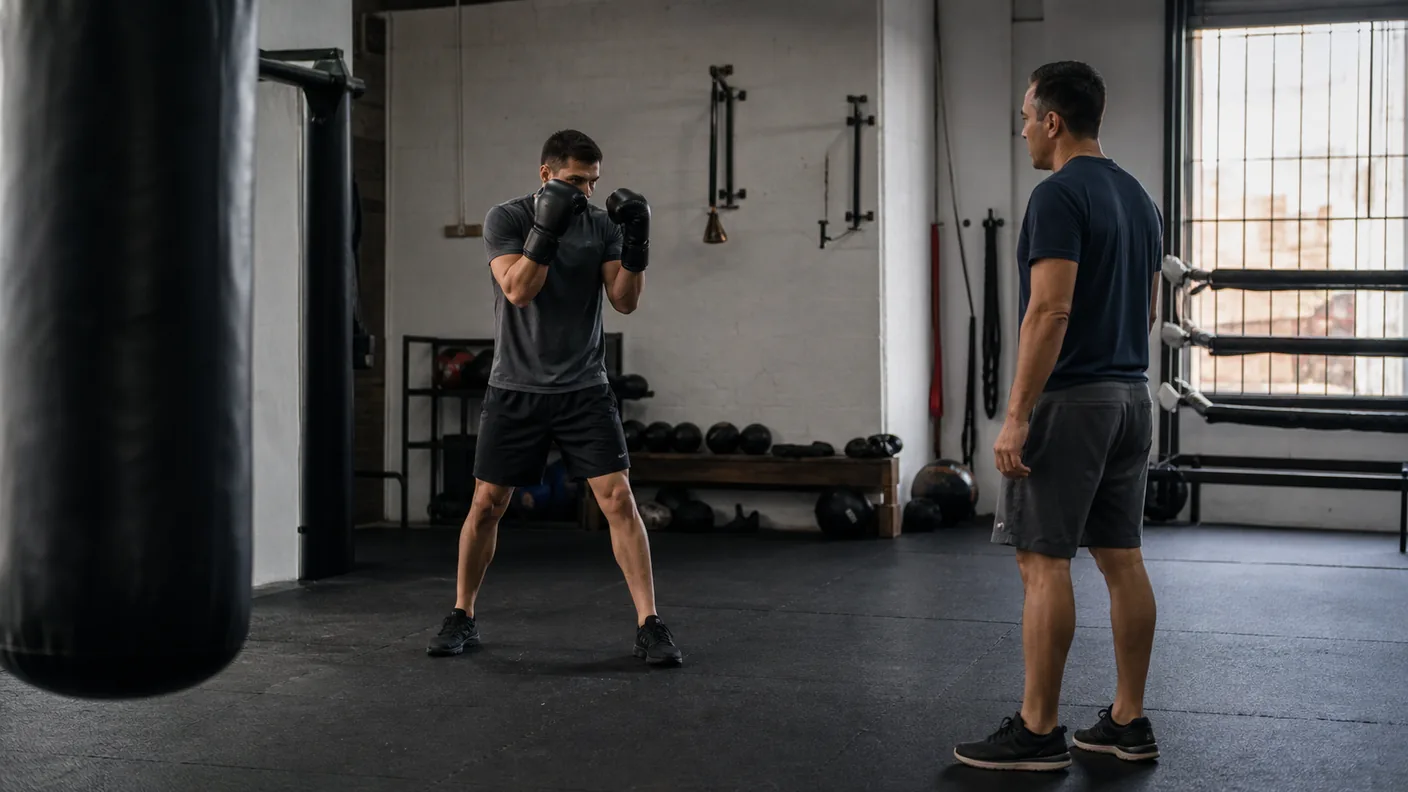
Lead Hook to Jab: Change Direction in Boxing
Use a compact lead hook to shift the guard, then send a jab through the middle without losing your stance or balance.
Was this page helpful?
It takes one tap, and it genuinely helps.
Choose your next step
Turn this article into the right action
Some readers are ready to book. Some need the class route first. Pick the route that matches what you actually want.