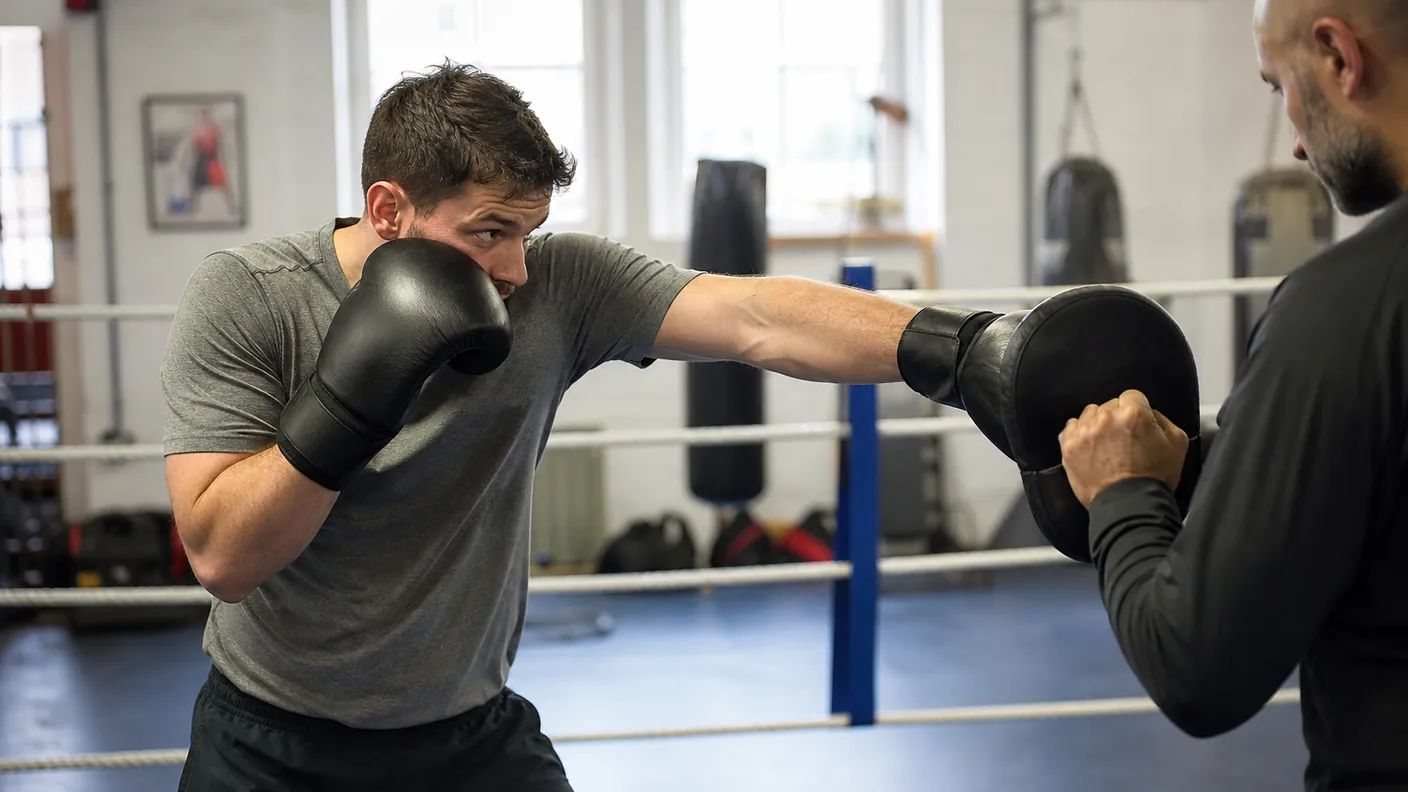
A body jab is easy to make look clever and easy to make unsafe.
The bad version is a long dive at somebody's midsection. The head goes first, the rear hand drops, and the boxer arrives close enough to be hit but too stretched to punch again. The useful version is quieter. It is a short lead-hand shot that changes level through the knees, keeps the eyes up and leaves the feet ready for the next decision.
Watch the demonstration below, then use the coaching notes to make the body jab a proper setup rather than a reach.
The body jab changes the picture
A jab to the head makes the other boxer think about the line in front of their face. A body jab asks a different question. It can touch the middle, make the elbows react, check whether the distance is honest or give you a calmer way to enter than rushing in behind a hard cross.
That does not mean it must land every time. Its first job is to make the other boxer notice a lower line while you keep enough shape to see their answer. If they cover low, their head line may change. If they step back, you have learned the range is not there. If they fire a straight shot over it, your rear hand and posture need to be ready before you decide on a follow-up.
The body jab belongs in the same family as the ordinary jab, not in a separate bag of tricks. If the straight lead hand is still new, start with our guide to throwing a proper boxing jab. The lower target changes the level, but it does not remove the need for a clean line, a useful shoulder and a fast return to guard.
Bend the knees, not the waist
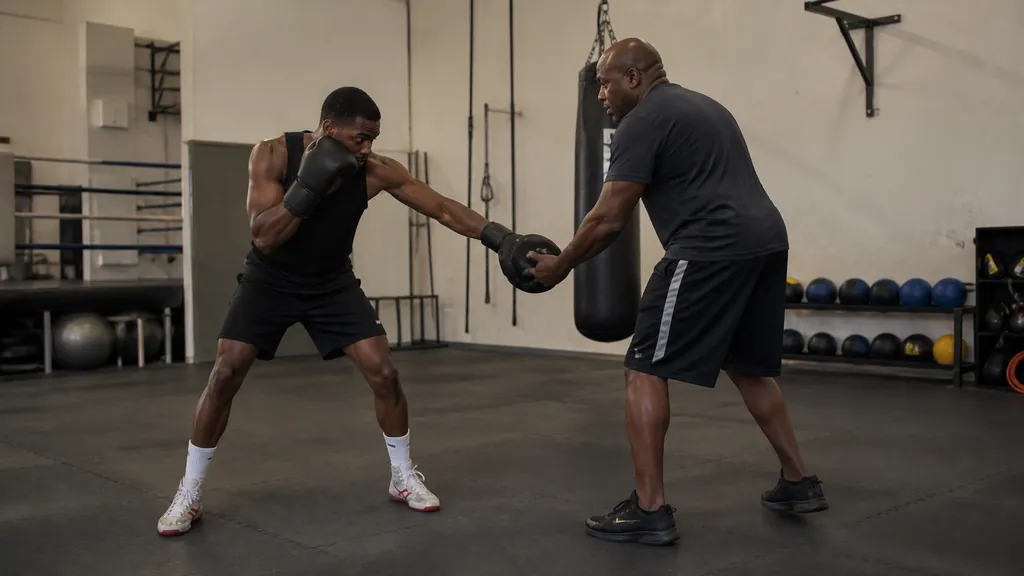
The main coaching point is simple: lower the body without sending the head on a solo journey.
Start in a normal stance at a distance where the lead hand could reach a body-height mitt without a lunge. Soften the knees and let the level drop by a small amount. The lead shoulder comes forward with the jab, while the rear glove stays close to the cheek. Your eyes stay on the person in front of you, not on the place you are trying to touch.
If you have to fold at the waist to reach the body, the distance is wrong. Step into a better range or choose another shot. A low target does not give you permission to put your head beyond your front knee.
England Boxing's coaching handbook puts balance, posture and controlled technical progressions ahead of complicated combinations. That is a useful test here. After a body jab, you should be able to bring the glove home, cover a response or take a small step without having to pull yourself upright first.
Try the freeze test. Throw one slow body jab to a mitt or bag, then pause before moving. Can you see forward? Is the rear glove still there? Are the feet still staggered? If not, make the level change smaller before adding speed.
Do not turn the body jab into a long punch
The body jab is usually shorter than people expect.
At long range, the head jab has space to extend. A lower target can tempt a boxer to throw the hand farther and drag the torso after it. That makes the body jab obvious and leaves the chin travelling through the middle.
Keep it compact. Let the knees give you the lower line and let the hand travel straight from a settled stance. The glove can touch a body shield, a low mitt or the safe centre of a heavy bag. Then it comes home. There is no need to leave the arm out to admire the position or force a second punch from bad feet.
A review of boxing biomechanics describes punching as a joined action across the lower body, trunk and upper body, rather than an arm movement alone (review of boxing performance). In plain gym language, the hand has to agree with the feet. If the body jab pulls the chest forward, the rest of the exchange is already compromised.
Use it to earn the next choice
A body jab is useful because it can create an honest next decision. It is not a cue to fire the same combination every time.
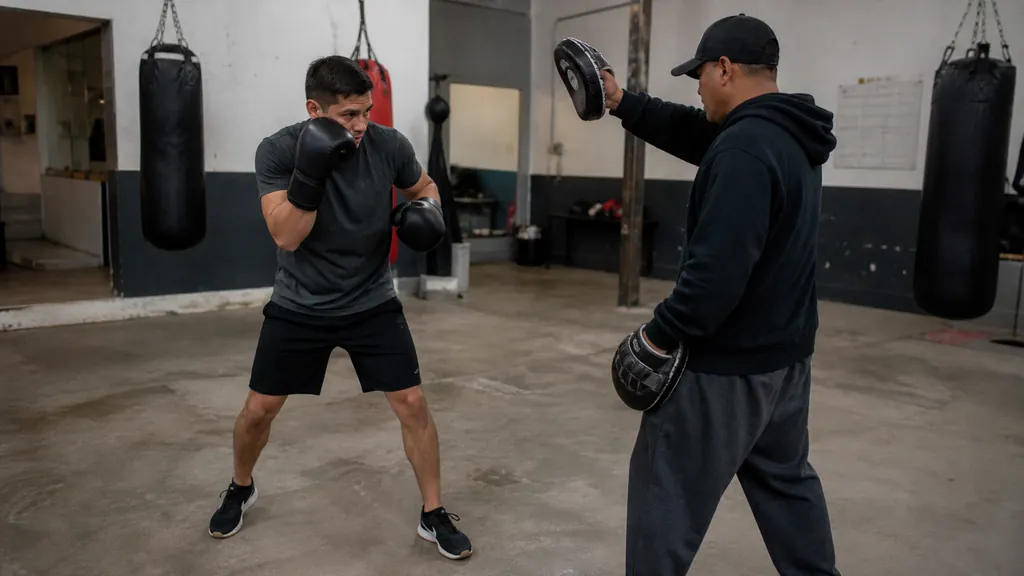
On pads, ask a coach to give one of three responses after the body jab: hold a high mitt, keep the guard closed, or step back. If the high mitt appears and your feet are still underneath you, a measured jab or cross may be available. If the guard stays compact, bring the hands home and reset. If the coach steps out, do not lean for the follow-up. Take a small step, or let the moment go.
This is what stops a drill becoming choreography. The body jab creates a change. You still need to see whether that change has given you anything useful.
The same rule matters when you are working the lower targets more generally. Our guide to body-shot target selection in boxing explains why a low punch needs a clear target and a safe position, rather than a blind swing below the elbows.
For beginners, the best first follow-up is often no follow-up at all. Jab to the body, return to guard, reset your feet. When that feels reliable, add one choice at a time.
A three-round body-jab drill
Keep this technical. A body shield or coach-held mitt is better than trying to practise low punches freely with a partner.
Round one: jab low and freeze
Use a body-height mitt or the centre of a heavy bag. Throw one light body jab, return the glove to guard and hold your stance for one second.
Check the rear hand, eyes and feet after every rep. If your head has dropped below your front knee or your rear foot has become stuck, reduce the range or shorten the jab.
Round two: jab low, then read
A coach holds a body mitt for the jab, then either shows a high mitt or gives no second target. The second action is not automatic. You only throw again when the mitt is there and your stance has survived the first shot.
This trains patience as much as mechanics. The body jab is there to change the picture. It is not an instruction to spend the next second throwing blindly.
Round three: jab low, finish safely
Now add one controlled finish: a high jab to the mitt, a light cross to a clear target, or a small step out. Pick one finish for a whole round, then swap on the next round.
Every repetition ends with both hands usable and the feet in stance. If the first jab has taken you too close, cover and reset. That is a successful repetition when the alternative is reaching into the next punch.
Four mistakes to catch early
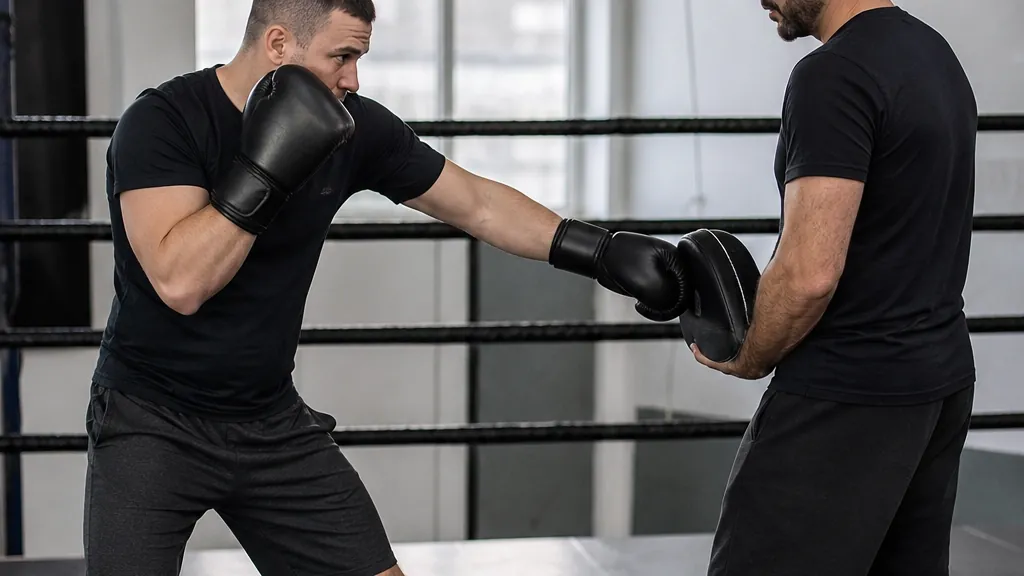
The first is looking down at the target. Your eyes tell you what the other boxer is doing. If you watch your own glove, you will miss the response that matters.
The second is dropping the rear hand. The body jab is a lead-hand shot. The other glove has no excuse to leave its job.
The third is dipping before the jab. A large early level change tells a partner exactly where you are going. Keep the movement small and let the hand travel as the knees soften.
The fourth is staying low after the punch. Once the glove has returned, bring your posture back to a place where you can defend, step or punch again. Do not linger at body level because the drill has taught you one low target.
Where it fits in a normal session
Use body-jab work after a warm-up, when the stance is settled but before hard bag rounds or faster partner work. It works well as a two- or three-round technical block alongside ordinary jabs, range checks and controlled exits.
It does not need sparring. In fact, the first version is better without it. Pads, a body shield and clear coaching cues give you enough feedback to learn the position without turning a small technique into a contest.
If you train near Kidbrooke, our Recreational Adults boxing classes use drills like this to connect stance, target choice and guard before the pace rises.
The cue is simple: knees bend, eyes stay up, glove comes home.
H&G Team
Writer at Honour & Glory Boxing Club, a community boxing gym in Kidbrooke, South East London.
KEEP READING
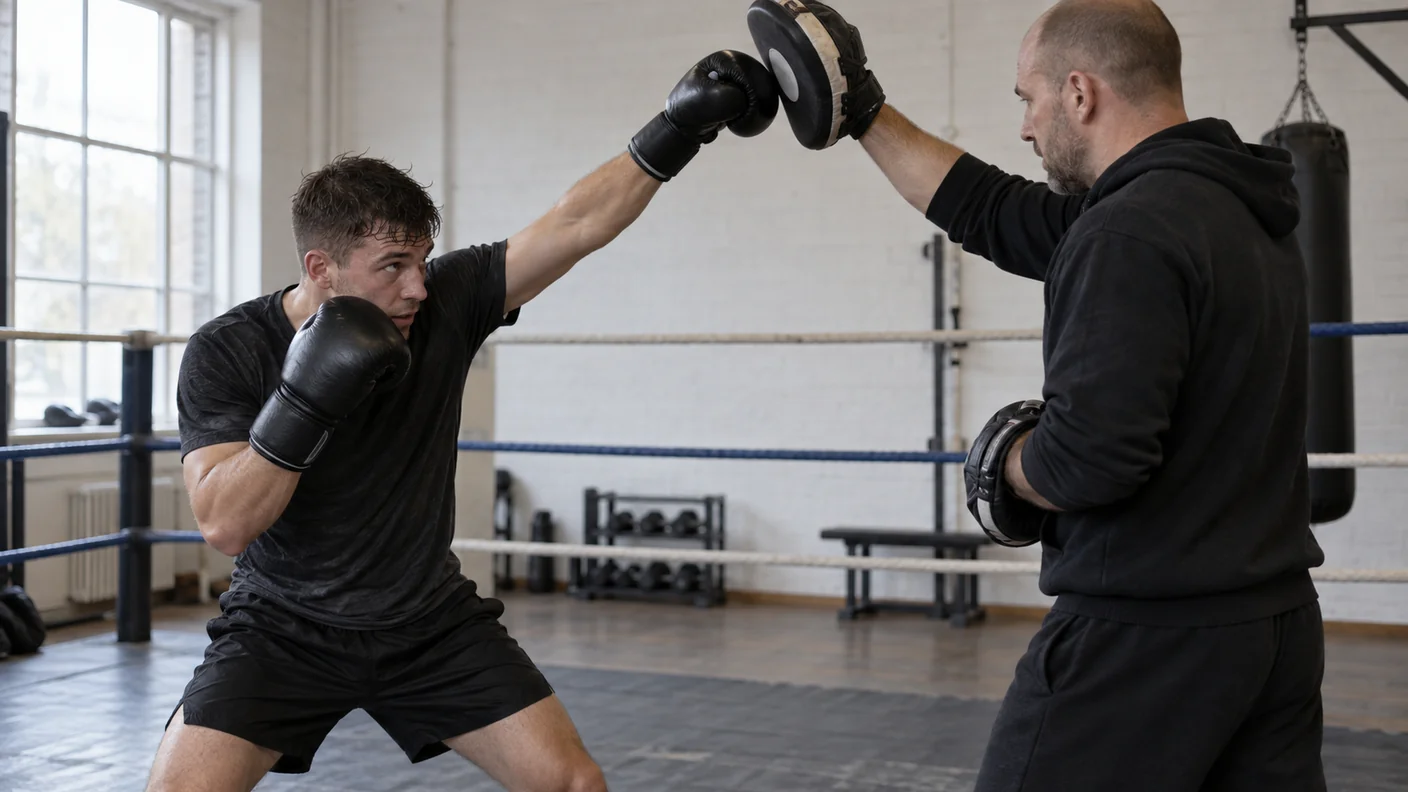
How to Use an Up Jab in Boxing
Use a compact up jab to change the line, test a high guard and keep your stance ready for the next decision.
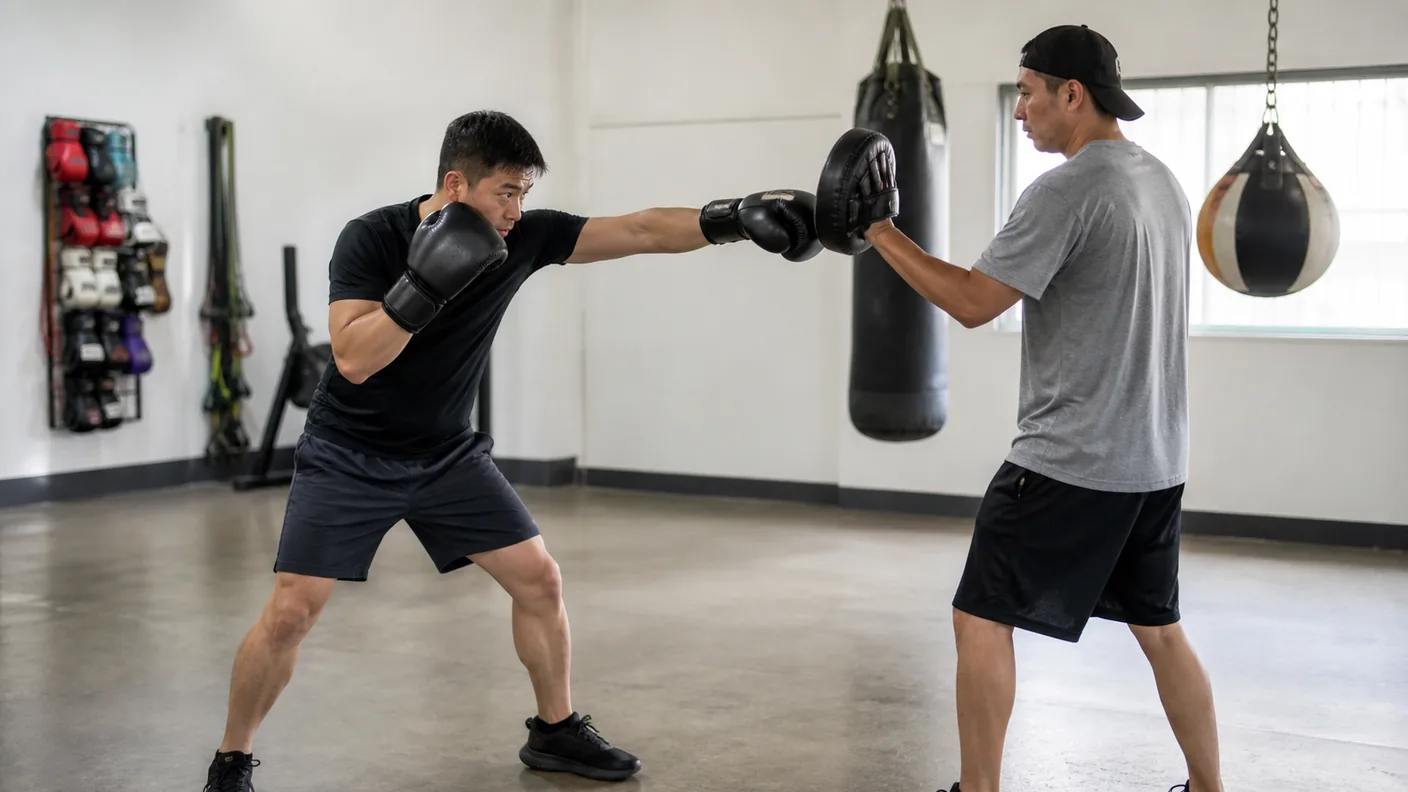
Jab-Duck Drill: Stay Low Without Folding
Use a jab-duck drill to change level with your eyes up, feet underneath you and guard ready for the next decision.
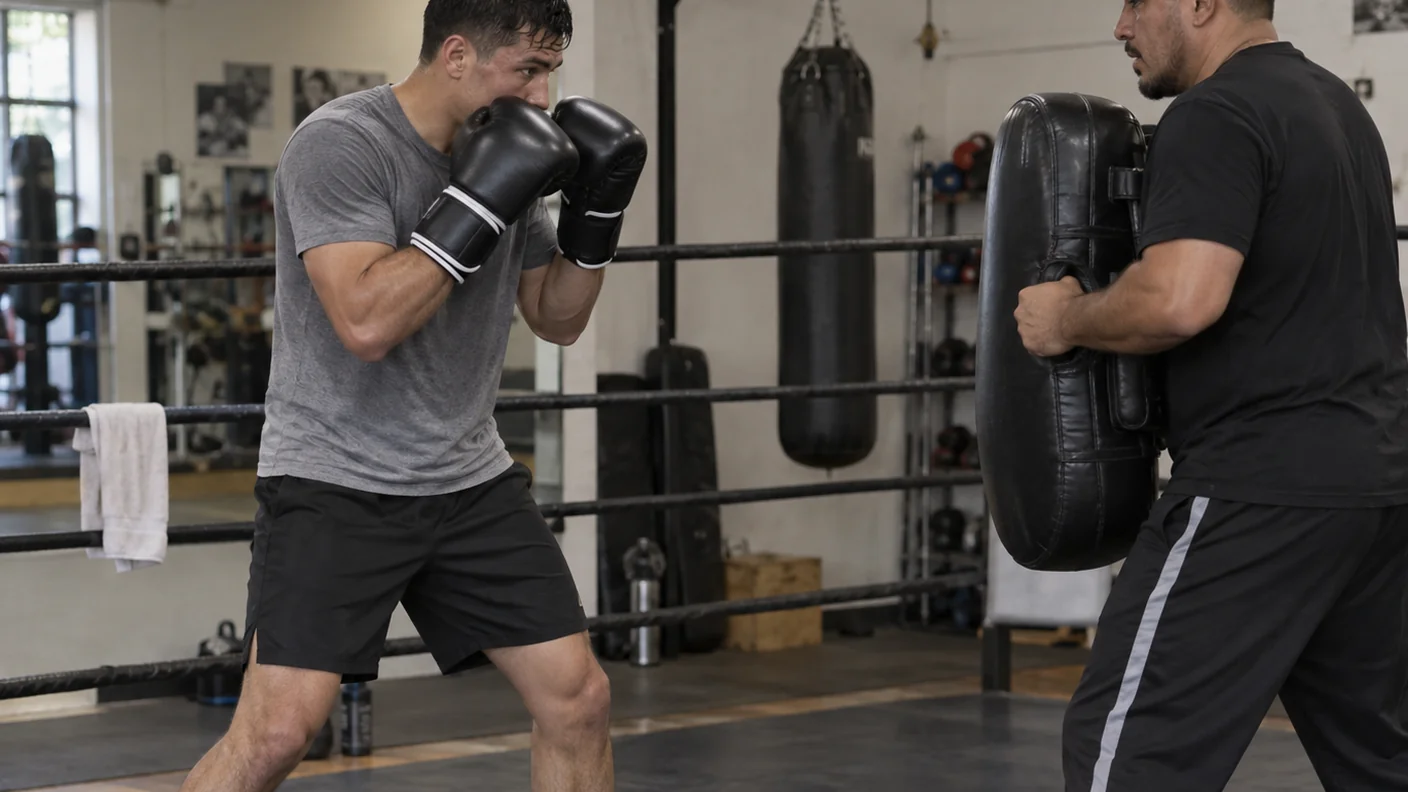
How to Defend a Body Jab in Boxing
Use a compact elbow line, steady eyes and a balanced reset to defend body jabs without dropping your hands or folding forward.
Was this page helpful?
It takes one tap, and it genuinely helps.
Choose your next step
Turn this article into the right action
Some readers are ready to book. Some need the class route first. Pick the route that matches what you actually want.