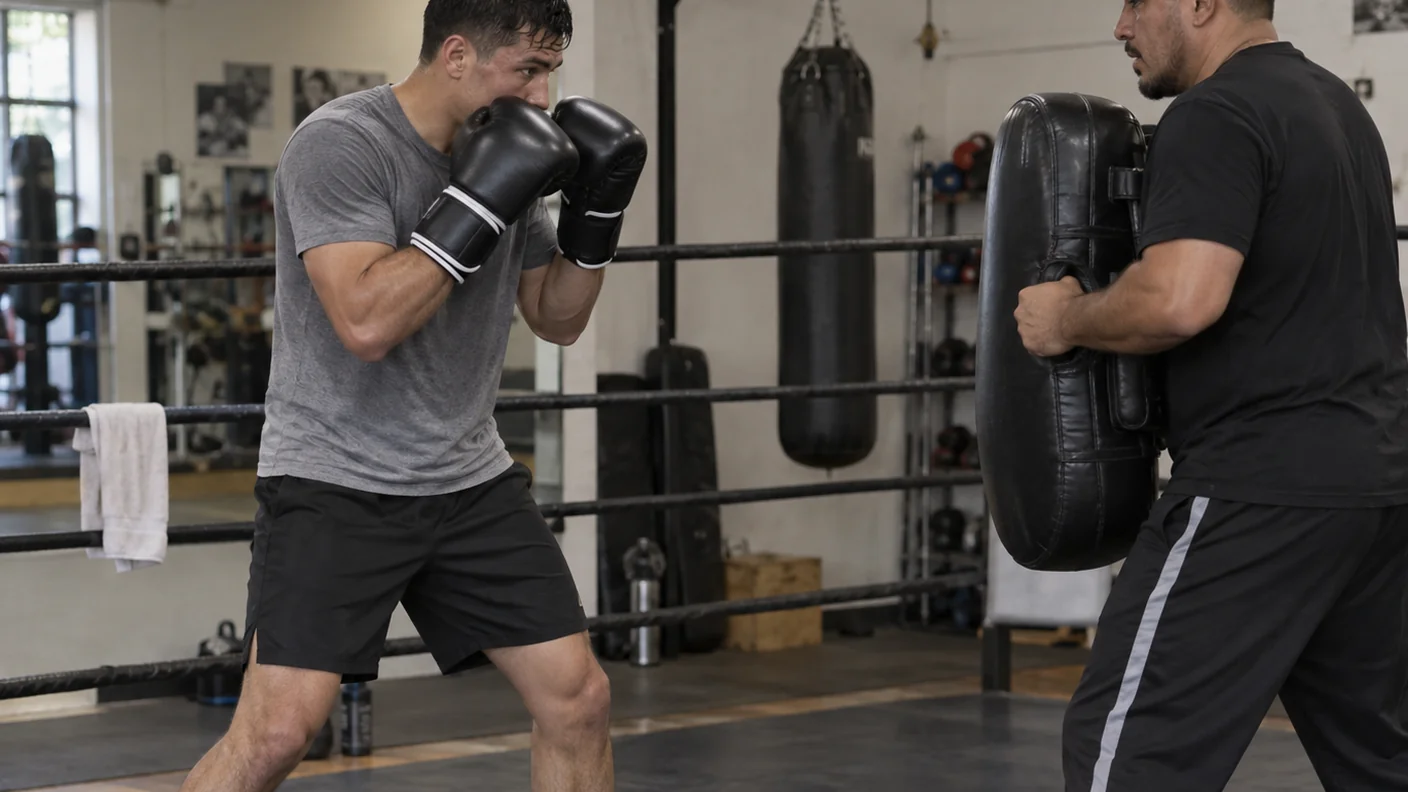
A body jab can make a boxer panic because it changes the level without looking dramatic. The lead hand drops towards the middle, the defender sees the glove travelling down, and both hands chase it. That is how a modest shot to the body becomes an invitation for the next punch upstairs.
The better answer is organised rather than clever. Keep the eyes up, let the elbow protect the line and keep the gloves close enough to deal with what follows. You are not trying to catch a low punch with both hands. You are making the body jab land on a protected part of your shape, then deciding whether you need to move, cover or return a simple shot.
Watch the demonstration below, then use the drill to make the response compact.
A body jab is often the first question, not the whole attack
The attacker uses a body jab to change what you are looking at. It can test the distance, make you lower your guard or buy a step closer for the next punch.
That is why the first response needs discipline. A body jab that arrives above the belt line is not an emergency. If you drop both gloves to swat it away, you may protect the middle for a moment while leaving the head line open for a cross, hook or another jab.
A review of boxing performance describes punching, defence, distance and movement as linked tasks. That is the useful principle here. The defence is not only whether the first jab misses. It is whether your stance and guard still work when the next decision arrives.
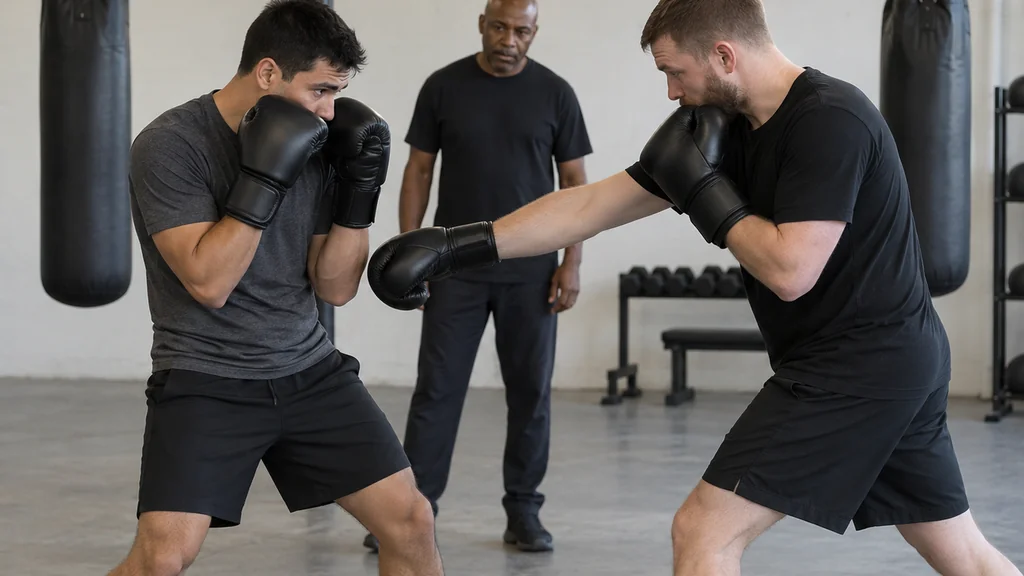
Keep the hands high and let the elbow do its job
Start from an ordinary guard. Your gloves stay near the cheeks, your chin stays quiet and the elbows sit close enough to cover the lower ribs and upper stomach without squeezing the whole body shut.
When a slow body jab comes in, make a small adjustment with the elbow on that side. The elbow comes slightly inward and down towards the body line. The forearm stays connected to the glove, so the hand has not travelled away from the face. Think of closing a short door, not reaching down to catch a ball.
The movement should be only large enough to make the jab meet your elbow, forearm or guarded body line rather than arrive cleanly. If your hand has fallen to your hip, the movement is too big. If you have bent over to look at the glove, you have made the follow-up easier for the other boxer.
England Boxing's coaching handbook places balance, posture and an effective guard at the centre of technical development. A useful body-jab defence meets that standard. You should finish able to see, cover a head shot, take a short step or touch a mitt with a jab.
Do not fold forward to meet the punch
The body jab can cause a second common mistake: the defender bends forward at the waist to get closer to the incoming glove. This makes the body feel covered, but it sends the head into the space above the jab.
Use the knees instead. If the range has closed enough that you need a little level change, soften the legs while keeping the back long and your eyes on the other boxer's chest and shoulders. The goal is to stay beneath your own guard, not to duck into the next punch.
This is especially important when the attacker is stepping in behind the jab. A small body jab can be a way of closing distance. If you lean forward as they step, you have helped them crowd you. Keep the head between the feet, let the elbow deal with the first line and be ready to make space with a small step if the range has collapsed.
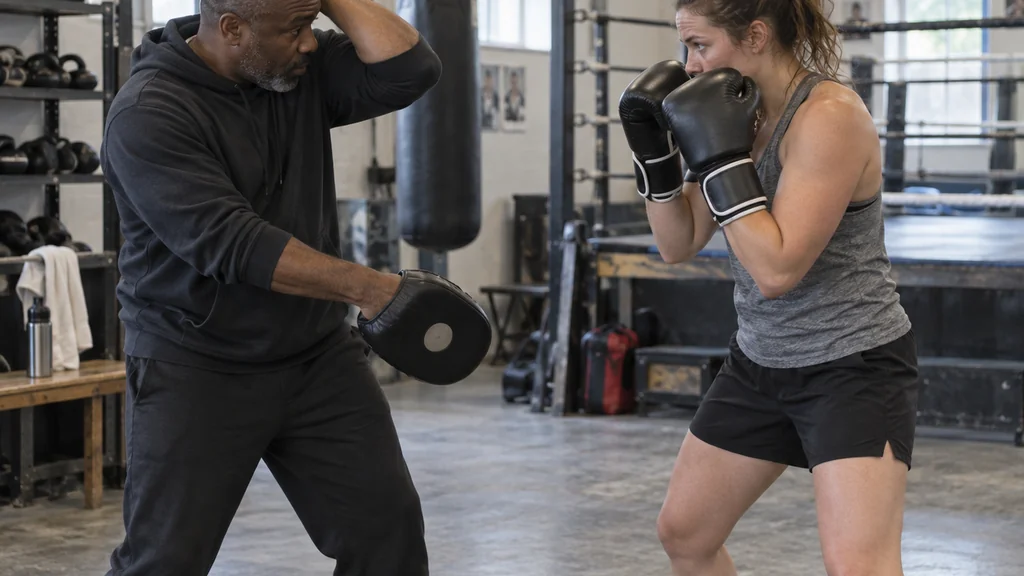
The right response depends on the range after the jab
There is no compulsory counter after a body jab. The right answer depends on what has changed.
If the attacker is still at the edge of range, cover the body line, bring the elbow back to its ordinary place and reset. You have not lost ground just because you did not throw back.
If they have stepped close enough to work again, bring the guard together and use your feet. A short step back can restore the range. A small side step can change the line. Do not try to throw a long right hand while your elbow is still low and the other boxer is standing in front of you.
If a coach presents a clear mitt after the body jab, a measured jab back can be a useful next action. It makes the attacker respect the space without turning the drill into a race. The glove should return to the face before the jab goes out. The feet should be settled before you ask the rear hand to do more.
Our guide to defending the jab in boxing explains the same wider principle at head height: catch, slip, block or move according to range rather than treating one defence as the answer to every punch. The body line changes the tool, not the need for judgement.
The body-jab cover and reset drill
Use a coach, a body shield or a trusted partner who can keep the feed slow and clearly agreed. This is technical work, not a body-sparring contest.
Round one: close the line and freeze
The coach presents a light body-height mitt cue from jab range. Bring the relevant elbow slightly in and down, keeping both gloves near the cheeks. Freeze for one count.
Check four things before the next repetition:
- Your eyes are still forward.
- The opposite glove has not left the cheek.
- Your head remains between your feet.
- You could take a small step without untangling your stance.
If one part is missing, make the cue slower. A compact cover is more useful than a fast one that pulls the guard apart.
Round two: cover and read the second cue
The coach now gives the body-jab cue, then chooses one of three responses: a high mitt, a forward step or nothing. The boxer covers first and reads what is actually there.
Against the high mitt, a single light jab can be available after the guard has recovered. Against the step, bring the guard tight and step out. Against no second cue, simply reset. This is the round that teaches you not to pre-book the counter.
Round three: defend the body jab, then leave the line
Add a small exit after the cover. It can be one short step back, one quiet side step or a return to open range after a light jab to a coach-held mitt.
Keep the body jab controlled and the exit modest. The goal is not to travel across the gym. It is to prove that your defensive shape has left you able to leave the original line without crossing your feet or dropping your hands.
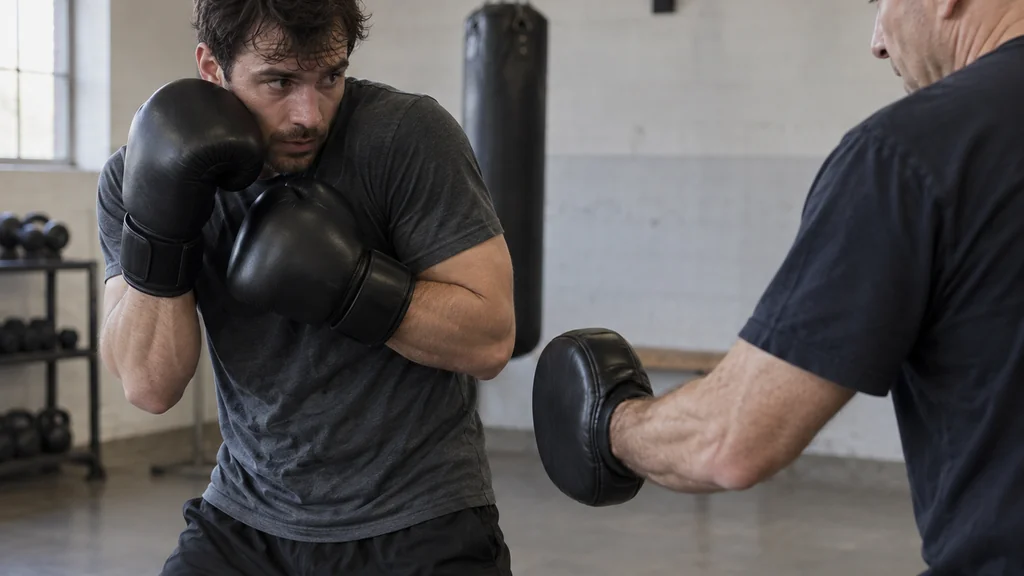
Four mistakes that make the body jab more dangerous
The first is dropping both hands. You do not need both gloves at body level to deal with one lead-hand shot. Keep the hands responsible for the head and let the elbow help protect the middle.
The second is folding over. A body jab is low, but it is not below your feet. Use a small bend through the knees, keep your spine organised and keep watching the opponent.
The third is trying to counter before your guard has recovered. A body jab can be a setup for a head shot. If your glove or elbow is still out of place, make the safe choice first.
The fourth is treating every body jab as identical. A probing jab from long range, a jab thrown while stepping in and a jab that follows a feint ask different questions. Begin with one clear cue in training, then add choices once the cover stays dependable.
For the attacking side of the same problem, our guide to using a body jab as a boxing setup shows why the lower line can change a guard without making a follow-up automatic. Understanding that purpose makes the defence easier to read.
Where this fits in training
This works well after you have practised the basic guard and before faster pad or partner rounds. It gives beginners a clear answer to a common low-line cue without asking them to slip, pull or throw a counter before their stance is ready.
Keep it controlled. Use gloves, a mitt or a body shield. Do not turn a body-jab drill into hard contact, and do not use it as permission to throw below the belt. The aim is clean position, clear decisions and respect for the partner in front of you.
For adults in Kidbrooke, Greenwich and nearby, our Recreational Adults boxing classes use controlled drills to connect guard, feet and simple choices before the pace rises.
The coaching cue is simple: hands high, elbow home, eyes up.
H&G Team
Writer at Honour & Glory Boxing Club, a community boxing gym in Kidbrooke, South East London.
KEEP READING
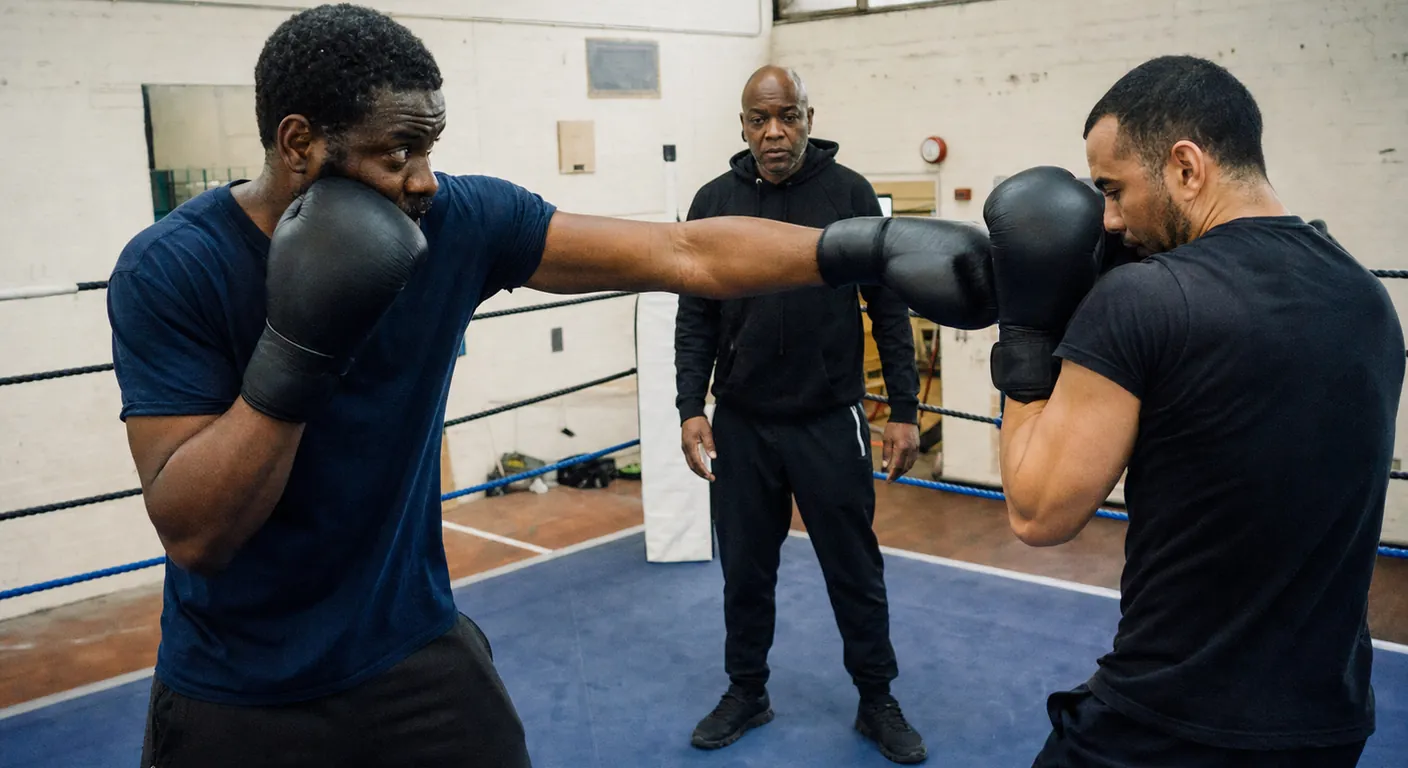
How to Defend the Jab in Boxing
Learn how to defend the jab with a catch, slip, block and exit without losing stance, balance or the chance to punch back.
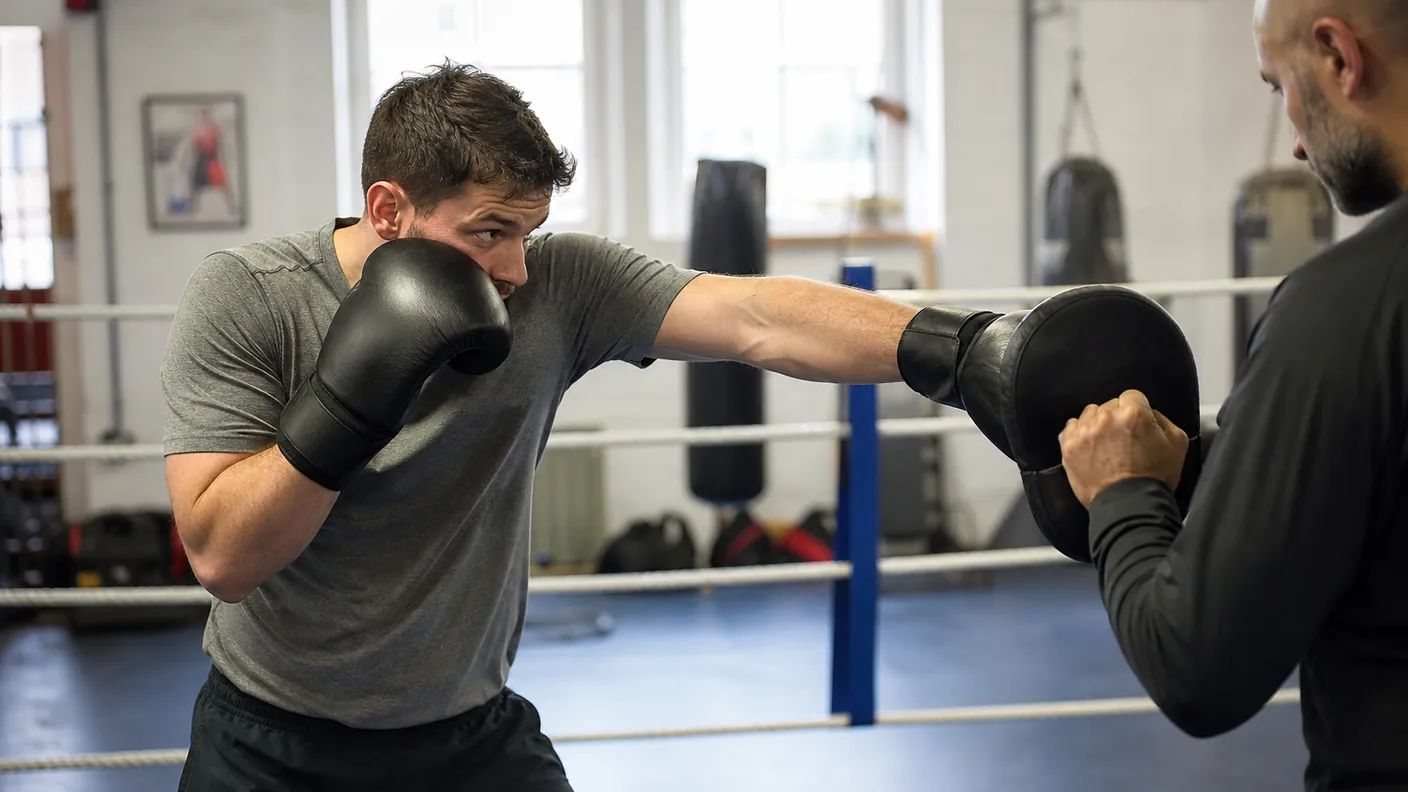
The Body Jab: A Safe Boxing Setup
Use a compact body jab to change the target, check range and set up the next decision without falling over your front foot.
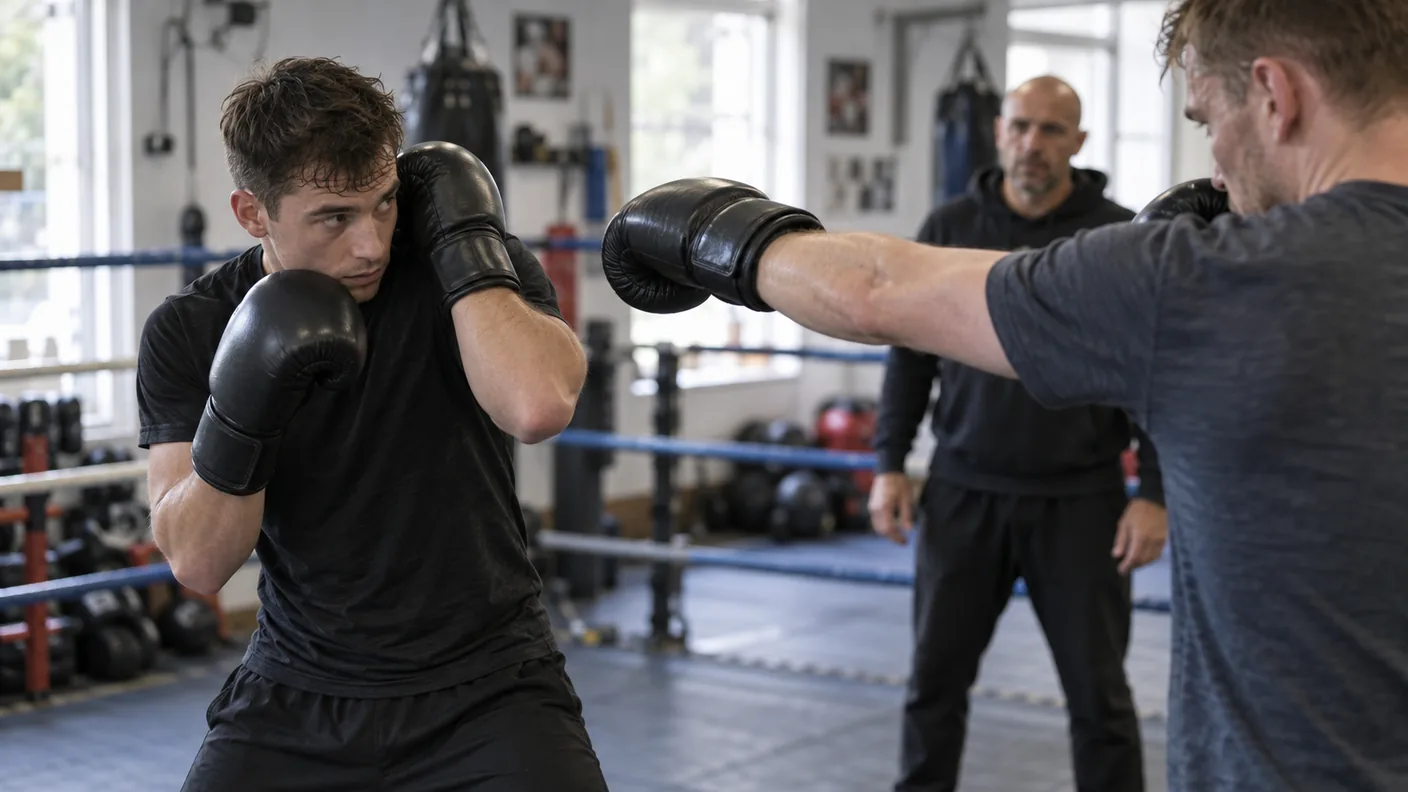
Elbow Parry: A Compact Jab Counter Drill
Use a compact elbow parry to close the jab line without reaching, then return to a balanced boxing stance before choosing a counter.
Was this page helpful?
It takes one tap, and it genuinely helps.
Choose your next step
Turn this article into the right action
Some readers are ready to book. Some need the class route first. Pick the route that matches what you actually want.