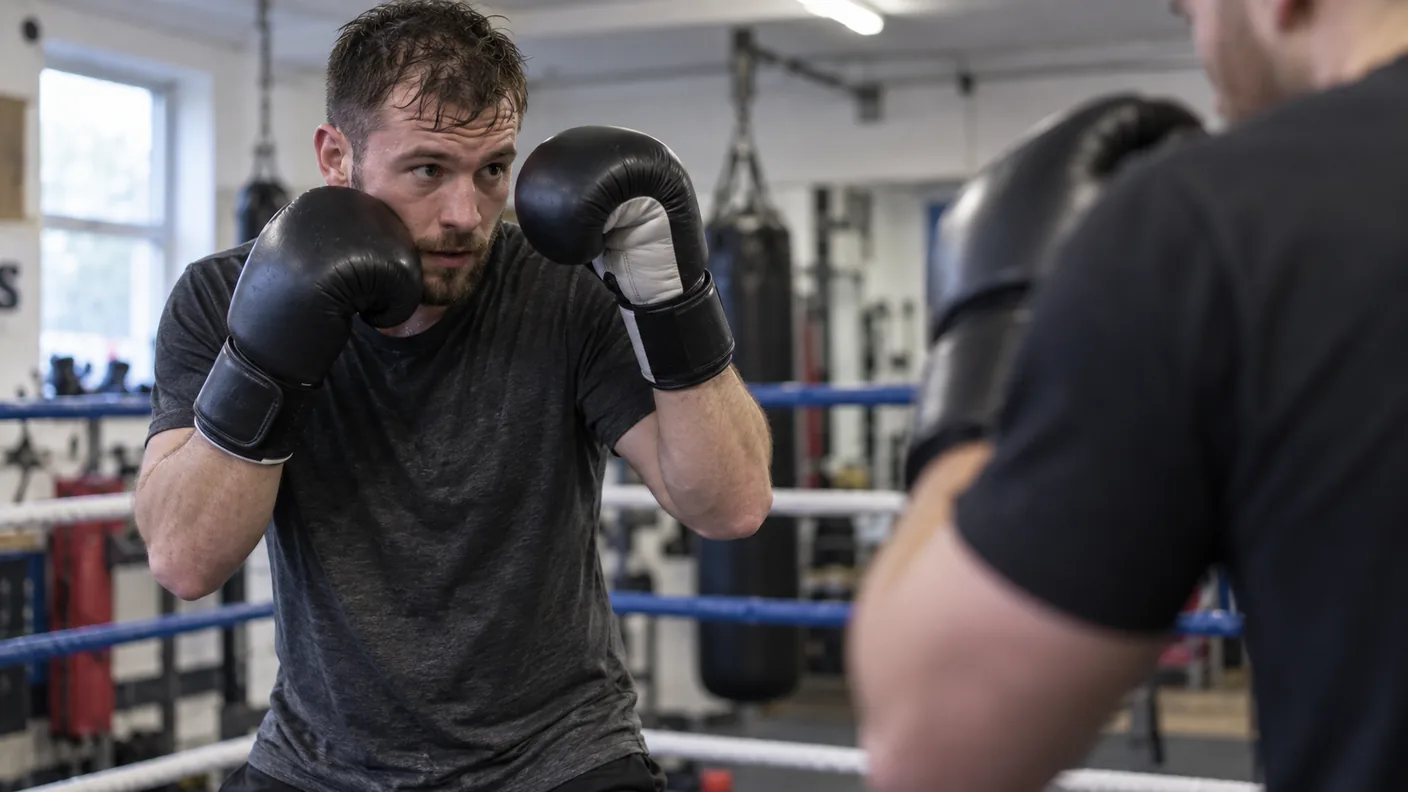
Most boxers learn to catch the jab with the rear glove first. That is still the right starting point.
The lead-hand catcher mitt is a later variation for a narrower job: making the lead hand a small defensive shield at the edge of range, then returning it quickly enough that you can jab, step or cover again. It is not a pose and it is not a licence to leave a hand hanging in front of your face.
Done well, the glove meets a probing jab close to your own space, takes a little sting off the line and gives you a moment to decide what follows. Done badly, it becomes a reaching palm that leaves the middle open.
The video below is useful for seeing the lightness of the catch and the immediate answer that can follow it. Treat it as a technical reference, then keep the practice slow and coach-led.
What the lead-hand catcher mitt is for
This is not a replacement for a normal guard. It is a small response to a predictable, reaching jab when you are settled at the edge of range.
Rather than trying to swat the punch away, the lead glove opens slightly and receives the jab near your defensive space. The elbow stays soft and the shoulder stays relaxed. Your rear hand remains near the cheek, because the first jab is rarely the only thing you need to consider.
The purpose is simple: make the jab land on your glove instead of your face, keep your eyes up, then return to a position where you can box. A controlled guard, balance and foot position matter more than collecting a clever-looking hand trap. England Boxing places those basics at the centre of effective technical development in its coaching handbook.
Keep the catch close to your own guard
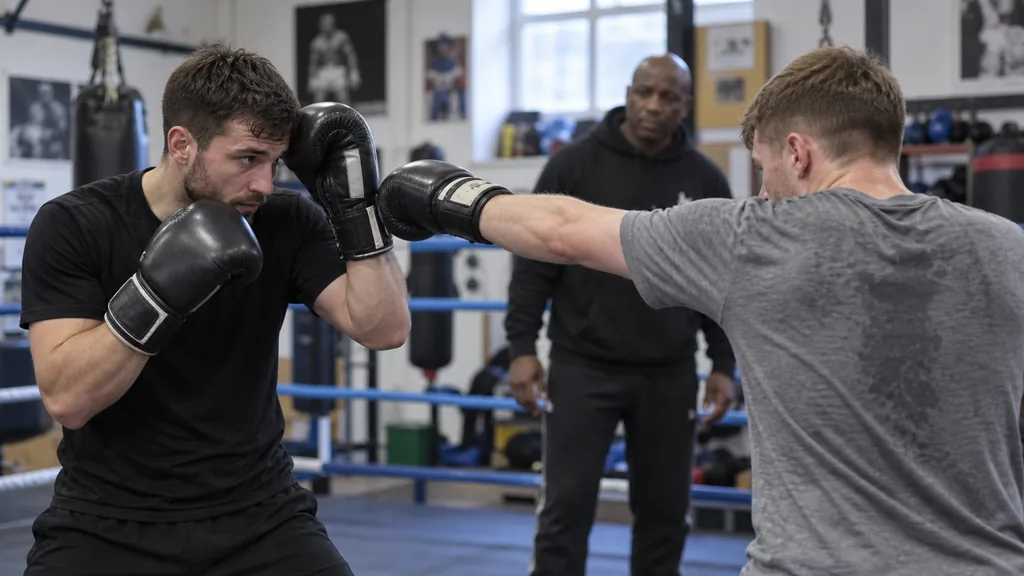
The catch happens close to home. If your glove has to travel towards the other boxer, you are reaching for the punch rather than defending it.
Start with the lead glove near eyebrow height, palm facing the incoming line rather than turned out like a stop sign. Let the jab arrive at the edge of your guard, take it with a short give in the elbow, then bring the hand back to its normal lane.
The body should not lurch with the glove. Keep the head between the feet, knees ready and chin tucked. If the shoulder twists open or the rear hand drops to watch the catch, the drill has become too ambitious.
This is why it belongs after a boxer already understands the standard jab defence options. A rear-hand catch, small slip, block or step out is often the simpler answer. The lead-hand version is useful only when it lets you stay organised.
Do not turn a catch into a hold
A defensive touch is brief. You meet the jab, feel the line, then release it.
Trying to grab, push or steer the other glove creates a different problem. Your lead hand gets busy, your feet stop and the other boxer can start working around the hand you have parked in front of them. In a controlled drill, that is a cue to reset. In sparring, it is a good way to lose the next exchange.
Think of the catch as a door closing for a moment. It does not need force. It needs timing and a return path.
A review of anticipation in combat sports found that more skilled athletes use early movement information more effectively than less skilled athletes (review of anticipation in combat sports). In practical gym terms, do not stare at the glove and react late. Watch the chest, shoulder and front foot so the lead hand is ready before the jab has travelled all the way in.
Build the catch before adding a counter
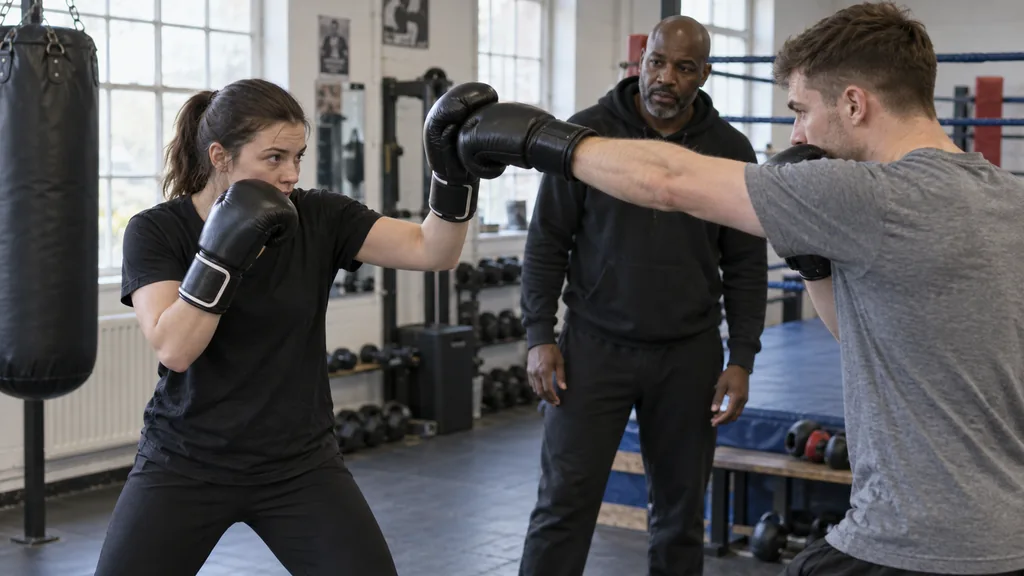
The common mistake is treating every successful catch as a guaranteed opening. It is not.
Sometimes the jab retracts quickly. Sometimes the other boxer steps out. Sometimes the rear hand is already lined up behind it. Your first job is to bring the lead glove back to a useful guard and see what is still available.
If the distance is honest, a light return jab can make sense. If the other boxer has moved away, reset and take the range again. If they are stepping forward behind the jab, cover, step or use the safer defence your coach has set for the drill.
The catch earns a decision. It does not force a pre-written counter.
The drill: catch, return, choose
Use a coach or a trusted partner. Work at a pace where both people can stop, correct and reset without contact becoming a contest.
Round one: catch and freeze
Partner A shows a slow jab to the lead-hand line. Partner B receives it with the lead glove, then freezes for one count.
Check the shape before repeating. Is the rear glove near the cheek? Is the chin down? Is the elbow bent? Are both feet still under the body? If not, reduce the range or speed before adding anything else.
Ten clean repetitions are more useful than fifty frantic ones.
Round two: catch and return to guard
Now Partner B catches the jab and immediately returns the lead glove to its ordinary guard position. No counter yet.
This is the part that makes the drill useful. The hand must not hover after the contact. It should come home as naturally as it would after a jab or parry.
Round three: catch, then make one decision
Partner A can now show one of three pictures after the jab: stay at range, take a small step back, or step forward behind a second cue.
Partner B catches and chooses one answer. At range, a calm jab to a coach-held mitt may be there. If the partner steps away, reset. If they close ground, bring the guard together or take a small exit rather than forcing the counter.
The standard is not speed. The standard is finishing in a position where you can defend again.
Four mistakes that make the drill worse
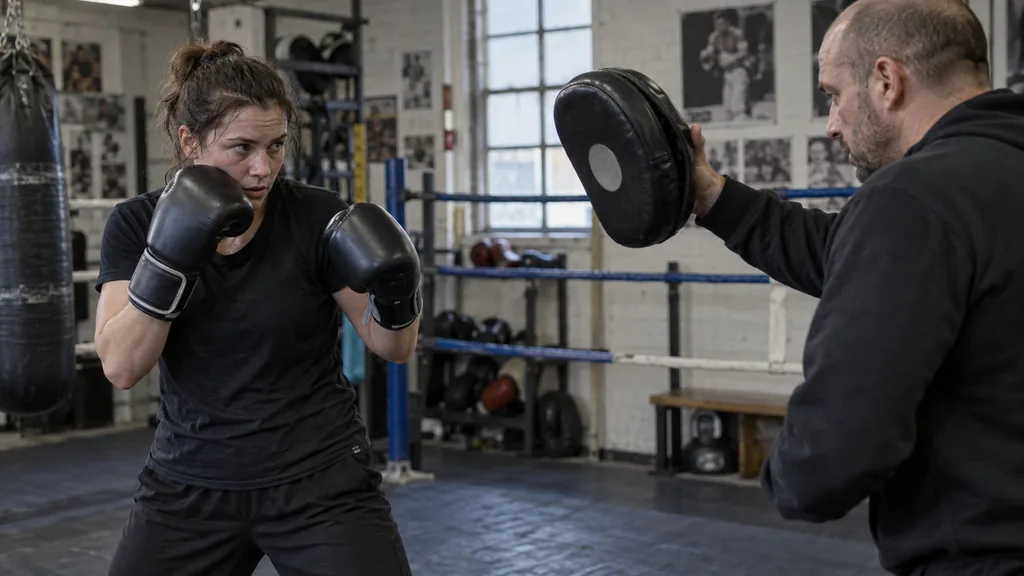
The first is catching too far from the face. If the lead hand reaches out to find the jab, the other boxer can change the line or throw behind it. Let the punch come into the edge of your guard.
The second is opening both hands. One glove is receiving the jab. The other needs to stay ready. If both gloves drift away from the head, you have solved one punch while inviting the next one.
The third is trying to counter before the lead hand has returned. A jab thrown from a stretched hand is slow and often leaves the shoulder over the front knee. Bring the glove home, then see whether the shot is truly there.
The fourth is treating the catch as an answer for every range. A sharp jab in close may need a compact block or slip. A jab thrown from too far away may not need a hand movement at all. Match the defence to the distance, not to the drill you have memorised.
Where it fits in training
Use the catcher-mitt drill after basic guard, jab and rear-hand catch work are settled. It works well in a short technical block before pads or controlled sparring, but it does not need hard sparring to teach the detail.
For a wider look at the lead hand as a range tool, read our guide to lead-hand control without reaching. The link between the two is restraint: the hand should give you information and protection without becoming something the other boxer can easily use against you.
For adults in Kidbrooke, Greenwich and nearby, our Recreational Adults boxing classes use controlled partner drills to connect guard, range and decision-making before the pace rises.
The coaching cue is simple: catch close, hand home, eyes up.
H&G Team
Writer at Honour & Glory Boxing Club, a community boxing gym in Kidbrooke, South East London.
KEEP READING
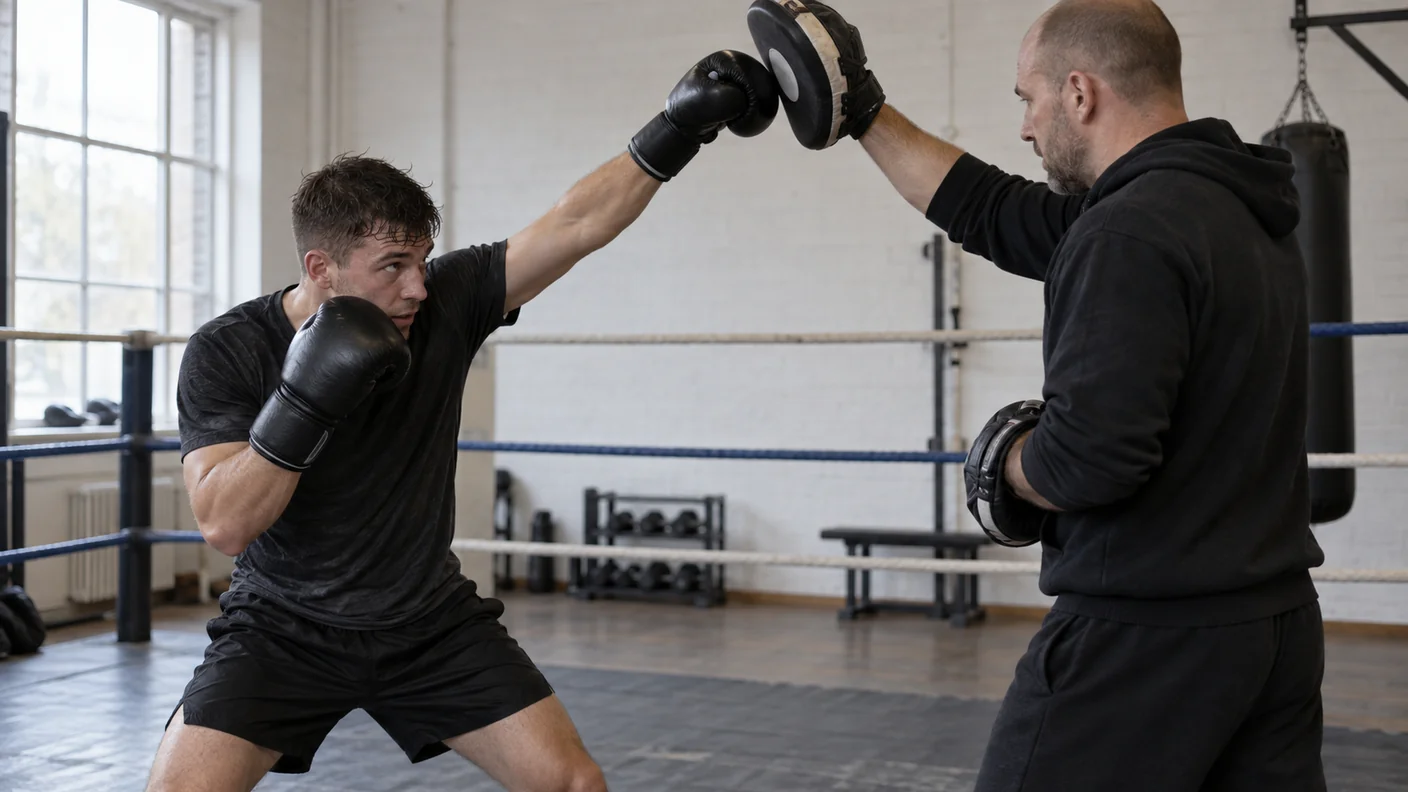
How to Use an Up Jab in Boxing
Use a compact up jab to change the line, test a high guard and keep your stance ready for the next decision.
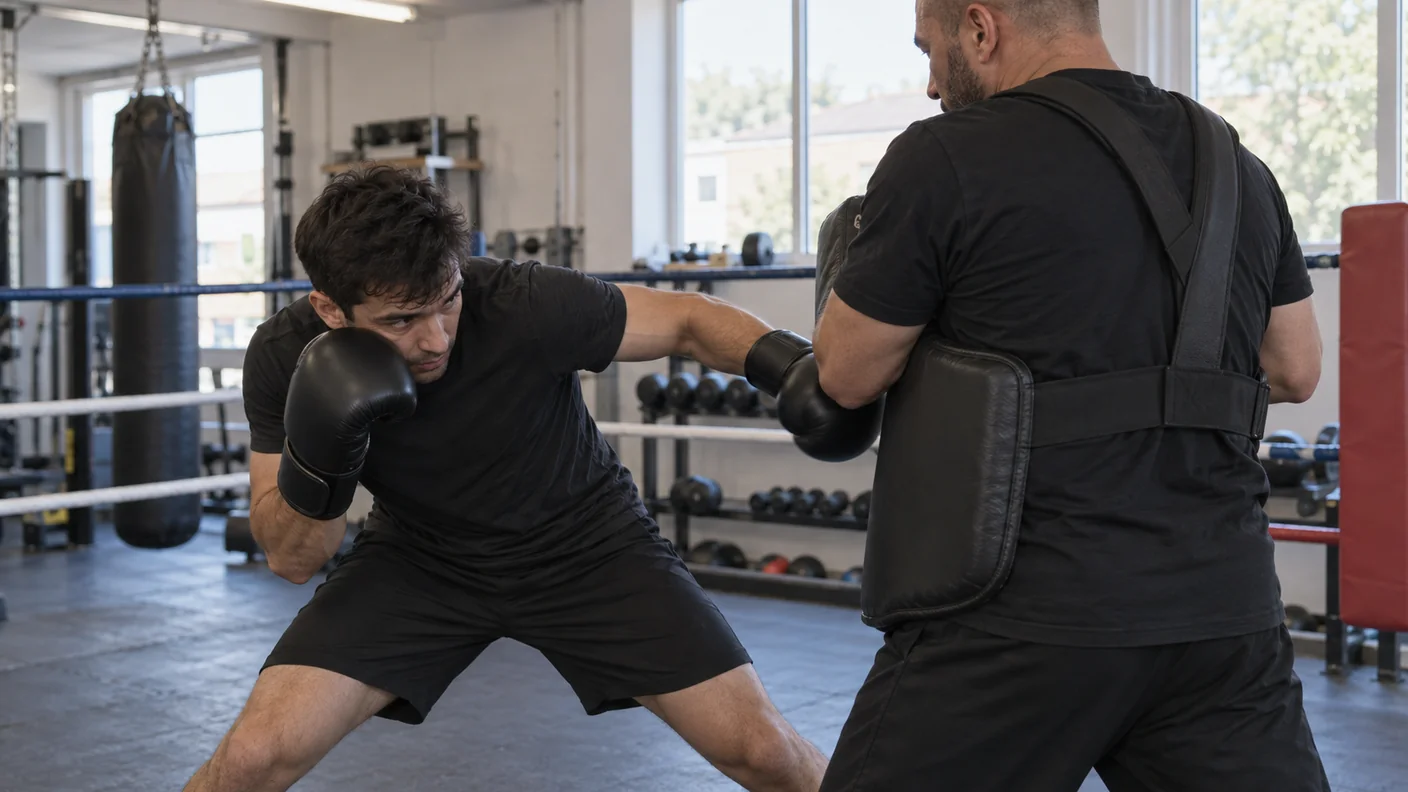
Inside Slip Lead Hook: A Controlled Jab Counter
Use a small inside slip and a compact lead hook only when the jab, range and guard make the counter an honest option.
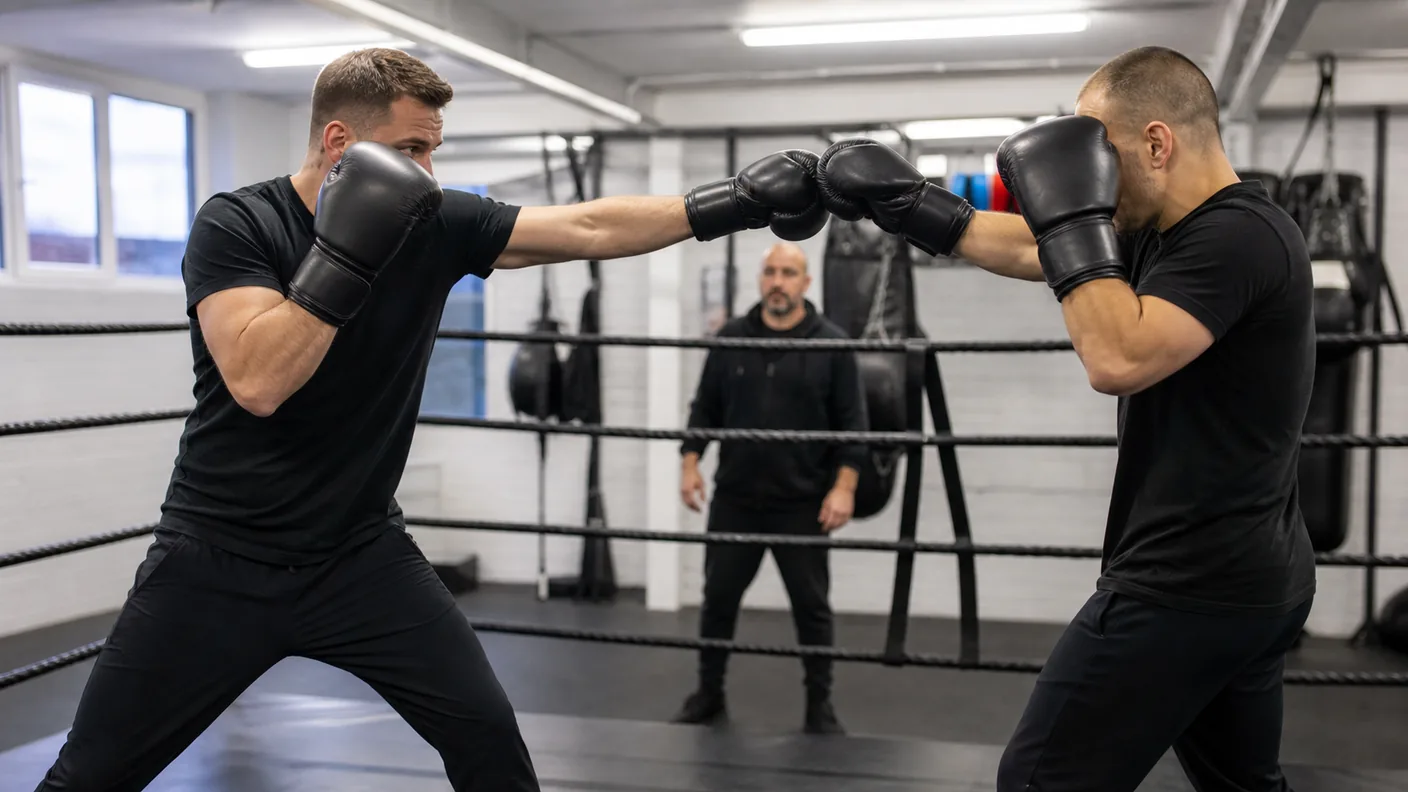
Lead Hand Control in Boxing Without Reaching
Use small lead-hand touches to disrupt the jab, manage range and create safer entries without turning boxing into an arm wrestle.
Was this page helpful?
It takes one tap, and it genuinely helps.
Choose your next step
Turn this article into the right action
Some readers are ready to book. Some need the class route first. Pick the route that matches what you actually want.