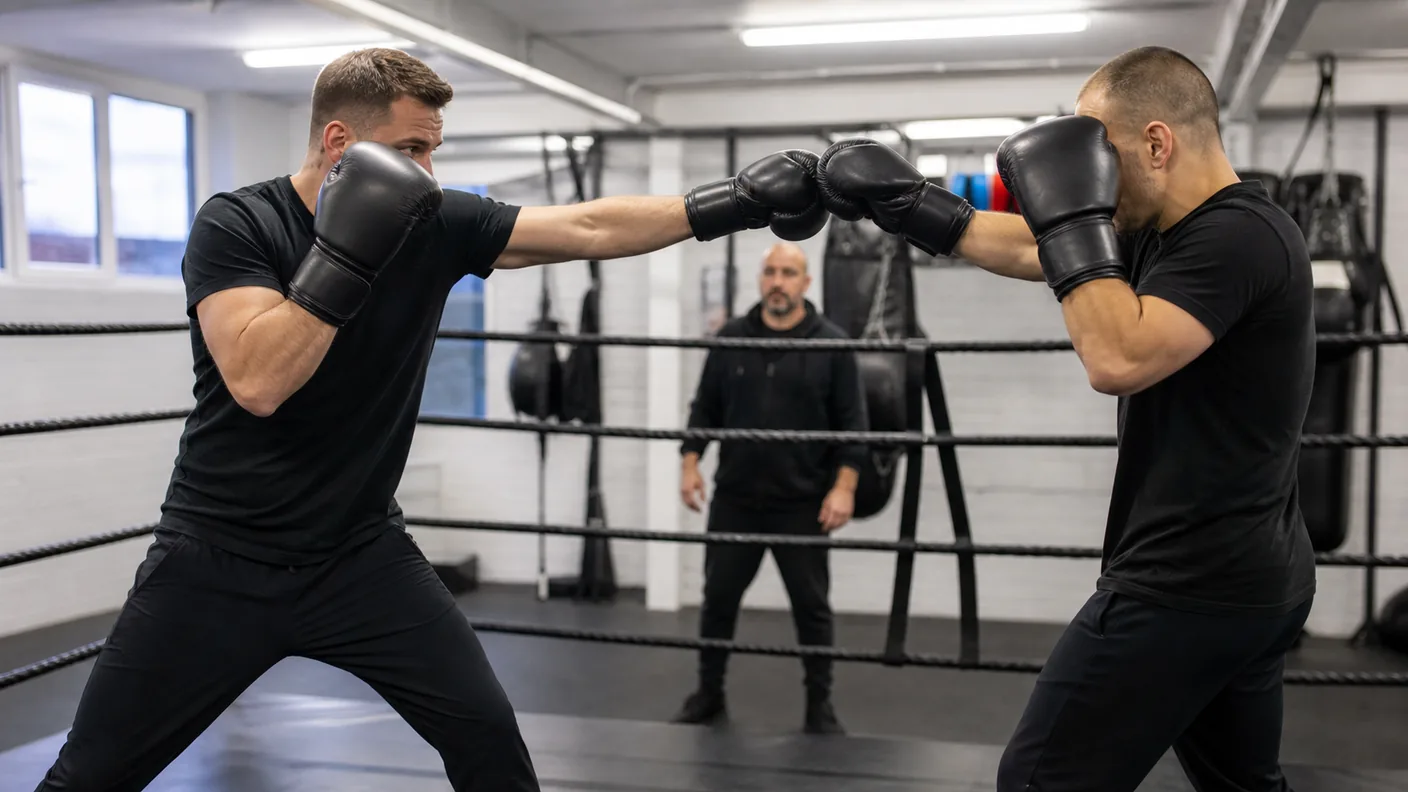
Lead-hand control is one of the small boxing skills that makes an opponent feel awkward before anyone has landed a hard punch.
At long and middle range, both boxers are trying to use the same strip of space. The lead hand can jab through it, touch it, parry through it or hold the other person at the end of a punch. If you can make their lead hand hesitate, you can make their jab late. If your own lead hand stays tidy, you can see range more clearly and enter without walking into a straight shot.
That does not mean slapping gloves until somebody gets annoyed. Good lead-hand control is light, brief and attached to stance. It gives you information or changes a line for a moment, then your hand comes back ready to box.
The video below gives a useful visual reference. Watch the small hand positions, the settled feet and the way the boxer does not chase every touch.
What lead-hand control is actually for
The point is not to win a hand fight. The point is to make the first clean punch harder for the other boxer to find.
In an orthodox versus orthodox matchup, both lead hands sit on the same side of the centre line. That means a small touch on their glove can interrupt the jab lane, a light parry can move a straight shot away from your face, and a brief post can tell you whether they are stepping in or standing still.
None of those actions should leave your own chin or rear hand exposed. If the lead glove is doing something clever while the rear hand has wandered down, you have traded one problem for another.
England Boxing puts balance, guard and controlled footwork at the centre of effective punching and defence in its coaching handbook. That is the useful test for every lead-hand touch. Could you still punch, cover or take a step away from the position you have made? If not, the hand has stayed out too long.
Keep the touch small and the elbow alive
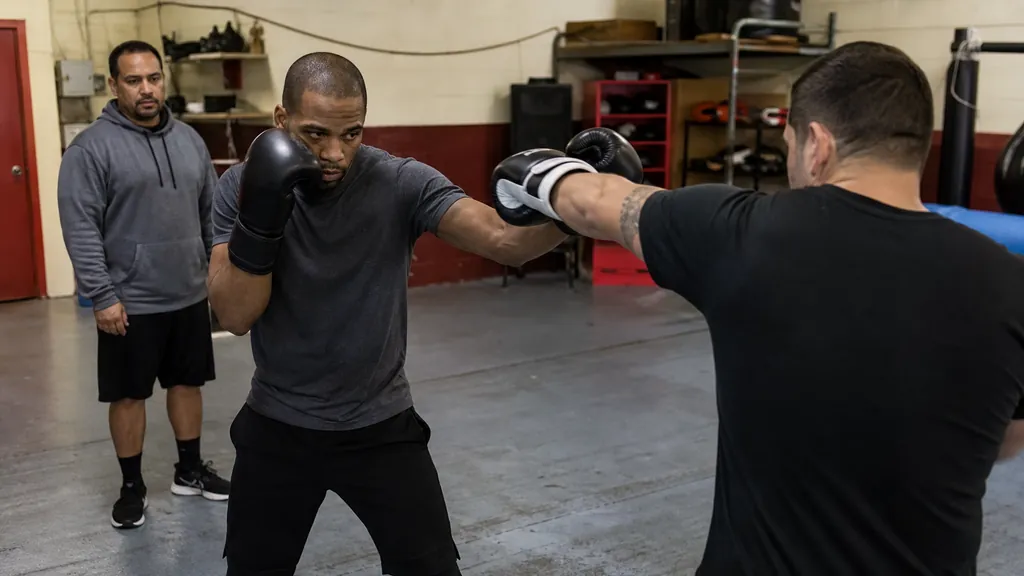
A useful touch is normally no more than a few inches. You may press lightly against the opponent's glove, brush their jab aside or place your palm against their lead glove for a moment. The elbow stays soft enough to retract, parry or jab from the same position.
The mistake is reaching for their hand from too far away. Your shoulder comes forward, your head follows it and your feet stop underneath you. Now they can pull you into range, drop under the reaching hand or fire the rear straight down the middle.
Think of the lead hand as a feeler, not a handle. You are checking whether the opponent is present on the line. You are not trying to steer them around the ring.
There is a simple check. After every touch, ask whether you could take your lead hand straight back to your eyebrow without moving your feet. If you need a big shoulder pull or an extra step to recover, shorten the touch.
For the longer version of this range problem, read our guide to long guard boxing and range control. A long guard gives you a reference at the edge of range. Lead-hand control becomes more useful when both people are close enough that the jab lanes are competing for the same space.
Use the hand to read the step, not just the glove
Do not stare at the other boxer's knuckles. The glove is only one part of the picture.
When you make a light connection with their lead hand, look at the chest, shoulders and front foot. A boxer who presses forward through your glove may be about to close the distance. A boxer who pulls their hand away may be looking to draw your jab. A boxer whose lead shoulder twitches before their glove moves may be about to throw.
You do not need to guess perfectly. You need to notice enough that you do not stand in front of a predictable line.
A systematic review of anticipation in combat sports found that more skilled athletes use early movement information more effectively than less experienced athletes. In a boxing class, that means reading the start of the movement rather than waiting for the glove to arrive at your face.
The hand touch gives you a fraction more time to make a basic decision. You can jab, parry and return, take a step out, or bring both gloves home and reset. That is plenty. Do not turn a useful read into a long sequence because you want to look clever.
Three safe ways to use lead-hand control
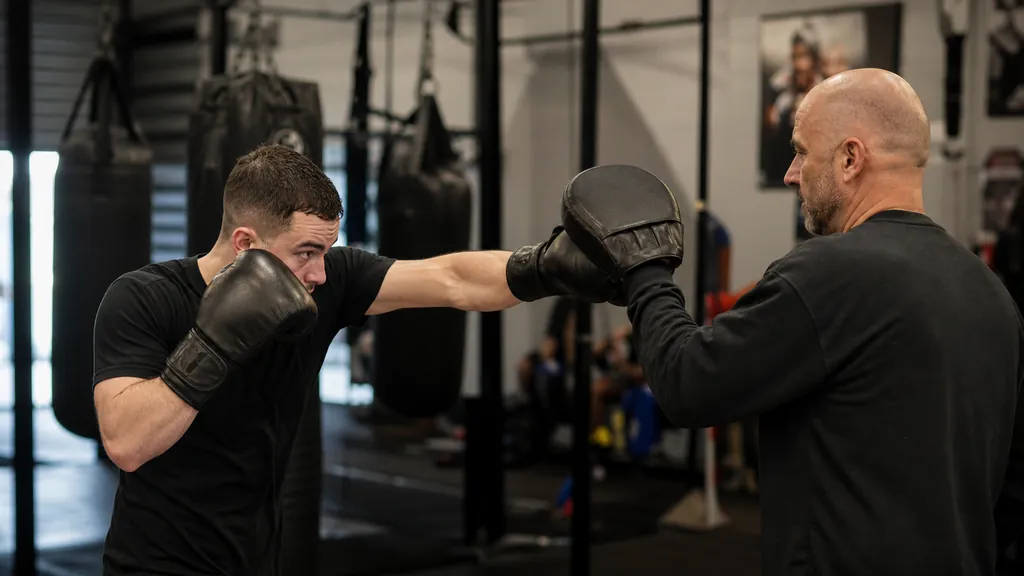
Touch and jab
Place the lead glove lightly against the opponent's lead glove, then bring it home and jab on a fresh rhythm. The touch is not a shove. Its job is to make the other boxer feel your hand and briefly question their jab lane.
Use this on a mitt or a controlled partner drill first. If the other person starts reaching back at every touch, your jab can appear while their hand is away from the centre.
Parry and return
When their jab comes, use a short lead-hand parry to move it just outside your shoulder line, then return a jab or take a small step out. The rear hand remains high. Do not sweep the jab across your own body and leave the middle open.
This differs from a rear-hand catch. The lead-hand parry is usually a quick change of direction. It works only when the hand can return immediately.
Light post and exit
At the edge of middle range, a light open-palm post on the lead glove or upper chest line can give you a reference before you step away. It is not a push and it is not licence to hold. Use it to stop yourself drifting too close, then leave on an angle or reset at jab range.
If the opponent is already throwing hooks or crowding you, bring the hand home. This is not an inside-fighting solution. A conventional guard, a cover or a coached clinch is safer when the range has collapsed.
The drill: touch, read, choose
Use this drill with a coach or a partner who can keep the speed technical. No hard contact to the head and no contest over who can win the hand battle.
Round one: make contact without reaching
Stand at the edge of jab range. Both boxers can touch the outside of the other lead glove, then return to guard. No punches yet.
The coach should watch for two errors: a locked elbow and the head drifting over the front knee. If either appears, move back half a step and make the touch smaller.
Round two: add one clear response
Partner A touches. Partner B chooses one slow response: a jab, a step in or a hand withdrawal. Partner A must recognise the response and make one safe choice.
Against the jab, use a compact parry or a cover. Against the step in, step out or bring the guard tight. Against the hand withdrawal, a single jab may be there. If it is not, do not chase it.
This is where the drill becomes boxing rather than choreography. The response changes. Your job is to stay in stance and choose the answer that fits.
Round three: one punch, then leave
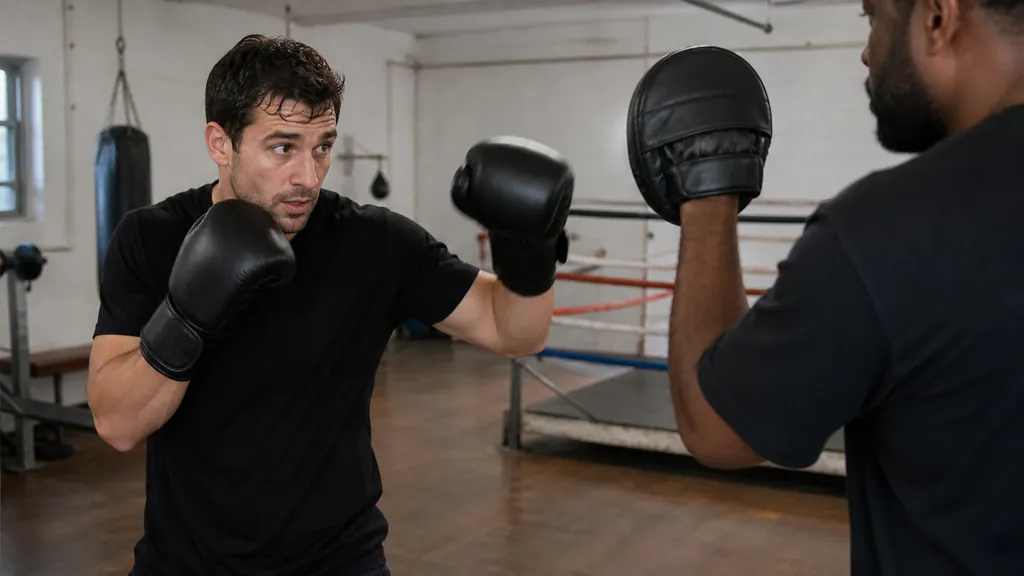
Add a coach-held mitt after the chosen response. Partner A can touch, see the picture, land one controlled jab or straight shot on the mitt, then leave the line.
Finish in a position where you can defend again. A good repetition is not the one with the loudest pad crack. It is the one where your hand is home, your feet are under you and your eyes are still on the partner.
The mistakes that make it useless
The first is turning it into an arm wrestle. If you are pushing, gripping or holding their glove, you are no longer managing a line. You are standing still with one hand occupied.
The second is touching without a reason. A touch should help you find range, interrupt a jab, read a step or set a simple punch. Random hand movement gives away rhythm without asking anything useful in return.
The third is forgetting the rear hand. Your lead hand might be busy, but the straight shot you do not see still comes down the middle. Keep the rear glove close enough to catch, cover or return.
The fourth is treating every touch as an entry. Sometimes the right decision is touch, notice the pressure, and step away. That is not passive. It is better than forcing a jab when the other boxer has already taken the range.
Our guide to defending the jab in boxing covers the next decision in more detail. The lead hand can help deny the line, but you still need a catch, slip, block or exit when the punch comes through.
Where this fits for beginners
Lead-hand control suits a boxer with a basic stance, a reliable guard and an understanding of the jab. It does not require hard sparring. Pads, glove touches and pre-agreed partner drills are enough to learn the shape.
Keep the first sessions slow. Work on one touch and one decision. Add the jab only when the feet remain settled. The boxer who can make a small adjustment and stay balanced will improve faster than the boxer who knows six ways to slap a glove.
For adults in Kidbrooke, Greenwich and nearby, our Recreational Adults boxing classes use controlled partner work to connect guard, range, footwork and simple attacks. You can learn the details without needing to jump straight into hard sparring.
The coaching cue is simple: touch the line, read the step, then bring your hand back ready to box.
H&G Team
Writer at Honour & Glory Boxing Club, a community boxing gym in Kidbrooke, South East London.
KEEP READING
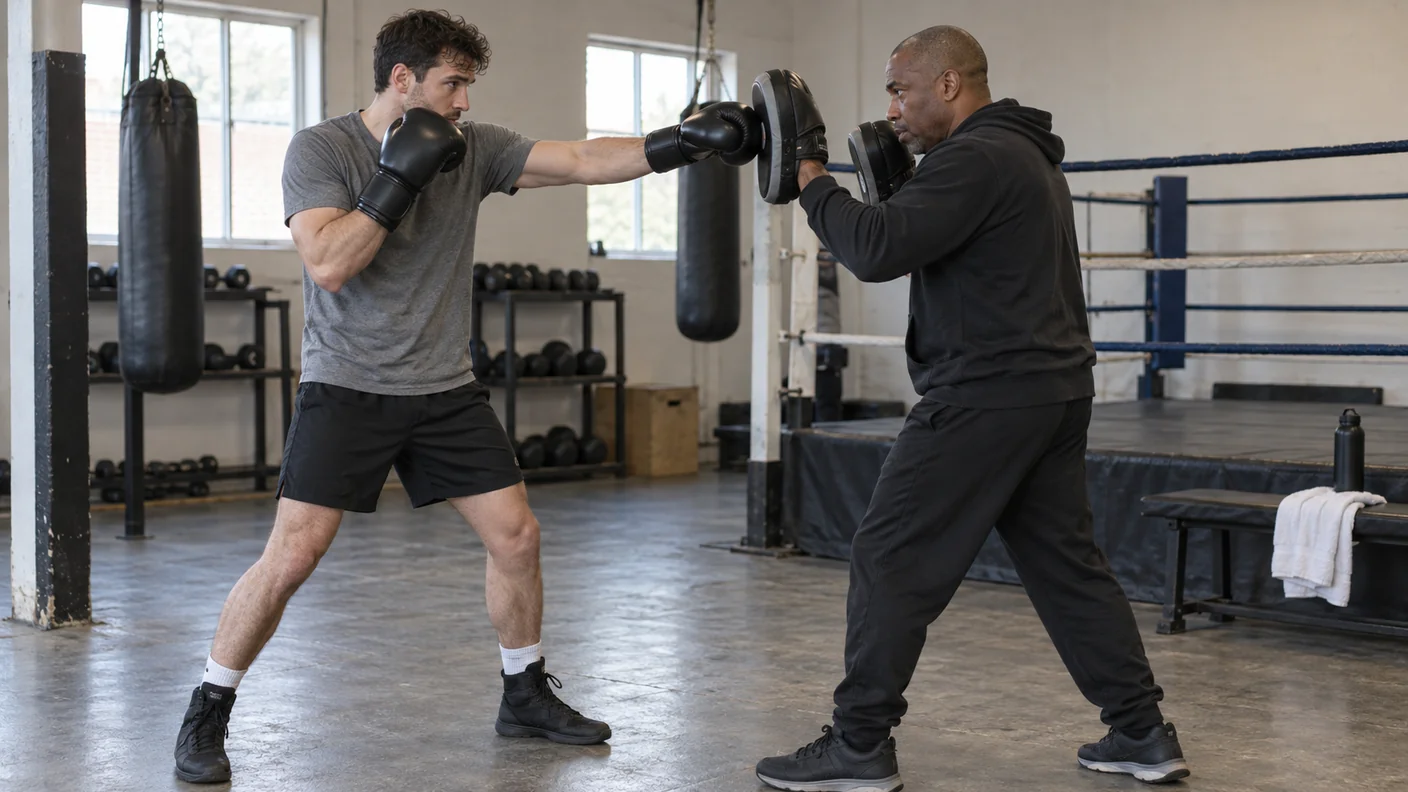
Lead-Hand Frame to Lead Uppercut: A Safe Drill
Use a brief lead-hand frame to find close range for a compact lead uppercut without pushing, holding or losing your guard.
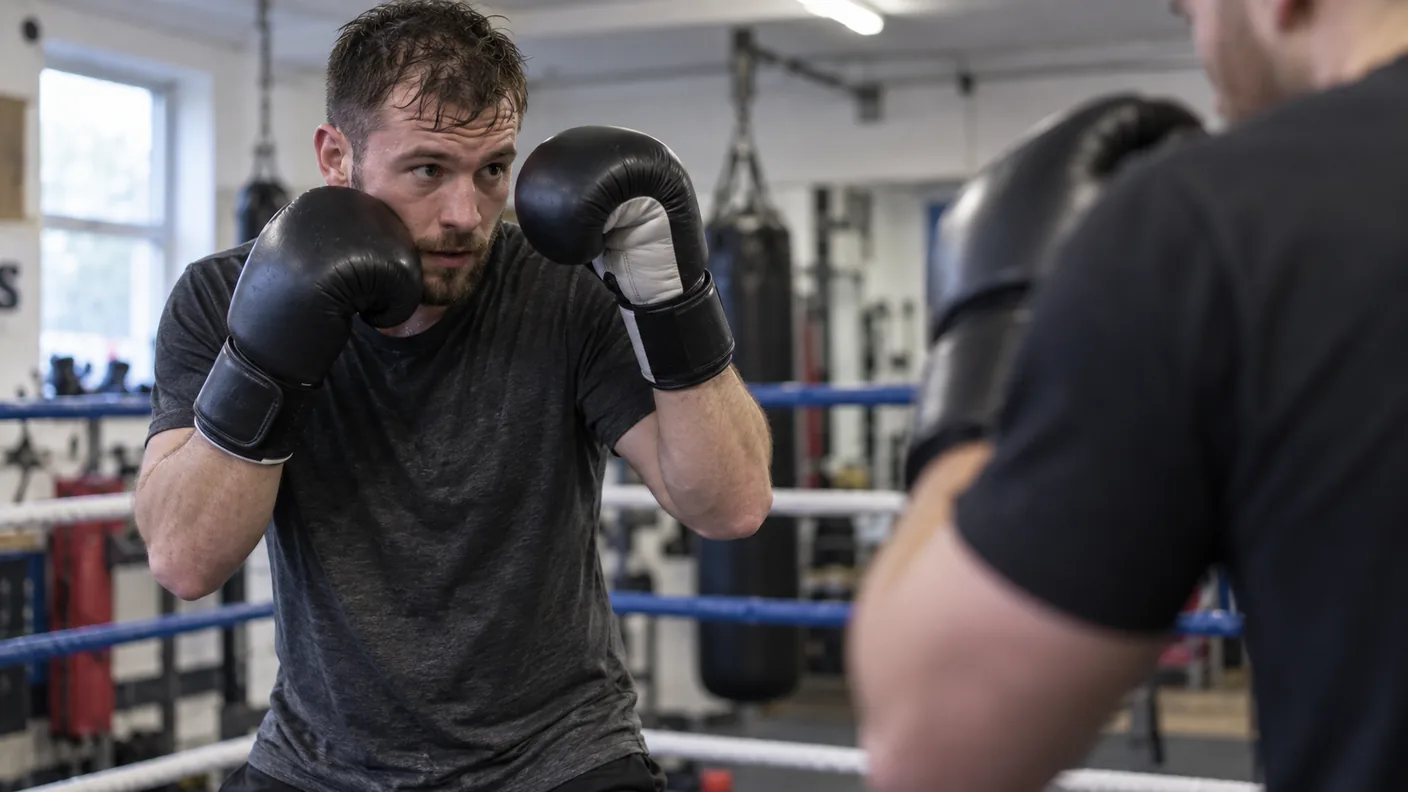
Lead-Hand Catcher Mitt: A Jab Defence Drill
Use a light lead-hand catch to manage the jab line, then return to guard before adding a calm counter or exit.
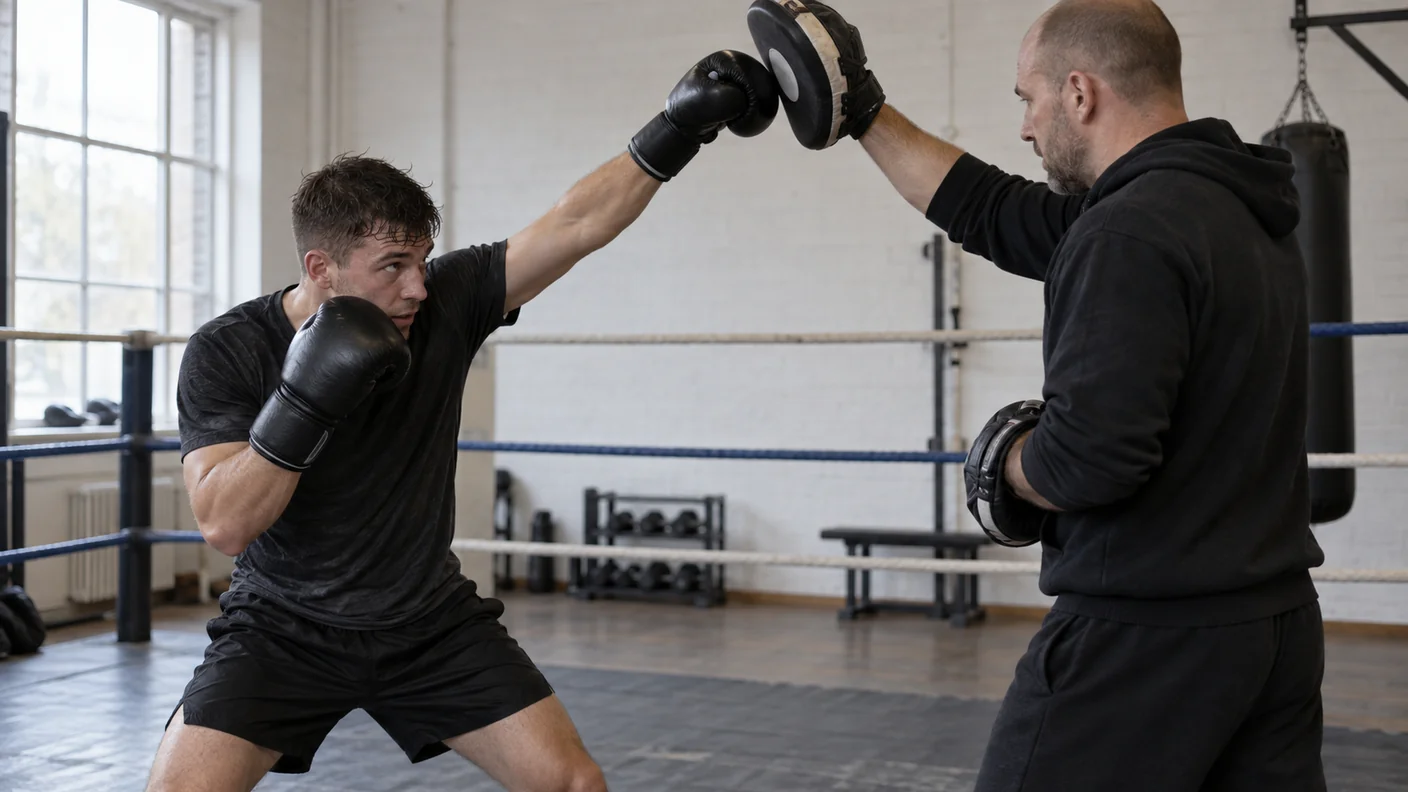
How to Use an Up Jab in Boxing
Use a compact up jab to change the line, test a high guard and keep your stance ready for the next decision.
Was this page helpful?
It takes one tap, and it genuinely helps.
Choose your next step
Turn this article into the right action
Some readers are ready to book. Some need the class route first. Pick the route that matches what you actually want.