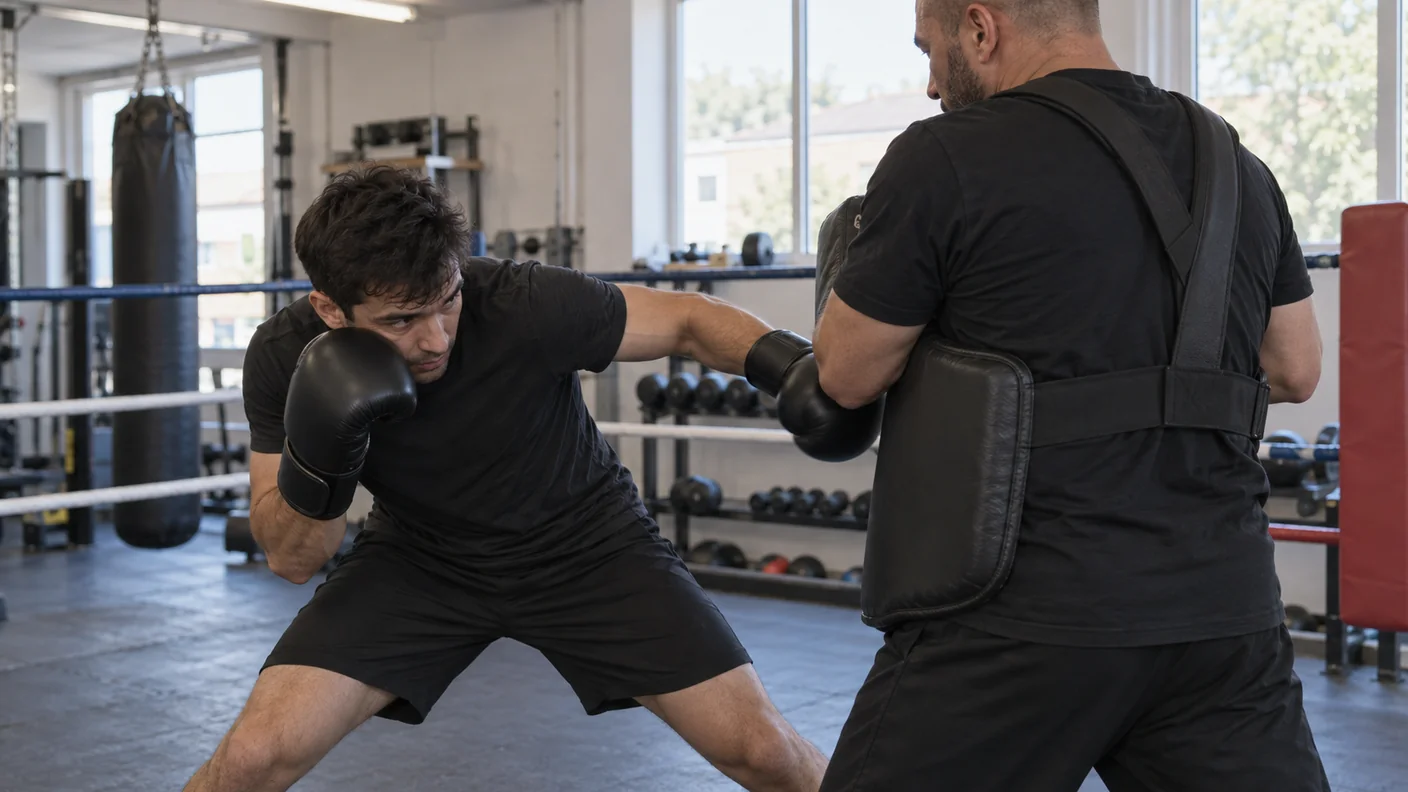
The inside slip lead hook is a tempting answer to a jab. You move just off the line, your lead side is ready, and the hook can feel as if it is already loaded.
That does not make it a beginner shortcut. Moving inside a jab puts you close to the other boxer's rear hand. If you make the slip too large, throw the hook too wide or stay in front after it, you have traded one clean problem for several worse ones.
The useful version is quiet. Read a single jab, move the head only enough to clear it, touch a coach-held mitt with a short lead hook if the range is right, then recover the guard and leave or reset. Watch the short demonstration below, then use the progressions to make the counter disciplined rather than dramatic.
The counter begins with a small defensive movement
For an orthodox boxer facing orthodox, an inside slip takes the head slightly to the left of the incoming jab. Southpaws reverse the picture. The key word is slightly.
Bend the knees a little, turn the lead shoulder in and let the head leave the centre line by a few centimetres. Keep the spine organised and the eyes forward. Your feet should remain beneath you, not cross or reach after the jab.
A systematic review of anticipation in combat sports found that more experienced athletes use early body cues more effectively. In a normal class, that means seeing the shoulder and glove begin to travel, then making a calm movement before the jab is already on your face.
The mistake is treating an inside slip like a duck under a clothesline. A deep fold at the waist can take you below the jab, but it can also hide the other boxer's next punch and leave the rear hand too far away to help. Move the head, not your whole posture.
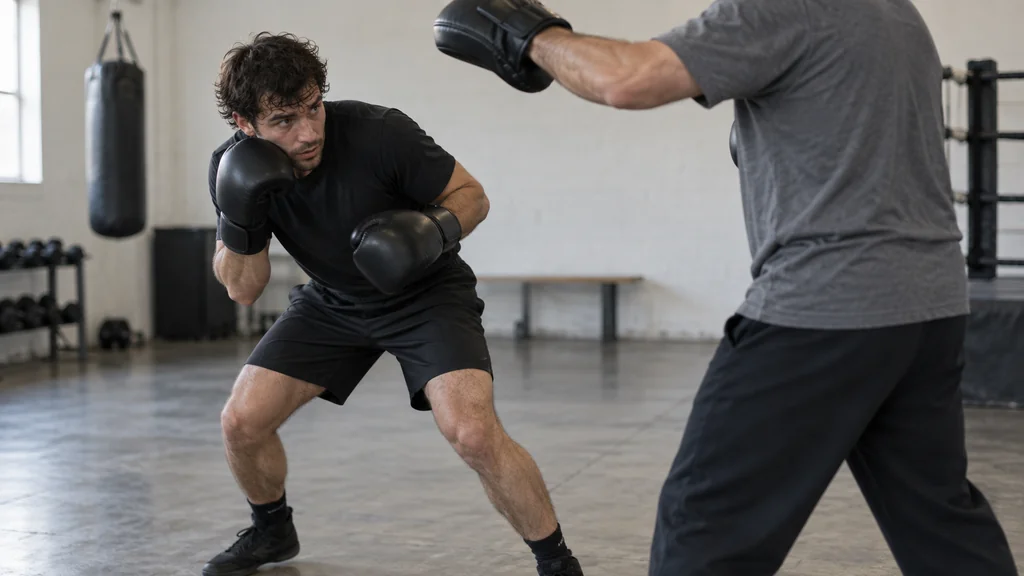
Use a mirror test before adding the hook. Start in stance, slip inside, then freeze. If you can still see forward, cover your chin, take a small step and throw a straight punch without first rearranging your feet, the slip is probably the right size. If you feel stuck over the lead knee, make it smaller.
For the wider foundation, read how to defend the jab in boxing. A catch, slip, block or step each has its place. The inside slip is not the answer to every lead hand.
Why the lead hook can follow the slip
A compact lead hook works from the lead side. An inside slip moves your body towards that side, so the punch can arrive without a big visible wind-up.
That is the technical opportunity, not a promise that the hook is always safe. You are also moving into a busy line. A jab-cross, an opponent who has held their ground, or range that is too long should end the idea. Cover, step out or return to stance instead.
Keep the rear glove at the cheek while the lead hand works. The non-punching hand is not decoration. It is your protection while you are close enough for the other boxer to answer.
England Boxing's coaching handbook repeatedly returns to stance, balance and a controlled skill progression. That is a sensible standard here. If your hook pulls the head forward, drops the rear glove or leaves the feet square, it is not ready for a moving partner.
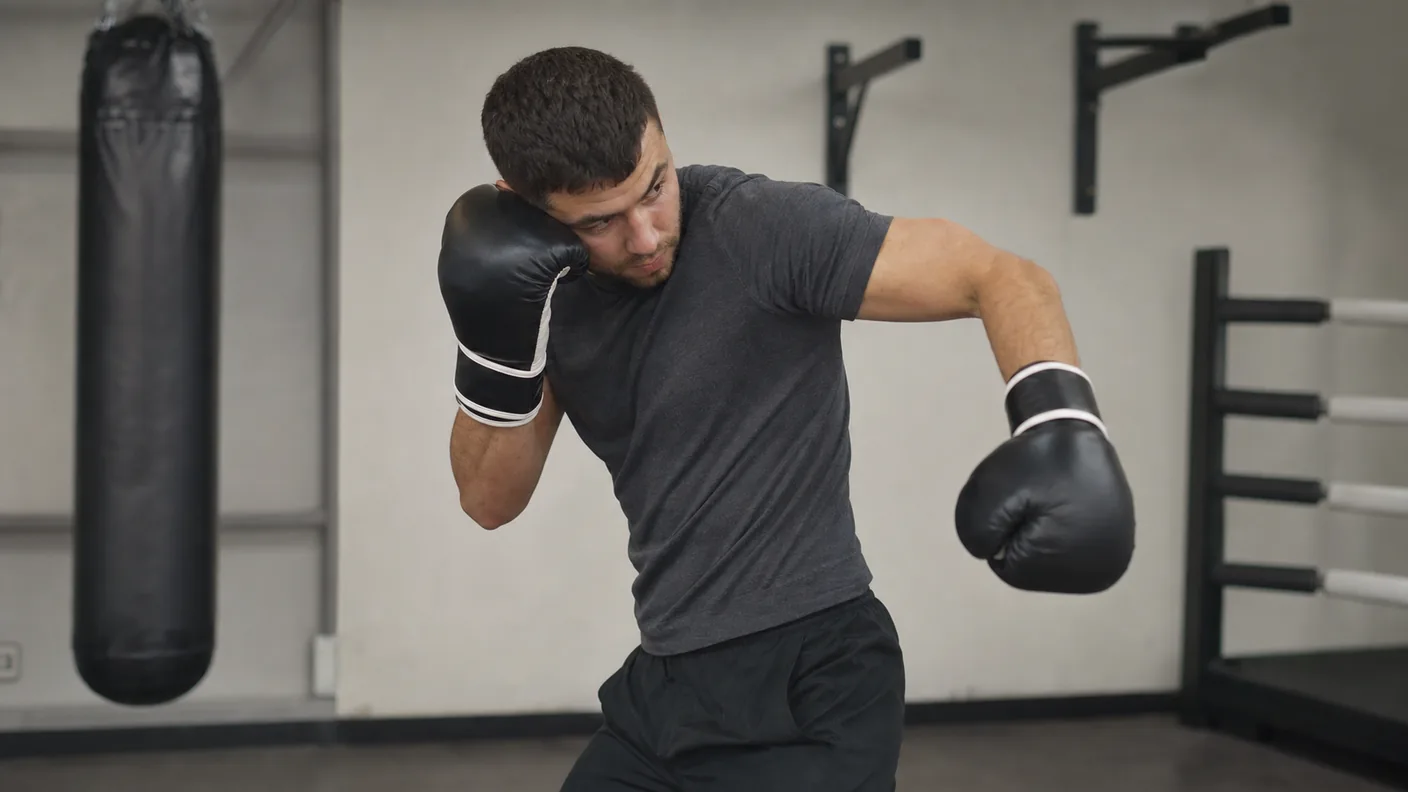
The hook itself needs a short path. Let the lead hip turn, keep the elbow bent and send the glove to a coach-held mitt at honest mid-range. Do not pull the hand back to announce it. Do not chase a target that has moved away.
This differs from the body version explained in slipping inside a jab for a body hook. A head-level lead hook needs a clear line round the guard and a quicker recovery. Both options begin with the same rule: the defensive movement must be sound before a counter is considered.
Learn the shape before adding speed
Start with a coach and one focus mitt, or with a partner who is prepared to feed the same slow single jab. No hard contact is needed.
Round one: slip and hold
Partner A shows one light jab line. Partner B slips inside by a small amount and holds the position for one beat. There is no hook yet.
The coach checks three things: eyes remain forward, rear glove stays close to the cheek and the front knee is bent without collapsing forwards. If one of those fails, slow the jab down rather than trying to correct it with speed.
A useful cue is "nose off line, feet under you". It keeps the movement compact and gives the boxer something practical to check after every repetition.
Round two: slip and touch the mitt
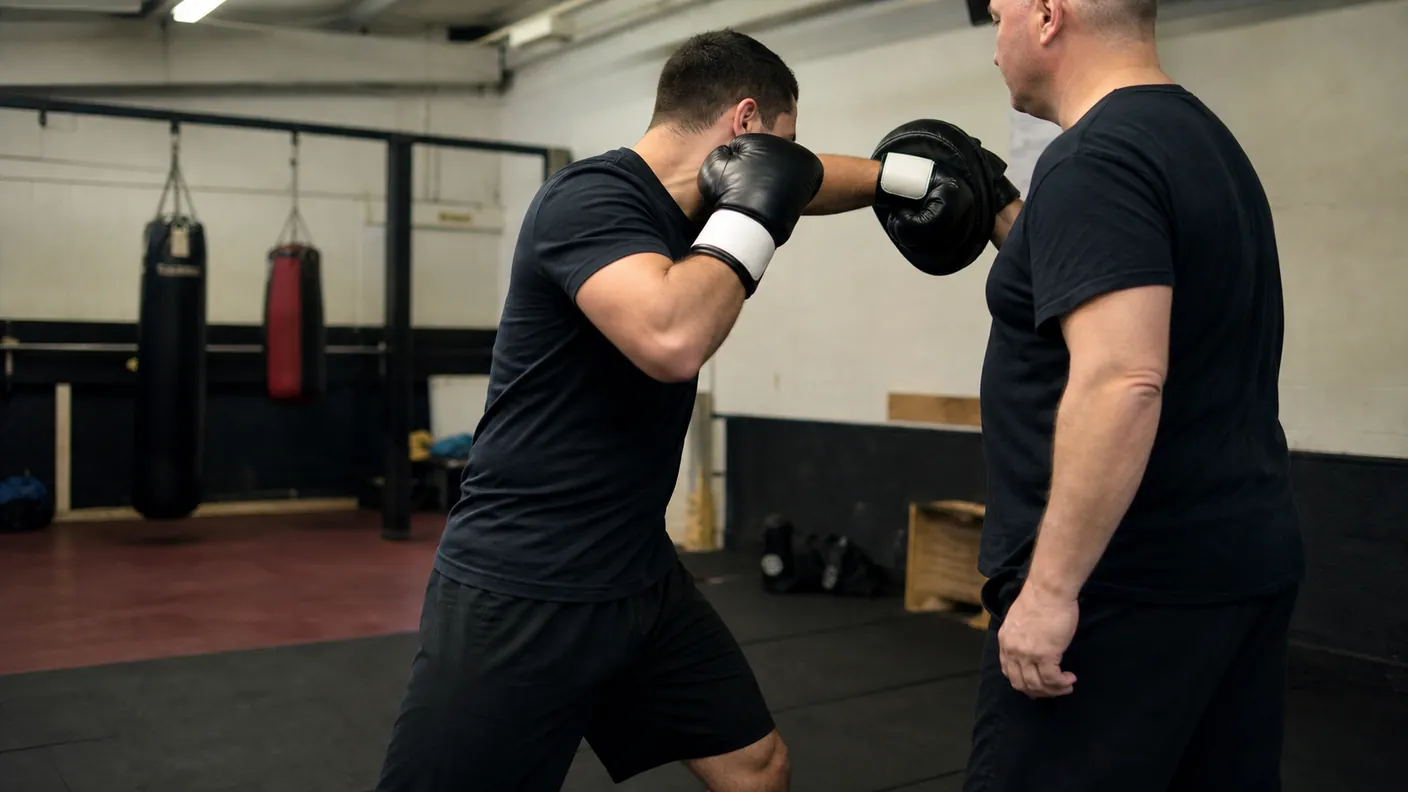
Now the coach presents a lead-hook mitt only after the slip. Partner B makes the slip, touches the mitt at low power, brings the lead glove straight back to guard and freezes again.
The mitt is not always a signal to hit hard. It is a test of position. If the hook needs an arm stretch, a lunge or a second effort to reach, the range was not there. Reset rather than turning a clean drill into a reach.
A review of boxing technique and performance describes punching, movement, defence, distance and tactical choices as connected tasks. You can feel that connection here. The slip does not excuse a poor hook, and the hook does not repair a poor slip.
Round three: decide whether the counter exists
In the third round, the coach or partner varies the picture. Sometimes there is one clear jab and a mitt. Sometimes there is a jab followed by a second controlled cue. Sometimes there is no mitt at all.
On the clear single jab, slip and touch the hook mitt. On the second cue, slip, bring both gloves home and take a small exit. When no target appears, reset.
That is the actual lesson. You are not learning a combination that must follow a jab. You are learning to recognise when a short counter belongs, and when it does not.
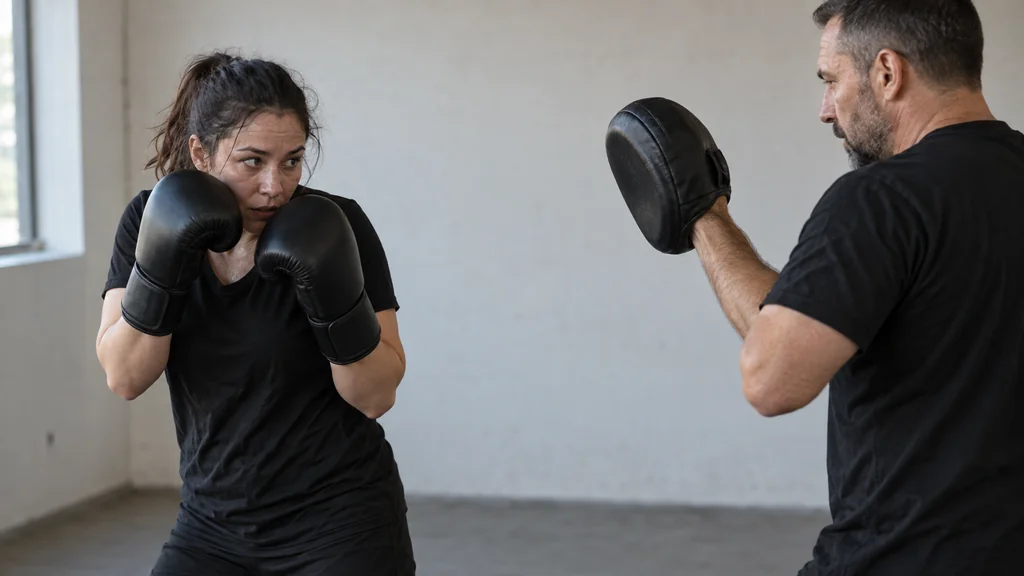
The exit keeps the counter honest
The inside line is not a place to admire your work. After the hook, you are still close. The other boxer may return with a hook, straight shot or pressure step.
Bring the lead glove home as the shoulder comes back towards stance. Then choose one simple finish: take a short step away to the lead side, cover and reset in place, or turn out if a coach has taught that option safely.
Avoid the theatrical leap backwards. A big retreat often leaves the feet square and gives away your next move. A modest exit lets you see what is happening and keeps your stance useful.
Try this short sequence on pads: slip, touch the lead hook mitt, guard, one step out. Pause. If you cannot finish in a position where you could jab or cover, remove the hook and return to the first round.
Five mistakes to stop early
The first is slipping too far. You only need to clear the jab, not move your head across the room.
The second is entering before the jab has committed. Guessing the slip turns a counter into a gamble. Let the partner give a real cue.
The third is throwing the hook at long range. A lead hook needs you close enough to turn through it without reaching with the head.
The fourth is dropping the rear hand. You are moving towards the opponent's rear side, so that glove must remain available.
The fifth is making the hook compulsory. If the jab comes with another punch, the mitt is absent or your feet have lost their shape, cover and reset. That is good boxing judgement.
The coaching cue
Slip small, hook short, leave organised.
Start on pads and controlled partner work. Let the coach control the cue and the pace. A clean inside slip lead hook is not about showing bravery in the pocket. It is about seeing one honest moment, taking it without losing your guard, and being ready for the next decision.
If you are in Kidbrooke, Greenwich or nearby, our Recreational Adults boxing classes use pads, coached partner drills and technical rounds to make counters useful without rushing people into hard exchanges.
H&G Team
Writer at Honour & Glory Boxing Club, a community boxing gym in Kidbrooke, South East London.
KEEP READING
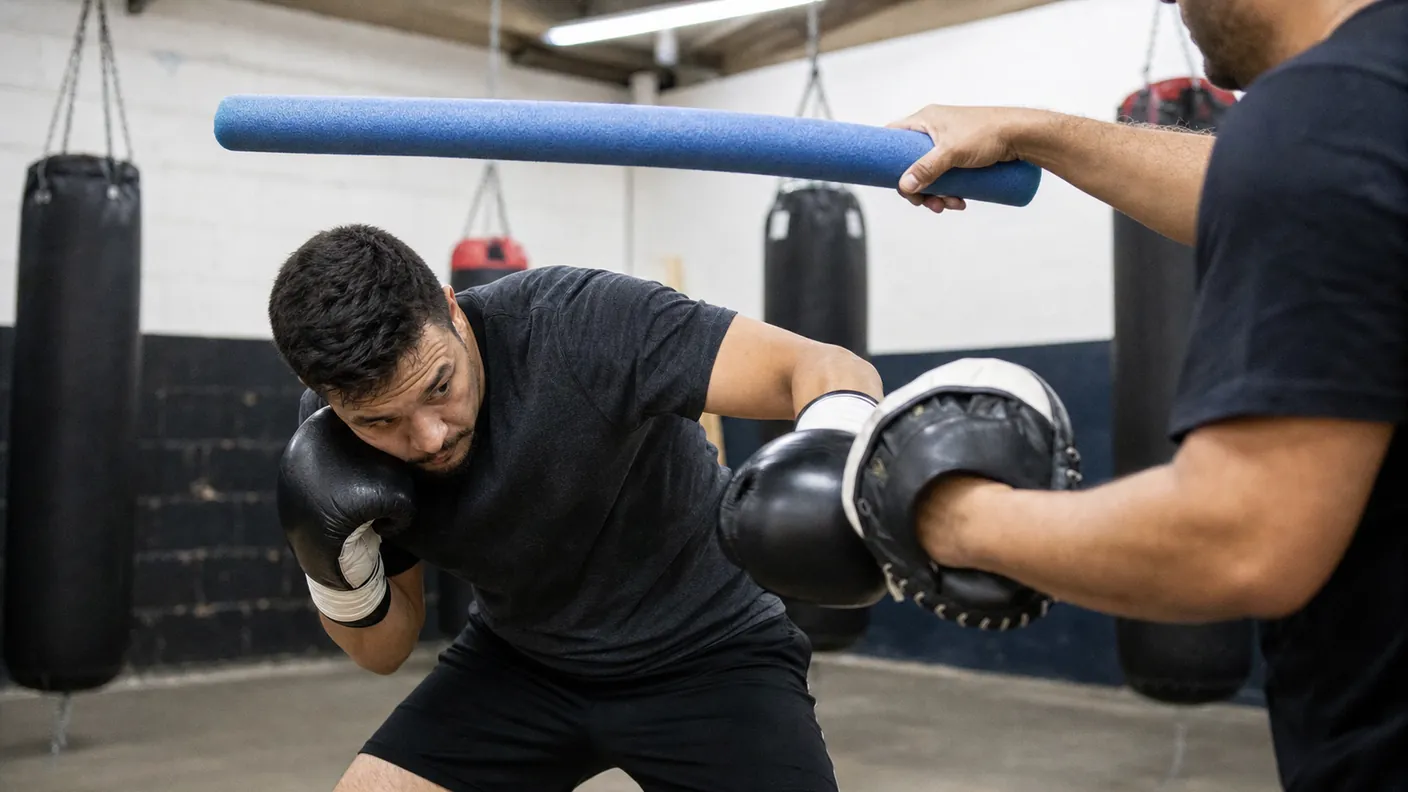
Slip Inside the Jab for a Body Hook
Use a small inside slip to move off the jab line, then build a compact lead hook to the body without losing your balance.
The Hook-Jab: Use Your Lead Hand Twice
Learn how a compact hook-jab can change the line of attack, bring your lead hand home and help you leave the pocket in balance.
One-Two, Block, Hook: The Next Boxing Answer
Use a compact block after the one-two, then return with a lead hook without losing your stance or chasing the exchange.
Was this page helpful?
It takes one tap, and it genuinely helps.
Choose your next step
Turn this article into the right action
Some readers are ready to book. Some need the class route first. Pick the route that matches what you actually want.