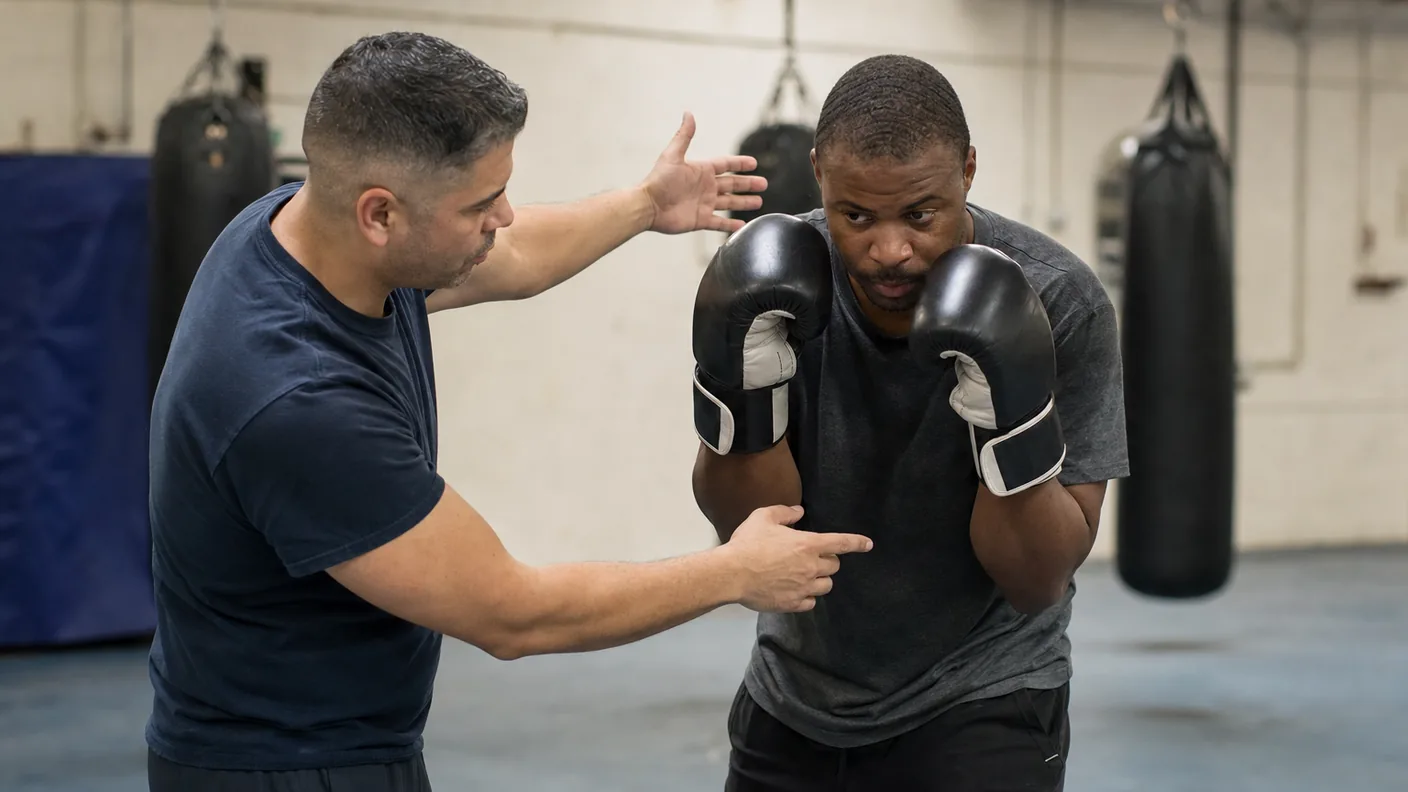
Some beginners hold their gloves as if they are trying to hide behind them.
Both fists squeeze together in front of the nose. The elbows pinch in. The shoulders get tight. Then the boxer throws a jab and wonders why the punch turns the whole body, or why the rear hand drifts away from the face as soon as anything happens.
A tight guard can feel safe, but too narrow is not the same as protected. Your fists need enough spacing for the shoulder, elbow and glove to work as one line. If the hands are jammed together, the punch has to fight through your own posture before it reaches the target.
Watch the short clip below first. Then use the coaching notes after it to fix the shape in your own stance.
Why fist position changes the whole stance
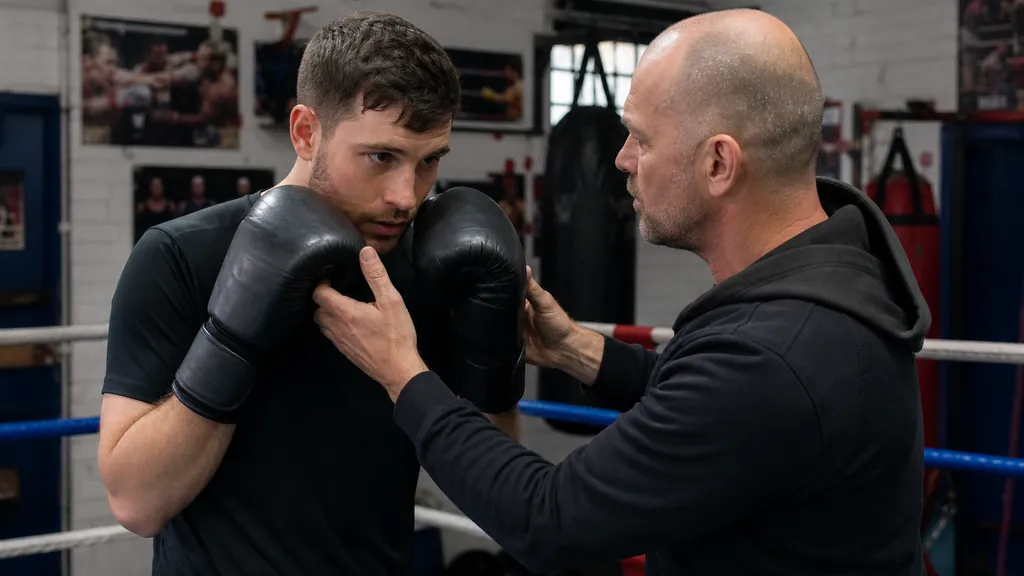
Your guard is not just where your gloves sit. It changes how your shoulders move, how your elbows recover, and how quickly your punches return.
If your fists are too close together, the shoulders often lock inward. The punching side then has to rotate awkwardly to find a straight lane. That is why a simple jab can start to drag the body round, or a cross can pull the boxer out of stance.
The fix is not to spread the hands wide like a gate. That creates a different problem. The fix is to set each fist in a useful lane: close enough to protect the face, but not so squeezed together that the shoulder cannot move freely.
A good guard gives you options. You can jab without flaring the elbow. You can catch or block without reaching. You can bring the hand home without having to rebuild the stance after every punch.
The beginner mistake: hiding behind both gloves
The too-narrow guard usually comes from good intentions.
Beginners do not want to get hit, so they bring both gloves to the middle. It feels like a wall. In reality, it can become a traffic jam. Both hands want the same space, the shoulders round forward, and the boxer loses the clean line from fist to elbow to shoulder.
That problem shows up fast on pads. The jab starts from the centre of the face instead of the lead side. The elbow lifts or cuts across the body. The shoulder moves late. The punch lands with the arm but not the whole body behind it.
On the bag, it can look less obvious because the bag does not answer. In partner work, it becomes clearer. The jab is late, the cross feels cramped, and the guard does not reset quickly enough.
This is why stance work matters before combinations. Our guide to how to throw a jab in boxing covers the punch itself, but the jab is only as clean as the position it leaves from.
A simple guard spacing check
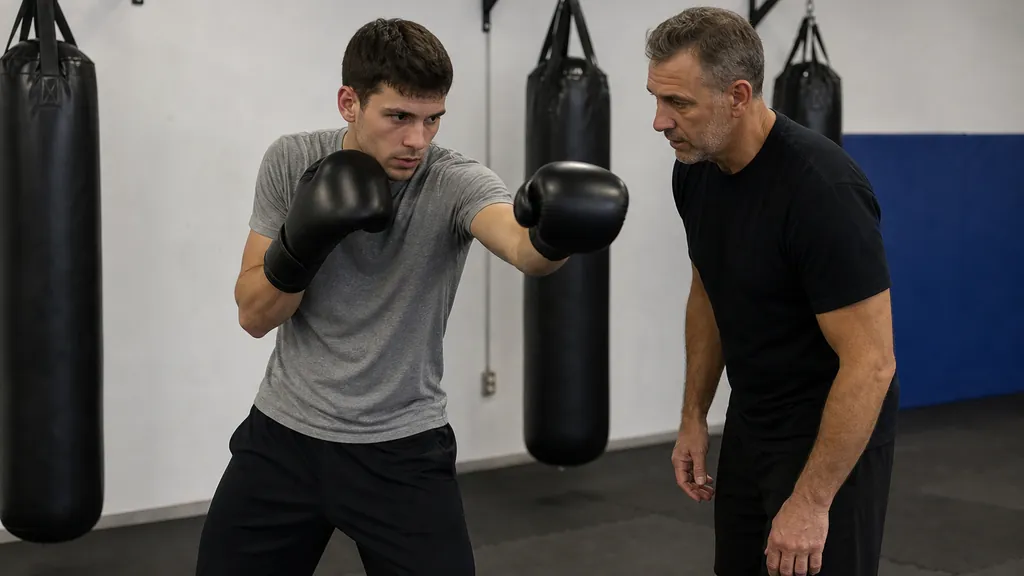
Stand in your boxing stance in front of a mirror.
Your lead glove should sit on the lead side of the face line, not directly in front of the nose. Your rear glove should protect the rear cheek and jaw, not press into the lead glove. There should be a small working gap between the fists.
Now throw a slow jab.
Ask three questions:
- Did the lead fist travel straight from its own lane?
- Did the rear glove stay useful at the cheek?
- Did the shoulder move smoothly without dragging the whole body round?
If the answer is no, reset the guard and try again more slowly. Do not chase speed yet. The first job is to feel where the punch starts.
The same check works for the cross. If both fists begin too close, the rear hand often has to loop round the lead hand or pull the shoulder behind it. A clean cross should not need that detour.
Keep the hands active, not stiff
Good guard spacing does not mean freezing your hands in one perfect photograph.
Boxing is movement. Your gloves will adjust as you jab, block, slip, step, breathe and reset. The point is not to become rigid. The point is to return to a useful home position after each action.
Think of the guard as a working base:
- the fists have their own lanes
- the elbows stay close enough to protect the body
- the chin sits behind the gloves, not above them
- the shoulders can move without being jammed
- the hands can punch, block and recover without crossing each other
That last point is the one beginners feel most. When the hands are too narrow, recovery becomes messy. The punching hand returns into the other glove, the elbows collide, and the boxer has to pause before the next shot.
A small amount of spacing makes the rhythm cleaner. Jab, return. Cross, return. Block, return. The hands stop arguing over the same patch of air.
How this affects defence
A narrow guard is not automatically safer.
If both gloves sit in the middle, the sides of the head can still be open. The boxer may also start reaching from the centre to block punches on either side, which pulls the hand away from home. That is when a simple one-two from a partner feels faster than it really is.
A better guard puts each hand near the job it has to do. The rear glove protects the rear cheek and is ready to catch or block. The lead glove controls space, touches, measures and jabs. Both hands can still come together when needed, but they do not live glued together.
This links with our article on how to jab without getting jabbed back. A jab is safer when the non-punching hand already has a defensive job. If your guard spacing is wrong, that hand starts late.
A three-round drill to fix it
Use this before hard pad rounds. It is dull in the right way.
Round 1: mirror guard and jab
Work in front of a mirror or blank wall. Set the guard with a small gap between the fists. Throw single jabs at half speed. The lead hand leaves from its own side and returns to the same place. The rear hand stays at the cheek.
Do not add the cross yet. If the jab cannot leave cleanly from the correct guard, combinations will only hide the mistake.
Round 2: pad touch with coach check
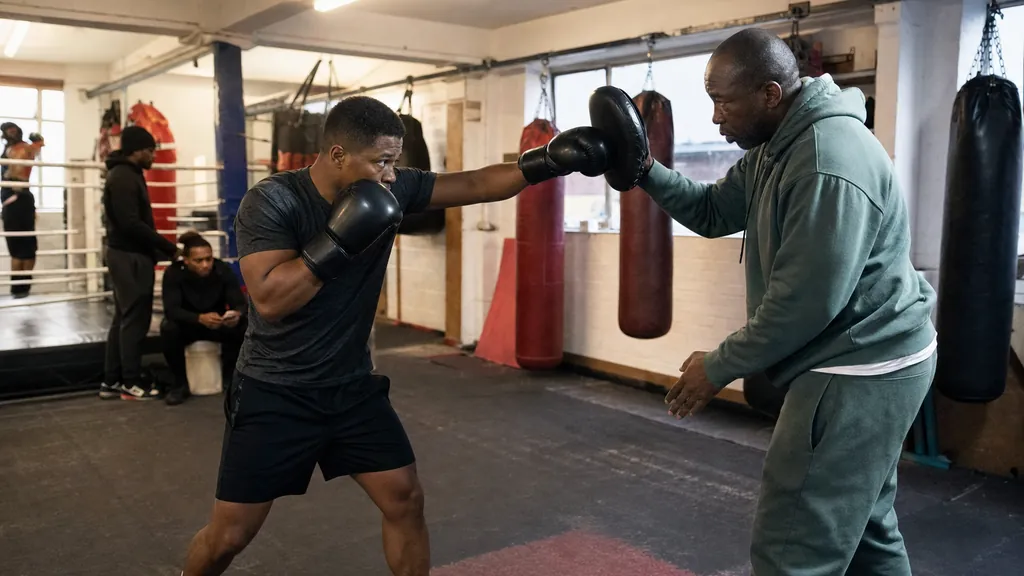
The coach holds one pad for the jab. After every punch, the coach checks the returning guard. If the gloves squeeze back together in the middle, pause and reset. If the boxer starts widening the hands too much, bring them back near the face.
The cue is simple: separate lanes, close guard.
Round 3: jab, catch, jab
Partner or coach gives a light return jab after your jab. You catch it with the rear glove, then jab again. This tests whether your non-punching hand was in a useful place or whether it had to travel too far to defend.
Keep the pace low. The aim is clean order: jab, rear hand catches, jab again. If it turns into a race, the stance lesson disappears.
Common guard spacing mistakes
The first mistake is confusing tight with cramped. Your hands should protect you, but they still need working space. If your gloves touch each other constantly, check whether your punches are being forced round your own guard.
The second mistake is overcorrecting. Some boxers hear that the hands are too close and spread them wide. That opens straight shots down the middle. Keep the fists near the face, just not jammed into one narrow line.
The third mistake is fixing the hands but ignoring the shoulders. If the shoulders stay rounded and tense, the punch will still feel restricted. Let the shoulder sit naturally so it can move behind the fist.
The fourth mistake is only checking the guard at rest. The real test is after punching. Can the jab return to a good lane? Can the cross come back without crossing the other glove? Can you catch a jab without rebuilding everything?
The coaching cue
Separate the fists enough for the shoulders to work.
That is the whole lesson. Not wide. Not loose. Not theatrical. Just enough space that each hand has a lane, each shoulder can move, and each punch can return without crashing into the other glove.
At Honour and Glory, our Recreational Adults boxing classes spend time on these small corrections because they make the bigger skills easier. If you are in Kidbrooke, Greenwich or nearby, we can help you fix the stance before bad habits become normal.
H&G Team
Writer at Honour & Glory Boxing Club, a community boxing gym in Kidbrooke, South East London.
KEEP READING
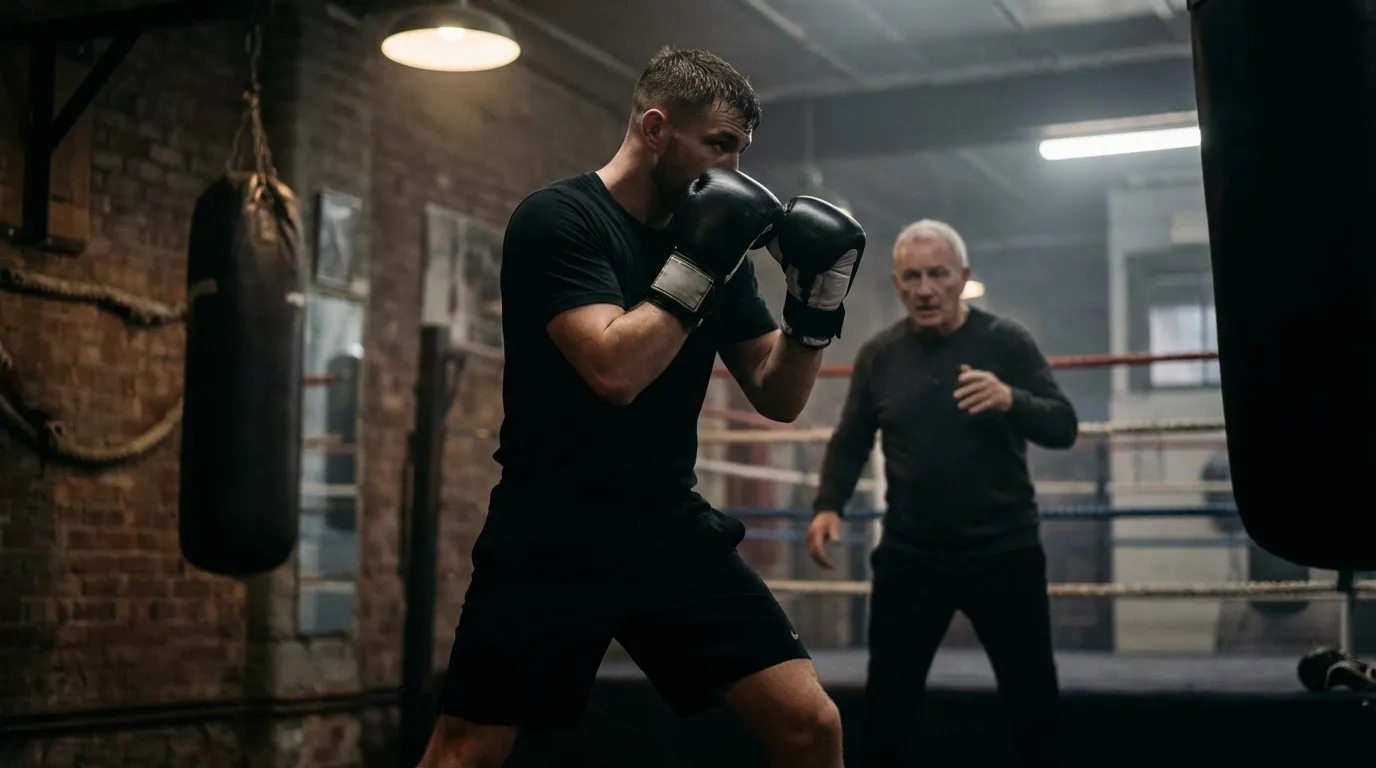
Boxing Stance and Guard Basics
Learn the proper boxing stance for beginners and how to hold your guard. Get these foundations right and everything else becomes easier.
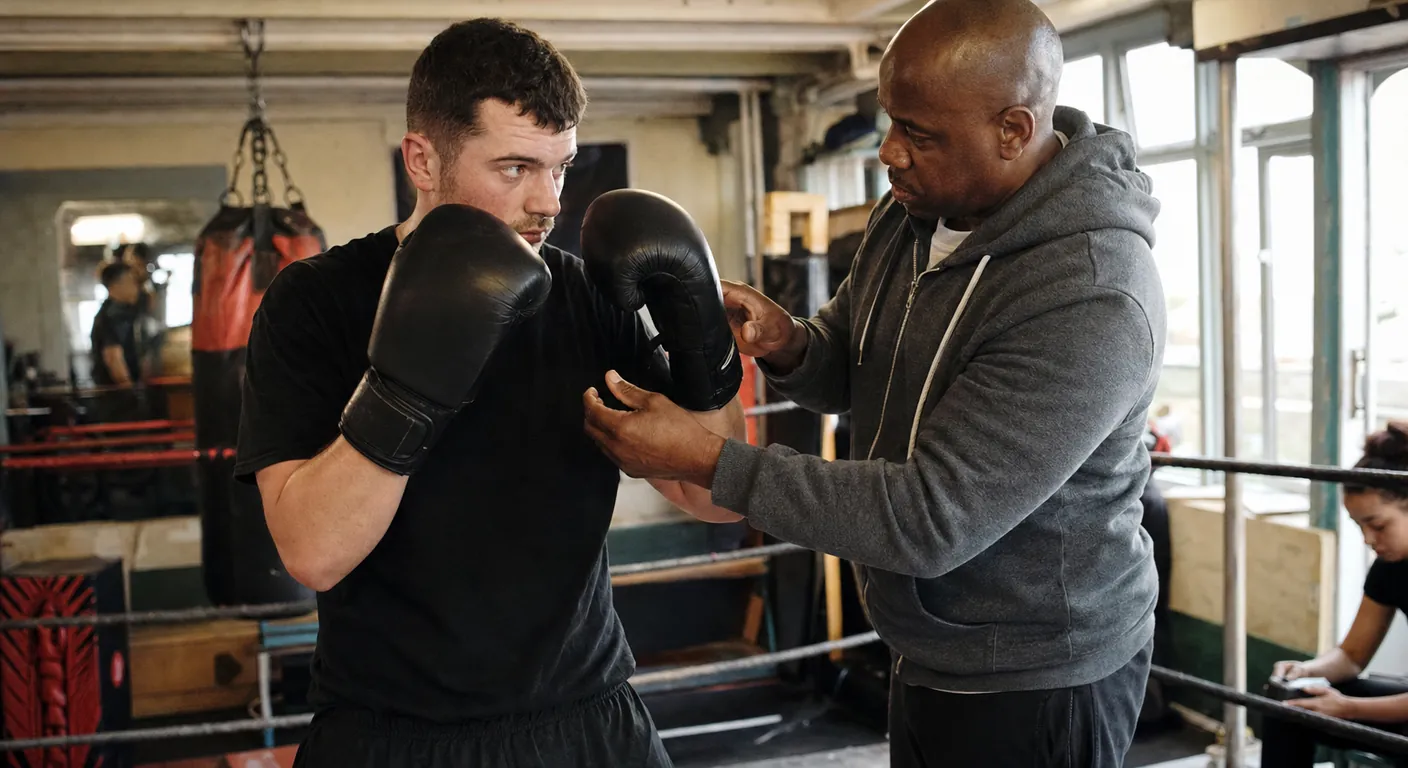
Boxing Guard: Do Not Squeeze Your Hands Together
A practical guard lesson for boxers who keep their gloves too narrow and lose shoulder position when they punch.
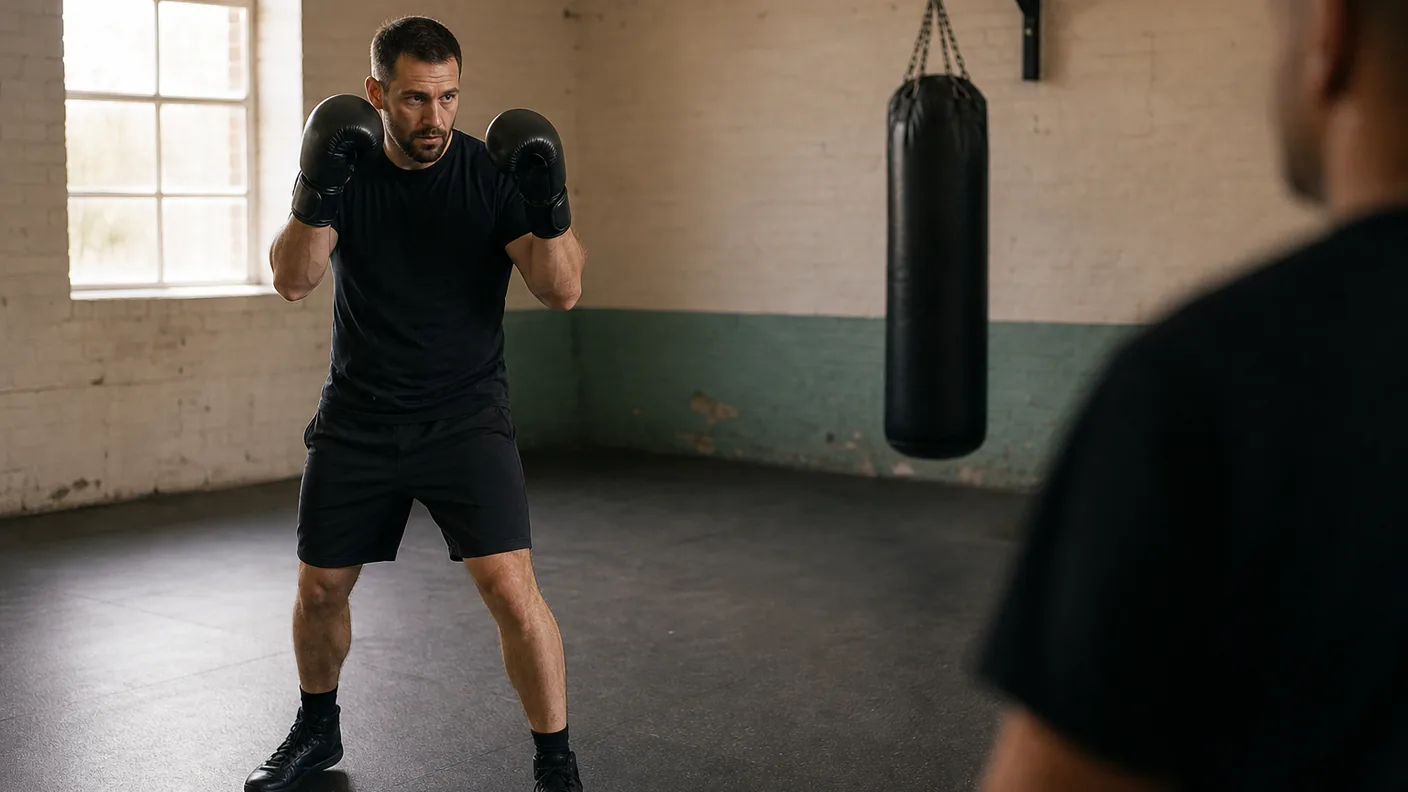
Why a Narrow Boxing Guard Spoils Straight Punches
A cramped boxing guard can turn the shoulders away from clean straight punches. Use this simple check to keep your stance useful.
Was this page helpful?
It takes one tap, and it genuinely helps.
Choose your next step
Turn this article into the right action
Some readers are ready to book. Some need the class route first. Pick the route that matches what you actually want.