Boxing Guard: Do Not Squeeze Your Hands Together
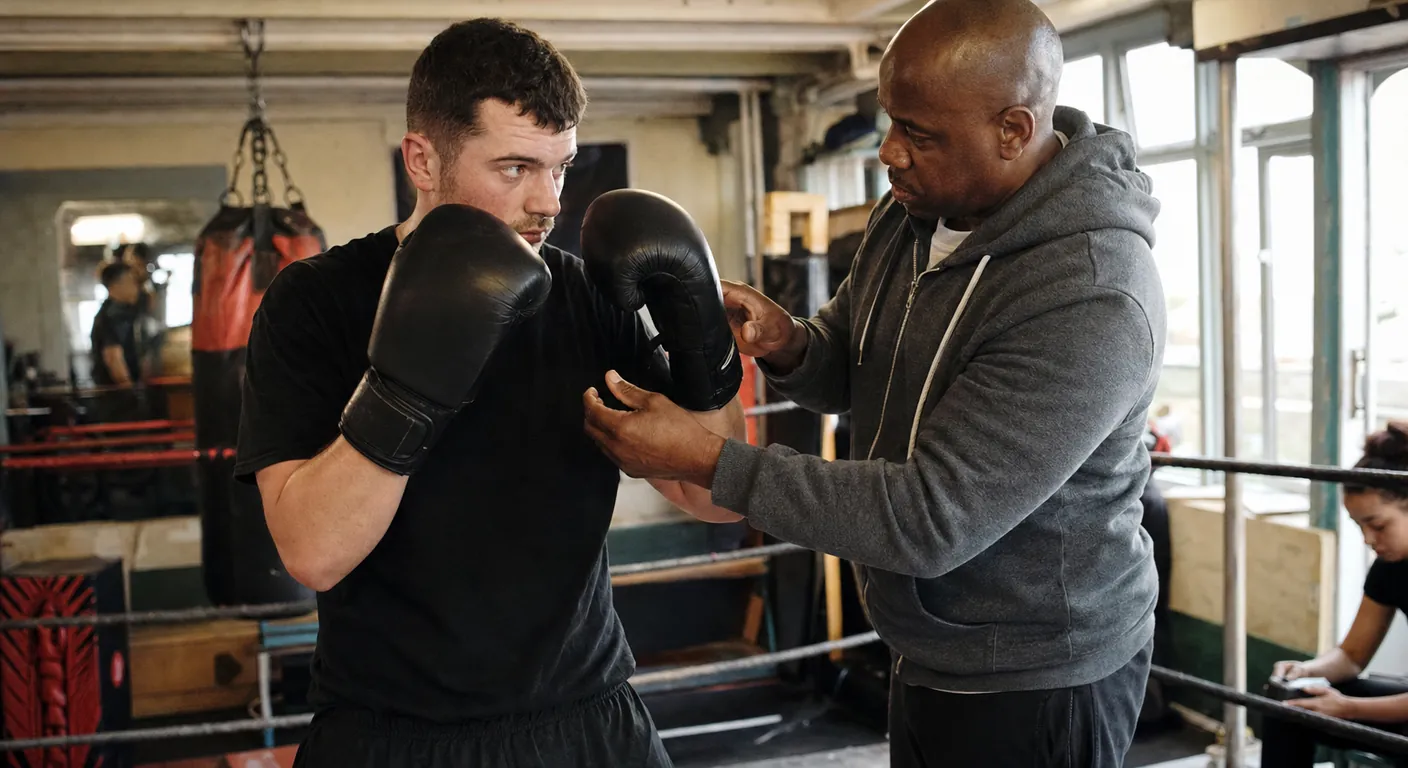
A tight guard can still be a bad guard.
That sounds odd to beginners because the first correction they usually hear is simple: hands up. Fair enough. If your gloves are by your chest and your chin is in the air, hands up is the right start.
But there is a second mistake that comes straight after it. A boxer pulls both gloves in close together, almost touching in front of the face, and thinks that means safe. It can feel protected, but it often ruins the punch. The shoulders stop working properly, the elbows drift into a strange line, and the straight shot turns the body instead of travelling cleanly from the stance.
The short clip below shows the lesson clearly. Watch the position of the fists before the punch. If the hands are squeezed too narrow, the body has to twist to put the shoulder, elbow and fist back into a usable line.
Boxing skill is not just arm speed. A technical review of boxing performance describes punches, movement, distance and defence as connected actions. That is exactly why hand spacing matters. The guard sets up the punch before the punch even starts.
Here is how to fix the habit without opening your face up.
What a too-narrow guard looks like
A too-narrow guard is not the same as a high guard.
In a high guard, the hands protect the face, the elbows protect the body and the boxer can still jab, catch, parry and move. In a squeezed guard, the gloves sit too close together on the centre line. The boxer looks hidden from the front, but the arms are jammed. The shoulders are not ready to drive a punch.
You will often see the mistake in new boxers who are worried about being hit. They bring both hands right in front of the nose, tuck the elbows in hard and stand very square. It feels safe because the face is behind a wall of glove. The problem is that boxing is not a still photograph. You have to punch, defend, move and recover from that position.
If the hands are too narrow, the jab has to escape from a cramped lane. The cross has to travel around the lead hand. The shoulders cannot turn naturally. Instead of a clean punch, you get a small body correction before the glove goes out.
That correction is the tell.
Why hand spacing affects the shoulder
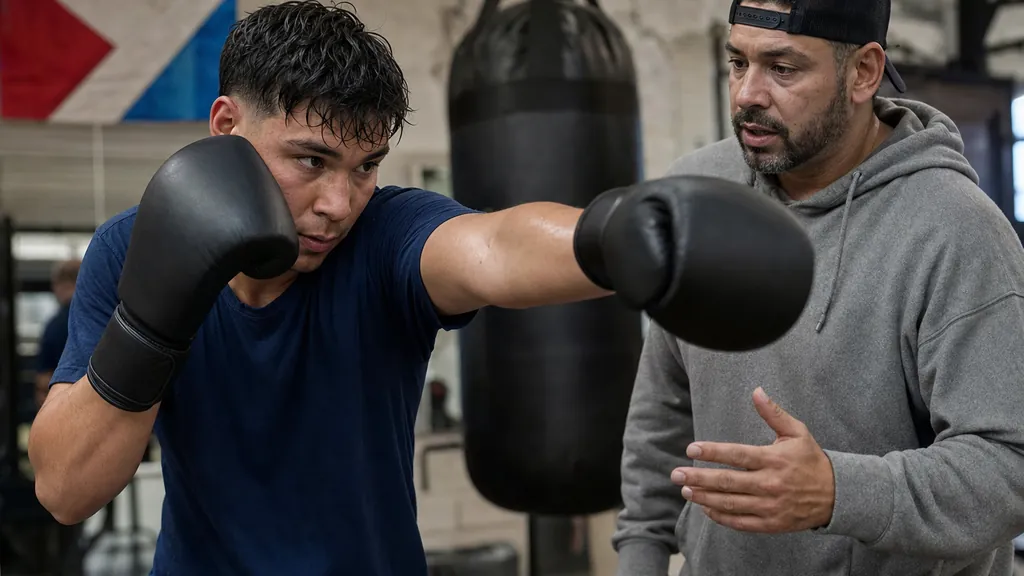
Your fist, wrist, elbow and shoulder need to work as one line.
That does not mean the arm is stiff. It means the punch has a route. When the glove starts from a useful place, the shoulder can move behind it and the hand can come back to guard without a detour.
When the fists are squeezed together, the shoulder starts behind the wrong line. To throw a straight punch, the body has to rotate early just to find the lane. The shoulder is not driving the punch from the start. It is catching up.
That is why the mistake can make a boxer turn too much on basic shots. The punch is not longer because the boxer is strong. It is longer because the starting position is poor. The body is trying to solve the problem the hands created.
The England Boxing coaching handbook keeps returning to balance, stance and controlled movement. That is the right frame for this correction. A punch that breaks your stance before it lands is not a good punch, even if it makes noise on the bag.
The guard should be protective, not cramped
Do not hear this as advice to drop the hands or hold them wide.
A useful guard still protects the head. The chin stays down. The hands stay high enough to defend. The elbows do not flare out like wings. The difference is that each hand has its own job and its own lane.
A simple starting position works for most beginners:
- Rear hand near the cheek, ready to catch, parry or fire the cross.
- Lead hand slightly forward, not glued to the rear glove.
- Elbows relaxed enough to move, not clamped so hard that the shoulders freeze.
- Chin tucked between the shoulders, not lifted over the gloves.
- Feet still in stance, with enough width to punch and step.
The lead hand does not have to be miles away. It just needs enough space to jab without fighting through your own guard. The rear hand should be close enough to protect but not so close to the lead hand that the cross has no clean path.
If you are still building the base position, start with our boxing stance and guard basics. This article is the next layer: not only hands up, but hands in a place that lets you box.
Test it with the jab
The jab exposes a cramped guard quickly.
Stand in front of a mirror or work with a coach on pads. Put both gloves too close together on purpose, almost touching in front of the face. Now throw ten slow jabs.
Watch what happens.
Most people will push the jab out with the hand first, lift the chin, or let the shoulder arrive late. Some will pull the lead hand backwards before jabbing, because the glove is trapped on the wrong line. Others will throw the punch straight enough, but the rear hand will move with it because the two gloves started as one lump.
Now reset. Let the lead glove sit a little forward, with the rear glove still protecting the cheek. Throw the same ten jabs.
The jab should feel cleaner. The shoulder can come with the punch. The hand can return without bumping into the rear glove. The rear hand can stay home instead of travelling for no reason.
This is also where how to throw a jab in boxing becomes more useful. A good jab is not just the hand going out. It is the starting shape, the shoulder cover, the return and the next decision.
Test it with the cross
The rear hand tells the same story.
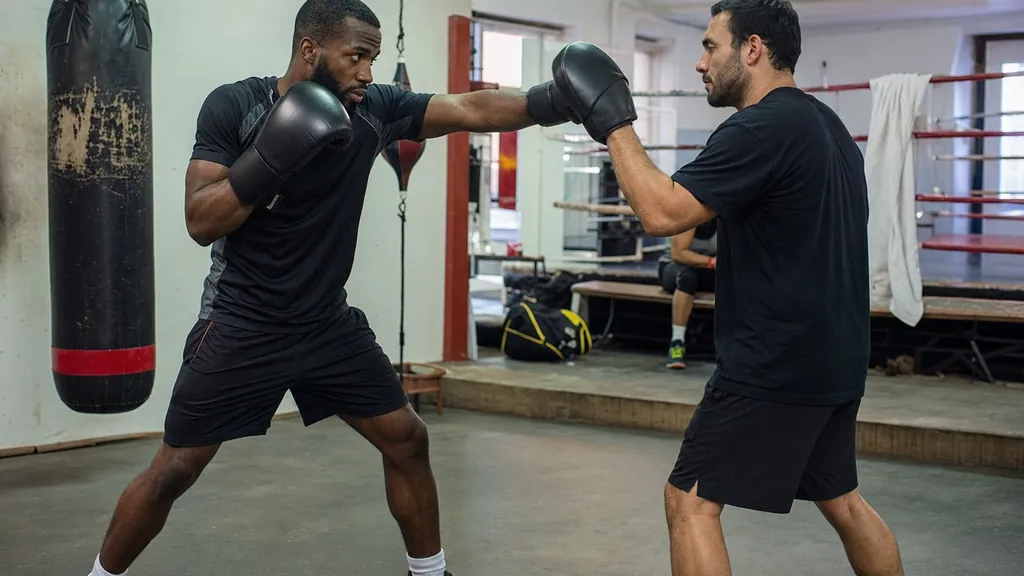
If the rear glove starts too close to the lead glove, the cross often has to travel around traffic. The boxer turns the shoulders early, reaches across the centre, or lets the lead hand fall away as the rear hand comes through.
Try this slowly:
- Stand in stance with both gloves squeezed together.
- Throw a rear cross at half speed.
- Freeze at the end of the punch.
- Ask whether the lead hand is still guarding.
- Ask whether the feet are still underneath you.
If the answer is no, widen the starting relationship between the hands. Not wide like a showboat. Just honest. Lead hand on its lane. Rear hand on its lane. Chin between the shoulders. Elbows able to move.
A good cross should feel as if the rear shoulder is sending the glove through the target. If the first sensation is the torso twisting to free the hand, your guard has already cost you time.
Better boxers see that. A review on anticipation in combat sports explains that skilled fighters read early movement cues. In gym language, if every punch begins with a little escape movement from a cramped guard, you are giving the other boxer a preview.
Do not overcorrect into a lazy guard
The fix is not to hold your hands low, wide and casual.
That is the other beginner trap. They hear one correction and run too far with it. Hands too close becomes hands nowhere near the face. The boxer now has a cleaner punch but no defence. That is not progress.
You want useful space, not laziness.
Your lead hand can be slightly forward and still high. Your rear hand can protect the cheek and still have a clean route for the cross. Your elbows can protect the body without squeezing the ribs so hard that the shoulders cannot move.
Think of the guard as a working position. It should let you do three things immediately: punch, defend and move. If it only defends while you stand still, it is too cramped. If it only punches while your face is open, it is too loose.
The best guard for a beginner is usually boring to look at. No dramatic shell. No dangling lead hand. No crossed arms. Just organised hands, quiet shoulders, chin down and feet ready.
A three-round guard-spacing drill
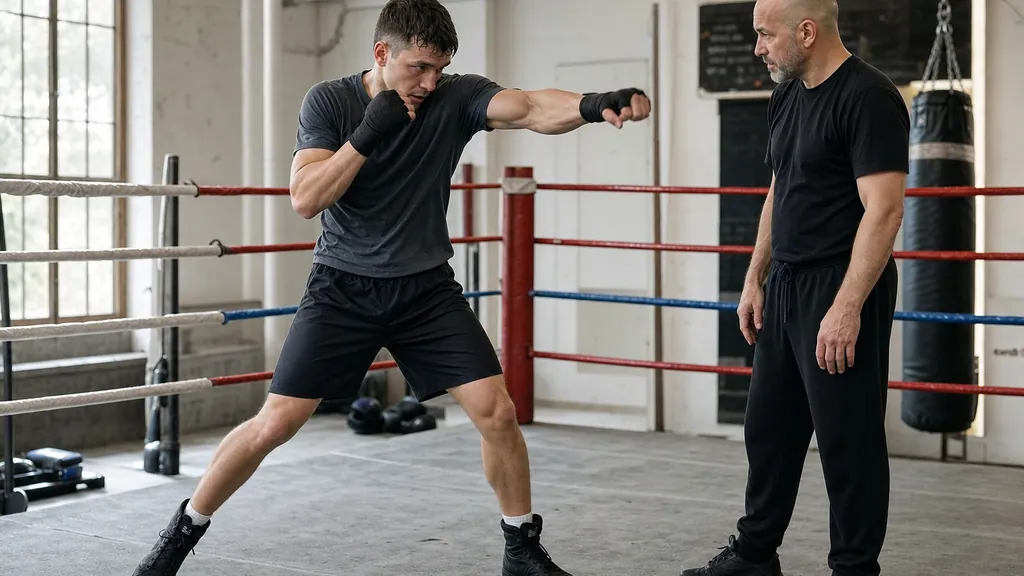
Use this on the bag, pads or in shadow boxing. Keep it slow enough that you can feel the correction.
Round 1: mirror guard and jab
Work in front of a mirror if possible. Throw single jabs only. Before each jab, check that the lead hand is not glued to the rear hand. After each jab, bring the hand back to the same useful place.
The goal is not speed. The goal is repeatable shape.
Round 2: cross without dragging the lead hand
Throw single rear crosses at half speed. The lead hand must stay near the cheek as the rear hand goes. If the lead hand drops or drifts across, pause and reset.
The cue is simple: rear shoulder punches, lead hand watches.
Round 3: jab-cross with a freeze
Throw jab-cross, then freeze for one second. In the freeze, check three things: chin down, hands back to guard, feet still in stance.
If the combination leaves you square or open, slow down. A clean guard gives you a clean second punch. A cramped guard makes the second punch a repair job.
Common mistakes
The first mistake is confusing narrow with safe. A glove wall in front of the nose might feel secure, but if it stops you punching cleanly, it will not help once the exchange starts.
The second mistake is squeezing the elbows too hard. Elbows protect the body, but they still need to move. If your shoulders feel locked before the punch, relax the arms and rebuild the guard.
The third mistake is copying a professional's high shell without understanding the range. Experienced fighters use different guards for different jobs. Beginners need a base position that teaches sound punches first.
The fourth mistake is fixing the hands but forgetting the feet. If your stance is too square or too narrow, the guard correction will not save the punch. Hands, shoulders and feet have to agree.
The fifth mistake is only checking this on the bag. The bag does not care if your guard is cramped. A partner with pads or a coach watching from the side will show the mistake faster.
The coaching cue
Keep your hands close enough to protect you and separate enough to let each punch leave cleanly.
That is the rule. The guard is not a hiding place. It is the start of your next action.
If your fists are squeezed together, your shoulders lose their job. If your hands drift too wide, your chin is available. Find the middle: organised hands, working shoulders, clean punch lanes, quick recovery.
If you are in Kidbrooke, Greenwich or nearby, our Recreational Adults boxing classes teach stance, guard, jab and cross mechanics with coach feedback from the first session. You learn how to protect yourself without getting stuck behind your own gloves.
H&G Team
Writer at Honour & Glory Boxing Club, a community boxing gym in Kidbrooke, South East London.
KEEP READING
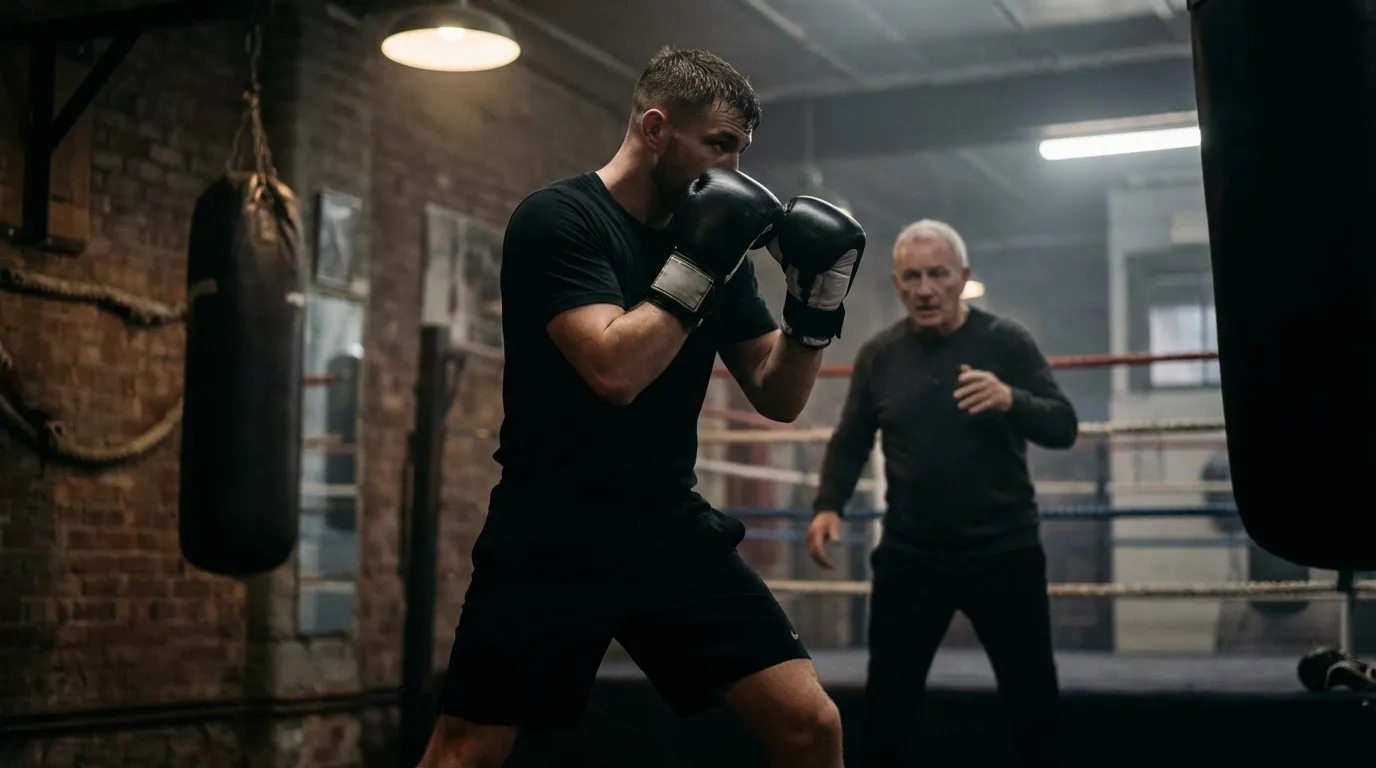
Boxing Stance and Guard Basics
Learn the proper boxing stance for beginners and how to hold your guard. Get these foundations right and everything else becomes easier.
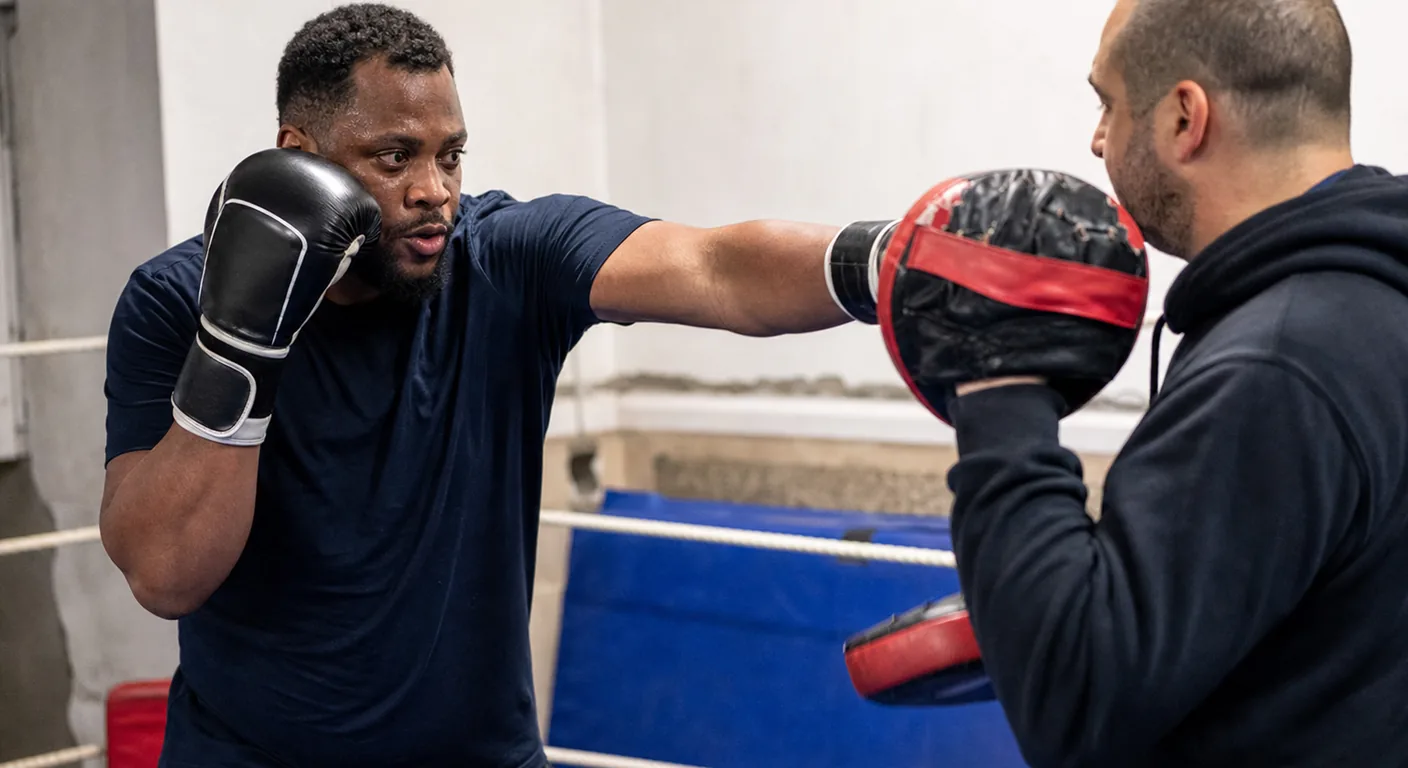
How to Punch Without Dropping Your Guard
Learn how to keep your guard alive while punching, so combinations protect you instead of opening clean counters.
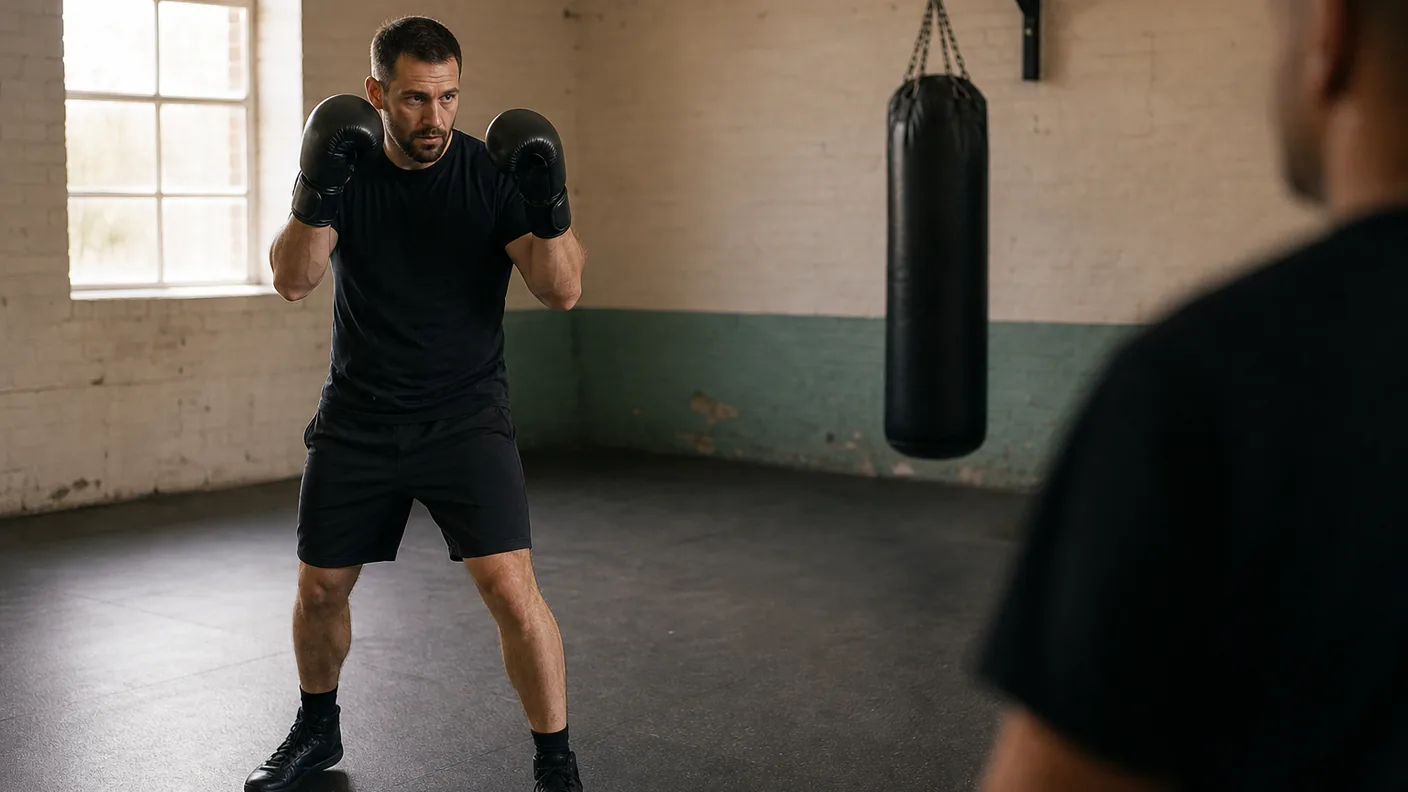
Why a Narrow Boxing Guard Spoils Straight Punches
A cramped boxing guard can turn the shoulders away from clean straight punches. Use this simple check to keep your stance useful.
Was this page helpful?
It takes one tap, and it genuinely helps.
Choose your next step
Turn this article into the right action
Some readers are ready to book. Some need the class route first. Pick the route that matches what you actually want.