Why a Narrow Boxing Guard Spoils Straight Punches
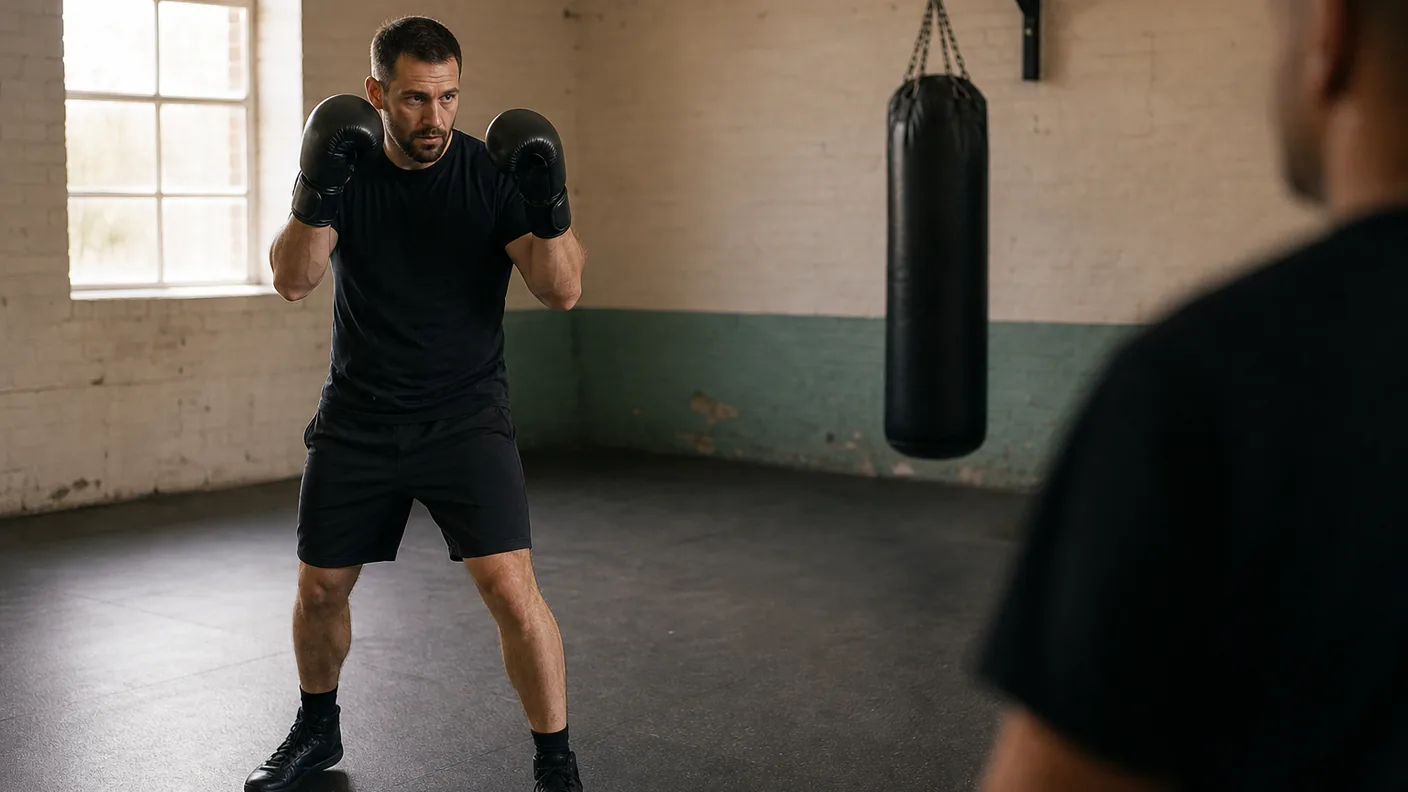
A tight guard can feel safe. When a coach says "hands up", plenty of beginners bring both gloves together directly in front of the nose and try to keep them there for the whole round.
The intention is right. The position often is not.
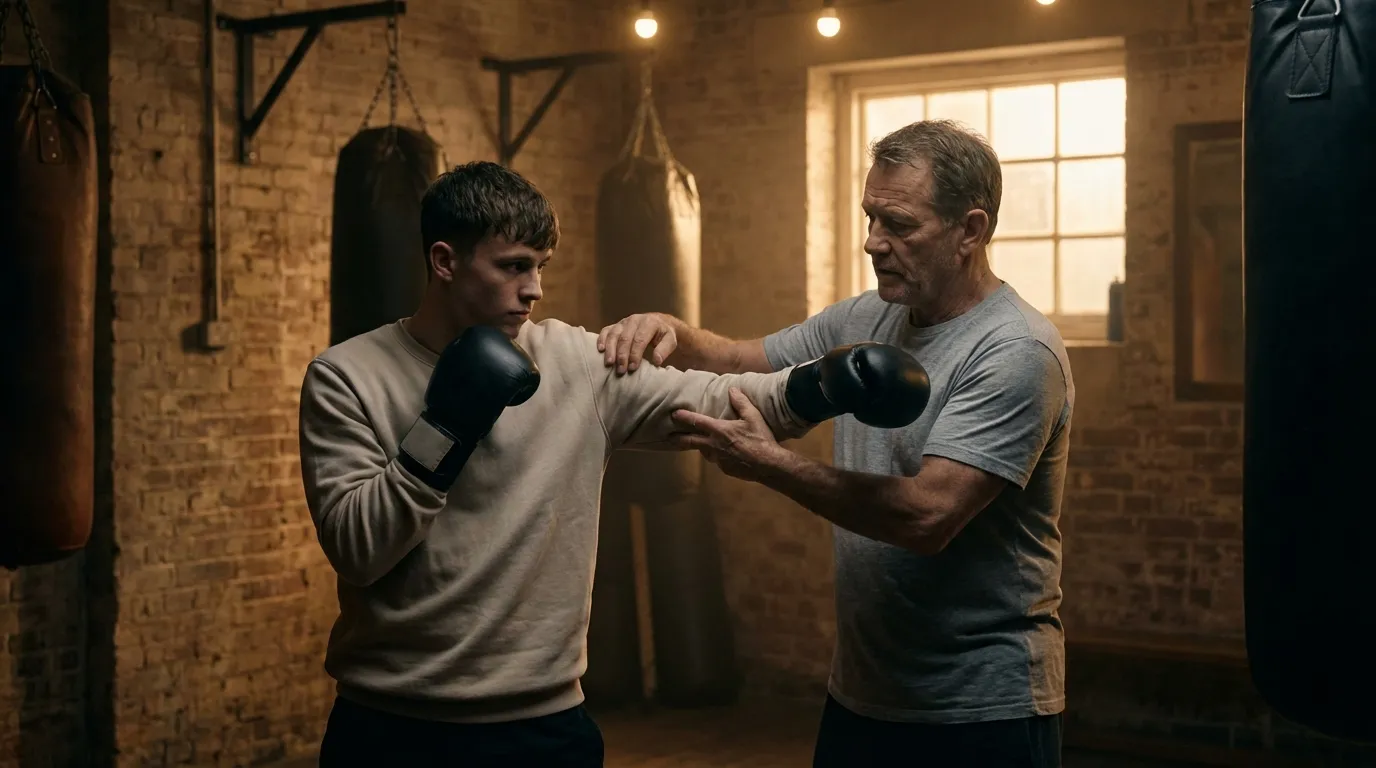
When the gloves are pressed too close together, the shoulders have little room to work. Throw a jab or cross from there and one shoulder may pull away first, the elbow may drift, or the whole body may turn just to find a line for the fist. The punch still travels forward, but it has started by untying your own stance.
Watch the short demonstration below, then use the checks in this article with a coach or during a slow shadow-boxing round.
Your guard needs to protect and leave room to punch
A useful guard is not a pose for a photograph. It is a starting position you can punch, move and defend from without rebuilding yourself every time.
For most orthodox boxers, the lead glove sits close enough to the lead cheek to cover and touch with the jab. The rear glove protects the other side of the chin. They do not need to be miles apart, but they do need a little daylight between them. The elbows stay connected enough to help cover the body without being glued together in front of the chest.
That small amount of space lets each shoulder travel on its own job. The lead shoulder can rise with the jab. The rear shoulder can turn through the cross. The opposite glove can remain useful instead of being dragged across the face by the punch.
A review of boxing punch mechanics describes effective striking as a linked movement through the legs, trunk and upper body. That is the practical reason to care about your starting hand position. If the hands force the shoulders into an awkward line before you throw, the rest of that chain has to compensate.
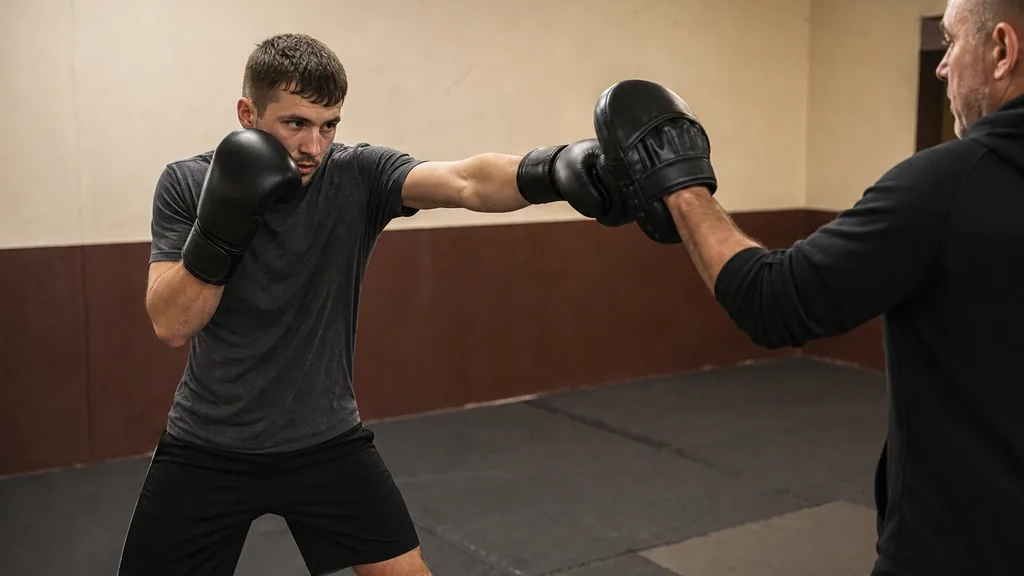
The narrow-guard problem usually appears on the jab
A cramped guard often reveals itself when the lead hand leaves.
Try a slow jab in front of a mirror. If your rear shoulder rocks backwards as the lead glove goes out, or the rear hand crosses your own face to make room, stop there. The jab is asking the body to escape the shape of the guard rather than extend cleanly from it.
The correction is not to flare both hands wide. A boxer still needs to look like they could cover their head, catch a jab or move their elbows in. Instead, relax the gloves into two clear lanes: one for the lead shoulder to work through, one for the rear shoulder to work through. Keep the chin down and eyes up between them.
This is why a guard is not measured with a ruler. Hand size, glove size and stance all change the exact picture. The reliable test is what happens when you punch. Can the lead shoulder come forward without pulling the rear side out of place? Can the jab return to guard without you having to reset both hands? If yes, the width is probably useful.
Our guide to why boxers drop their hands explains the other common mistake. A guard that is too low makes the face easy to find. A guard that is too narrow can make every straight punch feel trapped. You need the middle ground.
Let the shoulder, elbow and glove agree
The hand is only the visible end of a straight punch. Behind it, the elbow and shoulder need to point in a compatible direction.
With the jab, the lead shoulder comes forward and slightly up as the glove travels out. With the cross, the rear hip and shoulder turn through as the rear hand travels straight. Neither action needs a dramatic wind-up. Both need a starting position that does not force the elbow to search around the other glove.
The England Boxing coaching handbook places balance, guard and sound punching mechanics together rather than treating them as separate lessons. That matters in a real round. A straight punch is only useful if you can finish it with your feet under you and your other hand able to cover.
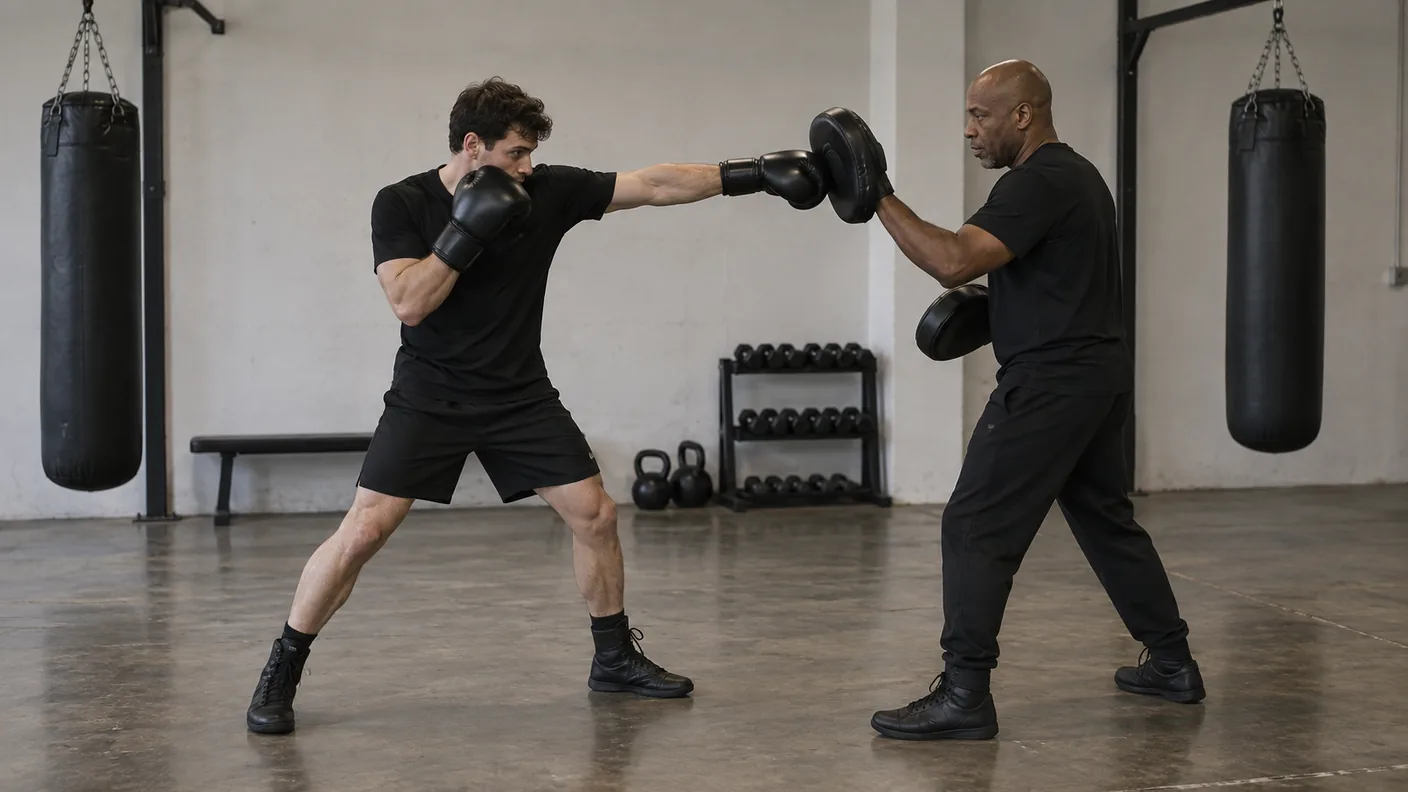
Use this simple check with a coach holding one mitt:
- Begin in your normal stance with both gloves near the cheeks, not touching in front of the nose.
- Throw one light jab to the mitt.
- Freeze for a beat before the glove comes home.
- Check whether the rear glove still covers, the elbow points naturally and the shoulders remain level enough to move.
- Repeat with one measured cross, then reset rather than rushing into a combination.
The coach should watch the shoulder before judging power. A clean, light straight punch that leaves the guard organised is more valuable than a hard punch that pulls the whole body out of place.
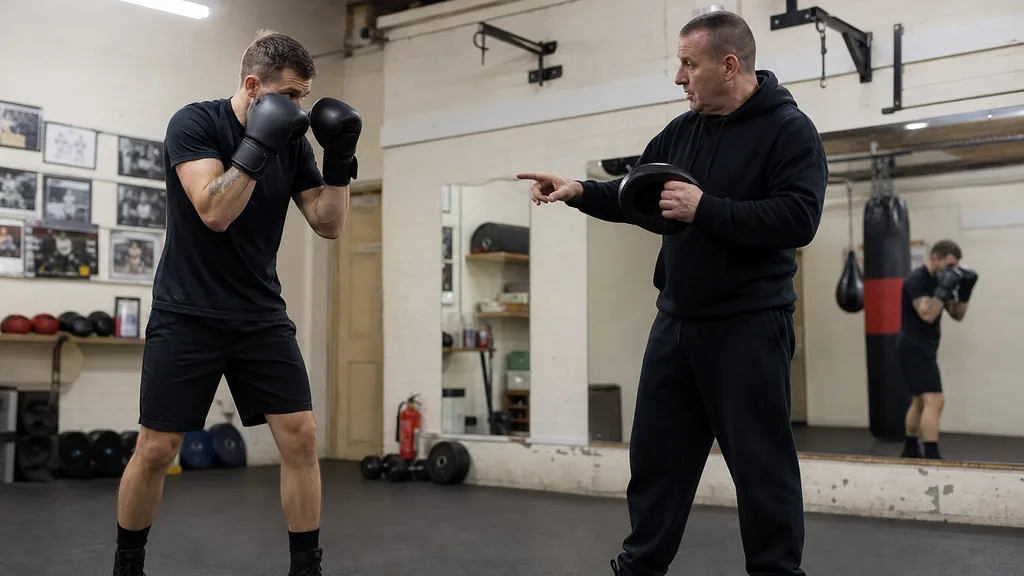
Do not solve it by opening your elbows too far
People who notice a narrow guard sometimes make the opposite error. They push both gloves far outside the shoulders, lift the elbows and create a wide gap down the middle.
That is not a better guard. It may make the arms feel free, but it makes the body line easier to find and tires the shoulders quickly. The answer is a compact position with enough separation for the shoulders to turn, not a display of how wide you can hold your hands.
Think of the gloves as sitting near the outside of the cheeks, with your eyes able to look through the middle. Your elbows can stay near the ribs. Your forearms can still close gaps when you need them. The point is to avoid locking both gloves into the same small patch of space.
If you train in a high guard, you may naturally hold the gloves closer together than a boxer who uses a longer lead hand. That is fine. The test stays the same: the guard must not make your shoulders roll away from a simple jab or cross.
A three-round drill for a less cramped guard
Use this as a technical block after warming up. Do it in front of a mirror, with a coach on mitts, or on a light bag. Do not turn it into a power round.
Round one: guard and return
For one minute, throw a single jab every few seconds. Before every jab, settle both gloves near the cheeks with a small gap between them. After every jab, bring the glove home to the same usable place.
Do not stare at the gloves. Keep your eyes at head height. If the rear shoulder drifts backwards or the rear hand moves across your line of sight, make the jab slower and adjust the starting guard by a small amount.
Round two: jab and cross without a chase
Now throw a calm one-two, then pause. The jab should leave space for the cross, and the cross should not drag the lead hand down or across the face.
A useful cue is: one shoulder works, then the other. If both shoulders are twisting at once before the jab has landed, you are probably trying to make the punch from a cramped shape. Return to single shots until the movement looks simpler.
Round three: add one defensive finish
Throw jab-cross, then choose one quiet finish: bring both gloves home, take a small step out, or cover for an imagined reply. Keep the feet underneath you.
This is where the drill stops being a mirror exercise. A guard is not correct because it looks tidy while you are still. It is correct because you can punch and remain ready for the next decision. Our guide to straight-punch shoulder alignment is a useful companion when you want to check that line more closely.
Four signs that the guard needs attention
The first is the rear shoulder flying backwards when you jab. That usually means the lead glove has no clear lane.
The second is the opposite glove crossing your face as you throw. A guarding hand can move slightly, but it should not have to disappear from its side of the head just so the punch can travel.
The third is the elbow pointing away from the punch. If the elbow has to flare dramatically to clear the other hand, go back to the starting guard and make a smaller adjustment.
The fourth is losing balance after a basic one-two. A narrow guard is not the only possible cause, but it is worth checking before you blame footwork or speed. Slow the round down until you can see whether the hands are creating the shoulder movement or following it.
Do not make the change alone if it feels unnatural. A coach can see whether your gloves are genuinely too close or whether you are simply learning a different guard style. The aim is not to copy one exact pose. It is to find a position that protects you and lets you throw cleanly.
If you are in Kidbrooke, our Recreational Adults boxing classes use slow technical rounds, pads and bag work to make those small details feel natural before the pace rises.
The coaching cue is simple: keep the guard compact, leave the shoulders a route, then let the straight punches travel without pulling you out of place.
H&G Team
Writer at Honour & Glory Boxing Club, a community boxing gym in Kidbrooke, South East London.
KEEP READING
Straight Punch Shoulder Line Drill
A simple straight-punch drill for keeping the shoulder, glove and chin connected instead of reaching with the head.
Basic Boxing Punches for Beginners
Learn the six basic boxing punches that form the foundation of every boxer's arsenal. From the jab to the uppercut, here is how to throw each one properly.
Opposite-Shoulder Turn: Stop Arm Punching
Use a small turn from the non-punching shoulder to stop reaching with the arm and keep your balance after straight punches.
Was this page helpful?
It takes one tap, and it genuinely helps.
Choose your next step
Turn this article into the right action
Some readers are ready to book. Some need the class route first. Pick the route that matches what you actually want.