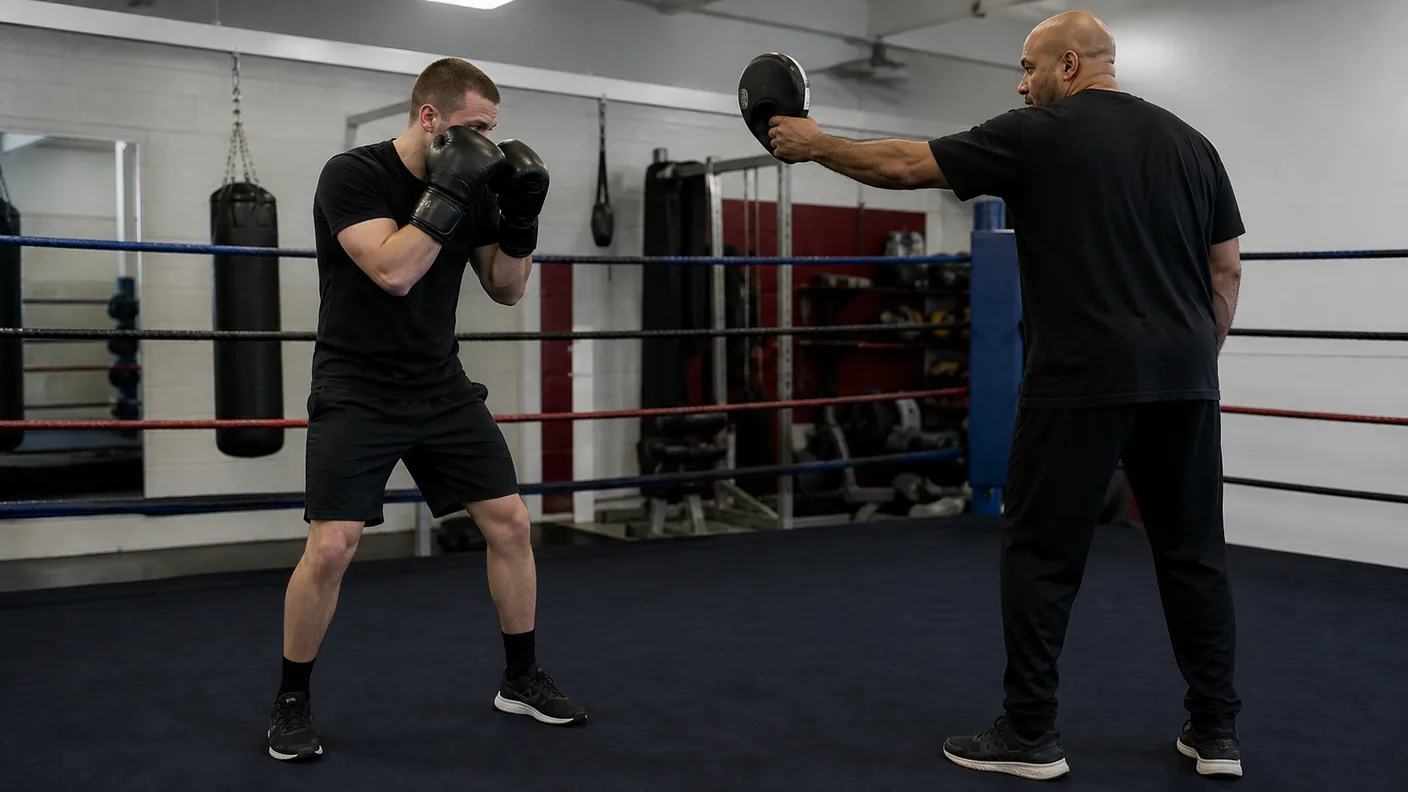
The punch that misses by an inch is usually not a hand-speed problem. It is a range problem.
A newer boxer sees an opening, reaches with the front foot and sends the chin with the glove. The punch may touch the target, but the stance has stretched, the rear hand has drifted and the next reply is easy to see coming. That is not a clean entry. It is a gamble that happened to land.
Creeping into range is the quieter alternative. You take small, patient steps until the punch fits the distance you have earned. The feet bring you close enough to score without turning the punch into a lunge.
Watch the video below for a useful visual reference, then use the coaching points to make the movement calm and repeatable.
Do not try to land from a distance you have not earned
The first rule is simple: if you need to lean to land, you are too far away.
That sounds obvious beside a heavy bag, but it is harder in sparring. The other boxer is moving, showing feints and giving you a target for a fraction of a second. The instinct is to cover all the distance with one big step and a hard punch. That is how people fall over the front knee or walk onto a counter.
A technical review of boxing performance describes punching, movement, defence and distance as connected parts of the same task. In ordinary gym language, the feet do not merely carry you towards the punch. They decide whether you are balanced enough to throw it and safe enough to recover after it.
Start just outside jab range. Your lead glove should fall short by a little when you stand still, not by a yard. Take a small step with the lead foot, then let the rear foot restore the usual space between your feet. Keep the shoulders quiet and the head between the feet.
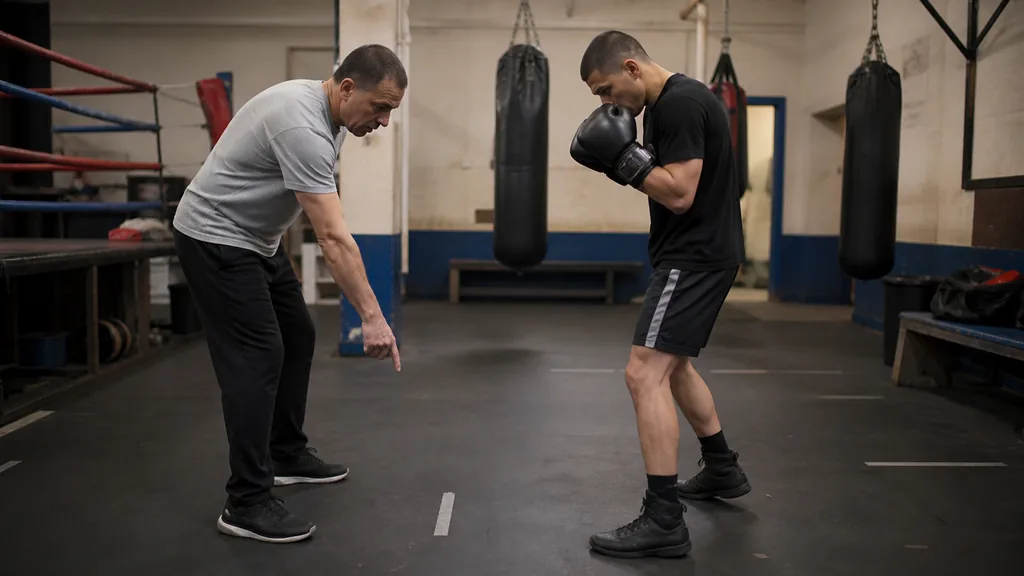
The important word is small. If the rear foot has to drag to catch up, the first step was too large. If your head ends in front of the lead knee, the body has travelled farther than the feet. Reset, shorten the step and begin again.
Our guide to boxing range and choosing the right punch explains why a good punch can still fail when it starts from the wrong distance. Creeping is how you correct that distance without announcing a desperate rush.
Let the lead foot take ground without taking your balance
For an orthodox boxer, the left foot normally opens the entry. It moves a few inches forward while the right foot follows enough to preserve the stance. Southpaws reverse the feet, but the rule is identical: the foot nearest the opponent moves first, and the back foot keeps the base intact.
Do not lift both feet together. Do not hop. Do not let the front foot race ahead while the back foot stays behind. You want the stance to travel, not break apart.
Think of the movement as a series of questions:
- Can I touch the target with a proper jab from here?
- If not, can I take one small step without leaning?
- After the step, can I still jab, defend or step away?
If the answer to the third question is no, you have taken too much ground. A good entry preserves choices. A bad entry uses all of them up before the first punch leaves the guard.
England Boxing's coaching handbook puts safe, progressive skill development at the centre of good coaching. This is a useful place to apply that principle. Learn the step without a punch first. Add the jab only when the stance stays steady. Add a second punch only when the first movement remains organised.
The jab gives the step a job
A small entry can happen with no punch, but the jab is usually the safest hand to join to it.
The lead glove gives the other boxer something to look at as the lead foot moves. It can check range, occupy the guard or make a defensive habit appear. It does not need to be a hard scoring shot every time. It does need to be a real jab that comes back to guard.
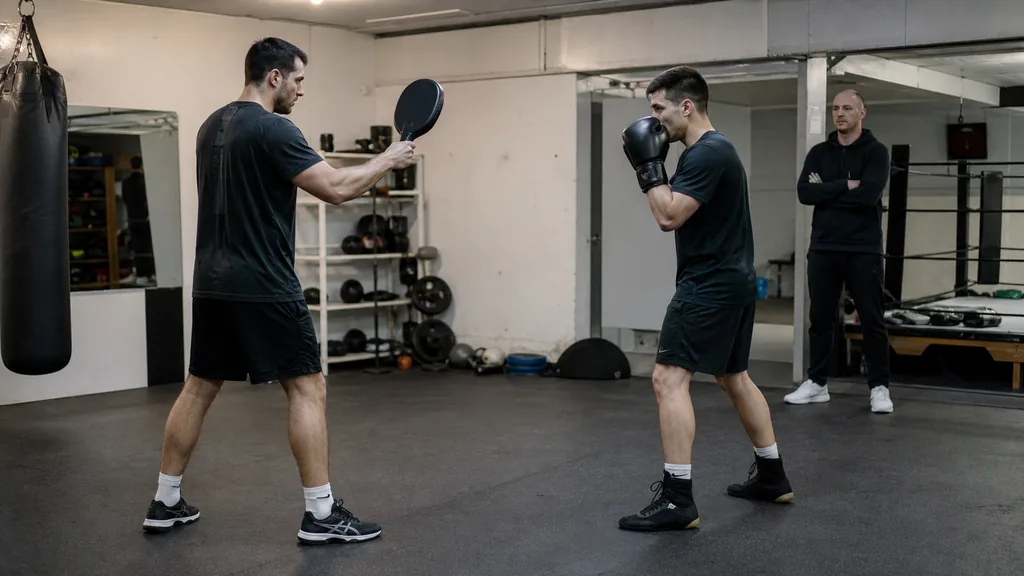
The sequence is modest:
- Take a small lead-foot step.
- Send the jab with the step or just before it.
- Bring the jab back as the rear foot restores your stance.
- Pause long enough to see whether the range is now honest.
- Choose a next action only if the shape is still good.
That pause is not hesitation. It is where you stop a tidy entry becoming a careless one-two. If the jab lands but your rear foot is still miles behind you, do not throw the cross to rescue the moment. Bring the feet back under you first.
Our article on using a set-up jab to make the first punch useful goes deeper on the lead hand as preparation. The key here is the footwork underneath it. The jab has a better chance of doing its job when the step has not already pulled you out of shape.
Read the reaction before you chase the next punch
Closing range is not only about getting closer. It is about seeing what changes when you do.
A cautious opponent may take a step back. Someone with a high guard may cover tighter. Another boxer may reach to parry, throw a jab of their own or plant their feet to set a counter. Those reactions tell you whether to take another small step, reset or leave the line.
A systematic review of anticipation in combat sports found that more experienced athletes make better use of early movement information than less experienced athletes. You do not need to turn that into a theory lesson in the gym. Just look for the first useful answer instead of staring at your own punch.
If the other boxer steps back, do not sprint after them. Take ground in stance and make them give you another decision. If they parry wide, bring the jab home and notice the open lane before you throw anything else. If they stand still, you may have earned the distance for a proper jab or a measured one-two.
The target is not to force a combination every time. The target is to arrive in a position where a clean decision is possible.
A three-round creeping drill
This drill works on pads, with a partner holding one mitt or during shadow boxing with a line on the floor. Keep it technical. There is no need for hard contact.
Round one: creep and freeze
Start just outside jab range. Take one small step, let the rear foot recover the stance and freeze for one beat. Do not punch.
Check the basics: feet still staggered, knees soft, chin down and both gloves in useful places. If the stance is longer, narrower or square, reduce the step. Repeat for one minute, then change direction and stance if you are comfortable doing so.
Round two: step with one jab
Ask a coach or partner to hold a mitt at the edge of jab range. Take the same small step and land a light jab. Bring the hand home, allow the rear foot to settle and freeze again.
The mitt holder should not pull the target away at speed. This is not a test of who can chase. It is a drill for finding the distance that lets the jab land without the head following it.
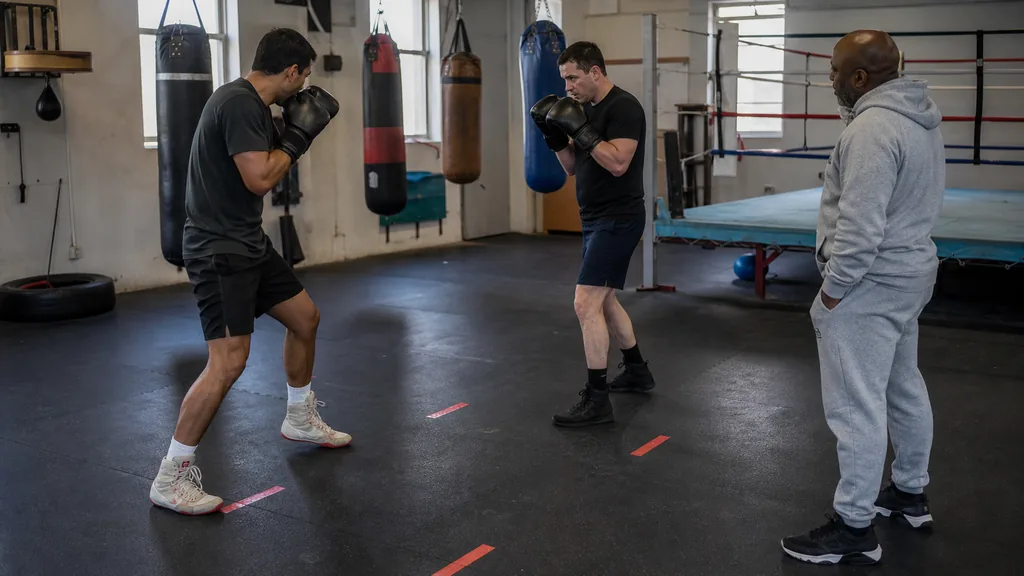
Round three: creep, jab, choose
Now the pad holder gives one clear response after the jab: high guard, small retreat or a visible parry. The boxer has only three choices: take another small step behind a jab, reset to range, or step away.
Do not add a hard cross yet. The lesson is decision-making. A good coach can make the drill harder later by adding a second cue, but the first version should make the feet and eyes work together without turning into sparring.
Four mistakes to stop early
The first is leading with the face. If your chin arrives before the glove, you have confused forward movement with an entry. Bring the step down to a size you can hold.
The second is leaving the rear foot behind. A long stance may feel powerful for a moment, but it makes a counter or an exit harder. Let the rear foot do its share before you add the next punch.
The third is throwing every jab hard. A sharp jab has a place, but range work also needs controlled touches that let you see the response. If every first jab is a full effort, you will either overreach or become easy to time.
The fourth is chasing a retreat. Someone stepping back has not automatically given you a safe one-two. They may be drawing you onto a counter or waiting to pivot. Keep taking ground in a usable stance until the next punch truly fits.
Put it into ordinary training
Use creeping entries after the warm-up and before hard bag rounds. Two or three technical rounds are enough. The aim is not to look busy. It is to make the small step feel so normal that you stop reaching for targets that are not there.
For partner work, agree the pace before you start. One person holds a mitt or shows a clear guard. The other person practises the entry. No surprise punches, no contact to the head and no race for points. The coach should be able to stop the drill at any moment and find both boxers balanced and attentive.
If you train near Kidbrooke, Greenwich or Blackheath, our Recreational Adults boxing classes teach these entries through controlled pads, bag work and partner drills. The first job is not to look quick. It is to arrive in a position where the next punch is honest.
The cue is simple: take a little ground, keep your shape, then let the punch fit the distance.
H&G Team
Writer at Honour & Glory Boxing Club, a community boxing gym in Kidbrooke, South East London.
KEEP READING
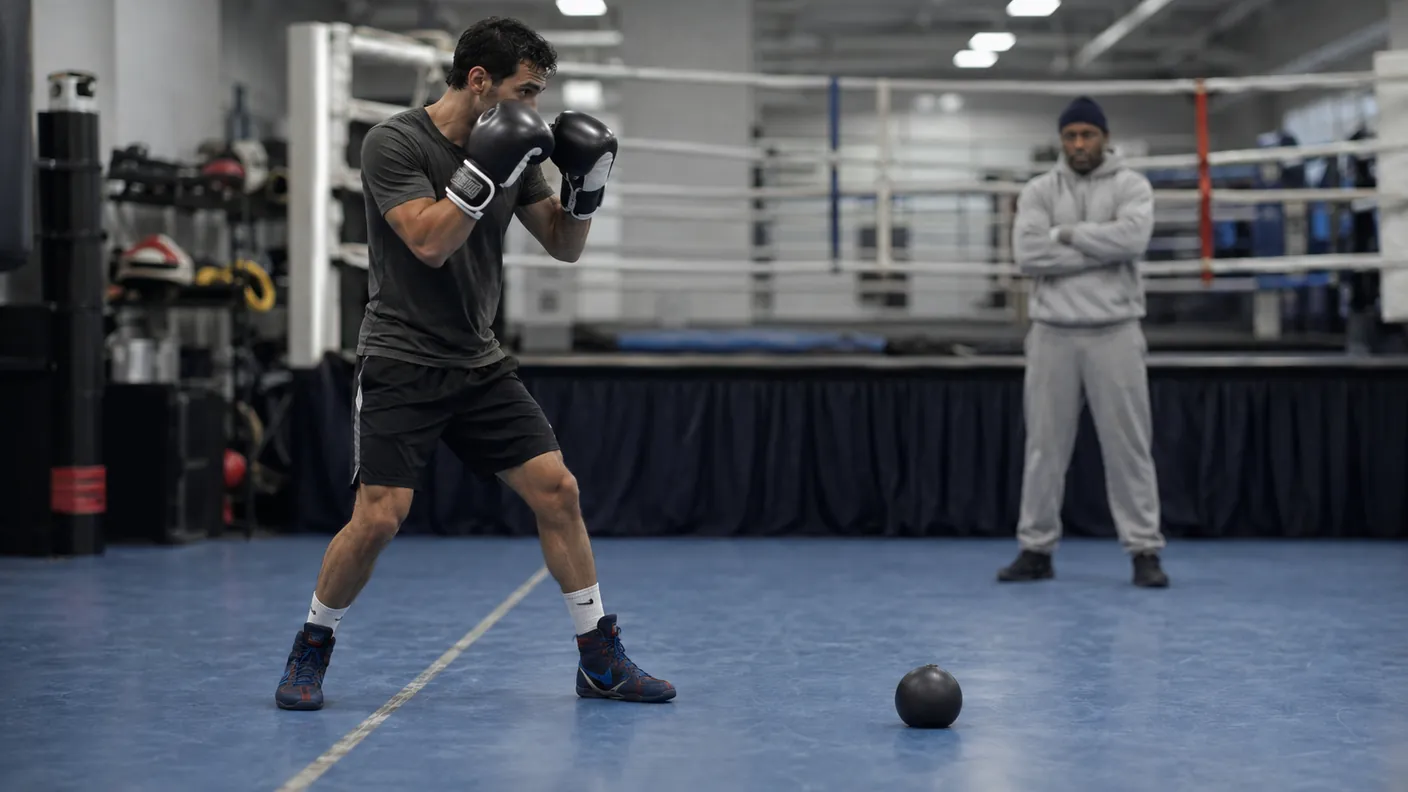
Boxing Footwork Ball Drill for Better Range
Use one small ball to practise stepping into range, seeing the distance and leaving without crossing your feet or reaching.
How to Make Space at Close Range in Boxing
Learn how to make space at close range without panicking, pushing illegally, or smothering your own punches.
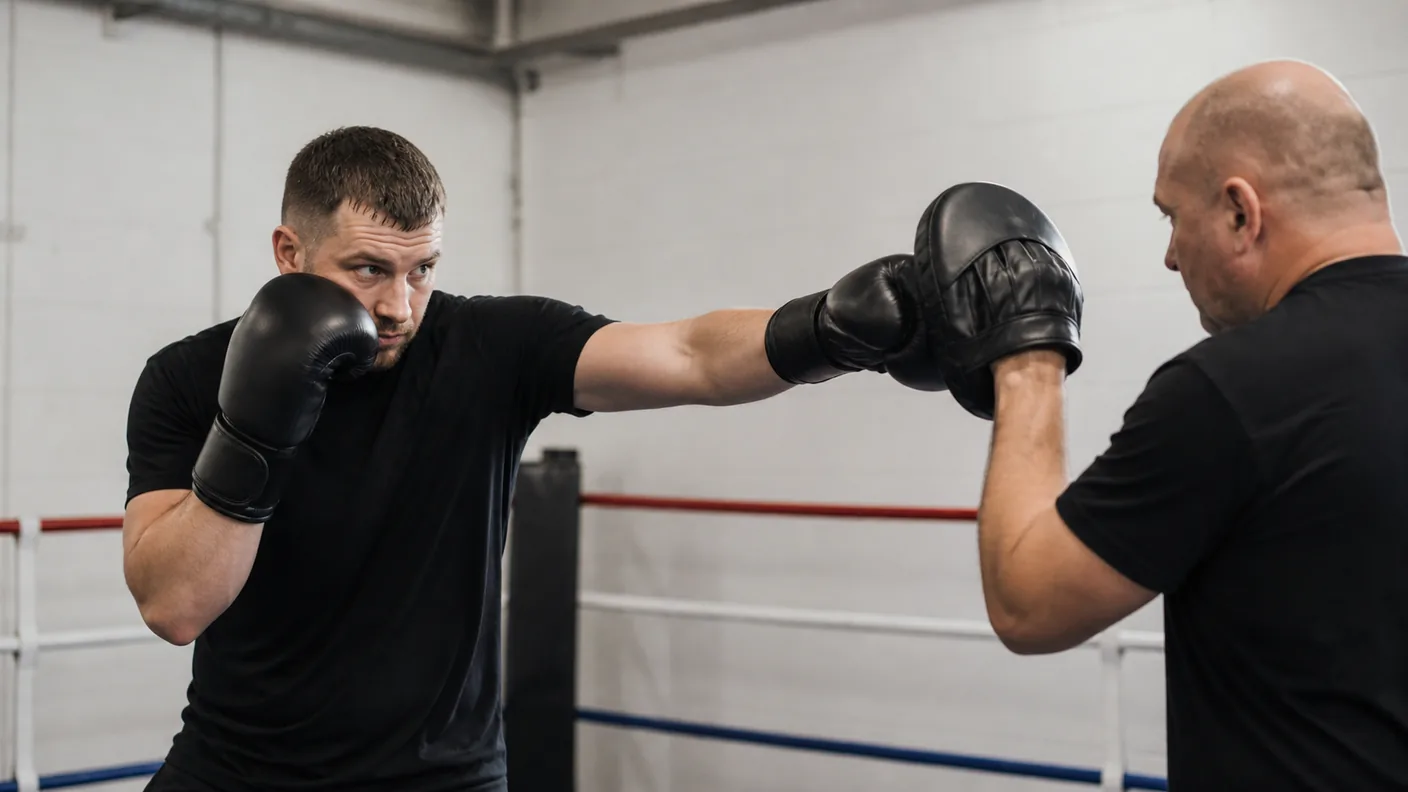
Boxing Punch Range: Short, Mid and Long Shots
Learn why a jab, hook and uppercut need different range, shape and foot position before you add speed or power.
Was this page helpful?
It takes one tap, and it genuinely helps.
Choose your next step
Turn this article into the right action
Some readers are ready to book. Some need the class route first. Pick the route that matches what you actually want.