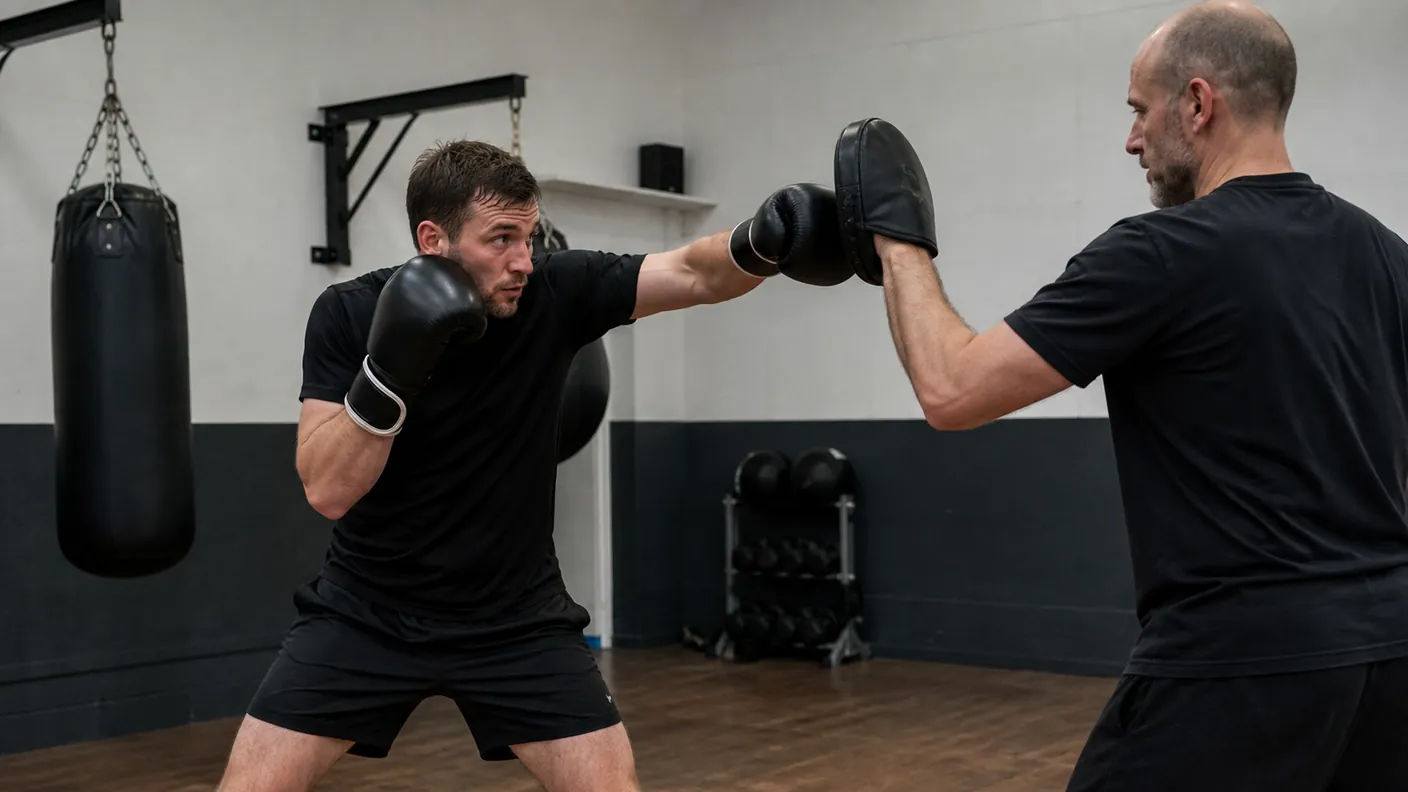
A lead hook can land cleanly and still leave you in trouble.
That is the bit beginners often miss. They throw the hook, watch it land and leave the head in the same place. The other boxer does not stop because you have had your turn. A return hook, straight punch or pressure step can arrive while your lead hand is still away from guard.
The hook-slip-hook drill gives the first hook an ending. You place a compact hook, move your head only far enough to leave the expected return line, then choose whether a second hook is genuinely available. It is a close-range technical drill, not an instruction to trade hooks or throw a fixed combination in sparring.
The short video below shows the rhythm. Use the coaching notes to keep the movement small, balanced and useful.
The first hook is not the end of the exchange
At close range, a hook changes your body position. The lead hip turns, the shoulder comes through and the glove leaves the cheek. That can create a useful opening, but it can also leave you looking straight down the middle if the hand stays out or the feet stop.
The answer is not to throw the second hook immediately. First recover enough of the guard, move the head off the original line and see what position you have reached. If you are balanced, close enough and the coach has shown a safe target, the second hook can be a sensible follow-up. If those things are missing, cover or reset.
A review of boxing performance and biomechanics describes punching as a connected action through the legs, trunk and upper body. That is the useful lesson here. The hook, defensive movement and next punch should belong to one position, rather than three arm actions forced together at speed.
Think of the middle movement as a small slip, not a dramatic duck. Your knees soften, the hips assist and the head shifts just enough that a straight return would pass outside the target. Your eyes remain up. The feet stay staggered. A coach should still be able to see a boxer ready to choose, not someone folded over and hoping the next punch misses.
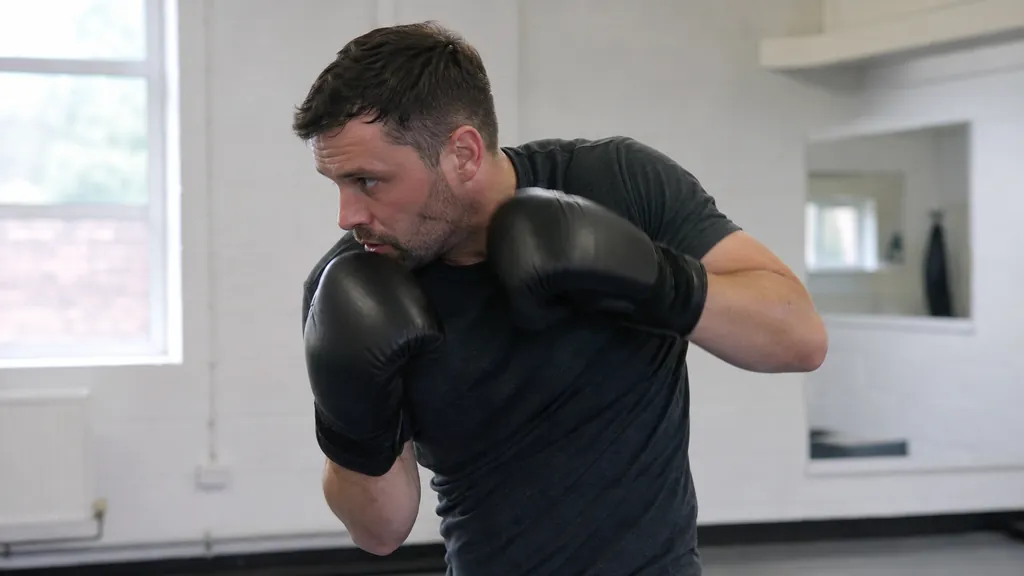
Make the hook compact before you add the slip
Start with one hook to a mitt or the side of a bag. Begin close enough that the elbow remains bent. Turn the lead hip, let the glove meet the target, then bring it back towards the face. The rear hand stays at the cheek while the lead side works.
If the hook has to travel across the room, it is the wrong starting distance. A long swinging hook will pull the shoulders around and make any defensive movement afterwards late. Take a small step in before the drill or choose a straight punch instead.
Once the first hook returns cleanly, add a small head movement after it. Do not decide in advance that every slip has to be huge or to one particular side. Let a coach show a clear slow line with a mitt, pool noodle or glove at a safe distance. Your task is to take the head off that line without losing the stance.
This is different from a roll under a hook. A roll uses a fuller circular path under a curved punch. A slip is smaller and is usually used against a straighter line. If you want to work the lower, more rounded movement, our guide to rolling under punches without folding is the better place to start. Do not blend the two movements into a vague bend at the waist.
England Boxing's coaching handbook puts balance, stance and controlled progression at the base of skill learning. That is exactly how to treat this drill. One tidy hook and one tidy slip are better than ten quick repetitions that leave the feet crossed and the hands low.
Three rounds to build the pattern
Keep the first versions quiet. The drill should make poor shape obvious, not hide it behind bag noise or tired arms.
Round one: hook, recover, slip
Work on a single mitt or a bag for one minute. Throw one relaxed lead hook, bring the glove back towards guard, then make a compact slip from the knees and hips. Hold the finish for a count of one before resetting.
Check three things at the pause: both hands are available, the head is between the feet, and you could take a small step without shuffling first. If not, make the hook shorter or the slip smaller.
Round two: hook, slip, show the second target
Now use a coach with two mitts. The coach shows the first mitt for the lead hook, then gives a slow visual line after the punch. Slip it, but do not throw again yet. The coach can hold the second mitt in place only after you have recovered the stance.
At first, simply point the lead glove towards the second mitt and reset. This removes the urge to chase a loud second punch. You can see whether the range is actually right and whether the rear hand has stayed home.
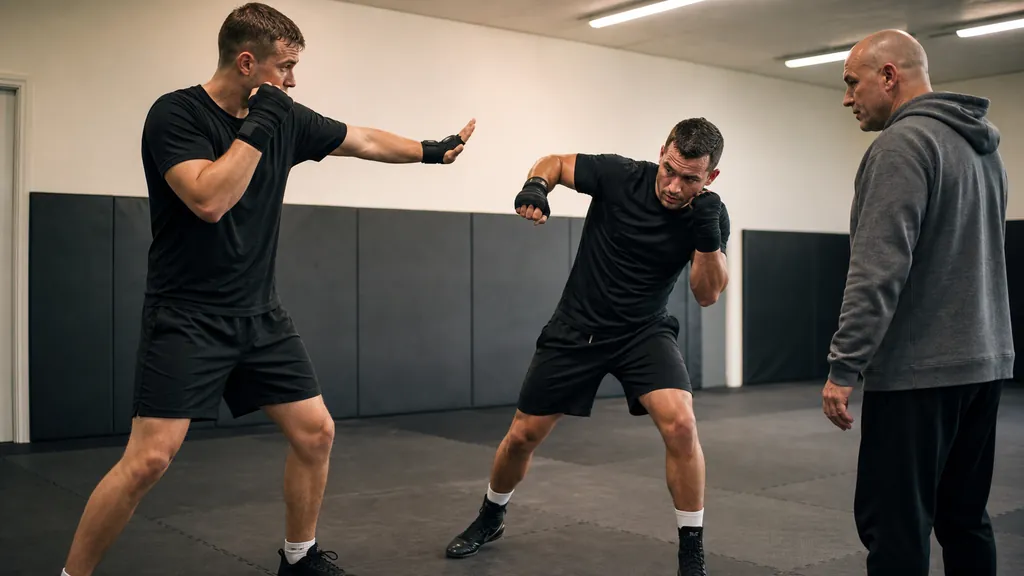
Round three: hook, slip, hook, leave
Only after the first two rounds stay tidy should you touch the second mitt with a controlled hook. Hook, recover, slip, second hook, then bring both gloves to guard and take a small step out or reset.
Do not chase the mitt if it has moved. The second hook is a choice, not a debt. If the target is too far away after the slip, the correct answer is to cover, step or start again. This makes the drill more useful than simply throwing two hooks because the feet and eyes have to decide whether the second punch belongs.
Four mistakes that spoil the drill
The first is using the slip as a bow. If your head drops towards the floor, your eyes disappear from the exchange and the legs have stopped carrying the movement. Keep the back long and move only enough to change the line.
The second is letting the lead hand stay outside after the first hook. The hook does not need to return all the way to a frozen pose, but it needs to recover enough that the centre is not vacant. A second punch from an open guard is usually a bad bargain.
The third is forcing a close-range drill at long range. Hooks need a range where the elbow can remain bent and the hips can turn without the boxer reaching. If you are too far away, use a jab, cross or step to get closer before trying this pattern.
The fourth is treating it as permission to trade. The drill is for pads, bag work and slow agreed partner practice. In sparring, the other boxer may cover, step out, clinch or throw a different punch. The right answer can be a guard and reset rather than trying to complete a remembered sequence.
Our guide to blocking hooks without opening the middle is a useful companion because it deals with the other side of close-range work: how to stay protected when the return is already coming.
Where the drill belongs in training
Use it after a warm-up and before hard bag rounds or busy padwork. Two or three one-minute technical rounds are enough. The work should leave you sharper, not exhausted.
Beginners can stop after the first round and practise hook, recover, slip. The second hook belongs only when a coach can see that the stance, range and guard are holding together. There is no advantage in adding a clever-looking finish before the first movement is dependable.
At Honour and Glory, our Recreational Adults boxing classes build close-range techniques through controlled pads, bags and coached partner drills. If you are near Kidbrooke, Greenwich or Blackheath, a coach can help you tell the difference between a useful small slip and a bend that leaves you exposed.
The cue is simple: hook, move your head, then decide.
H&G Team
Writer at Honour & Glory Boxing Club, a community boxing gym in Kidbrooke, South East London.
KEEP READING
How to Block Body Hooks in Boxing
Use a compact elbow-and-glove cover to block body hooks without exposing your head, folding forward or getting stuck at close range.
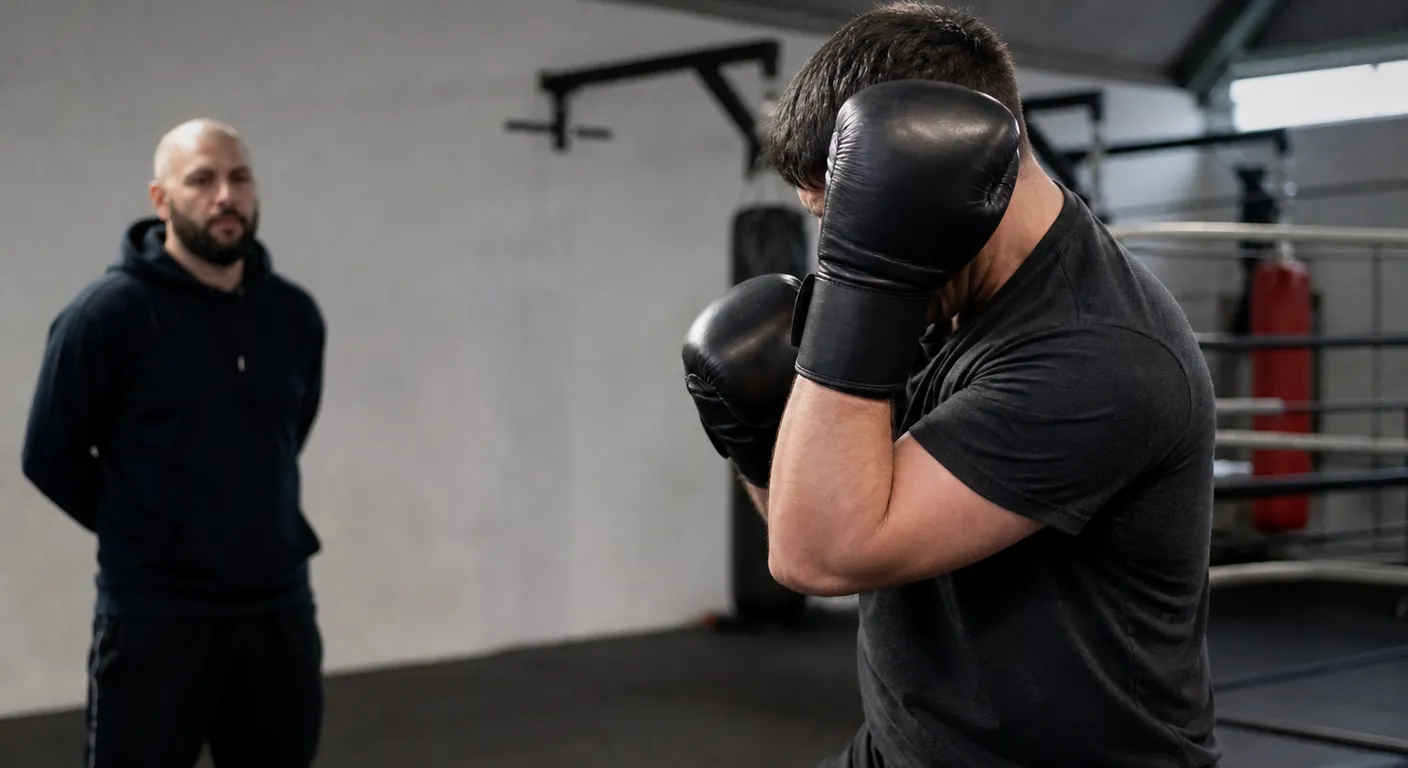
How to Block Hooks in Boxing Without Opening Up
Learn a compact hook block that protects your head, keeps your eyes up and leaves you ready to answer at close range.
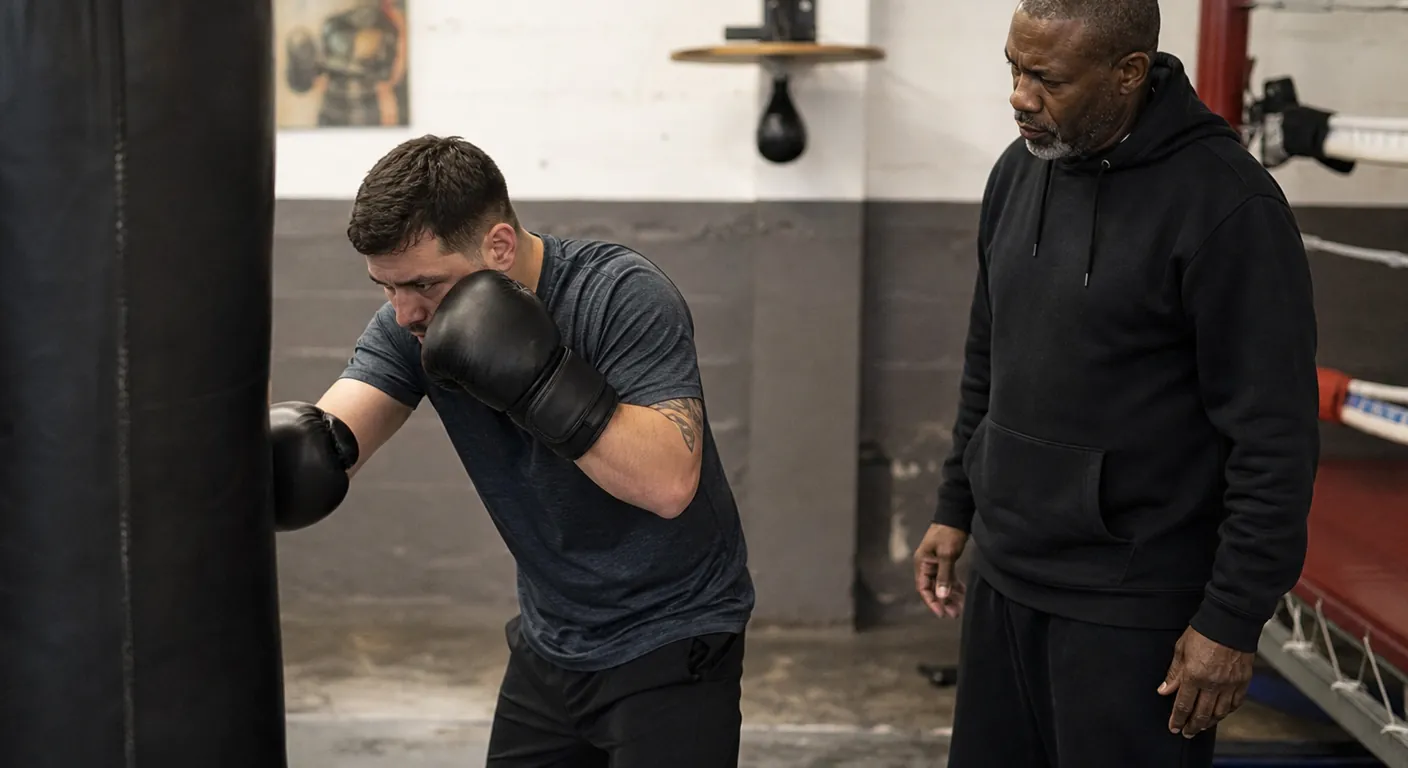
How to Make Space at Close Range in Boxing
Learn how to make space at close range without panicking, pushing illegally, or smothering your own punches.
Was this page helpful?
It takes one tap, and it genuinely helps.
Choose your next step
Turn this article into the right action
Some readers are ready to book. Some need the class route first. Pick the route that matches what you actually want.