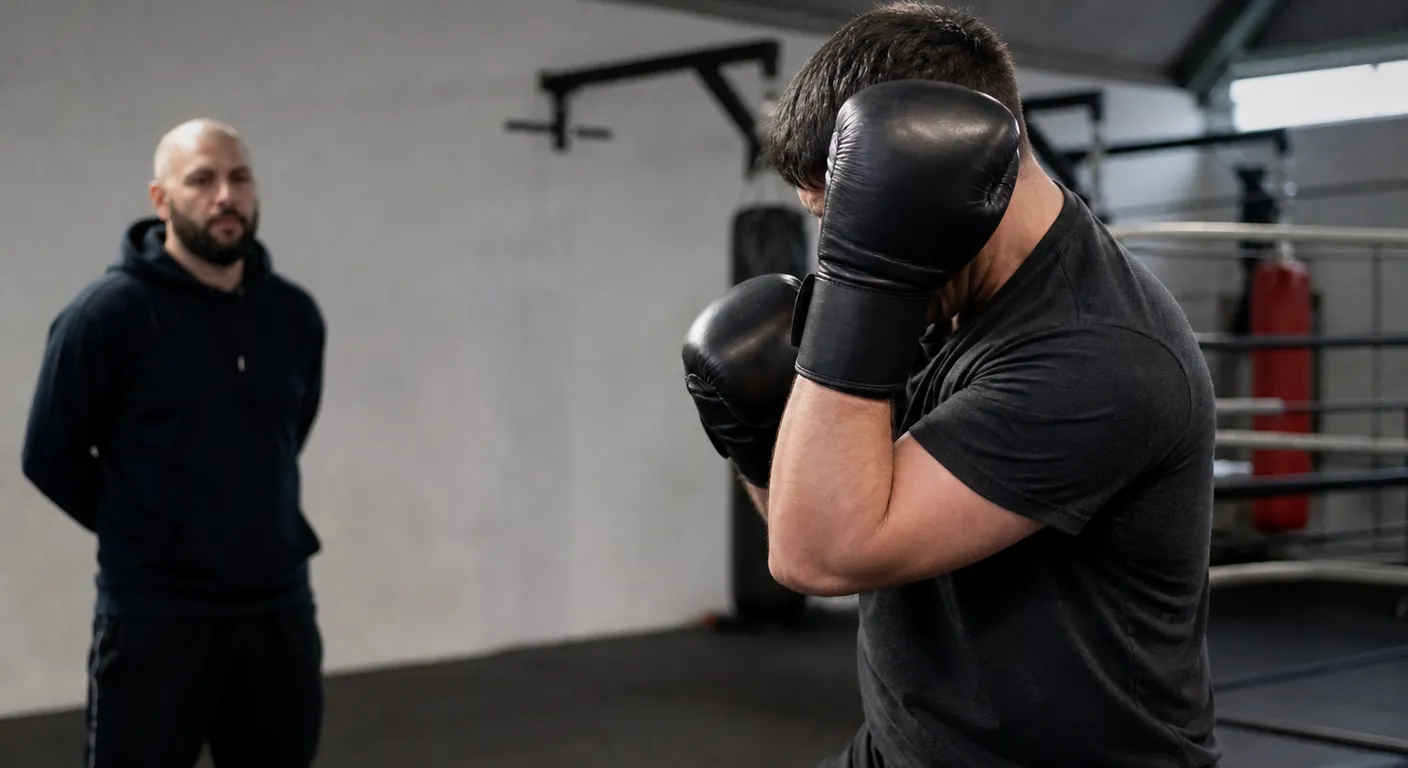
A hook is the punch that exposes a loose guard fastest.
At close range, beginners often see the glove coming and make the same mistake: they pull one hand away from their face, reach across to find the punch, and open the middle as they do it. The hook may miss, but the next shot has an easy route in.
The better answer is smaller. You turn slightly into the shot, keep the glove close to the side of the head, keep the elbow connected, and stay in a position where you can still see and respond.
Watch the short demonstration first. Then use the coaching points below to turn a simple block into a usable close-range habit.
A hook block is a shield, not a reach
A hook block is for the moment when a hook is already entering your space. It is not a long-range answer and it is not a move to make look dramatic.
For an orthodox boxer defending a left hook, the left glove comes tight to the left temple. The elbow stays close enough to cover the ribs and the forearm makes a compact wall beside the head. The body turns just enough to meet the shot with a solid shape. A southpaw does the same on the opposite side.
The important detail is that the hand does not travel far. If you chase the hook with a big arm movement, your guard opens somewhere else. The goal is to keep the door closed with the least movement that does the job.
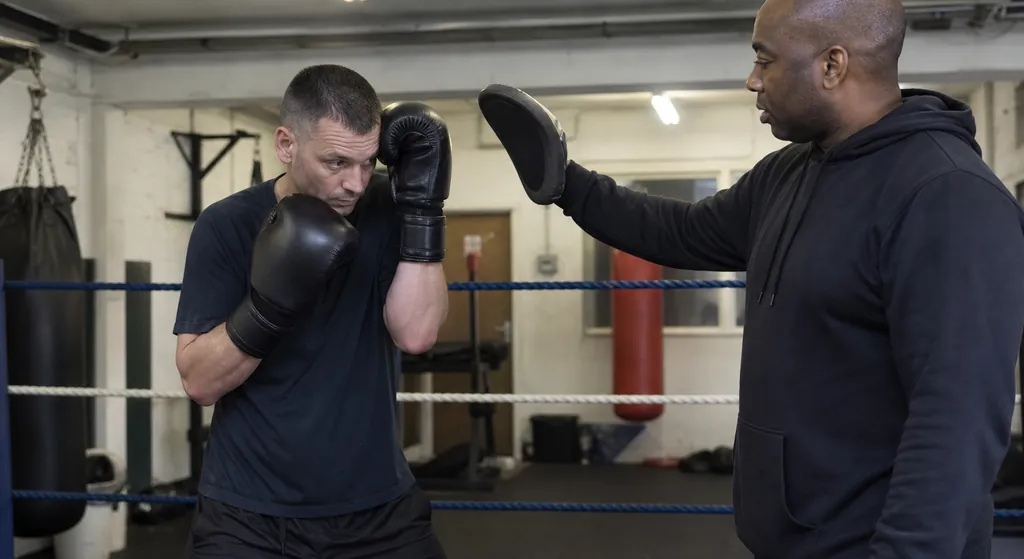
The block should let the glove and forearm take the impact, rather than leaving the temple or jaw exposed. Chin stays tucked. Eyes stay forward. Your opposite hand stays home rather than drifting down to watch the first block work.
This is why basic boxing stance and guard matters so much. A good close-range block is not invented when the hook is already coming. It comes from starting with the hands in a useful place.
Turn into the hook without folding over
There is a difference between turning into a hook and collapsing under it.
A small turn helps you make a stable shield. Your shoulder comes up a little, the glove stays connected to the side of the head, and your knees stay soft enough to absorb the movement. You are still looking at the other boxer. You are still standing on both feet.
Folding at the waist is different. The head drops, the eyes go to the floor, and the feet usually freeze. It can make a light shot slide over, but it leaves you unable to read the next punch. A boxer who cannot see has stopped defending and started hoping.
A technical and tactical review of boxing performance describes boxing performance as a connected mix of punching, movement, defence, distance and tactical behaviour. That is the right way to view the hook block. It is not just an arm position. It is a position that should leave the feet, eyes and next decision alive.
Try the shape slowly before you try it under pressure:
- Take your normal stance with both hands high.
- Imagine a hook coming to the side of the head.
- Raise the same-side glove a few inches, not a foot.
- Bring the elbow close to the ribs and tuck the chin.
- Turn slightly towards the incoming side while keeping your eyes level.
- Return to your normal guard without standing tall or crossing your feet.
If your glove finishes behind the ear, your elbow flares out, or you cannot see forward, the movement has become too big.
The elbow protects more than the glove
People usually think about the glove because it is closest to the head. The elbow is what stops a compact block becoming a gap at the body.
A high elbow with a loose rib line gives an opponent a body hook underneath. A low elbow with the hand wandering away gives them the head. The block works because the glove, forearm and elbow make one connected side of the guard.
That does not mean squeezing yourself into a frozen shell. You need enough structure to cover the line, but enough relaxation to move afterwards. If both shoulders are up by your ears and the legs are locked, you are hard to hit for a second but easy to crowd, push back or line up for the next attack.
The practical cue is simple: glove by temple, elbow near ribs, eyes forward.
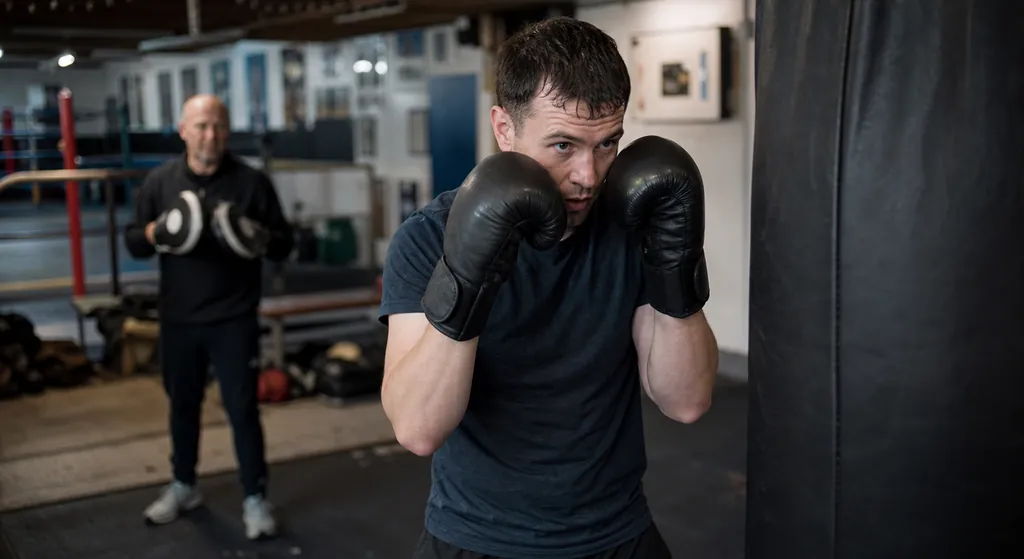
Use that cue during pad work. The coach can show a curved mitt outside either side of the head. The boxer does not have to smash the mitt or flinch away from it. They build the right cover, hold it for a beat, then return to stance.
Start with one side at a time. Once the shape is tidy, the coach can call left or right without warning. The boxer still works slowly. A rushed bad block is only a bad habit done at speed.
Block, answer, then leave the pocket
Blocking a hook is the first part of the job. It is not the finish.
If you cover up and remain in the same place, the other boxer can throw the next hook, change levels, fire an uppercut, or start leaning on you. The block buys a moment. Use it.
Your immediate answer does not need to be spectacular. It should suit the range and the shape you have after the block:
- Block the hook, then bring both gloves back to guard and take a small step out.
- Block the hook, then answer with a short straight shot through the middle if the line is clear.
- Block the hook, then turn or clinch if the range has collapsed.
- Block the hook, then reset the feet before throwing again if you are square or too close.
Do not decide that every block has to lead to a huge counter. That is how people punch themselves out of balance. Good close-range boxing is often one quiet defensive action followed by one clean decision.
A review of anticipation in combat sports found that more skilled fighters use earlier movement information when making defensive choices. In gym terms, you improve when you start reading the shoulder, elbow and distance before the glove has reached your face. The block is still there when you are late. Over time, it becomes the bridge to a calmer next move.
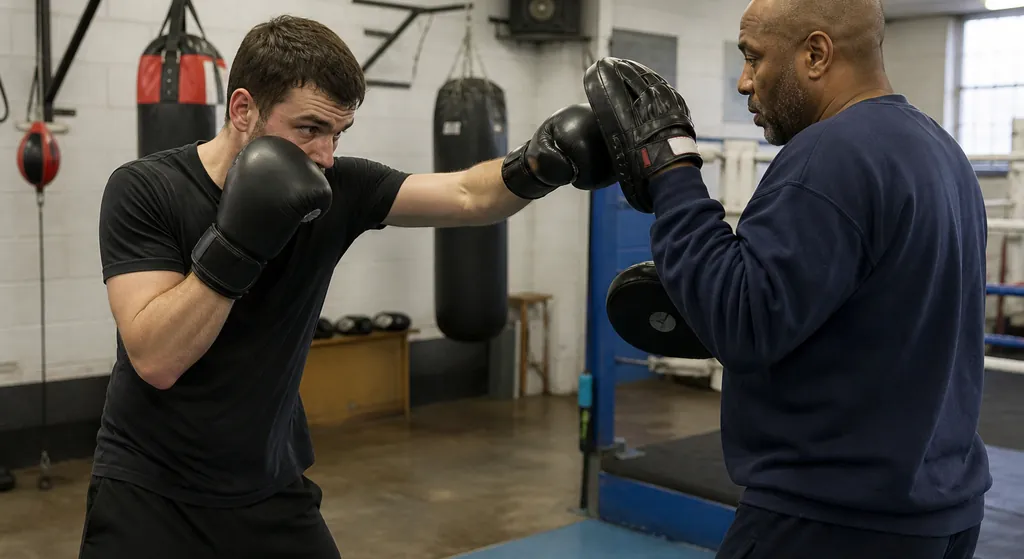
This is the same principle behind punching without dropping your guard. A guard that only appears after you have been hit is late. The best work keeps attack, defence and recovery connected.
A three-round partner drill
Use this drill after a warm-up, with gloves and controlled power. It is a technical drill, not an invitation for two people to throw hooks hard at each other.
Round 1: show the hook
Partner A stands at close but comfortable range and shows a slow hook shape without trying to land. Partner B blocks on the correct side, holds the position for one second, then returns to guard. Ten clean reps each side are better than fifty rushed ones.
The coach should watch three things: the glove stays close to the temple, the elbow stays close enough to cover the ribs, and the boxer can still look forward.
Round 2: block and reset
Partner A now gives a gentle hook to the glove or a focus mitt. Partner B blocks, then takes one small step back and resets. No counter yet. This round teaches the exit, which is the part beginners often forget.
If the defender leans backwards, stumbles or looks at the floor, reduce the pace. The reset is more important than making the block look tough.
Round 3: block and choose
Partner A can show a hook on either side. Partner B blocks, then chooses one simple answer: step out, short straight shot, turn, or clinch position. Keep the choices limited. Boxing decision-making improves when the first options are clear enough to repeat well.
For a wider view of what happens after the first shot, read the three phases of a boxing exchange. A block keeps you in the exchange. The next action decides whether you regain control of it.
Common mistakes that leave you open
The first mistake is swatting. If the glove travels across the face or out towards the opponent, it can expose the other side and make the follow-up hook easy.
The second is pulling the elbow away from the body. That turns a head block into an open invitation to the ribs. Keep the arm connected without clamping yourself rigid.
The third is closing both eyes or staring at the floor. A hook block should protect your view, not remove it. You need to see the uppercut, body shot or step that follows.
The fourth is countering before you have balance. If the block has left you square, crowded or leaning, reset before you throw. The bag will let you throw from anywhere. A partner will not.
The fifth is using the block at the wrong range. At long range, use the feet, a catch or a parry rather than waiting for a hook to arrive on the side of your head. The block is a compact close-range answer, not a default setting for every punch.
The coaching cue
Close the side. Keep the middle safe. See the next shot.
That is what a good hook block does. It does not make you invincible, and it does not need to look flashy. It gives you a solid second at close range, which is enough time to answer, turn, or leave with your shape intact.
If you are in Kidbrooke, Greenwich or nearby, our Recreational Adults boxing classes teach defensive habits through controlled pad work and partner drills. You learn to keep your guard useful when punches are coming back, not just when the bag is standing still.
H&G Team
Writer at Honour & Glory Boxing Club, a community boxing gym in Kidbrooke, South East London.
KEEP READING
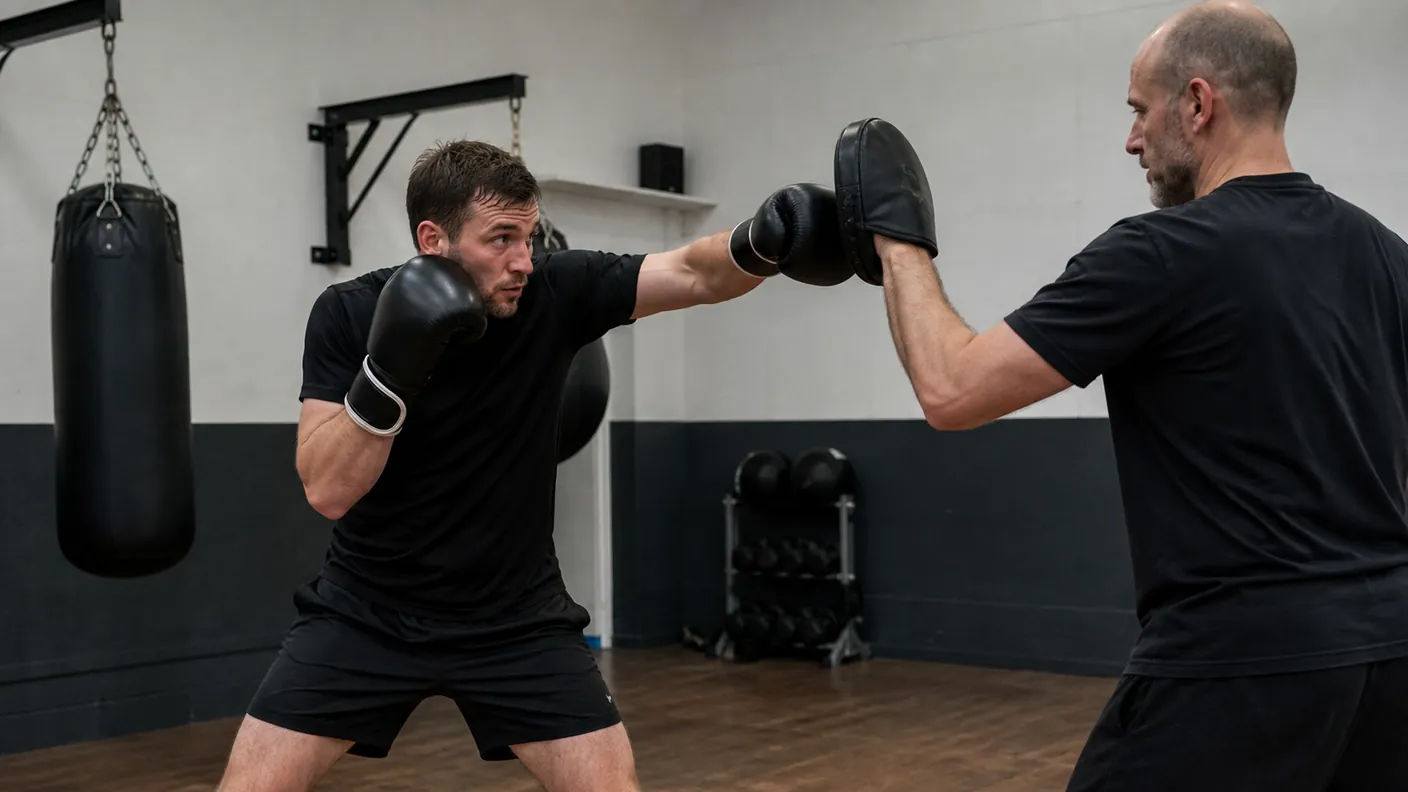
Hook-Slip-Hook: A Calm Close-Range Boxing Drill
Use a compact hook, small defensive slip and second hook to practise close-range boxing without standing still after your first punch.
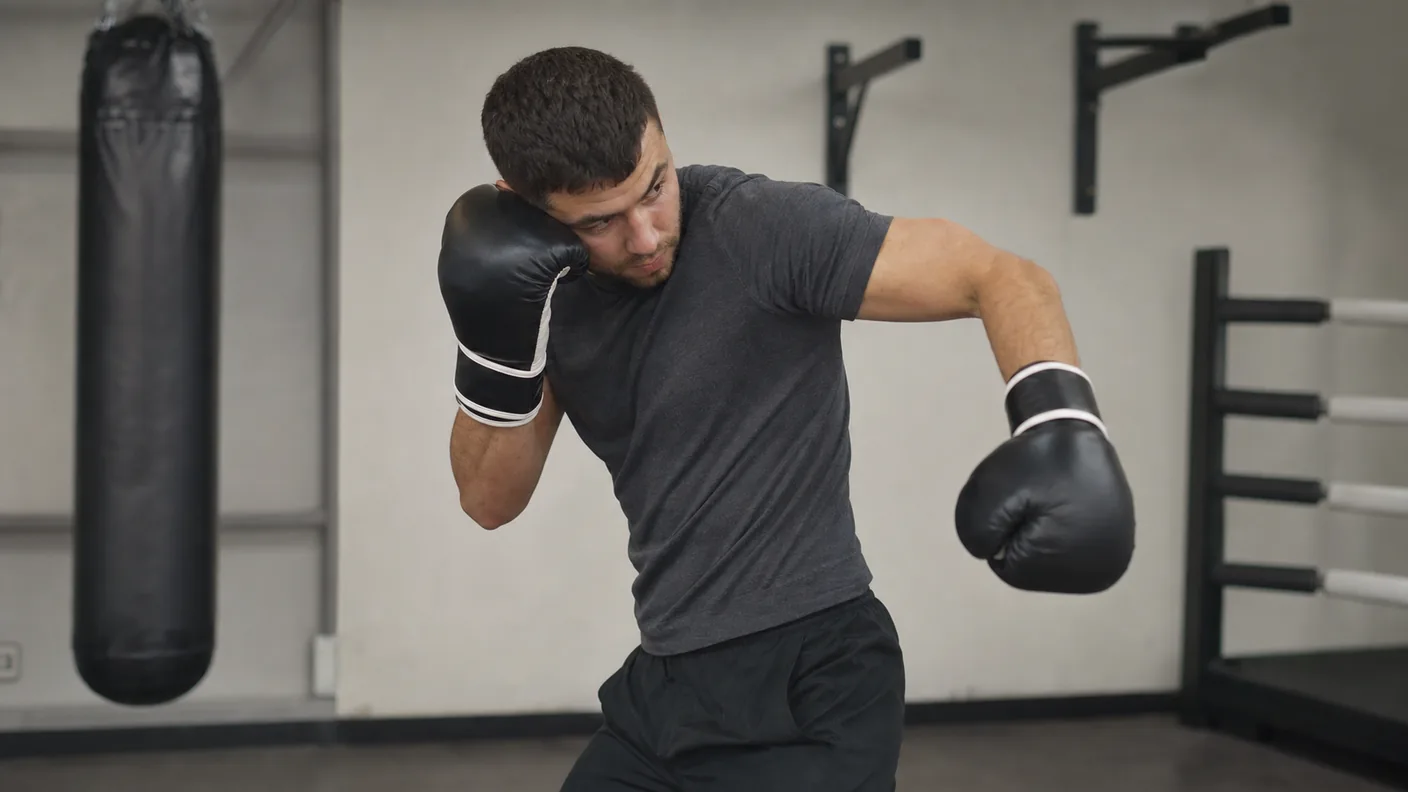
One-Two, Block, Hook: The Next Boxing Answer
Use a compact block after the one-two, then return with a lead hook without losing your stance or chasing the exchange.
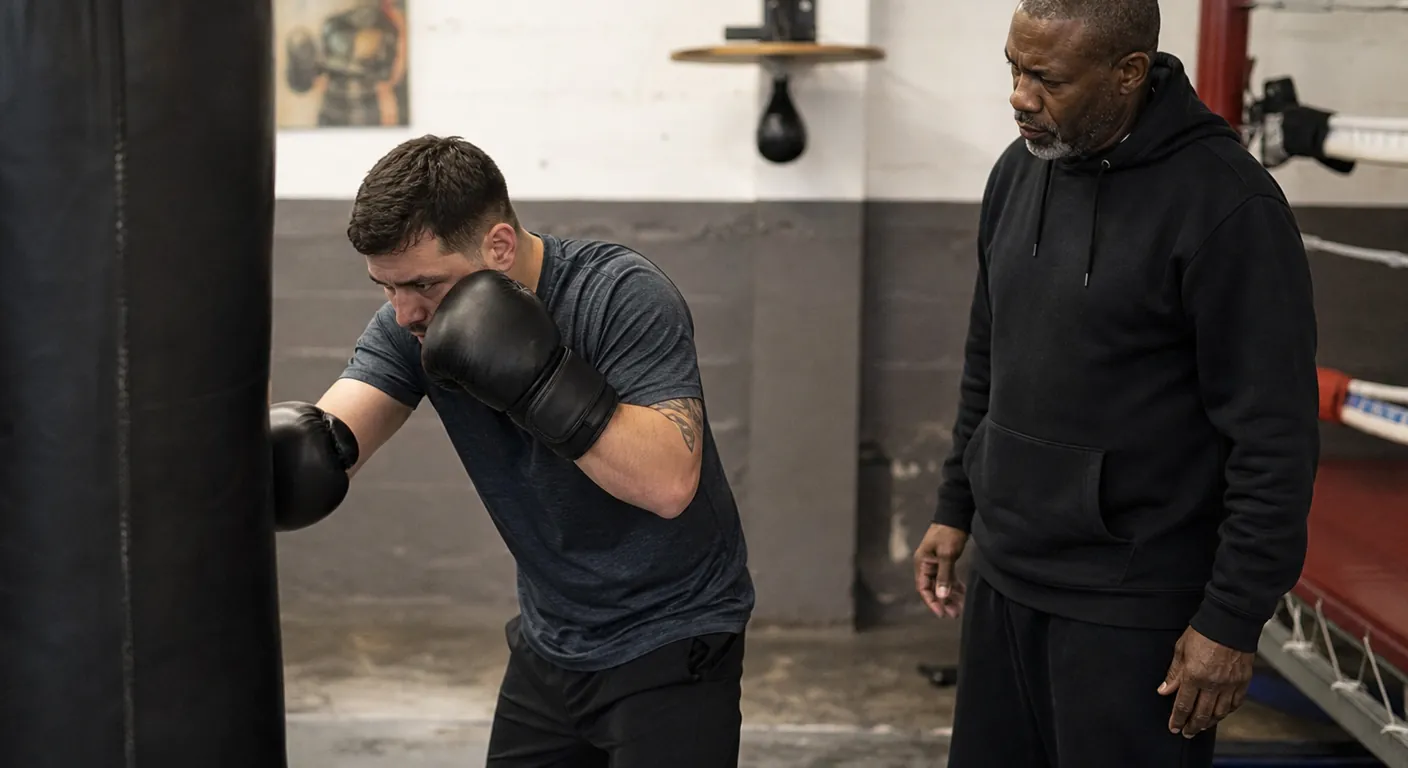
How to Make Space at Close Range in Boxing
Learn how to make space at close range without panicking, pushing illegally, or smothering your own punches.
Was this page helpful?
It takes one tap, and it genuinely helps.
Choose your next step
Turn this article into the right action
Some readers are ready to book. Some need the class route first. Pick the route that matches what you actually want.