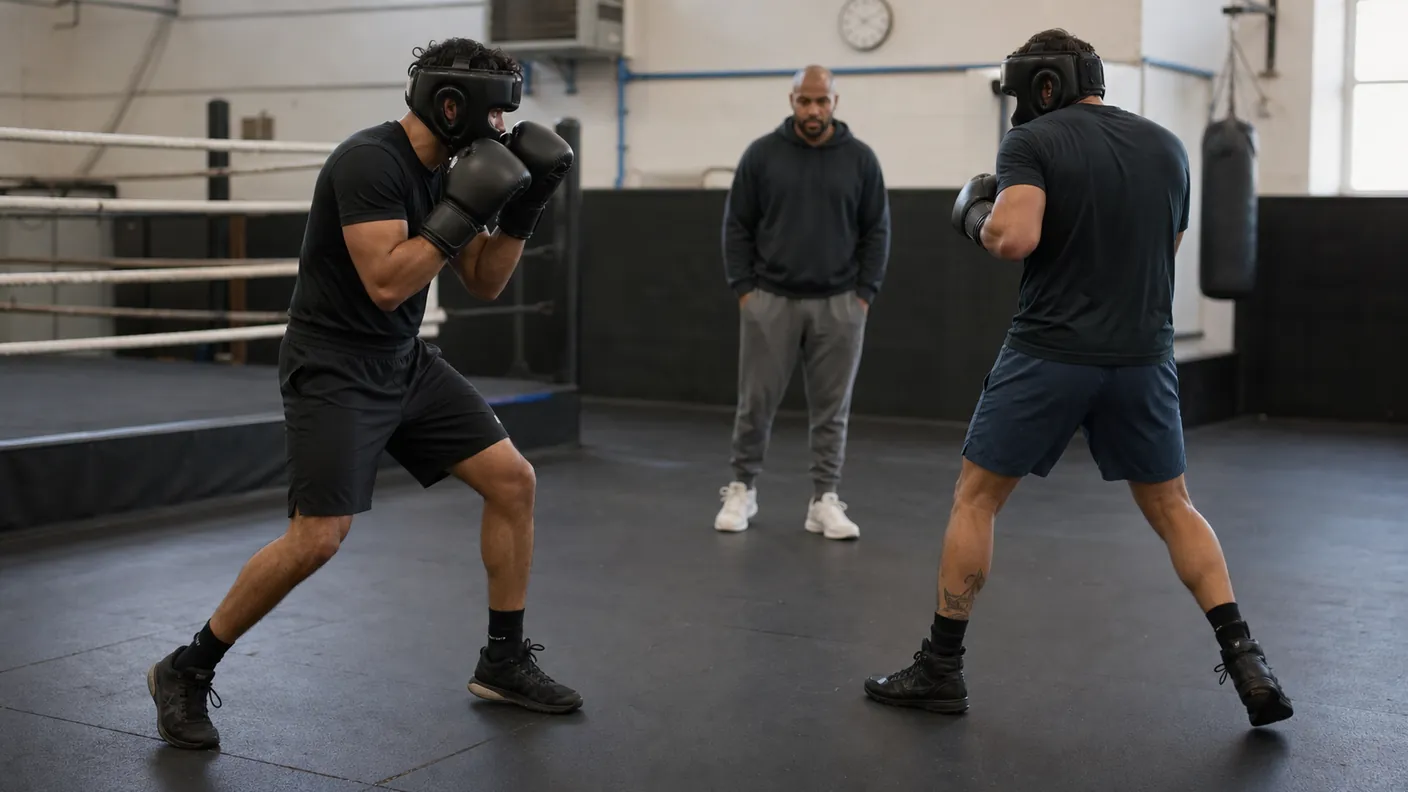
A boxer who keeps stepping back can make you feel slow, even when your feet are moving all round.
The usual reaction is to chase. You see the other boxer give ground, stretch for the jab, then hurry the cross before they disappear again. Your feet get narrower, your head comes forward and the punch lands only if the other person stops moving. That is not pressure. It is a reach with ambition behind it.
The better answer is quieter. Take ground in stance, let the lead hand make the distance honest, and only throw when your feet have brought you close enough to finish in balance. You are not trying to catch every retreat with a six-punch burst. You are trying to make the ring smaller without giving away a counter.
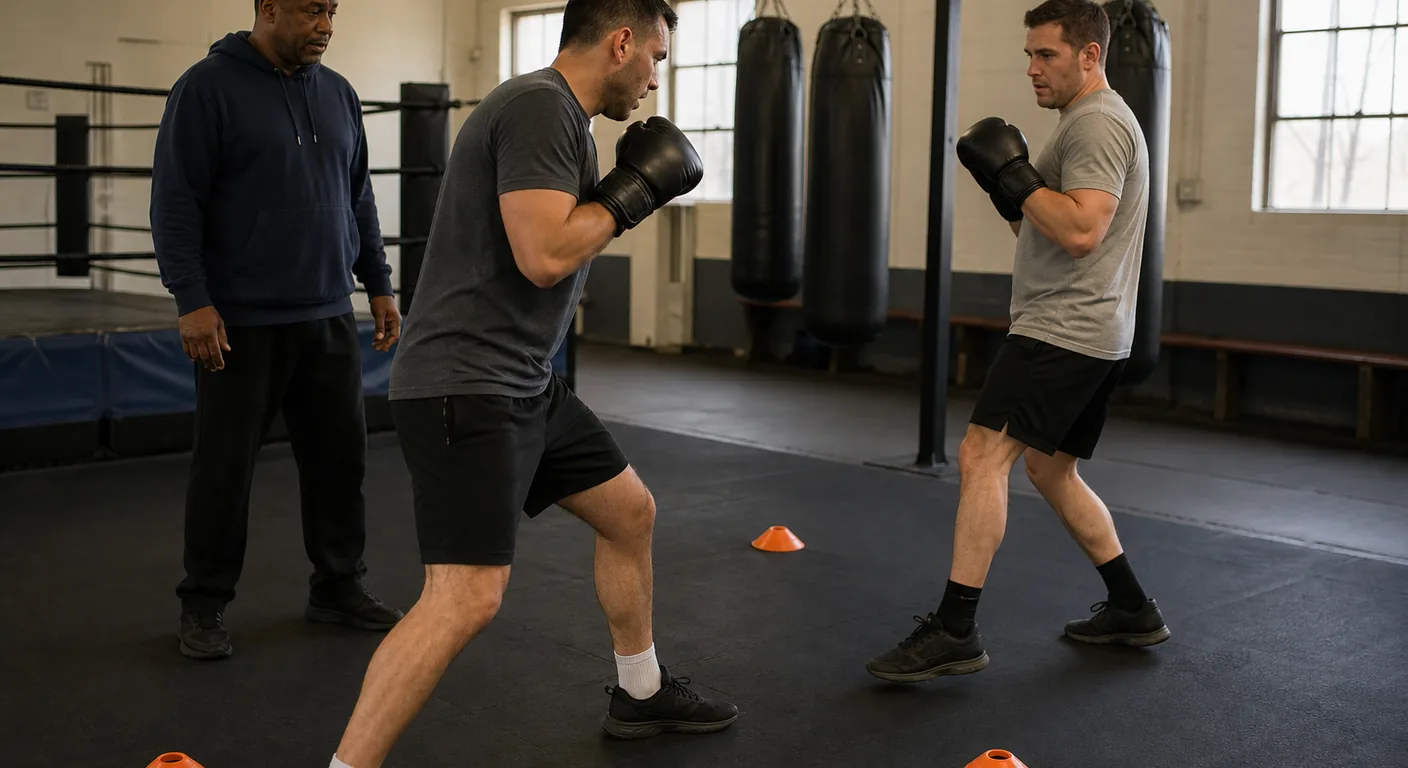
Watch the short drill below, then use the coaching notes to turn it into useful footwork rather than a chase.
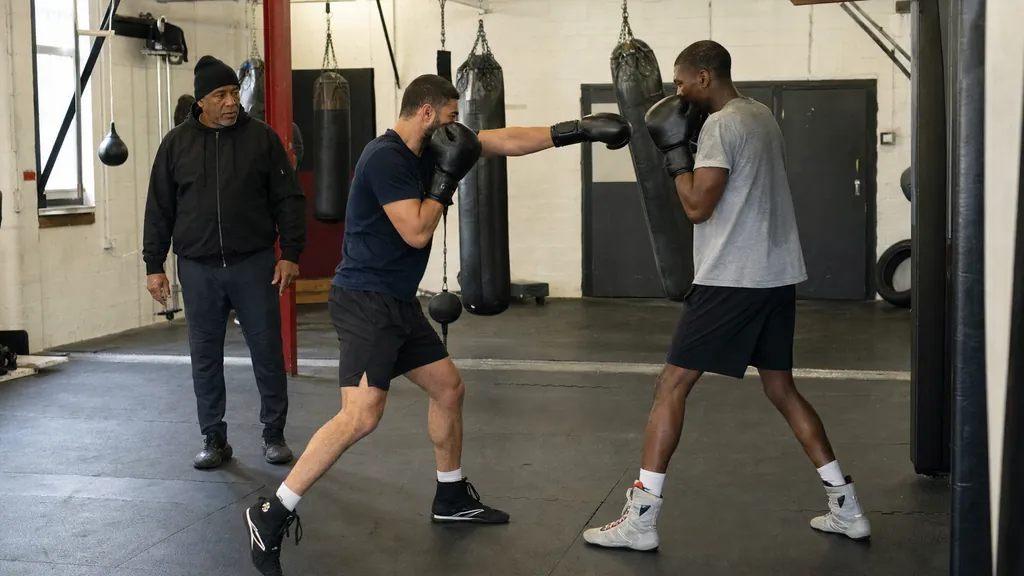
Why reaching makes a retreating boxer easier to fight
A retreating boxer wants you to become impatient.
When you overstep, your weight lands over the front foot and your rear foot trails behind. Your jab becomes a stretch rather than a punch. Your cross arrives after your balance has already gone. The boxer moving back does not need to be especially fast at that point. They only need to wait for the moment your feet stop agreeing with each other.
That is why good pressure is not simply walking forward. It is keeping enough stance width and posture that you can still punch, defend or stop. England Boxing's coaching handbook makes the same foundation clear: useful footwork keeps balance while changing distance and direction, so punches come from a solid base.
The rule is simple: do not borrow distance from your head.
If your chin has to travel beyond the front knee for the jab to land, you are too far away. Let the other boxer step back. Bring your feet forward in order. Then take the next honest shot.
Let the lead foot take the ground first
When moving towards an opponent, the lead foot moves first. The rear foot follows just enough to restore the stance.
That sequence matters. If the rear foot jumps forward before the lead foot has found space, the feet come too close together. If you fling the lead foot too far forward, the rear foot has to drag, and you end up square when the punch is due. Neither version gives you a dependable platform.
Think small. The lead foot takes a measured step. The rear foot follows. The gap between them should still look like your normal boxing stance, not a lunge frozen halfway through.
A good way to test the step is to stop after it. Can you throw a jab without leaning? Can you take a small step back if the other boxer fires? Can you turn left or right without untangling your feet? If the answer is no, the step was too big.
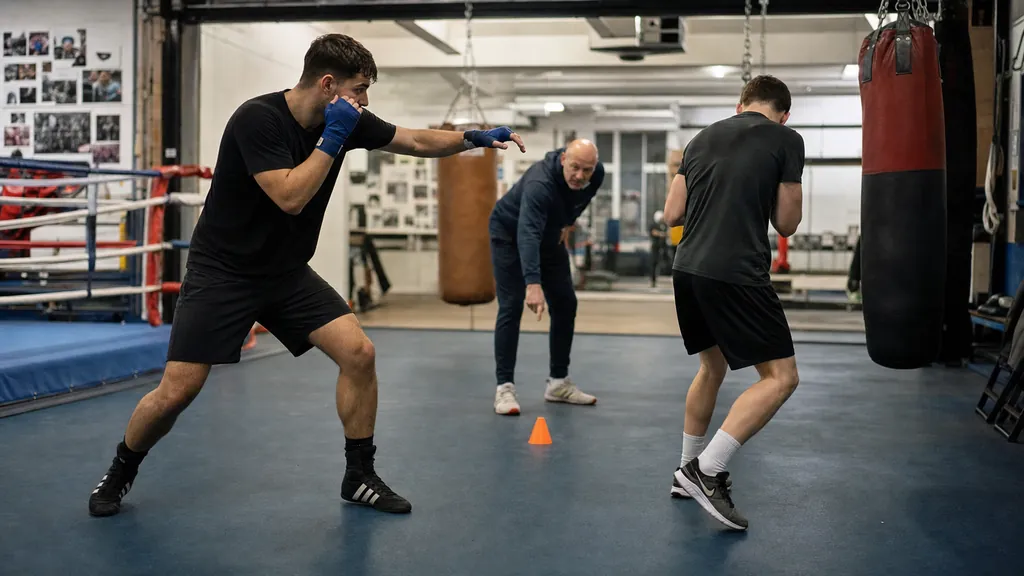
Do not try to match every backward step
A moving opponent can take one step back, pause, angle away or suddenly set their feet to counter. If you try to copy every retreat with an equal-sized chase, you become easy to read.
Instead, treat their movement as information.
If they take one small step back, you may only need a small step and a jab to keep them busy. If they take two hurried steps and approach the ropes, you can take the centre and make them choose an exit. If they step back, settle and show the right hand, your next move might be a feint or a reset rather than an automatic entry.
A technical review of boxing performance describes boxing as a connected task of punching, movement, defence, distance and tactics. That is useful here. The forward step does not exist on its own. It has to fit the range, the opponent's reaction and the position you will occupy after the punch.
Your feet should be closing the space in stages. Small step, see. Small step, touch. Small step, punch when the distance is there. That is more tiring for the retreating boxer than one reckless rush, because it gives them less obvious timing to work with.
Use the jab to make the retreat cost attention
A retreating boxer is not always running away. Often they are trying to draw you onto a long counter.
The jab is how you make that harder. A proper jab does not need to land hard every time. It can put the lead glove in their eye line, ask them to cover, interrupt their feet and make their next backward step less relaxed. It also lets you check whether you are actually close enough for the right hand.
Use three simple versions in controlled drills:
- A long jab when your feet have already brought you into range.
- A light measuring touch when you are at the edge of range and still deciding.
- A jab to the chest line when the head is moving but the body is available.
The mistake is treating the jab as a fishing rod. Do not leave it hanging out while your feet catch up. Touch, bring it home, step again if needed. Our guide to the half-jab as a range finder explains how a short lead-hand touch can test distance without becoming a lazy arm.
The jab should not force the pursuit. It should organise it.
Put a pause between taking ground and throwing hard
Beginners often hear "keep the pressure on" and translate it as "never stop punching".
That creates bad rounds. The hands go first, the feet follow late, and each missed punch gives the other boxer another clean angle. A measured pause is not hesitation. It is where you read whether the retreat is real, whether the opponent is set, and whether your next punch belongs at that range.
Picture the sequence:
- The opponent takes a step back.
- You bring the lead foot forward without leaning.
- You show the jab or feint the shoulder.
- The opponent reacts, retreats again, covers or sets to counter.
- You choose the next small step, a jab, a reset or an angle.
This is how pressure starts to feel calm. You are not following the other boxer around the ring. You are asking them to keep solving the space in front of them.
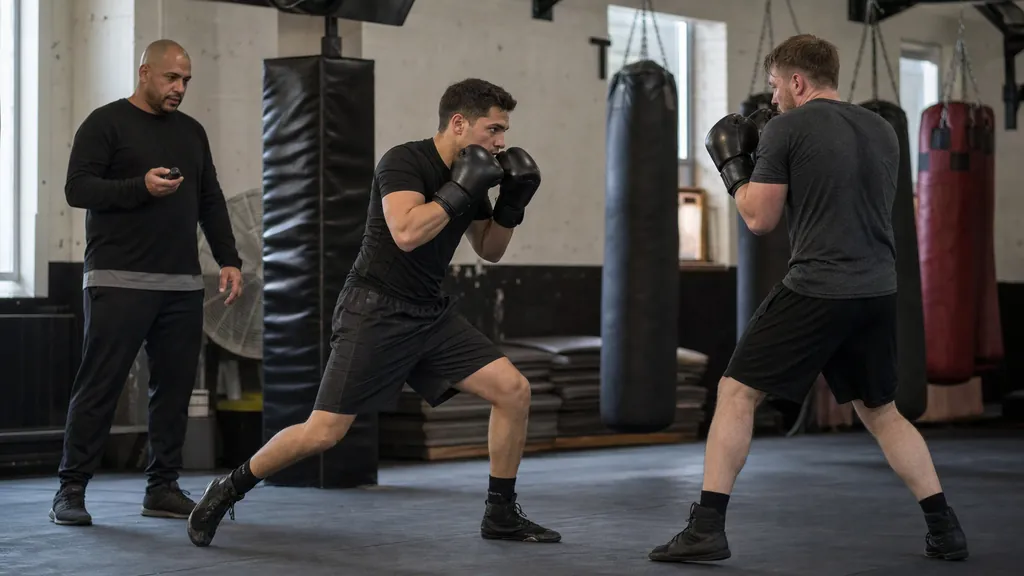
The partner drill: advance, touch, reset
Keep this drill controlled. It is for foot placement, distance and decision-making, not for trying to trap a partner against the ropes.
Partner A is the boxer taking ground. Partner B is allowed to take one calm step back, pause or angle away. Both start at a distance where a full jab is almost available but not quite.
Round one: feet only
Partner B steps back once. Partner A follows with a small lead-foot step and rear-foot recovery. Freeze. Check stance width, knees, guard and head position.
Do not punch yet. If Partner A is leaning or the feet have become narrow, reset before continuing. The round only counts when the boxer can stop in a position that still looks ready.
Round two: add the jab
Use the same movement, but Partner A adds one light jab only when the range becomes honest. The jab comes back to guard before the next step.
If Partner B has moved too far, Partner A should not reach. They use the lead hand as a feint or remain patient until another small step brings the target into range. This is the habit that prevents pressure from becoming a chase.
Round three: choose the answer
Partner B can now step back, cover high or set their feet behind a light return jab. Partner A must make one clean decision: step and jab, show the lead hand then reset, or step to an angle and take the centre.
Keep the contact light. The aim is to see when a retreat has become a trap. A coach should stop the round if either boxer starts rushing for a score.
Common mistakes when following a moving boxer
The first mistake is taking one giant step. A big step feels as though it wins ground, but it usually leaves the rear foot stranded and the head easy to counter. Make the step smaller and take two decisions instead of one gamble.
The second is punching before the feet arrive. If the jab or cross leaves while you are still falling forward, the other boxer can make it miss with one more step. Close the distance first, then punch from the new position.
The third is moving in straight lines without changing the picture. A retreating boxer who knows you will follow their chest can keep steering you into their favourite counter. Use the jab, feint, small angle step or pause to make the route less predictable.
The fourth is staring at the head. When a boxer steps back, their head is the target that moves fastest. A chest-line jab, a glove touch or simply taking the centre can be more useful than reaching for a head shot that is no longer there.
The fifth is forgetting that the other boxer can stop. The moment they plant their feet, your chase has to end. Cover, reset, feint or move to an angle. Do not walk onto a boxer who has just set a trap.
The coaching cue
Take the ground with your feet, not your face.
That is the habit. Lead foot forward, rear foot restores the stance, jab only when the range is honest, then make the next decision. The boxer who keeps stepping back will eventually run out of easy space if you stay balanced enough to make every retreat cost them attention.
If you are in Kidbrooke, Greenwich or nearby, our Recreational Adults boxing classes teach this kind of movement through pads, bag rounds and controlled partner drills. You can learn to take ground without mistaking a chase for pressure.
H&G Team
Writer at Honour & Glory Boxing Club, a community boxing gym in Kidbrooke, South East London.
KEEP READING
How to Close Distance in Boxing
Learn how to close distance in boxing without rushing, reaching or walking onto counters. A practical footwork guide for beginners.
Shift Counter in Boxing: Punch as You Move
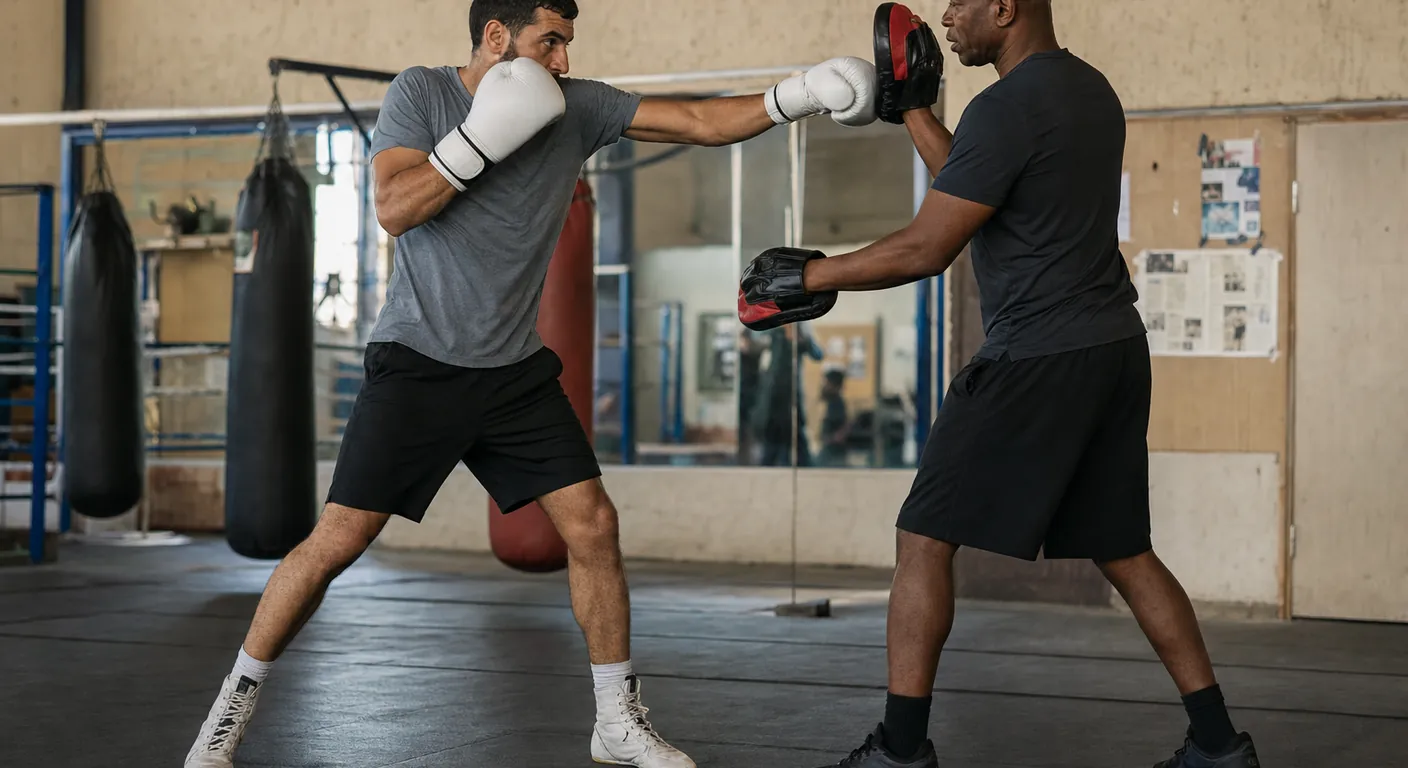
Learn the shift counter: a simple way to step off pressure and punch while you change angle, instead of backing up in panic.
How to Box a Taller Opponent Without Rushing
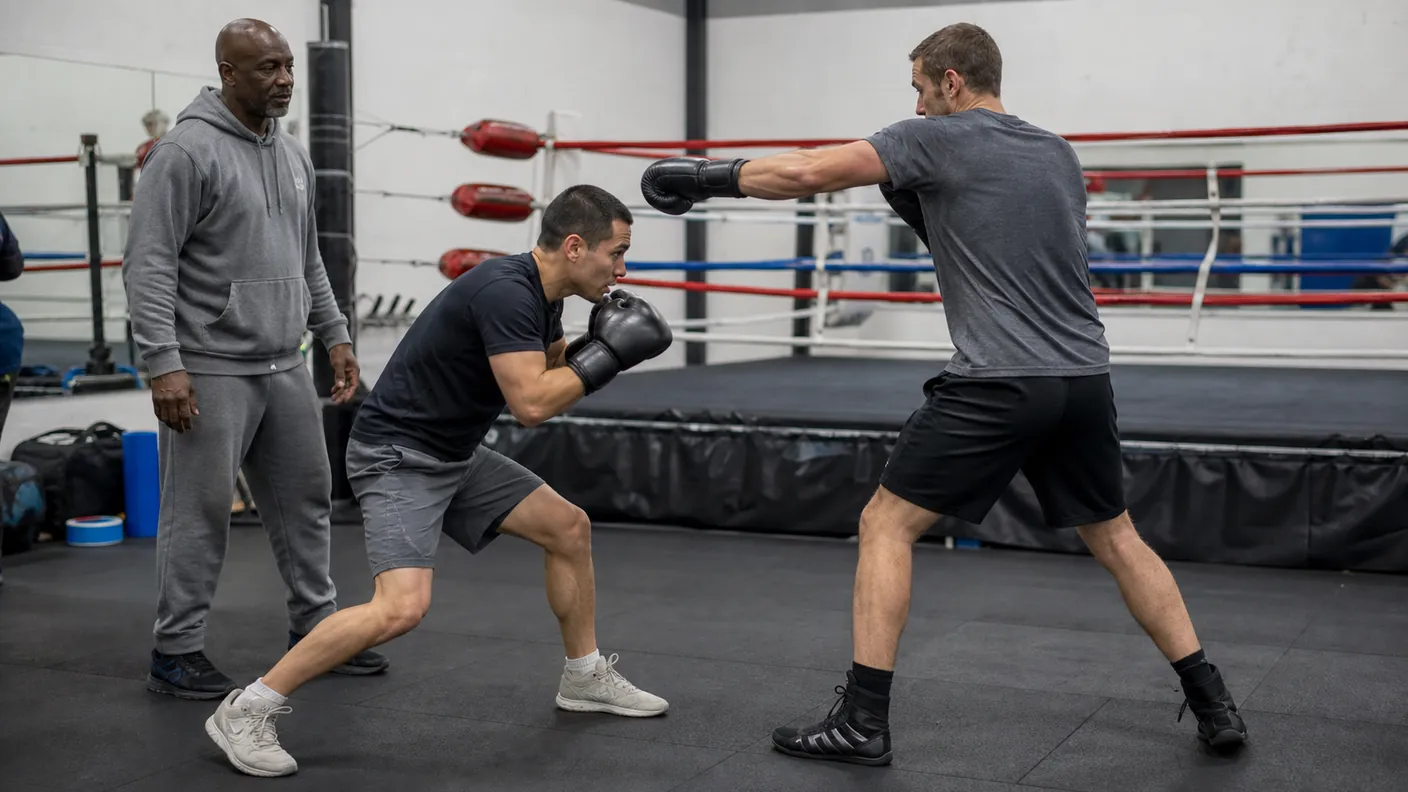
A practical coaching guide to closing distance, changing rhythm and making a taller boxer miss without walking onto the jab.
Was this page helpful?
It takes one tap, and it genuinely helps.
Choose your next step
Turn this article into the right action
Some readers are ready to book. Some need the class route first. Pick the route that matches what you actually want.