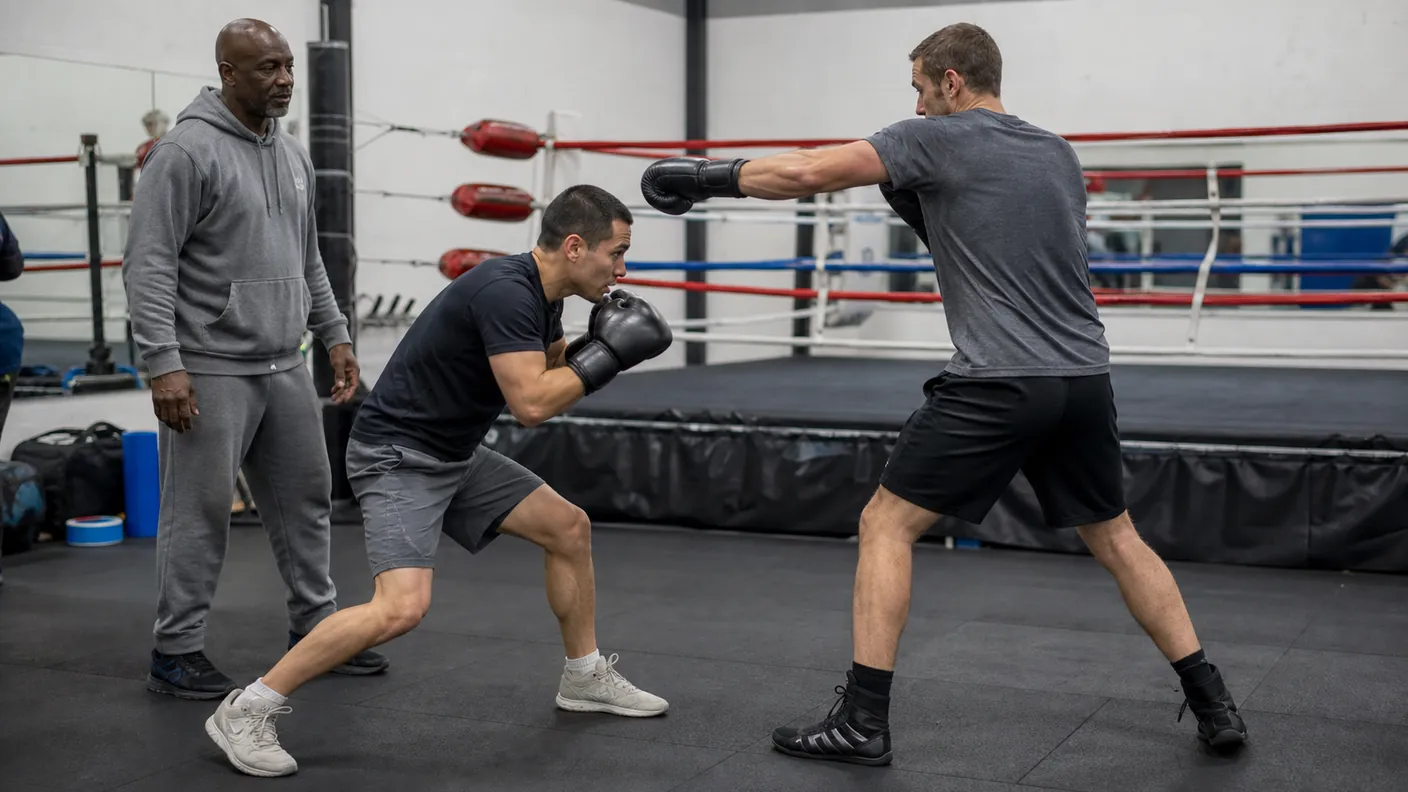
A taller opponent wants you to get impatient.
That is the whole trap. You stand outside their jab, feel as if your arms are too short, then rush across the gap in one straight line. The tall boxer does not need to be brilliant. They only need to meet you halfway with the jab, step back, or turn you as you overreach.
The answer is not to be braver. The answer is to arrive better.
If you are the shorter boxer, long range is usually not your range. You need to get either just outside the jab where the taller boxer is made to reach, or inside where your shorter punches and lower centre of gravity start to matter. The dangerous place is the dead zone between the two, where you are close enough to be hit but not close enough to work.
Watch the drill below with that in mind. The useful part is not a magic move. It is the idea that the shorter boxer keeps moving, changes rhythm, makes the taller boxer commit, then enters when the distance has been disturbed.
Do not admire the reach
A reach advantage only hurts you if you accept the range where it works.
Beginners often freeze when they face a taller partner. They see the lead hand in front of them and treat it like a closed gate. The round becomes a waiting game: wait for the jab, wait for the perfect slip, wait for the taller boxer to make a mistake.
That usually fails because stillness gives the taller boxer a clean target. If your head, feet and rhythm are fixed, the jab does not need to be fast. It only needs to be straight.
A good shorter boxer makes the taller boxer keep measuring. You step left, step right, half-step back, show the shoulder, touch the lead hand, dip without diving, and make the jab start from a worse position. Now the taller boxer is not throwing at a post. They are throwing at a moving problem.
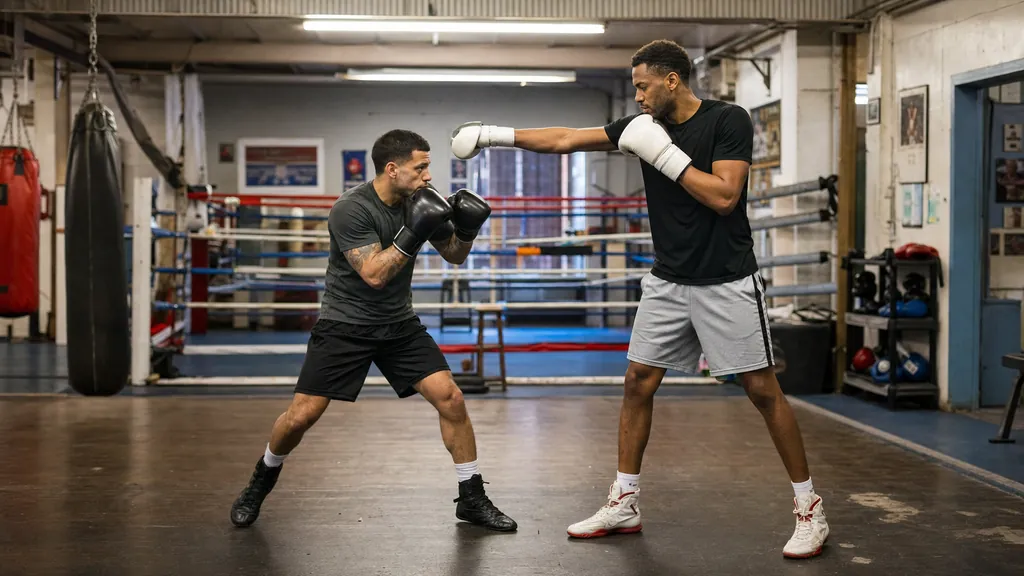
That is why footwork comes before courage here. Research on expert decision-making in sport shows that better athletes use visual cues earlier and more efficiently than novices (review on expert visual search in sport). In boxing language, that means they are not just reacting late to punches. They are reading shoulders, feet, balance and rhythm before the punch fully arrives.
You can train that. But you cannot train it by standing still and hoping your reflexes save you.
Make the taller boxer punch at the wrong time
Closing distance is easier when the taller boxer has already started doing something.
If you charge in from a cold start, they see the entry. If you enter while they are adjusting their feet, reaching with a lazy jab, pulling out of stance, or following you too eagerly, the same entry becomes safer.
The shorter boxer has two basic ways to create that moment.
First, you can draw the punch. Give a small target, make the taller boxer jab, then move as the jab travels. This is not a big theatrical slip. It is a small movement that takes your head off the line while your feet put you in range.
Second, you can make them step. Step back just enough that they follow. Many taller boxers like to punch while planted. If you make them chase, their long frame can become a problem. The front foot lands, the jab reaches, the weight spills, and suddenly the space they wanted to control is not clean.
The mistake is waiting for the punch before you move. By then you are late. Start moving before the punch has become a punch. Use your feet to make them decide, then accelerate when the decision exposes them.
Change rhythm before you change distance
Most bad entries fail because the rhythm is obvious.
The shorter boxer bounces, bounces, bounces, then suddenly sprints forward. The taller boxer sees the gear change and sticks the jab out. That is not a technical mystery. It is a rhythm problem.
Better entries are broken up.
Try this pattern in shadow boxing:
- small step left
- pause for half a beat
- small step back
- jab to the chest or glove
- quick step in behind the next jab
- finish with your head off centre
The entry is not one move. It is a sentence. The taller boxer has to read each word, and the final step arrives while they are still processing the earlier ones.
This is also where feints matter. If your feint makes them lift the lead hand, lean back or plant their feet, you have won something before you punch. Our guide to using feints in boxing without overcommitting is a good companion piece because it explains how to get a reaction without giving away your balance.
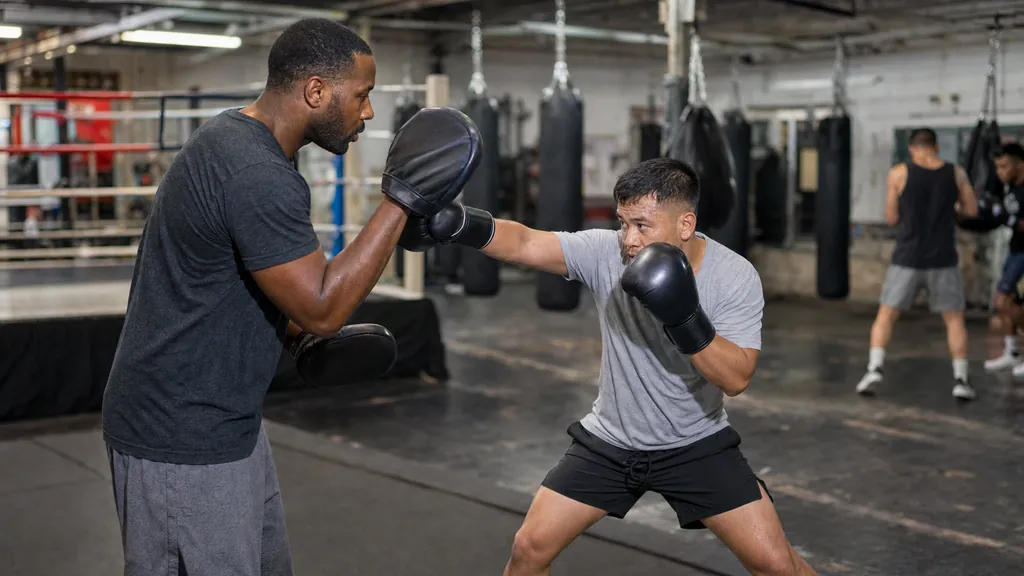
Do not make every entry explosive. If every movement is urgent, none of it is surprising. Show slow, show small, show patient, then go fast.
Enter behind something
A naked entry is an invitation to be hit.
If you walk forward with no punch, no feint and no angle, the taller boxer can jab you without solving anything. Give them a job first.
The simplest entry is jab to chest, step in. The chest is useful because it is harder to miss than the head, it can interrupt the taller boxer's rhythm, and it keeps your shoulder in a position to protect your chin. You are not trying to win the exchange with that first jab. You are buying the step.
Another entry is touch the glove, then slip outside. Touching the glove makes the taller boxer react with the lead hand. As they answer, your head moves outside the line and your feet close the distance. Now you are not running through the jab. You are moving around it.
A third entry is jab low, right hand high, then roll under the return. This only works if the feet come with you. The punch mechanics research on boxing strikes is clear that effective punching depends on whole-body coordination, not just arm speed (biomechanics review of boxing punches). For a shorter boxer, that matters even more. If the feet do not arrive, the hands are pretending.
Once you get inside, stay compact. Short hooks, short uppercuts, shoulder tight, elbows in. Do not admire your entry and stand there tall. The taller boxer will frame, lean, tie you up or step out. Your job is to work, angle, and leave before they rebuild long range.
Get inside, then do not smother yourself
Shorter boxers often make one of two mistakes.
The first mistake is staying too far away. They respect the reach so much that they never get to their own range.
The second mistake is diving too close. They finally get past the jab, but their head drops over the front knee, their feet square up, and their punches disappear because they are chest-to-chest with no room to work.
Inside range is not a cuddle. It is a position.
You want your head slightly off centre, your feet underneath you, your shoulder close enough to feel their body position, and your hands free enough to punch. If your head is buried and your feet are tangled, you are not fighting inside. You are stuck.
A useful cue is: enter low, land short, leave angled.
Not enter low, stay low, wait.
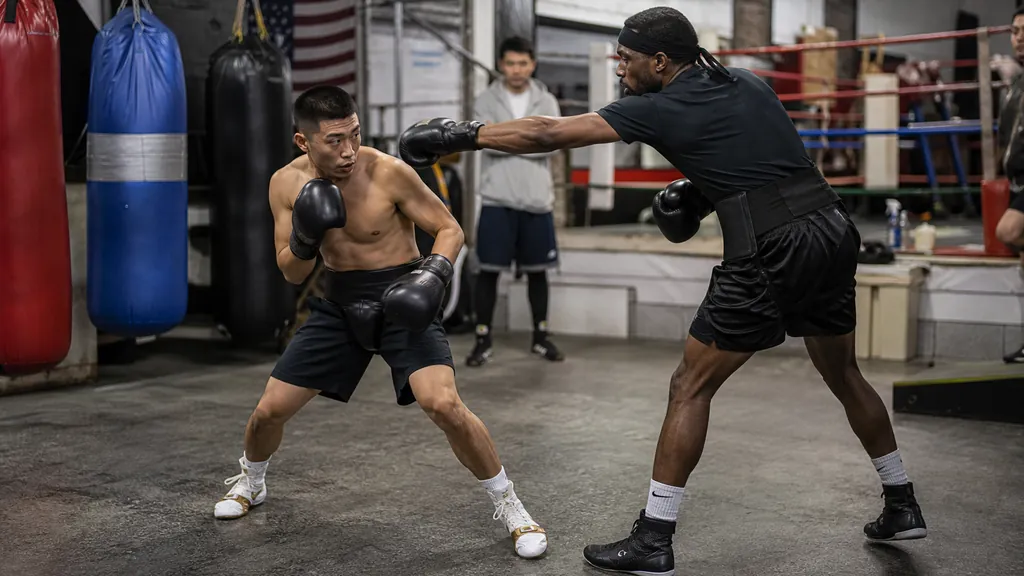
This connects with the pressure skills in our peek-a-boo boxing style guide. You do not need to copy that style, but the principle is important: compact defence and purposeful entries beat hopeful rushing.
A three-round drill for closing distance
Use this with a partner, light contact only, or with a coach on pads.
Round one is movement only. The taller partner jabs lightly and moves. The shorter boxer is not allowed to punch. Their job is to stay mobile, step off the line, and get to inside range without jumping in. If they rush, reset.
Round two adds the entry punch. The shorter boxer can use jab to chest, touch the glove, or jab low. One entry only, then step out. No big combinations yet. The aim is clean arrival.
Round three adds two short punches inside. Entry, two short shots, angle out. The punches can be body-head, head-body, or hook-uppercut. Keep them compact. If the shorter boxer ends square or off balance, the exchange does not count.
The coach should watch three things:
- Does the shorter boxer move before the jab, not after it?
- Do they enter behind a punch or feint?
- Do they finish balanced enough to defend the return?
That is the standard. Not bravery. Not volume. Clean entry, short work, safe exit.
If you need a base combination to build this from, our go-to combination guide explains why a reliable default beats having twenty half-learned ideas.
What to remember in sparring
When the taller boxer looks comfortable, make them move.
When they jab from a strong stance, do not run straight through it.
When they reach, step with purpose.
When you get inside, work short and leave on an angle.
That is the whole lesson. A shorter boxer does not beat reach by pretending reach does not exist. They beat it by refusing the range where reach is strongest.
At Honour and Glory, this kind of skill belongs in controlled, coached rounds. Our Recreational Adults boxing classes give beginners and returning boxers a safe place to learn distance, footwork and defence properly. If you are near Kidbrooke, you are close enough to train the details rather than guessing at them.
H&G Team
Writer at Honour & Glory Boxing Club, a community boxing gym in Kidbrooke, South East London.
KEEP READING
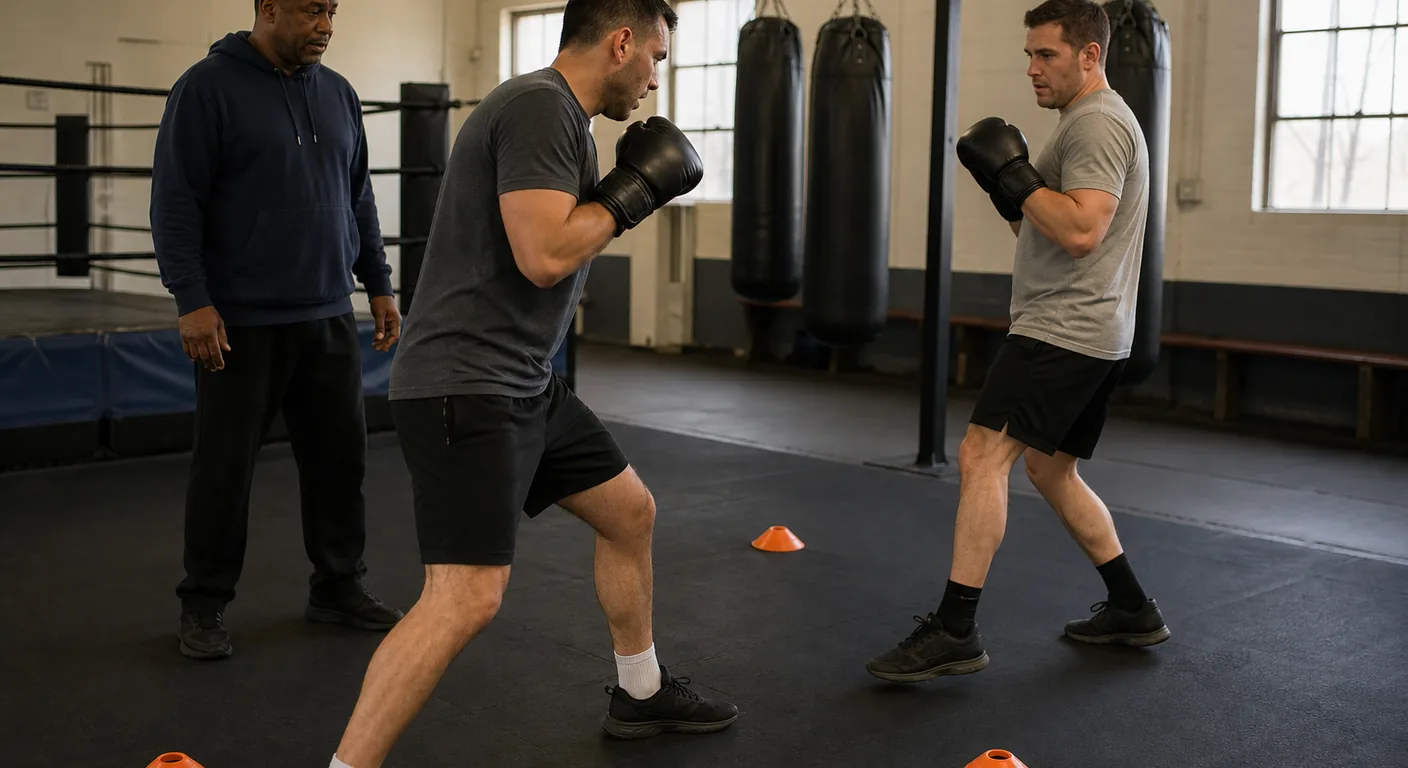
How to Close Distance in Boxing
Learn how to close distance in boxing without rushing, reaching or walking onto counters. A practical footwork guide for beginners.
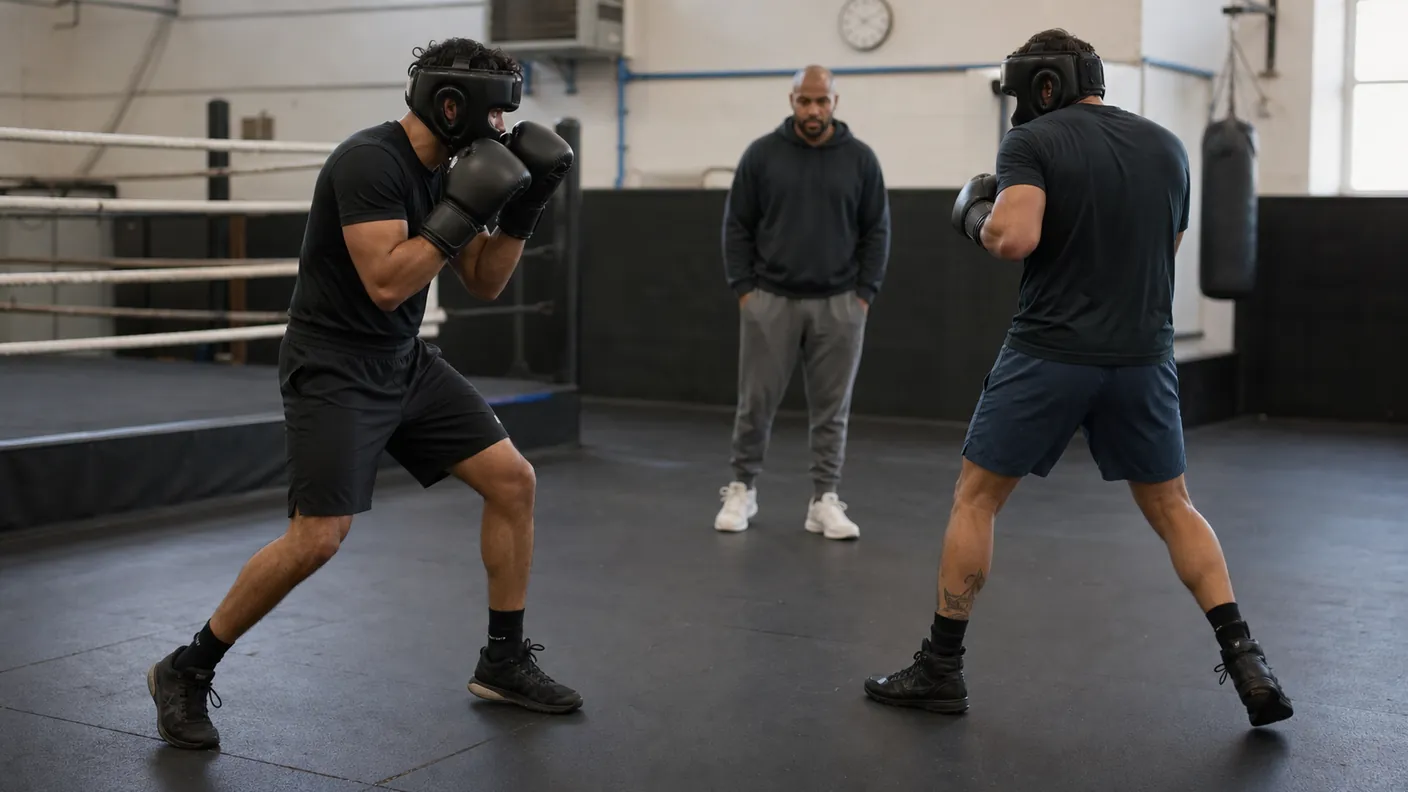
Follow a Retreating Boxer Without Reaching
Learn how to take ground against a boxer who steps back without crossing your feet, leaning for punches or walking into a counter.
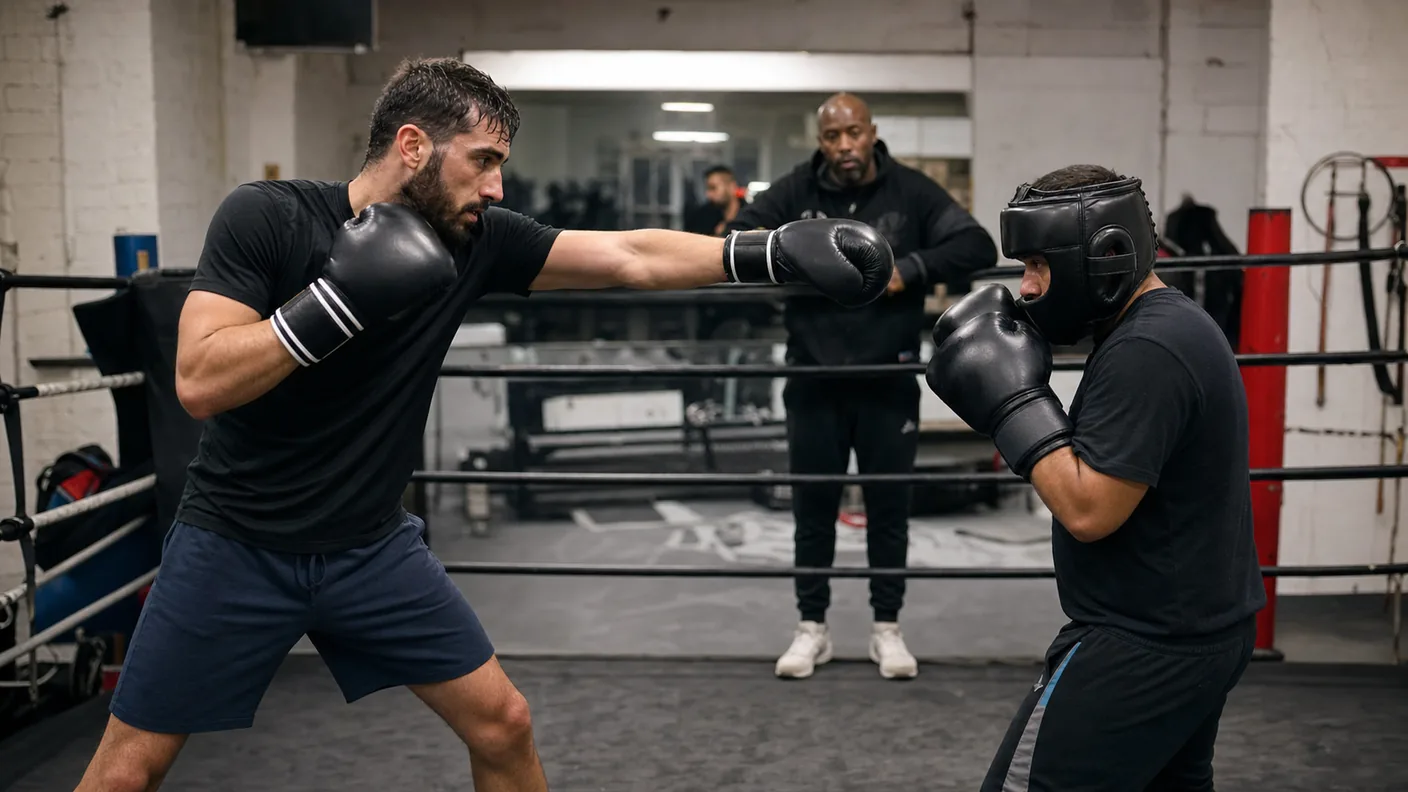
How to Box a Shorter Opponent Without Reaching
Use the jab, your feet and calm resets to control a shorter boxer without leaning into their range or giving away your balance.
Was this page helpful?
It takes one tap, and it genuinely helps.
Choose your next step
Turn this article into the right action
Some readers are ready to book. Some need the class route first. Pick the route that matches what you actually want.