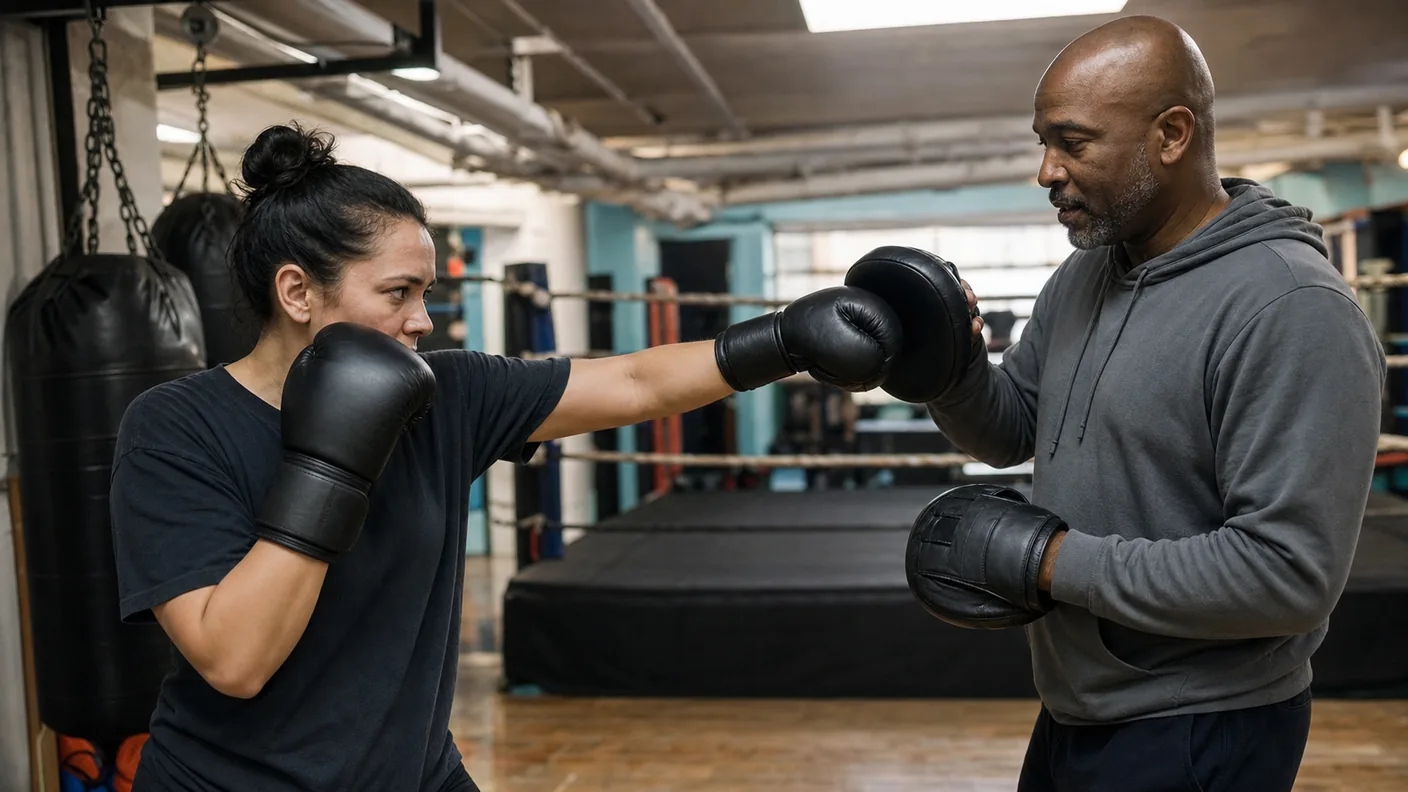
Falling forward after a jab or right hand is one of the most common beginner mistakes in boxing. You throw, your head comes over the front knee, your back foot loses contact with the floor, and the next move feels late or awkward.
It can feel like commitment. Usually it is a range problem dressed up as effort.
The punch should take you to the target, not leave you hanging over it. A clean shot lets you defend, step, punch again or get out. If you need a second to pull yourself upright after every punch, the punch has cost too much.
England Boxing describes a solid, well-balanced stance and guard as the base for moving fluently, punching effectively and defending well (England Boxing Coaching Handbook). That sounds basic because it is. It is also where most bad punches start.
What falling forward actually looks like
The obvious version is a lunge. Your front foot shoots out, the body follows it, and the rear foot trails behind. You land close to the bag or pad with your shoulders pitched forward and no easy route back to stance.
The subtler version happens with the upper body only. Your feet stay roughly in place, but you push the head and chest ahead of the hips to add a little reach. The glove may touch the target, yet your balance has already gone.
Both versions create the same problem. Your weight is outside your base. You cannot change direction quickly, and your rear hand often drifts while you are trying to catch yourself.
A coach does not need to wait for hard sparring to see it. It appears on pads, the bag and shadowboxing. The clue is what happens after the punch. If your feet need to shuffle back into shape before you can do anything else, you were not in range when you threw.
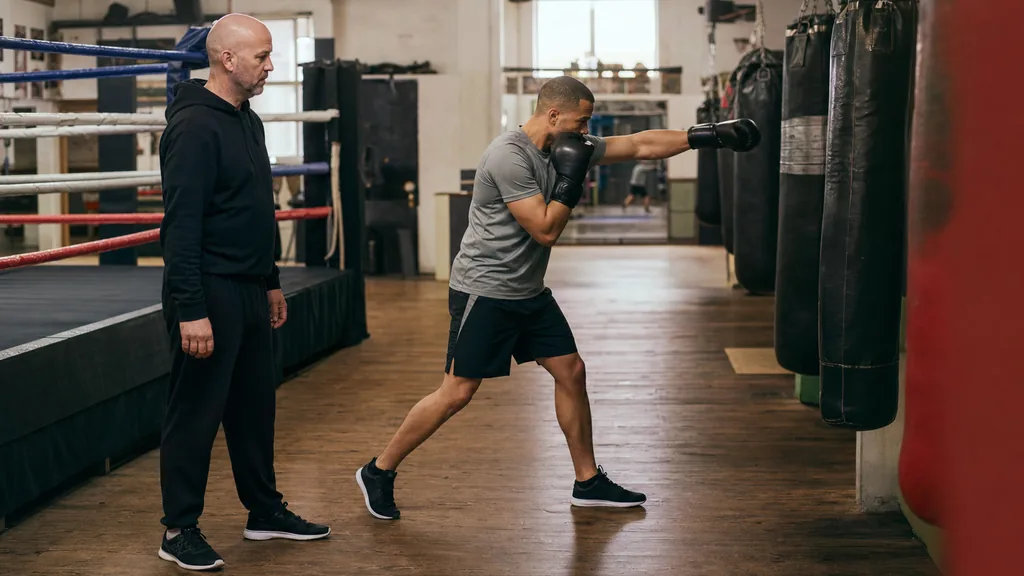
The target is too far away
This is the main reason beginners fall forward.
A bag is fixed, but it still teaches bad habits if you stand too far out and try to reach it. Pads can do the same when the holder drifts back and the boxer chases the target with the shoulders rather than the feet. In partner drills, the urge is even stronger because another person is moving away from you.
The solution is not to make a longer punch. It is to take a small step, set your feet, then punch from a distance that fits the shot.
For a jab, that may mean a modest lead-foot step as the hand goes out. For a rear hand, it may mean using the jab first to close and judge range. For hooks and uppercuts, it often means getting closer before you throw, not folding forward from far away.
Our guide to boxing range and choosing the right punch gives the broader picture. The useful check here is simple: after the punch, could you throw the same hand again, move away, or block a return without rebuilding your stance? If not, shorten the distance or add a step before the punch.
You are trying to make every punch hard
A lot of people fall forward because they are trying to make one punch do far too much.
They load the shoulder, push off wildly, send the head forward and stay extended for a fraction too long. The bag moves, the pad cracks, and it feels productive. Then the hands are low, the feet are split and the next punch comes from panic.
Good power is not the same as big effort. A boxing biomechanics study comparing junior and elite boxers found that punch performance depends on how the body segments contribute to the shot, rather than simply what the arm does (Biomechanical Analysis of the Cross, Hook and Uppercut). In gym terms, the legs, hips, trunk and hands need to arrive in the right order.
That is why a calmer punch often lands better than a wild one. You can turn the hip, let the foot assist, and bring the glove back without throwing yourself at the target.
Work at about half power until you can finish in stance. Then build speed. Power is the last part of the sentence, not the first word.
Your feet are not carrying the punch
Beginners sometimes hear "move your feet" and start hopping around. That is not the answer either.
The feet need a job. They take you into range, give the punch a base, then leave you able to move again. When the feet stop doing their job, the upper body starts reaching to make up the distance.
For a simple jab, think step and touch. The lead foot makes the small adjustment and the jab goes with it. The rear foot follows afterwards to restore your stance. Do not step, pause, then launch yourself with the arm. Do not let the front foot travel so far that the rear foot cannot follow.
England Boxing's coaching guidance flags leaning in and losing rear-foot contact as a common straight-punch error. It also makes the practical point that over-committing in a combination can leave a boxer without a stable base (Level 2 Coaching Handbook). The fix is not exotic. Make the step smaller and make the reset part of every repetition.
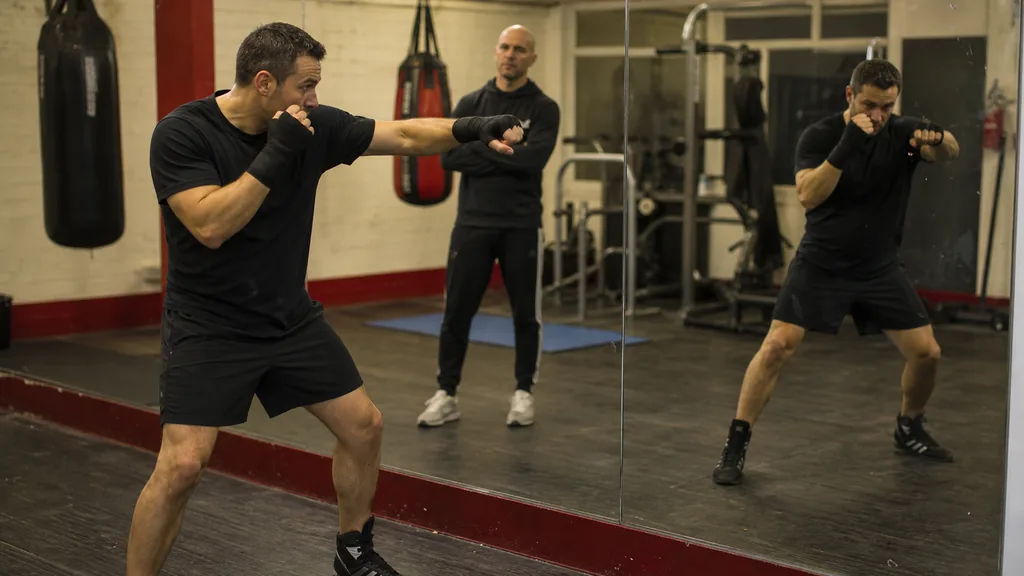
Your head is trying to lead the punch
Your head should not arrive before your hand.
When a beginner wants to be sure the punch reaches, the chin creeps forward. The shoulders follow. Suddenly the face is closer to the target than the glove needs it to be. That makes a missed punch harder to recover and leaves you open to a straight counter in partner work.
Keep the head between the feet as much as possible. You do not need to stand stiff and upright. Boxing has slips, rolls, level changes and controlled shifts. But those movements start from balance. They do not replace it.
Try this simple pad or bag check:
- Throw one light jab.
- Freeze for a second as the glove returns.
- Ask whether the rear foot is still connected, the rear hand is home and the head is still between the feet.
- If one of those has gone, take a smaller step or stand closer.
- Repeat before adding the cross.
This is not glamorous work. It is the work that makes a one-two useful instead of merely loud. For more detail on the first punch, read how to throw a jab in boxing.
Do not confuse balance with standing still
Some beginners respond to this correction by becoming cautious. They plant both feet, punch only from one spot and never take ground. That avoids the lunge, but it does not teach boxing.
Balance is active. You should be able to move in, move out, angle off and punch while travelling. The point is to keep enough shape that you can still make a choice at the end of the action.
A recent study of novice women in a structured boxing programme found clear improvements in basic stance and punch technique after supervised practice (Short-Term Effects of a Structured Boxing Program). That is a useful reminder for adults who feel clumsy at first. You do not need a special talent for balance. You need enough good repetitions, at a pace where the coach can still see and correct what is happening.
Start with one punch and one step. Add a return to guard. Add a reset. Then add the next punch. If your shape collapses when the combination gets longer, go back a stage. There is no prize for rehearsing a bad lunge quickly.
The mistake becomes dangerous when pressure rises
On a bag, falling forward makes you look untidy. In sparring, it can put you in front of a counter.
That does not mean beginners should rush into sparring to fix it. The better route is controlled partner drills: one person moves back slowly, the other steps into range with a jab, then both reset. No hard contact. No chase. No attempt to win the exchange.
The coach can then add one simple answer, such as a light jab back or a step to the side. The leaning habit becomes obvious because it stops you responding. A balanced jab lets you see the return and deal with it.
For adults in Greenwich, Kidbrooke and nearby, that is the value of a coached session. You get someone who can tell the difference between a committed punch and a lunge before the habit becomes automatic.
The quickest fix
Stand a little closer than you think. Take smaller steps. Throw at a level where you can return to guard without effort. Freeze after single shots and check the feet before adding speed or power.
You do not need to lean to show intent. You need to arrive in range, punch from balance and be ready for what happens next.
Our Recreational Adults boxing classes give beginners the time to build that pattern through bags, pads, footwork and coach-led drills. You can learn real boxing without sparring being a requirement.
H&G Team
Writer at Honour & Glory Boxing Club, a community boxing gym in Kidbrooke, South East London.
KEEP READING
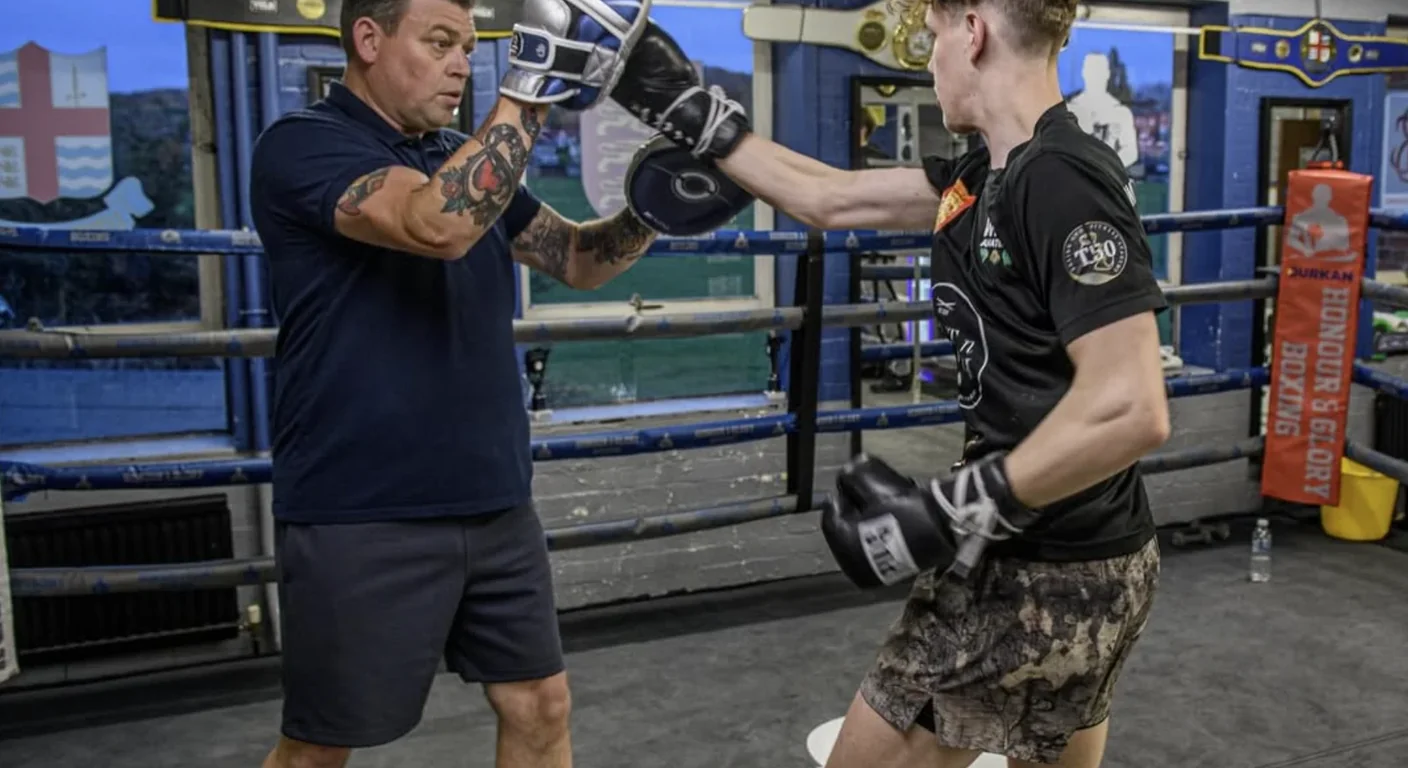
Stop Crossing Your Feet in Boxing
Crossed feet wreck balance, defence and punch recovery. Here is how beginners can fix the habit with simple boxing footwork drills.
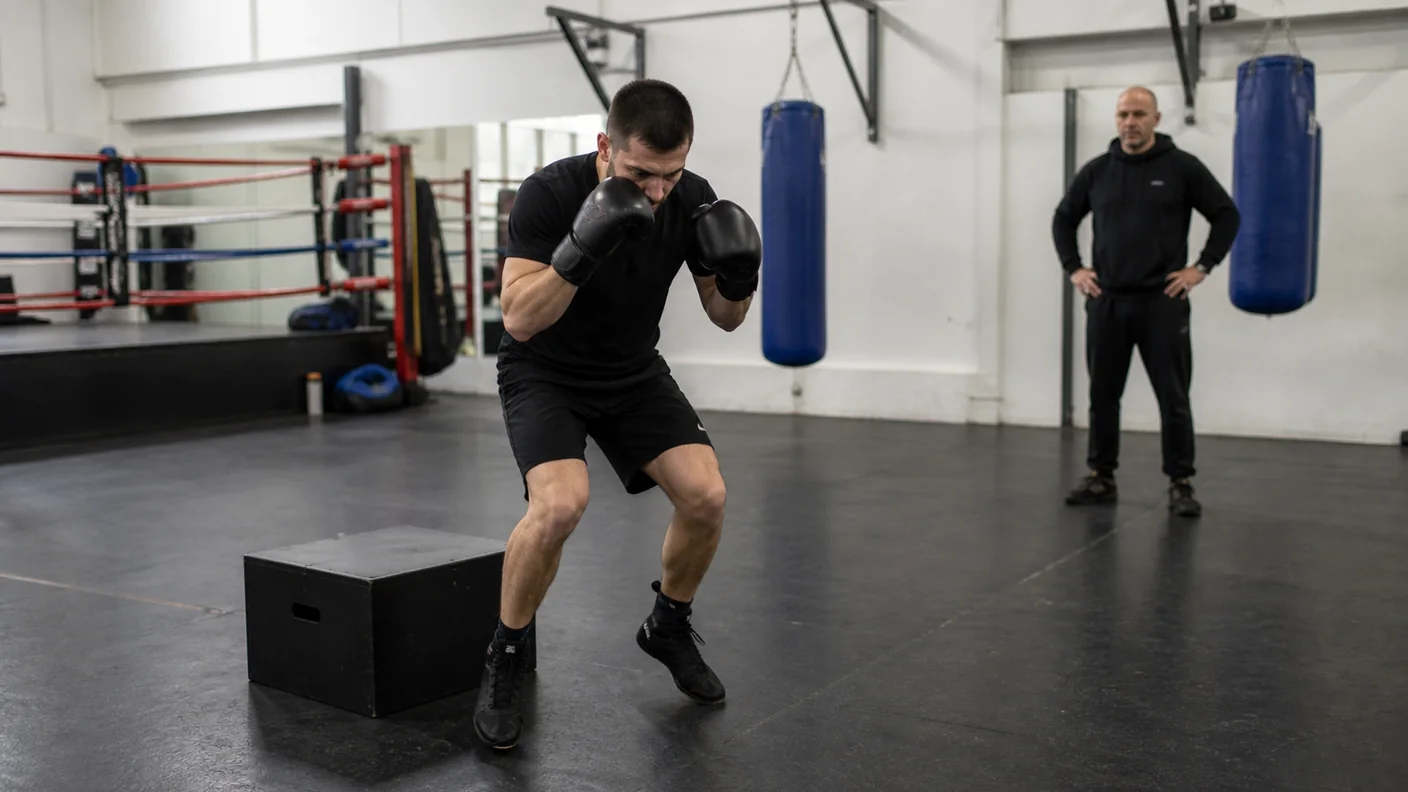
Boxing Drop-Step Drill: Land Ready to Punch
Use a low boxing drop-step drill to practise a settled rear leg, balanced guard and a calmer straight punch after movement.
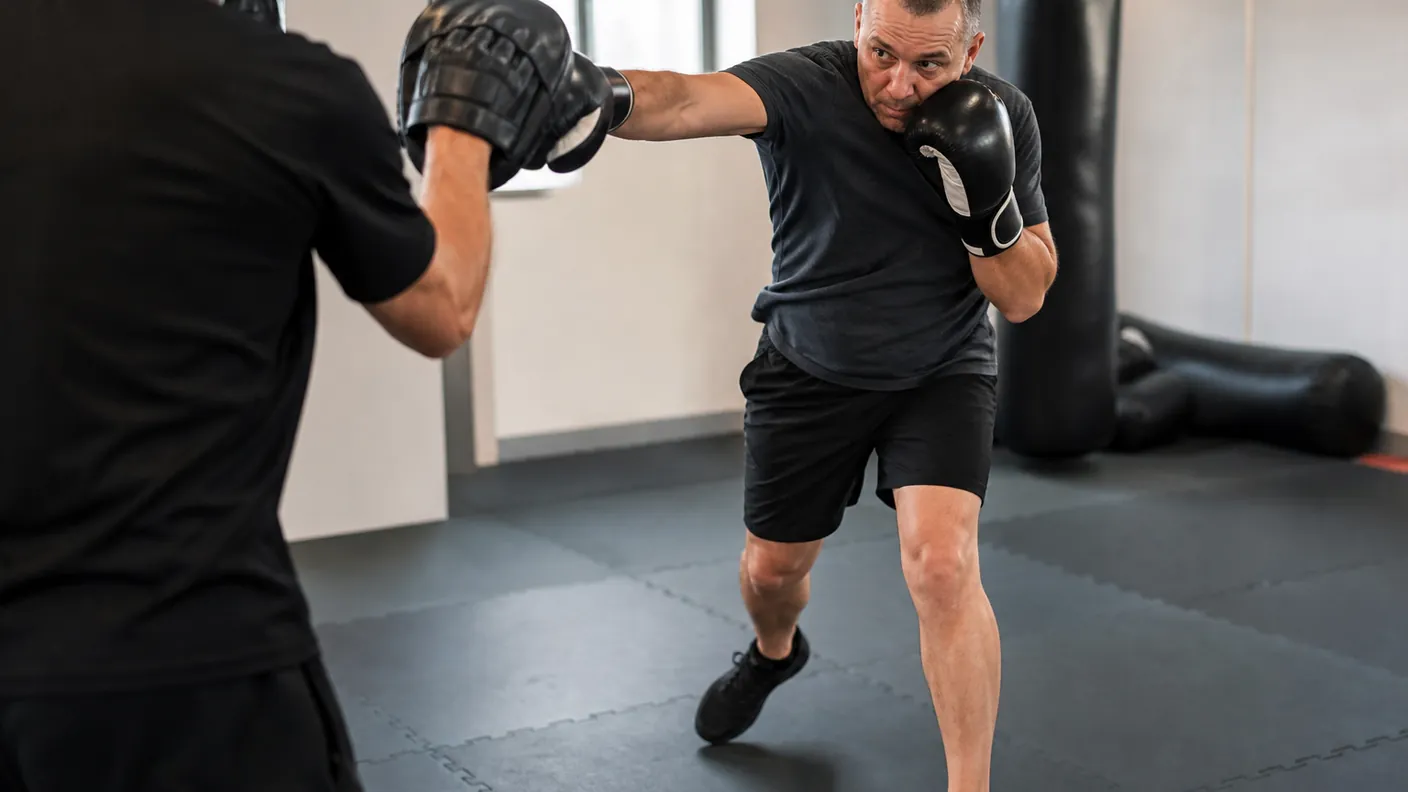
Two-Step Hook Drill for Boxing Balance
Use two small foot adjustments to find range for a compact hook without stretching, spinning or losing your guard.
Was this page helpful?
It takes one tap, and it genuinely helps.
Choose your next step
Turn this article into the right action
Some readers are ready to book. Some need the class route first. Pick the route that matches what you actually want.