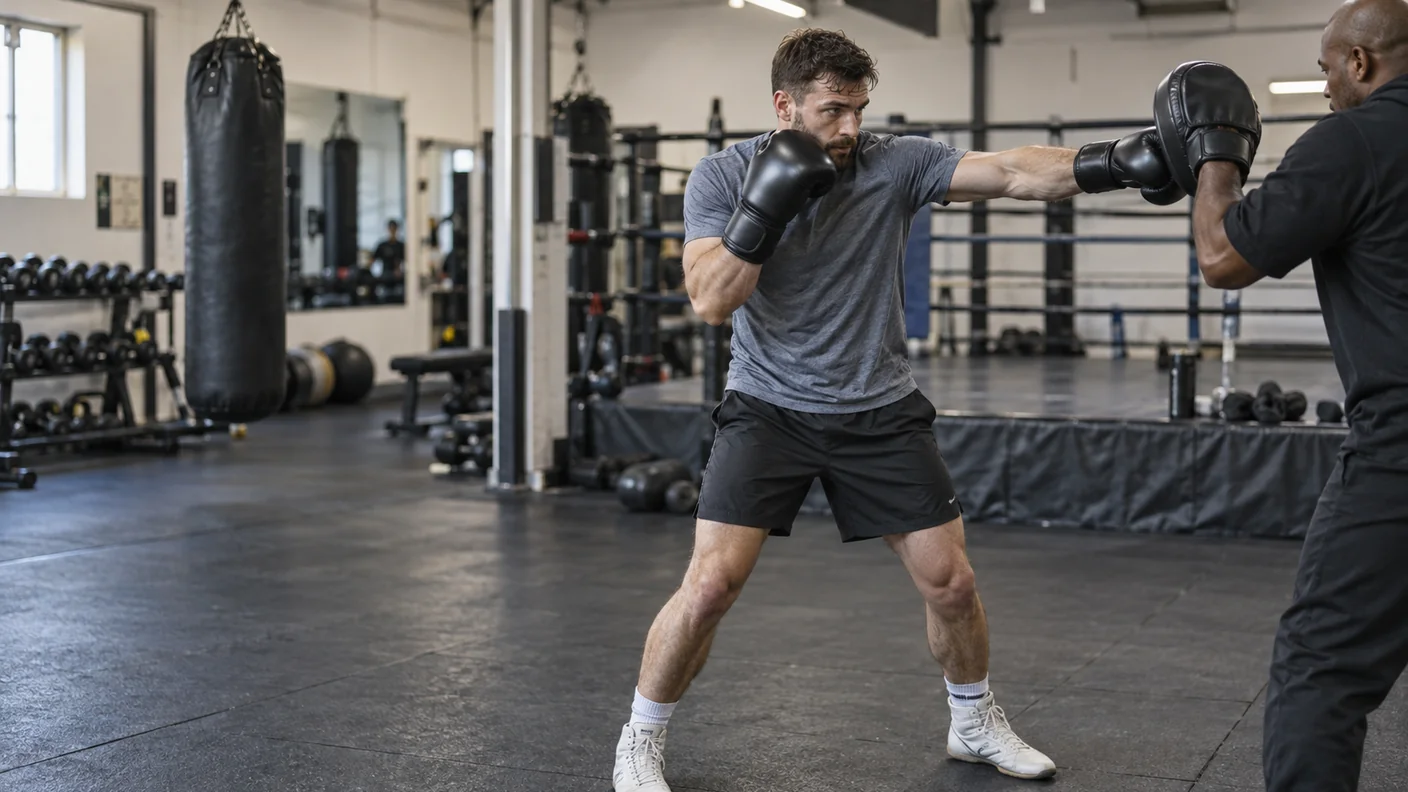
A cross can land cleanly and still leave you in the wrong place.
The rear shoulder turns through, the rear hand reaches the mitt or bag, and the boxer pauses directly in front of the target. On pads, that pause can go unnoticed because the mitt holder is waiting. With another person, it is the moment when a return jab, hook or step forward can make the original punch feel expensive.
One useful answer is a light lead-hand post after the cross. The lead glove goes out on a short line, not as a second hard punch and not as a shove. It gives your body time to settle back into stance while keeping something between you and the other boxer. The point is not to win an exchange with a clever-looking movement. It is to stop the cross becoming an ending pose.
Watch the demonstration once, then work at a pace where you can feel the rear hand return and the lead hand leave without either glove drifting away from its job.
Why the cross can leave you square
A rear straight asks the rear hip, trunk and shoulder to turn together. That connection gives the punch its weight, but it can also pull the rear side forward if the boxer chases the target. The front knee stiffens, the head travels beyond the base and the lead hand becomes an afterthought.
The correction is not to throw a timid cross. It is to finish the cross in a position that still allows a choice. A review of boxing performance and biomechanics describes punching as a connected action through the legs, trunk and upper body. In practical terms, that means the punch should leave enough structure to cover, move or jab again.
Try this test after a light cross on the bag. Can you bring the rear glove back to your cheek and make a small step without first rearranging your feet? If the answer is no, do not add a follow-up yet. Shorten the cross, settle the stance and make the first action useful.
The lead hand has a simple role once the cross is returning. It can make a short, calm post along the centre line, then come back to guard. That small barrier can discourage an immediate rush, give your weight a route back towards the rear foot and help you see whether the other boxer has stayed in front of you.
The post is a barrier, not a second lunge
Think of the post as a brief straight lead hand, placed with control rather than force. It should travel from its ordinary guard lane and stop before the shoulder reaches. Your elbow does not need to lock. Your chin does not need to follow the glove. The rear hand comes home while the lead hand creates the short line.
That distinction matters. If you throw a full, reaching jab after every cross, you can easily turn one overextension into two. If you push the hand into someone, you have tied up your lead arm and given them something to pull or parry. The useful version is lighter than either of those mistakes.
For an orthodox boxer, the cross turns the rear side forward. The lead-hand post is a natural way to bring the body back towards its ordinary shape. Southpaws reverse the picture, but the rule does not change: one hand returns while the other hand gives you a short, safe reference.
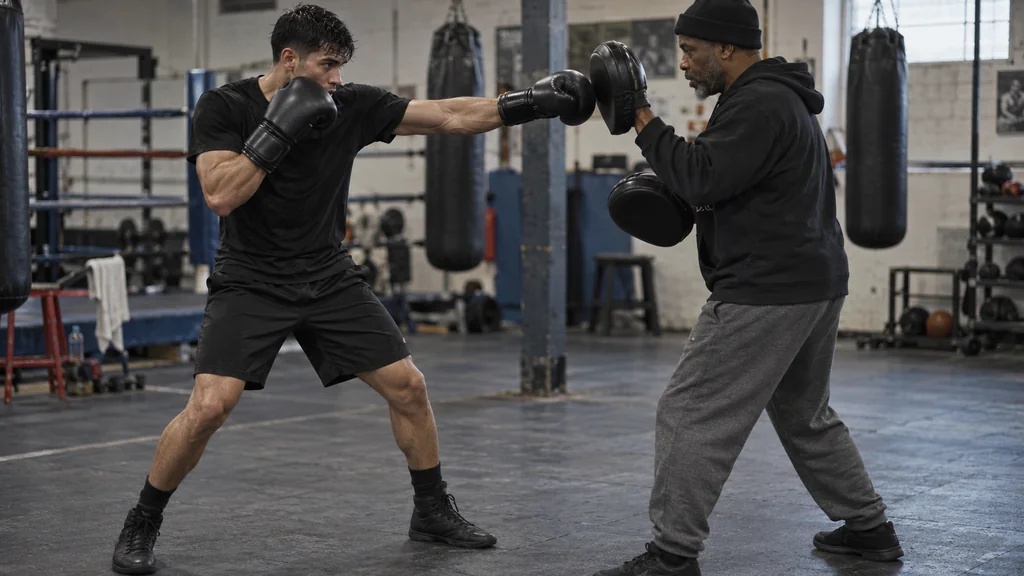
Our guide to lead-hand control without reaching covers the same discipline at longer range. The version here is narrower. You are not trying to control somebody's glove. You are using your own lead hand to finish a rear-hand attack without freezing on the line.
Build the cross-post reset in three rounds
Use a coach with focus mitts, or shadow box in front of a mirror before you bring in a partner. This is a technical drill, not hard sparring. The coach should be able to stop the action at any point without someone carrying a punch through the target.
Round one: cross and return
Throw one measured cross to a mitt or a bag. Bring the rear glove straight back to guard and freeze before you add the lead hand.
Check the feet. They should remain staggered and wide enough to move. Check the head. It should not be hanging over the front knee. Check the lead hand. It should still be available near the face rather than stranded by the cross.
Do ten calm repetitions before adding speed. A cross that finishes in balance is a better starting point than one that makes a loud sound and leaves you reaching for your stance afterwards.
Round two: cross, post, return
Now add the lead hand after the rear glove begins to come home. The post is short and light. Let it travel towards a coach-held mitt at head height, then bring it back to guard.
There is no need to fire the post as a sharp second jab. At this stage, it is a timing device. You are learning the order: cross lands, rear glove returns, lead hand gives you a line, both gloves come home.
If the lead shoulder starts travelling ahead of the front knee, make the post smaller. If the rear hand stays out while the lead hand goes, slow down. The drill works only when the two gloves take turns doing their jobs.
Round three: post and choose the next action
The coach can now show one of three calm pictures after the cross. A lead mitt in front of you invites the short post. A small step away means you reset and take your own space back. A closer mitt can ask for a compact high guard rather than another punch.
This final round matters because a post is not an automatic answer. A partner may already be out of range. They may be stepping in behind a second shot. They may have covered enough that a jab would only run you into their guard. The good decision is the one that leaves you able to box again.
England Boxing's coaching handbook puts controlled progressions, stance and guard at the centre of skill development. That is the right order here: first make the cross balanced, then make the post short, then learn when no extra punch is needed.
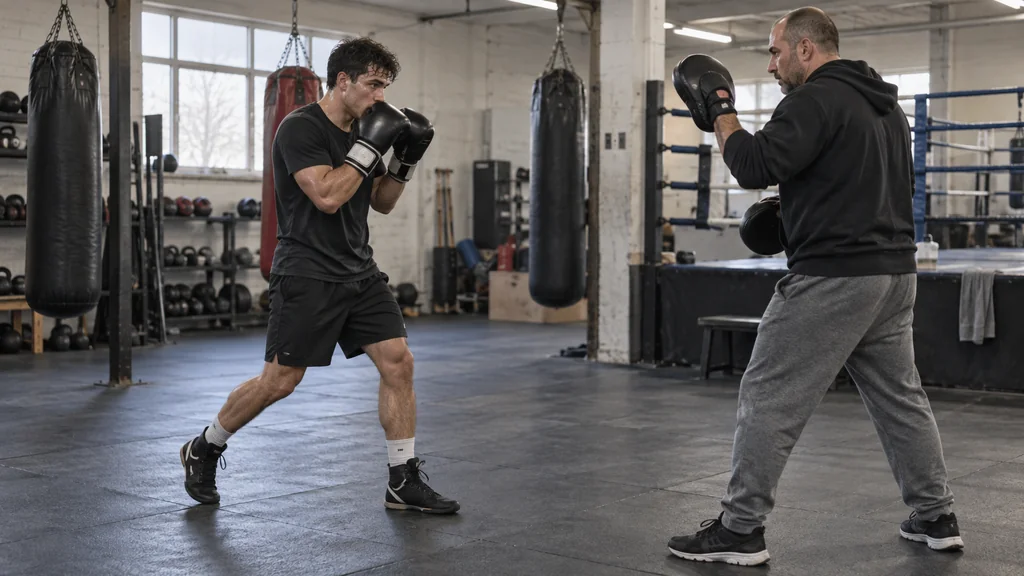
Four mistakes that spoil the drill
The first is admiring the cross. The rear hand lands and stays extended while the boxer watches the target. Bring it back along a direct route. The post cannot protect a side that the rear glove has abandoned.
The second is turning the post into a shove. The lead glove should make a brief line, not remain against the mitt or a partner. If you are pushing, you are no longer ready to jab, cover or move.
The third is reaching with the lead hand. A long post pulls the shoulder and head forwards, which is the opposite of the recovery you are trying to teach. Keep the post close enough that you could bring it home without a second movement from the feet.
The fourth is repeating the same finish every time. A predictable post can be read, parried or countered over. Use it as a practice tool and one option among others. Our cross-roll recovery drill gives you another controlled way to leave the line after a rear hand.
Where the drill belongs in training
Use the cross-post reset after the warm-up, before hard bag rounds or in a short pad block. It suits recreational adults who can already throw a controlled cross and hold a basic guard. It does not require hard contact to be useful.
The partner version should stay slow and agreed. One person feeds a clear target. The boxer works the cross and reset. Then both people return to stance. There is no reward for making the movement bigger than it needs to be.
If you are near Kidbrooke, our Recreational Adults boxing classes use pads, bag rounds and controlled partner drills to make this sequence reliable: throw the cross, recover the guard, then decide whether there is anything left to do.
The coaching cue is simple: right hand home, lead hand short, feet ready.
H&G Team
Writer at Honour & Glory Boxing Club, a community boxing gym in Kidbrooke, South East London.
KEEP READING
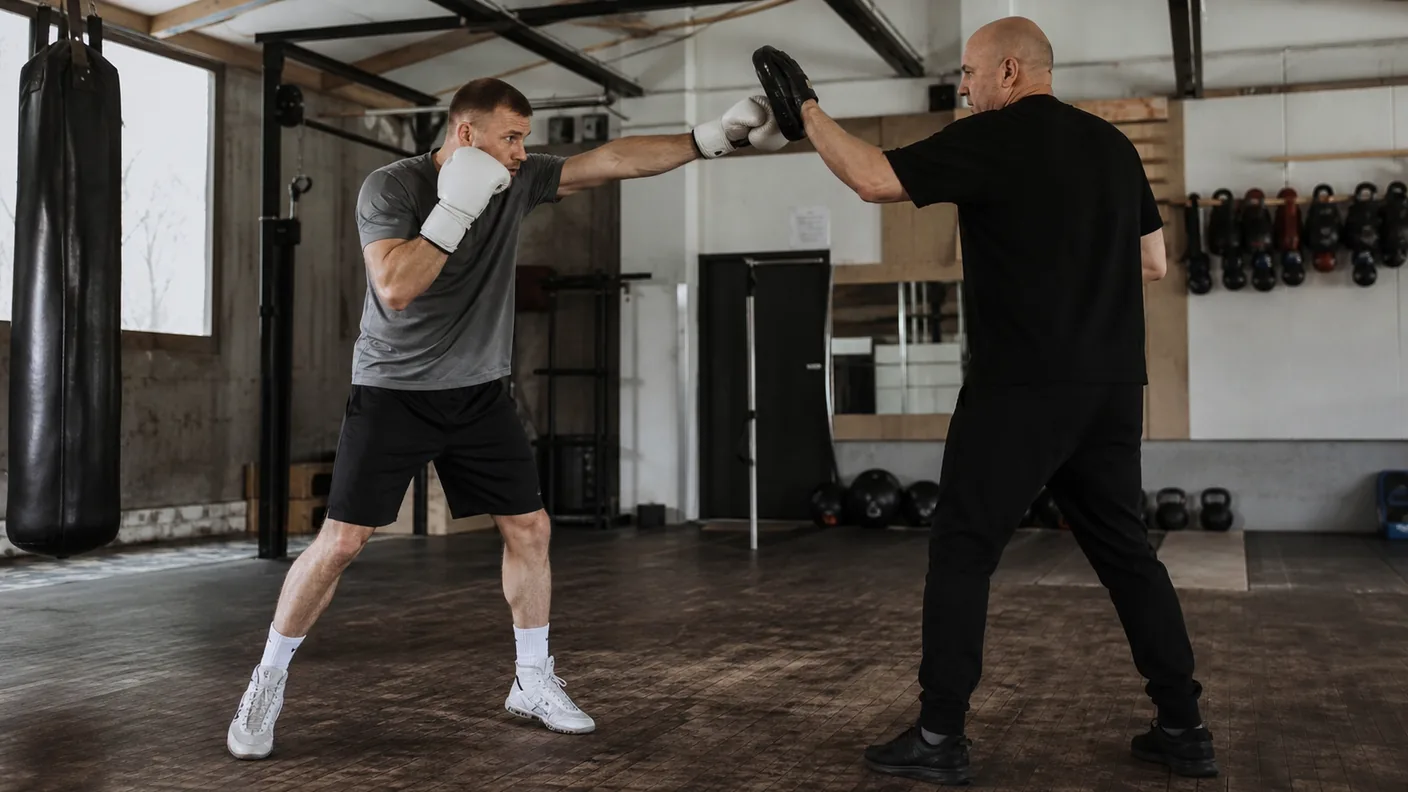
Boxing One-Two Footwork: Step With the Jab
Use a small step with the jab, then set your feet for the cross so a basic one-two stays balanced and useful.
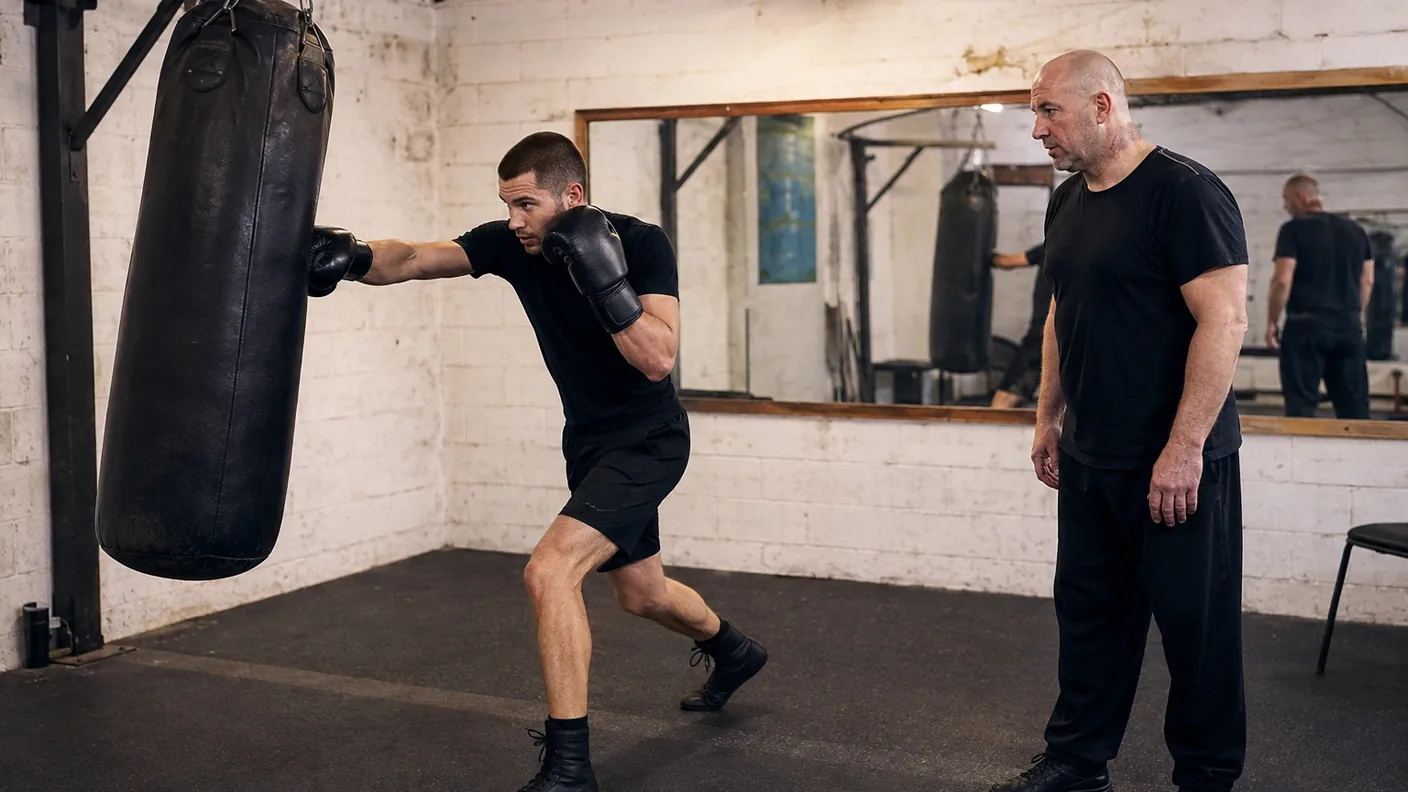
Jab Step-Across Cross: A Boxing Angle Drill
Use a compact jab step-across to open a rear-hand angle without crossing your feet, losing your guard or reaching for the cross.
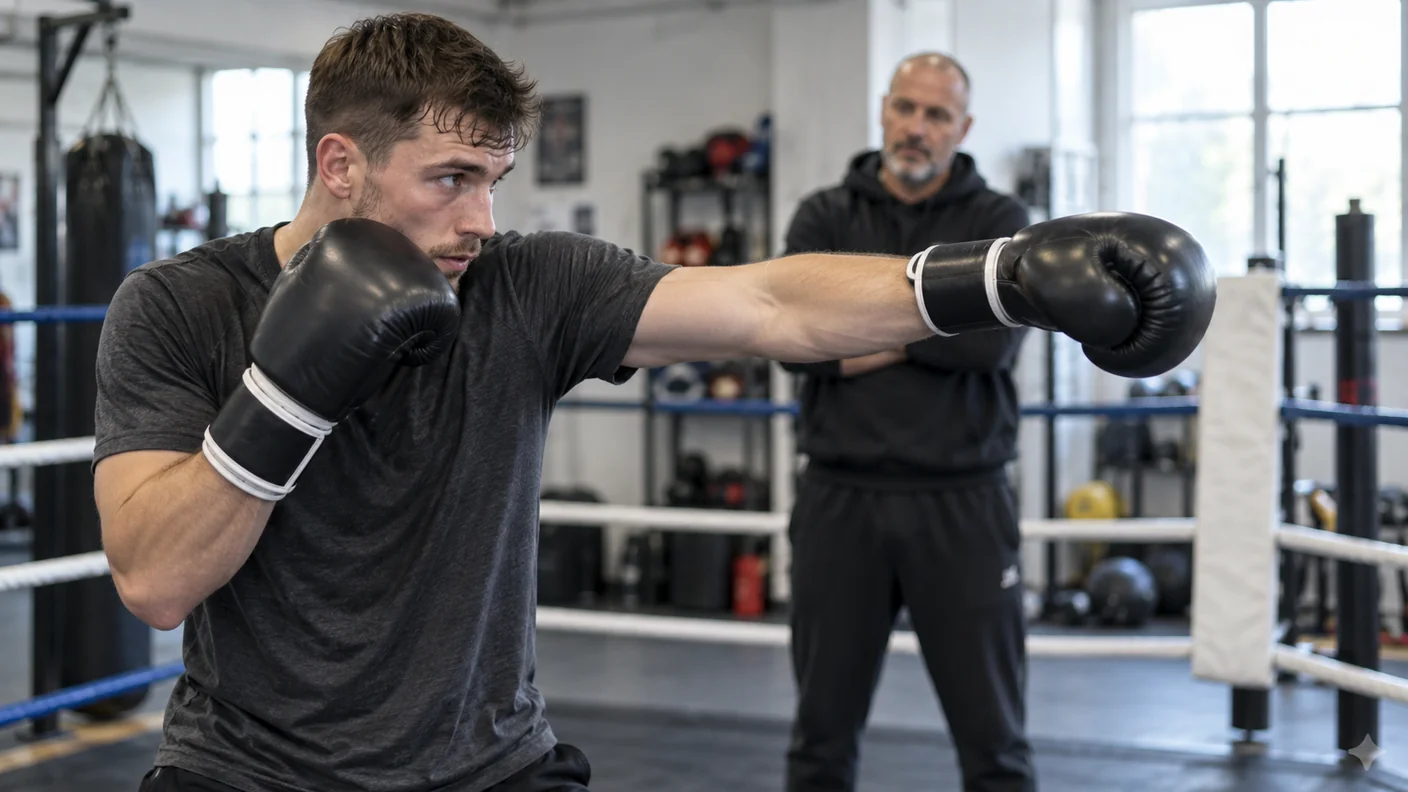
Slow Jab, Fast Cross: Boxing Timing
Use a measured jab and sharp cross to break predictable timing without losing your stance, guard or route out.
Was this page helpful?
It takes one tap, and it genuinely helps.
Choose your next step
Turn this article into the right action
Some readers are ready to book. Some need the class route first. Pick the route that matches what you actually want.