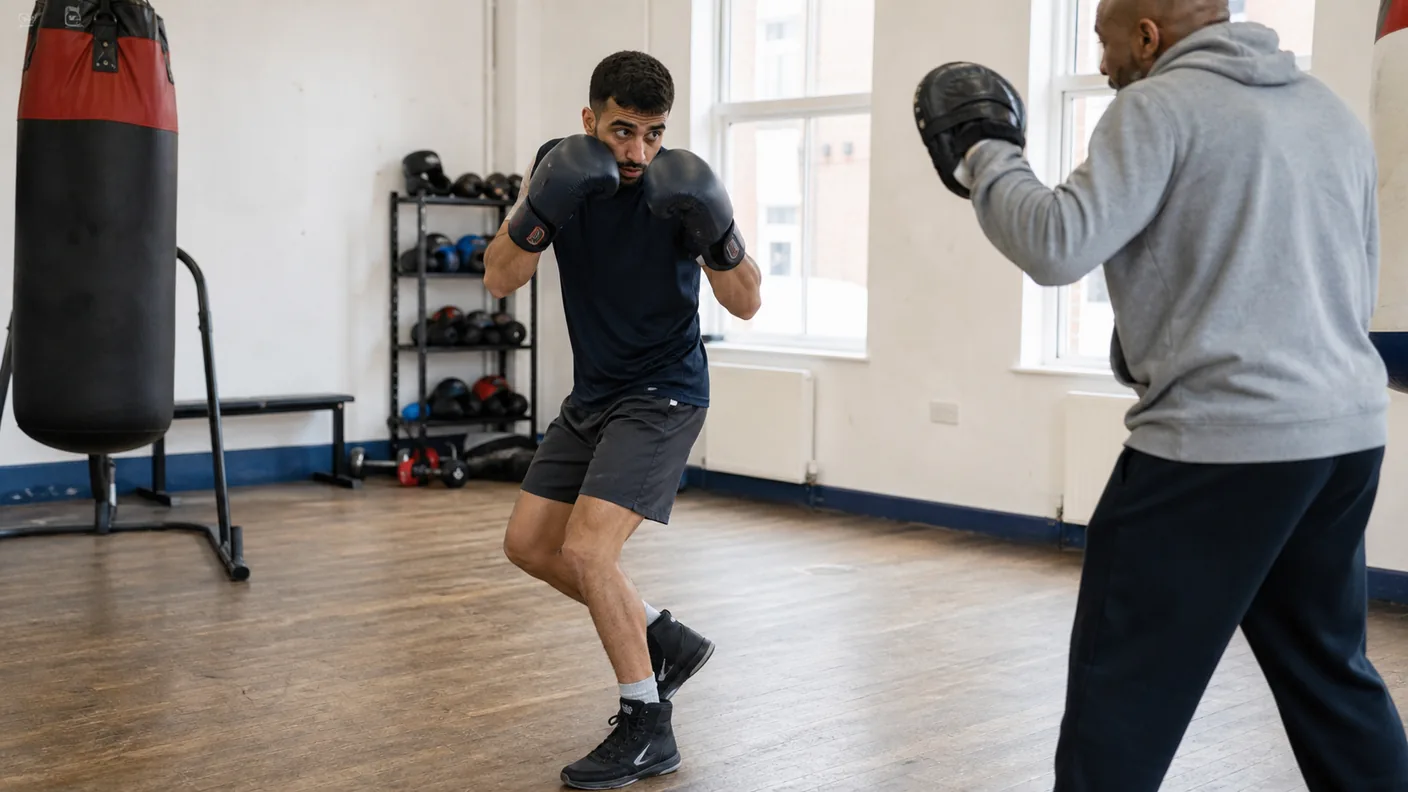
A rear-foot pivot can move you to a better line. A small tuck can stop that turn from walking your head into a straight punch.
The order matters. Some boxers hear "make an angle" and immediately spin their feet. They may move off the centre line, but their head stays upright, their rear hand drifts and they turn into the shot they were trying to avoid. A cleaner version is quieter: make a short turn, soften the knees as you do it, then finish in a stance that is still ready to box.
This is not a trick for hard sparring. It is a controlled footwork drill for learning whether a new angle has actually made you safer. Start at low speed on a line, then let a coach or partner add a slow, agreed straight-punch cue.
Watch the demonstration below, then use the coaching points to keep the movement compact.
The rear-foot pivot is a small change of line
A rear-foot pivot is not a step across. The feet do not trade places and you do not chase a large circle around the other boxer.
From an orthodox stance, think about moving a little towards your rear side. The rear foot turns by a small amount on the ball of the foot. The lead foot follows just enough to keep the stance staggered. Southpaws reverse the picture, but the standard stays the same: the finish should still look like a boxing stance, not two parallel feet pointing at the same wall.
The smallest useful turn is normally the best place to start. If you can jab, cover or take one more step without rearranging your feet, you have made an angle you can use. If you need to shuffle back into shape before doing anything else, the pivot was too large.
England Boxing puts balance, stance and controlled movement at the centre of technical development in its coaching handbook. That is the useful test here. The pivot is not there to look mobile. It is there to leave you able to make the next sound decision.
Why the tuck belongs with the pivot
A pivot changes the feet. It does not automatically move the head away from a punch.
If you turn towards the rear side while standing tall, you can bring your face through the line of an orthodox opponent's straight right. The simple answer is a compact tuck at the same moment as the first turn. Bend through the knees, let the chin stay behind the gloves and lower the head only enough to leave the line.
Do not fold forward at the waist. That turns a useful defensive shape into a blind dive. Your eyes need to stay on the other boxer's chest and shoulders, because those tell you whether they have followed your turn, stopped, or changed their line.
The tuck should feel like a small change in height, not an attempt to touch the floor. Keep some weight through the rear side as the knees soften. That gives the second pivot a base and prevents the body from falling over the front knee.
A technical review of boxing performance describes punching, movement, defence and tactics as connected parts of the same task. This drill follows that rule. The feet turn, the knees move the head, the guard stays present, and the finish leaves room for the next action.
Build the two-part movement before you add punches
The first job is not to counter. It is to prove that your feet and head can arrive together.
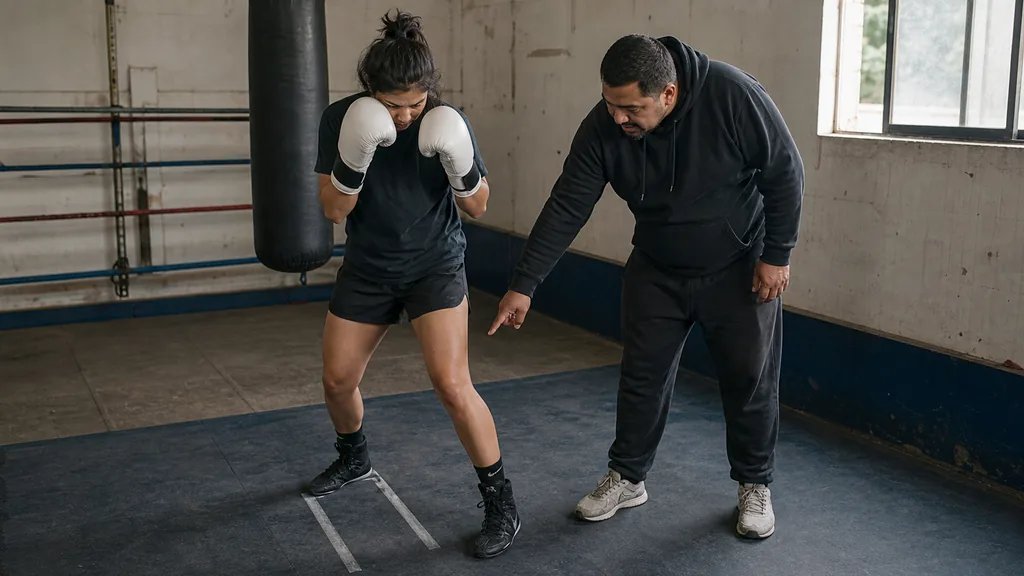
Set two pieces of tape on the floor in the shape of your usual stance. Start in guard with soft knees and both heels light. Make a small rear-foot pivot, add the tuck, then let the lead foot complete a second short turn so the stance points along the new line.
Freeze for a count of one. Check four things:
- The feet are still staggered rather than parallel.
- The chin is tucked without the eyes dropping to the floor.
- The rear glove is near the cheek.
- You could throw a jab without leaning or shuffling first.
If one part has gone missing, remove speed. Do not repair it by turning farther. A short pivot that ends in a useful guard is better than a dramatic angle that leaves you square.
This builds on our guide to boxing pivots without losing your stance. That article covers the basic turn. This version gives the rear-side movement a defensive job when a straight punch may be coming through the original line.
A three-round rear-foot pivot and tuck drill
Use this as a technical block after warming up. One minute per round is enough when you are learning it. Rest briefly, then correct the position before adding another layer.
Round one: pivot and freeze
Shadow box at a calm pace. Every few seconds, make the rear-foot pivot and second small turn. Do not add the tuck yet. Finish in guard and freeze.
This round tells you whether the feet are doing too much. If you lose the stance before the head movement is even involved, make the turn smaller and keep the rear heel lighter.
Round two: add the tuck
Repeat the same turn, but soften the knees as the first rear-foot pivot happens. Keep your back long, eyes forward and gloves at home.
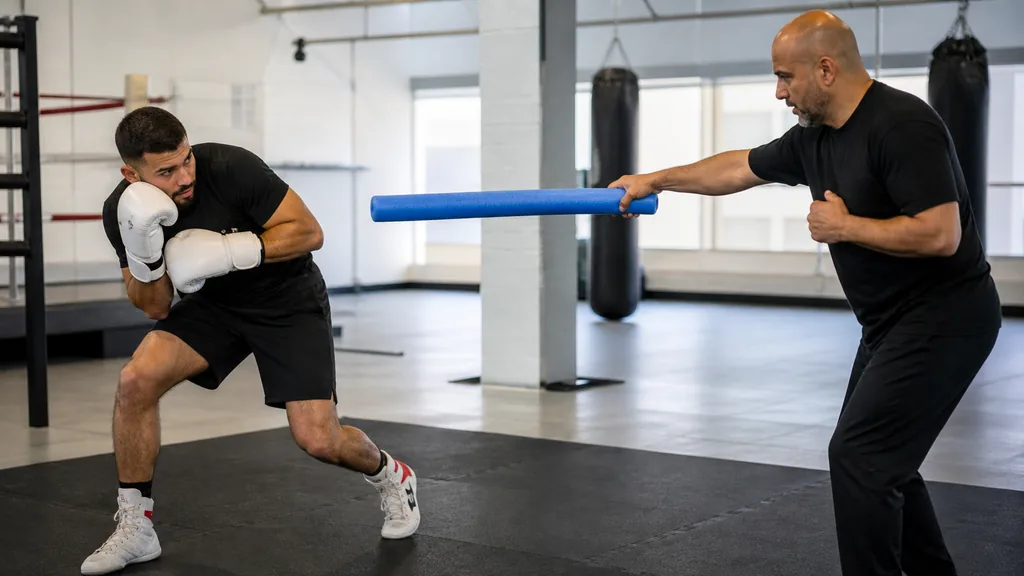
A coach can stand in front with one hand extended at forehead height as a visual line. The boxer is not trying to duck under a real punch. They are learning to take their head just below and outside the line while the feet make the angle.
Round three: read the straight-punch cue
Now use a coach-held foam noodle, glove or mitt. The coach gives a slow straight-punch cue as you start the first turn. Tuck, complete the second pivot and decide on one finish: cover and reset, take a small step out, or place a light jab on an available mitt.
The jab is optional. If the new range is wrong, bring the gloves home and reset. A pivot has done its job if it has moved you into a safer position, even when no punch follows.
Four mistakes that make the angle worse
The first is taking too much ground. A giant turn gives the other boxer time to follow and leaves your own feet unable to stop. Work with a small angle first.
The second is turning with a locked knee. Keep a slight bend so the hips and feet can move together. A stiff turn often leaves the head high and the rear foot flat.
The third is making the tuck a forward bend. The head needs to leave the line, not travel towards the other boxer. Let the knees lower you while the torso stays organised.
The fourth is deciding that every pivot earns a counter. If the other boxer has stepped away, covered well or stopped outside range, do not stretch for the jab. Reset and take the angle again when it fits.
For a related defensive movement, read our guide to the rear slip and rear pivot drill. The slip starts with the head. This drill starts with the feet and adds a tuck so you can make a rear-side angle without walking into the straight line.
Where this fits in training
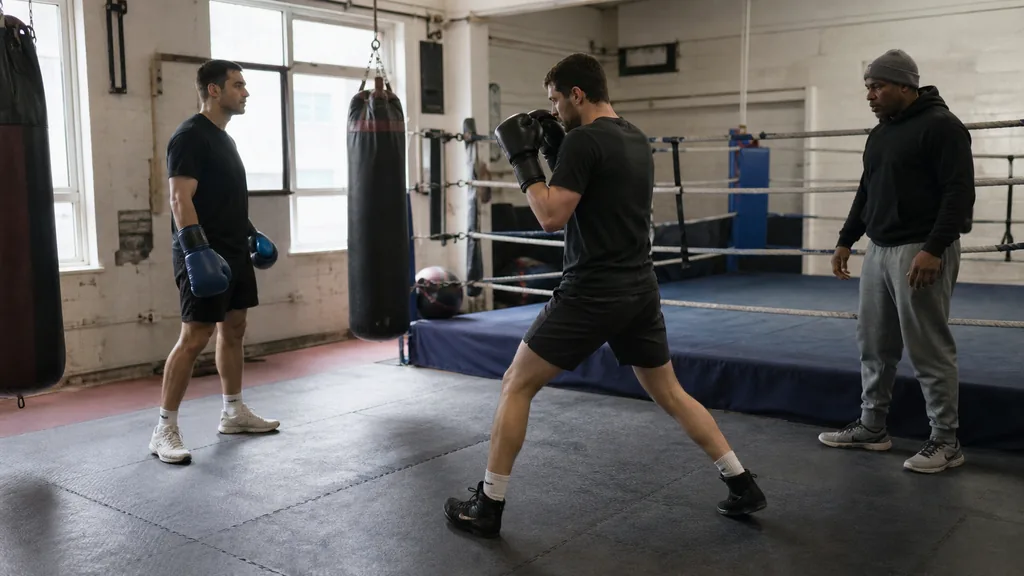
This is best for boxers who already have a settled stance and can make basic pivots without crossing their feet. Beginners can work it as shadow boxing or with floor tape. More experienced boxers can use slow partner cues after a coach has checked the position.
Keep the partner work controlled. No hard punches, no surprise hooks and no race to land a counter. The point is to learn whether the angle has left you able to see, guard and move. Pads and an agreed cue teach that far better than trying to force the movement into open sparring.
For adults in Kidbrooke, Greenwich and nearby, our Recreational Adults boxing classes use technical footwork, pads and controlled partner drills to connect movement with the next decision. You can build the detail before speed and pressure enter the picture.
The coaching cue is simple: turn small, tuck with the knees, finish ready.
H&G Team
Writer at Honour & Glory Boxing Club, a community boxing gym in Kidbrooke, South East London.
KEEP READING
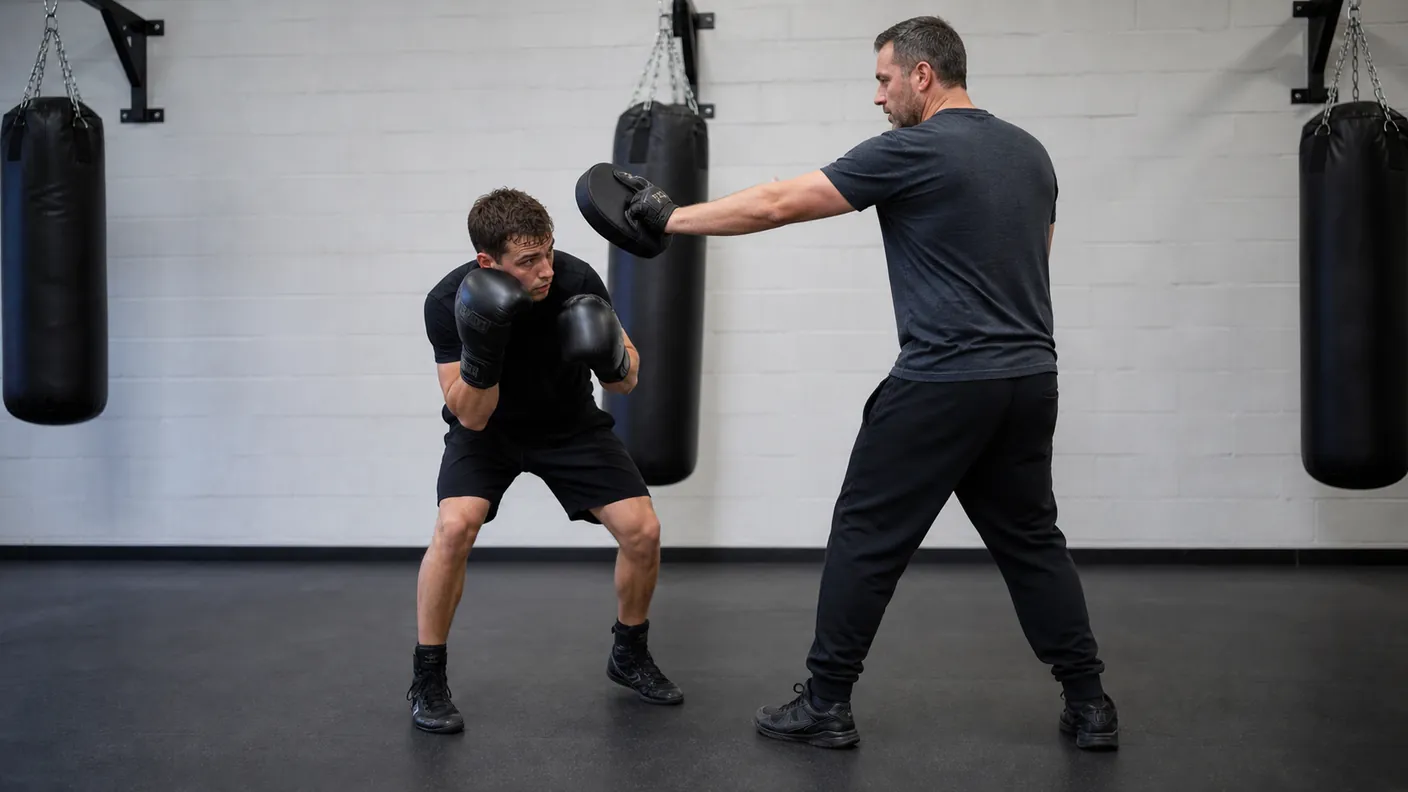
Rear Slip to Rear Pivot Boxing Drill
Use a compact rear slip and small pivot to leave the centre line without throwing yourself out of range or out of stance.
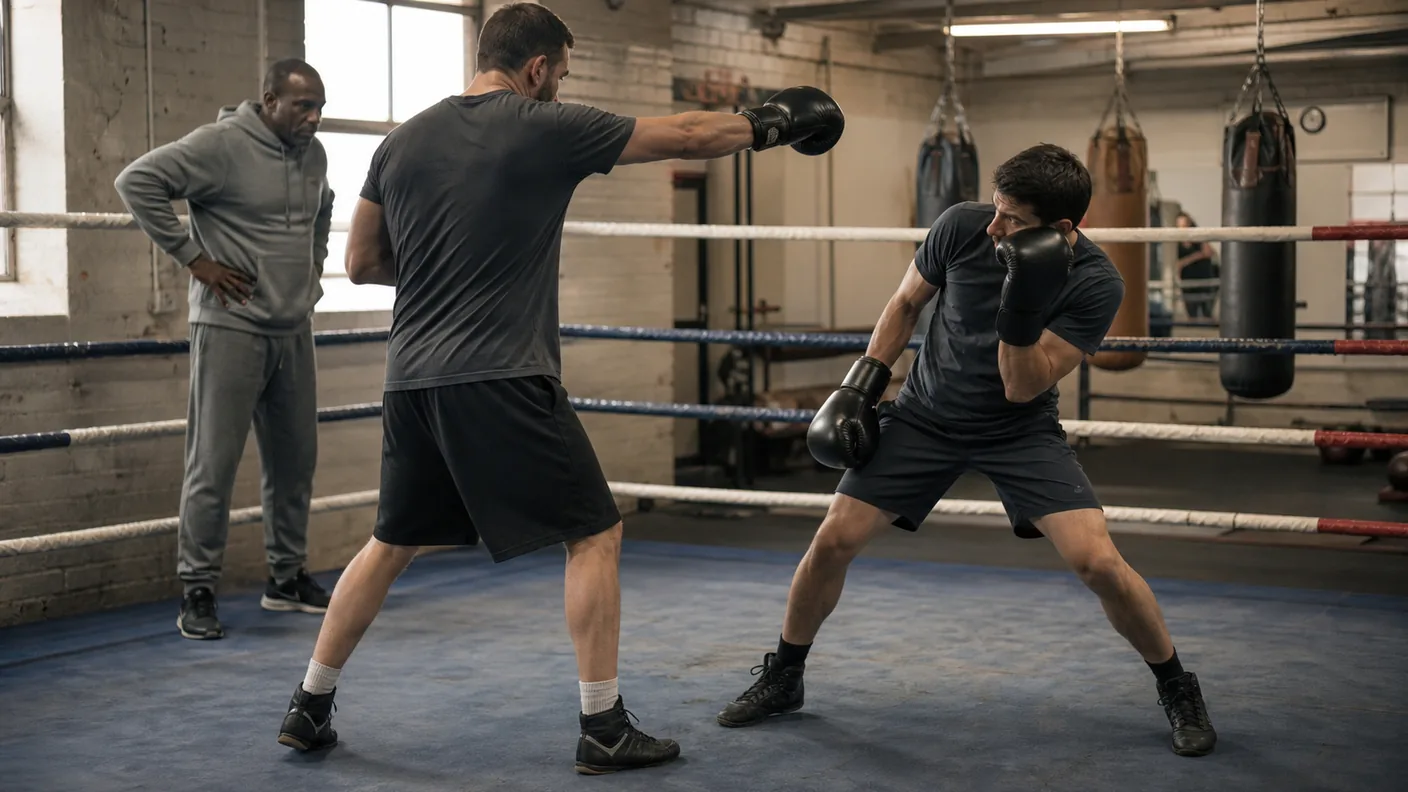
Slip Then Pivot: A Boxing Exit Drill
Use a compact slip and pivot to leave the jab line with balance, clear vision and a useful next position.
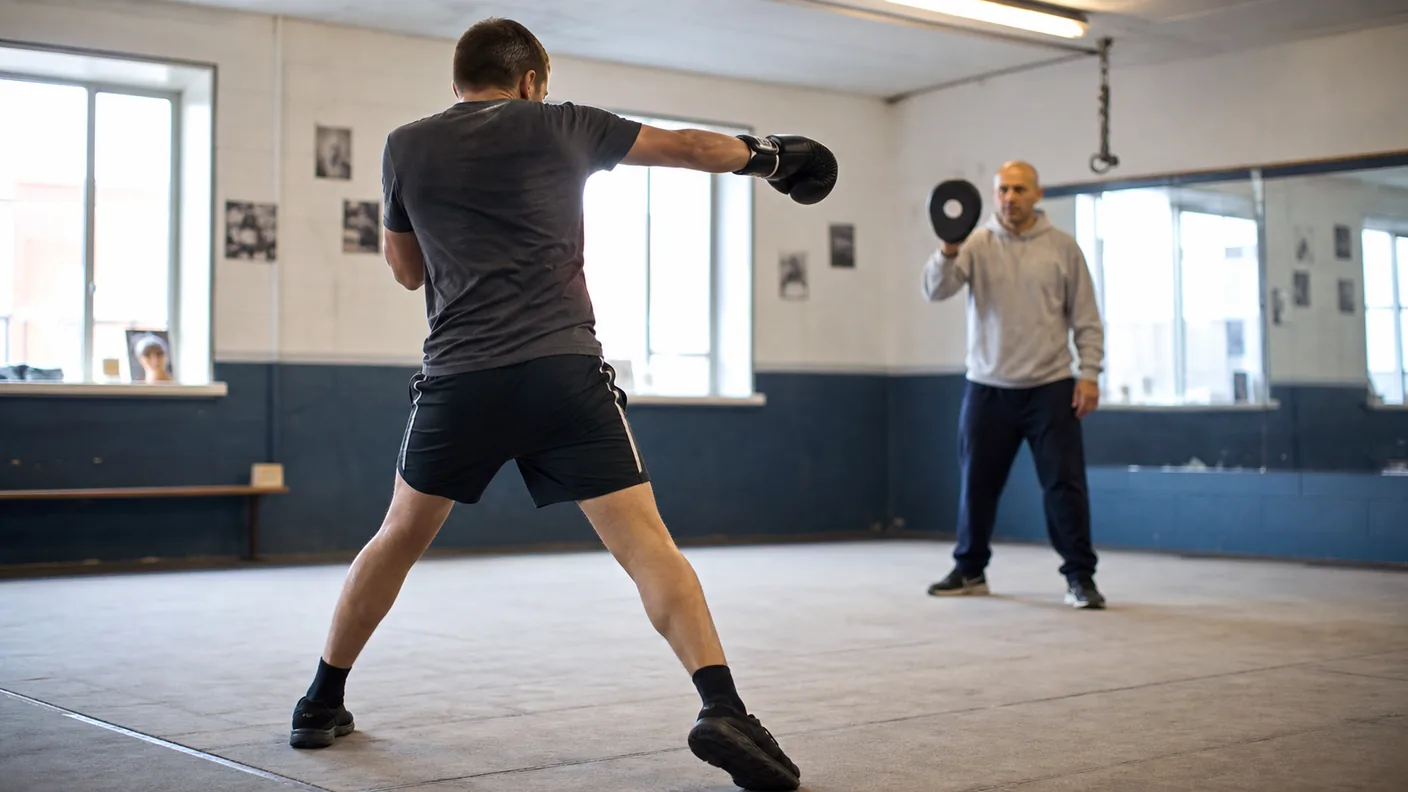
Boxing Pivot Drill: Turn Without Losing Your Stance
Build a useful boxing pivot with three simple drills that keep your feet under you, your guard ready and your next punch available.
Was this page helpful?
It takes one tap, and it genuinely helps.
Choose your next step
Turn this article into the right action
Some readers are ready to book. Some need the class route first. Pick the route that matches what you actually want.