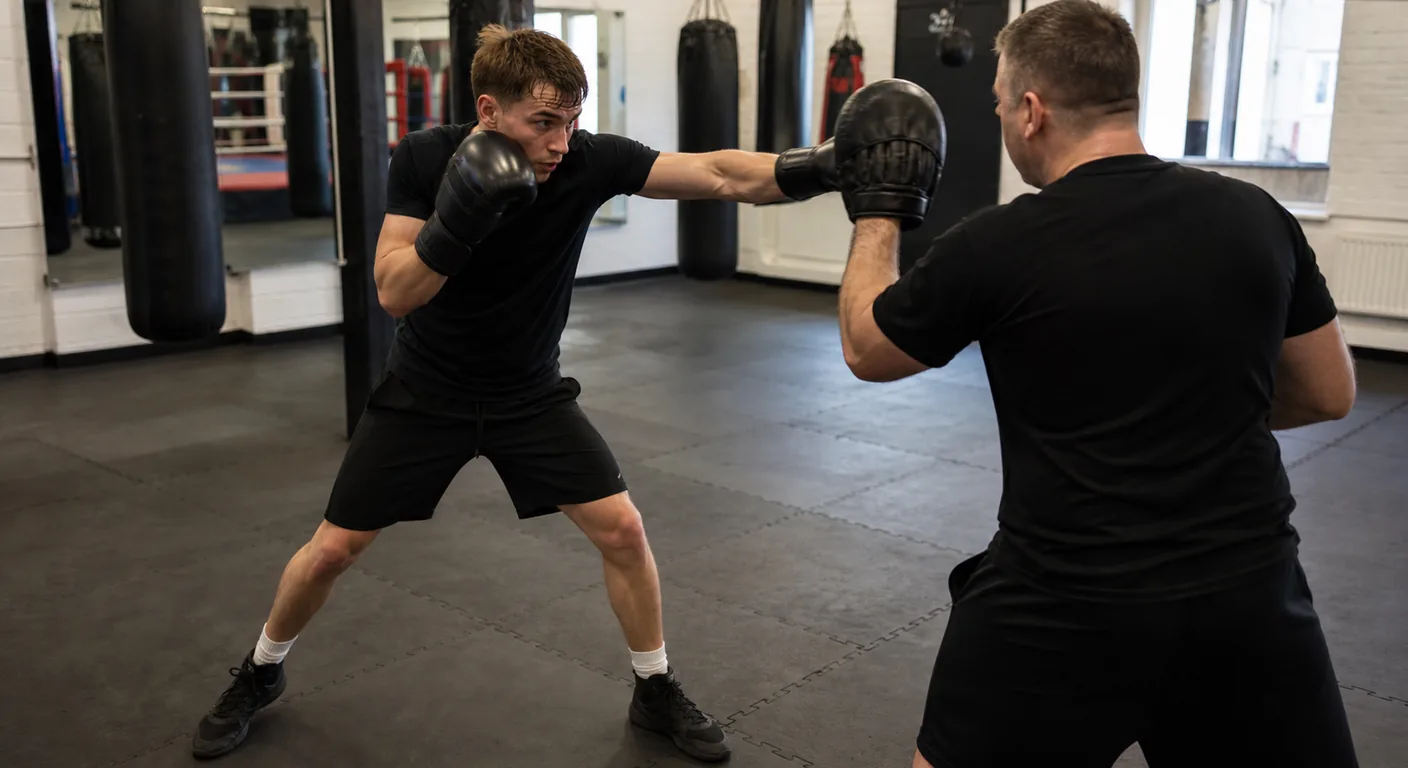
New boxers often make the same mistake on pads: they think the coach wants a performance.
The mitt appears, the room goes quiet, and suddenly every punch is thrown as hard as possible. The sound is impressive for three seconds. Then the feet spread too wide, the shoulders rise, the punch starts travelling from the arm alone and the next call is missed.
The short answer is that you should hit pads hard enough to make the technique honest, but not so hard that the punch changes shape. For most beginner rounds, clean contact, balance and a usable guard matter more than making the loudest noise in the gym.
That is not an argument for timid boxing. Pad work should have intent. It is an argument for putting power in the right place: after you can find the range, land with a straight wrist, return to guard and hear the next instruction.
Pads are not a heavy bag
A heavy bag stays where it is. Pads do not. A coach can raise the target, change the angle, step back, ask for a defence or stop the round to correct something. That is why pads are useful, but it is also why trying to smash them from the first bell causes problems.
On a bag, an overcommitted punch can look acceptable because the target is fixed. On pads, the same punch can leave you leaning forward, reaching or standing square after contact. The coach can see it immediately.
A study comparing junior and elite boxing mechanics found meaningful differences in how boxers coordinate punches, including the cross, hook and uppercut (Sports Biomechanics study). The useful lesson for a beginner is not to copy elite force figures. It is to accept that a punch is a whole-body movement. If the feet, hips, trunk and hand are not arriving in order, more effort will only make the mistake louder.
Use enough power to get useful feedback
Good pad work gives both people information.
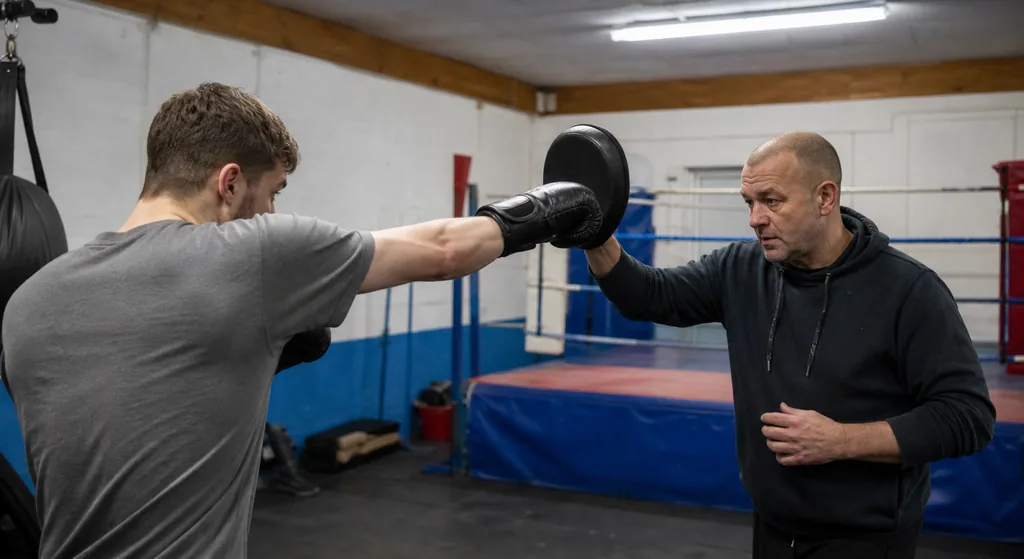
The coach needs to feel whether the punch lands through the correct part of the glove, whether the wrist stays stable and whether you are turning the body rather than flicking the arm. You need to feel whether you were actually at range and balanced enough to recover.
That means the punch cannot be a tap. A limp jab tells you very little about distance or structure. But it also does not need to be a full-blooded swing. Start at a level where you can land the shot, bring the glove home and throw the next one without your feet needing an emergency repair.
A useful check is the second after the punch. If you could defend, move or throw a clean jab again, the power was probably under control. If your chest has tipped forward, your rear hand has dropped and the coach has had to catch you with the pad, you have spent too much on one shot.
The sound is a poor scorecard. Good contact can be sharp without being violent. A loud slap can come from a badly timed arm punch. Ask the coach what they felt rather than judging the round by who heard it.
Match the power to the job of the round
Not every pad round is a power round. Treating them all the same is how technical work becomes a blur.
Technical rounds need controlled contact
When you are learning a new combination, defence or footwork pattern, use enough force to keep the punch real but leave room to think. The job is to notice where your hand returns, whether your weight stays centred and what happens after the final punch.
If a coach says jab, cross, step out, do not add force until you can complete the exit cleanly. The exit is part of the combination, not an optional extra after the exciting bit. Our guide to boxing technical rounds with one clear job explains why a narrow target usually teaches more than a frantic three minutes.
Accuracy rounds need calm eyes
If the coach is changing target height or moving the mitt, reduce the power until you can see properly. You are training judgement as much as impact.
This is also where a short cue helps. Think "touch, turn, return" rather than trying to remember a speech about every body part. Research on trained combat athletes found that an external focus, aimed at the outcome of the movement, produced slightly faster and more forceful punches than an internal focus on body mechanics (Journal of Sports Sciences study). In a normal class, that supports a simple coaching habit: look at the target and follow the cue, instead of trying to tense every muscle into position.
Conditioning rounds need repeatable power
A conditioning round can be hard. You might work a steady jab-cross, a short combination or a thirty-second burst. But the target is repeatable effort, not one dramatic punch followed by a minute of recovery.
If the first ten seconds are wild and the last twenty are empty, lower the power slightly and keep the rhythm. A controlled round that stays technically useful is tougher, and more valuable, than a short burst of chaos.
Power rounds need a coach's call
There is a place for harder punches. It is normally after the coach has set the range, braced the pads and told you the purpose of the drill. That could be a rear-hand cross, a body shot on a shield or a short finishing combination.
Even then, hard does not mean reckless. The strike should still land with the wrist lined up, the chin protected and enough balance to move after it. If you have to fall into the pad to make it sound heavy, you are not producing useful power. You are borrowing it from your posture.
Do not let the pad holder absorb your bad decision
Pads protect the coach, but they are not permission to throw without control.
Hand and wrist problems are a real part of boxing. A long-term study of the Great Britain Olympic boxing squad recorded 172 hand and wrist injuries, with injury rates much higher in competition than in training (British Journal of Sports Medicine study). That does not mean recreational pad work is dangerous by default. It means wraps, glove choice, sound mechanics and sensible progression are not fussy details.
If your wrist bends on impact, your knuckles ache sharply, or the same spot hurts every time you hit pads, do not try to prove toughness by adding power. Tell the coach and reduce the contact. Our guide to why wrists hurt after boxing covers the common technical and equipment mistakes, along with the warning signs that need proper attention.
The same courtesy applies to the person holding for you. Do not launch a surprise hard hook because you feel fresh. Wait for the call. The coach sets the target and the intensity so both people get a useful rep.
A simple way to find the right level
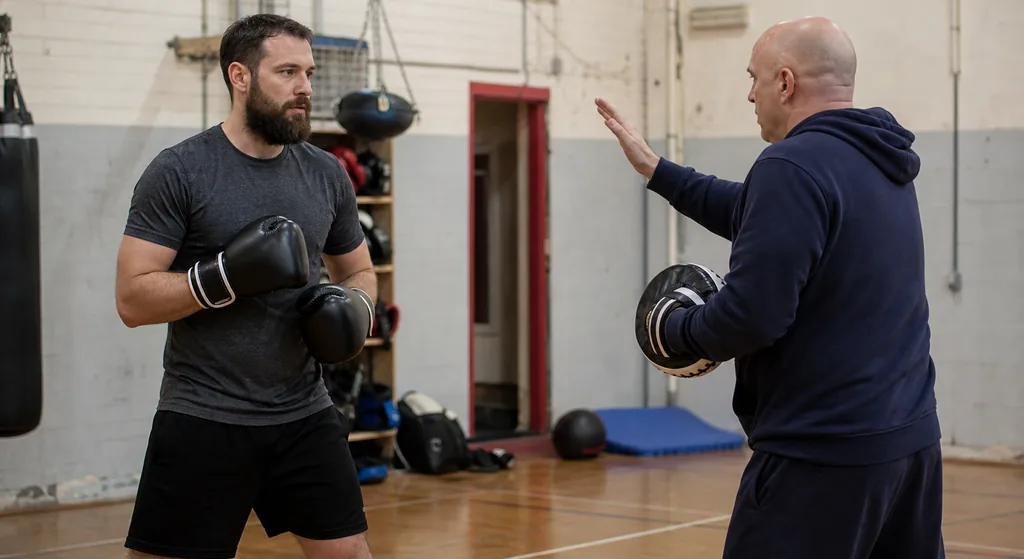
Use this three-step approach in a coached pad round:
- Start with single jabs at a calm pace. Check that you can reach without leaning and return the hand to guard.
- Add the cross, still below maximum effort. After each one-two, take a small step or reset your stance before the next call.
- Increase the force only if the coach says the shape is holding. The moment your feet stick, shoulders tense or hands stop coming home, return to the previous level.
That is not holding back. It is how you earn the right to hit harder. Beginners who learn to control power tend to progress faster because the coach can give them more precise corrections. The person swinging at full force is usually too busy recovering to learn much at all.
If you want to build impact on a fixed target, use our guide to how hard you should hit a heavy bag alongside this one. The bag is useful for power and conditioning. Pads are where you test whether that power still belongs to a boxer who can see, listen and move.
Learn the feel before you chase the sound
The best pad work has a rhythm. You can hear the coach, see the target, make clean contact and stay in a shape that lets you carry on. A hard shot belongs inside that rhythm. It does not replace it.
If you are in Greenwich, Kidbrooke or nearby, our Recreational Adults boxing classes give beginners the chance to learn pads with coaching rather than guesswork. You do not need to arrive powerful. You need to learn how to make a punch useful.
H&G Team
Writer at Honour & Glory Boxing Club, a community boxing gym in Kidbrooke, South East London.
KEEP READING
Why You Miss Focus Mitts in Boxing
Missing focus mitts is not a sign that you cannot box. Learn the small range, timing and attention errors that make pads feel impossible.
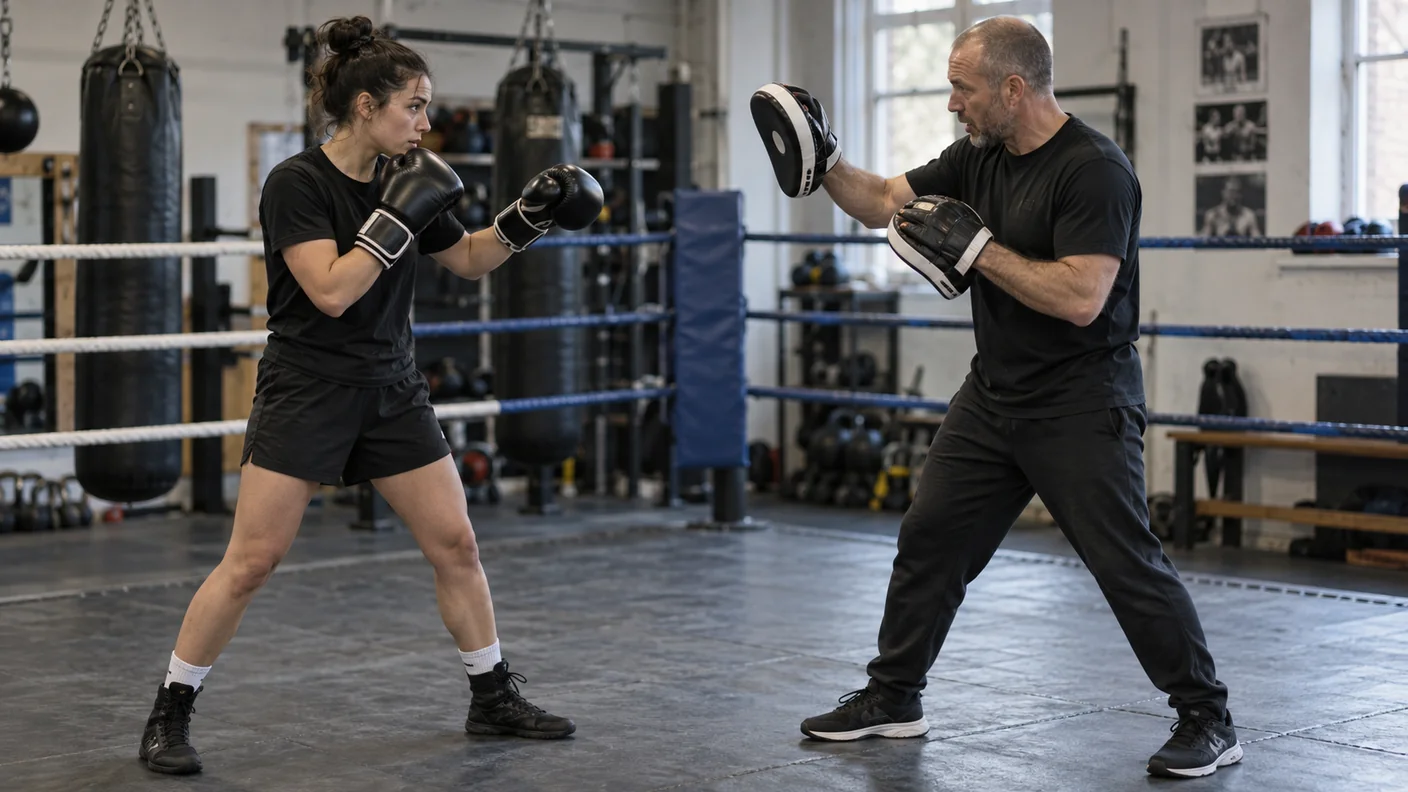
How to Hold Pads for a Southpaw Boxer
A practical guide to pad position, stance and clear calls when your partner boxes southpaw.
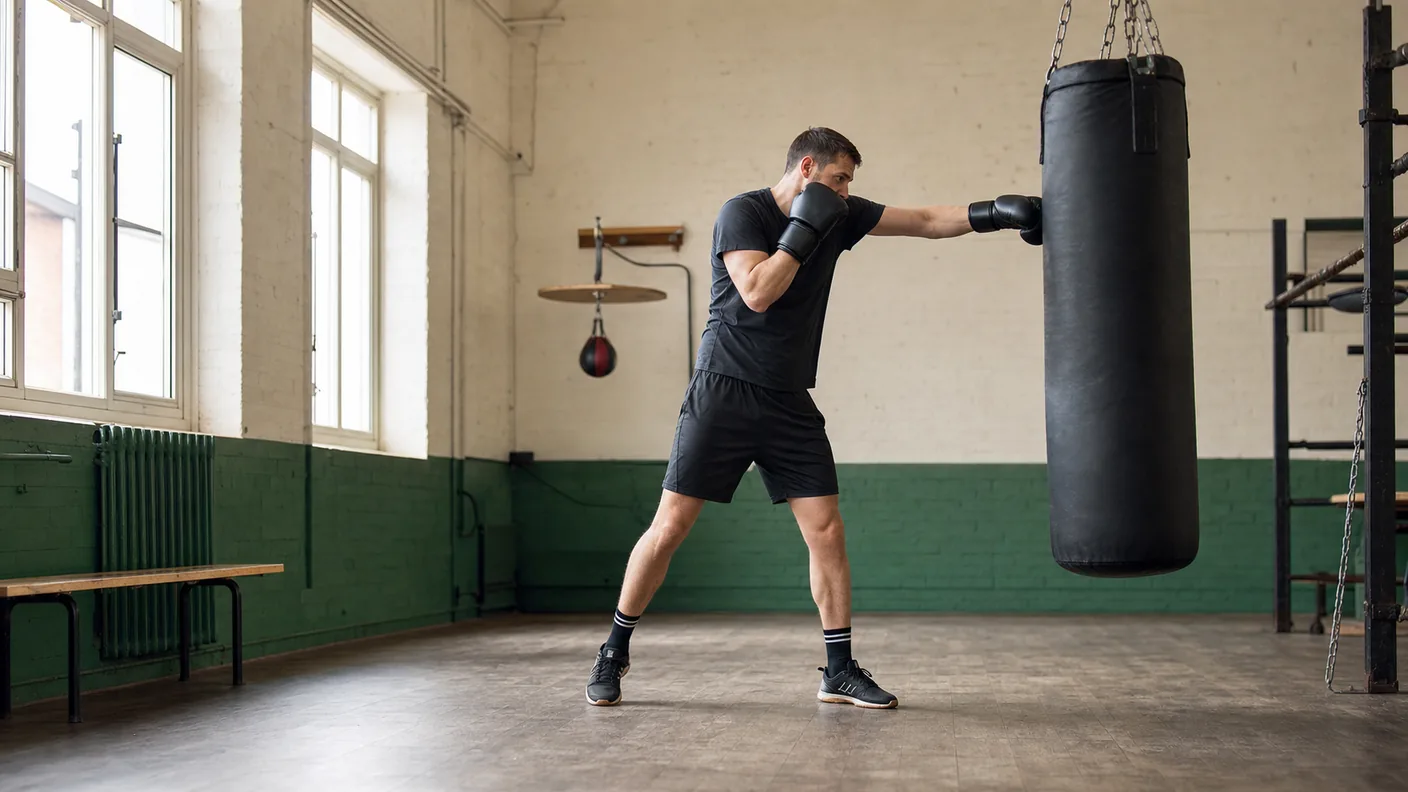
How Hard Should You Hit a Heavy Bag?
Most bag rounds do not need maximum force. Learn when to hit hard, when to stay light and how to keep boxing technique intact.
Was this page helpful?
It takes one tap, and it genuinely helps.
Choose your next step
Turn this article into the right action
Some readers are ready to book. Some need the class route first. Pick the route that matches what you actually want.