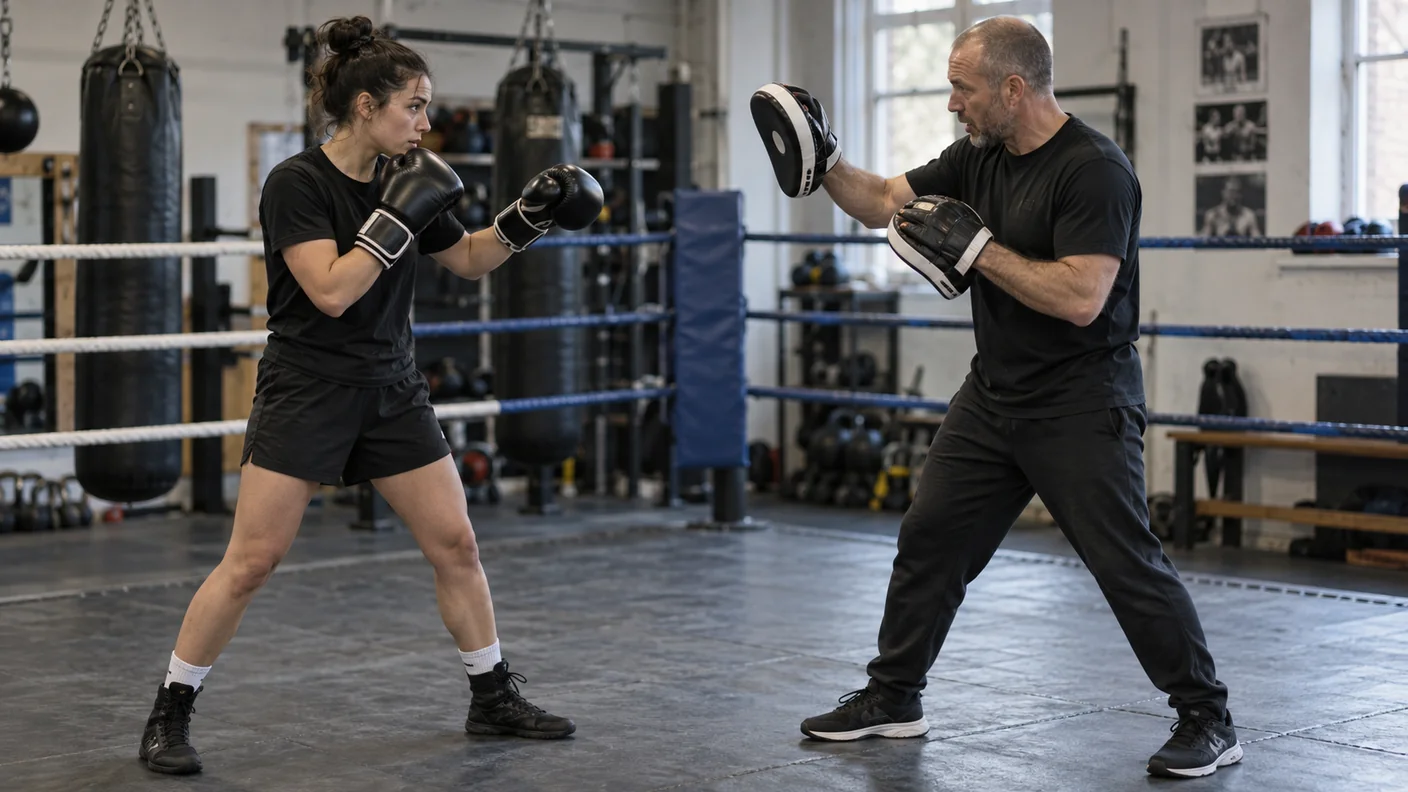
Holding pads for a southpaw should not feel like a magic trick. The punches are the same. The job is the same. Your partner still needs a clear target, an honest distance and enough time to see the next instruction.
What changes is the map. A southpaw has the right hand and right foot forward, with the left hand as the rear straight. If you hold pads as though every boxer is orthodox, you can make their best straight punch land on the wrong target, pull them across their stance, or teach a combination that only works for the person wearing the mitts.
The simple rule is this: set the pads for the boxer in front of you, not for your own comfortable side.
Start by agreeing who is southpaw
Do not guess from which hand hits harder on the bag. Ask your partner which stance they are using for the round. A southpaw stands with the right foot and right hand forward. Their basic straight sequence is right jab, left cross.
That matters before the first call. If you say "one-two", make sure you both mean the same thing. Some gyms number punches by the boxer’s lead and rear hands. Others use left and right. Either is fine if you agree before the timer starts. Confusion in the middle of a pad round creates rushed, ugly punches.
England Boxing’s coaching handbook says trainees should try both orthodox and southpaw stances, while keeping the rear foot offset, balanced and ready to move (England Boxing Level 2 coaching handbook). The same courtesy applies to the pad holder. You need to know which picture your partner is building before you start moving the targets.
Put the southpaw straight left on your left pad
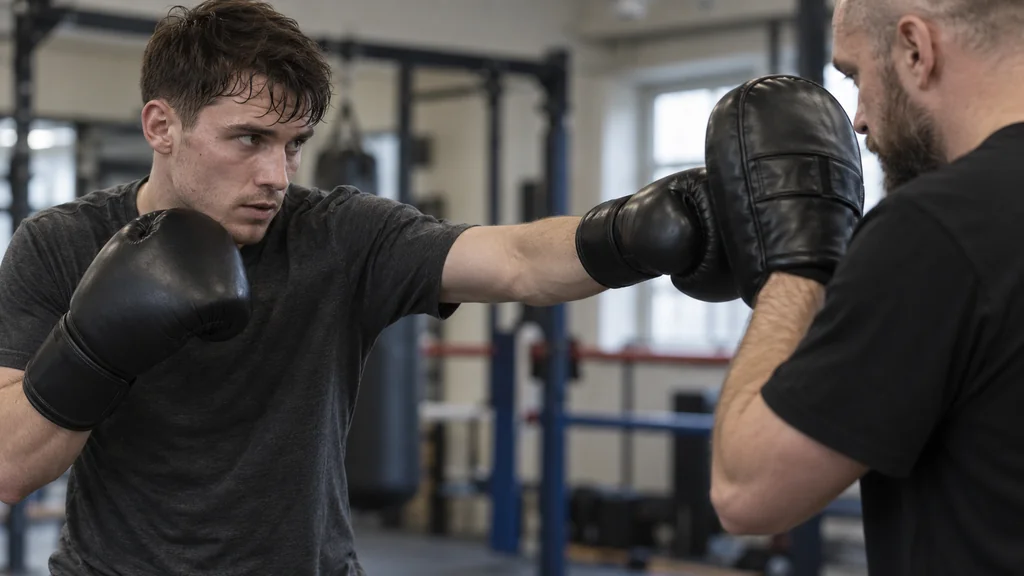
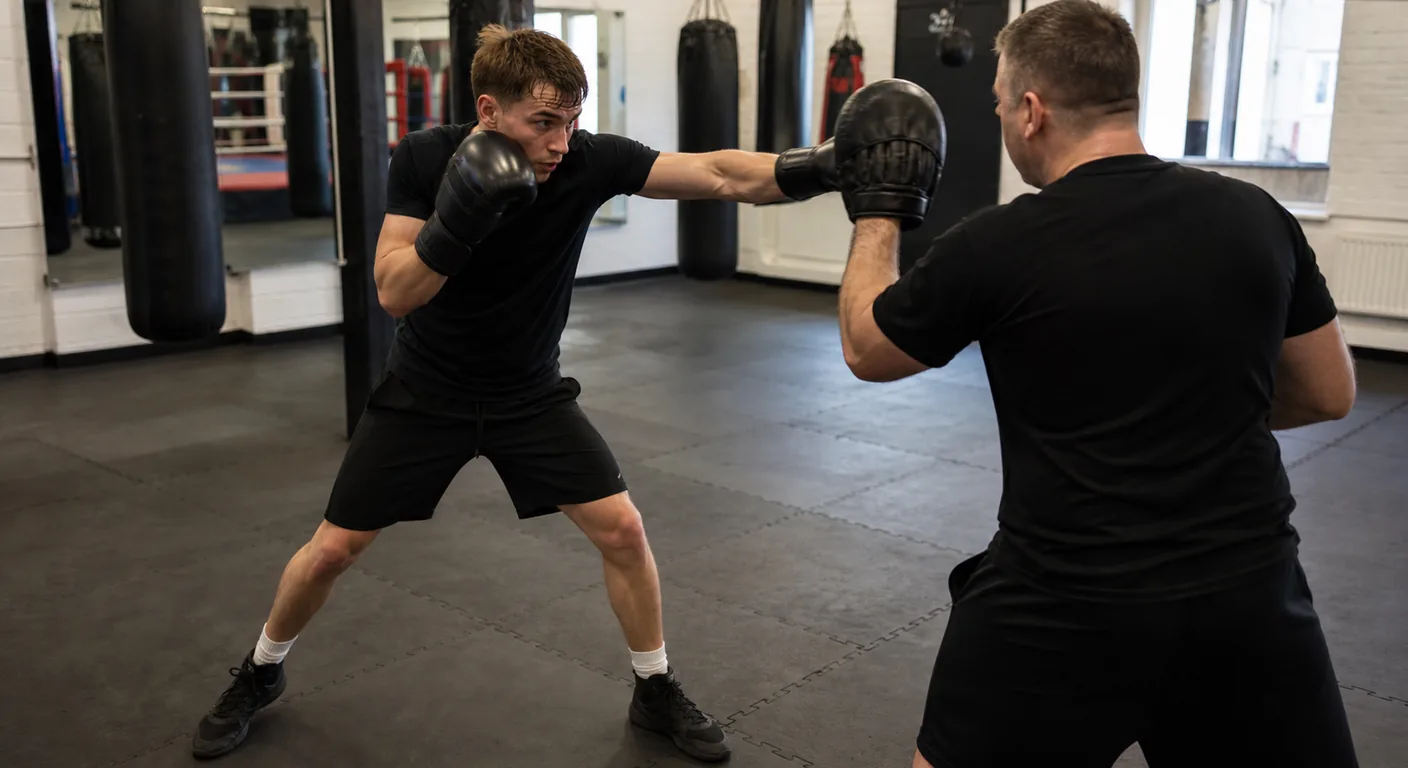
This is the first practical adjustment. For a southpaw boxer, the rear straight left should land on your left pad. Hold that pad at the boxer’s nose height, with the striking surface facing them.
That is not a personal preference. England Boxing’s pad-position guidance makes the same distinction directly: straight shots from an orthodox boxer are taken on the holder’s right pad, while straight shots from a southpaw boxer are taken on the holder’s left (England Boxing Level 2 coaching handbook).
Do not reach the left pad across your own body at the last second. Set it early and make the target plain. If the boxer has to chase a moving mitt, they will often overreach with the shoulder or pull their head past the front knee just to land the shot.
For a right jab, present the other mitt in a normal lead-hand line. The target should allow the boxer to jab from their guard, bring the right glove home and still see the left cross without their feet tangling.
Keep your own stance useful
A pad holder does not need to copy the boxer’s southpaw stance. In fact, holding an orthodox stance while your partner works southpaw often gives both of you a clear open-stance picture.
What matters is that you are not square, flat-footed or planted too close. Keep one foot forward, knees soft and enough room to step away if the boxer closes distance. You are giving them a moving reference, not standing in front of a firing line.
England Boxing’s Level 1 handbook recommends a boxing stance and guard as the normal starting position for pad work, and says coaches should watch the boxer’s feet as well as the punch impact (England Boxing coaching handbook). That is good advice for anyone holding mitts. If your pad position makes the southpaw stand square or cross their feet, the sound of the punch does not rescue the repetition.
Give the southpaw jab a proper job
The right jab is not a placeholder while you wait for the left hand. It lets a southpaw find distance, disturb the other boxer’s lead hand and create a cleaner route for the rear straight.
Start with one simple pattern: right jab, reset. Hold the lead target still enough that the boxer can land, recover their glove and look at their feet. Then call right jab, left cross. The first punch should set the second, not rush it.
A technical review of boxing performance describes successful punching as work shared through the legs, trunk and upper body, rather than an arm acting alone (boxing performance review). In the gym, that means the pad holder cannot ask for a clean left cross while putting the target somewhere that forces the boxer to lean or twist out of stance.
Build combinations from the southpaw side
Keep the first combinations short. Long calls can become a memory test before either person has got the angles right.
Try these three sequences:
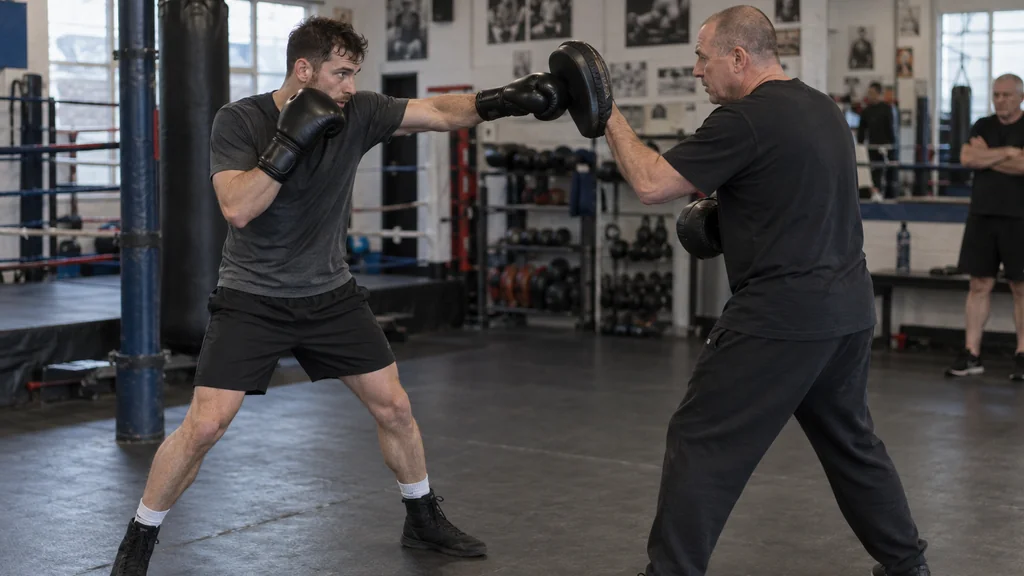
- Right jab, left cross. The basic southpaw one-two. Hold the left pad clearly for the rear straight.
- Right jab, left cross, right hook. After the cross, bring the hook target in close enough that the boxer does not have to reach around their own shoulder.
- Right jab to the body, left cross to the head. Lower the right-jab pad by changing your level slightly, rather than dropping a mitt so low that the boxer folds forward.
After each sequence, stop for a second. Can the boxer move, defend or throw another jab without repairing their feet first? If not, take a punch away. The best pad combinations look uncomplicated because each part leaves the next part possible.
Our southpaw stance and footwork guide explains why the lead-foot position matters in an open stance. Our broader guide to holding boxing pads properly covers grip, wrist position and meeting the punch safely. This article is the bridge: those ordinary pad-holding habits still apply, but the target order has to match the southpaw boxer.
Do not chase the outside foot with the mitts
A southpaw facing an orthodox stance will often want to work to the outside of the other boxer’s lead foot. That does not mean the pad holder should drag every target wide and make the boxer chase it.
The angle belongs to the feet. Your mitts should give a target that rewards a small, settled step, not a lunge across the floor. If you move the left pad too far outside, the southpaw will stretch for the rear straight and lose the balance that made the angle useful.
Use a small rule: move the target only as far as you could still absorb a clean punch without twisting your own back. If you need a dramatic sweep to make the drill look clever, it is probably no longer a good beginner drill.
What goes wrong most often
The first mistake is reversing the straight-punch targets by habit. The southpaw left cross lands on the wrong mitt, then both people start compensating in a hurry. Slow down and reset the pad order.
The second is holding the rear-straight target too far away. A southpaw is not trying to impress you with a long left hand from the car park. If the target is out of range, let the feet close the distance first.
The third is treating the boxer’s lead right hand as decorative. A useful right jab gives the left cross a route. If you keep calling the rear hand alone, the boxer starts loading it and the round becomes predictable.
The fourth is asking for speed before the left pad is clear. Southpaw work can look unfamiliar to an orthodox pad holder, but unfamiliar does not need to become frantic. One clean jab-cross is better than a six-punch mess where neither person knows which hand is due next.
A three-round southpaw pad plan
For the first round, work only the right jab. Change the range with your feet, but keep the target obvious. The boxer should finish each jab in guard and stance.
For the second round, add the left cross. Call right jab, left cross, then pause. Check that the left pad was ready early, the boxer stayed balanced and the hands came home.
For the third round, add one exit. After the jab-cross, take a small step to one side or ask the boxer to step out behind their guard. Do not turn the exit into a race. The aim is to show that the combination ends with a usable position, not a pose.
If either of you loses the picture, return to the one-two. That is not going backwards. It is the fastest way to make sure the drill is teaching boxing rather than teaching both people to chase mitts.
Let a coach check the first rounds
Pad holding is part of learning boxing, but it is not a reason to improvise hard contact. Start light, use a clear call and let a coach correct the distance before you add speed or power.
At Honour and Glory, our Recreational Adults boxing classes use pads, bags and coached partner drills to make stance and punch selection practical. If you are in Kidbrooke, Greenwich or nearby, a coach can see quickly whether your southpaw partner needs a different pad target, a smaller step or a simpler sequence.
H&G Team
Writer at Honour & Glory Boxing Club, a community boxing gym in Kidbrooke, South East London.
KEEP READING
Why You Miss Focus Mitts in Boxing
Missing focus mitts is not a sign that you cannot box. Learn the small range, timing and attention errors that make pads feel impossible.
How Hard Should You Hit Boxing Pads?
New to pad work and unsure how much power to use? Learn how to hit with intent without turning every round into a balance and injury test.
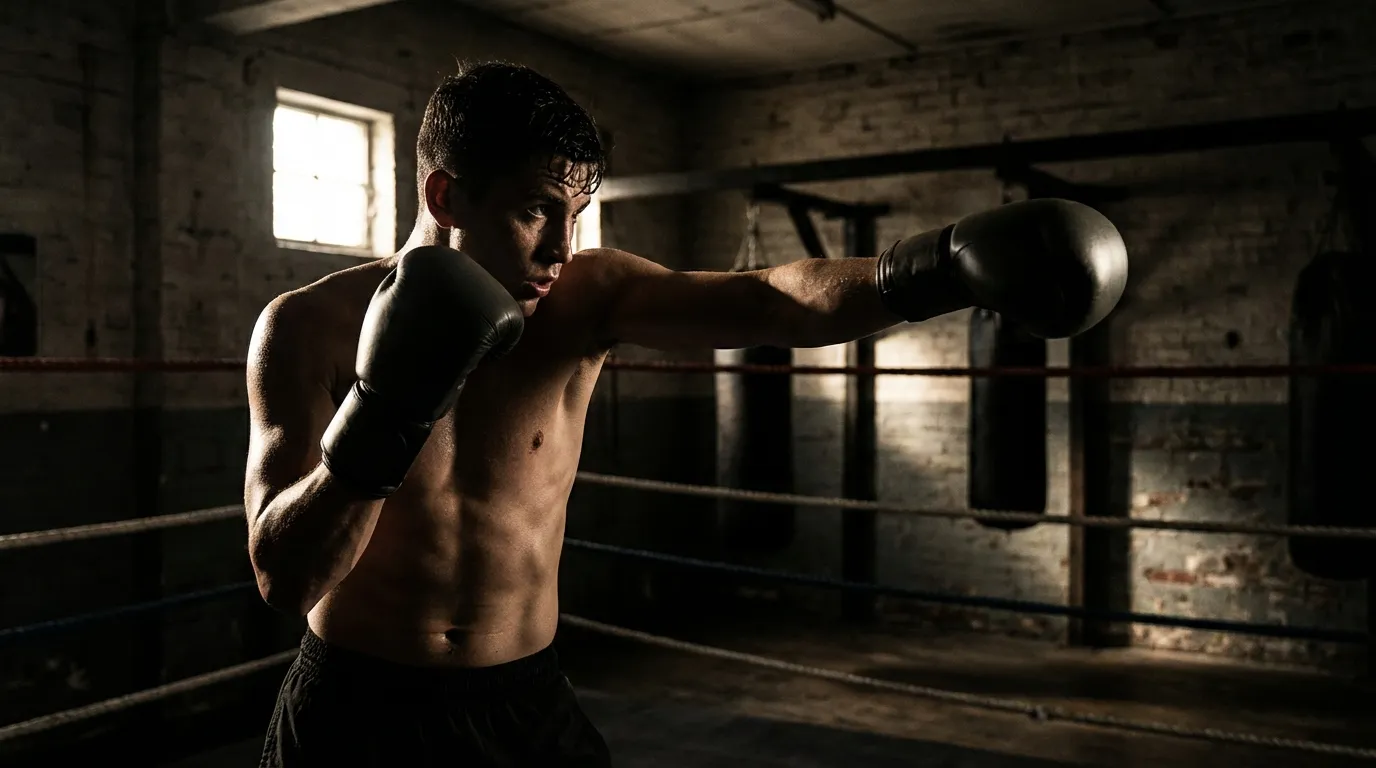
Southpaw Stance in Boxing: Footwork, Angles and Drills
A practical southpaw stance guide for beginners and improving boxers: foot position, the right jab, the straight left, orthodox matchups, common mistakes and coach-led drills.
Was this page helpful?
It takes one tap, and it genuinely helps.
Choose your next step
Turn this article into the right action
Some readers are ready to book. Some need the class route first. Pick the route that matches what you actually want.