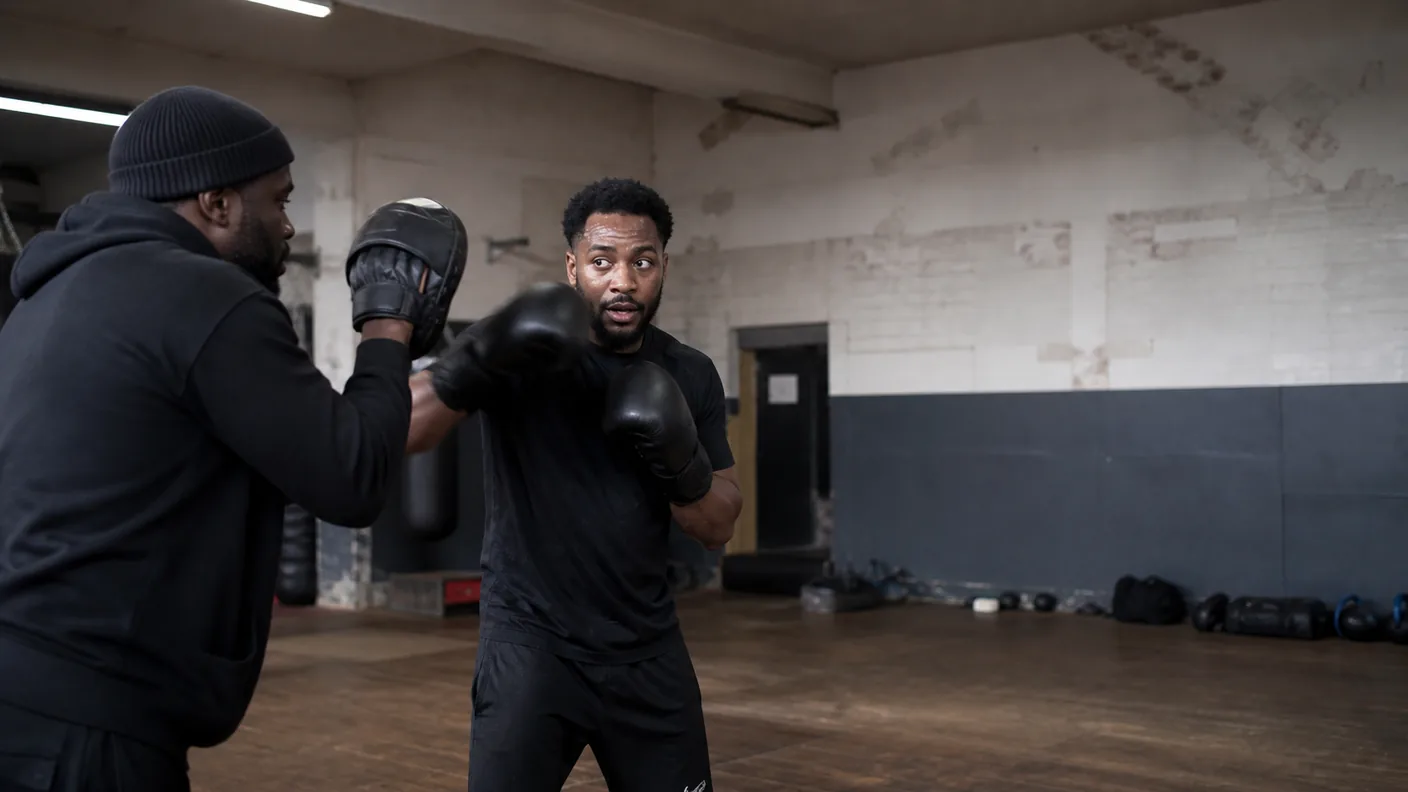
A heavy bag is patient. It stays in front of you, does not change height, and never asks you to make a decision after the punch.
Focus mitts are different. The target appears, the coach moves, a number gets called, and your jab suddenly lands on the edge of the pad or cuts through empty air. New boxers often take that personally. They should not. Missing mitts is usually a useful sign that the drill is asking more of your eyes, feet and attention than the bag did.
The answer is not to swing harder or try to react faster than you can see. It is to make the target, range and task smaller until you can land cleanly and recover your stance.
Missing mitts is usually a range problem first
Most missed pads happen before the glove leaves your guard. You are either too far away and reaching for the mitt, or too close and trying to punch around your own shoulders.
On a bag, people can get away with standing in the wrong place because the target is fixed. A long jab that leans the head forward might still touch leather. On mitts, the coach can take half a step back or show the target slightly to one side. Now the same jab misses because your feet did not put you in range.
Start by looking at what happens after the miss. If your chest falls forward, your back foot trails or you need two hurried steps to recover, do not blame your hand speed. You threw from too far away. Our guide to why you fall forward when you punch explains the same mistake from the stance side.
The correction is small: take a shorter step, then punch. Do not stretch the arm an extra inch. The glove should arrive while your head stays behind the front knee and your rear hand remains useful.
Watch the coach, not the mitt
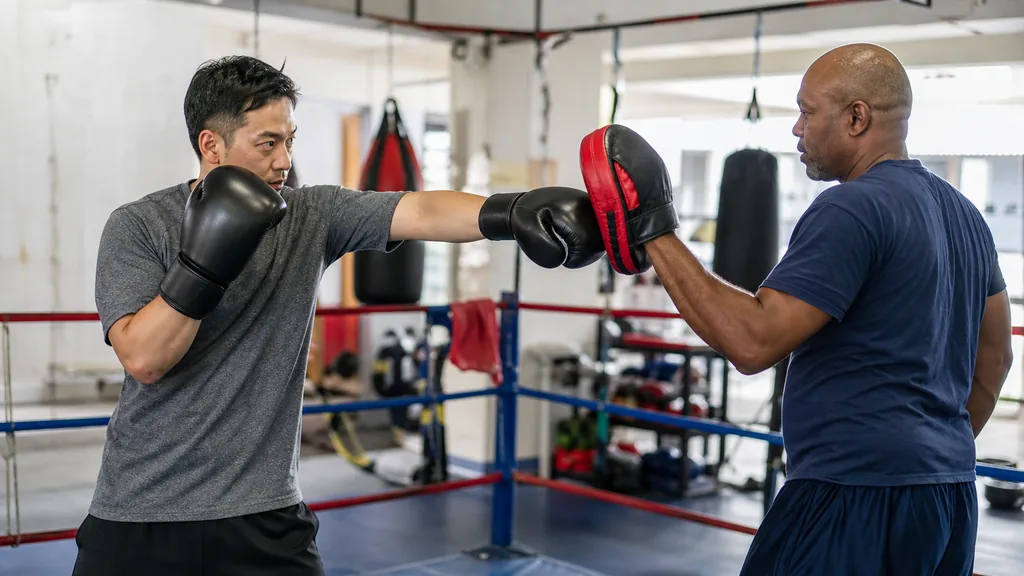
A moving mitt is a poor thing to stare at. If your eyes chase it, your head usually follows, then your shoulders tense and your timing becomes late.
For most beginner pad drills, keep your gaze around the coach's upper chest and shoulders. You can still see the mitt in your wider field of view, but you are less likely to lunge after it. This gives you a calmer picture of the target, the distance and the next cue.
That is not just a coach's preference. A systematic review of anticipation in combat sports found that experienced performers make better use of early movement information than novices. You do not need to become an expert reader of shoulders in one class. The practical lesson is simpler: stop waiting for the pad to be right in front of your face before you start paying attention.
A good pad holder will show a clear target for a beginner. If you keep missing it, ask them to slow the sequence or use one mitt at a time. That is not asking for an easier session. It is giving yourself a fair chance to learn the movement before the pace turns it into guesswork.
The first punch is often rushed
Many missed mitts come from trying to beat the call.
The coach says "one-two" and the first jab has already left before you have seen where the mitt is. The second punch is then thrown because you remember the combination, not because the target is there. The round becomes a recital: numbers first, eyes second.
Reverse that order. See the target. Land the jab. Bring it back. Then take the next call.
This is especially important when you are new to combinations. A two-punch pattern is enough to teach range, balance and recovery. A six-punch pattern can be useful later, but it cannot fix a first punch that is leaving from the wrong distance.
A study of highly trained male amateur boxers found relationships between visual abilities and punch performance in competition. It does not mean that a beginner needs specialist vision drills. It does support the obvious coaching point: accuracy is not only about having quick hands. You need to see the right cue, make the right decision and then put the hand where it belongs.
Slow the drill until you can name the mistake
The fastest way to improve is to stop calling every miss "bad timing".
There are a few common versions:
- The mitt was too far away and you reached with the shoulders.
- You stepped after the punch instead of before it.
- You looked down at your feet as the coach raised the target.
- You threw the remembered combination before you saw the mitt.
- You hit the first pad, then left the hand out and missed the second.
- You tried to hit hard enough to impress the pad holder, so the punch changed shape.
Each mistake has a different fix. If you reach, make the step smaller and earlier. If you look down, use a single jab round with your eyes on the coach's upper body. If the second hand is late, bring the first hand home before adding speed.
Trying to correct all of them at once is how beginners freeze. Pick one visible problem for a round. Our guide to boxing technical rounds with one clear job gives a useful way to organise that work without turning every session into a test.
Let the pad holder make the target honest
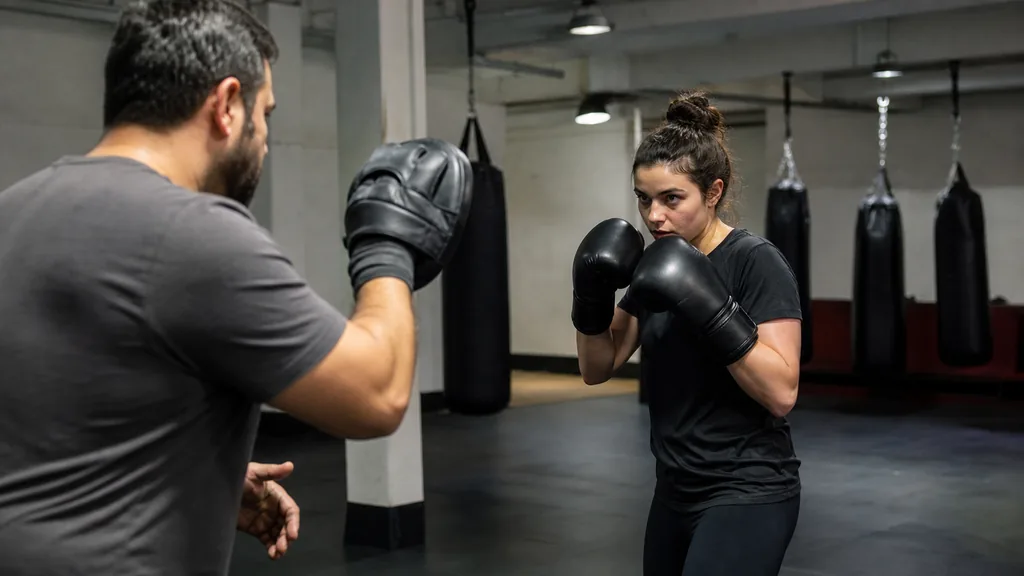
Pad work is a conversation, not target practice with somebody else's arms.
The coach has a job too. They need to show a target at a sensible distance, catch the punch safely and make the call clear enough for the drill's purpose. If the mitt is flying around like a trick-shot video, a beginner learns to flinch and chase. That does not build useful boxing.
A good first accuracy drill is boring in the best sense:
- The coach holds one mitt at head height.
- You take a small step only if the range needs it.
- You land one relaxed jab and return it to guard.
- Both people pause for a beat and check the stance.
- The coach moves the target a small amount before the next rep.
That gives you hundreds of chances to learn one thing properly. Once you can land the jab without leaning, the coach can call a cross. Once the one-two lands with the hands returning home, they can ask for an exit step. The difficulty rises, but the basic picture remains clear.
This is why pad work is more valuable than trying to copy fast combinations from a video. A coach can see whether you missed because you were late, too far away, too tense or simply asked to do too much at once.
Do not chase the mitt after a miss
The bad rep often gets worse after the first miss. You fall short of the jab, then throw a frantic cross to make up for it. The feet stop. The chin comes forward. The coach now has to move the mitt away to avoid meeting your glove in a bad position.
Instead, use the same reset after every miss:
- bring both gloves back to guard
- take one small step to restore range
- look at the coach's upper body
- breathe out and wait for the next clear target
You will lose fewer seconds with this reset than you lose trying to rescue a broken combination. It is also a safer habit for later partner drills, where reaching after a missed punch can leave you square and open.
The reset should be quiet. Do not turn it into a dramatic retreat across the gym. One good step, a stable stance and a ready guard are enough.
Accuracy improves when the punch is not a performance
New boxers often miss mitts because they want the punch to sound impressive. The shoulders rise, the arm stiffens and the target gets chased instead of met.
Pads reward clean contact more than noise. A sharp jab at a sensible pace tells the coach far more than a wild hook that makes the whole room look round. If you can land a punch, return to guard and hear the next call, you are doing useful work.
That is also why a clean bag round does not automatically make pads easy. The bag teaches contact and rhythm. Focus mitts add choice, movement and feedback. They are supposed to expose the next thing you need to learn.
Give yourself a fair first target
You do not need fast reflexes or a boxing background to learn pad work. You need a coach who can give you a clear target and the patience to repeat a simple action until it feels less strange.
Start with one mitt. Start with one punch. Step before you reach. Keep your eyes up. Then add the next layer only when the first one still looks like boxing.
If you are in Greenwich, Kidbrooke or nearby, our Recreational Adults boxing classes use pads, bags and controlled drills to teach those details without putting beginners under sparring pressure.
H&G Team
Writer at Honour & Glory Boxing Club, a community boxing gym in Kidbrooke, South East London.
KEEP READING
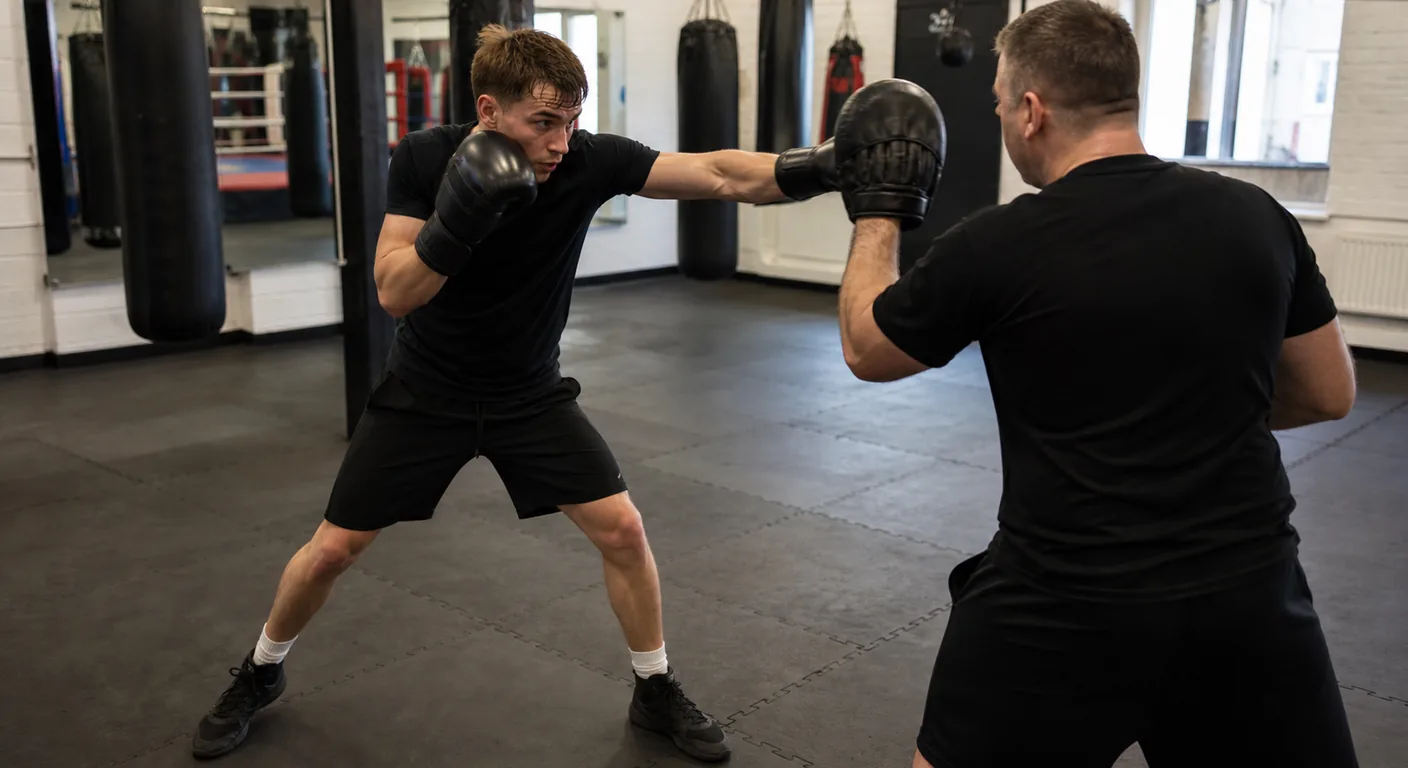
How Hard Should You Hit Boxing Pads?
New to pad work and unsure how much power to use? Learn how to hit with intent without turning every round into a balance and injury test.
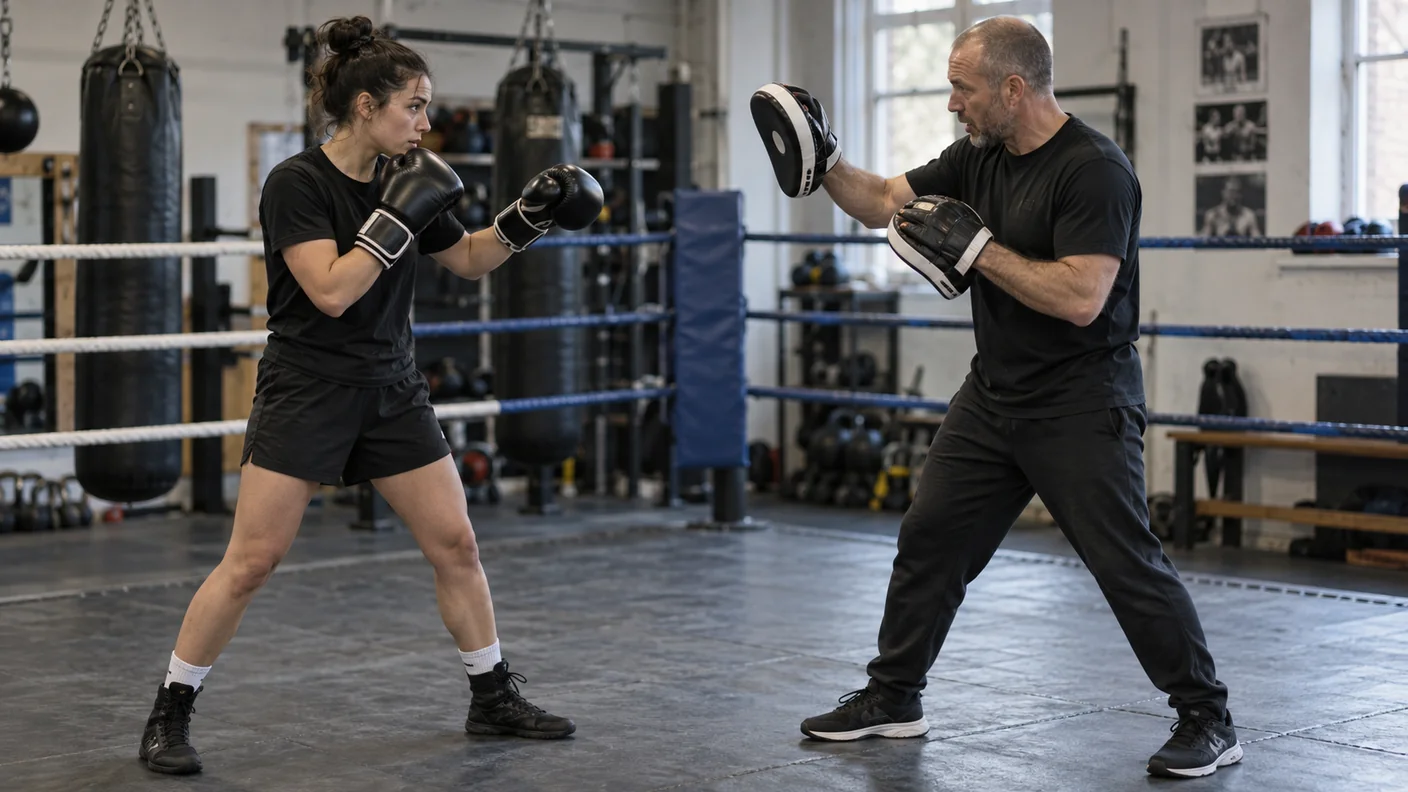
How to Hold Pads for a Southpaw Boxer
A practical guide to pad position, stance and clear calls when your partner boxes southpaw.
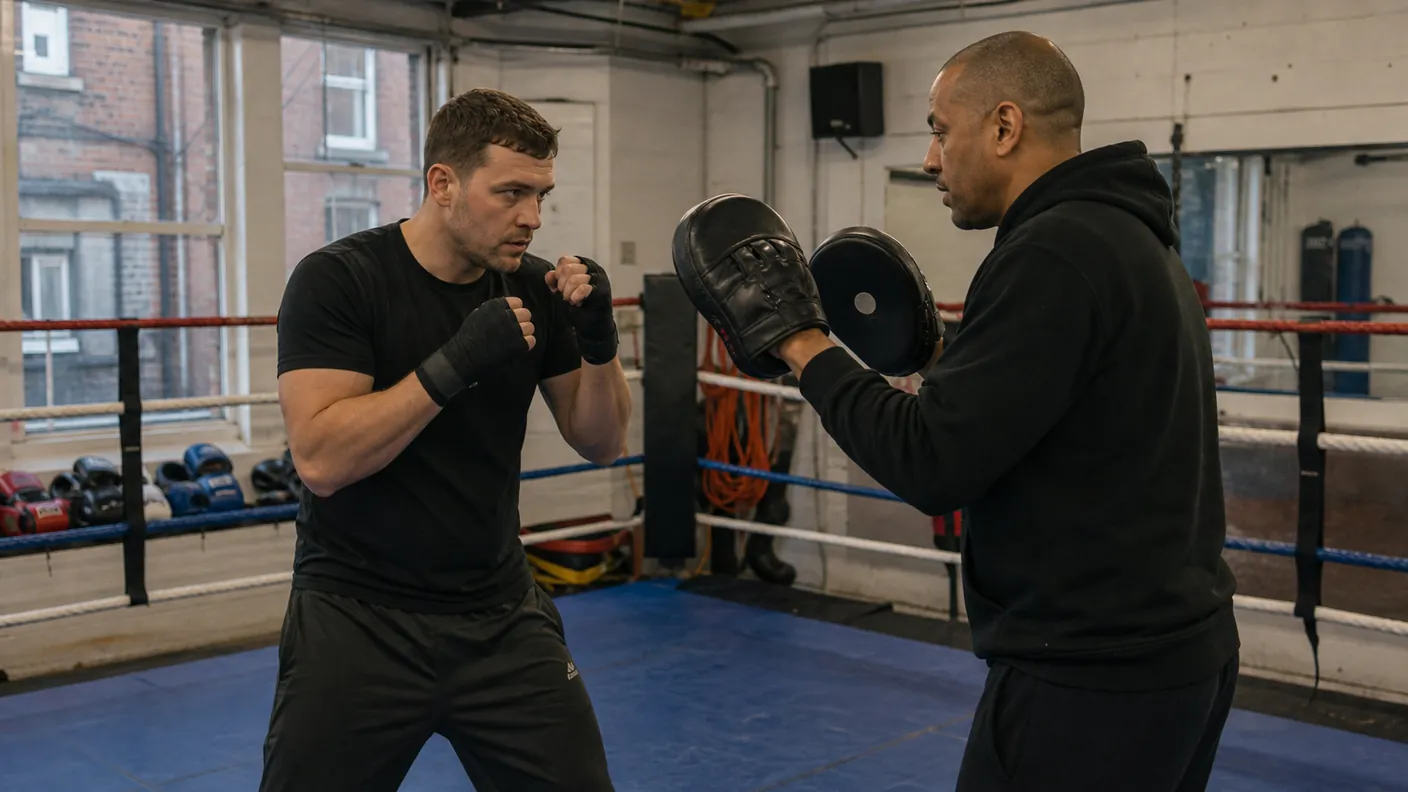
Why You Look at the Floor When Boxing
Looking down makes boxing feel faster and less controlled. Learn the simple visual habits that keep your stance, guard and decisions organised.
Was this page helpful?
It takes one tap, and it genuinely helps.
Choose your next step
Turn this article into the right action
Some readers are ready to book. Some need the class route first. Pick the route that matches what you actually want.