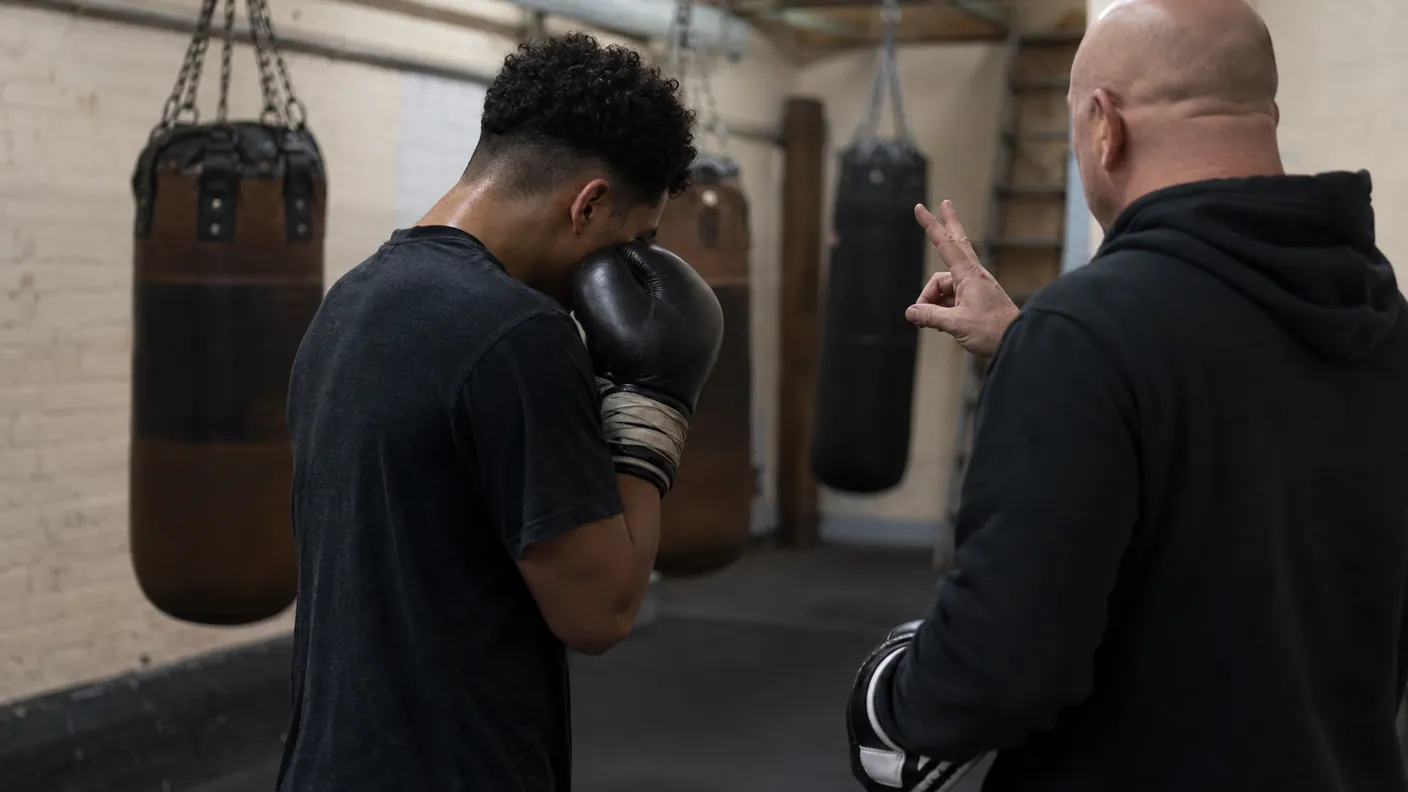
A coach calls a simple one-two. You hear it, then try to finish it before the words have properly landed. The jab chases the mitt. The cross follows because it was supposed to, not because you are balanced enough to throw it. By the end of the round, you feel busy but cannot say what the punches were for.
That is rushing. It is one of the most normal beginner habits in boxing, and it is not fixed by trying harder.
The answer is to make the first action clear, let the feet support it, and only add pace when you can return to stance. Fast boxing is not two hands flapping as quickly as possible. It is clean decisions made at a useful speed.
Rushing starts before the first punch
Most people do not rush because they are lazy or incapable. They rush because a boxing class asks for several things at once: listen to the call, see the target, hold stance, judge distance, turn the body, bring the hand back and breathe. The urge to get ahead of the instruction is an attempt to feel in control.
It usually has the opposite effect. You throw before the mitt is settled, then chase the next target with the shoulders. A combination becomes a string of corrections rather than a piece of boxing.
Motor learning research gives a useful explanation. A review of motor learning describes sequence learning as a distinct part of how people acquire skilled movement. A separate study of physical practice found that working memory was linked with general gains in motor learning. The practical takeaway is modest: do not expect a new sequence to survive perfectly when you are also moving and getting tired.
You do not need to prove you understood a call instantly. You need to give yourself a chance to perform it properly.
Let the coach finish the instruction
The first correction is almost embarrassingly simple: wait until you can see the first target.
On pads, listen to the call, look at the coach, then throw. That small pause is not hesitation. It is where your eyes find the pad and your feet decide whether you are already in range.
For a jab-cross, the jab is not the starting pistol for a frantic two-punch sprint. It is a separate action. Land it from balance. Bring it back. Then throw the cross only if your stance still gives it somewhere to come from.
If you miss the first pad because you were early, do not try to rescue the combination with a harder second punch. Reset your guard, take the right step and wait for the next call. Our guide to why beginners miss focus mitts explains why the range error often happened before the glove left your face.
Use one clear speed before you chase another
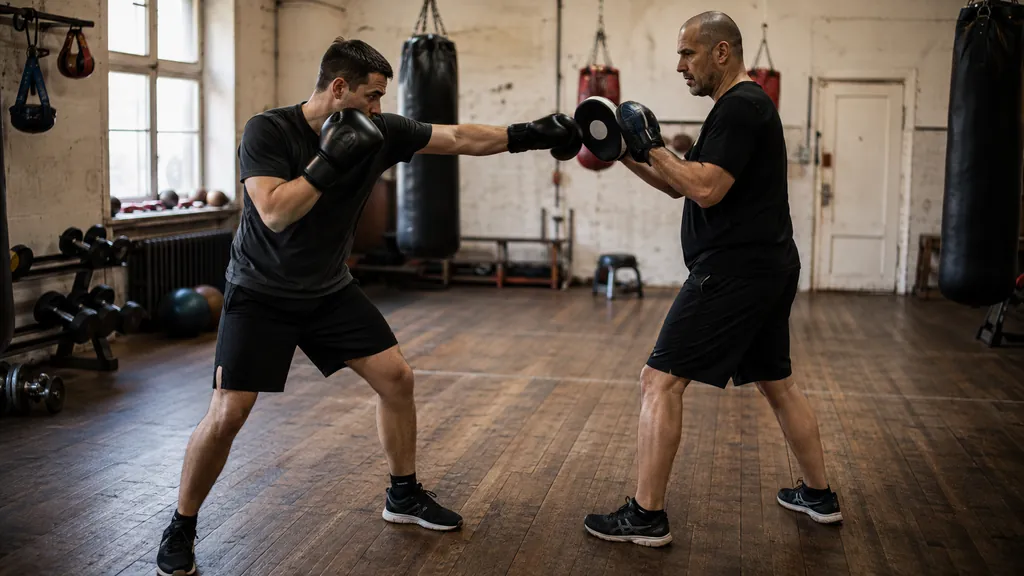
A common pad-work trap is treating every round like a race. The first rep is thrown at full speed, the second gets messier, and by the sixth the feet have stopped moving altogether.
Choose a pace that lets you finish the punch and recover your guard. For most beginners, that is slower than it feels as though it should be. Good. That is where you can actually notice the mistake.
Try this simple scale in a coached session:
- First round: 50 percent pace. See the target, step if needed, land one clean punch, return to guard.
- Second round: keep the same pace, but add the second punch only after the first hand returns.
- Third round: raise the pace slightly only if the feet still stay underneath you and the shoulders have not climbed up around your ears.
Do not turn the percentages into science. They are a way to stop yourself from starting at panic speed. If a coach says slow down, they are not asking you to become passive. They are protecting the shape that will eventually let you move faster.
Your feet are often ahead or behind your hands
Rushed combinations usually reveal a footwork problem. Some boxers throw first, then take a step to catch up. Others take a huge step, freeze, then throw from too close. Neither gives the hands a clean job.
For straight punches, use a short adjustment before the punch when distance needs fixing. If you are already in range, do not add a step just because the call has made you nervous. Punch from where you are, recover, then move again.
A helpful check is what happens after the second punch. Can you take a normal step in either direction? Can you bring both gloves back to a usable guard? If not, the combination was too fast for the position.
Our guide to moving in and out without crossing your feet covers the same principle from the ground up. Your hands can only look calm when the feet are not asking them to repair a bad position.
Give each combination an ending
A combination that ends with the last glove hanging in the air encourages the next rushed rep. You land, freeze, hear the next call and launch yourself at it from wherever you happened to stop.
Build a finish into every short sequence. Jab-cross, hands home. Jab-hook, take a small step out. One-two-three, turn or reset. The specific exit depends on the drill, but the habit is the same: finish in a place where you can make the next decision.
This is not adding a flourish. It is the practical part that stops the round becoming a scramble.
A study on interleaved motor practice found that switching between sequences creates greater retrieval demands than repeating a single sequence. That does not mean every beginner should be given endless combinations. It does explain why a clear reset matters when a coach begins to mix familiar calls. You are not only throwing punches. You are retrieving the right answer from a balanced position.
A three-round drill for slowing down
Use this after the coach has shown you the basic punch mechanics. You can shadow box it at home or use it as a simple bag-round plan.
Round one: one punch, one reset
For two minutes, throw a single jab. Do not add a cross. Let the jab return to guard before taking a small step away. Your job is to make the jab look identical at the start and the end of the round.
If the shoulder rises or your head leans forward, slow down again. You are not failing the drill. You have found its purpose.
Round two: make the one-two separate
Throw a jab, bring it back, then add the cross. Leave a small beat between them if you need it. The point is not to make the combination sound sharp. It is to make both punches come from a stance you could use again immediately.
Breathe out on each shot, then breathe normally as you recover. If holding your breath is making you rush, read our guide on breathing properly in boxing alongside this one.
Round three: keep the finish
Keep the jab-cross, but end every sequence with guard back and one small step. Do not add a new punch unless the coach has given you one. A good round can be deliberately boring when it is teaching you to stop rushing.
What to say to the coach
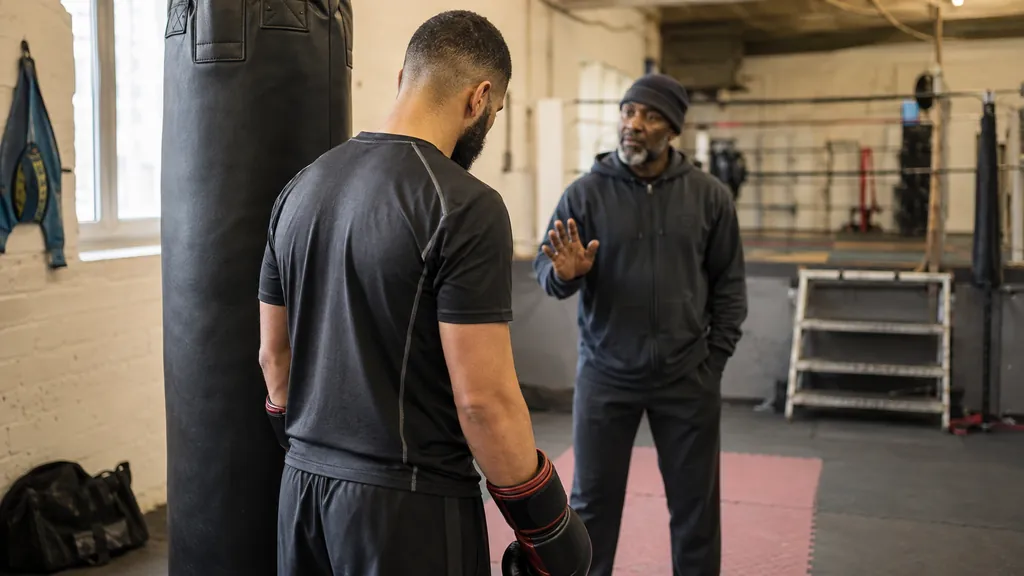
Do not just say that you are bad at combinations. Give the coach the actual pattern.
Try: "I know the punches when I slow down, but I throw before I see the first pad." Or: "I lose my feet after the cross." Or: "I start trying to hit hard and forget the end of the combination."
That gives the coach something useful to change. They might show one mitt at a time, make the call shorter, ask you to throw at half pace or put an exit step after the combination. Those are not watered-down drills. They are how a movement becomes reliable enough to use under more pressure later.
Slow is not the opposite of sharp
The goal is not to stay slow forever. The goal is to remove the wasted hurry.
A clean jab-cross at a controlled pace gives you range, rhythm, balance and a guard you can trust. Once those are stable, the coach can raise the tempo. Without them, speed only makes the mistakes arrive sooner.
If you are near Kidbrooke, Greenwich or Blackheath, our Recreational Adults boxing class is where beginners can work through those details with pads, bags and coach-led drills. You do not need to look fast on day one. You need to learn how good boxing feels when you have time to see it.
H&G Team
Writer at Honour & Glory Boxing Club, a community boxing gym in Kidbrooke, South East London.
KEEP READING
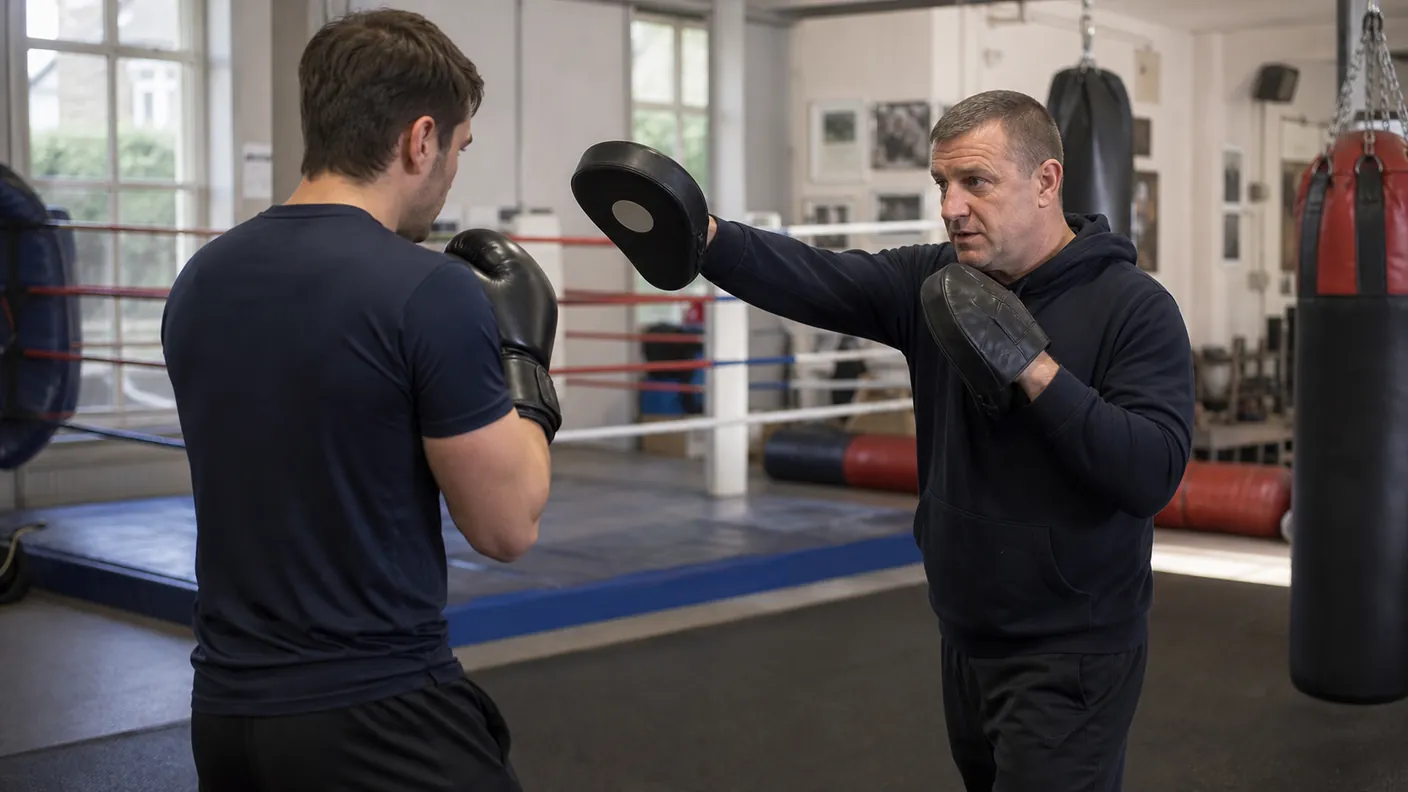
How to Remember Boxing Combinations
Forget combinations as soon as a coach calls them? Learn a calmer way to build boxing combinations that you can actually use.
Boxing Combinations for Beginners
Learn the essential boxing combinations every beginner needs to know. From the basic 1-2 to more advanced sequences, these combos form the foundation of your offence.
How to Punch Without Dropping Your Guard
Learn how to keep your guard alive while punching, so combinations protect you instead of opening clean counters.
Was this page helpful?
It takes one tap, and it genuinely helps.
Choose your next step
Turn this article into the right action
Some readers are ready to book. Some need the class route first. Pick the route that matches what you actually want.