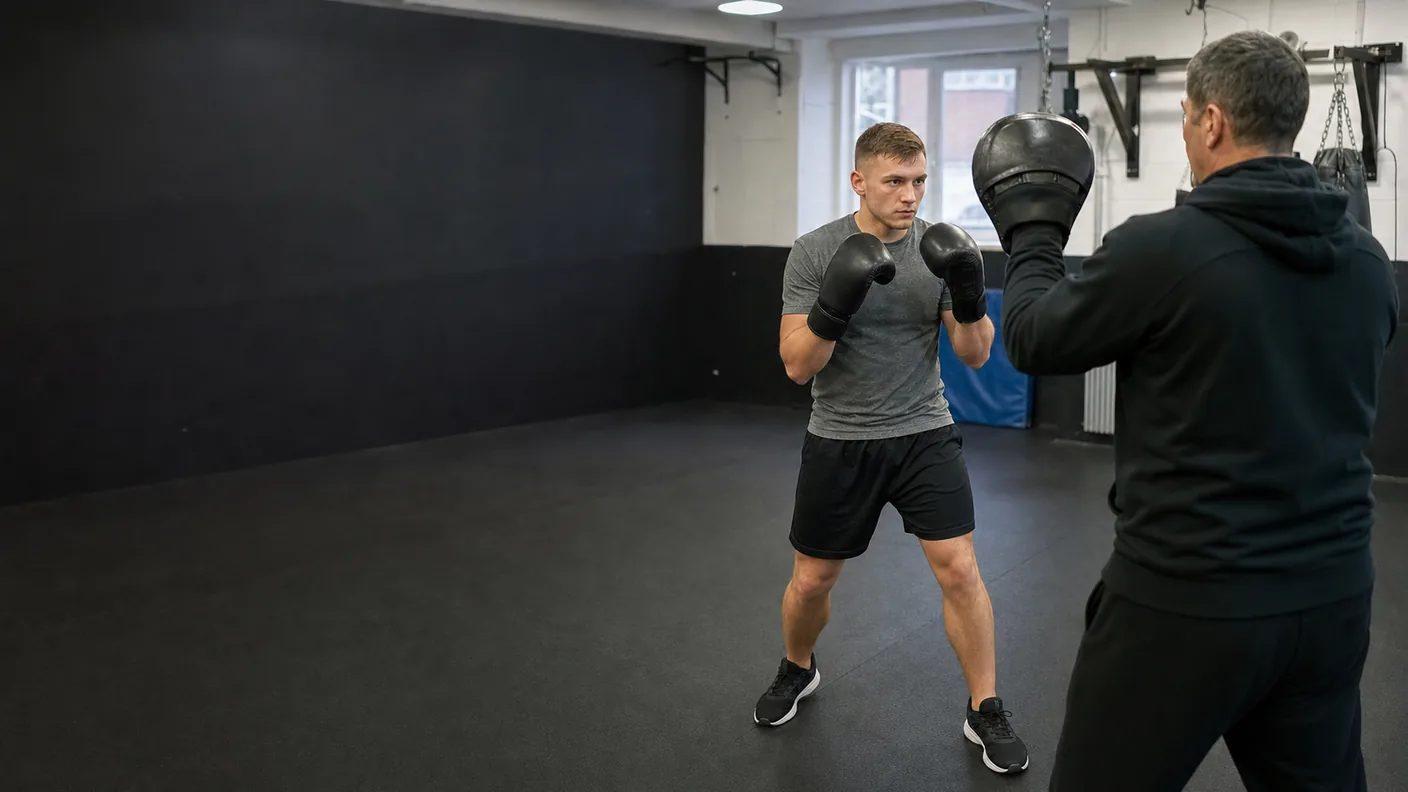
Closing your eyes when a glove comes towards your face is common. It does not mean you are soft, and it does not mean you are hopeless at boxing. It means your body has noticed something fast and close, then chosen the safest-looking response before you have had time to think.
The trouble is that closed eyes make the next decision worse. You cannot see whether the punch is a jab, a feint or nothing at all. You cannot see the distance change. You cannot see your partner reset. A blink turns one moment of uncertainty into several.
The answer is not to get shouted at, hit harder or told to "toughen up". The answer is a sensible progression: learn a safe stance, see slow movement clearly, then add pressure in small steps. That is how you become calmer without pretending contact does not matter.
Closing your eyes is a protection problem, not a character problem
A beginner often closes their eyes before a punch is close enough to land. The shoulders rise, the chin tucks too far, the hands come together, and the feet stop moving. It is an attempt to make the moment disappear.
That instinct becomes awkward in boxing because the sport asks you to do the opposite. You need to stay present, read what is in front of you and choose a small response. Catch the jab. Step away. Keep your guard. Do nothing if nothing is coming. Those choices all start with seeing.
A systematic review of anticipation in combat sports found that more experienced performers made better use of early movement information than less experienced athletes. That is not a reason to expect beginner instincts on day one. It is a reason to practise looking at the useful parts of an opponent: the chest, shoulders, hips and hands, rather than waiting for the glove to arrive at your face.
The goal is not to stare at one glove like it is a wasp. Your eyes need to take in the person in front of you. If you only watch the lead hand, you will miss the feet. If you only watch the face, you will miss the shoulder turn that tells you a punch is starting.
Do not try to train the blink out with fear
There is a bad version of this lesson. Someone flicks gloves at a beginner's face, laughs when they flinch, then calls it pressure training. That does not teach defence. It teaches the beginner that every mistake will be punished.
Good coaching makes the job clear enough to learn. England Boxing's coaching handbook puts it plainly: a boxer focused on survival is not in a good position to learn. Its guidance also stresses matching contact work to the person's age, experience and ability.
Start where you can stay composed. That could mean a coach showing a mitt at a distance while you hold your stance. It could mean a partner moving their lead hand slowly while you practise a small step back. It could mean shadow boxing in front of a mirror and keeping your eyes level while the shoulders stay loose.
None of that is glamorous. It works because it gives the eyes time to stay involved.
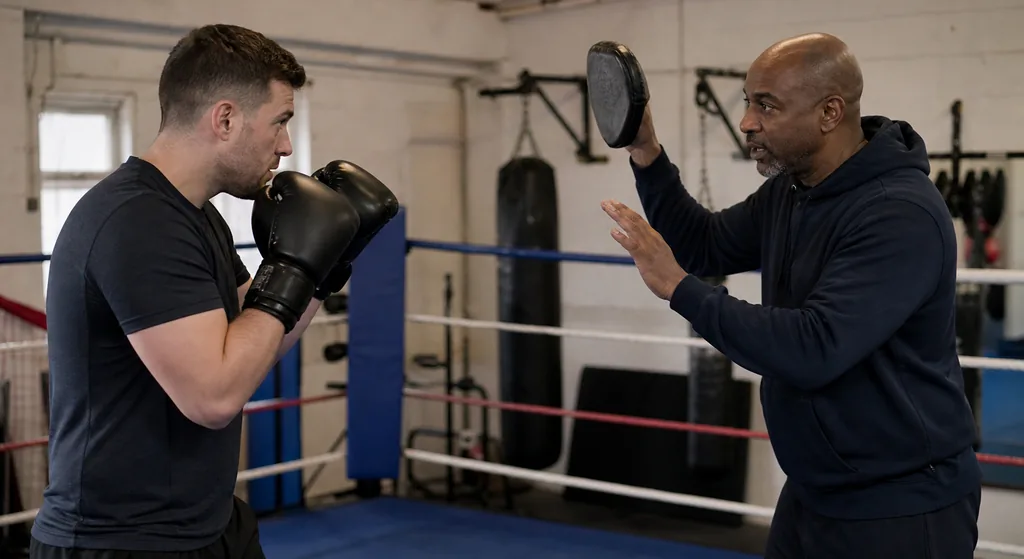
Give your eyes a job
"Keep your eyes open" is not enough coaching. It tells you what not to do but gives you nothing useful to watch.
A better cue is: look through the chest and shoulders. That is broad enough to show the body moving, but close enough to pick up a jab, a shoulder twitch or a step into range. You will still notice the gloves in your peripheral vision, without following every feint with your head.
Try this at a calm pace with a coach or trusted partner:
- Stand in your normal boxing stance with your chin down and hands ready.
- Your partner shows a slow lead-hand feint without throwing a punch.
- Keep your eyes on their upper body and make no response unless they actually step or punch.
- If they throw a light jab, catch it with the rear hand or take one small step out.
- Reset before the next repetition.
The lesson is restraint. Beginners often blink because every small movement feels urgent. Once you learn that some movement is only information, the room gets quieter.
This is also why a stable stance matters. If your feet are too square or your weight is stuck over the front knee, every feint feels bigger than it is. Our guide to boxing stance and guard basics gives you the starting position that makes small defensive decisions possible.
Build the pressure one layer at a time
You do not earn open-eyed defence by jumping into a hard round. You build it through repetitions that stay just difficult enough to require attention.
Start with a coach and pads. The mitt gives you a target and a moving shape in front of you, without asking you to deal with incoming punches. Learn to look at the coach, listen for the call and return to guard after each combination. This is where many people first notice they have been closing their eyes on the final punch.
Next, use a partner drill with one agreed action. One person throws only a light jab. The other catches, parries or steps back, then resets. There is no surprise hook, no loaded right hand and no score to settle. The narrower the task, the easier it is to see what happened.
After that, the coach can allow more choice: a jab, a feint or a step forward. The defender still has one job, stay balanced and keep looking. If the eyes close, reduce the speed. Do not add more noise.
What to do when you close your eyes anyway
It will happen. The useful response is not embarrassment. It is a reset.
First, say it out loud. A decent coach cannot correct what they cannot see or what you pretend is not happening. "I keep closing my eyes when the jab comes" is a useful sentence. It gives them something specific to change.
Second, slow the task down. You cannot learn visual calm from a round where you are already panicking. Work at a pace where you can name what you saw after each exchange: jab, feint, step, nothing.
Third, make the response smaller. You do not need to duck under everything. Catch one jab. Take one half-step back. Keep the feet under you. Big, panicked reactions make the next punch harder to read.
Fourth, return to the same drill often. One good round does not make the habit permanent. The nervous system learns from repeated, controlled exposure, especially when the result is clear. You saw the cue, you kept your eyes open, you made a sensible choice.
Our guide to defending the jab in boxing is a good next step once you can watch a slow jab without freezing. It explains when to catch, slip or block without trying to turn every defensive moment into something fussy.
When technical sparring becomes useful
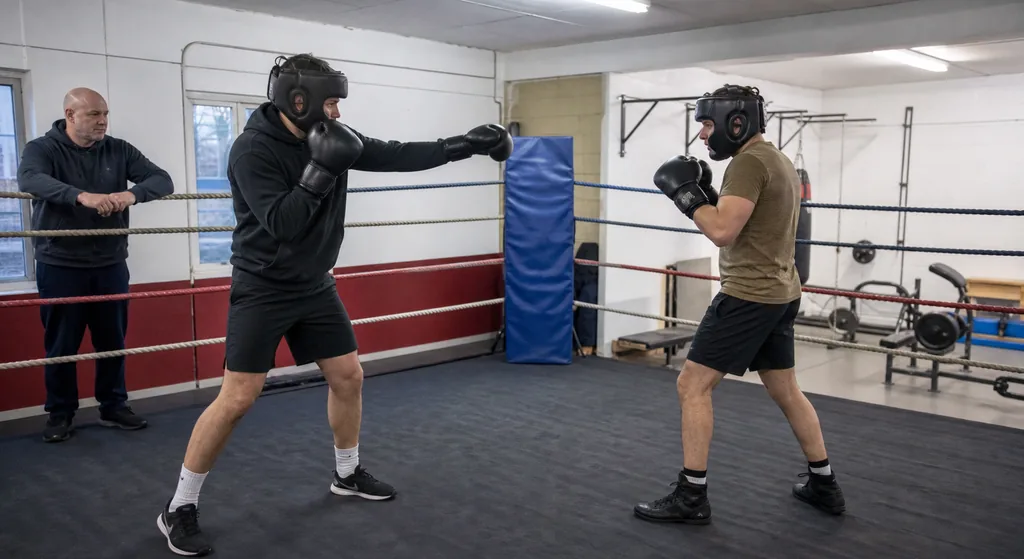
Technical sparring can help because it adds the part bags and pads cannot give you: another person making decisions. It is not the place to prove courage.
The round needs rules. Low power. Clear limits on the punches allowed. A partner who can control themselves. A coach who can stop the work before it turns into two people trying to win an argument. If the pace makes you close your eyes from the first exchange, it is too hard for the lesson you are trying to learn.
For many adults, there is no rush to reach this stage. H&G's Recreational Adults boxing class is for real boxing training without sparring being required. You can build stance, rhythm, fitness and confidence through coaching, bags, pads and drills first.
If you are in Greenwich, Kidbrooke, Blackheath or nearby, start with the basics and let a coach see how you move. Closing your eyes is not a verdict on you. It is one clear habit to work on.
H&G Team
Writer at Honour & Glory Boxing Club, a community boxing gym in Kidbrooke, South East London.
KEEP READING
Hook-Slip-Hook: A Calm Close-Range Boxing Drill
Use a compact hook, small defensive slip and second hook to practise close-range boxing without standing still after your first punch.
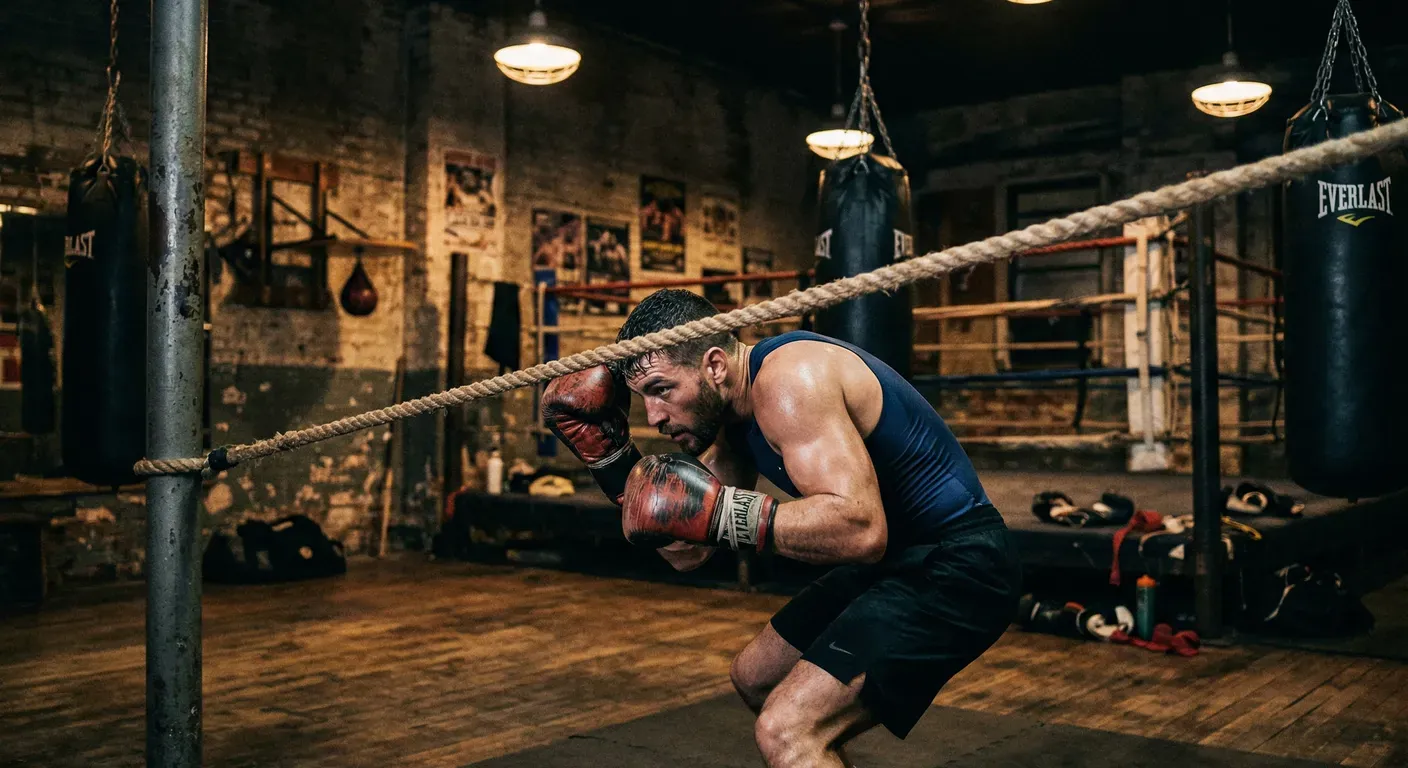
How to Stop Flinching in Boxing
Flinching is normal in boxing. Here is how beginners can reduce it with safer drills, better defence and calmer coaching.
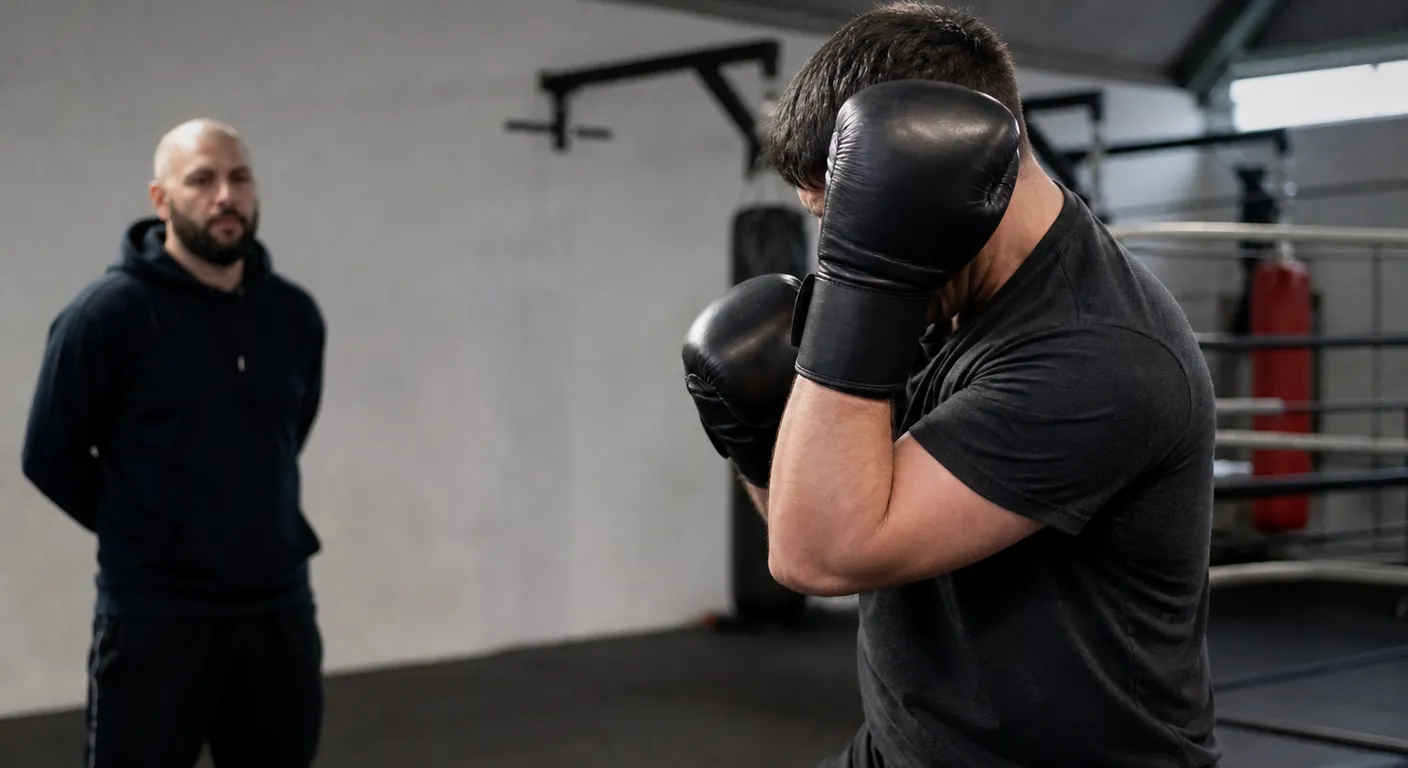
How to Block Hooks in Boxing Without Opening Up
Learn a compact hook block that protects your head, keeps your eyes up and leaves you ready to answer at close range.
Was this page helpful?
It takes one tap, and it genuinely helps.
Choose your next step
Turn this article into the right action
Some readers are ready to book. Some need the class route first. Pick the route that matches what you actually want.