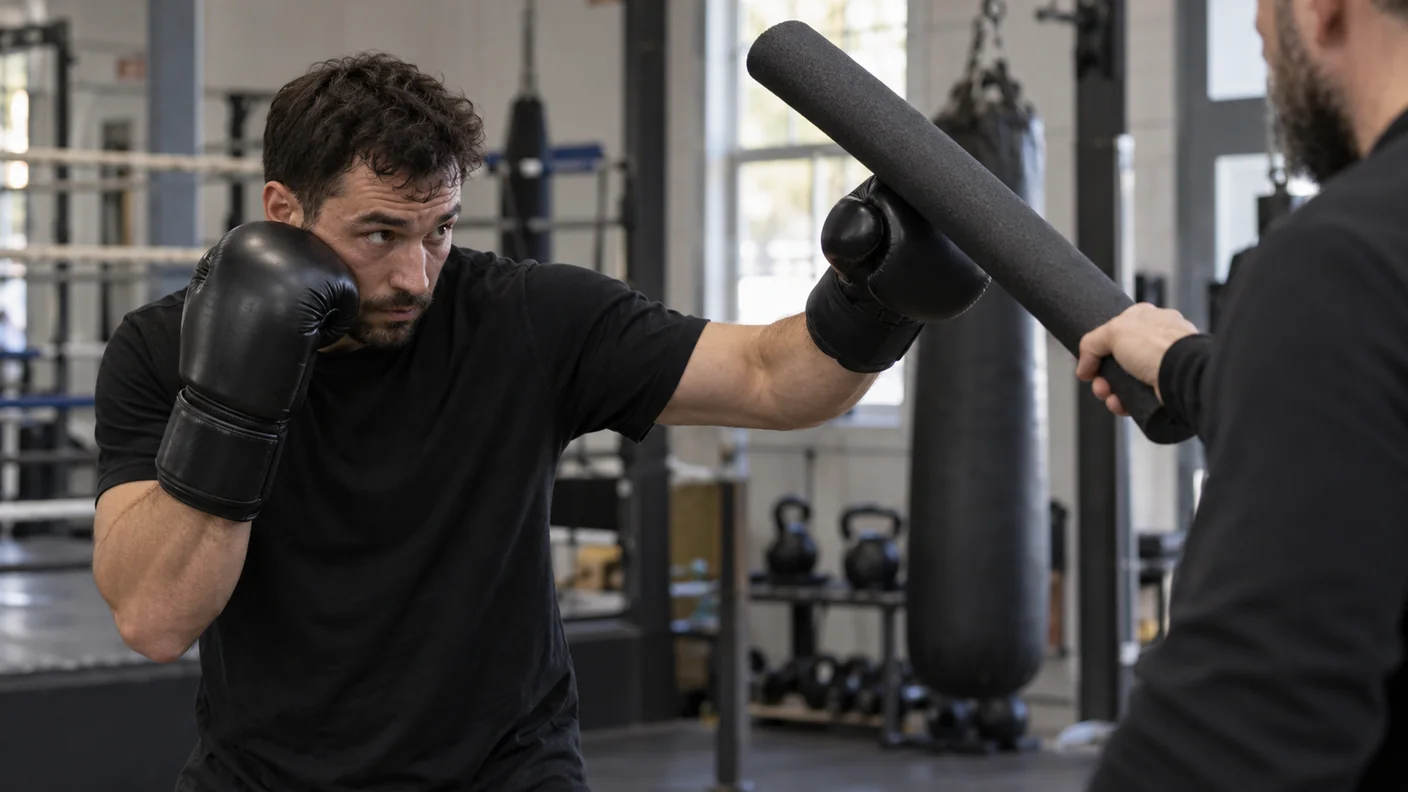
Many beginners waste good energy trying to make every punch miss spectacularly.
A jab comes and they slip hard. The next one comes and they duck. A shoulder twitches and they roll underneath an imaginary hook. By the end of the round, the boxer is working harder than the person throwing the punches, and their feet have stopped being useful.
The better habit is less glamorous: use the smallest defensive answer that keeps you safe, keeps your eyes up and leaves you ready for the next decision. Sometimes that is a catch. Sometimes it is a tight cover. Sometimes it is one quiet step. The aim is not to collect defensive moves. It is to stay organised long enough to choose the right one.
The video below is a useful visual reference for keeping early sparring simple. Watch how the basic stance and compact hand defence create time to see what is really coming.
A defence is only useful if you can use the next second
A dramatic slip can look sharp on a bag or in a mirror. Against a partner, it can leave you low, turned too far or standing in the same place with your hands apart.
A quiet catch looks less exciting, but it can keep the guard close to home and the eyes on the other boxer. That matters when the jab is only the first part of an exchange. The other boxer may jab again, step behind it, show the rear hand or simply use your big reaction to take space.
England Boxing's coaching handbook puts a balanced stance, sound guard and controlled footwork underneath effective punching and defence. That is a practical test for any movement. After it, can you still see, cover, jab or step away without rebuilding your body first?
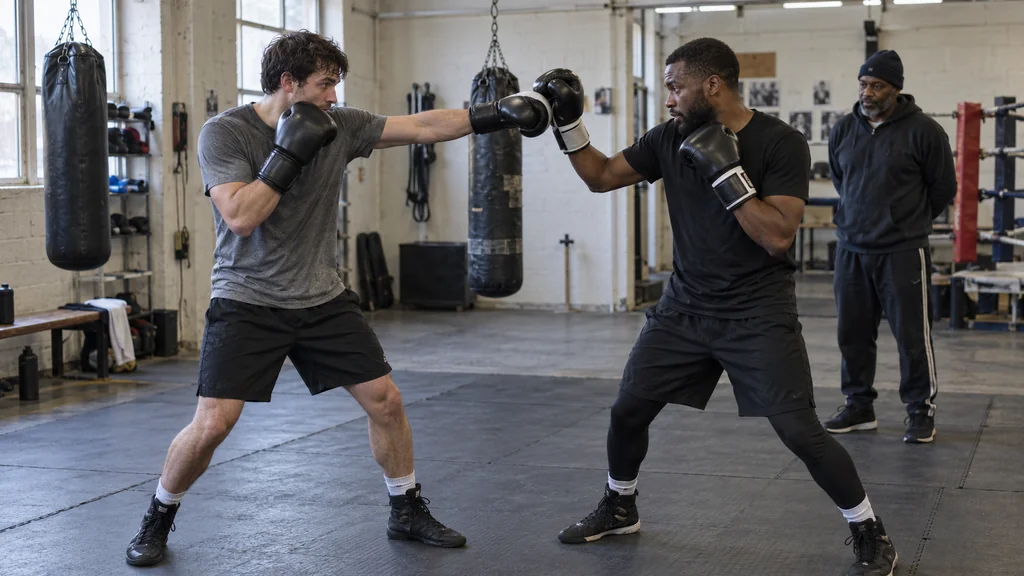
Start by matching the answer to the range
At the edge of jab range, a reaching jab often needs only a compact rear-hand catch or a small parry. Let the glove arrive close to the space your face occupies. If your hand has travelled halfway across the room to find it, you have made the defence larger than the problem.
At closer range, a small slip may make more sense because the jab can arrive before a catch has time to settle. The movement still needs to be small. Soften the knees, move the head only enough to leave the line and keep the feet ready beneath you.
If you are late, covered up or already being crowded, the clean answer may be a conventional guard and a reset. Do not try to produce a beautiful slip after the punch has already claimed the space. A high guard buys a moment. Use that moment to move, tie up under coaching or return to a safer range.
Our guide to defending the jab in boxing explains the mechanics of the catch, slip and block. The extra job here is choosing the cheapest answer that fits the distance rather than forcing a favourite defence every time.
Stop reacting to a feint as if it is a real punch
The other source of wasted movement is treating every hint as a command.
A boxer may twitch a shoulder, touch your lead glove or settle their weight before doing nothing at all. If you leap out of range at every signal, they learn that they can move you without spending a punch. Your own reaction gives them the rhythm.
A systematic review of anticipation in combat sports found that more experienced athletes were generally faster and made better decisions when responding to attacks, while using fewer and more useful visual fixations than novices. The useful gym version is not to guess more. It is to keep a calm view of the chest, shoulders and lead foot, then wait until the action is clear enough to deserve an answer.
That does not mean standing still and hoping. Your guard should already be in a place where a jab can be caught, a hook can be covered and a step can start without delay. Calm is not passive. Calm means you have not spent your balance before the opponent has spent a punch.
Build hand defence before you chase head movement
Head movement is valuable, but it is not a costume you put on for every round.
Slips, rolls and ducks ask the legs, hips, eyes and guard to stay connected while the other boxer is still free to change the punch. If you are new to partner work, that can be a lot to manage at once. A tight catch against a slow jab is a simpler way to learn that punches can arrive without forcing panic.
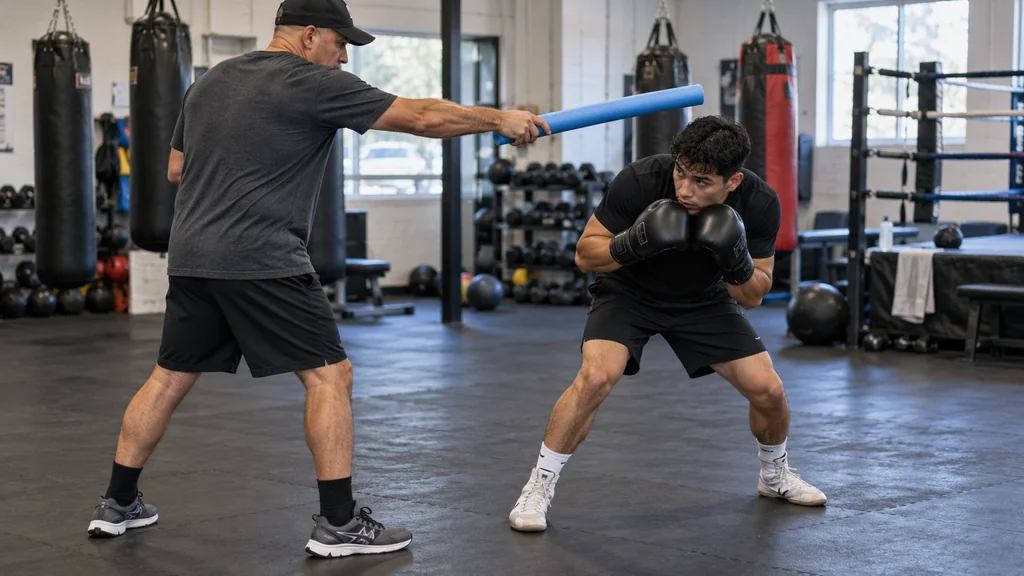
Start with straight lines. Let a coach or partner show a slow jab. Catch it near your cheek, return the hand to guard and stay still for one count. Notice the useful details: the chin stays down, the elbow stays close and the eyes never leave the person in front of you.
Only then add a slip. The slip should not replace the catch because it looks more advanced. It should solve a different problem: a closer jab line where moving your head a few inches keeps you ready to answer. If a compact catch already deals with the range, keep it compact.
For a related reading drill, see how to read boxing weight shifts before a punch. The goal is the same: notice the picture early without throwing yourself into a decision before the evidence is there.
The drill: catch, hold, choose
Use a coach, gloves and a partner who understands that this is technical work. No hard contact, no race to score and no surprise combinations.
Round one: catch and hold
Partner A sends one slow jab to the head line. Partner B catches it with the rear glove, returns the glove to the cheek and holds the stance for one count. No counter.
The coach looks for the common errors: reaching for the jab, pulling the rear hand down to the chest or leaning the head forwards. Make the feed slower if any of those appear. Ten clean catches teach more than fifty frantic ones.
Round two: choose catch or slip
Partner A now gives either a jab from long range or a closer jab cue. Partner B chooses the compact catch for the first picture and a small slip for the second.
Keep the difference obvious at first. The point is not to trick the defender. It is to show that range changes the answer. Both defences should finish with the hands ready and the feet staggered.
Round three: add the non-punch
Partner A can now show a shoulder twitch, a slow jab or no action. Partner B does nothing for the twitch, catches or slips the jab, then resets.
This is the important round. A boxer who can stay still through a false signal is no less technical than one who can move. They are simply saving the movement for the moment that needs it.
Four signs your defence is too big
The first is that you cannot see the next cue. If a slip has folded you towards the floor, or a roll has sent your eyes away from the partner, shorten it.
The second is that your feet need to be rebuilt after every defence. A useful catch, cover or slip should leave you able to step, jab or take another defensive action. If the feet have crossed or narrowed, the movement cost too much.
The third is that the rear hand keeps disappearing. A catch should return quickly. A slip should not pull both gloves out of their lanes. A block should not become a place to hide for the rest of the round.
The fourth is that you are tired before the other boxer has made you work. Do not confuse busy with effective. Strong defensive rounds often look calm because the boxer is spending only what the exchange requires.
Where this fits in training
This is useful for adults who have learned the basic guard and want their partner drills to feel less frantic. It does not require hard sparring. Slow feeds, foam-noodle cues and controlled mitt work are enough to build the habit.
For adults in Kidbrooke, Greenwich and nearby, our Recreational Adults boxing classes use controlled drills to connect stance, guard, footwork and decision-making before the pace rises.
The coaching cue is simple: see the problem, use the smallest answer, stay ready.
H&G Team
Writer at Honour & Glory Boxing Club, a community boxing gym in Kidbrooke, South East London.
KEEP READING
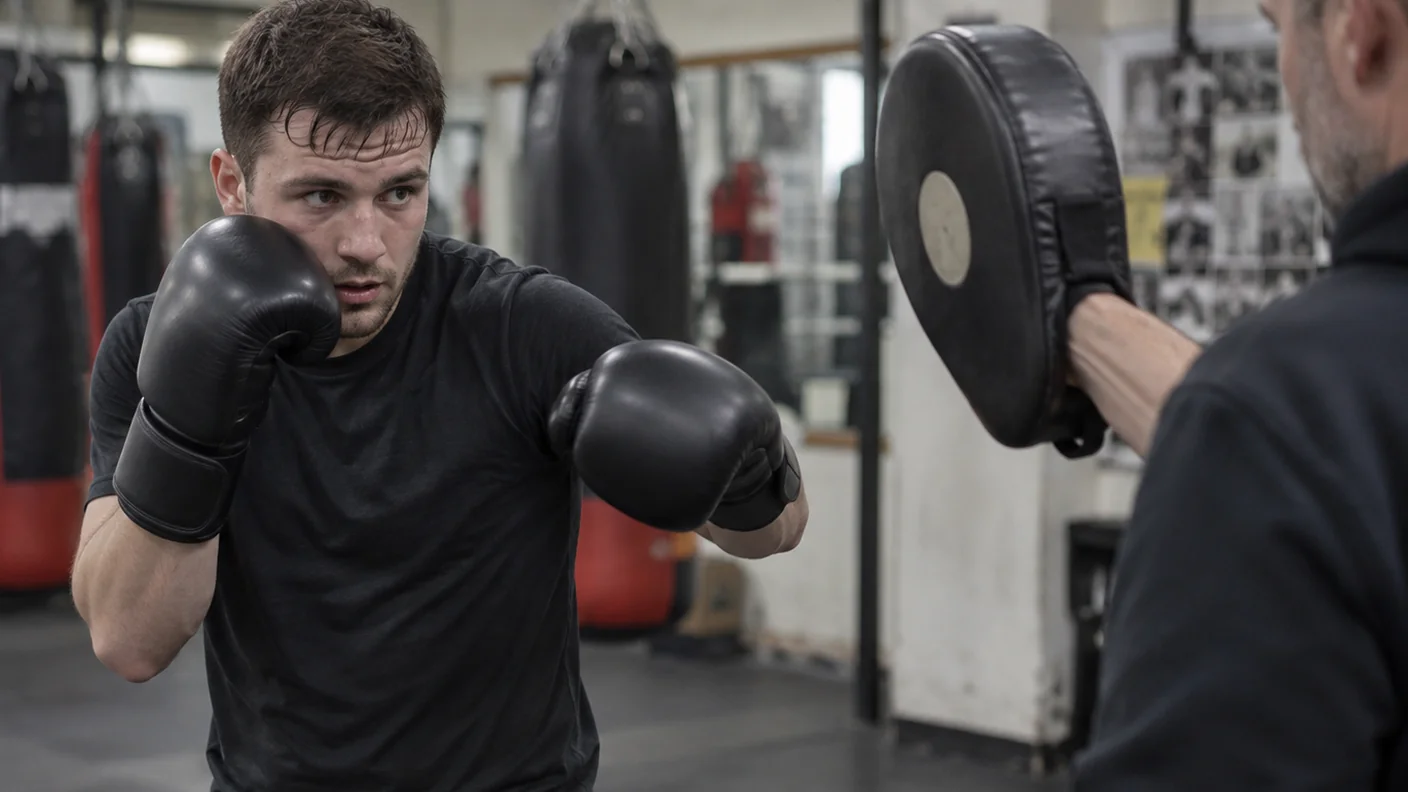
How to Defend a Double Jab in Boxing
A calm drill for catching or covering the first jab, reading the second and keeping your stance ready for the next decision.
How to Defend the Jab in Boxing
Learn how to defend the jab with a catch, slip, block and exit without losing stance, balance or the chance to punch back.
Why You Close Your Eyes in Boxing
Closing your eyes when punches come near is common for beginners. Here is how calm, coached drills help you keep seeing the work.
Was this page helpful?
It takes one tap, and it genuinely helps.
Choose your next step
Turn this article into the right action
Some readers are ready to book. Some need the class route first. Pick the route that matches what you actually want.