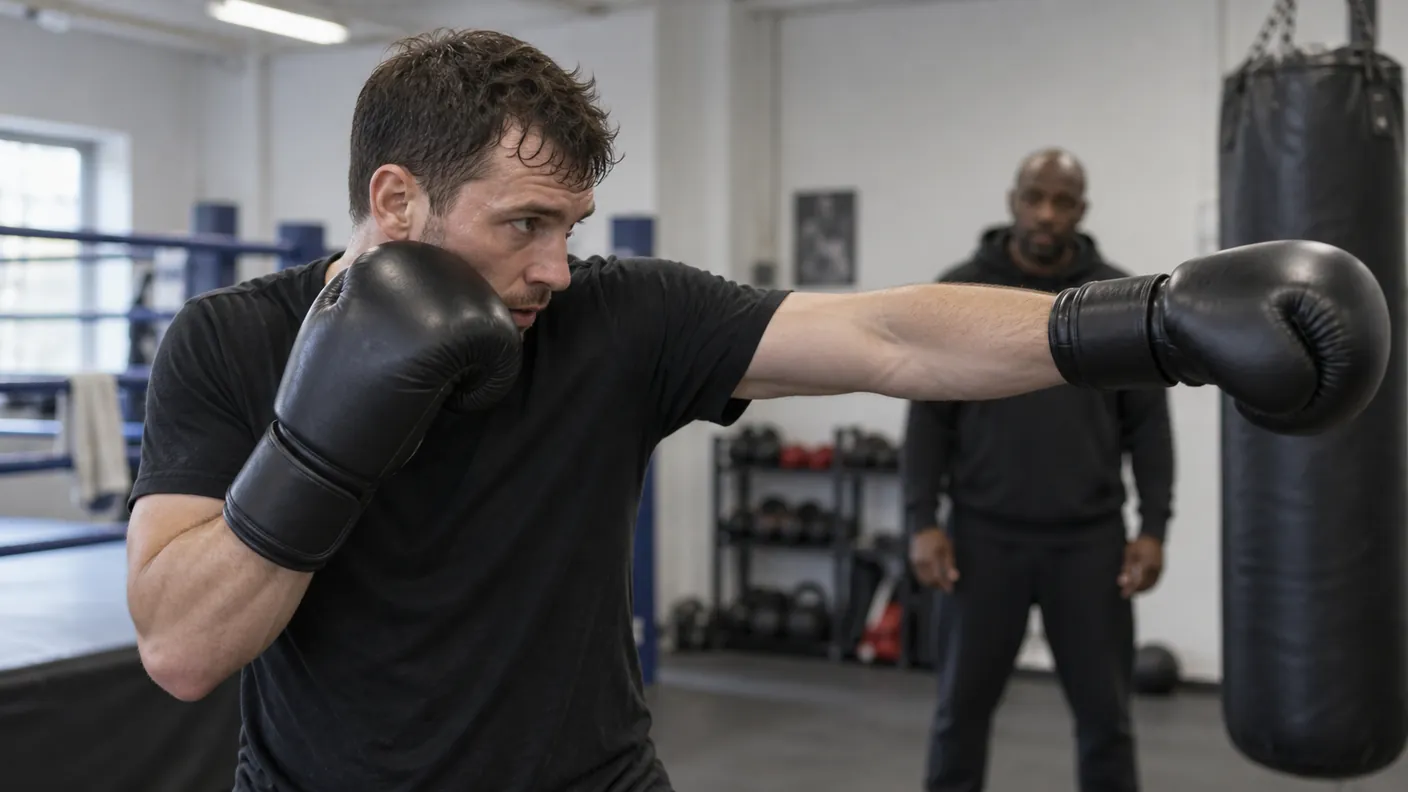
A jab can look busy and still give the other boxer an easy read. The usual giveaway is the elbow. It opens sideways before the glove goes forward, the shoulder follows it late, and the hand drifts back instead of returning cleanly to guard.
That is not a power problem. It is a route problem. The jab should travel out from your own guard, reach the target on a direct line and come home before you have time to admire it. If the elbow escapes sideways, the punch takes a longer route and the rear hand often starts wandering too.
The video below is a useful visual prompt for three linked habits: keeping the elbow behind the fist, keeping the rear glove at home and giving the jab a proper return. Use it as a technical reference, then practise the work slowly with a coach.
What an elbow flare tells the other boxer
A small amount of natural movement is normal. Your shoulder turns a little, the lead side reaches forward and the fist rotates as it lands. The problem starts when the elbow rises or swings away from the route of the glove.
That movement makes the jab easier to read because the other boxer sees the arm travelling sideways before it travels forward. It also tends to turn a straight punch into a push. You can still touch a bag or a mitt, but the glove arrives late and the hand takes longer to return.
A review of boxing performance describes punching as a coordinated movement between the feet, trunk and upper body. That is the useful point here. A tidy jab is not an arm held rigidly in place. It is the whole stance helping the glove travel on a short route without taking the guard apart.
Start with the line, not the speed
Stand in your normal boxing stance. The lead glove begins near its own cheek and the elbow sits under the hand rather than pointing across the room. Your rear glove stays close to the other cheek. Soften the knees enough that you can move, but do not bounce or lean looking for extra length.
Now throw one light jab at half speed. Let the fist lead the route. The elbow follows behind it, not outside it. Bring the glove home along the same lane. If the jab needs your head to tip over the front knee, take a small step closer before the next one. Reaching with the torso is not a fix for a crooked arm.
The shoulder can rise enough to give the chin some cover, but do not shrug yourself into a knot. You should finish able to see, catch a return shot or move your feet. That is a better test than trying to make every single jab feel heavy.
Our guide to telegraphing the jab in boxing explains why the first few inches matter so much. If the opponent can spot the elbow, shoulder or foot before the glove has started its line, they have time to prepare an answer.
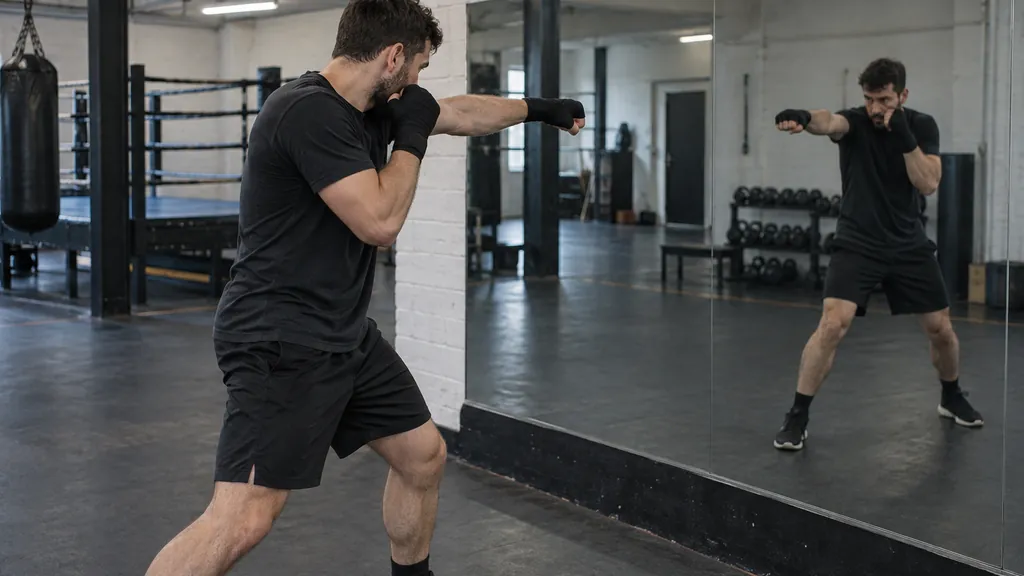
The mirror check that finds the real fault
A mirror is useful when you give it one job. Do not stand in front of it throwing fast combinations and watching your own face. Set your stance, look through the mirror as if you were looking at a partner, and throw ten single jabs at an easy pace.
After each one, check three things:
- Did the elbow stay behind the fist?
- Did the rear glove remain near the cheek?
- Did the lead glove come back by the same route it used to leave?
If the elbow opens, slow down rather than forcing it straight by tension. If the rear glove drops, bring the pace down again. A clean repetition teaches more than a loud jab that leaves you open for the next punch.
England Boxing puts stable stance, balance and controlled technical progressions at the centre of coaching practice in its coaching handbook. The simple version applies here: practise a shape you can keep when the pace rises, rather than chasing speed before the shape exists.
A wall drill without punching the wall
The wall is a guide, not a target. Do not punch it, brush it or stand close enough to catch your knuckles on it.
Stand side-on with your lead shoulder and lead heel near a flat wall. Leave enough space that your glove cannot touch the surface at full extension. Throw a slow jab parallel to the wall, then bring it back to guard.
If the elbow wants to flare, the wall gives you immediate feedback because there is nowhere for it to travel. Keep the rear glove at the cheek and work in short sets of five. Stop as soon as you find yourself twisting away from the wall or reaching with the chin.
This drill is for the route of the arm, not for force. Use shadowboxing pace only. Once ten clean jabs feel ordinary, take the same shape to a single mitt. Do not assume the wall has fixed your jab if the line disappears as soon as there is a target to hit.
Give the jab a return, not a pause
A pawing jab often looks like a weak extension, but the bigger problem is what happens after it lands. The glove stays in front, the elbow locks and the boxer waits to see whether the touch worked. That pause gives the other boxer a clear target and leaves the lead hand too far away to defend its own side.
Think of the jab as out and home. It can be light. It can be a range touch. It can be the first punch of a combination. None of that means it should float in the middle.
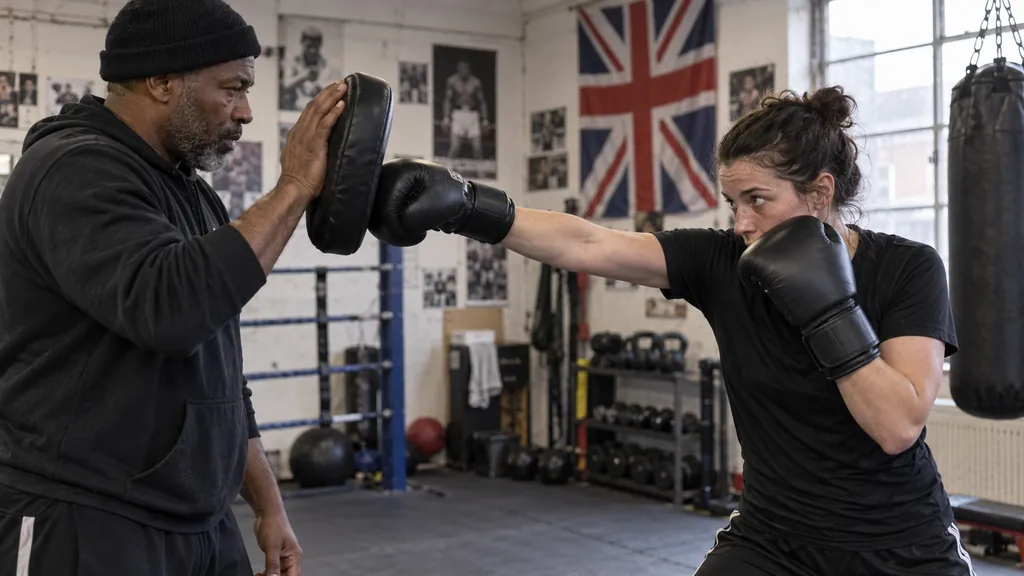
On pads, ask the coach to hold one mitt at sensible jab range. Touch the mitt, return to guard and wait for the next cue. The coach can show the mitt again, move it away or give a light return line. Your job is not to throw the next punch early. Your job is to be ready for it.
That connects with good guard spacing in boxing. The lead hand needs its own lane to jab and return. The rear hand needs its own lane to catch or cover. When both hands drift into the middle after every punch, you may feel protected but you will be slow to respond.
Build the jab in three short rounds
Use these rounds before hard bag work, when your shoulders and attention are still fresh. You are teaching a route, not trying to exhaust your arms.
Round one: line and return
Shadowbox for one minute with single jabs only. Work at about half speed. After every jab, freeze for one count once the glove is back at guard. Check feet, chin and rear hand before the next rep.
If the elbow rises, shorten the jab rather than trying to force reach from a poor position. The target can be imaginary. The shape cannot be.
Round two: wall-guided jabs
Take five slow jabs on each side of a wall-guided set, keeping enough clearance that no glove touches the wall. Rest briefly, then repeat for three sets.
The goal is not a perfect mechanical pose. You are simply giving the lead arm a short, direct path. If the wall makes you stiff or turns your shoulder too far, step away and return to the mirror version.
Round three: mitt and decision
A coach or partner holds one mitt at honest range. Throw one jab and return it. On the next cue, the partner can show the mitt again, take it away or give a slow return jab line.
If the mitt appears, touch it with another clean jab. If it disappears, reset your feet without reaching. If the return line comes, bring the rear glove to a compact catch or cover as your coach has taught you. The jab is useful only if it leaves you organised enough to deal with the answer.
Four mistakes that spoil the drill
The first is pinning the elbow to the ribs. You want the elbow travelling behind the fist, not glued to the body so tightly that the jab cannot move naturally.
The second is chasing snap by tensing the shoulder. A tense shoulder slows the return and burns energy. Begin lightly, let the fist accelerate through the last part of the route, then bring it home without a big pullback.
The third is using the wall as a striking surface. It is only there to give the elbow a boundary. A punch into a wall risks the hand and teaches nothing useful about range.
The fourth is adding a cross before the jab returns. A one-two can be a good next step, but only after the lead glove is travelling cleanly. If the first hand hangs out, the second punch starts from a broken picture.
For adults in Kidbrooke, Greenwich and nearby, our Recreational Adults boxing classes use pads, mirrors and controlled partner drills to make small details like this hold under movement. You do not need to hit hard to make a jab better. You need a cleaner line, a useful guard and enough patience to repeat the right version.
The coaching cue is short: fist leads, elbow follows, hand home.
H&G Team
Writer at Honour & Glory Boxing Club, a community boxing gym in Kidbrooke, South East London.
KEEP READING
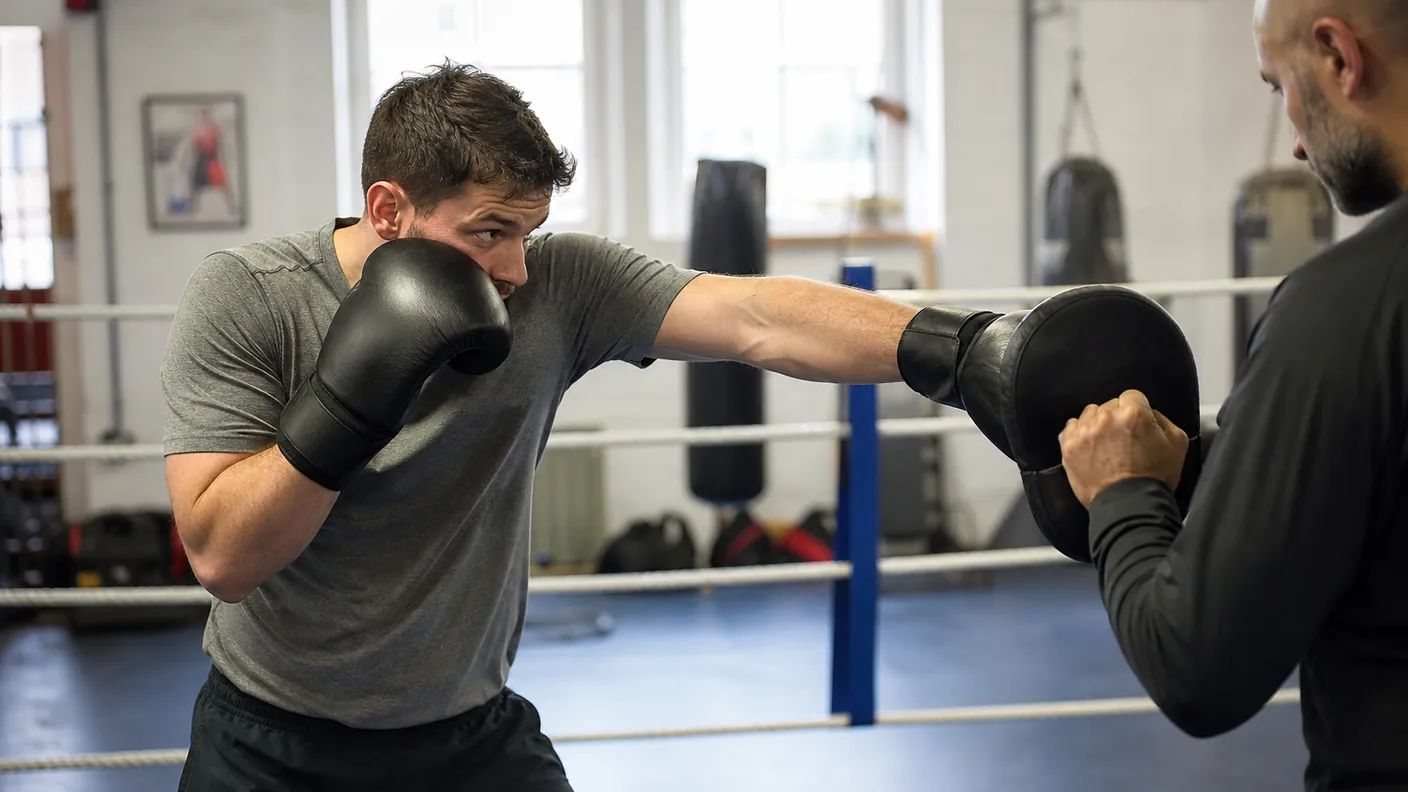
The Body Jab: A Safe Boxing Setup
Use a compact body jab to change the target, check range and set up the next decision without falling over your front foot.
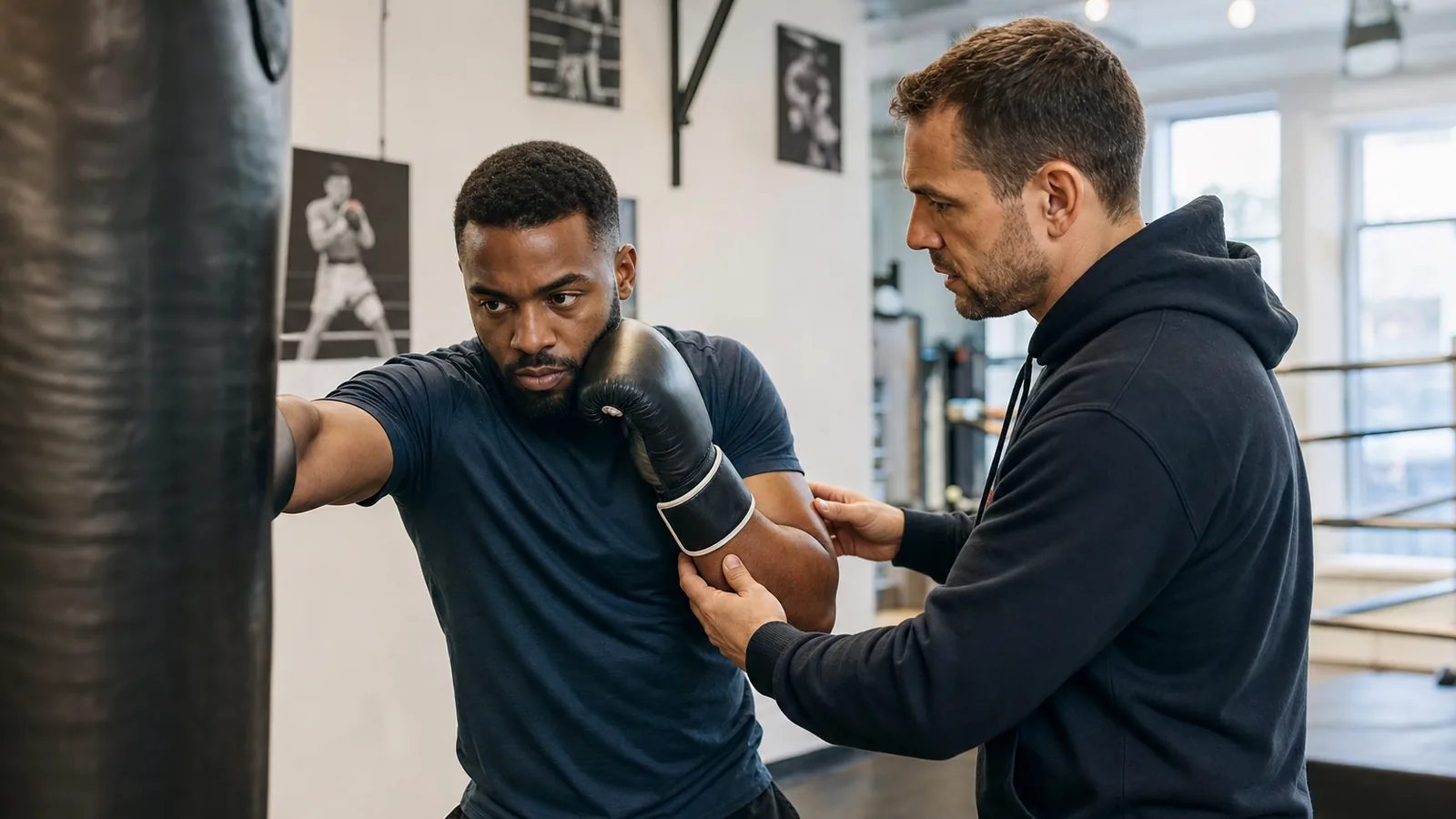
Elbow Pain in Boxing: Hyperextension, Bag Work and Return to Punching
A careful boxing guide to elbow pain: why missed punches, bag work, gripping, tendon overload and hyperextension can irritate the elbow, NHS-backed warning signs and return to boxing.
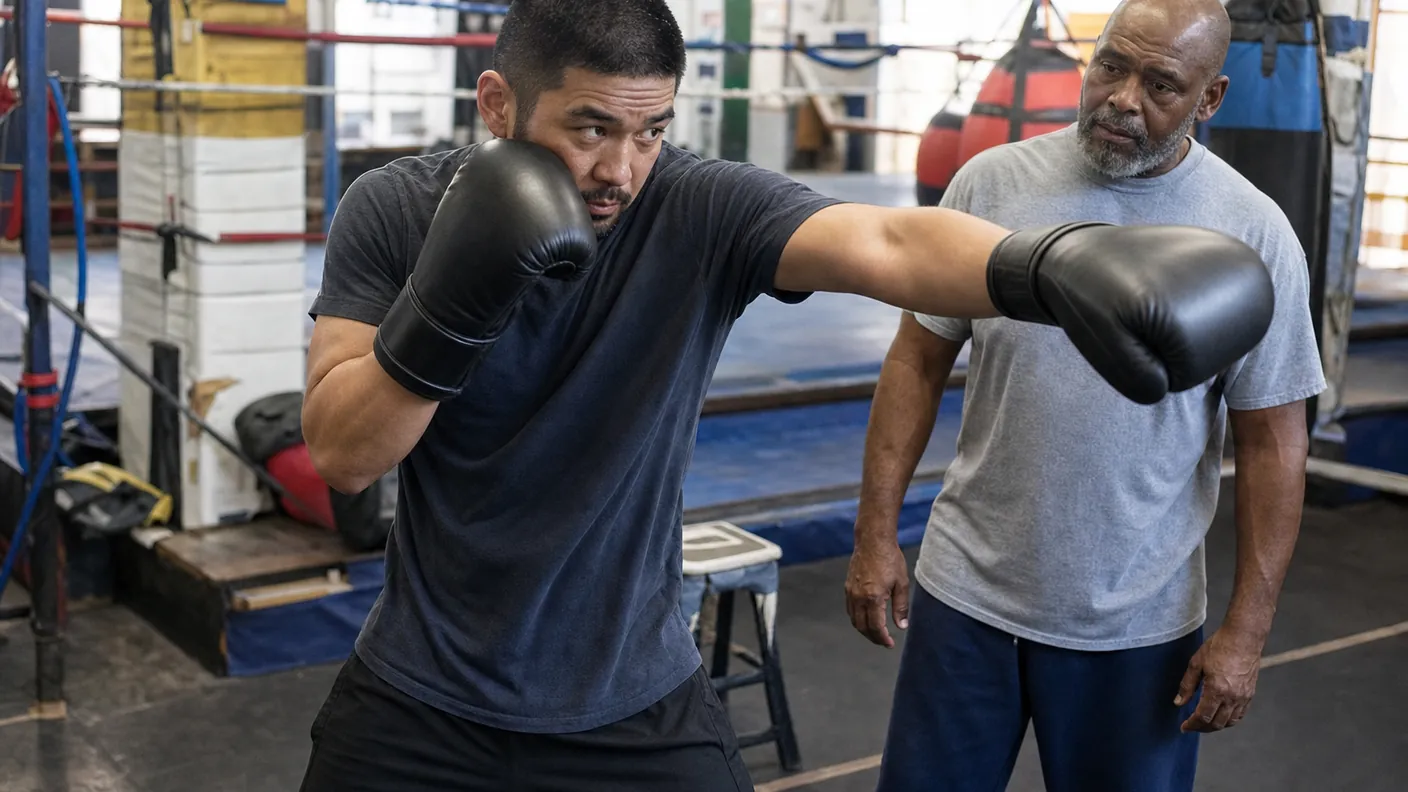
How to Jab Without Getting Jabbed Back
Learn the jab-block and off-line jab: two simple habits that stop beginners landing a jab and eating one straight back.
Was this page helpful?
It takes one tap, and it genuinely helps.
Choose your next step
Turn this article into the right action
Some readers are ready to book. Some need the class route first. Pick the route that matches what you actually want.